
Unit 11 Digestive System and Urinary system The


- Slides: 45
Unit 11 Digestive System and Urinary system
The Digestive System • General Anatomy and Digestive Processes • Mouth Through Esophagus • Stomach • Liver, Gallbladder and Pancreas • Small Intestine • Chemical Digestion and Absorption • Large Intestine 25 -2
The Digestive System • most nutrients we eat cannot be used in their existing form – must be broken down into smaller components before our body can make use of them • the digestive system is essentially a “disassembly line” – to break down nutrients into a form that can be used by the body – to absorb them so they can be distributed to the tissues • gastroenterology – the study of the digestive tract and the diagnosis and treatment of its disorders 25 -3
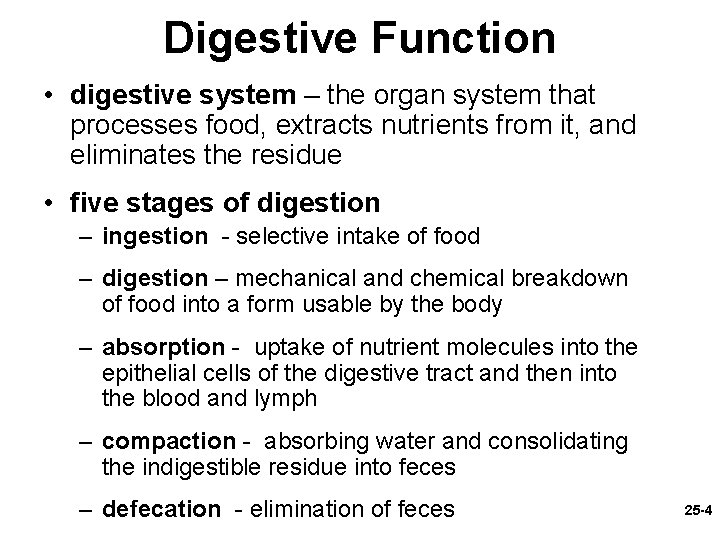
Digestive Function • digestive system – the organ system that processes food, extracts nutrients from it, and eliminates the residue • five stages of digestion – ingestion - selective intake of food – digestion – mechanical and chemical breakdown of food into a form usable by the body – absorption - uptake of nutrient molecules into the epithelial cells of the digestive tract and then into the blood and lymph – compaction - absorbing water and consolidating the indigestible residue into feces – defecation - elimination of feces 25 -4
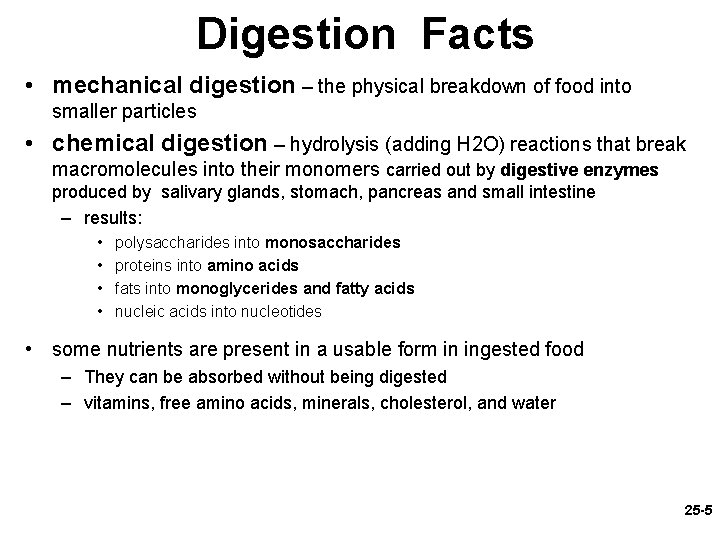
Digestion Facts • mechanical digestion – the physical breakdown of food into smaller particles • chemical digestion – hydrolysis (adding H 2 O) reactions that break macromolecules into their monomers carried out by digestive enzymes produced by salivary glands, stomach, pancreas and small intestine – results: • • polysaccharides into monosaccharides proteins into amino acids fats into monoglycerides and fatty acids nucleic acids into nucleotides • some nutrients are present in a usable form in ingested food – They can be absorbed without being digested – vitamins, free amino acids, minerals, cholesterol, and water 25 -5
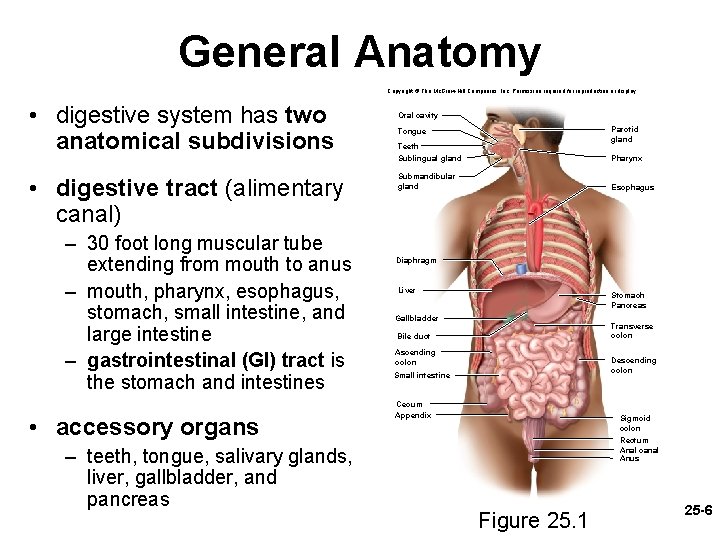
General Anatomy Copyright © The Mc. Graw-Hill Companies, Inc. Permission required for reproduction or display. • digestive system has two anatomical subdivisions • digestive tract (alimentary canal) – 30 foot long muscular tube extending from mouth to anus – mouth, pharynx, esophagus, stomach, small intestine, and large intestine – gastrointestinal (GI) tract is the stomach and intestines • accessory organs – teeth, tongue, salivary glands, liver, gallbladder, and pancreas Oral cavity Parotid gland Tongue Teeth Sublingual gland Pharynx Submandibular gland Esophagus Diaphragm Liver Stomach Pancreas Gallbladder Transverse colon Bile duct Ascending colon Descending colon Small intestine Cecum Appendix Sigmoid colon Rectum Anal canal Anus Figure 25. 1 25 -6
General Anatomy • digestive tract is open to the environment at both ends • most material in it has not entered the body tissues – is considered to be external to the body until it is absorbed by the epithelial cells of the alimentary canal • in a strict sense, defecated food residue was never in the body 25 -7
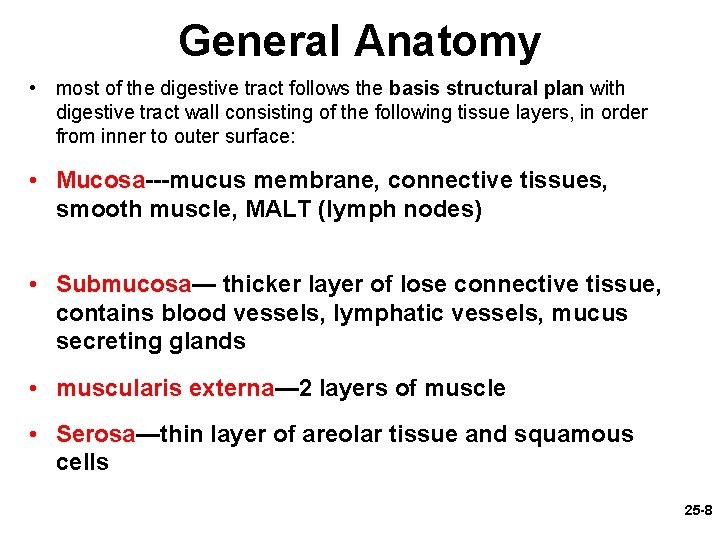
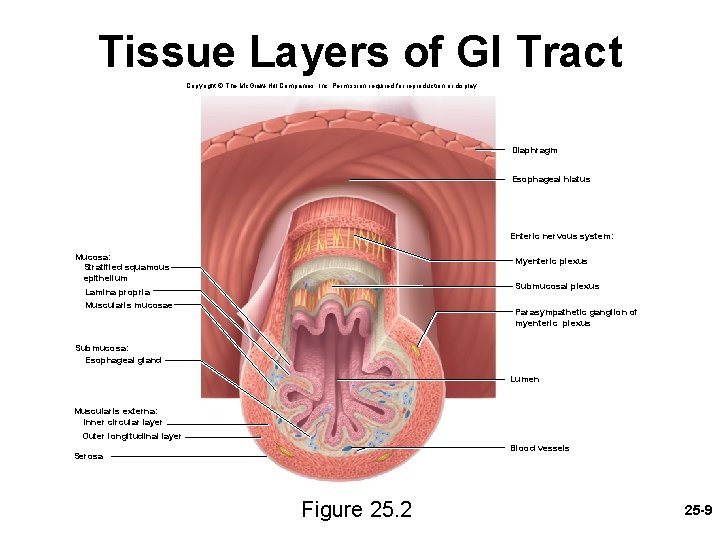
General Anatomy • most of the digestive tract follows the basis structural plan with digestive tract wall consisting of the following tissue layers, in order from inner to outer surface: • Mucosa---mucus membrane, connective tissues, smooth muscle, MALT (lymph nodes) • Submucosa— thicker layer of lose connective tissue, contains blood vessels, lymphatic vessels, mucus secreting glands • muscularis externa— 2 layers of muscle • Serosa—thin layer of areolar tissue and squamous cells 25 -8
Tissue Layers of GI Tract Copyright © The Mc. Graw-Hill Companies, Inc. Permission required for reproduction or display. Diaphragm Esophageal hiatus Enteric nervous system: Mucosa: Stratified squamous epithelium Myenteric plexus Submucosal plexus Lamina propria Muscularis mucosae Parasympathetic ganglion of myenteric plexus Submucosa: Esophageal gland Lumen Muscularis externa: Inner circular layer Outer longitudinal layer Blood vessels Serosa Figure 25. 2 25 -9
Stimulated and relaxed by the Enteric Nervous System • enteric nervous system – a nervous network in the esophagus, stomach, and intestines that regulated digestive tract motility, secretion, and blood flow – has over 100 million neurons – more than the spinal cord – functions completely independently of the central nervous system • CNS exerts a significant influence on its action • enteric nervous system contains sensory neurons that monitor tension in gut 25 -10
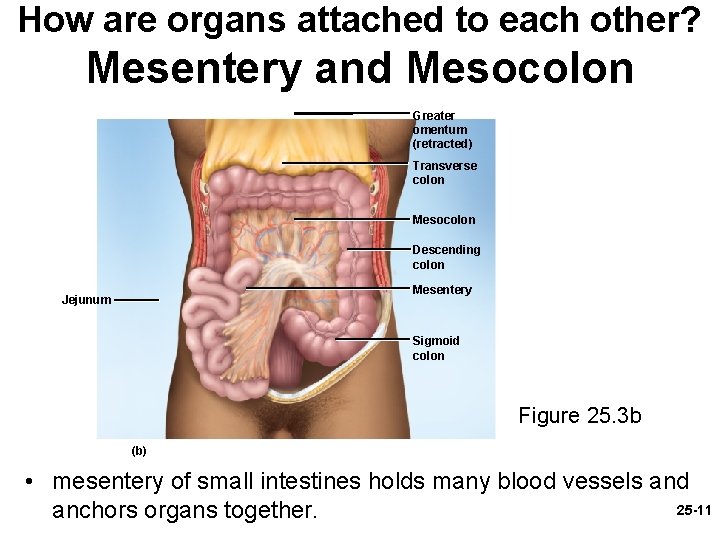
How are organs attached to each other? Mesentery and Mesocolon Greater omentum (retracted) Transverse colon Mesocolon Descending colon Mesentery Jejunum Sigmoid colon Figure 25. 3 b (b) • mesentery of small intestines holds many blood vessels and 25 -11 anchors organs together.
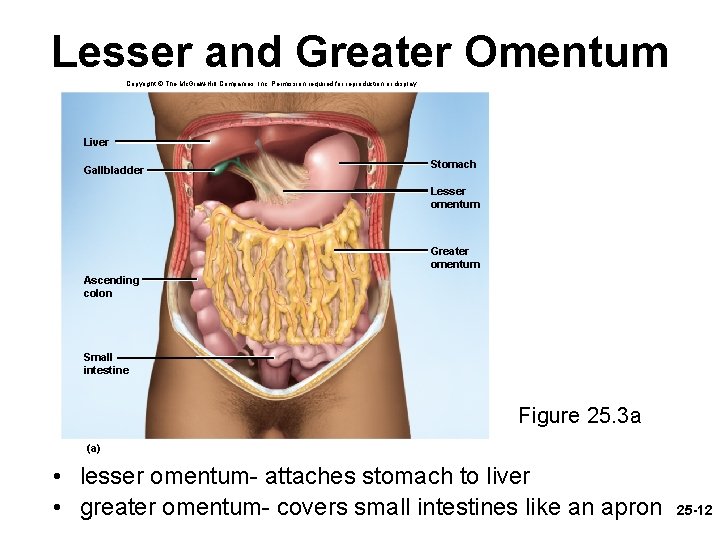
Lesser and Greater Omentum Copyright © The Mc. Graw-Hill Companies, Inc. Permission required for reproduction or display. Liver Gallbladder Stomach Lesser omentum Greater omentum Ascending colon Small intestine Figure 25. 3 a (a) • lesser omentum- attaches stomach to liver • greater omentum- covers small intestines like an apron 25 -12
Starts in the mouth • 1. Salavary glands secrete fluids • 2. Into the Pharynx, a muscular funnel that connects mouth to esophagus and allows air from nasal cavity to larynx • 3. Pharyngeal constrictor muscles force food along the pathway • 4. through the esophagus and into the stomach. 25 -13
Stomach • stomach – a muscular sac in upper left abdominal cavity • primarily functions as a food storage organ • internal volume of about 50 m. L when empty • 1. 0 – 1. 5 L after a typical meal • up to 4 L when extremely full and extend nearly as far as the pelvis • liquefies the food, and begins chemical digestion of protein and fat – chyme – soupy or pasty mixture of semi-digested food in the stomach • most digestion occurs after the chyme passes on to the small intestine 25 -14
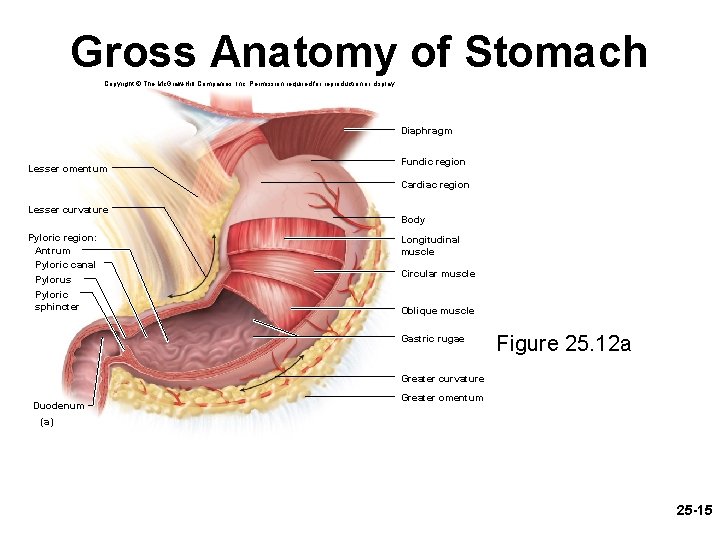
Gross Anatomy of Stomach Copyright © The Mc. Graw-Hill Companies, Inc. Permission required for reproduction or display. Diaphragm Lesser omentum Fundic region Cardiac region Lesser curvature Pyloric region: Antrum Pyloric canal Pylorus Pyloric sphincter Body Longitudinal muscle Circular muscle Oblique muscle Gastric rugae Figure 25. 12 a Greater curvature Duodenum Greater omentum (a) 25 -15
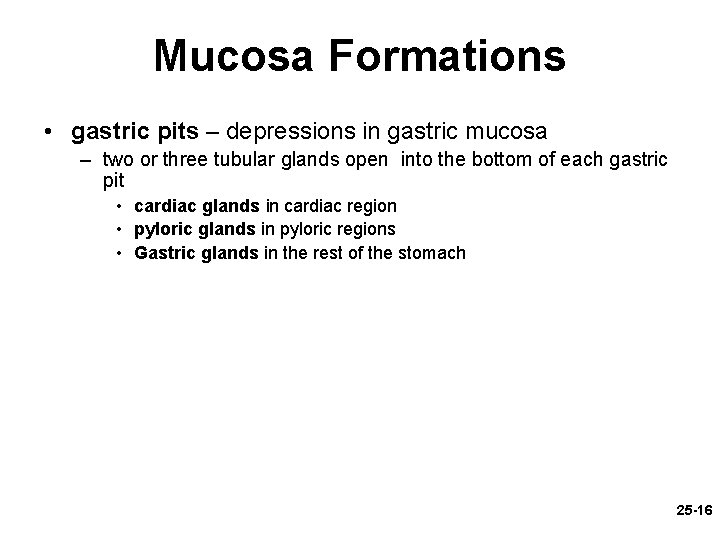
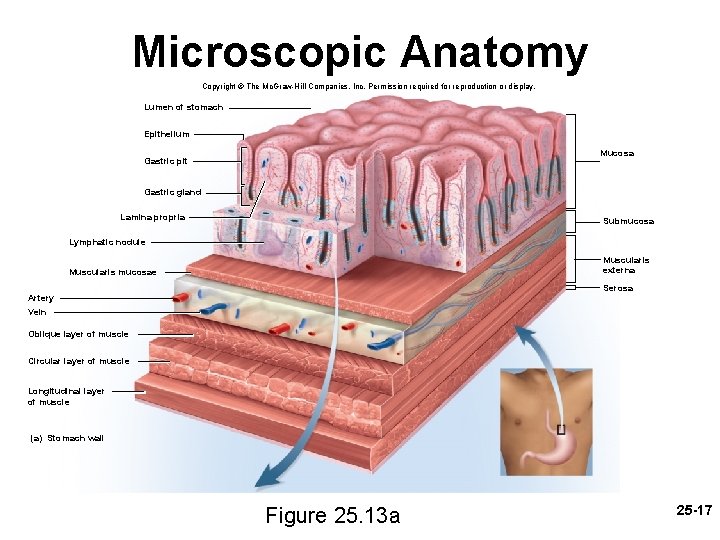
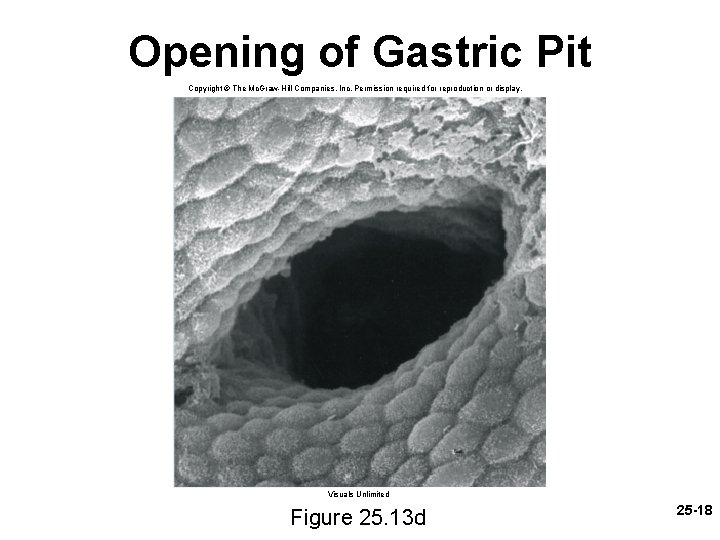
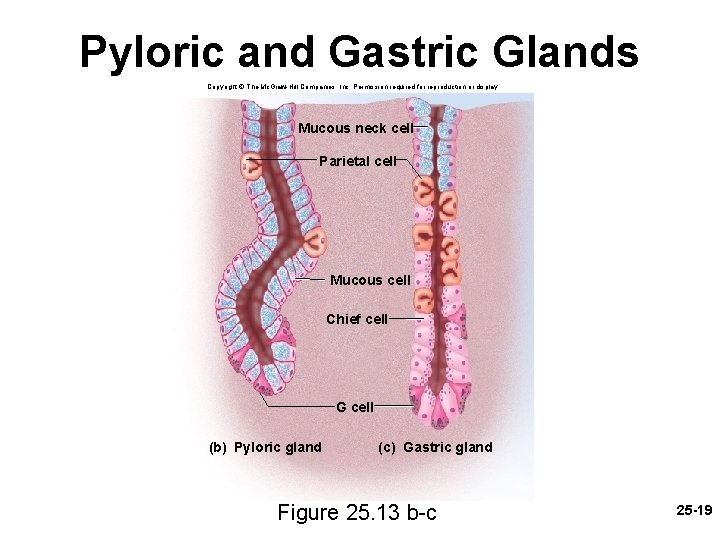
Mucosa Formations • gastric pits – depressions in gastric mucosa – two or three tubular glands open into the bottom of each gastric pit • cardiac glands in cardiac region • pyloric glands in pyloric regions • Gastric glands in the rest of the stomach 25 -16
Microscopic Anatomy Copyright © The Mc. Graw-Hill Companies, Inc. Permission required for reproduction or display. Lumen of stomach Epithelium Mucosa Gastric pit Gastric gland Lamina propria Submucosa Lymphatic nodule Muscularis externa Muscularis mucosae Serosa Artery Vein Oblique layer of muscle Circular layer of muscle Longitudinal layer of muscle (a) Stomach wall Figure 25. 13 a 25 -17
Opening of Gastric Pit Copyright © The Mc. Graw-Hill Companies, Inc. Permission required for reproduction or display. Visuals Unlimited Figure 25. 13 d 25 -18
Pyloric and Gastric Glands Copyright © The Mc. Graw-Hill Companies, Inc. Permission required for reproduction or display. Mucous neck cell Parietal cell Mucous cell Chief cell G cell (b) Pyloric gland (c) Gastric gland Figure 25. 13 b-c 25 -19
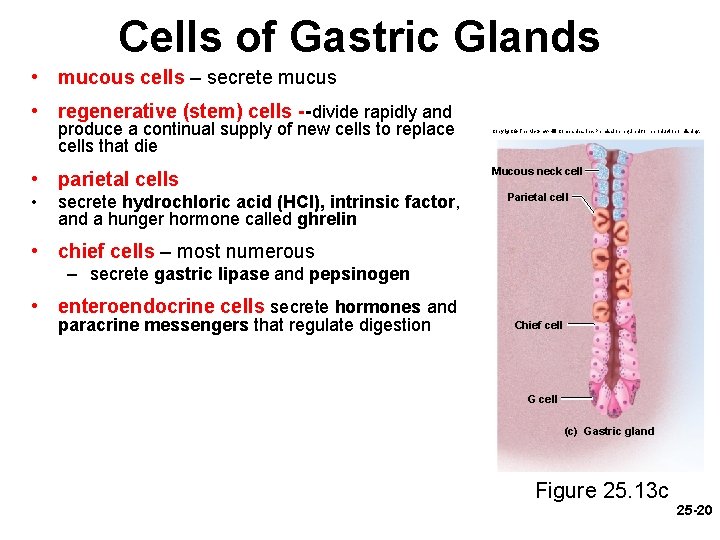
Cells of Gastric Glands • mucous cells – secrete mucus • regenerative (stem) cells --divide rapidly and produce a continual supply of new cells to replace cells that die • parietal cells • secrete hydrochloric acid (HCl), intrinsic factor, and a hunger hormone called ghrelin Copyright © The Mc. Graw-Hill Companies, Inc. Permission required for reproduction or display. Mucous neck cell Parietal cell • chief cells – most numerous – secrete gastric lipase and pepsinogen • enteroendocrine cells secrete hormones and paracrine messengers that regulate digestion Chief cell G cell (c) Gastric gland Figure 25. 13 c 25 -20
Gastric Secretions • gastric juice – 2 – 3 liters per day produced by the gastric glands • mainly a mixture of water, hydrochloric acid, and pepsin 25 -21
Functions of Hydrochloric Acid • activates pepsin and lipase • breaks up connective tissues and plant cell walls – helps liquefy food to form chyme 25 -22
Pepsin • pepsin digests dietary proteins into shorter peptide chains – protein digestion is completed in the small intestine 25 -23
Gastric Lipase • gastric lipase – produced by chief cells • lipase plays a minor role in digesting dietary fats – digests 10% - 15% of dietary fats in the stomach – rest digested in the small intestine 25 -24
Intrinsic Factor • intrinsic factor – a glycoprotein secreted by parietal cells • essential to absorption of vitamin B 12 by the small intestine • vitamin B 12 is needed to synthesize hemoglobin • secretion of intrinsic factor is the only indispensable function of the stomach – digestion can continue if stomach is removed (gastrectomy), but B 12 supplements will be needed 25 -25
Digestion and Absorption • most digestion and nearly all absorption occur after the chyme has passed into the small intestine • stomach does not absorb any significant amount of nutrients – aspirin – some lipid-soluble drugs • alcohol is absorbed mainly by small intestine – intoxicating effects depends partly on how rapidly the stomach is emptied 25 -26
Liver, Gallbladder, and Pancreas • small intestine receives chyme from stomach • also secretions from liver and pancreasand gallbladder 25 -27
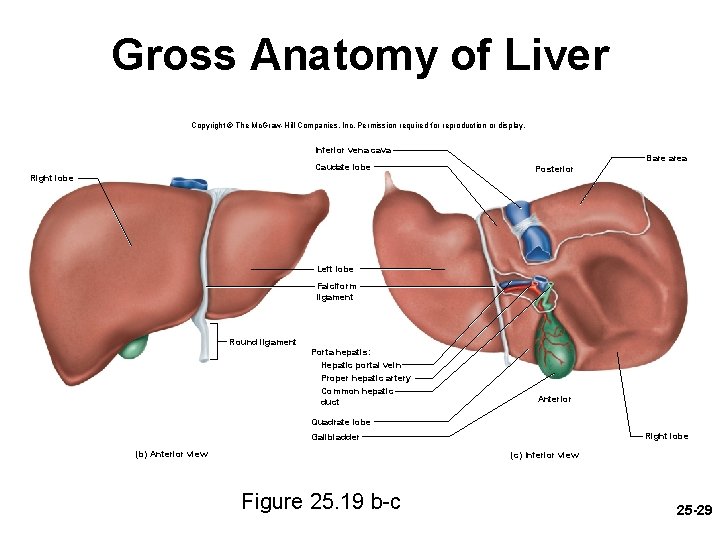
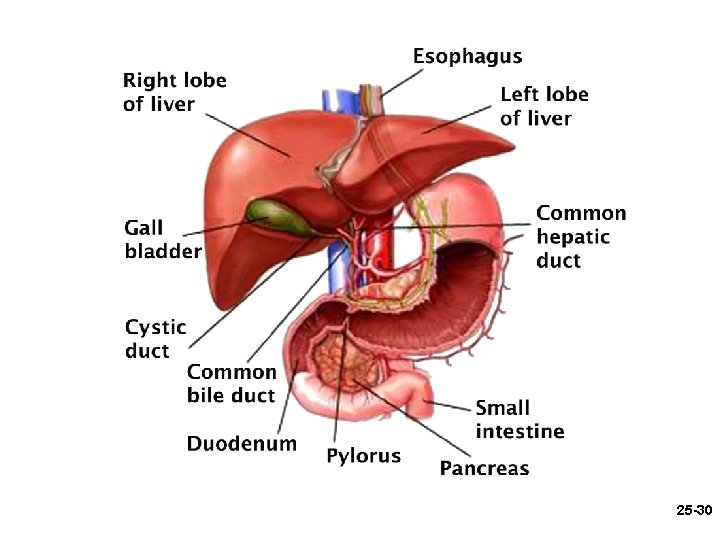
The Liver • liver – reddish brown gland located immediately inferior to the diaphragm • the body’s largest gland – weighs about 1. 4 kg (3 pounds) • variety of functions – secretes bile which contributes to digestion 25 -28
Gross Anatomy of Liver Copyright © The Mc. Graw-Hill Companies, Inc. Permission required for reproduction or display. Inferior vena cava Caudate lobe Right lobe Bare area Posterior Left lobe Falciform ligament Round ligament Porta hepatis: Hepatic portal vein Proper hepatic artery Common hepatic duct Anterior Quadrate lobe Right lobe Gallbladder (b) Anterior view (c) Inferior view Figure 25. 19 b-c 25 -29
25 -30
Functions of Hepatocytes ( Liver Cells) • after a meal, the hepatocytes absorb from the blood – glucose, amino acids, iron, vitamins, and other nutrients for metabolism or storage • removes and degrades – hormones, toxins, bile pigments, and drugs • secretes into the blood: – albumin, lipoproteins, clotting factors, angiotensinogen, and other products • between meals, hepatocytes breaks down stored glycogen and releases glucose 25 -31 into the blood
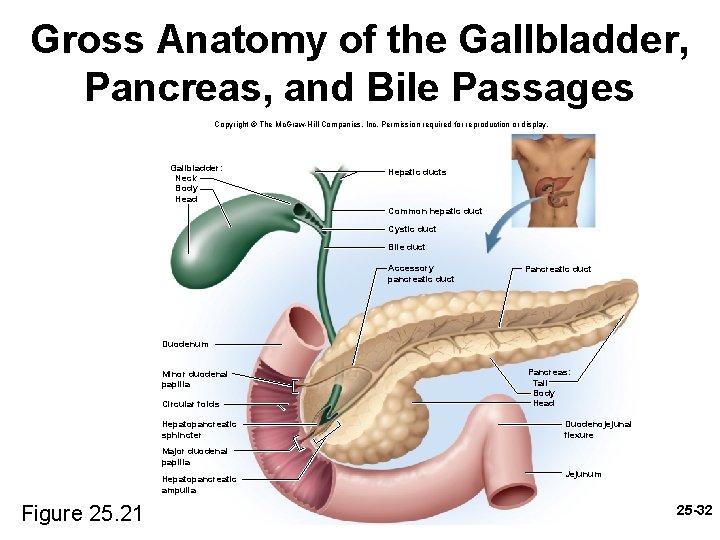
Gross Anatomy of the Gallbladder, Pancreas, and Bile Passages Copyright © The Mc. Graw-Hill Companies, Inc. Permission required for reproduction or display. Gallbladder: Neck Body Head Hepatic ducts Common hepatic duct Cystic duct Bile duct Accessory pancreatic duct Pancreatic duct Duodenum Minor duodenal papilla Circular folds Hepatopancreatic sphincter Pancreas: Tail Body Head Duodenojejunal flexure Major duodenal papilla Hepatopancreatic ampulla Figure 25. 21 Jejunum 25 -32
Gallbladder • gallbladder – a pear-shaped sac on underside of liver – serves to store and concentrate bile by a factor of 20 by absorbing water and electrolytes – about 10 cm long 25 -33
Bile • bile – yellow-green fluid containing minerals, cholesterol, neutral fats, phospholipids, bile pigments, and bile acids – bilirubin – principal pigment derived from the decomposition of hemoglobin – bacteria in large intestine metabolize bilirubin to urobilinogen • responsible for the brown color of feces – 80% of bile acids are reabsorbed in the ileum and returned to the liver – 20% of the bile acids are excreted in the feces • this is the body’s only way of eliminating excess cholesterol 25 -34
The Pancreas • pancreas – spongy gland posterior to the stomach – measure 12 to 15 cm long, and 2. 5 cm thick – both an endocrine and exocrine gland • endocrine portion – pancreatic islets that secrete insulin and glucagon 25 -35
The Pancreas – pancreatic juice – alkaline mixture of water, enzymes, zymogens, sodium bicarbonate, and other electrolytes – bicarbonate buffers HCl arriving from the stomach 25 -36
Small Intestine – the longest part of the digestive tract • 2. 7 to 4. 5 m long in a living person – “small” intestine refers to the diameter not length 2. 5 cm (1 inch) – nearly all chemical digestion and nutrient absorption occurs in small intestine 25 -37
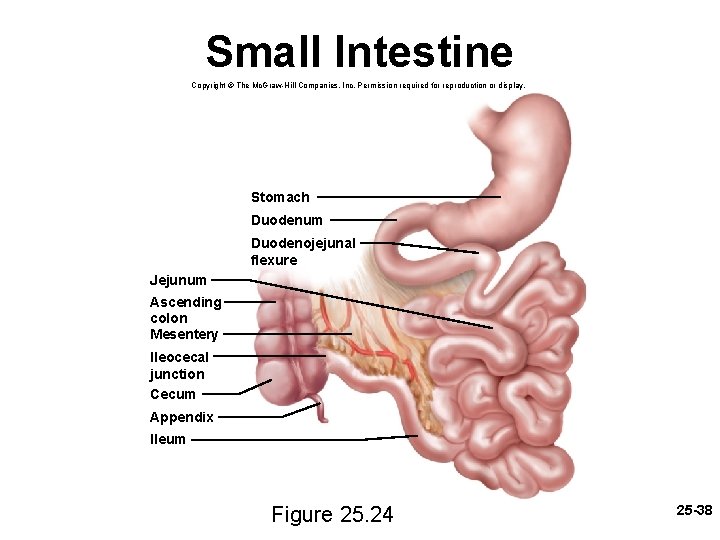
Small Intestine Copyright © The Mc. Graw-Hill Companies, Inc. Permission required for reproduction or display. Stomach Duodenum Duodenojejunal flexure Jejunum Ascending colon Mesentery Ileocecal junction Cecum Appendix Ileum Figure 25. 24 25 -38
Gross Anatomy • small intestine – coiled mass filling most of the abdominal cavity inferior to the stomach and the liver • small intestine divided into three regions: – duodenum – the first 25 cm (10 inches) • • • begins at the pyloric valve receives stomach contents, pancreatic juice, and bile stomach acid is neutralized here fats are physically broken up (emulsified) by the bile acids pancreatic enzymes take over the job of chemical digestion 25 -39
Gross Anatomy – jejunum – first 40% of small intestine beyond duodenum • • roughly 1. 0 to 1. 7 m in a living person its wall is relatively thick and muscular especially rich blood supply which gives it a red color most digestion and nutrient absorption occurs here – ileum – forms the last 60% of the postduodenal small intestine • about 1. 6 to 2. 7 m • thinner, less muscular, less vascular, and paler pink color • Peyer patches – prominent lymphatic nodules in clusters on the side opposite the mesenteric attachment – readily visible with the naked eye – become progressively larger approaching the large intestine 25 -40
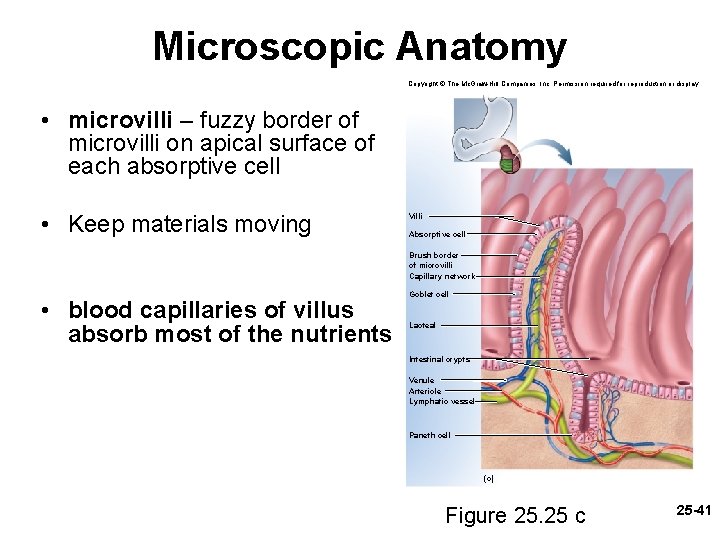
Microscopic Anatomy Copyright © The Mc. Graw-Hill Companies, Inc. Permission required for reproduction or display. • microvilli – fuzzy border of microvilli on apical surface of each absorptive cell • Keep materials moving Villi Absorptive cell Brush border of microvilli Capillary network • blood capillaries of villus absorb most of the nutrients Goblet cell Lacteal Intestinal crypts Venule Arteriole Lymphatic vessel Paneth cell (c) Figure 25. 25 c 25 -41
Intestinal Motility • contractions of small intestine serve three functions: – to mix chyme with intestinal juice, bile, and pancreatic juice • to neutralize acid • digest nutrients more effectively – to churn chyme and bring it in contact with the mucosa for contact digestion and nutrient absorption – to move residue toward large intestine – In the small intestines, carbohydrates, proteins , lipids, nucleic acids, vitamins, calcium and other minerals such as iron are digested and absorbed. – Chyme moves through the small intestines and into the large intestines 25 -42
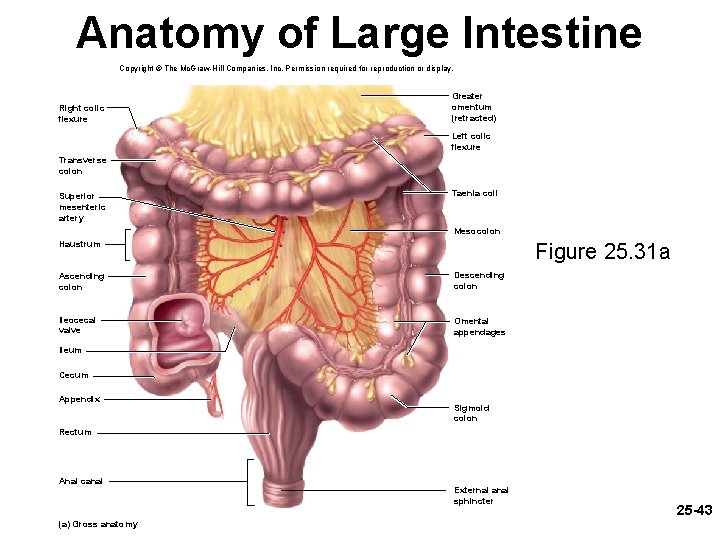
Anatomy of Large Intestine Copyright © The Mc. Graw-Hill Companies, Inc. Permission required for reproduction or display. Right colic flexure Greater omentum (retracted) Left colic flexure Transverse colon Superior mesenteric artery Taenia coli Mesocolon Haustrum Figure 25. 31 a Ascending colon Descending colon Ileocecal valve Omental appendages Ileum Cecum Appendix Sigmoid colon Rectum Anal canal (a) Gross anatomy External anal sphincter 25 -43
Gross Anatomy of Large Intestine • large intestine receives about 500 m. L of indigestible residue per day – reduces it to about 150 m. L of feces by absorbing water and salts – eliminates feces by defecation 25 -44
Bacterial Flora • bacterial flora populate large intestine – about 800 species of bacteria – ferment cellulose and other undigested carbohydrates • we absorb resulting sugars – help in synthesis vitamins B and K 25 -45