
Unit 11 Chemical Kinetics Chemical Kinetics The Basics
Unit 11 Chemical Kinetics
Chemical Kinetics: The Basics • Is the study of the rates of chemical reactions. • Chemical reactions vary in the rates that they occur • Rate is another term for speed • Speed = distance/ time
Reaction Rates • A reaction rate is the change in concentration of a reactant or product with time. • The behavior of the reactant atoms, molecules, or ions is responsible for the rates of a given chemical reaction.
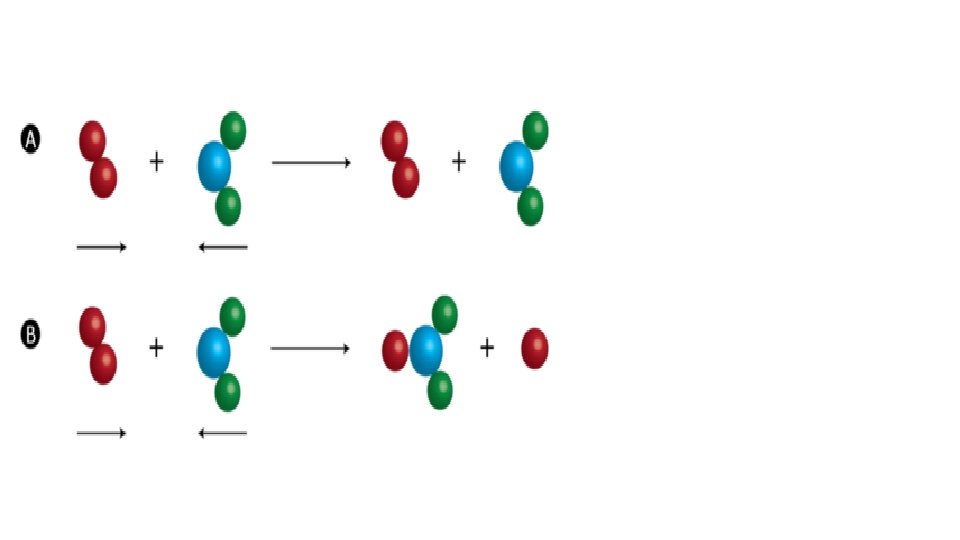
Collision Theory • Collision theory is a set of principles based around the idea that reactant particles form products when they collide with one another, but only when those collisions have enough kinetic energy and the correct orientation to cause a reaction. • Effective vs. Ineffective Collisions
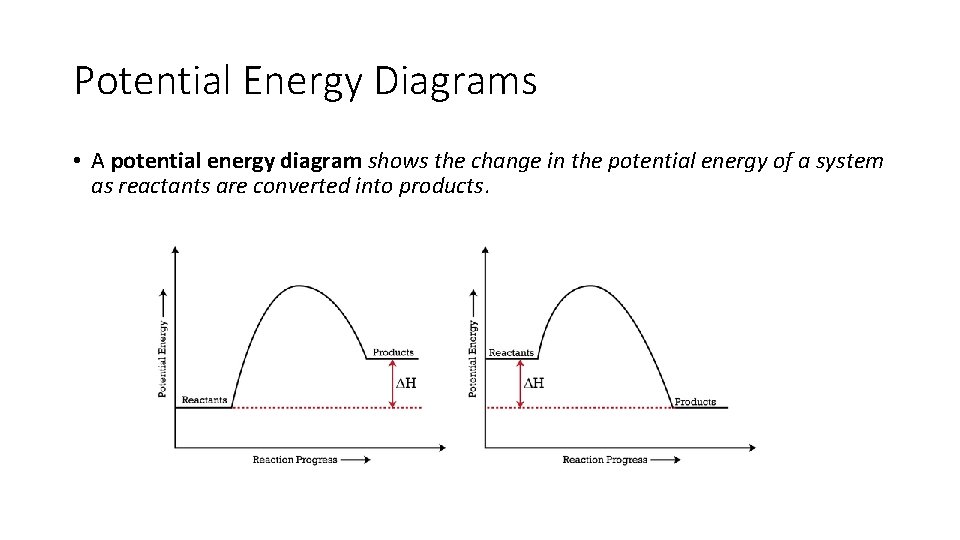
Potential Energy Diagrams • A potential energy diagram shows the change in the potential energy of a system as reactants are converted into products.
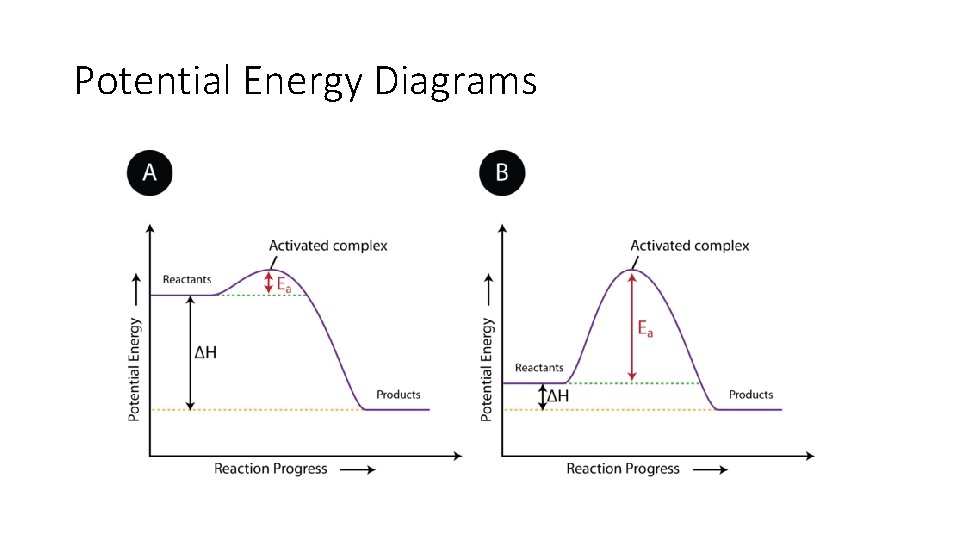
Potential Energy Diagrams
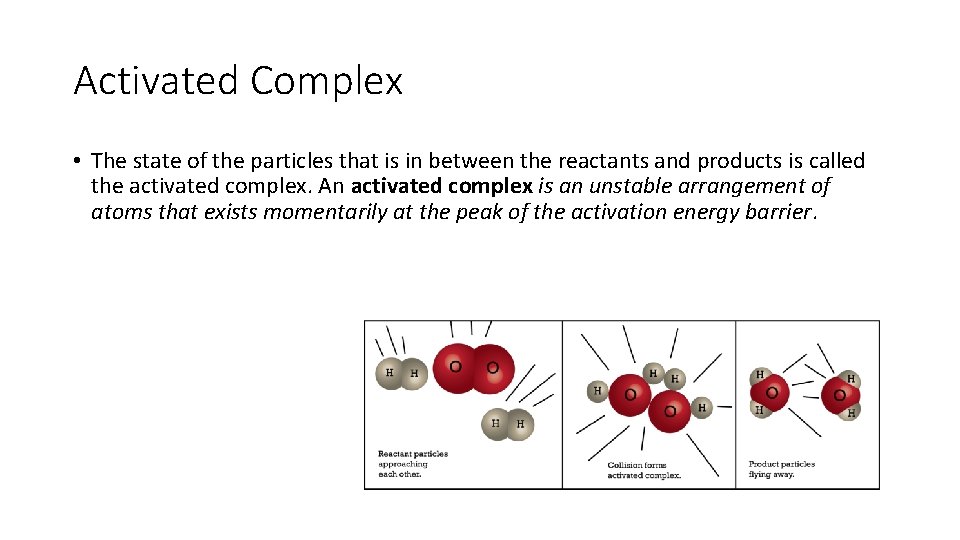
Activated Complex • The state of the particles that is in between the reactants and products is called the activated complex. An activated complex is an unstable arrangement of atoms that exists momentarily at the peak of the activation energy barrier.
Rate of Reactions and Collision Theory • 1. Concentration- Increasing the concentration of one or more of the reacting substances generally increases the reaction rate. • 2. Pressure-When the pressure of a gas is increased, its particles are forced closer together, decreasing the amount of empty space between them. Therefore, an increase in the pressure of a gas is also an increase in the concentration of the gas. • 3. Surface area- An increase in the surface area of a reactant increases the rate of a reaction. Surface area is larger when a given amount of a solid is present as smaller particles.
Continued • 4. Temperature-Raising the temperature of a chemical reaction results in a higher reaction rate. When the reactant particles are heated, they move faster and faster, resulting in a greater frequency of collisions. It also increases the effectiveness of the collisions. • 5. Catalyst-A catalyst is a substance that increases the rate of a chemical reaction without being used up in the reaction. It accomplishes this task by providing an alternate reaction pathway that has a lower activation energy barrier. After the reaction occurs, a catalyst returns to its original state, so catalysts can be used over and over again.
• The activation energy for a reaction is the minimum energy that colliding particles must have in order to undergo a reaction.
Fast and slow reactions ►The smaller the activation energy, the faster the reaction will occur regardless if exothermic or endothermic. ►If there is a large activation energy needed, that means that more energy (and therefore, time) is being used up for the successful collisions to take place.
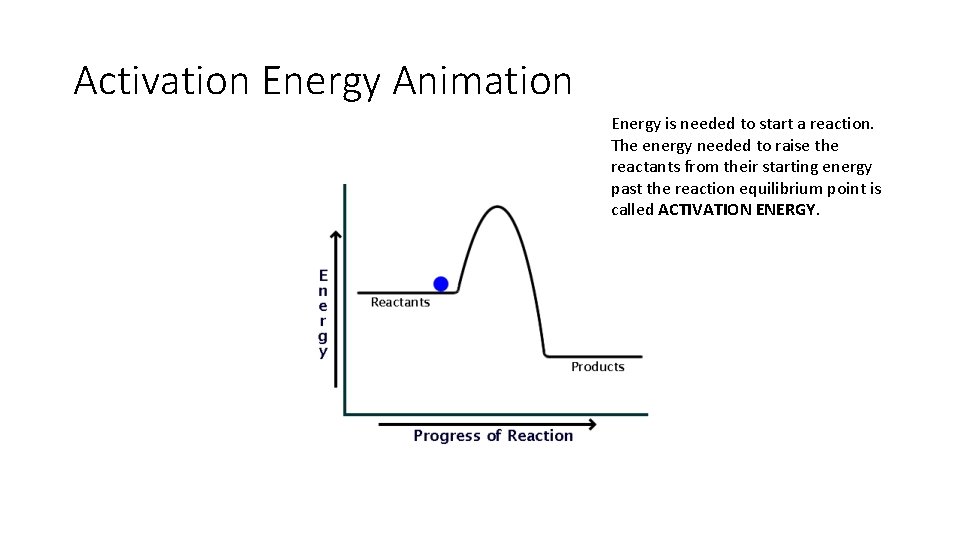
Activation Energy Animation Energy is needed to start a reaction. The energy needed to raise the reactants from their starting energy past the reaction equilibrium point is called ACTIVATION ENERGY.
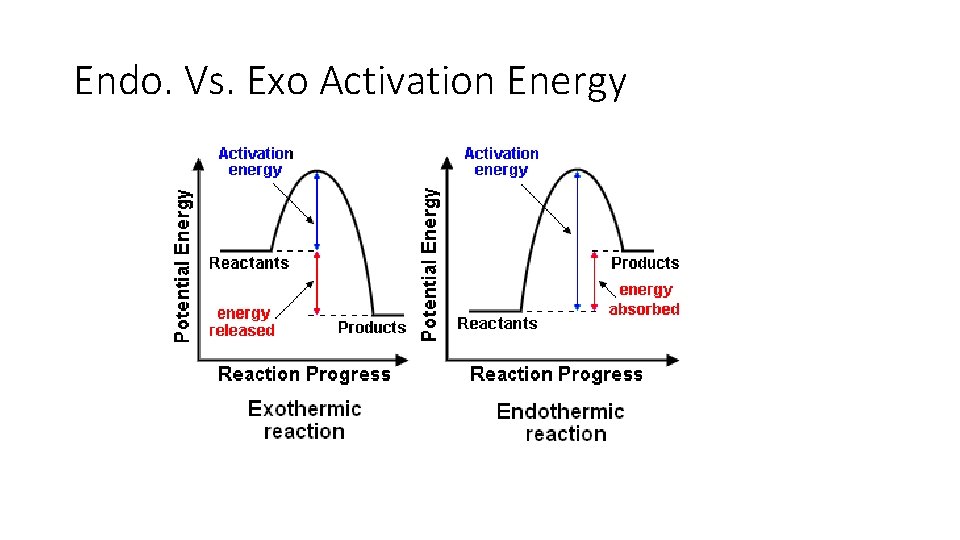
Endo. Vs. Exo Activation Energy

Let’s Practice • http: //www. kentchemistry. com/links/Kinetics/PEDiagrams. htm
- Slides: 15