
Unit 10 Product Service Selling Selling What are
- Slides: 93
Unit 10 Product & Service Selling
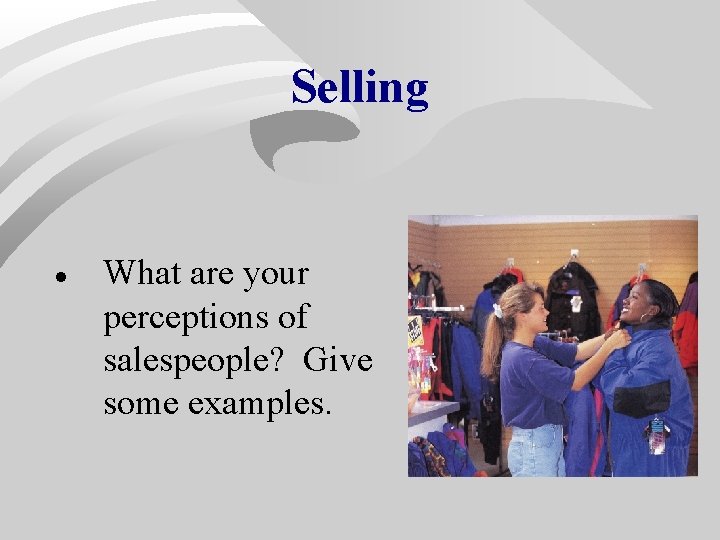
Selling · What are your perceptions of salespeople? Give some examples.
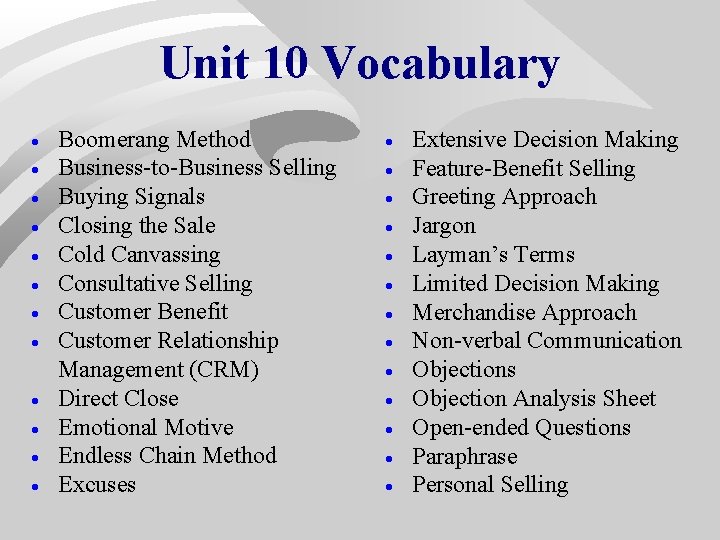
Unit 10 Vocabulary · · · Boomerang Method Business-to-Business Selling Buying Signals Closing the Sale Cold Canvassing Consultative Selling Customer Benefit Customer Relationship Management (CRM) Direct Close Emotional Motive Endless Chain Method Excuses · · · · Extensive Decision Making Feature-Benefit Selling Greeting Approach Jargon Layman’s Terms Limited Decision Making Merchandise Approach Non-verbal Communication Objections Objection Analysis Sheet Open-ended Questions Paraphrase Personal Selling
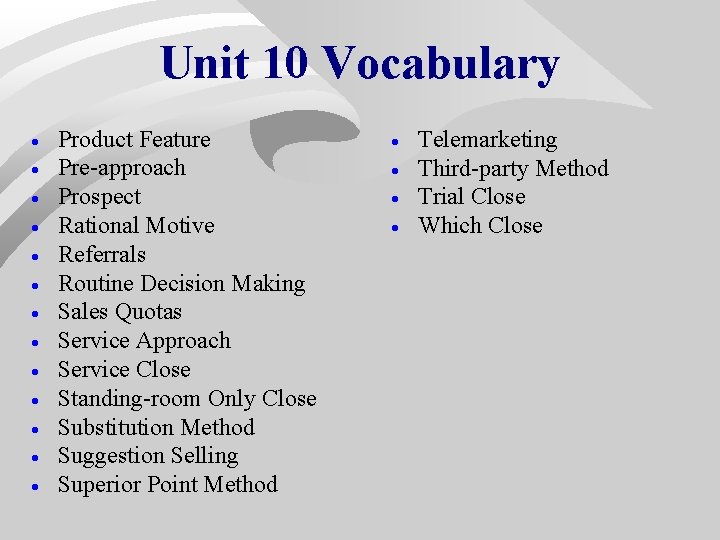
Unit 10 Vocabulary · · · · Product Feature Pre-approach Prospect Rational Motive Referrals Routine Decision Making Sales Quotas Service Approach Service Close Standing-room Only Close Substitution Method Suggestion Selling Superior Point Method · · Telemarketing Third-party Method Trial Close Which Close
Unit 10 Essential Question · What processes and techniques are employed to sell goods, services and ideas?
Essential Question 1 Selling · What is the nature and scope of the selling function and the role of marketing as a complement to selling?
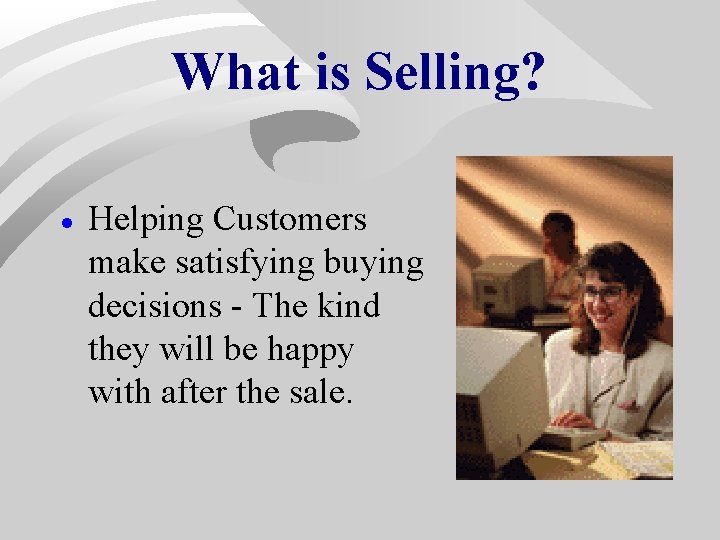
What is Selling? · Helping Customers make satisfying buying decisions - The kind they will be happy with after the sale.
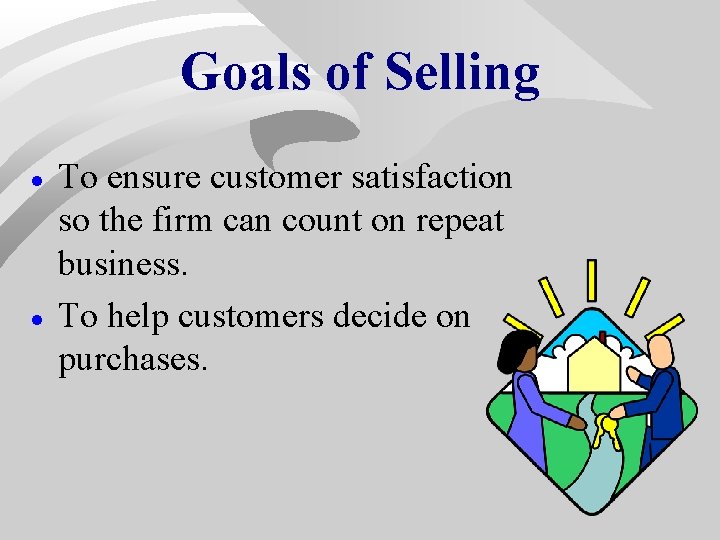
Goals of Selling · · To ensure customer satisfaction so the firm can count on repeat business. To help customers decide on purchases.
Personal Selling · · Personal Selling: Any form of direct contact between a salesperson and a customer. Types of personal selling situations – Retail Selling: Customers come to the store. – Business-to-Business Selling: May take place in a number of locations: manufacture’s or wholesaler’s showroom (inside sales) or a customer’s place of business (outside sales). – Telemarketing: Selling over the telephone.
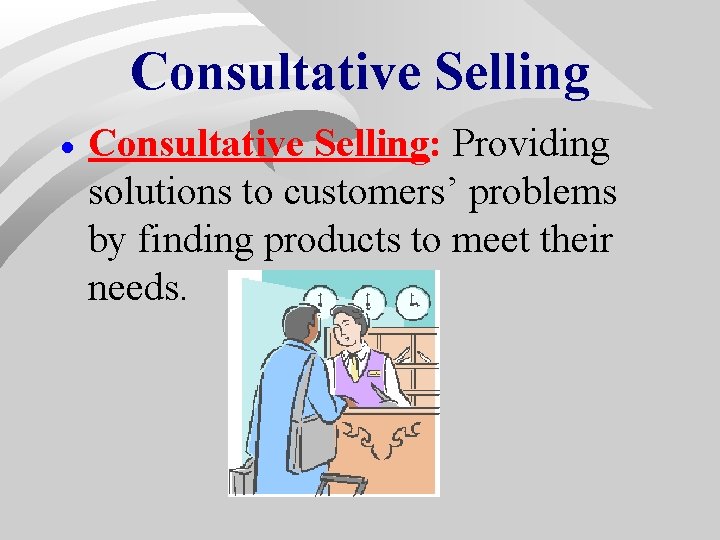
Consultative Selling · Consultative Selling: Providing solutions to customers’ problems by finding products to meet their needs.
Feature - Benefit Selling · The concept that a salesperson needs to match the features of each product to a customer’s needs and wants. – Product Features: A physical characteristic or quality of a good or service that explains what it is. • • Tangible Product Feature: Physical characteristics of a product. Extended Product Features: Although not always physically part of the product, important in the purchase decision.
Feature - Benefit Selling · The concept that a salesperson needs to match the features of each product to a customer’s needs and wants. – Customer Benefits: Advantages or personal satisfaction a customer will get from a good or service. • • How does the feature help the product’s performance? How does the performance information give the customer a personal reason to buy the product?
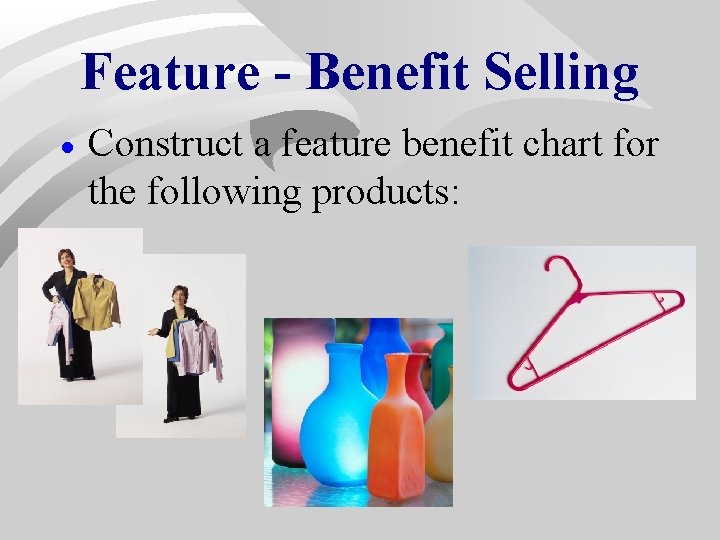
Feature - Benefit Selling · Construct a feature benefit chart for the following products:
Essential Question 2 Selling · What factors and motivational theories influence customer/client/business buying behavior?
Customer Buying Decisions · Salespeople must study what motivates customers to buy and what decisions customers make before finally purchasing a product.
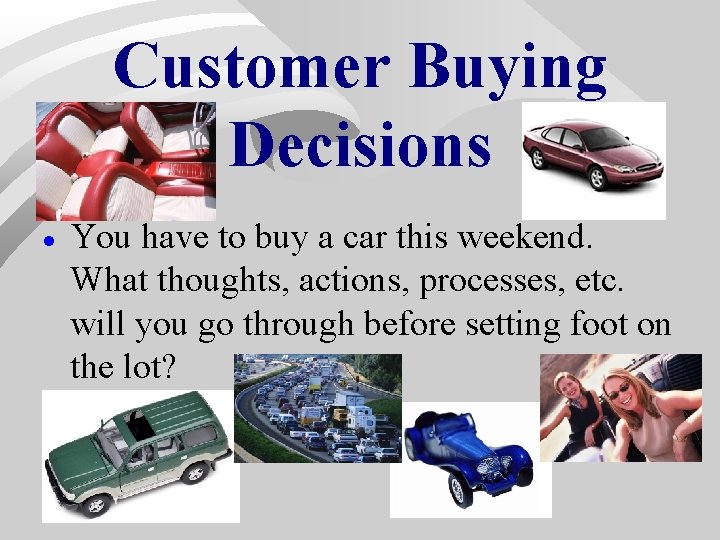
Customer Buying Decisions · You have to buy a car this weekend. What thoughts, actions, processes, etc. will you go through before setting foot on the lot?
Customer Buying Decisions · Rational Motive: Conscious, factual reason for a purchase. – product dependability – time or monetary savings – convenience – comfort – recreational value
Customer Buying Decisions · Emotional Motive: Feelings experienced by the customer such. – social approval – recognition – power – love – affection – prestige
Customer Buying Decisions · Factors that affect customer decisions. – Amount of previous experience with the product. – How often the product is purchased. – Amount of information necessary to make a wise buying decision.
Customer Buying Decisions · Factors that affect customer decisions. – Importance of the purchase to the customer. – Perceived risk involved in the purchase (financial loss, physical or emotional harm, won’t function properly). – Time available to make the decision.
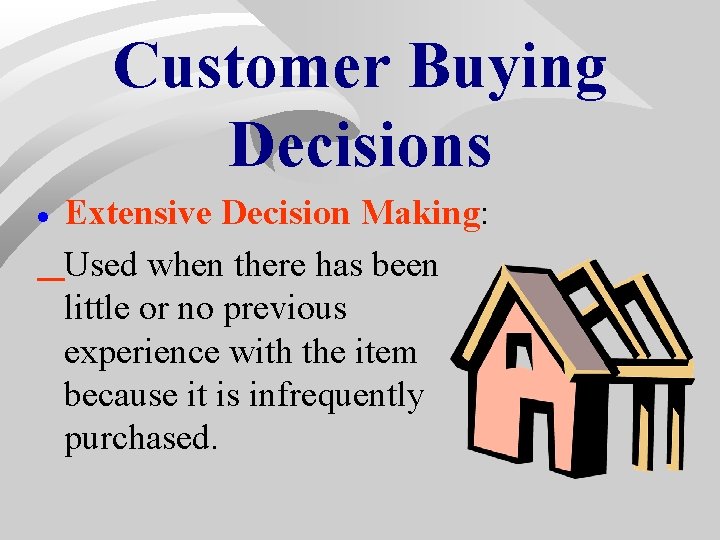
Customer Buying Decisions · Extensive Decision Making: Used when there has been little or no previous experience with the item because it is infrequently purchased.
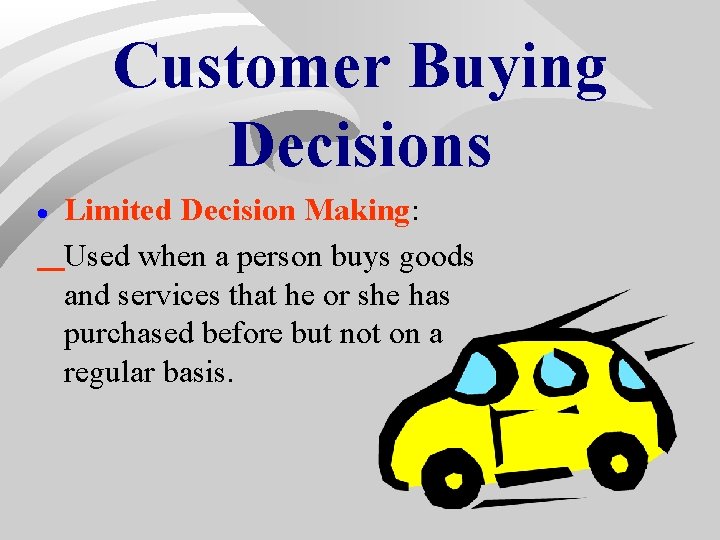
Customer Buying Decisions · Limited Decision Making: Used when a person buys goods and services that he or she has purchased before but not on a regular basis.
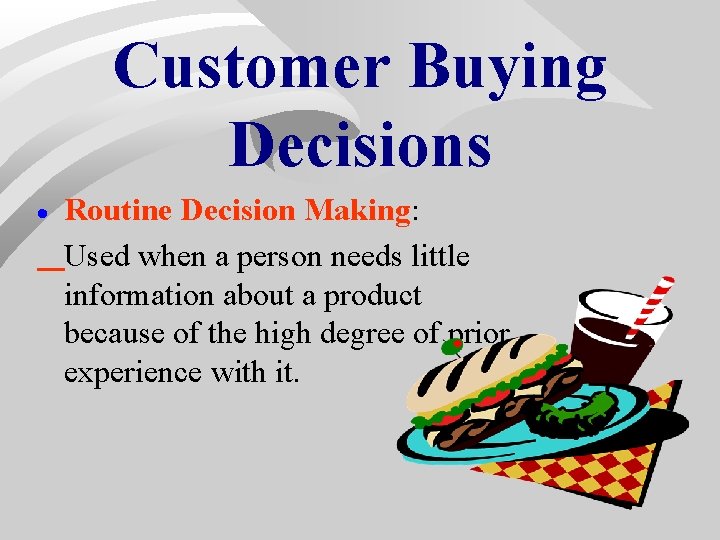
Customer Buying Decisions · Routine Decision Making: Used when a person needs little information about a product because of the high degree of prior experience with it.
Essential Question 3 Selling · What is the role of customer service as a component of selling relationships?
Customer Service Tips And Techniques · · Customer Relationship Management (CRM): Involves strategies used to stay close to customers. 68% of people quit doing business with companies that have poor customer service. It is far easier to lose customers due to poor service than for your product's quality or cost. It costs 5 times as much to bring in a new customer, than to keep an existing one.
Customer Service Tips And Techniques · Attention to customer service will go a long way in helping you to satisfy your customers and make them feel as if they are truly special. – 1. Always tell your customer what you CAN do for them. Don't begin your conversation by telling them what you CAN'T do. – 2. Allow irate customers to vent. Do not interrupt them or start to speak until they have finished having their say. – 3. Diffuse anger by saying "I'm sorry or "I apologize. " – 4. Use your customer's name at different points in the conversation.
Customer Service Tips And Techniques – 5. Make certain that your "solution" to the customer's problem is acceptable to them. Get their approval and agreement. – 6. Always conclude each conversation with a "Thank you" or a verbal message of appreciation for their business. – 7. Make certain that your tone of voice is in sync with your words. Remember, your tone of voice can completely contradict your message.
Customer Service Tips And Techniques – 8. Listen attentively! There is nothing worse than asking an irate or troubled customer to REPEAT what they have just said. – 9. Go the extra step by following up on your solution. Re -contact the customer to make certain that everything has been handled in a satisfactory manner, and they are pleased with the outcome. – 10. Remember to ask if there is anything else that you can do for your customer. Taking the time to ask the question often results in increased business and a more committed customer.
Essential Question 4 Selling · What are sales channels?
Sales Channels · All of the methods used by a company to market its products to consumers. Sales channels include: – sales force – door-to-door – wholesalers – distributors – telemarketing – internet – retail channels
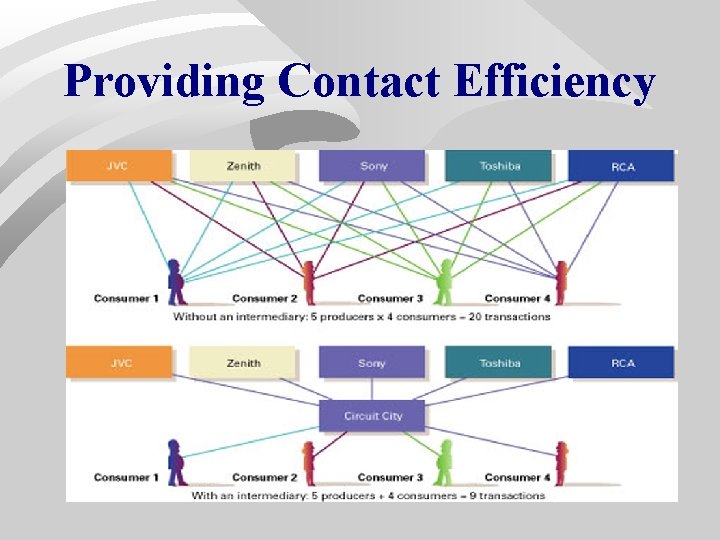
Direct Sales vs. Indirect Sales · · Direct sales are straight from the company to the customer. Indirect sales involve the use of an intermediary. – Can increase sales efficiency – Can reduce sales force costs – Can reduce retail expenses
Providing Contact Efficiency
Essential Question 5 Selling · What is the selling process?
How can selling skills be helpful to you? · · · As a consumer? You as a product? In a position other than sales in business?
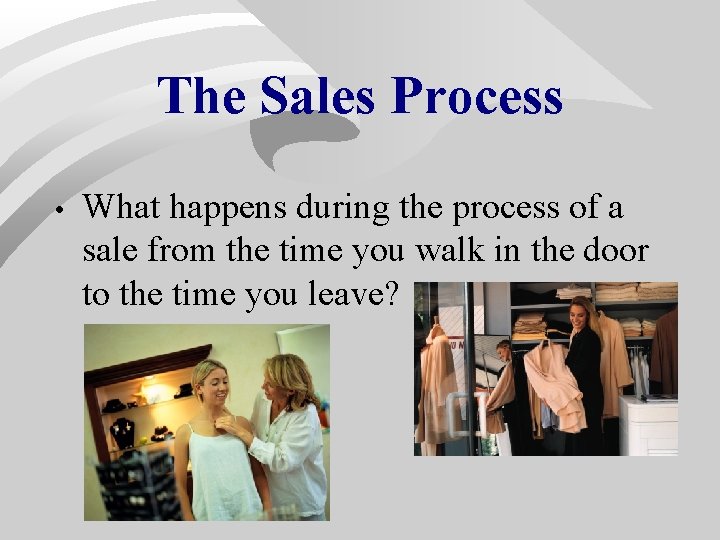
The Sales Process • What happens during the process of a sale from the time you walk in the door to the time you leave?
Steps of A Sale 1. Preapproach: Looking for customers and getting ready for the sale. 2. Approaching the customer: Actually greeting the customer face-to-face. 3. Determining needs: Learning what a customer is looking for.
Steps of A Sale 4. Presenting the product: Educating the customer about the product’s features and benefits. 5. Handling questions and objections: – Learning why the customer is reluctant to buy. – Providing information to remove that uncertainty. – Helping the customer make a satisfying buying decision.
Steps of A Sale 6. Closing the sale: Getting the customer’s positive agreement to buy. 7. Suggestion selling: Suggesting that the customer buy additional merchandise or services. 8. Reassuring and following up: Helping a customer feel that he or she has made a wise purchase.
Step 1 The Preapproach Getting ready to sell
Preparing for the Sale Industrial Sales · · · Finding new customers by prospecting. Analyze past sales records. Qualify new customers. Ask questions in a pre-visit phone call. Make an appointment to see the prospect in order to have time to explain the features of your product.
Preparing for the Sale Retail Sales · · · The customer comes to you, so most of the preparation is in the retail store. Stock keeping and housekeeping duties are important. Learn about the merchandise and the prices of the merchandise.
Step 2 Approaching the Customer
Approaching the Customer · · First impressions count. Be alert to what interests the customer. Establish a rapport and a positive relationship with the customer. Be aware of the customer’s buying style.
Approaching the Customer Industrial Sales · · Setup an appointment during the preapproach, and arrive early to the appointment. Introduce yourself, smile, and shake hands. Engage in small talk to build a relationship with the customer. Comment on important things to keep the customer interested.
Approaching the Customer Retail Sales Service Approach Method · “May I help you” · Appropriate when the customer is obviously in a hurry or you are simply an order taker. · Ineffective in most situations; you lose control of the sales situation.
Approaching the Customer Retail Sales Greeting Approach Method · “Good afternoon, Mr. Wright” or an appropriate personal comment. · This approach begins conversation and establishes a positive rapport. · Do not focus on the merchandise.
Approaching the Customer Retail Sales Merchandise Approach Method · The salesperson makes a comment or asks questions about a product that the customer is looking at. · Ask questions about the item. · The most effective approach because it immediately focuses attention on the merchandise.
Step 3 Determining Customer Needs
When to Determine Needs · · In Retail Selling: Immediately after the approach. In Industrial Selling: During the preapproach.
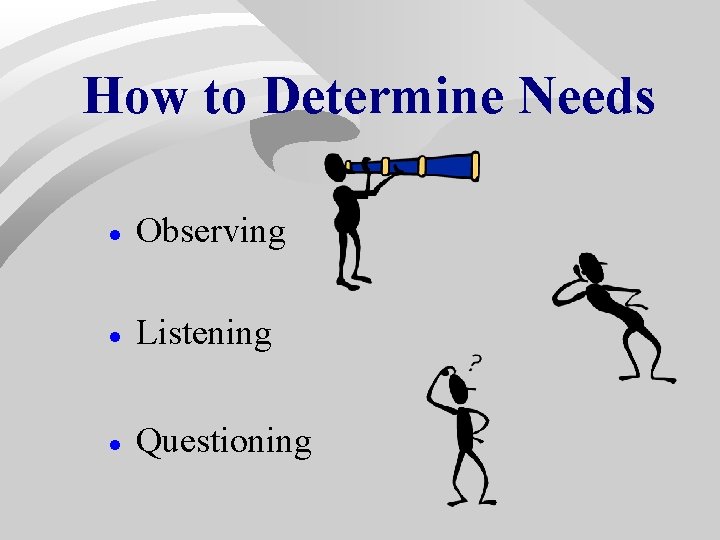
How to Determine Needs · Observing · Listening · Questioning
Step 4 Product Presentation
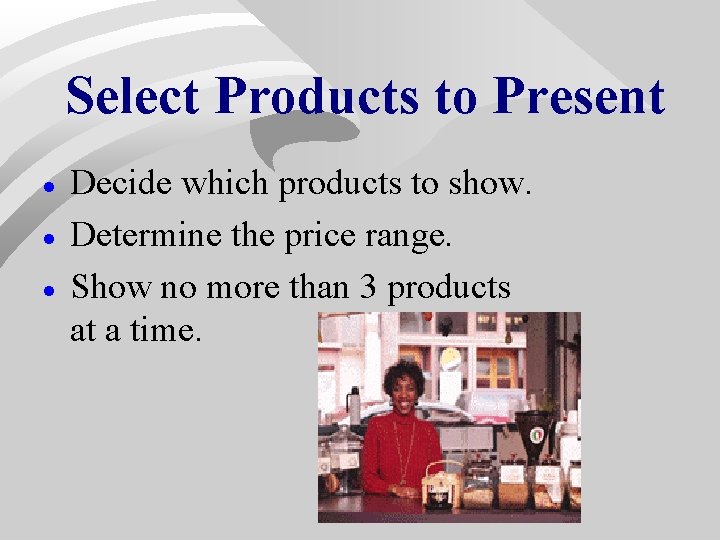
Select Products to Present · · · Decide which products to show. Determine the price range. Show no more than 3 products at a time.
What to Do · · Display the product creatively and attractively. Demonstrate to build customer confidence. Use sales aids such as articles, audio-visual aids, drawings, graphs, etc… Keep the customer involved.
Step 5 Handling Customer Questions and Objections
Objection or Excuse? · · Objections - Honest reasons a customer has for not making a purchase. Excuses - Insincere reasons for not making a purchase.
Common Objections · · · Need: Customer has a conflict between wanting something and truly needing it. Product: Objections based on the product itself such as quality, size, appearance, or style. Source: Objections based on negative past experiences with the firm or brand. Price: More common with high-quality, expensive merchandise. Time: Usually reveal a hesitation to buy immediately. Sometimes are in the form of excuses.
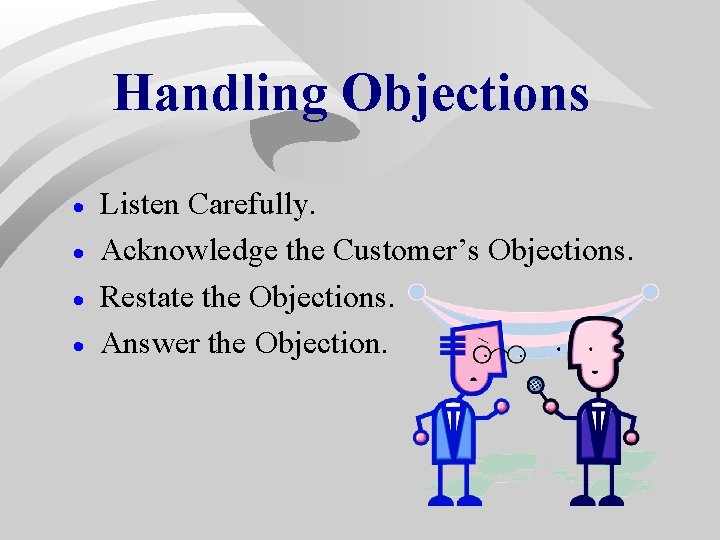
Handling Objections · · Listen Carefully. Acknowledge the Customer’s Objections. Restate the Objections. Answer the Objection.
Step 6 Closing the Sale
Closing the Sale · · Look for Buying Signals, things a customer says or does to indicate a readiness to buy. Closing methods: – Which Close: Encourages a customer to make a decision between two items. – Standing-Room-Only Close: Used when a product is in short supply or the price will go up in the near future. – Direct Close: Method in which you ask for the sale. – Service Close: Explains services that overcome obstacles or problems.
Closing the Sale · Failure to Close the Sale. – If at first you don’t succeed try again. – 60% of all sales follow four or more attempted closes.
Step 7 Suggestion Selling
Suggestion Selling · · Selling additional goods or services to the customer. Benefits: – To the Salesperson: Shows genuine concern for the customer and makes them want to do business with you again. – To the Customer: He or she is more pleased with the original purchase. – To the Company: The time and cost involved in suggestion selling is less than the cost of making the original sale.
Suggestion Selling · Methods: – Offer Related Merchandise: A good or service the customer should have to increase the use or enjoyment of the original purchase. – Recommending Larger Quantities: This method usually works with inexpensive items or when money, time, and/or convenience will be saved. – Call Attention to Special Sales Opportunities: As a matter of customer service, salespeople are obligated to communicate special sales opportunities.
Step 8 Reassuring and Follow-up
Reassuring and Following-up · After-Sale Activities – Customer Relationship Management (CRM): Involves strategies used to stay close to customers. – Taking Payment / Taking the Order: Work quickly and courteously to complete the order and avoid saying or doing anything that might irritate the customer. – Departure: Before the customer leaves, or before departing a clients office, reassure the person of the wise buying choices that have been made. – Follow-up: Follow through with all promises and check on customer satisfaction with the purchase. – Evaluation: Send questionnaires or call customers to check on how well they were treated by the sales and service staff.
Essential Question 6 Selling · What are the various sales techniques?
Sales Techniques · · · Pouring on the Honey: The most commonly used technique – flattery. Perceived Scarcity: Consumers perceive the product is in short supply when it really isn’t. The Discounted Markup: Stores will dramatically mark up the price of its merchandise just so it can offer a convincing discount.
Sales Techniques · · Obligation Through Reciprocity: Sales reps create a "give and take" scenario where they make the customer feel like they've done them a favor and, as a result, the customer feels more obligated to make a purchase. Use Content Marketing: Getting found by prospective customers rather than trying to push your product or service to the uninterested masses.
Sales Techniques · · · Upselling: Selling additional and related merchandise once the customer is in a buying mood. Customer Reward Program: Simple program that rewards customers for being customers. Free Samples: Increase customer confidence by giving away free samples.
Sales Techniques · · Listen To Customers: Interact with the customer and understand their problems and convey the product marketing message in a language the customer understands. Be Professional / Be Honest: Treat your customers with respect and hold true to the company values and goals.
Essential Question 7 Selling · What are the key factors in building a clientele?
Building A Clientele · · · Think of clients as individuals even though they may be a company. Some may have different needs and priorities than their counterparts. Each time you meet clients make it a point to discuss their needs. Make a list of your clients and contact them frequently. Frequent updates/inquiries will remind them about you and your services.
Building A Clientele · · Help clients succeed and so will you. Their success is your success. Always ask your clients how business is progressing. Keeping yourself updated allows you to determine how to position yourself and how to be indispensable to the client.
Building A Clientele · · Study trade magazines for each of your clients' industries. Familiarizing yourself with their trade allows you to use terminologies and show you know what's happening from a macro and micro perspective. Remember that the client is the lifeblood of the organization.
Building A Clientele · · Get feedback from your clients and find out what they think of your service. Don't wait for feedback; ask for feedback right away. Make it your business to know your client's business, in every way possible. Always be one step ahead of the client. Show them you've exerted effort to know their industry and you're interested in their business and how it's doing.
Building A Clientele · Strive for consistency. Being indispensable means submitting reports, budgets, etc. on time and doing the boring, dirty work. The more your clients are assured of your consistent, quality delivery, the more they are confident in hiring you again and recommending you to other businesses.
Essential Question 8 Selling · What is the importance of company selling policies?
Importance of Selling Policies · Selling policies are guidelines for selling. – Determines how products will be sold – Standardizes sales – Ensures the company and customers understand how products are sold – Protects the company legally
Characteristics of Selling Policies · · Clearly defines what constitutes a sale Why selling policies are necessary Proves that all customers are treated the same way and increases efficiency of the sales people Example: – “e. Bay's policies help to create a safer, fair and enjoyable trading experience for all e. Bay members. As a seller, you are responsible for reviewing and understanding e. Bay's selling policies, as well as all applicable laws and regulations outlined in the user agreement. ”
Problems encountered with the use of selling policies · · · Policies cover specific circumstances, so some situations will not fit the current policies. Misinterpretation by a salesperson. Some customers will ask for exceptions to policies in exchange for increased business or because of a history with your company.
Essential Question 9 Selling · How can product information be acquired and used in selling?
Sources of Product Information used in Selling · The product itself – Information in the product package – Salespeople use the product thereby gaining firsthand knowledge – Personal use gives salespeople confidence
Sources of Product Information used in Selling · Customers – Satisfied customers talk to salespeople about the product – Customer testimonials can be used for selling · Manufacturers’ brochures and publications – Free information from the manufacturer on the product – Best source on construction and materials
Sources of Product Information used in Selling · Other sales personnel – Get advice from experienced salespeople – Ask other salespeople questions · Promotional materials – Product bulletins – Catalogues – Manuals – Make feature/benefit statements using the promotional material
Essential Question 10 Selling · How is product information analyzed to identify product features and benefits?
Product/Service Features & Benefits · · While product features are usually easy to detect and describe, product benefits can be trickier because they’re often intangible. The most compelling product benefits are those that provide emotional or financial rewards.
Product/Service Features & Benefits · It’s not the brighter smile that the toothpaste offers that is it's benefit; it’s what the smile might bring you. – (A good-looking mate, a better job, etc. )
Your Product/Service Features & Benefits · Emotional rewards run the gamut of human emotions but basically allow the buyer to feel better in some way. – For example, sending flowers to a friend or family member allows the buyer to express love. – Buying products made from recycled materials offers the buyer the chance to be environmentally responsible.
Your Product/Service Features & Benefits · Products that deliver financial rewards allow the buyer to : – Save money (a discount long-distance phone plan) – Make money (computer software for managing a home-based business) – Gain convenience and time (microwaveable meals)
Discovering Your Product's Benefits · · To identify your product’s benefits, you must consider the customer’s viewpoint. Besides putting yourself in your customers’ shoes mentally, ask them to identify your product’s benefits. – They might provide you with information you never thought about!
Discovering Your Product's Benefits · · Look at who has purchased your product in the past. What does that customer profile tell you about your product’s benefits?
Discovering Your Product's Benefits · Set up systems to develop and track product benefits: – Ask customers for suggestions for improvement. – Pay attention to customer complaints and prospect inquiries. – Watch your competitors. • Do the changes in their product offerings suggest desired product benefits?
Importance of understanding what they product’s features and benefits are · Allows you to: – Describe your products in marketing collateral, publications or in a personal selling situation in a way that is most relevant to customers – Differentiate–explain how your product is different ("better") than the competition’s – Use a variety of pricing and positioning strategies effectively