
Unit 10 Physical Activity for Individual and GroupBased
Unit 10: Physical Activity for Individual and Group-Based Exercise BTEC Level 3 (RQF) Sport and Exercise Science 2020 -21
Your lesson is being recorded
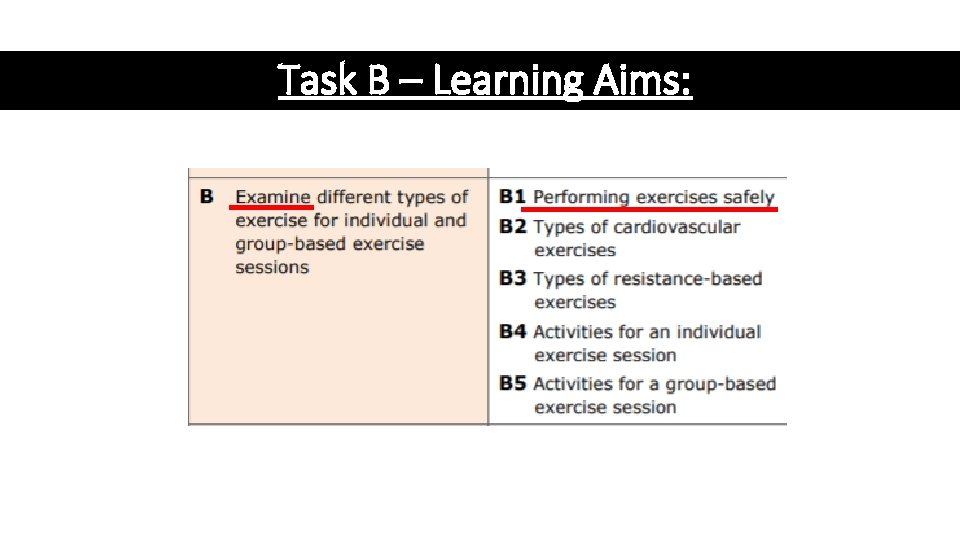
Task B – Learning Aims:

Learning Outcomes: Identify a variety of components that must be considered to perform exercises safely. Explain a variety of components that must be considered to perform exercises safely. Analyse a variety of components that must be considered to perform exercises safely.
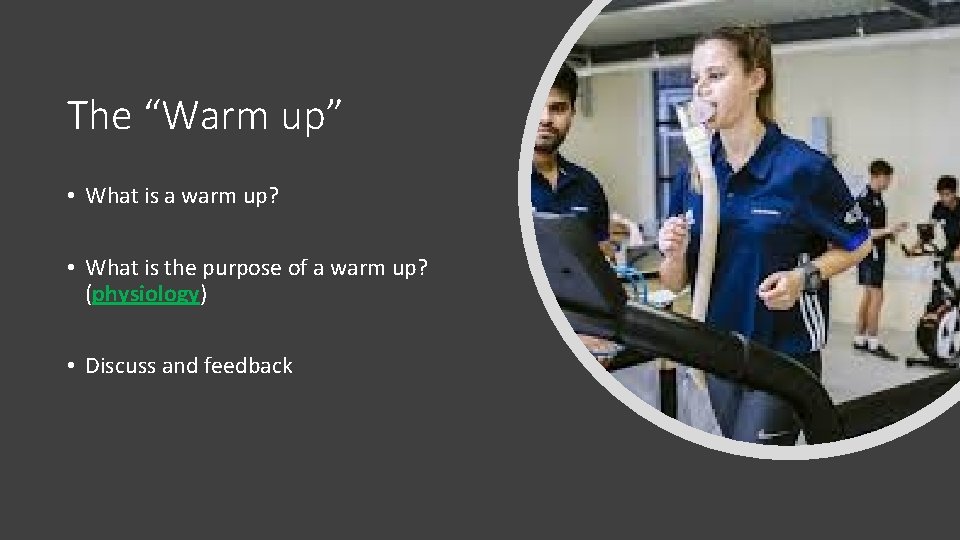
The “Warm up” • What is a warm up? • What is the purpose of a warm up? (physiology) • Discuss and feedback
The Warm Up (Jeffreys, 2006) • ‘A warm up provides a smooth transition from resting state to a state of athletic readiness’ (Crossley, 2012; pp. 26) • Involves a period of preparation which includes activities for: - Joints (mobility) - Muscle Groups (activation) - Cardio-respiratory system - CNS
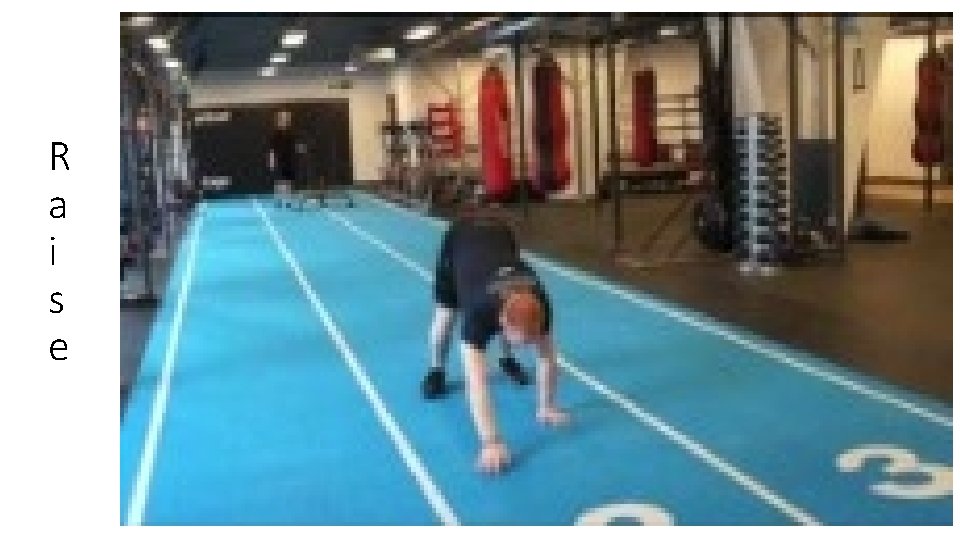
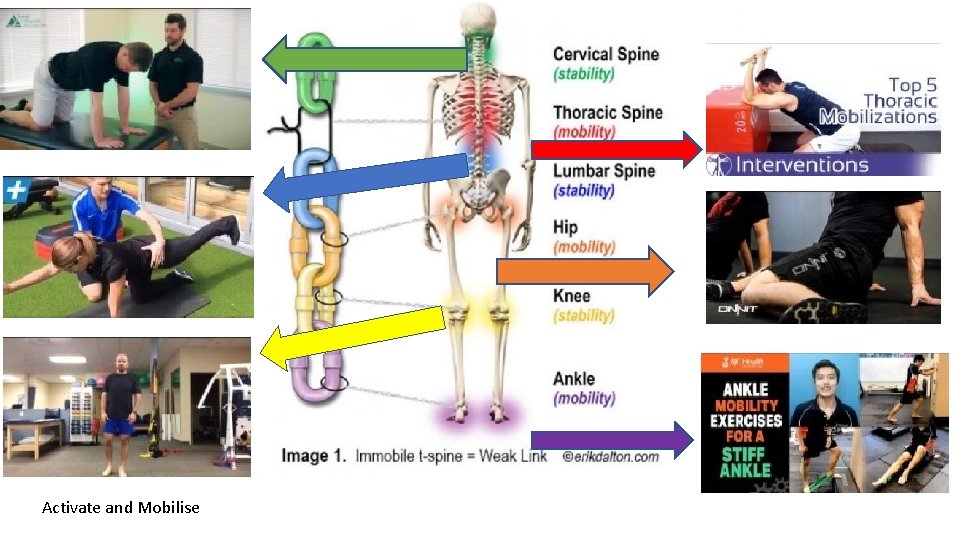
The ‘R-A-M-P’ Approach (Jeffreys, 2006) Raise – elevate core body temperature, heart rate, joint viscosity Activate – activate key muscle groups and muscle fibre types (e. g. Type 11 x in a long-jump warm up) Mobilise – mobilise key joints and ranges of motion used in the sport (e. g. Overhead squats for the snatch) Potentiation – increasing the intensity of exercise to a point that athletes are able to perform at their maximal levels – often referred to as PAP https: //www. atletiekunie. nl/sites/default/files/userfiles/themadagen/loo ptrainersdag/2018/Handouts/Plyometrie%20 Artikel%202%20%20 Nout%20 van%20 der%20 Velden. pdf
R a i s e
Activate and Mobilise

Potentiation Exercises

RAMP – Warm Up
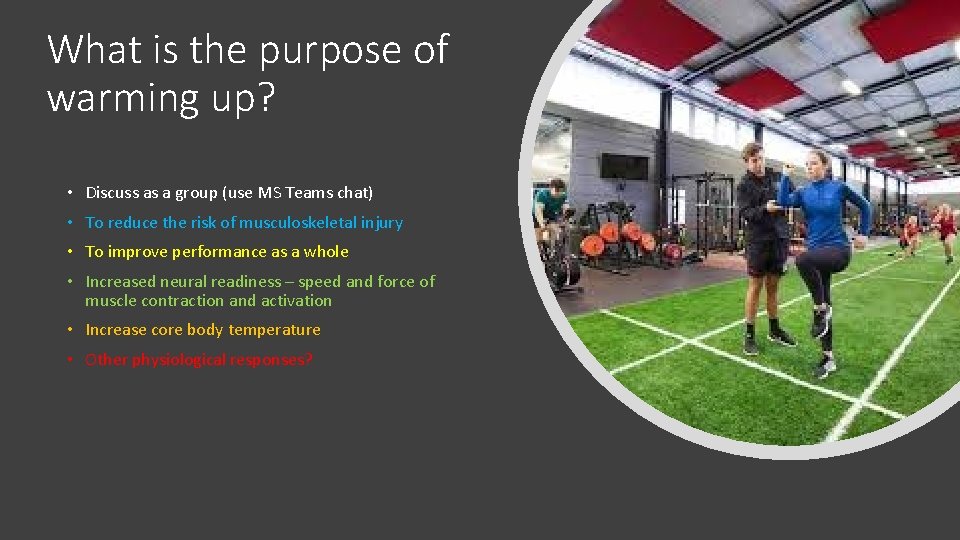
What is the purpose of warming up? • Discuss as a group (use MS Teams chat) • To reduce the risk of musculoskeletal injury • To improve performance as a whole • Increased neural readiness – speed and force of muscle contraction and activation • Increase core body temperature • Other physiological responses?
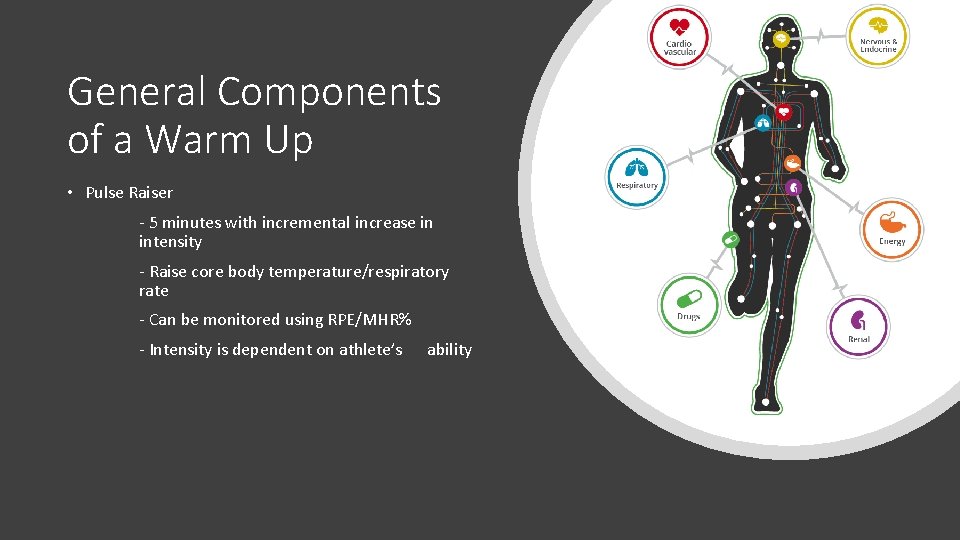
General Components of a Warm Up • Pulse Raiser - 5 minutes with incremental increase in intensity - Raise core body temperature/respiratory rate - Can be monitored using RPE/MHR% - Intensity is dependent on athlete’s ability
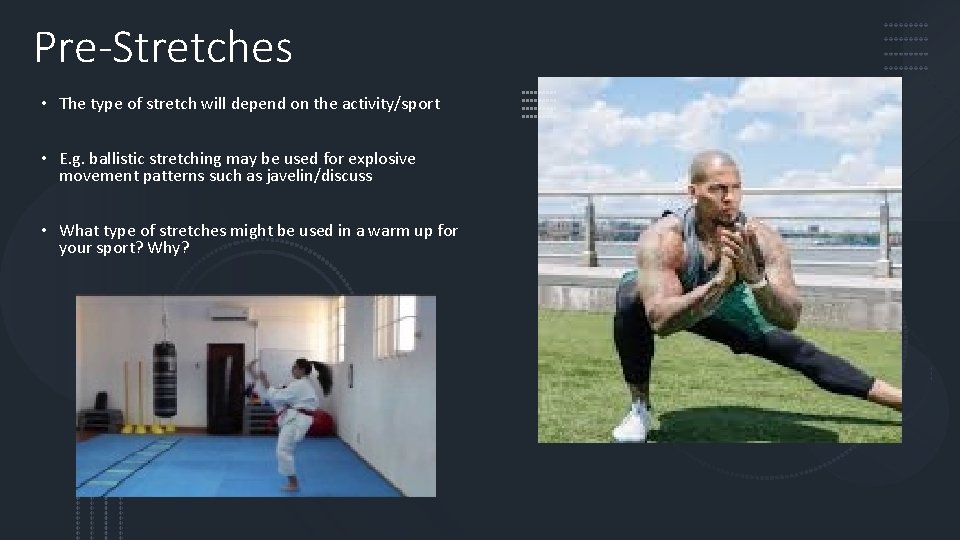
Pre-Stretches • The type of stretch will depend on the activity/sport • E. g. ballistic stretching may be used for explosive movement patterns such as javelin/discuss • What type of stretches might be used in a warm up for your sport? Why?
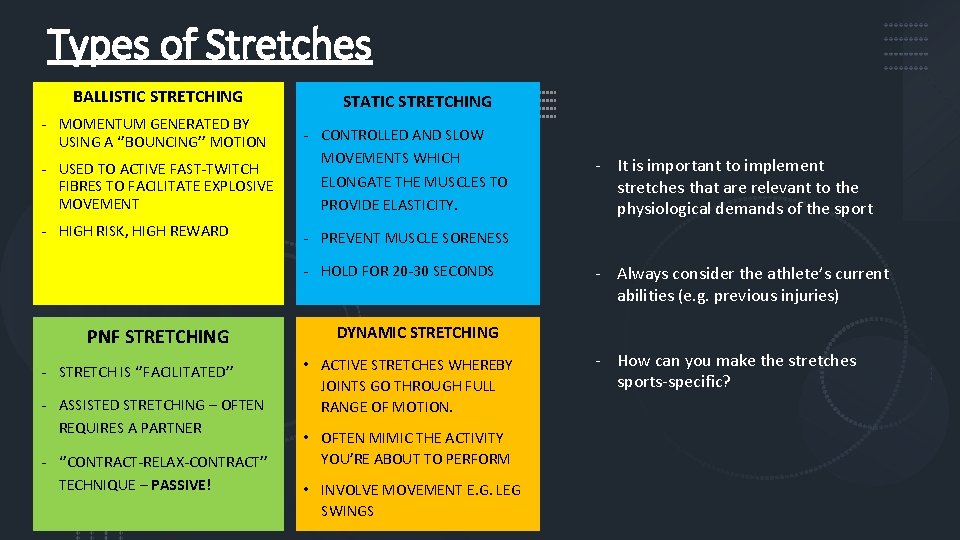
Types of Stretches BALLISTIC STRETCHING - MOMENTUM GENERATED BY USING A ‘’BOUNCING’’ MOTION STATIC STRETCHING - USED TO ACTIVE FAST-TWITCH FIBRES TO FACILITATE EXPLOSIVE MOVEMENT - CONTROLLED AND SLOW MOVEMENTS WHICH ELONGATE THE MUSCLES TO PROVIDE ELASTICITY. - HIGH RISK, HIGH REWARD - PREVENT MUSCLE SORENESS - HOLD FOR 20 -30 SECONDS PNF STRETCHING - STRETCH IS ‘’FACILITATED’’ - ASSISTED STRETCHING – OFTEN REQUIRES A PARTNER - ‘’CONTRACT-RELAX-CONTRACT’’ TECHNIQUE – PASSIVE! - It is important to implement stretches that are relevant to the physiological demands of the sport - Always consider the athlete’s current abilities (e. g. previous injuries) DYNAMIC STRETCHING • ACTIVE STRETCHES WHEREBY JOINTS GO THROUGH FULL RANGE OF MOTION. • OFTEN MIMIC THE ACTIVITY YOU’RE ABOUT TO PERFORM • INVOLVE MOVEMENT E. G. LEG SWINGS - How can you make the stretches sports-specific?

Why Stretch? Preparation stretches: - Reduce the risk of injury - Increase performance Post-Activity Stretches: - Eliminate waste products - Reactivate neuromuscular responses - Release muscle tension
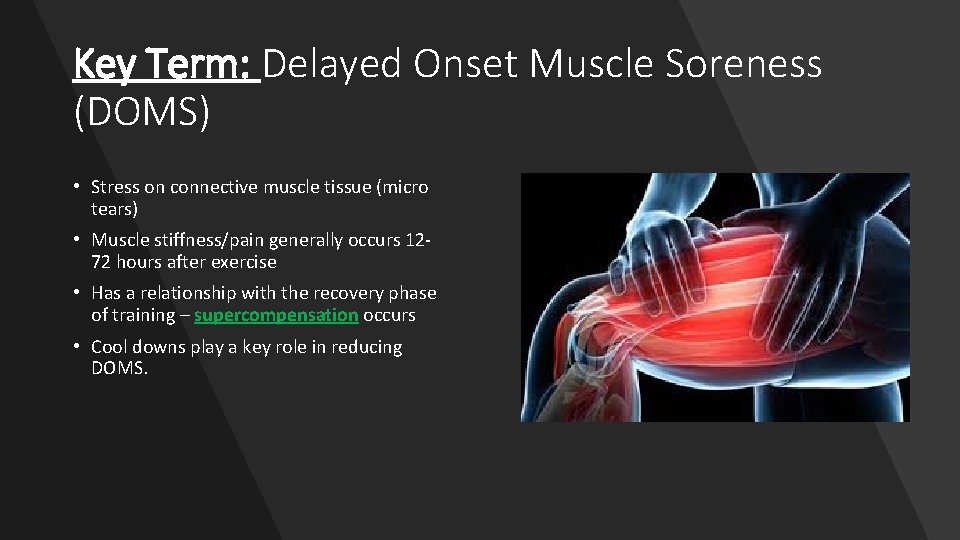
Key Term: Delayed Onset Muscle Soreness (DOMS) • Stress on connective muscle tissue (micro tears) • Muscle stiffness/pain generally occurs 1272 hours after exercise • Has a relationship with the recovery phase of training – supercompensation occurs • Cool downs play a key role in reducing DOMS.
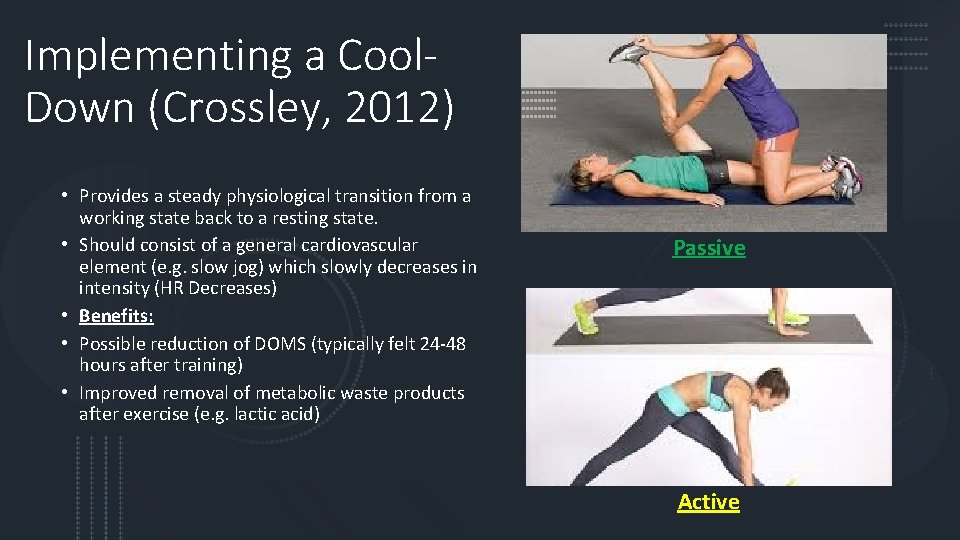
Implementing a Cool. Down (Crossley, 2012) • Provides a steady physiological transition from a working state back to a resting state. • Should consist of a general cardiovascular element (e. g. slow jog) which slowly decreases in intensity (HR Decreases) • Benefits: • Possible reduction of DOMS (typically felt 24 -48 hours after training) • Improved removal of metabolic waste products after exercise (e. g. lactic acid) Passive Active

Practical Session – Next Week: • In groups of 2/3, plan the following: • 10 minute warm up activity for a sport of your choice • 10 minute cool down activity for a sport of your choice • You will deliver this to your peers. • Each group will feedback to those that have delivered. • Please use the resources provided in the lesson!
- Slides: 19