
Unit 10 Evolution is defined as a change
- Slides: 18
Unit 10 Evolution is defined as a change over time, it is the process by which modern organisms have descended from ancient organisms The Evolutionary Theory which is based upon a collection of scientific facts, observations, and hypotheses attempts to explain how life on earth has become so diverse. 1 Slide 1
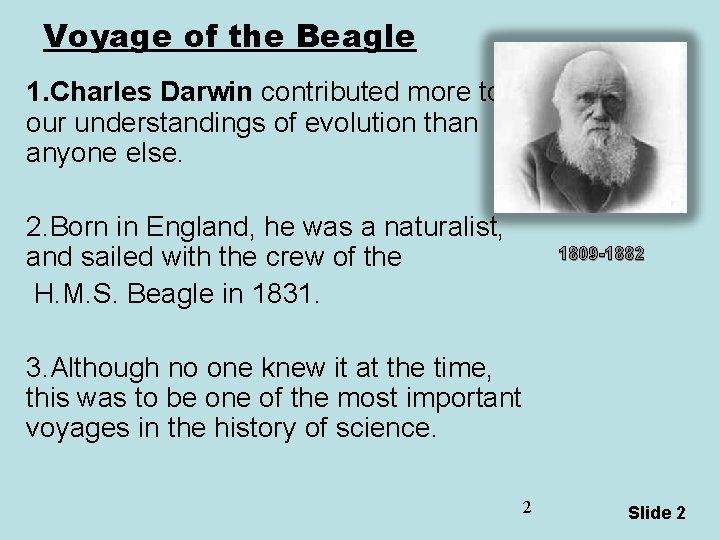
Voyage of the Beagle 1. Charles Darwin contributed more to our understandings of evolution than anyone else. 2. Born in England, he was a naturalist, and sailed with the crew of the H. M. S. Beagle in 1831. 1809 -1882 3. Although no one knew it at the time, this was to be one of the most important voyages in the history of science. 2 Slide 2
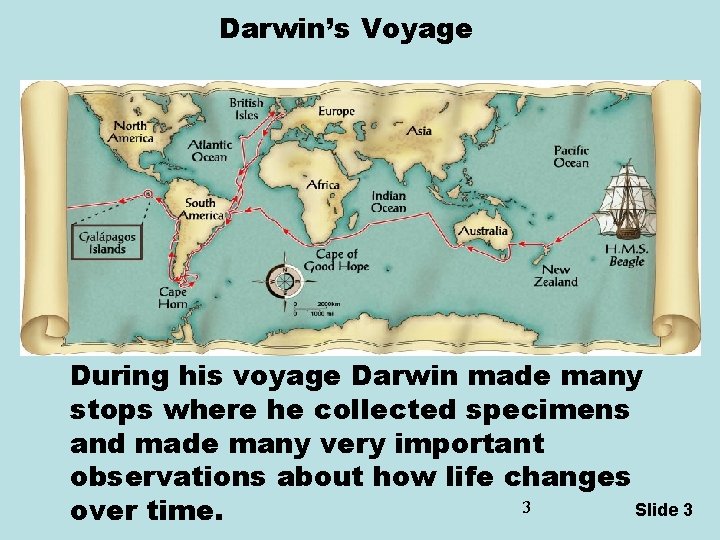
Darwin’s Voyage During his voyage Darwin made many stops where he collected specimens and made many very important observations about how life changes 3 Slide 3 over time.
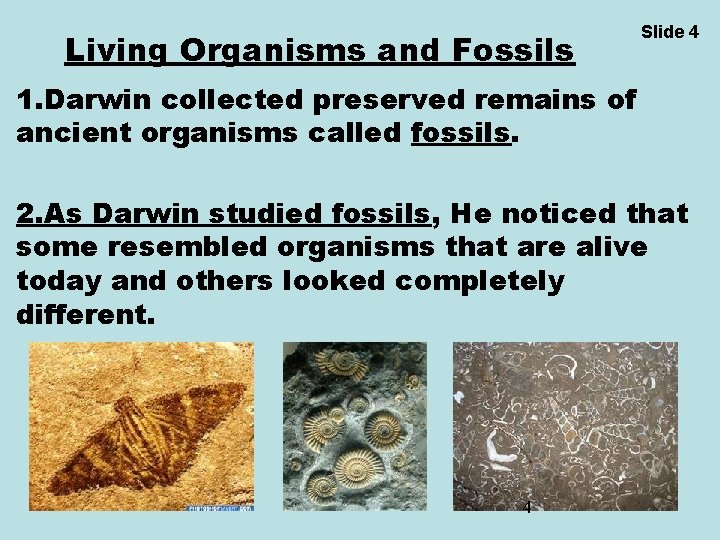
Living Organisms and Fossils Slide 4 1. Darwin collected preserved remains of ancient organisms called fossils. 2. As Darwin studied fossils, He noticed that some resembled organisms that are alive today and others looked completely different. 4
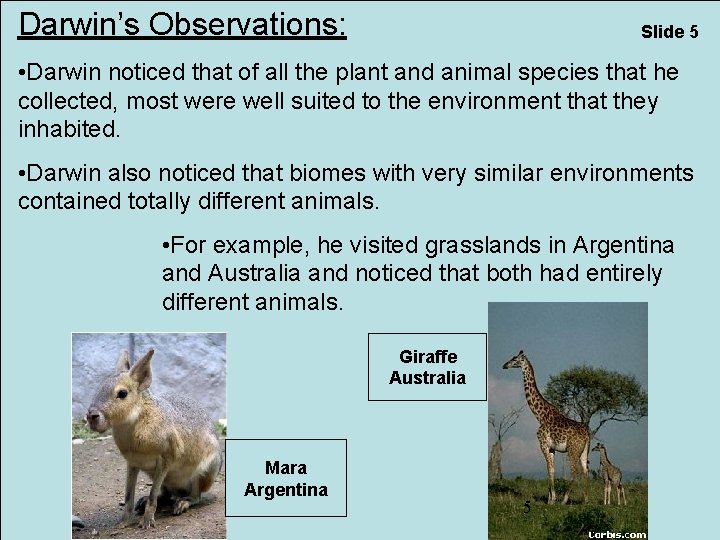
Darwin’s Observations: Slide 5 • Darwin noticed that of all the plant and animal species that he collected, most were well suited to the environment that they inhabited. • Darwin also noticed that biomes with very similar environments contained totally different animals. • For example, he visited grasslands in Argentina and Australia and noticed that both had entirely different animals. Giraffe Australia Mara Argentina 5
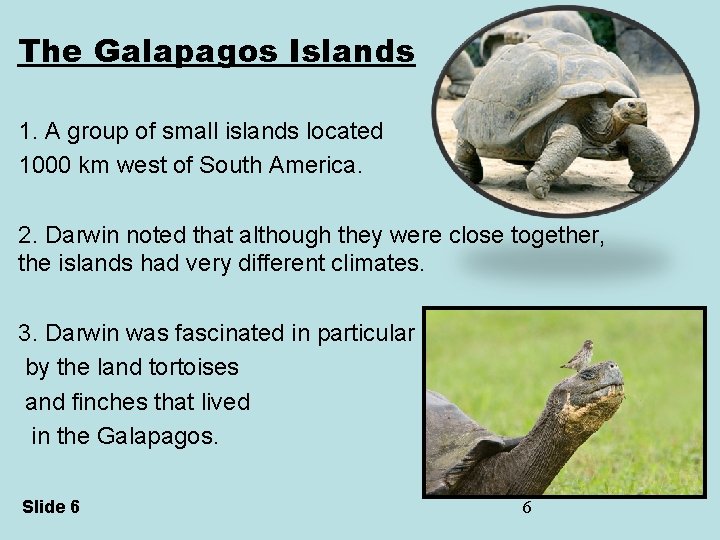
The Galapagos Islands 1. A group of small islands located 1000 km west of South America. 2. Darwin noted that although they were close together, the islands had very different climates. 3. Darwin was fascinated in particular by the land tortoises and finches that lived in the Galapagos. Slide 6 6
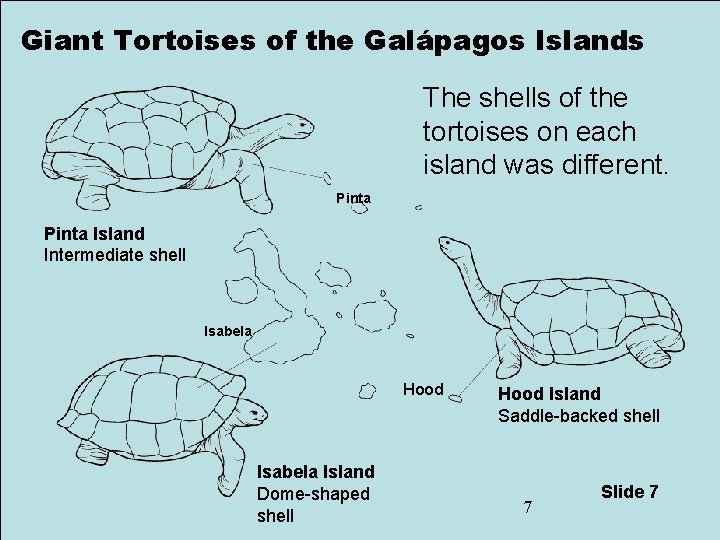
Giant Tortoises of the Galápagos Islands The shells of the tortoises on each island was different. Pinta Island Intermediate shell Isabela Hood Isabela Island Dome-shaped shell Hood Island Saddle-backed shell 7 Slide 7
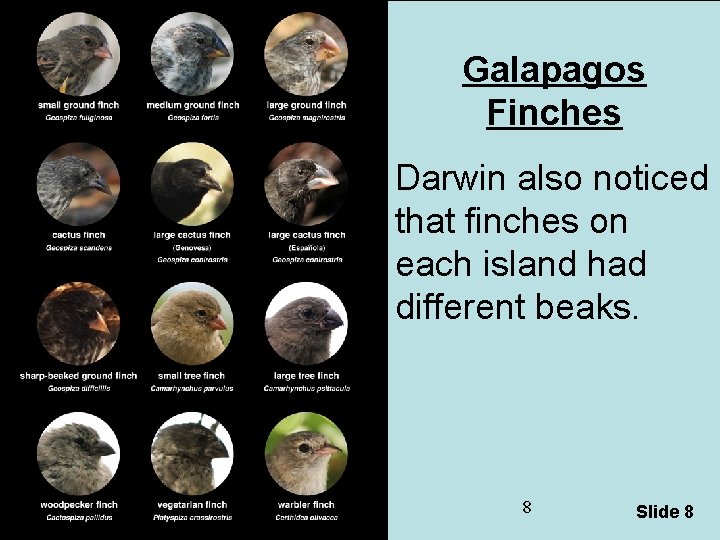
Galapagos Finches Darwin also noticed that finches on each island had different beaks. 8 Slide 8
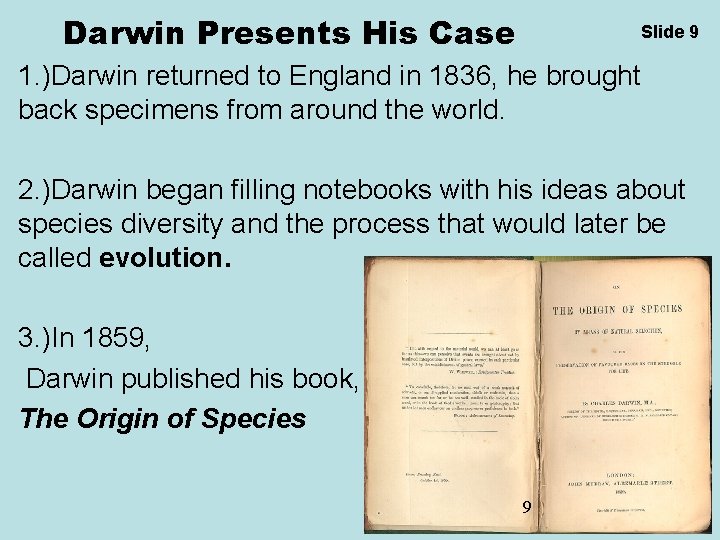
Darwin Presents His Case Slide 9 1. )Darwin returned to England in 1836, he brought back specimens from around the world. 2. )Darwin began filling notebooks with his ideas about species diversity and the process that would later be called evolution. 3. )In 1859, Darwin published his book, The Origin of Species 9
Natural Selection – The driving force behind evolution ! 1. )Darwin realized that high birth rates and a shortage of life’s basic needs would eventually force organisms into competition for resources. 2. )The struggle for existence means that members of each species compete regularly to obtain food, living space, and other necessities of life. 3. )A key factor in the struggle for existence is how well suited an organism is to its environment. Those organisms best suited to the demands of the environment will be naturally selected by the environment and will go onto reproduce new offspring with the same adaptations as the parents. Slide 10 10
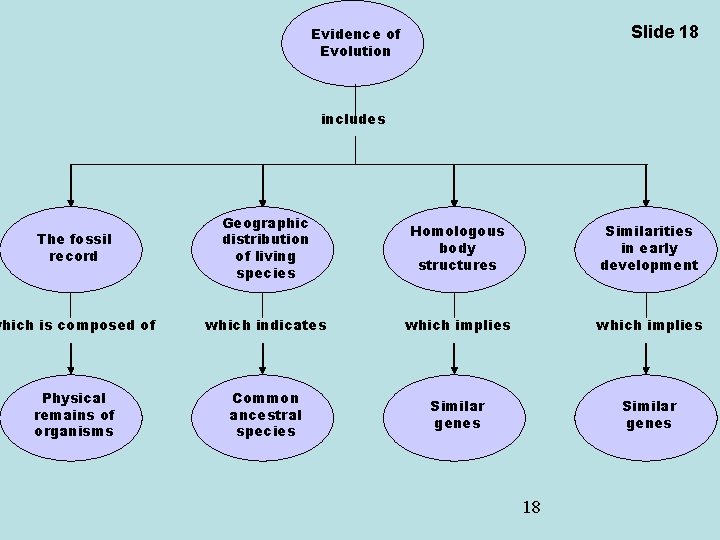
Evidence of Evolution Slide 11 • Darwin argued that living things have been evolving on Earth for millions of years. • Evidence to support his hypothesis is found in: 1. Fossil record 2. Geographical distribution of living species 3. Homologous structures of living organisms 4. Similarities in early embryonic development 11
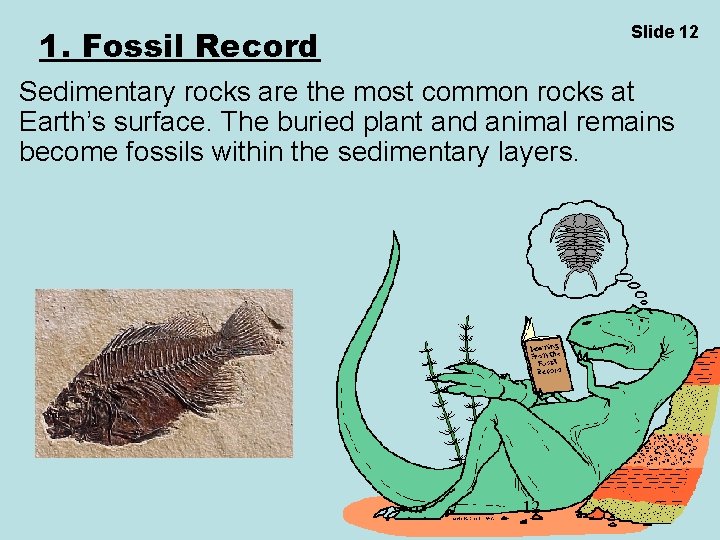
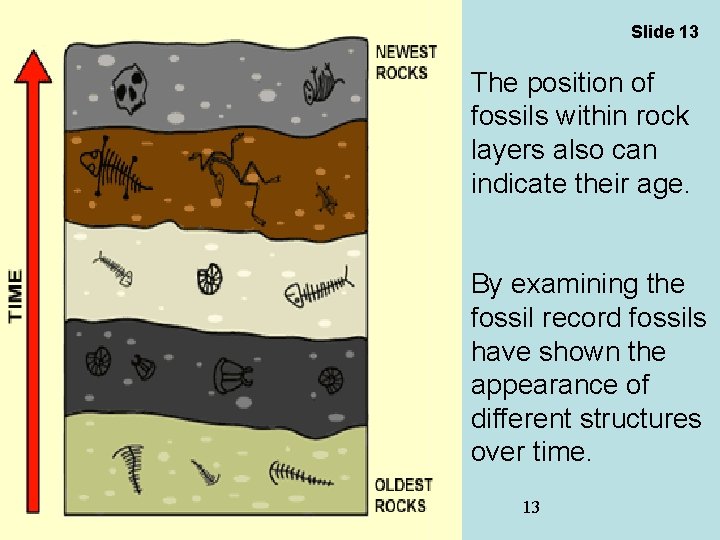
Slide 12 1. Fossil Record Sedimentary rocks are the most common rocks at Earth’s surface. The buried plant and animal remains become fossils within the sedimentary layers. 12
Slide 13 The position of fossils within rock layers also can indicate their age. By examining the fossil record fossils have shown the appearance of different structures over time. 13
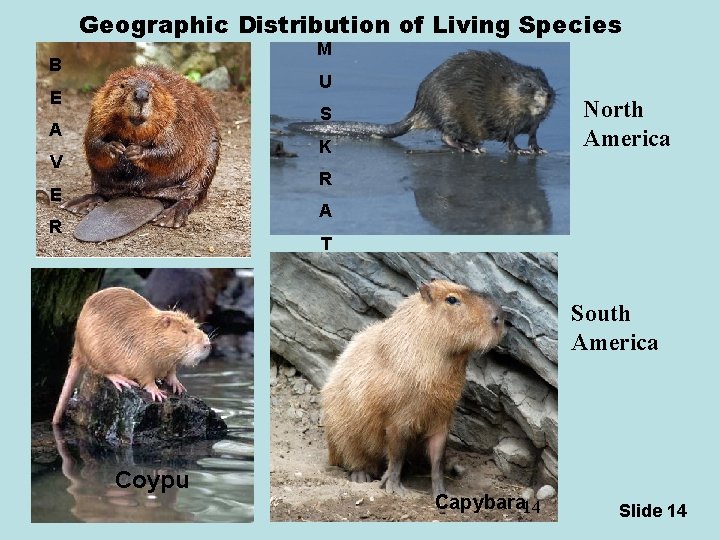
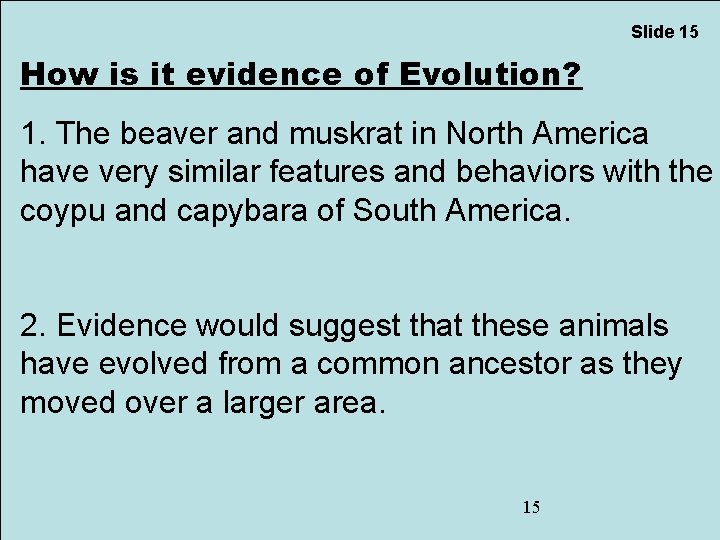
Geographic Distribution of Living Species M B U E North America S A K V R E A R T South America Coypu Capybara 14 Slide 14
Slide 15 How is it evidence of Evolution? 1. The beaver and muskrat in North America have very similar features and behaviors with the coypu and capybara of South America. 2. Evidence would suggest that these animals have evolved from a common ancestor as they moved over a larger area. 15
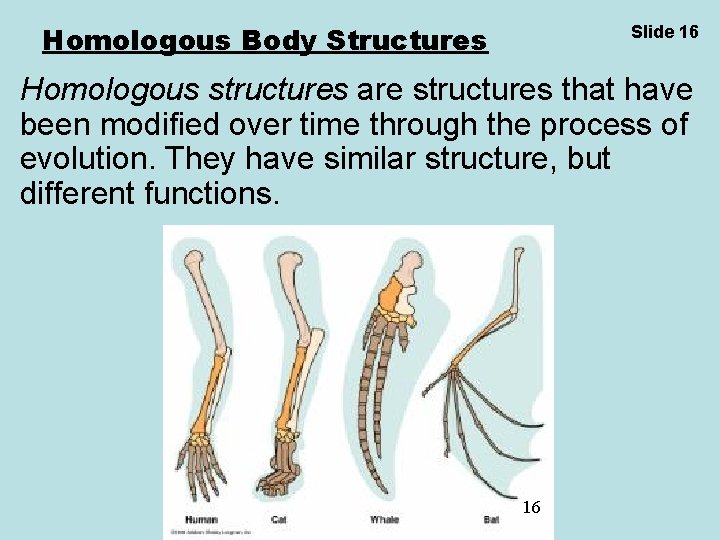
Homologous Body Structures Slide 16 Homologous structures are structures that have been modified over time through the process of evolution. They have similar structure, but different functions. 16
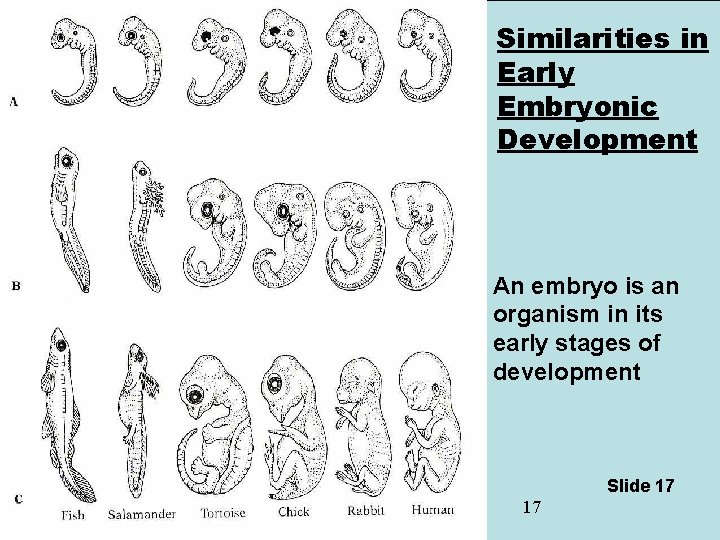
Similarities in Early Embryonic Development An embryo is an organism in its early stages of development Slide 17 17
Slide 18 Evidence of Evolution includes The fossil record Geographic distribution of living species Homologous body structures Similarities in early development which is composed of which indicates which implies Physical remains of organisms Common ancestral species Similar genes 18