
UNIT 10 CHEMICAL BONDING Notes One Unit Ten

UNIT 10: CHEMICAL BONDING

Notes One Unit Ten chapter Six Chemical bond Covalent Bonding Polar Covalent Ionic Bonding Electronegativity Lewis Electron Dot Diagrams Lewis Dot Formula Rules
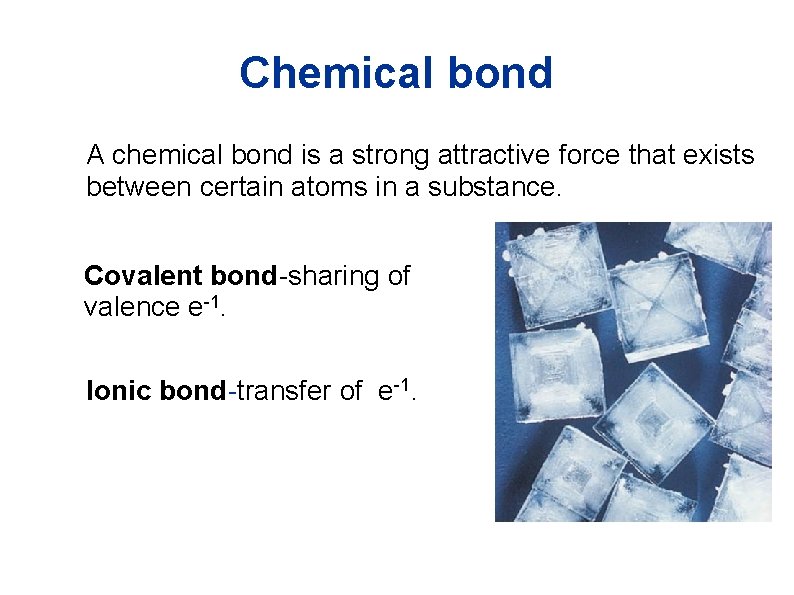
Chemical bond A chemical bond is a strong attractive force that exists between certain atoms in a substance. Covalent bond-sharing of valence e-1. Ionic bond-transfer of e-1.
Covalent Bonding • A covalent bond results when electrons are shared by nuclei.
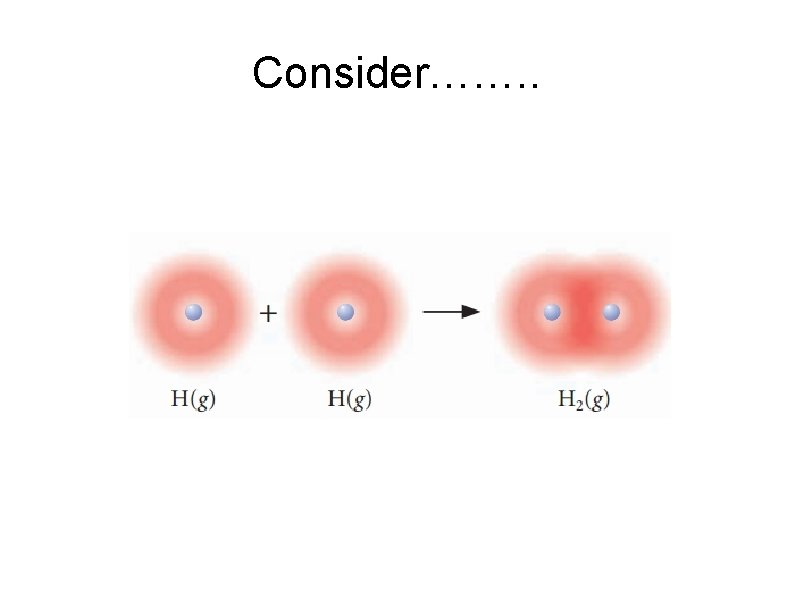
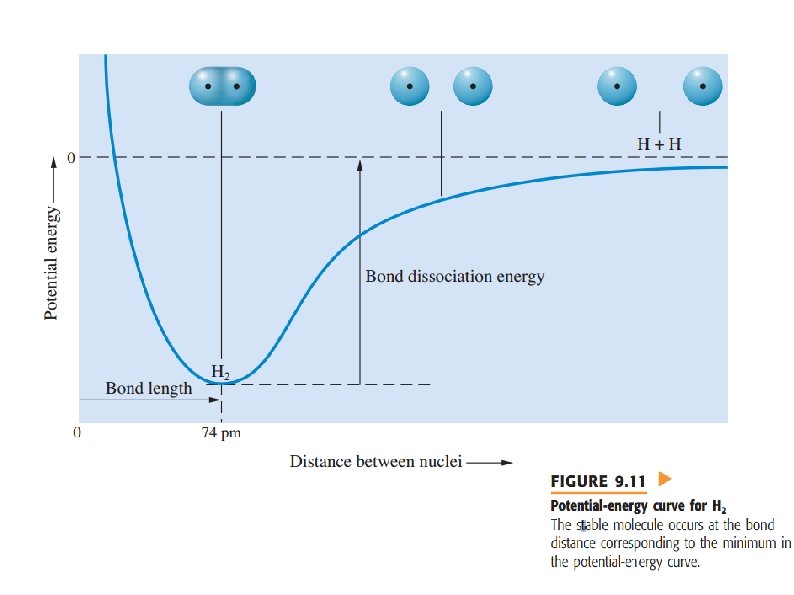
Consider……. .
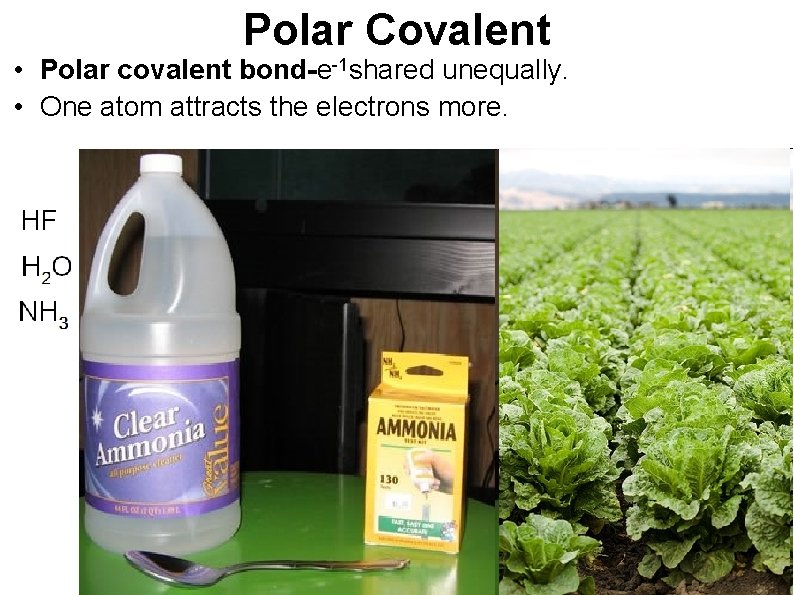
Polar Covalent • Polar covalent bond-e-1 shared unequally. • One atom attracts the electrons more.
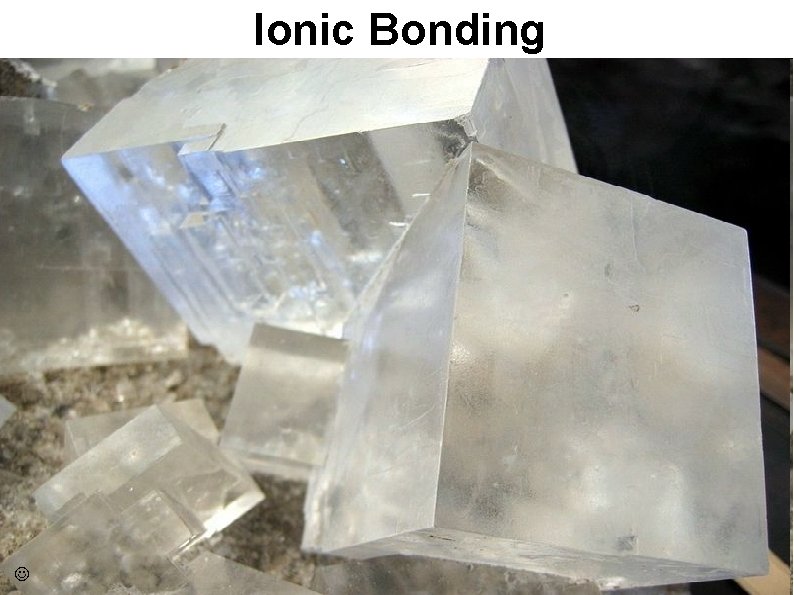
Ionic Bonding • Ionic compound-metal and nonmetal. • Ionic compounds dissolve in polar solvents.
Ionic Bonding
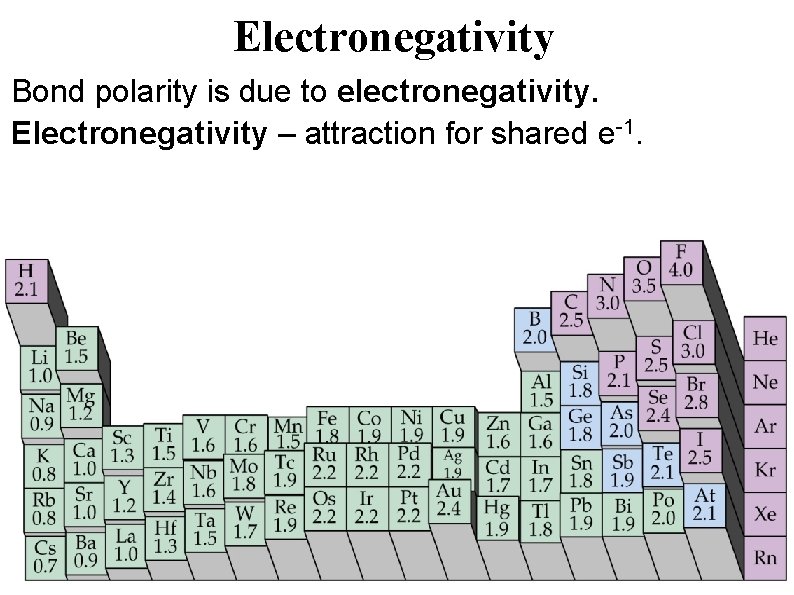
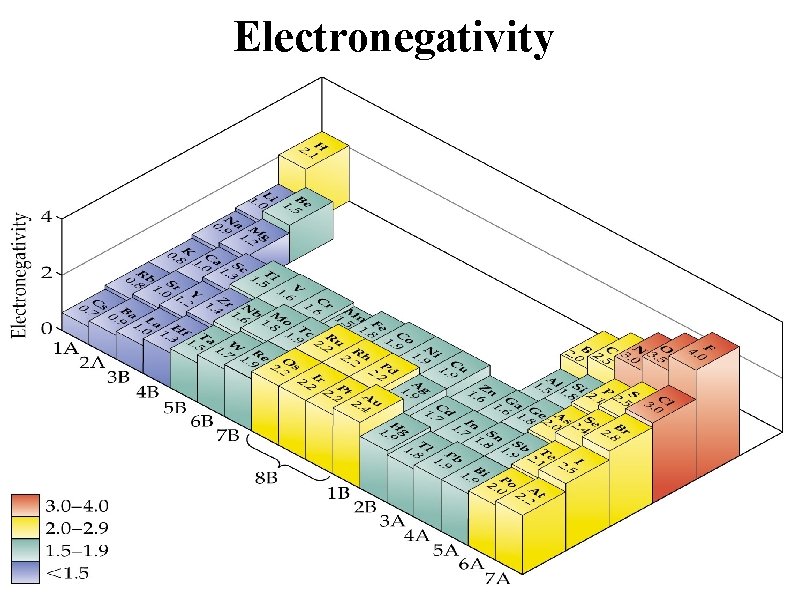
Electronegativity Bond polarity is due to electronegativity. Electronegativity – attraction for shared e-1.
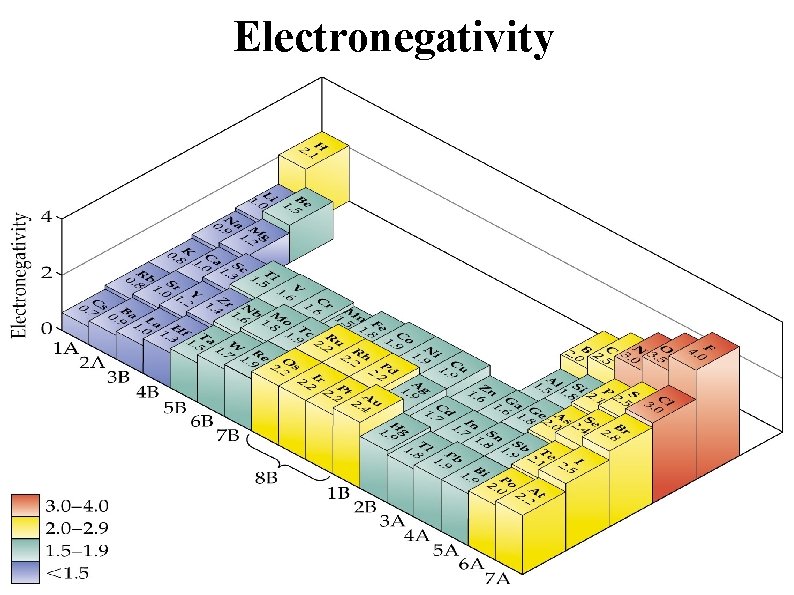
Electronegativity
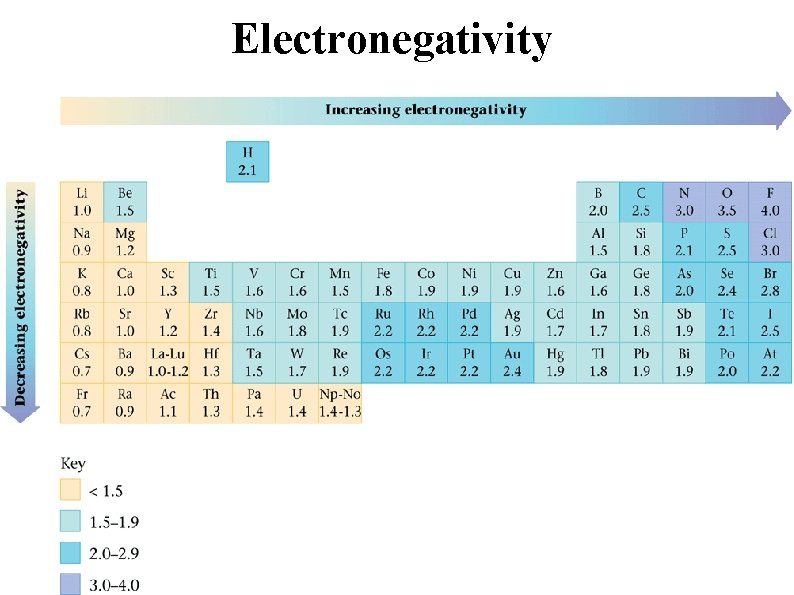
Electronegativity
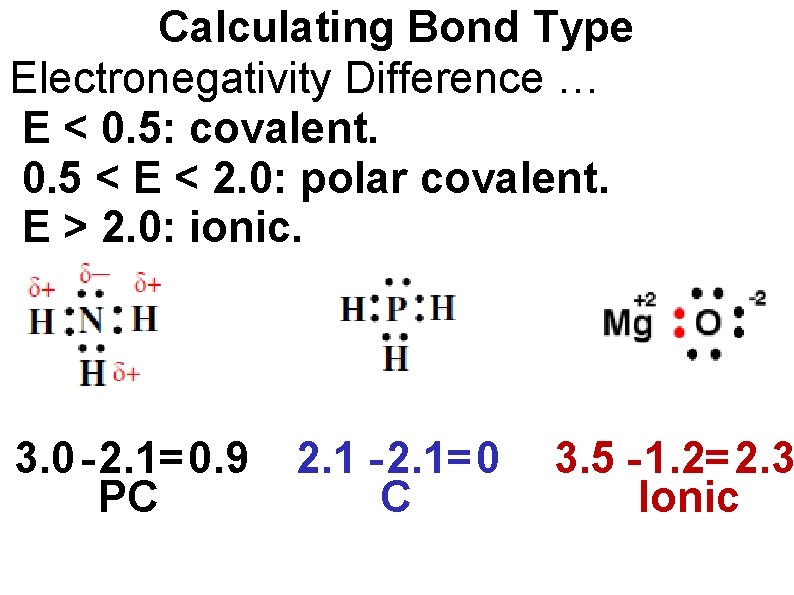
Calculating Bond Type Electronegativity Difference … E < 0. 5: covalent. 0. 5 < E < 2. 0: polar covalent. E > 2. 0: ionic. 3. 0 -2. 1=0. 9 PC 2. 1 -2. 1=0 C 3. 5 -1. 2=2. 3 Ionic
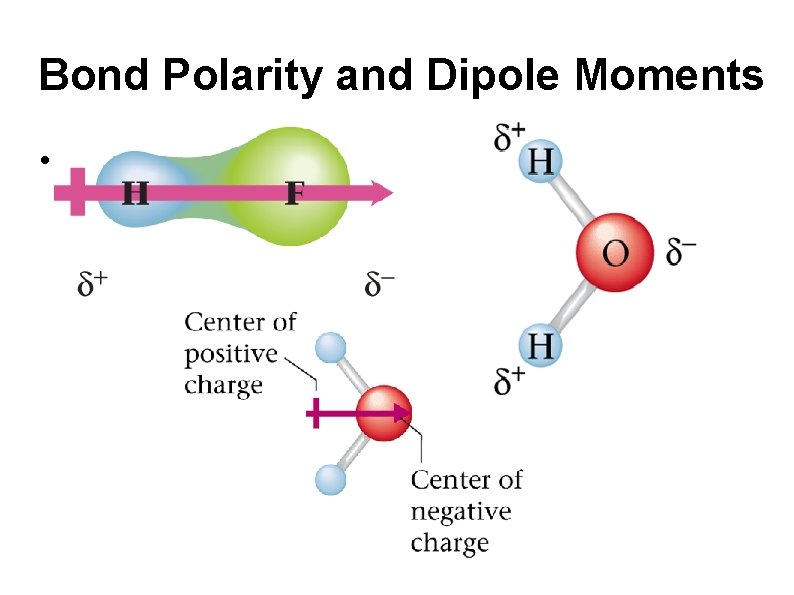
Bond Polarity and Dipole Moments •
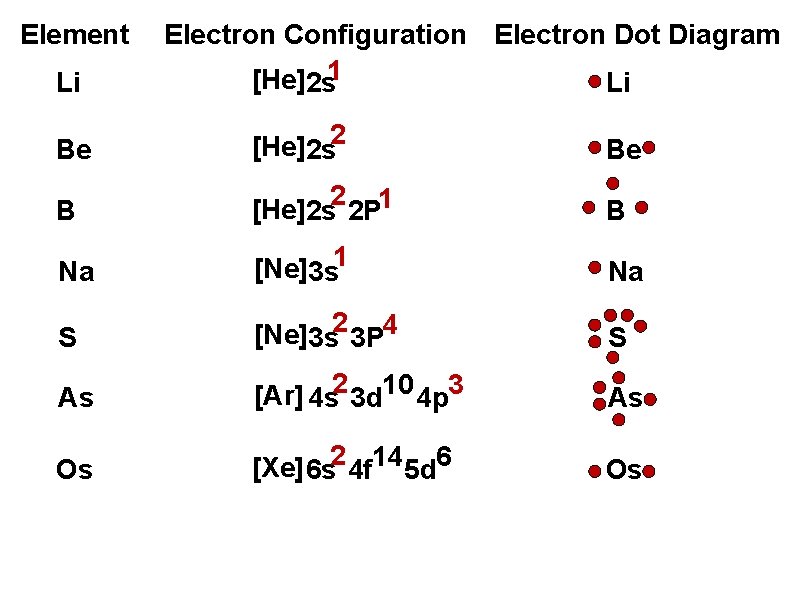
Element Li Electron Configuration Electron Dot Diagram [He]2 s 1 Li Be [He]2 s 2 Be B [He]2 s 2 2 P 1 B Na [Ne]3 s 1 Na S [Ne]3 s 2 3 P 4 S As [Ar] 4 s 2 3 d 10 4 p 3 As Os [Xe] 6 s 2 4 f 14 5 d 6 Os
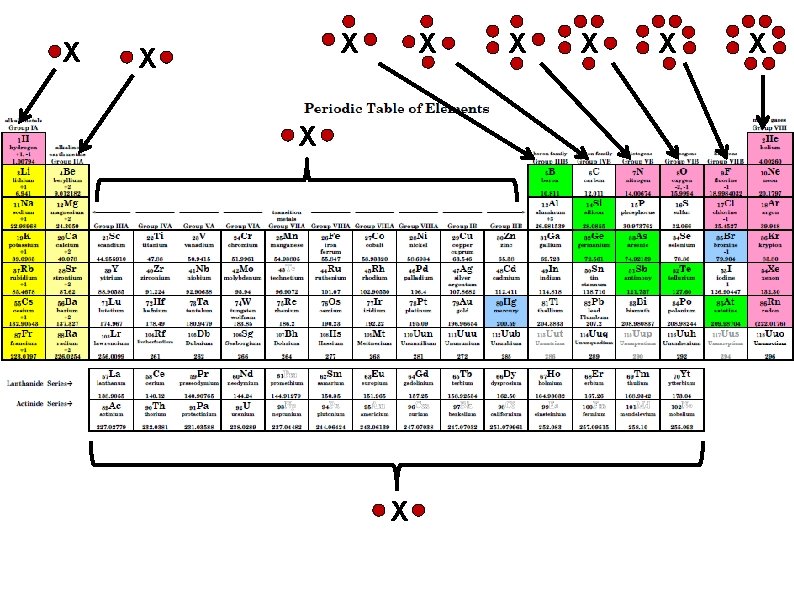
X X X X X
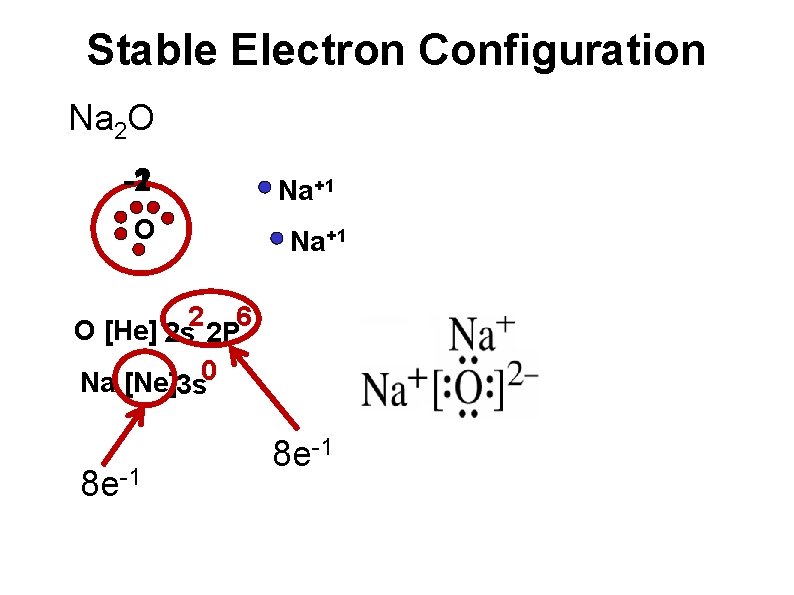
Stable Electron Configuration Na 2 O -2 -1 O Na+1 2 6 O [He] 2 s 2 P Na [Ne]3 s 0 8 e-1
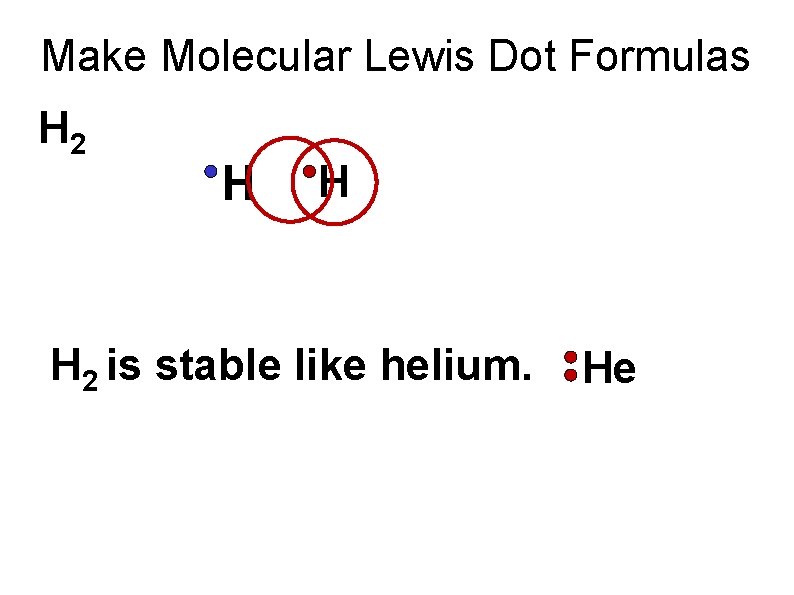
Make Molecular Lewis Dot Formulas H 2 H H H 2 is stable like helium. He
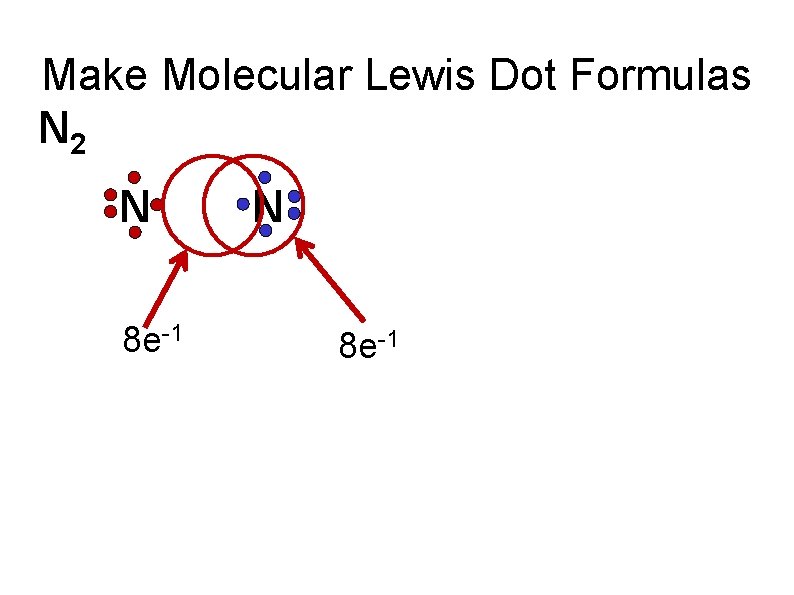
Make Molecular Lewis Dot Formulas N 2 N 8 e-1
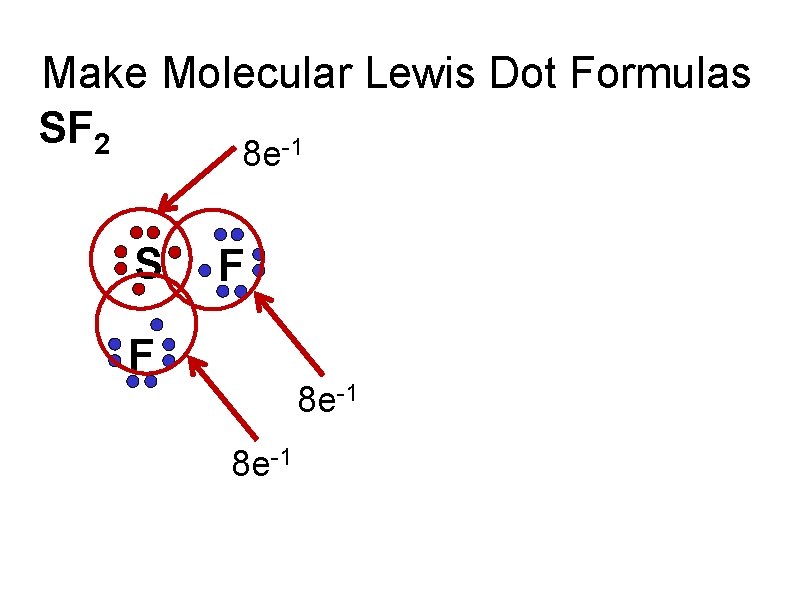
Make Molecular Lewis Dot Formulas SF 2 -1 8 e S F F 8 e-1
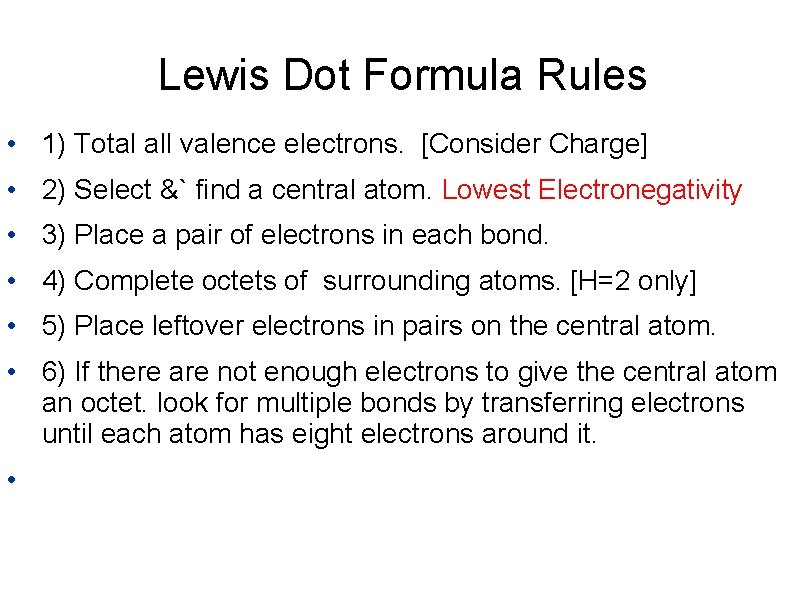
Lewis Dot Formula Rules • 1) Total all valence electrons. [Consider Charge] • 2) Select &` find a central atom. Lowest Electronegativity • 3) Place a pair of electrons in each bond. • 4) Complete octets of surrounding atoms. [H=2 only] • 5) Place leftover electrons in pairs on the central atom. • 6) If there are not enough electrons to give the central atom an octet. look for multiple bonds by transferring electrons until each atom has eight electrons around it. •
Notes Two Unit Ten Chapter Six • Naming Nonmetal Compounds • Electronegativity • Prefix • Examples
Review of Bonding • Bonding is the joining of two atoms in a stable arrangement. • Through bonding, atoms attain a complete outer shell of valence electrons. • Through bonding, atoms attain a stable noble gas configuration. • Ionic bonds result from the transfer of electrons from one element to another. • Covalent bonds result from the sharing of electrons between two nuclei. 23
Electronegativity
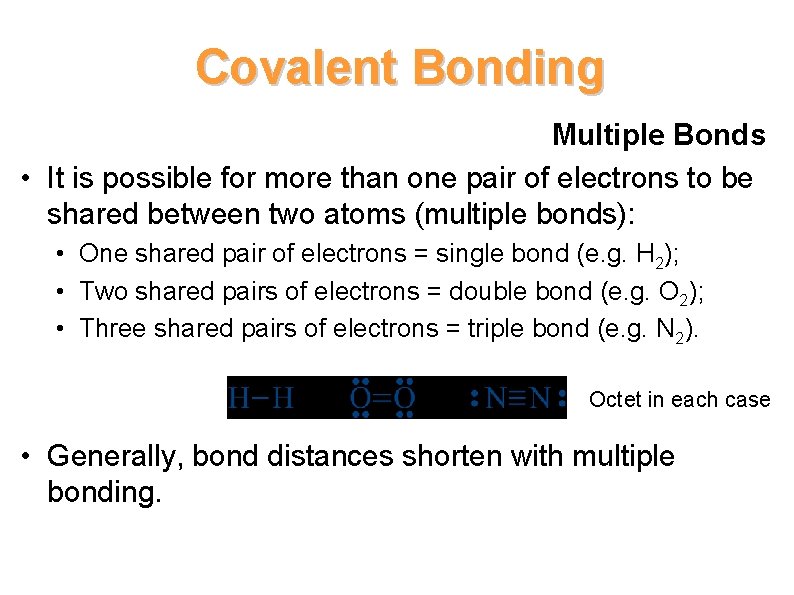
Covalent Bonding Multiple Bonds • It is possible for more than one pair of electrons to be shared between two atoms (multiple bonds): • One shared pair of electrons = single bond (e. g. H 2); • Two shared pairs of electrons = double bond (e. g. O 2); • Three shared pairs of electrons = triple bond (e. g. N 2). Octet in each case • Generally, bond distances shorten with multiple bonding.
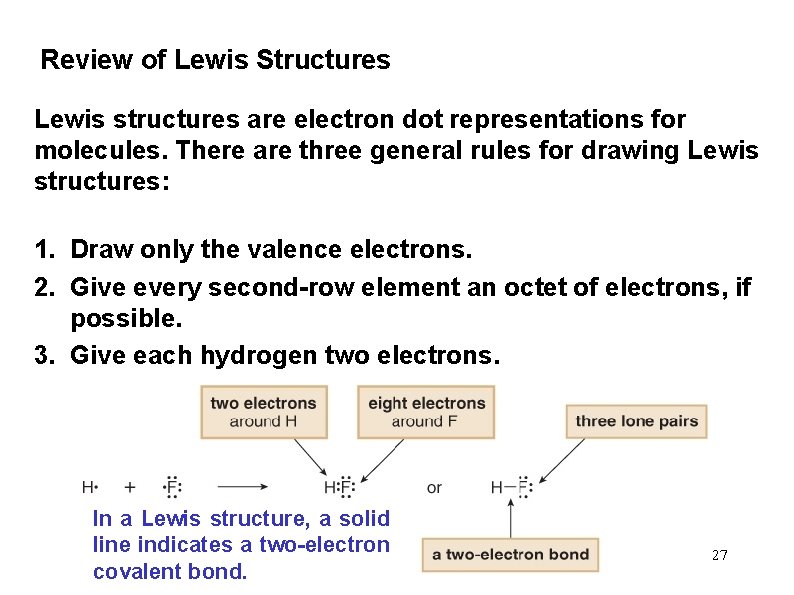
Review of Lewis Structures Lewis structures are electron dot representations for molecules. There are three general rules for drawing Lewis structures: 1. Draw only the valence electrons. 2. Give every second-row element an octet of electrons, if possible. 3. Give each hydrogen two electrons. In a Lewis structure, a solid line indicates a two-electron covalent bond. 27
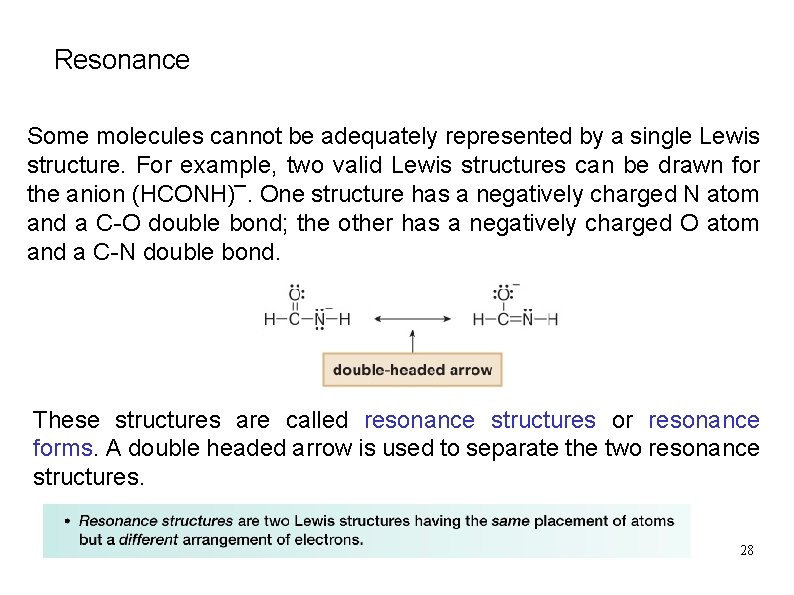
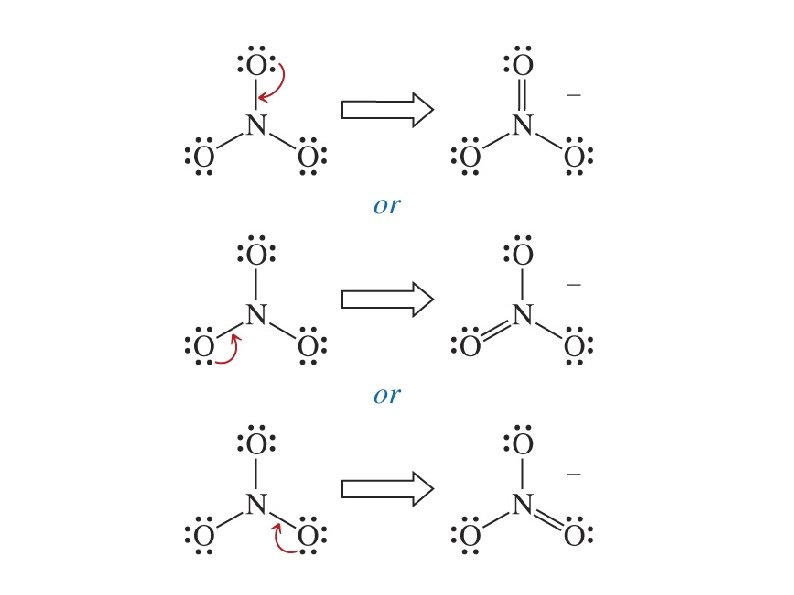
Resonance Some molecules cannot be adequately represented by a single Lewis structure. For example, two valid Lewis structures can be drawn for the anion (HCONH)¯. One structure has a negatively charged N atom and a C-O double bond; the other has a negatively charged O atom and a C-N double bond. These structures are called resonance structures or resonance forms. A double headed arrow is used to separate the two resonance structures. 28
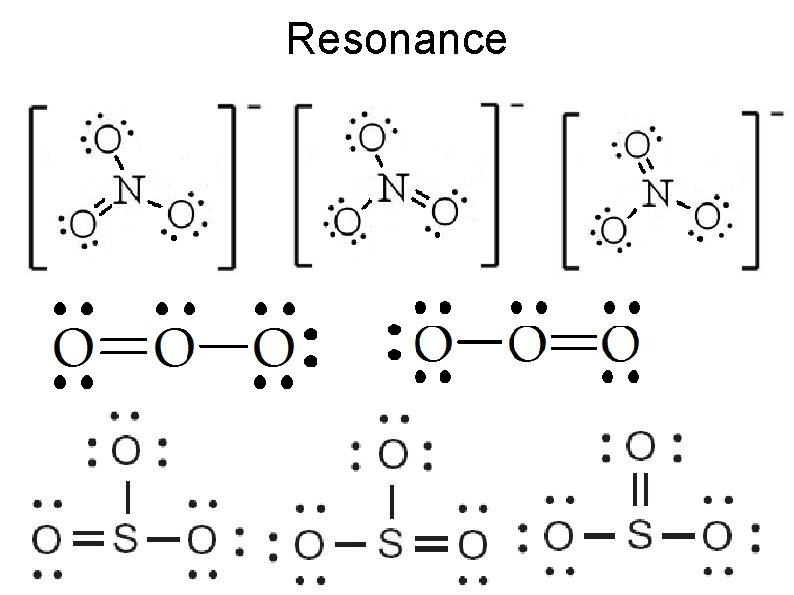
Resonance •
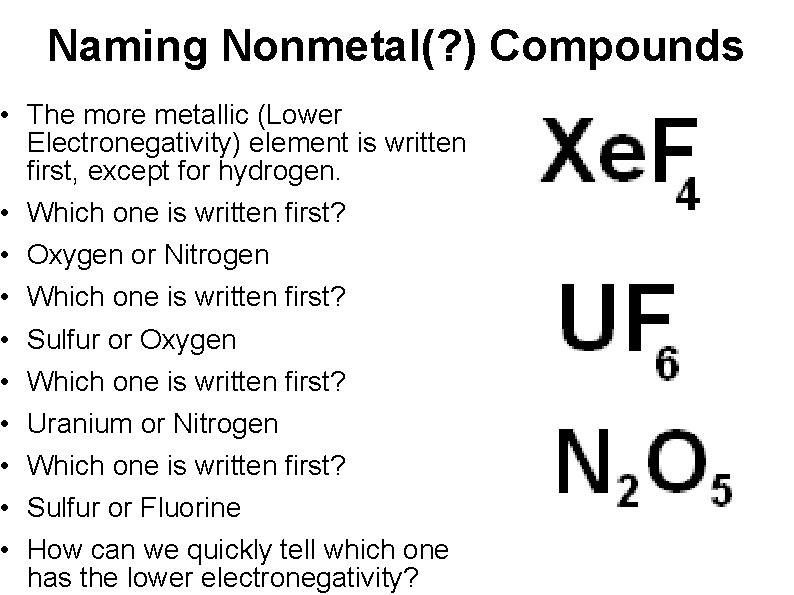
Naming Nonmetal(? ) Compounds • The more metallic (Lower Electronegativity) element is written first, except for hydrogen. • Which one is written first? • Oxygen or Nitrogen • Which one is written first? • Sulfur or Oxygen • Which one is written first? • Uranium or Nitrogen • Which one is written first? • Sulfur or Fluorine • How can we quickly tell which one has the lower electronegativity?
• • • Prefix Identifies the Numbers of each Element The number of each atom type is identified by a Greek prefix: mono di tri tetra penta hexa hepta octa nona deca The prefix mono is dropped for the first element.
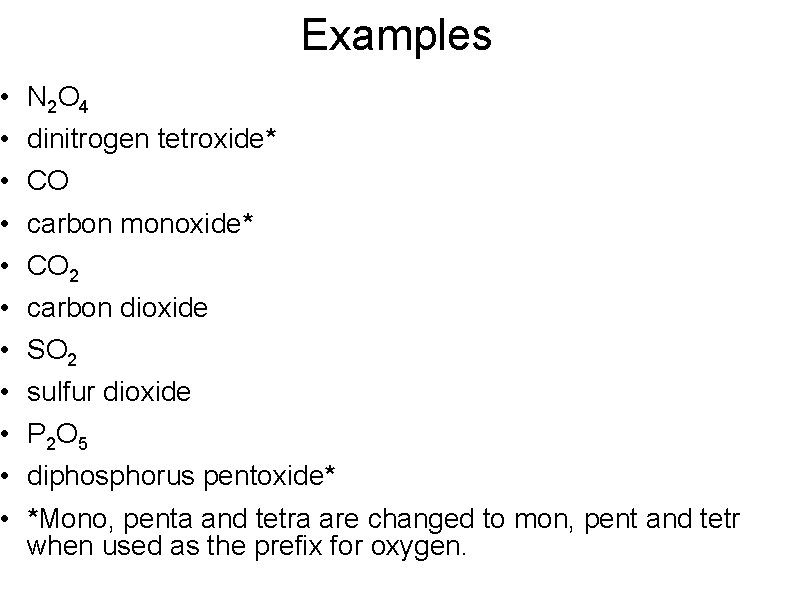
• • • Examples N 2 O 4 dinitrogen tetroxide* CO carbon monoxide* CO 2 carbon dioxide SO 2 sulfur dioxide P 2 O 5 diphosphorus pentoxide* *Mono, penta and tetra are changed to mon, pent and tetr when used as the prefix for oxygen.
Notes Three Unit Ten chapter Six Valence Shell Electron Pair Repulsion(VSEPR) Model Predicting Molecular Shapes Summary of VSEPR Molecular Shapes Resonance
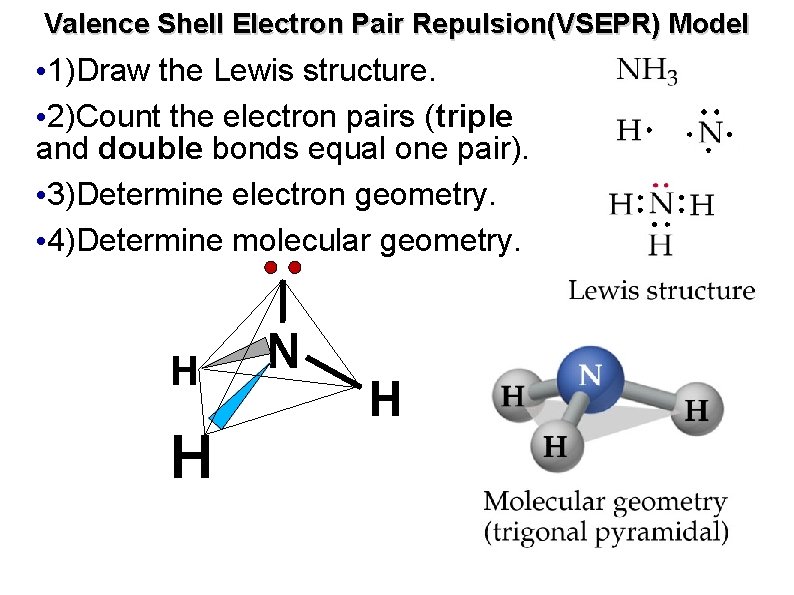
Valence Shell Electron Pair Repulsion(VSEPR) Model • 1)Draw the Lewis structure. • 2)Count the electron pairs (triple and double bonds equal one pair). • 3)Determine electron geometry. • 4)Determine molecular geometry. H H N H
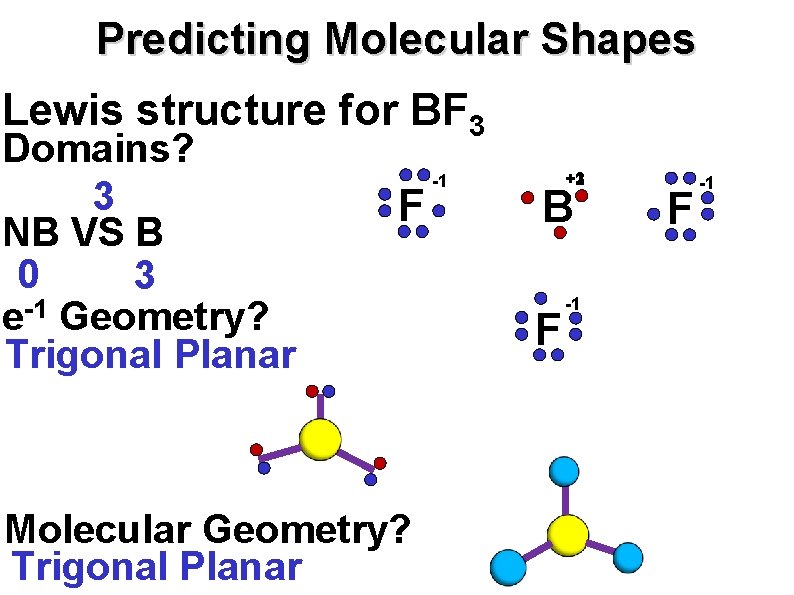
Predicting Molecular Shapes Lewis structure for BF 3 Domains? 3 NB VS B 0 3 e-1 Geometry? Trigonal Planar F Molecular Geometry? Trigonal Planar -1 +3 +2 +1 B F -1
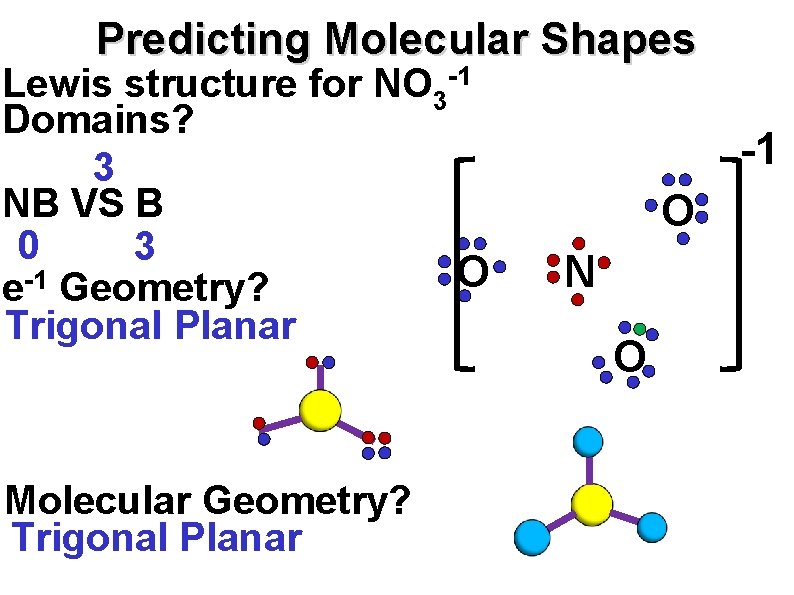
Predicting Molecular Shapes Lewis structure for NO 3 -1 Domains? 3 NB VS B 0 3 O -1 e Geometry? Trigonal Planar Molecular Geometry? Trigonal Planar -1 O N O
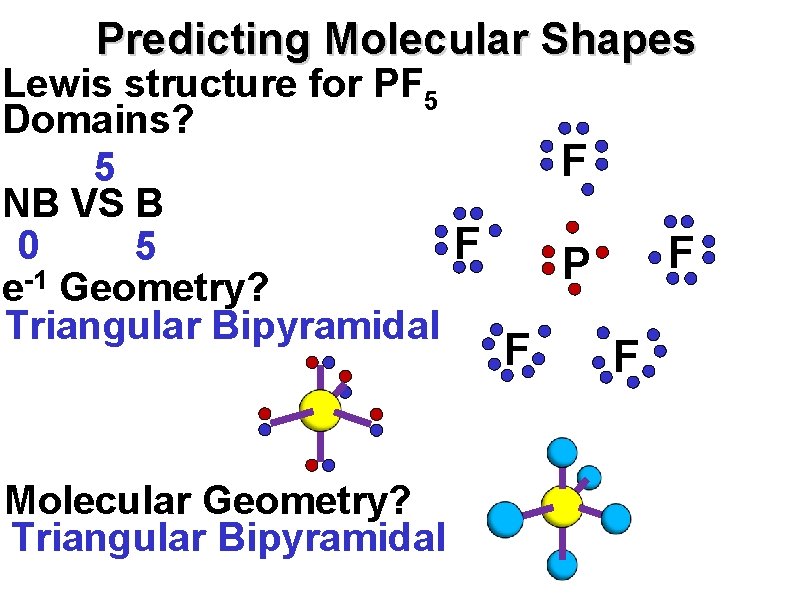
Predicting Molecular Shapes Lewis structure for PF 5 Domains? 5 NB VS B F 0 5 e-1 Geometry? Triangular Bipyramidal Molecular Geometry? Triangular Bipyramidal F F P F F
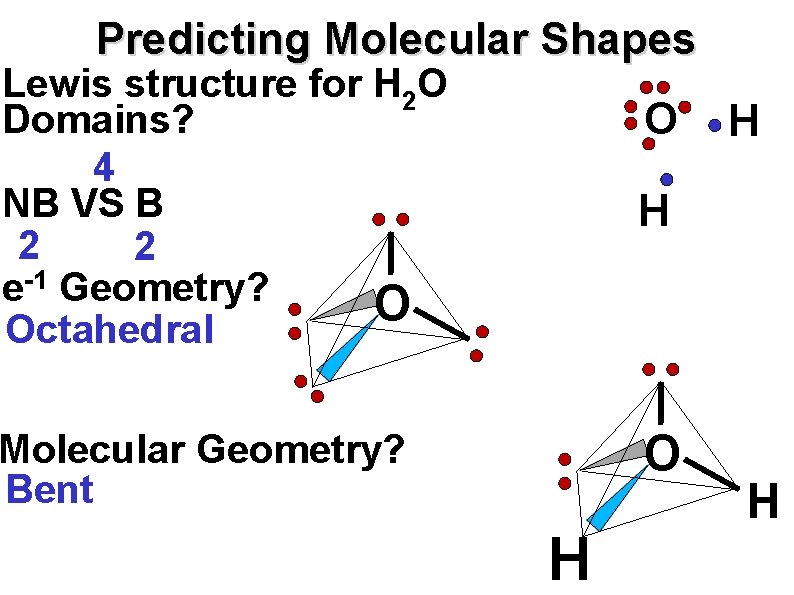
Predicting Molecular Shapes Lewis structure for H 2 O Domains? 4 NB VS B 2 2 e-1 Geometry? O Octahedral H Molecular Geometry? Bent O O H H H
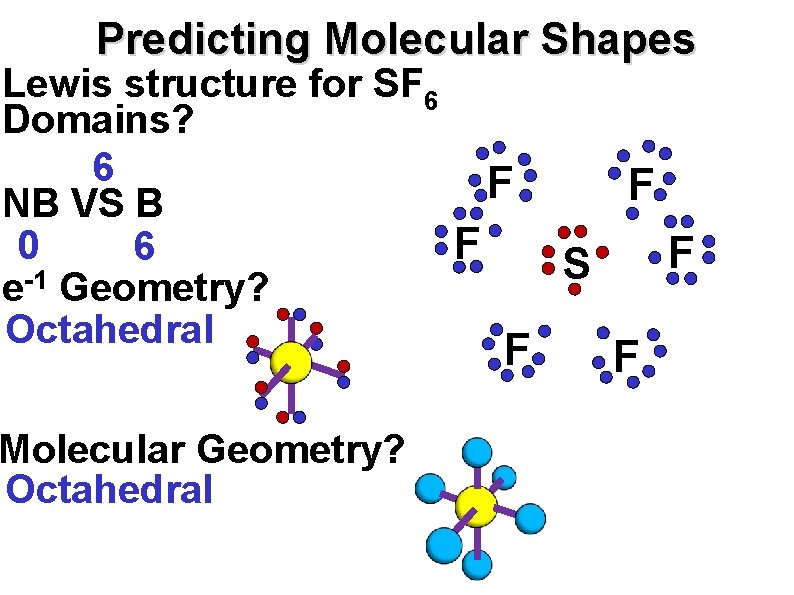
Predicting Molecular Shapes Lewis structure for SF 6 Domains? 6 F NB VS B F 0 6 e-1 Geometry? Octahedral Molecular Geometry? Octahedral F F F S F
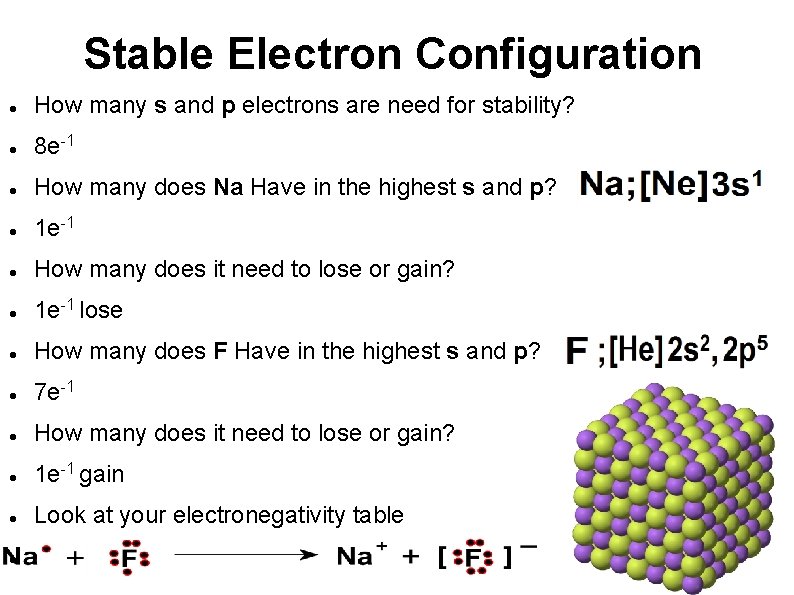
Stable Electron Configuration How many s and p electrons are need for stability? 8 e-1 How many does Na Have in the highest s and p? 1 e-1 How many does it need to lose or gain? 1 e-1 lose How many does F Have in the highest s and p? 7 e-1 How many does it need to lose or gain? 1 e-1 gain Look at your electronegativity table
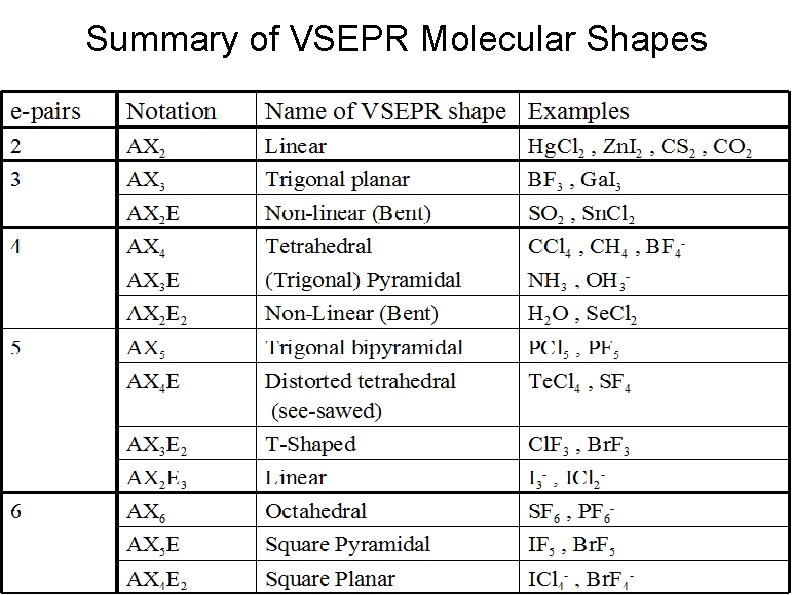
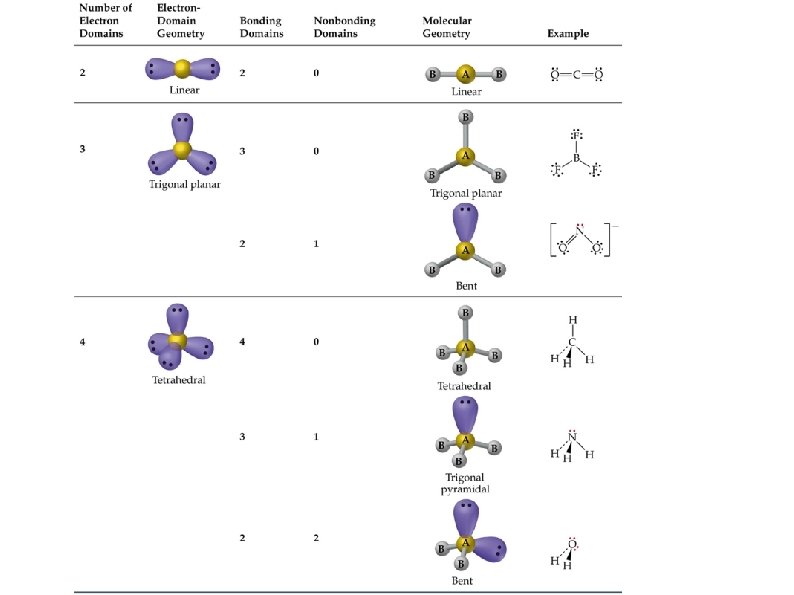
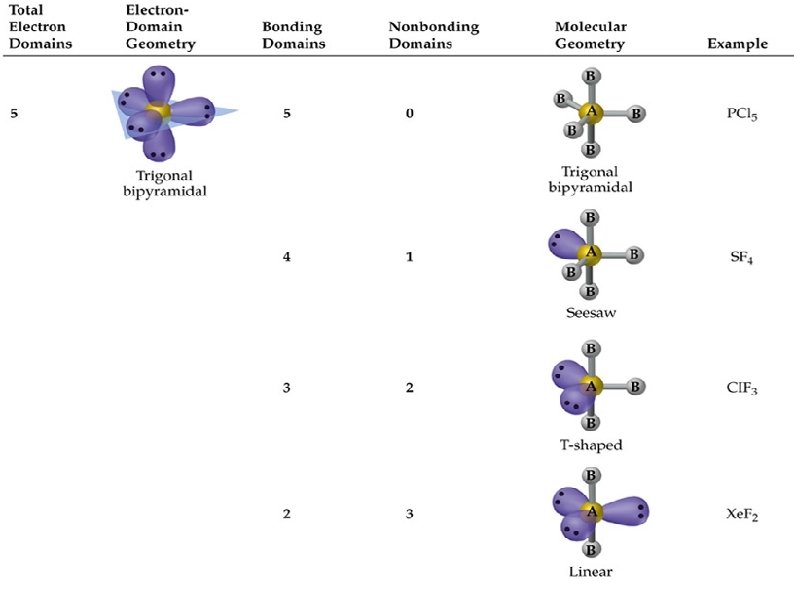
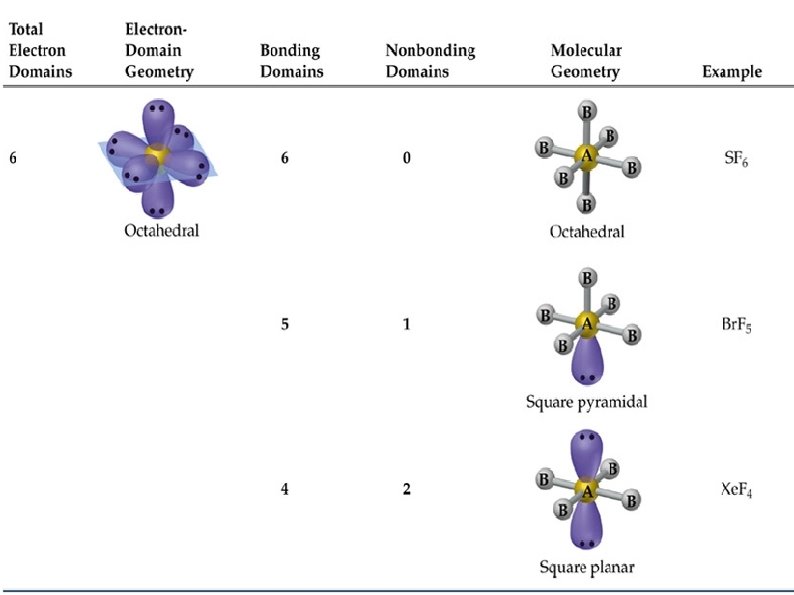
Summary of VSEPR Molecular Shapes
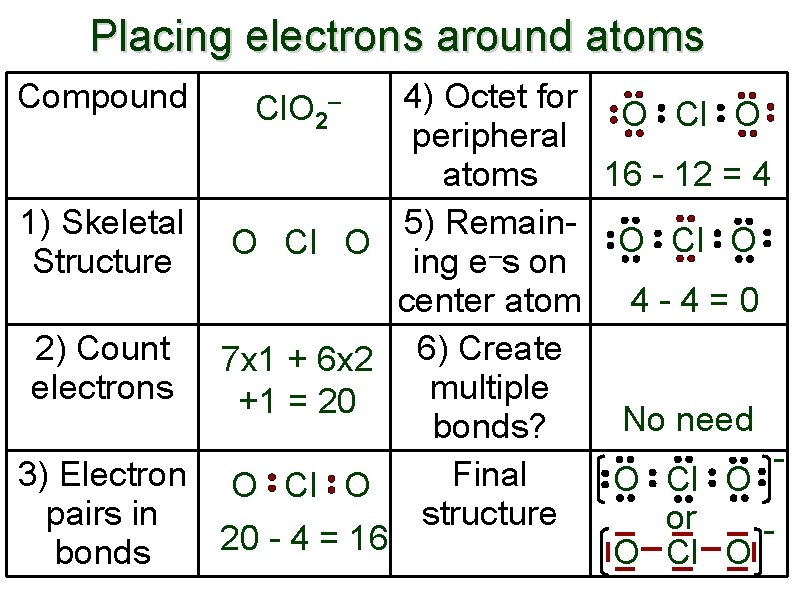
Placing electrons around atoms Compound 4) Octet for O Cl O peripheral 16 - 12 = 4 atoms 1) Skeletal 5) Remain. O Cl O – Structure ing e s on center atom 4 - 4 = 0 2) Count 7 x 1 + 6 x 2 6) Create electrons multiple +1 = 20 No need bonds? 3) Electron O Cl O Final O Cl O pairs in structure or 20 4 = 16 O Cl O bonds Cl. O 2–
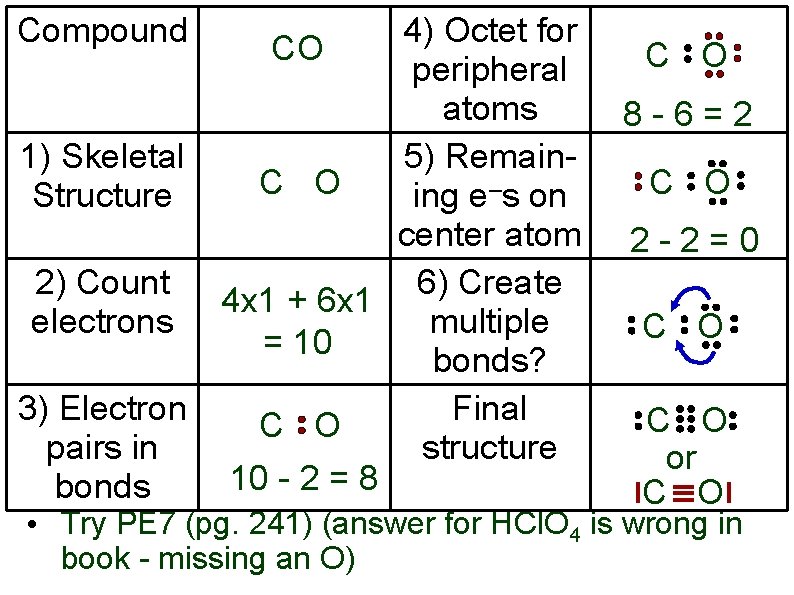
Compound 4) Octet for CO peripheral atoms 1) Skeletal 5) Remain. C O Structure ing e–s on center atom 2) Count 6) Create 4 x 1 + 6 x 1 electrons multiple = 10 bonds? 3) Electron Final C O pairs in structure 10 - 2 = 8 bonds C O 8 -6=2 C O 2 -2=0 C O or C O • Try PE 7 (pg. 241) (answer for HCl. O 4 is wrong in book - missing an O)
- Slides: 46