
Unit 10 B Personality Cont Humanistic Perspective Traits
Unit 10 B Personality Cont… Humanistic Perspective Traits Testing
The Humanistic Perspective
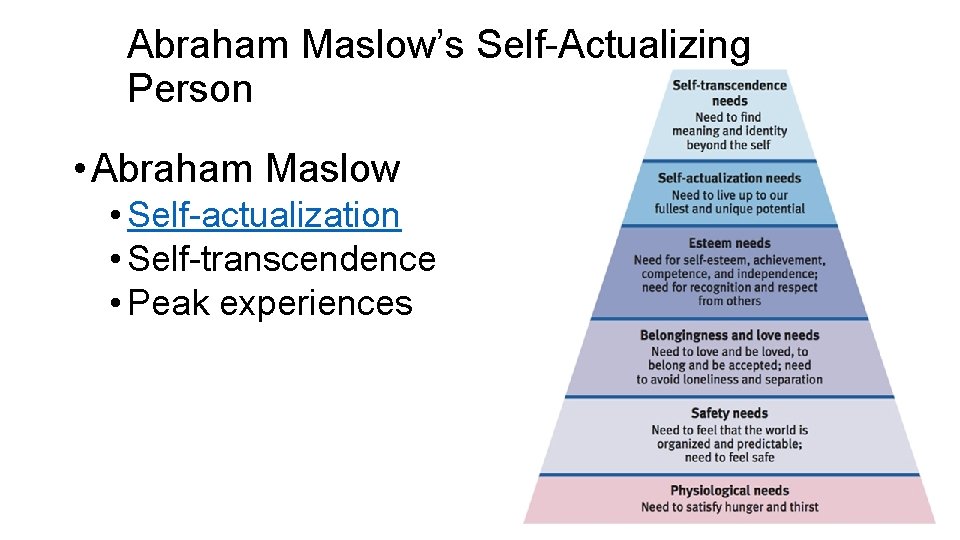
Abraham Maslow’s Self-Actualizing Person • Abraham Maslow • Self-actualization • Self-transcendence • Peak experiences
Carl Roger’s Person-Centered Perspective • Carl Rogers • Growth promoting climate • Genuineness • Acceptance • Empathy • Unconditional positive regard= according to Rogers, an attitude of total acceptance toward another person. • Self-concept = all our thoughts and feelings about ourselves, in answer to the question, “Who am I? ”
Assessing the Self • Self-report tests • Ideal versus actual self
Evaluating the Humanistic Perspective • Renewed interest in self-concept • Criticisms • Vague and subjective • Individualistic and Western biased • Naïve
The Trait Perspective
Traits • Trait = a characteristic pattern of behavior or a disposition to feel and act, as assessed by self-report inventories and peer reports. • Describing rather than explaining • Myers-Briggs Type Indicator (MBTI)
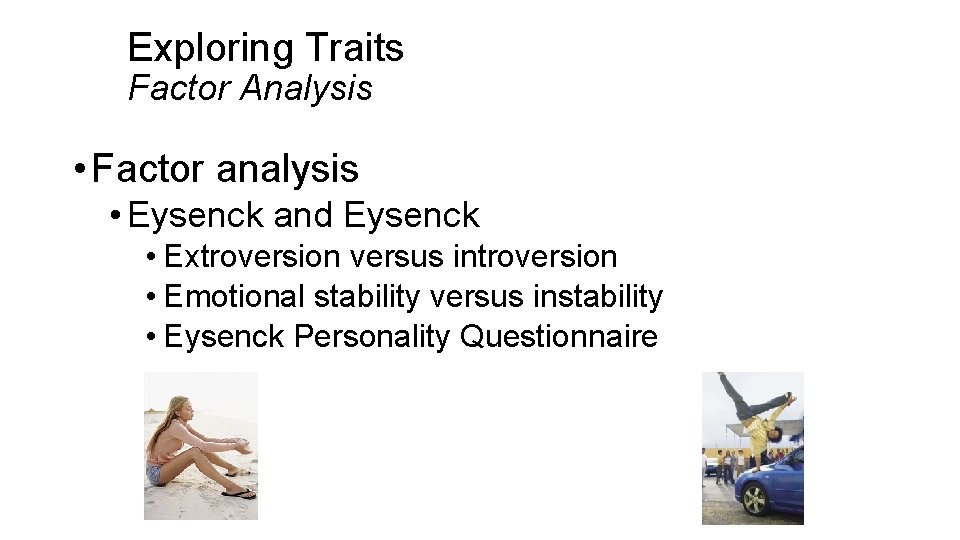
Exploring Traits Factor Analysis • Factor analysis • Eysenck and Eysenck • Extroversion versus introversion • Emotional stability versus instability • Eysenck Personality Questionnaire
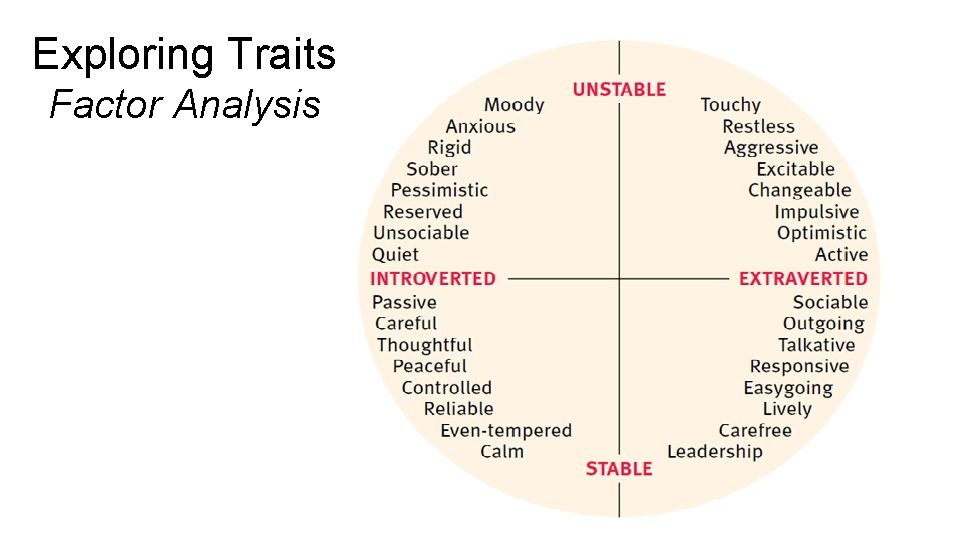
Exploring Traits Factor Analysis
Exploring Traits Biology and Personality • Brain scans • Brain arousal • Genetics • Autonomic nervous system reactivity
Assessing Traits • Personality inventory • Minnesota Multiphasic Personality Inventory (MMPI) = the most widely researched and clinically used of all personality tests. Originally developed to identify emotional disorders (still considered its most appropriate use), this test is now used for many other screening purposes. • Empirically derived test • Objective test • Lie scale
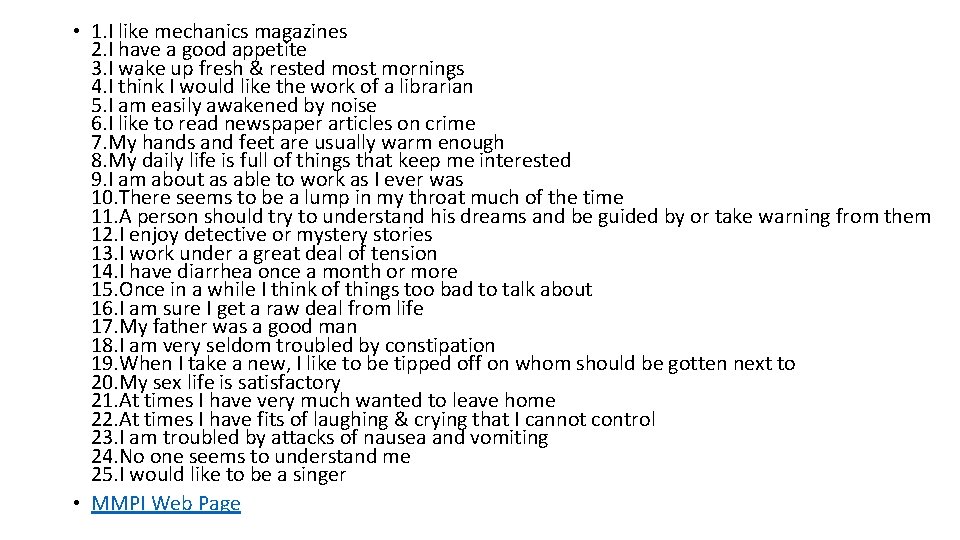
• 1. I like mechanics magazines 2. I have a good appetite 3. I wake up fresh & rested most mornings 4. I think I would like the work of a librarian 5. I am easily awakened by noise 6. I like to read newspaper articles on crime 7. My hands and feet are usually warm enough 8. My daily life is full of things that keep me interested 9. I am about as able to work as I ever was 10. There seems to be a lump in my throat much of the time 11. A person should try to understand his dreams and be guided by or take warning from them 12. I enjoy detective or mystery stories 13. I work under a great deal of tension 14. I have diarrhea once a month or more 15. Once in a while I think of things too bad to talk about 16. I am sure I get a raw deal from life 17. My father was a good man 18. I am very seldom troubled by constipation 19. When I take a new, I like to be tipped off on whom should be gotten next to 20. My sex life is satisfactory 21. At times I have very much wanted to leave home 22. At times I have fits of laughing & crying that I cannot control 23. I am troubled by attacks of nausea and vomiting 24. No one seems to understand me 25. I would like to be a singer • MMPI Web Page
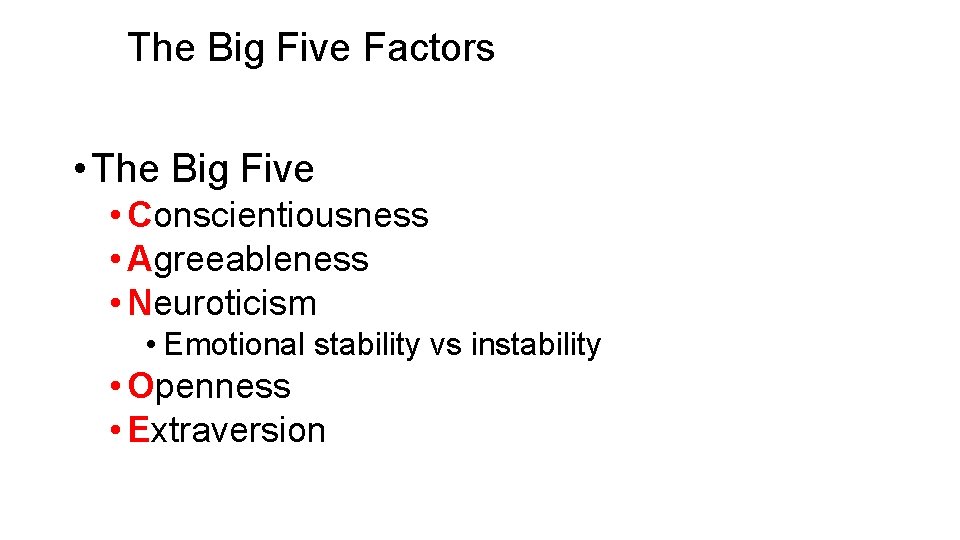
The Big Five Factors • The Big Five • Conscientiousness • Agreeableness • Neuroticism • Emotional stability vs instability • Openness • Extraversion
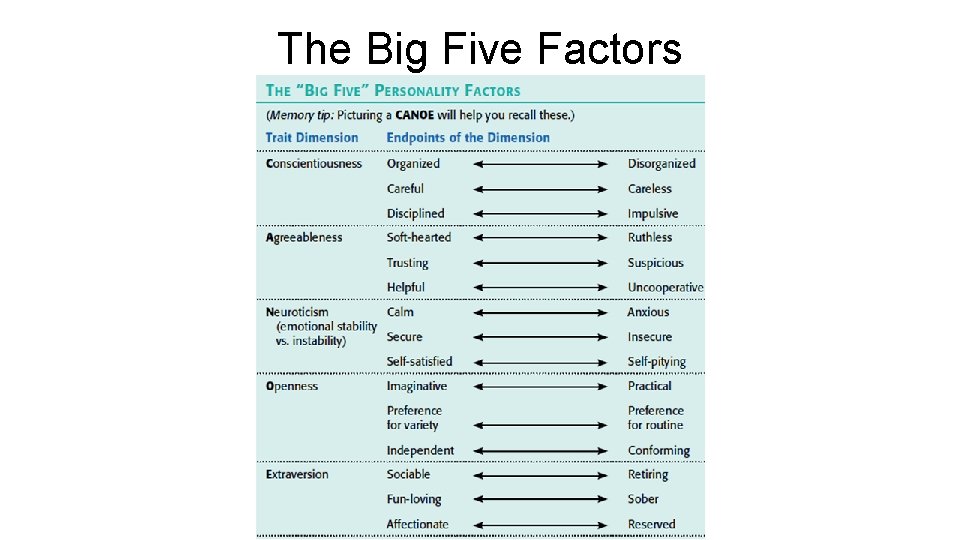
The Big Five Factors
The Big Five Factors • Questions on The Big Five • How stable are the traits? • How heritable are the traits? • Do the traits predict other personal attributes?
The Social-Cognitive Perspective
The Social-Cognitive Perspective • Social-cognitive perspective = views behavior as influenced by the interaction between people’s traits (including their thinking) and their social context. • Social-behavioral approach
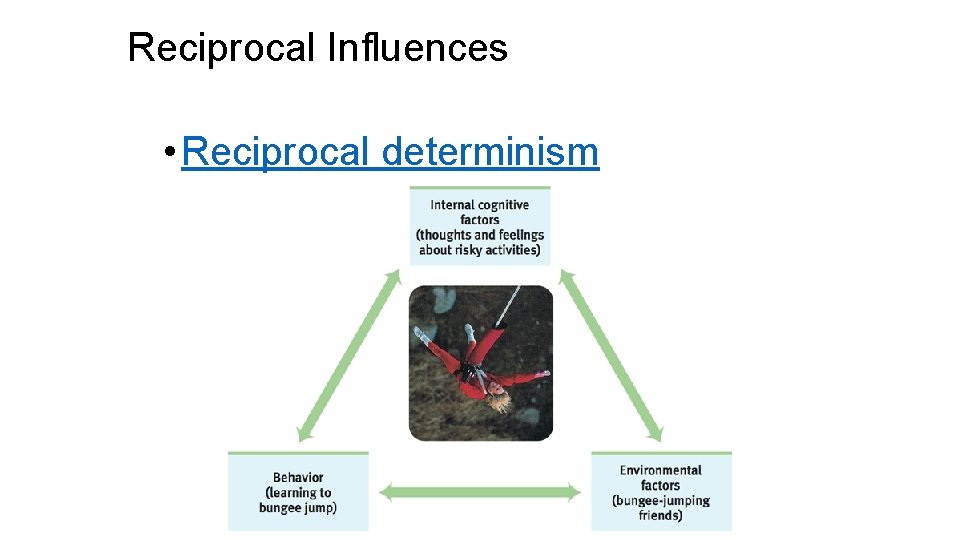
Reciprocal Influences • Reciprocal determinism
Reciprocal Influences • Ways individuals and the environment interact • Different people choose different environments • Our personalities shape how we interpret and react to events • Our personalities help create situations to which we react
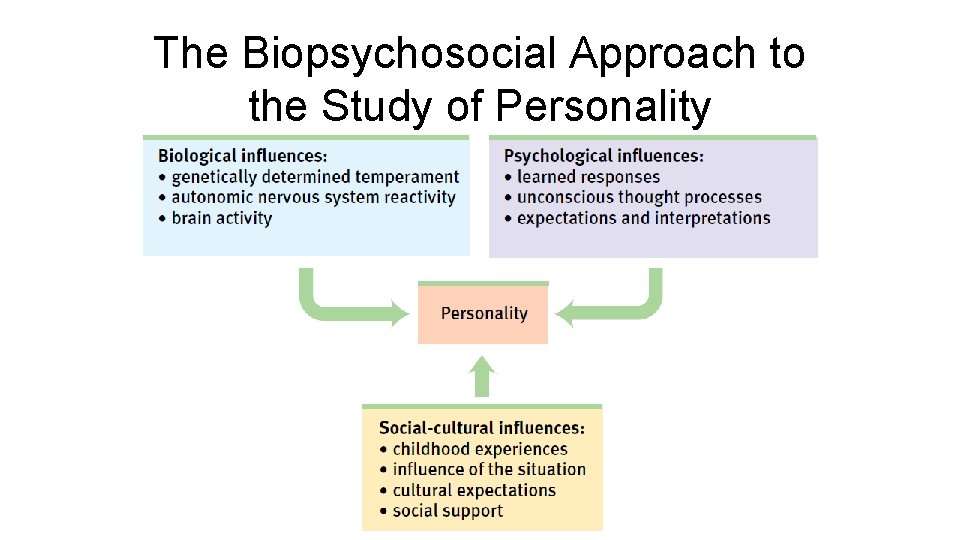
The Biopsychosocial Approach to the Study of Personality
Personal Control • Personal control = the extent to which people perceive control over their environment rather than feeling helpless. • Two ways to study personal control • Correlate people’s feelings of control with their behaviors and achievements • Experiment by raising and lowering people’s sense of control and noting the effects
Personal Control Internal Versus External Locus of Control • Internal versus external locus of control • External locus of control = the perception that chance or outside forces beyond your personal control determine your fate. • Internal locus of control = the perception that you control your own fate.
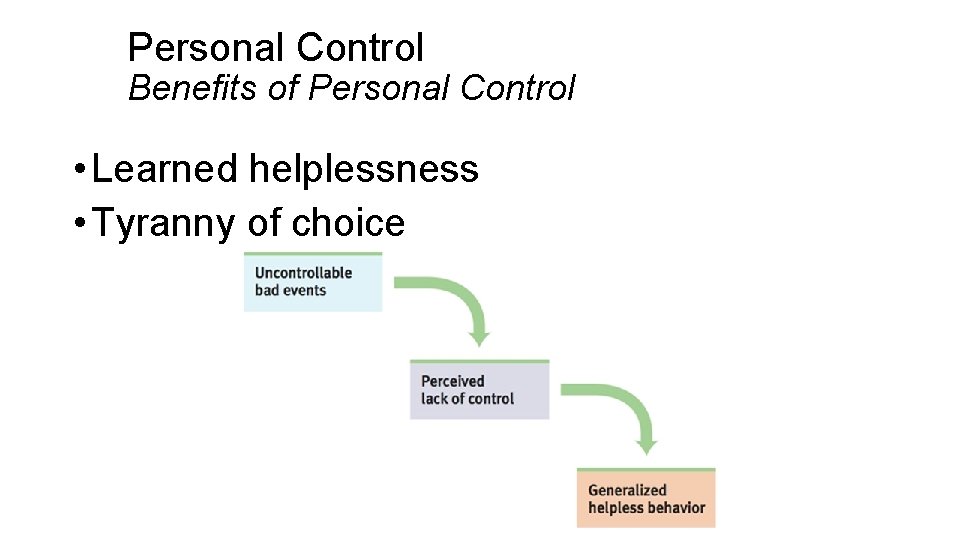
Personal Control Benefits of Personal Control • Learned helplessness • Tyranny of choice
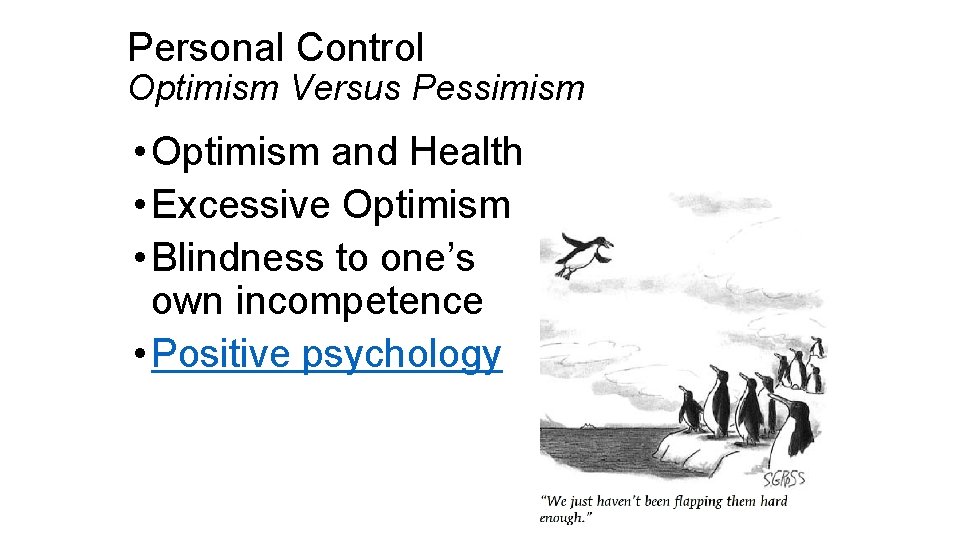
Personal Control Optimism Versus Pessimism • Optimism and Health • Excessive Optimism • Blindness to one’s own incompetence • Positive psychology
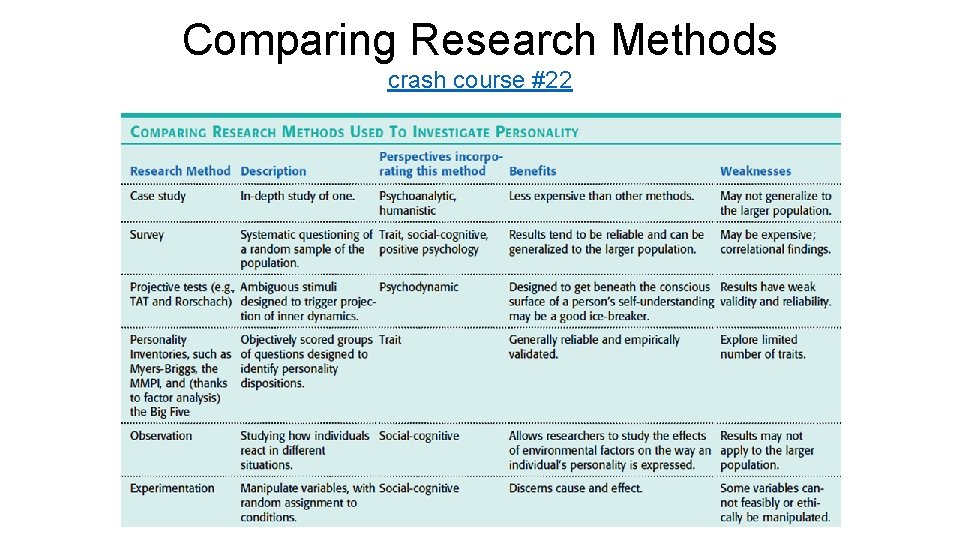
Comparing Research Methods crash course #22
Exploring the Self
• Self = in contemporary psychology, assumed to be the center of personality, the organizer of our thoughts, feelings, and actions. • Possible selves • Spotlight effect = overestimating other’s noticing and evaluating our appearance, performance, and blunders (as if we presume a spotlight shines on us). • Self Esteem = one’s feelings of high or low selfworth.
Self-Serving Bias • Self-serving bias = a readiness to perceive oneself favorably. • People accept more responsibility for good deeds than for bad, successes than failures • Most people see themselves as better than average • Defensive self-esteem
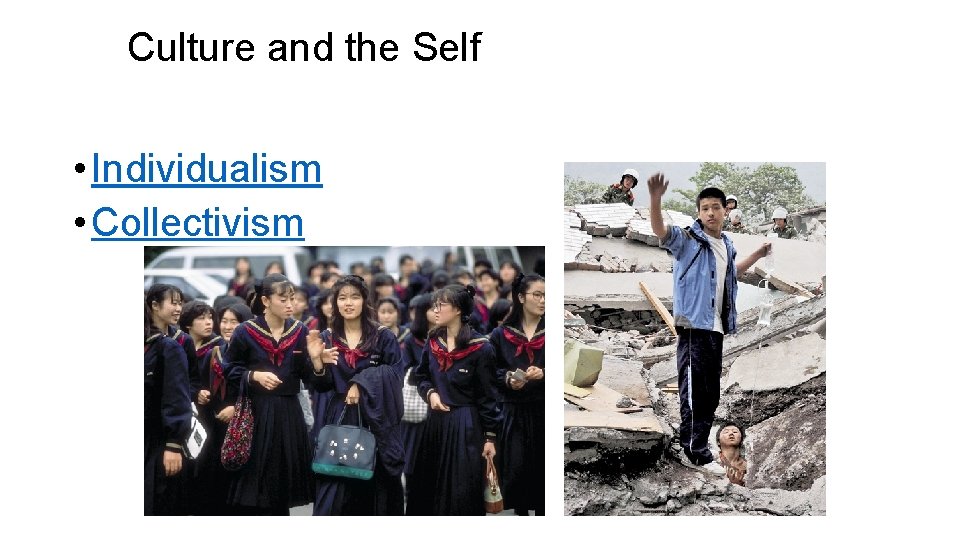
Culture and the Self • Individualism • Collectivism
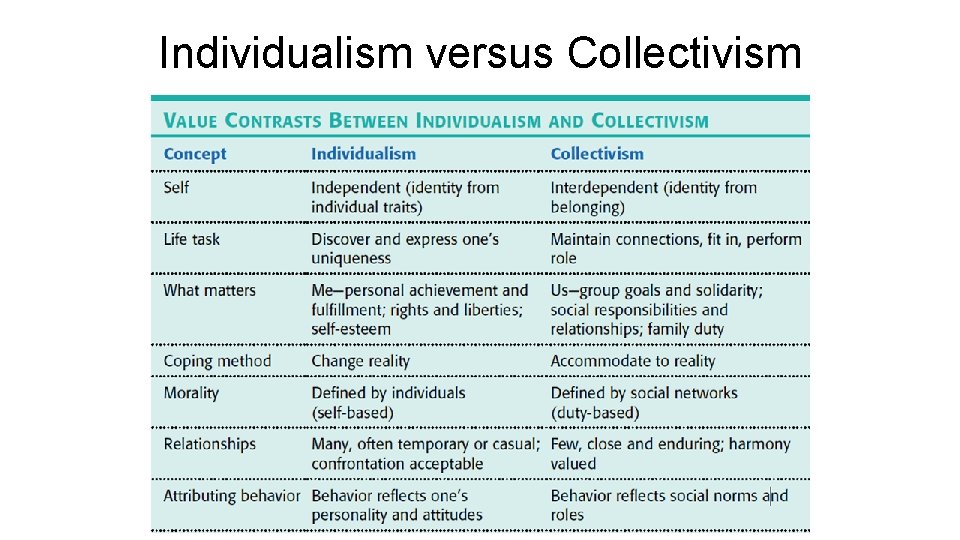
Individualism versus Collectivism
- Slides: 31