
Unit 10 Acids Bases Neutralization Titration Neutralization Reaction
Unit 10: Acids & Bases: Neutralization & Titration

Neutralization Reaction Chemical reaction between an acid and a base. u Products are: 1. a salt (ionic compound) 2. water (H 2 O). u ACID + BASE SALT + WATER
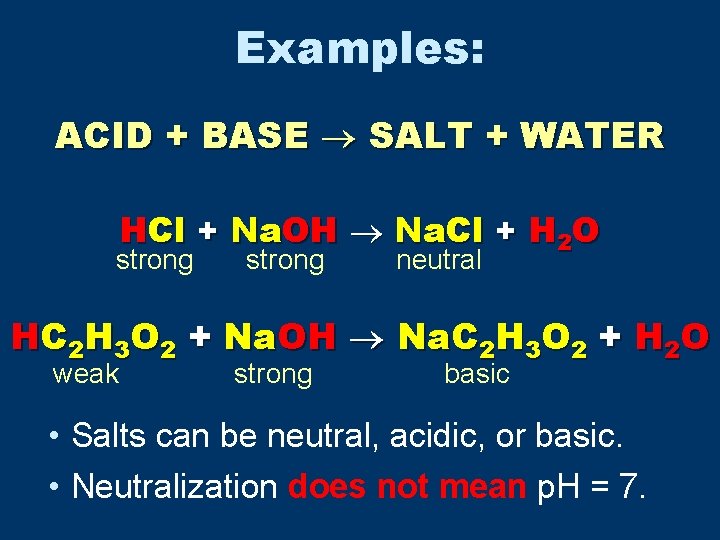
Examples: ACID + BASE SALT + WATER HCl + Na. OH Na. Cl + H 2 O strong neutral HC 2 H 3 O 2 + Na. OH Na. C 2 H 3 O 2 + H 2 O weak strong basic • Salts can be neutral, acidic, or basic. • Neutralization does not mean p. H = 7.
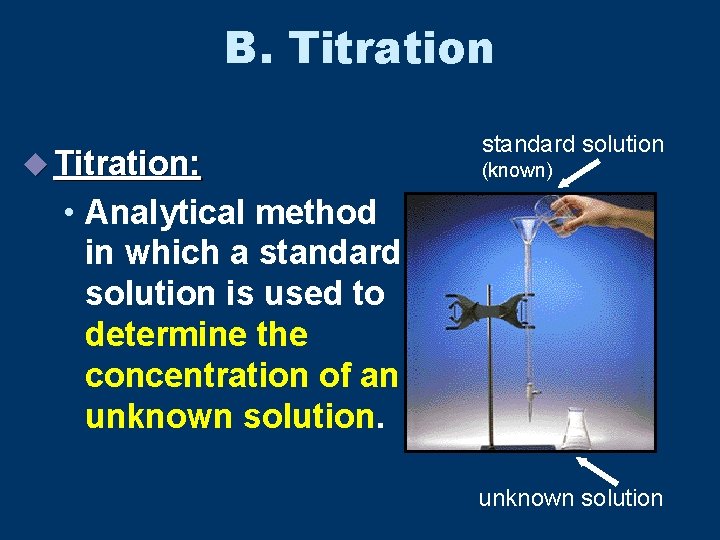
B. Titration u Titration: standard solution (known) • Analytical method in which a standard solution is used to determine the concentration of an unknown solution
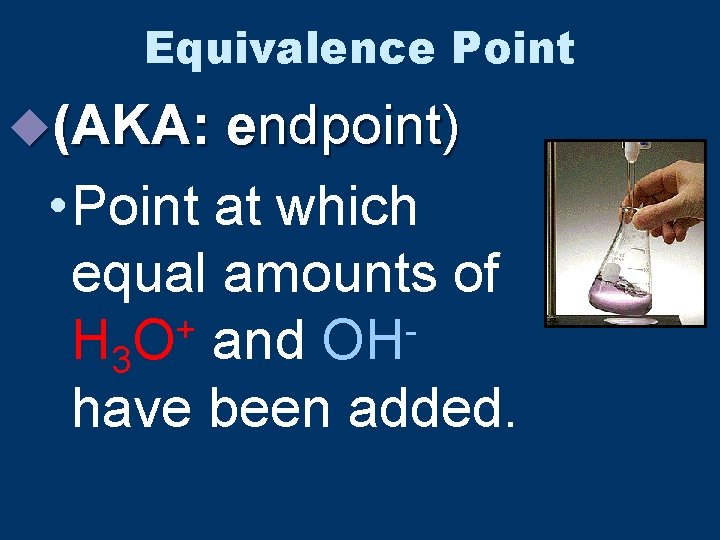
Equivalence Point u(AKA: endpoint) • Point at which equal amounts of + H 3 O and OH have been added.
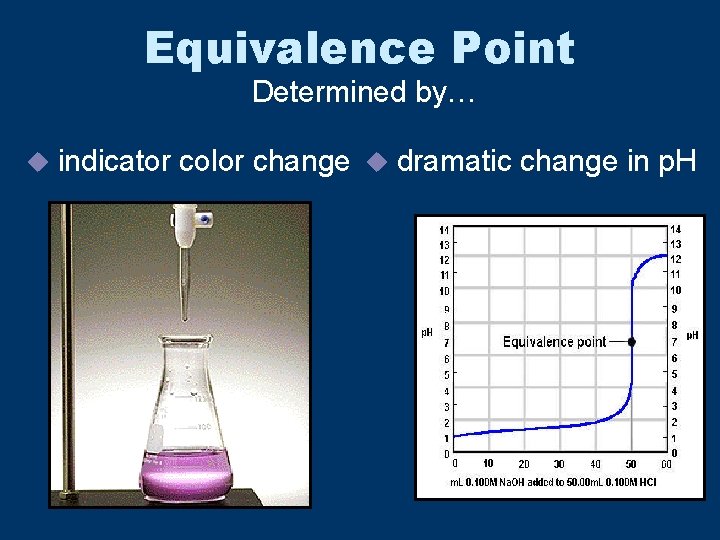
Equivalence Point Determined by… u indicator color change u dramatic change in p. H
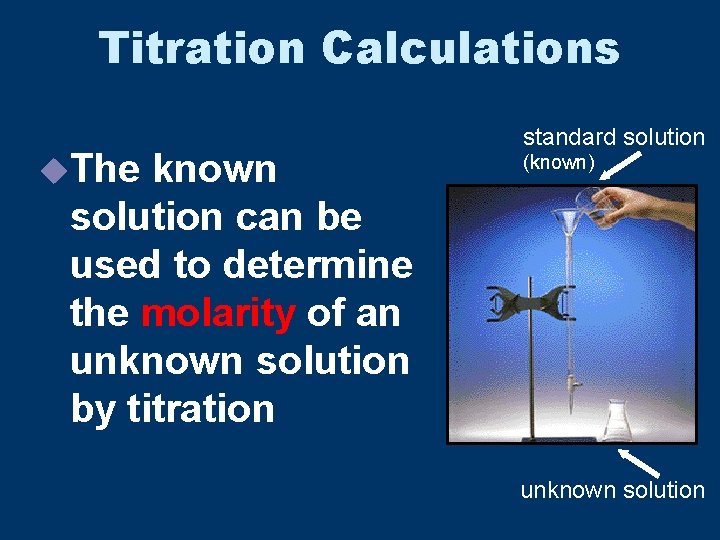
Titration Calculations u. The known solution can be used to determine the molarity of an unknown solution by titration standard solution (known) unknown solution
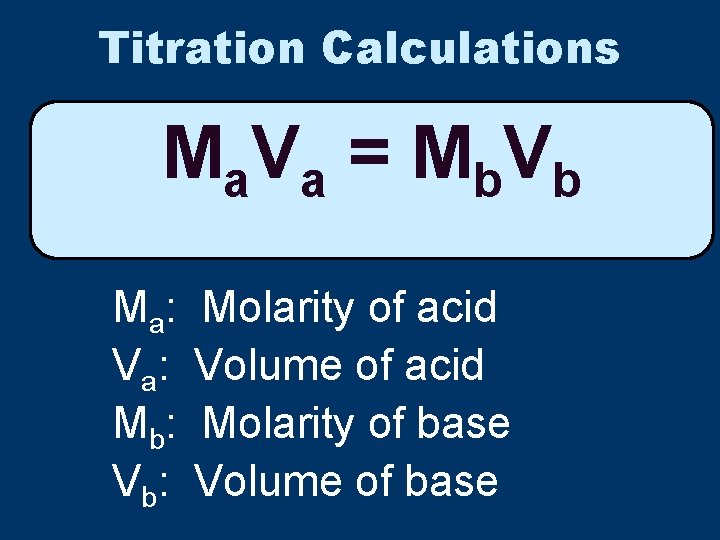
Titration Calculations Ma V a = M b V b Ma : V a: Mb : V b: Molarity of acid Volume of acid Molarity of base Volume of base
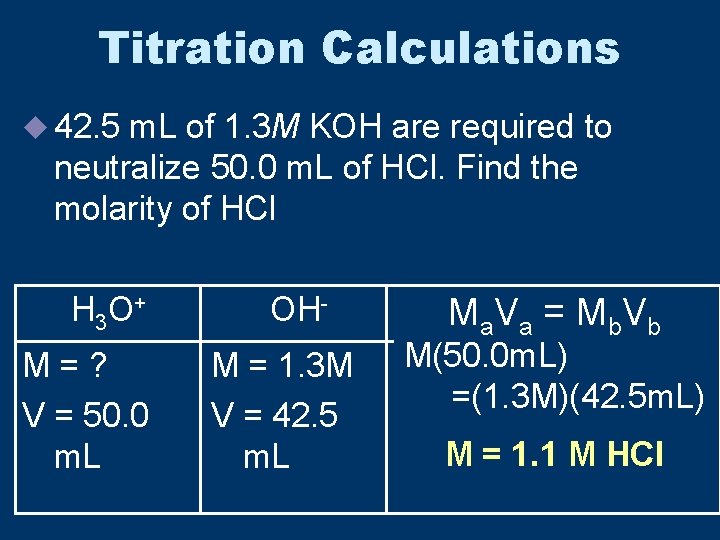
Titration Calculations u 42. 5 m. L of 1. 3 M KOH are required to neutralize 50. 0 m. L of HCl. Find the molarity of HCl H 3 O + M=? V = 50. 0 m. L OHM = 1. 3 M V = 42. 5 m. L Ma V a = M b V b M(50. 0 m. L) =(1. 3 M)(42. 5 m. L) M = 1. 1 M HCl
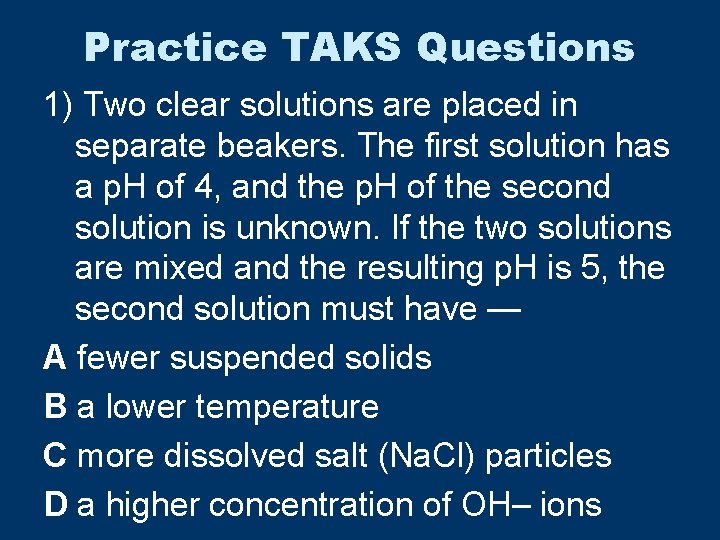
Practice TAKS Questions 1) Two clear solutions are placed in separate beakers. The first solution has a p. H of 4, and the p. H of the second solution is unknown. If the two solutions are mixed and the resulting p. H is 5, the second solution must have — A fewer suspended solids B a lower temperature C more dissolved salt (Na. Cl) particles D a higher concentration of OH– ions
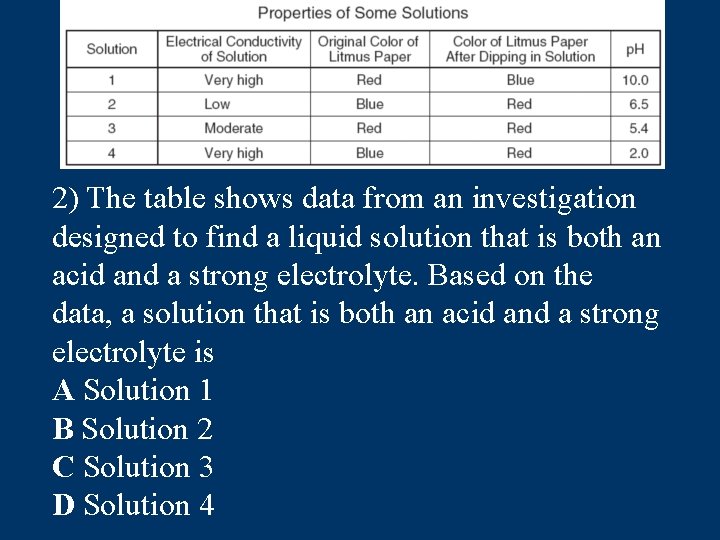
2) The table shows data from an investigation designed to find a liquid solution that is both an acid and a strong electrolyte. Based on the data, a solution that is both an acid and a strong electrolyte is A Solution 1 B Solution 2 C Solution 3 D Solution 4
- Slides: 11