
UNIT 1 UNDERSTANDING LIFE ON EARTH BIOMOLECULES INTRO
UNIT 1 – UNDERSTANDING LIFE ON EARTH BIOMOLECULES
INTRO TO BIOCHEMISTRY
What elements from the periodic table support all life on Earth? Answer: • CARBON • HYDROGEN • OXYGEN • NITROGEN • PHOSPHORUS 3
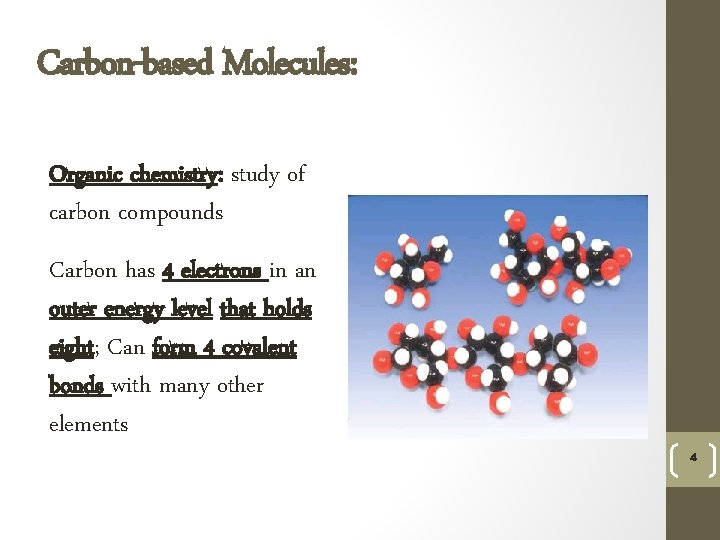
Carbon-based Molecules: Organic chemistry: study of carbon compounds Carbon has 4 electrons in an outer energy level that holds eight; Can form 4 covalent bonds with many other elements 4

Shape of Organic Molecules: shape=function The shape determines its function in an organism 5
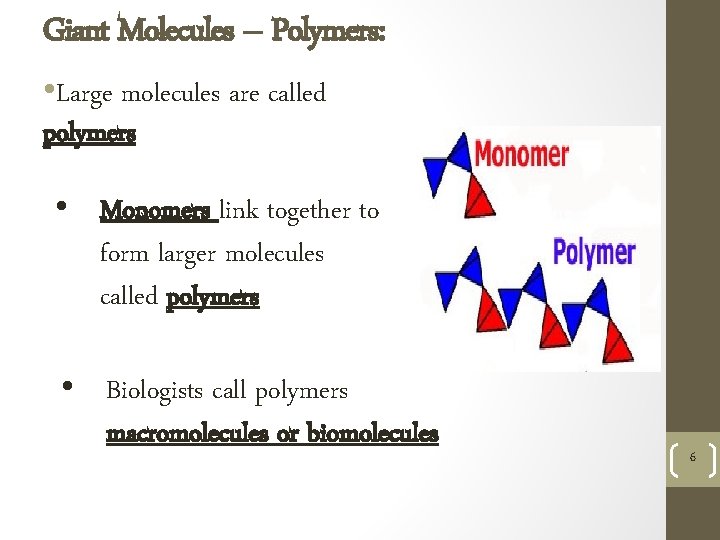
Giant Molecules – Polymers: • Large molecules are called polymers • Monomers link together to form larger molecules called polymers • Biologists call polymers macromolecules or biomolecules 6
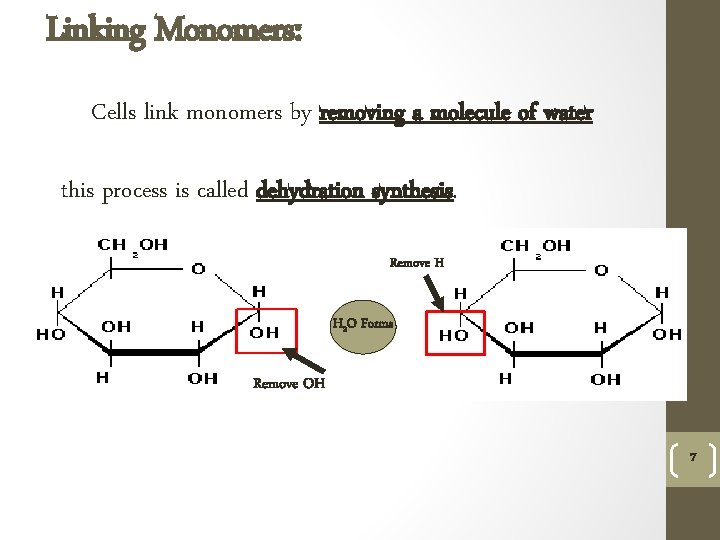
Linking Monomers: Cells link monomers by removing a molecule of water this process is called dehydration synthesis. Remove H H 2 O Forms Remove OH 7
Breaking Down Polymers: • Cells break down macromolecules by adding a molecule of water • this process is called hydrolysis FYI When trying to lose weight, dietitians tell patients to drink more water to help in the breakdown and absorption of molecules. 8

Macromolecules in Organisms: There are four macromolecules: Carbohydrates (CHO) Lipids (CHO) Proteins (CHON) Nucleic Acids (CHONP) 9
CARBOHYDRATES 10
Monosaccharides: • Monosaccharides are the monomers of carbohydrates; also called simple sugars • Examples: glucose, fructose, & galactose • Chemical Formula for monosaccharides is C 6 H 12 O 6; this a ratio of 1: 2: 1 • Monosaccharides are the main fuel that cells use for cellular work; they are a source of quick energy • Disaccharides (2 Sugars bonded); example – sucrose (table sugar)
Polysaccharides: Large sugar molecules; take longer for body to break down • Starch is an example of a polysaccharide in plant cells • Glycogen is a polysaccharide found in animal cells • Starch and glycogen are extra amounts of sugar taken in by the cell and stored for later use • Cellulose is a polysaccharide found in plant cell walls; most abundant organic compound on earth 12

LIPIDS
Lipids: • Lipids are hydrophobic –”water fearing”; they do not mix with water • Includes fats, waxes, steroids and oils • Functions – üstore energy üInsulate body üCushion and protect organs üForm cell membranes 14
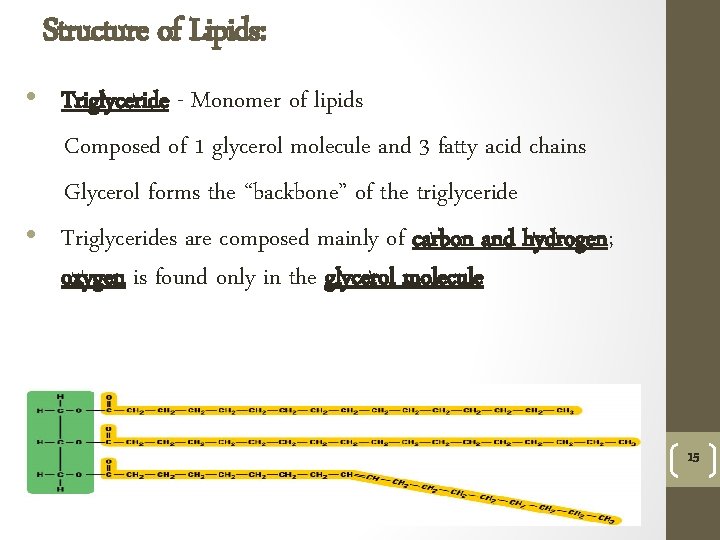
Structure of Lipids: • Triglyceride - Monomer of lipids Composed of 1 glycerol molecule and 3 fatty acid chains Glycerol forms the “backbone” of the triglyceride • Triglycerides are composed mainly of carbon and hydrogen; oxygen is found only in the glycerol molecule 15
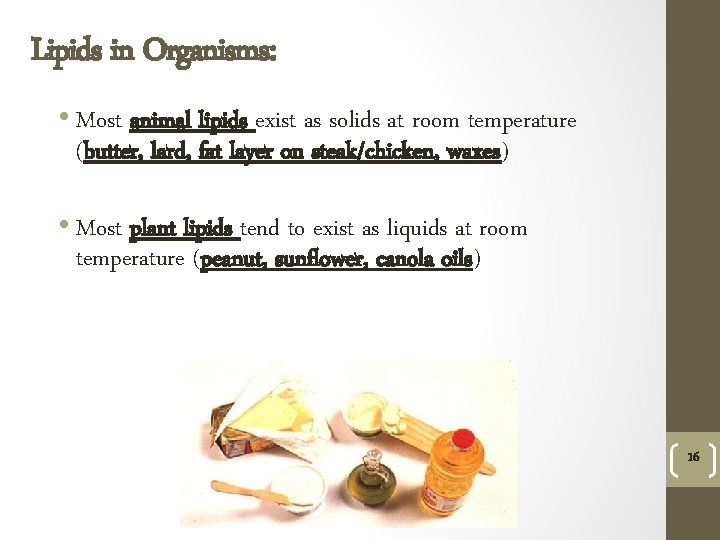
Lipids in Organisms: • Most animal lipids exist as solids at room temperature (butter, lard, fat layer on steak/chicken, waxes) • Most plant lipids tend to exist as liquids at room temperature (peanut, sunflower, canola oils) 16
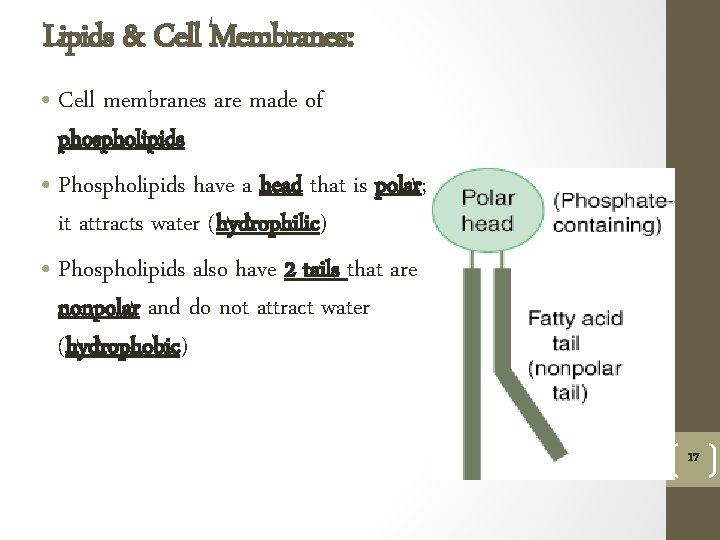
Lipids & Cell Membranes: • Cell membranes are made of phospholipids • Phospholipids have a head that is polar; it attracts water (hydrophilic) • Phospholipids also have 2 tails that are nonpolar and do not attract water (hydrophobic) 17
Steroids: • Cholesterol is the “base steroid” from which your body produces other steroids • Estrogen and testosterone are examples of these other steroids 18

PROTEINS
Proteins: • Proteins are large, folded polymers made of monomers called amino acids • Elements in proteins: C, H, O and N • Functions: üBuild cells üAct as hormones üAct as enzymes üCellular transport 20
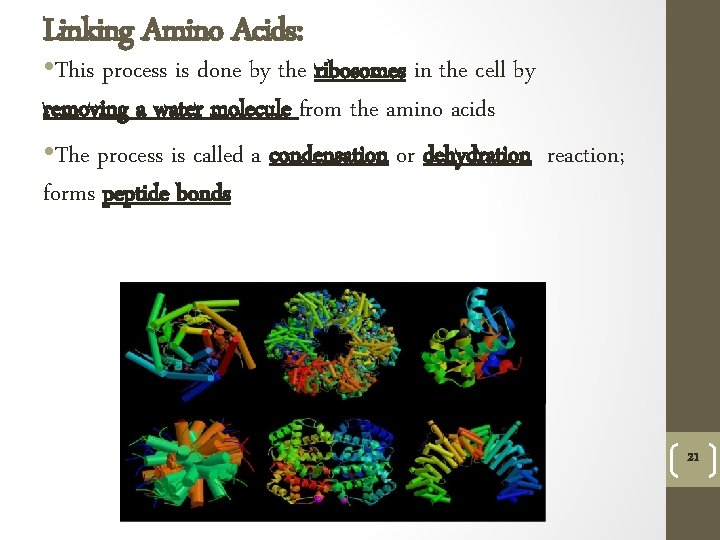
Linking Amino Acids: • This process is done by the ribosomes in the cell by removing a water molecule from the amino acids • The process is called a condensation or dehydration reaction; forms peptide bonds 21
Enzymes are proteins • What do enzymes do? • Enzymes control the rate of chemical reactions • Enzymes are also referred to as biological catalysts • enzymes work by weakening bonds and lowering the amount of activation energy needed for the reaction • Enzymes act on a substrate; they are specific to substrate 22
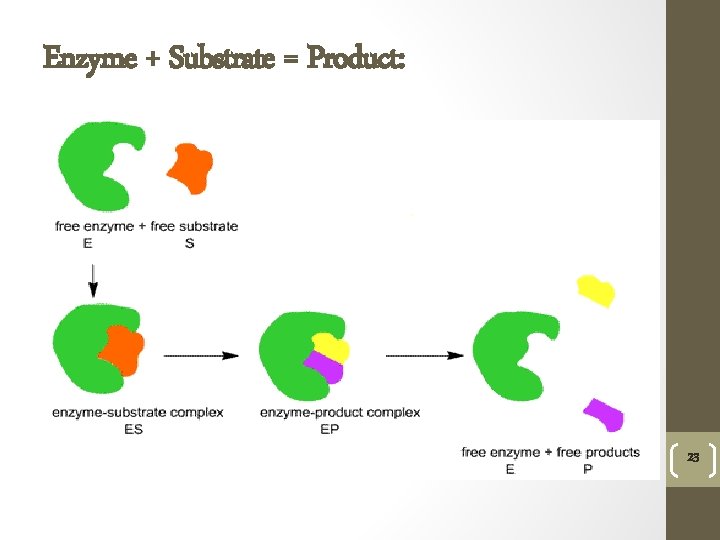
Enzyme + Substrate = Product: 23
NUCLEIC ACIDS
Nucleic Acids • Store hereditary information • Contain information for making all the body’s proteins • Elements in nucleic acids: C, H, O, N and P • Types of nucleic acids: DNA and RNA 25
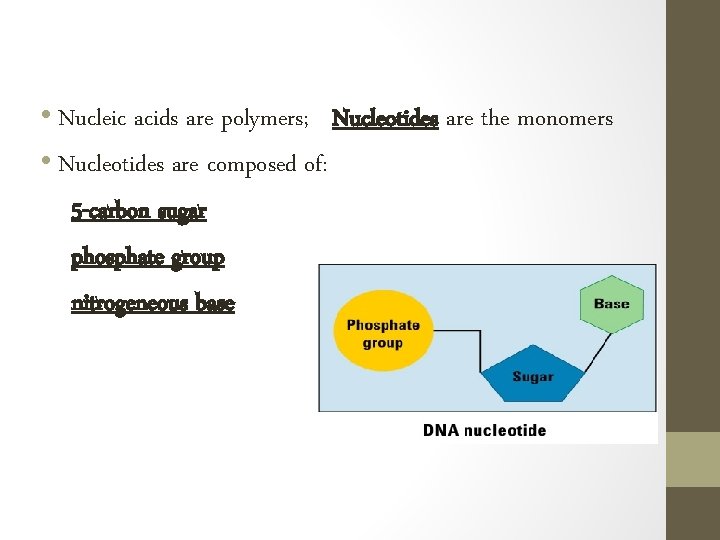
• Nucleic acids are polymers; Nucleotides are the monomers • Nucleotides are composed of: 5 -carbon sugar phosphate group nitrogeneous base
Nitrogeneous Bases: • Each DNA nucleotide has one of the following bases: • Each RNA nucleotide has one of the following bases: – Adenine (A) – Guanine (G) – Uracil (u) –Thymine (T) – Cytosine (C) –Cytosine (C) 27
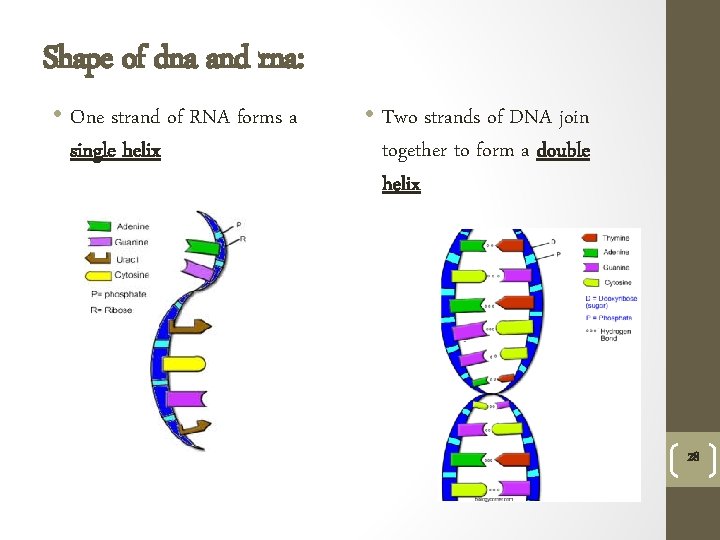
Shape of dna and rna: • One strand of RNA forms a single helix • Two strands of DNA join together to form a double helix 28
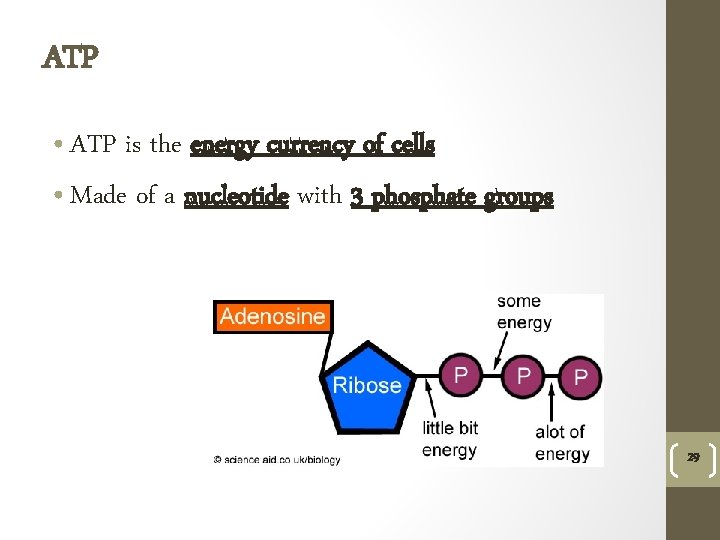
ATP • ATP is the energy currency of cells • Made of a nucleotide with 3 phosphate groups 29
- Slides: 29