
Unit 1 Tonsillitis PRESENTED BY REVIEWED BY Ms
Unit 1 Tonsillitis PRESENTED BY: REVIEWED BY: Ms. Pavithra K Mr. Jobin Lecturer, MSN dept Asst. Professor, MSN dept
LEARNING OBJECTIVES At the end of the class students will be able to • define tonsillitis • Enlist the causes of tonsillitis • list down the clinical features of tonsillitis • enumerate the management of tonsillitis

Definition • Inflammation of tonsils is called tonsillitis caused by bacterial and viral infection characterized by difficulty in swallowing, sore throat , fever , snoring.
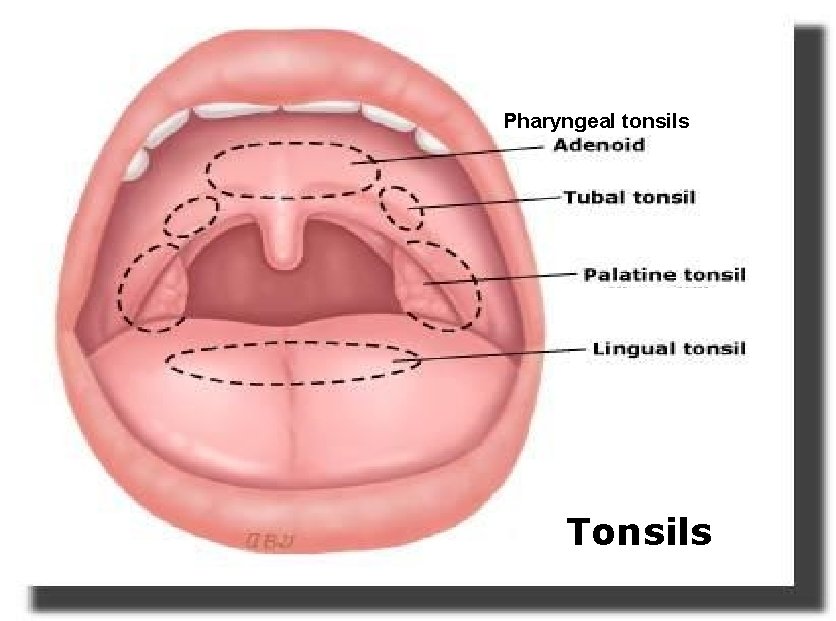
Pharyngeal tonsils Tonsils
• common childhood infection. • preschool age to midteens. • There are two types – Recurrent tonsillitis – Chronic tonsillitis

• Recurrent tonsillitis: – multiple episodes of acute tonsillitis a year. • Chronic tonsilitis – Chronic inflammatory changes in the tonsils are usually the result of recurrent acute infections.
Etiology VIRUS • Adenovirus • Rhinovirus • Influenza • Coronavirus • Respiratory syncytial virus • Epstein-Barr virus • Herpes simplex virus • cytomegalovirus
BACTERIA: • Streptococcus pneumoniae, • Mycoplasma pneumoniae • Chlamydia pneumoniae • Bordetella pertussis • Fusobacterium • Corynebacterium diphtheriae • Treponema pallidum • Neisseria gonorrhoeae
Triggering factors Exogenous • Food with artificial colours and preservatives • Cold foods, cold drinks, icrecreams • Extreme cold climate • Changes in weather • Exposure to pollution • Embedded foreign body • Contact with infected person
Endogenous • URTI • Post nasal drainage due to sinusitis • Residual tonsillar tissue after tonsillectomy • Blood Dyscrasias
PATHOPHYSIOLOGY • Due to the etiological factors • viruses and bacteria enter the body through the nose and mouth • white blood cells of the immune system destroy the viruses or bacteria by producing inflammatory cytokines • acute inflammation of the mucous membrane covering the tonsils
hyperemia , edema, abscesses formation Crypts Collection of inflammatory exudates in crypts Presence of white spots on inflamed tonslillar surface (follicular tonsillitis ) • Infection spreads whole over the tonsils • Congested and swollen (Parenchymatous tonsilitis ) • •
• Recurrent infection • Development of abscess • Fibrous tissue formation
CLINICAL FEATURES • • sore throat red, swollen tonsils odynophagia fever headache tiredness chills • • • malaise white pus-filled spots swollen lymph nodes pain in the ears or neck weight loss
• • • Halitosis voice changes difficulty opening the mouth (trismus) loss of appetite choking
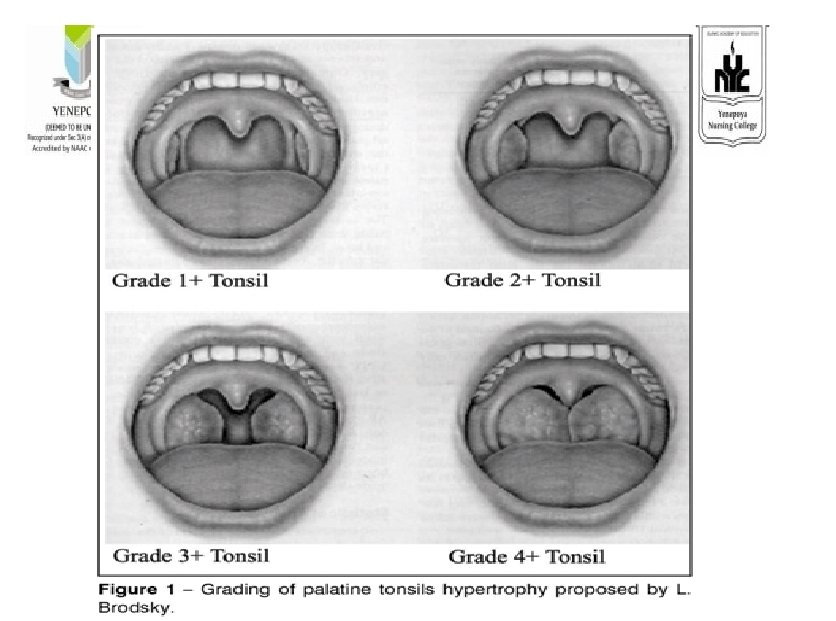
Grades • • • 0 - tonsil in palatine fossa 1 - Tonsil occupying less than 25% of oropharynx 2 - Tonsil occupying 25%- 50% of oropharynx 3 - Tonsil occupying 50% -75% of oropharynx 4 - Tonsil occupying more than 25% of oropharynx
Diagnosis • History collection • Physical examination – Inspecting the tonsis – Palpation of lymph nodes • Throat swab • Blood test - ESR
Complication • • • Chronic tonsilitis Peritonsillar abscess Para pharyngeal abscess Acute otitis media Acute nephritis Rheumatic fever
Management • To relieve the symptoms • To prevent recurrence • To prevent complications
Non Pharmacological measures drink plenty of fluids gargle with warm salt water throat lozenges- lemon and ginger Wearing mast – to avoid exposure to pollution Avoiding cold drinks or foods Provide comforting beverage: Warm liquids- warm water with honey • Soft foods • • •
Pharmacological management Antibiotics Therapy • 10 days, twice a day • penicillin -500 mg • amoxicillin - 50 mg/Kg • Erythromycin is used for people allergic to penicillin- 50 mg/Kg
• Antipyretic – Paracetamol • Analgesics – Ibuprofen
Surgical Management • Recurrent tonsillitis • bacterial tonsillitis that does not get better with antibiotics • tonsils are too big, and are causing trouble breathing or swallowing
Tonsillectomy : • It is the surgical removal of the tonsils • It is usually done under general anesthesia • Unilateral or bilateral
Tonsillectomy Methods 1. Dissection and snare method – removal of the tonsil by use of a forceps and snare scissors. The tonsils are completely removed and the remaining tissue is cauterized.
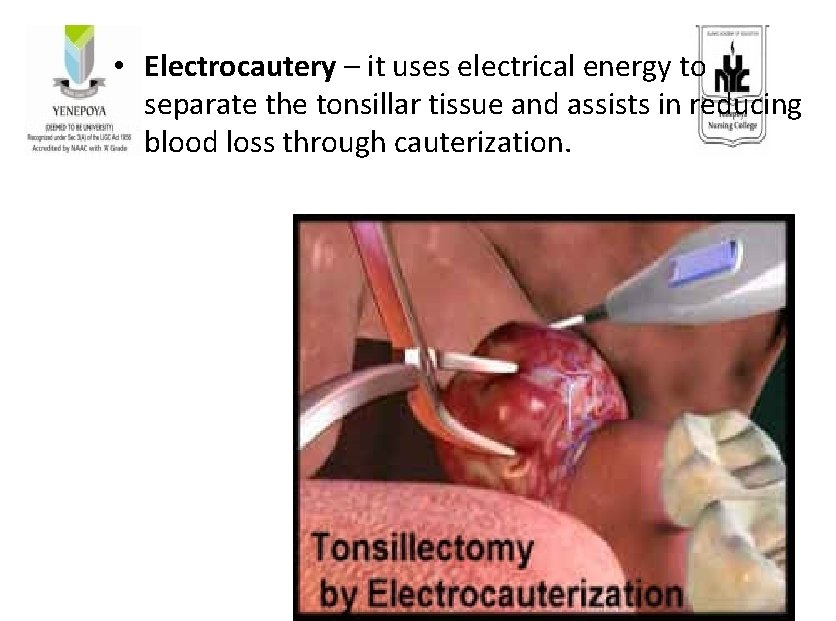
• Electrocautery – it uses electrical energy to separate the tonsillar tissue and assists in reducing blood loss through cauterization.
• Radiofrequency ablation – radiofrequency energy is used to remove the tonsil • Coblation tonsillectomy – it combines radiofrequency energy with the use of ionized sodium molecules to ablate tissues • Laser assisted serial tonsillectomy (LAST)
Pre operative – Nursing management • • • Explain the procedure and take consent NPO should be maintained Avoid use of over the counter medications Avoid Aspirin or aspirin containing drugs. IV fluids- NS, DNS Blood investigations
Post-operative Nursing management • • Bleeding Pain Diet Physical activity Nausea Halitosis Follow up
Bleeding • 2 weeks after surgery- blood from the nose or in the saliva • see a little coating of blood on the tongue. • Make the patient to sit in upright position, and place ice collar on their neck. • Check for blood when patient is spitting, coughing, or vomiting. • if bright red blood is seen should be reported immediately
Scabs: • A scab will form where the tonsils are removed. • These scabs are thick, white • cause bad breath • scabs fall off in small pieces five to ten days after surgery • when the scab on the tonsillar area falls off patent may have severe pain and a small amount of blood when this occurs.
Nursing Diagnosis • Ineffective Airway Clearance related obstructions as evidenced by inability to clear secretions. • Acute pain related to surgical incision • Risk for Deficient Fluid Volume related to Blood loss from surgery or nausea and vomiting or Inadequate oral intake
EVALUATION • • • What is Tonsillitis. What are the causes of Tonsillitis. Eneumerate the pathophysiology of Tonsillitis. Enlist the clinical features of Tonsillitis. Explain the management of Tonsillitis
REFERENCE • Smeltzer – Brunner & Suddharth Textbook of Medical Surgical Nursing, Wolters kluwer publishers, 12 th edition 2009. • Black – Medical Surgical Nursing, Elsevier publishers, 8 th edition 2009. • Nettina – Lippincott manual of Nursing Practice, Wolters kluwer publishers, 7 th edition 2014. • Lewis – Medical Surgical Nursing, Elsevier publishers, 10 th edition, 2017
- Slides: 35