
Unit 1 The Cell Standard 1 a Students
- Slides: 15
Unit 1 The Cell
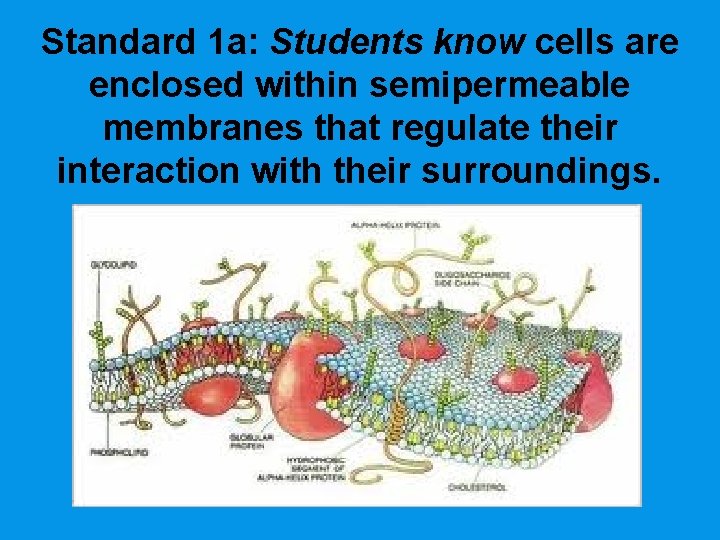
Standard 1 a: Students know cells are enclosed within semipermeable membranes that regulate their interaction with their surroundings.
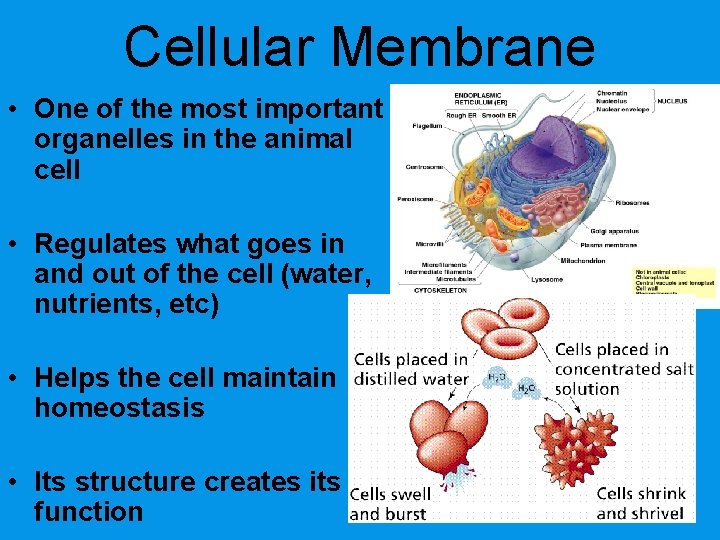
Cellular Membrane • One of the most important organelles in the animal cell • Regulates what goes in and out of the cell (water, nutrients, etc) • Helps the cell maintain homeostasis • Its structure creates its function
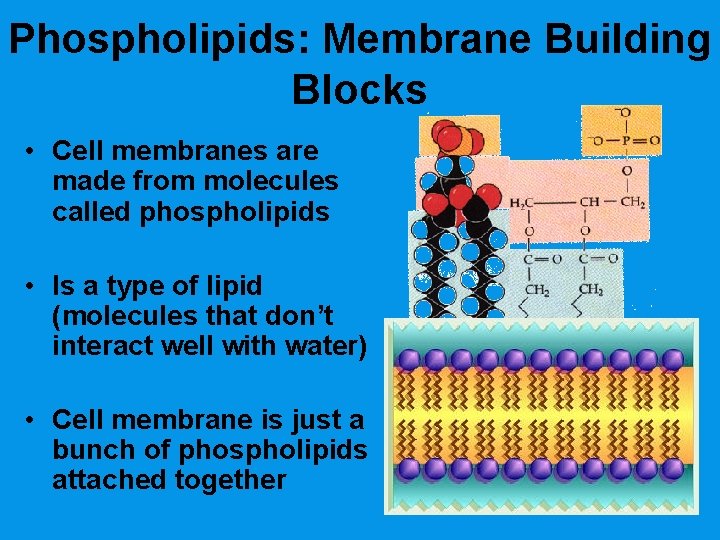
Phospholipids: Membrane Building Blocks • Cell membranes are made from molecules called phospholipids • Is a type of lipid (molecules that don’t interact well with water) • Cell membrane is just a bunch of phospholipids attached together
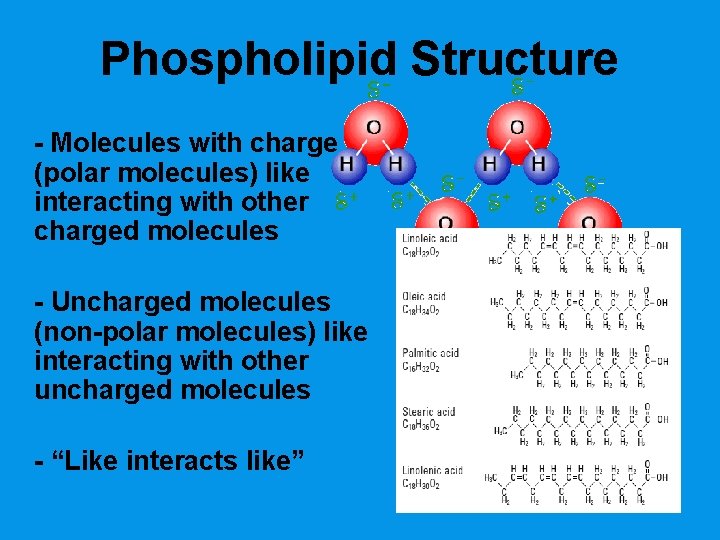
Phospholipid Structure - Molecules with charge (polar molecules) like interacting with other charged molecules - Uncharged molecules (non-polar molecules) like interacting with other uncharged molecules - “Like interacts like”
Polar Vs. Non-Polar Molecules Practice • • Is. If salt oil polar ispolar non-polar, orornon-polar? what does How that say do about doyou the know? charge of its molecules?
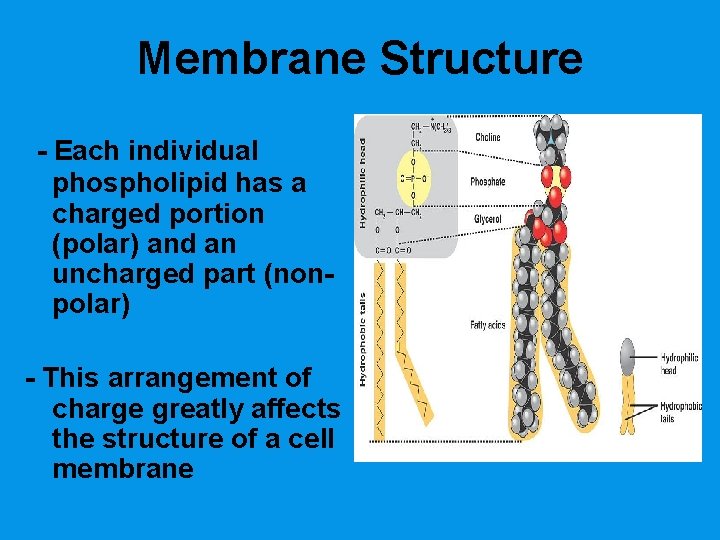
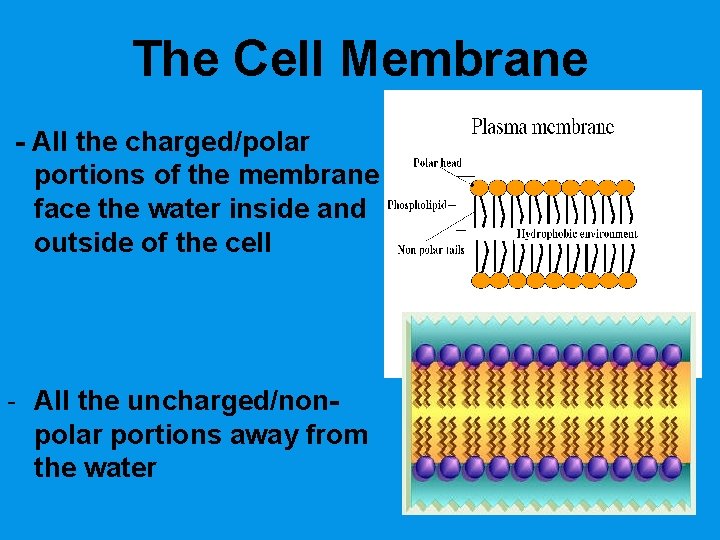
Membrane Structure - Each individual phospholipid has a charged portion (polar) and an uncharged part (nonpolar) - This arrangement of charge greatly affects the structure of a cell membrane
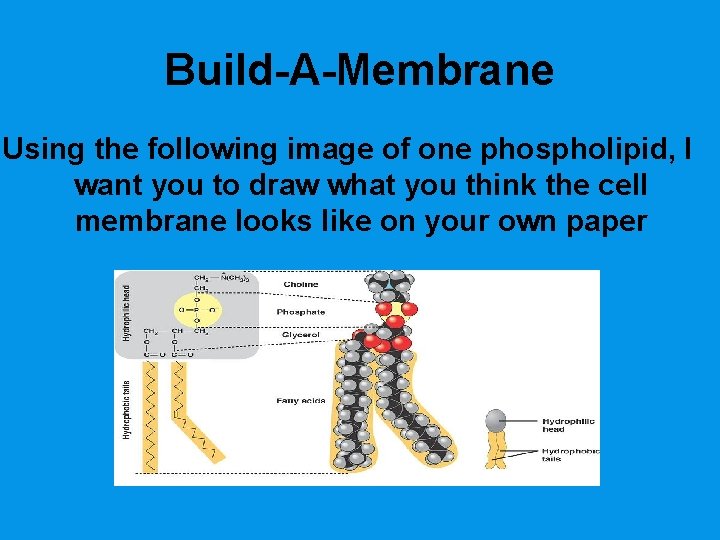
Build-A-Membrane Using the following image of one phospholipid, I want you to draw what you think the cell membrane looks like on your own paper
Build-A-Membrane Once you are done drawing your membrane, explain how you decided what the structure of the membrane looked like on your computer.
The Cell Membrane - All the charged/polar portions of the membrane face the water inside and outside of the cell - All the uncharged/nonpolar portions away from the water
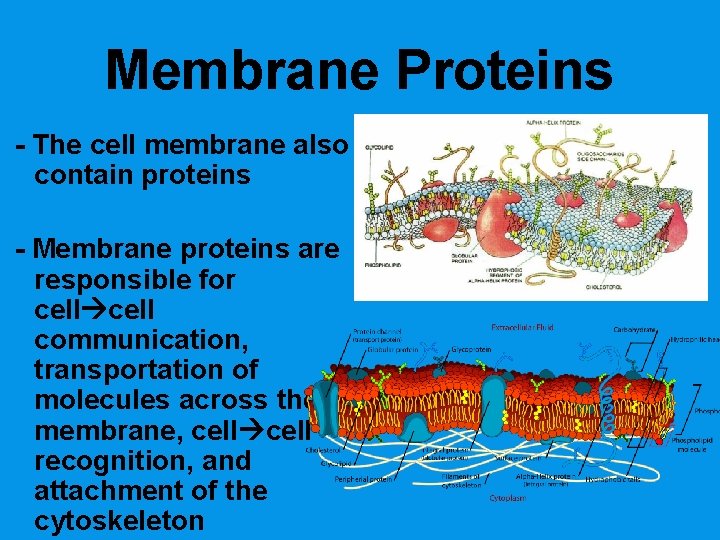
Membrane Proteins - The cell membrane also contain proteins - Membrane proteins are responsible for cell communication, transportation of molecules across the membrane, cell recognition, and attachment of the cytoskeleton
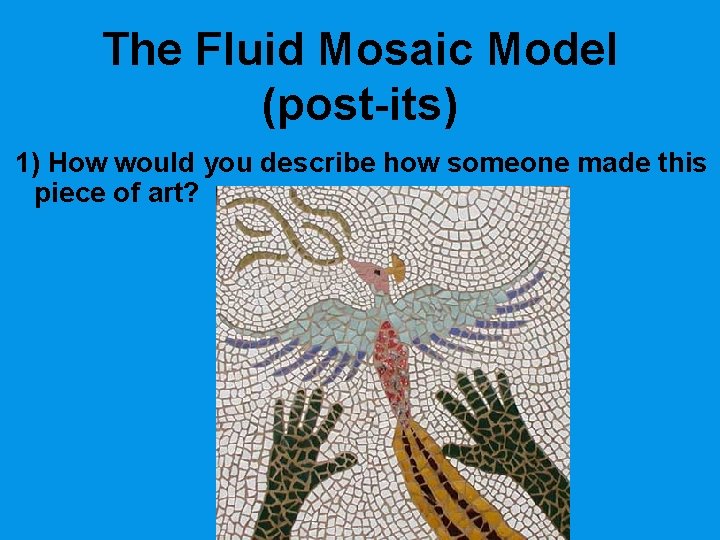
The Fluid Mosaic Model (post-its) 1) How would you describe how someone made this piece of art?
The Fluid Mosaic Model (Post-Its) 1) Why is the cellular membrane described as a “fluid-mosaic model? ”
Fluid-Mosaic Model - Fluid: The phospholipids in the membrane are free to move side to side like a liquid - Mosaic: The proteins are scattered throughout the membrane like the pieces of a mosaic
TPS The phospholipids in a membrane can move side to side as much as they want. However, they can never rotate upside down. Why not? Explain your reasoning.