
Unit 1 TECHNOLOGICAL AND ENVIRONMENTAL TRANSFORMATIONS 8000 600









- Slides: 49
Unit 1 TECHNOLOGICAL AND ENVIRONMENTAL TRANSFORMATIONS (8000 -600 B. C. E. )
BIG GEOGRAPHY AND THE PEOPLING OF THE EARTH Chapter 1
What is B. C. E. and C. E. ? • B. C. E. and C. E. replaced B. C. and A. D. • B. C. was Before Christ and is now B. C. E or Before Common Era • A. D. was Anno Domini which is Year of Our Lord in Latin. That has now been changed to C. E. which is Common Era.
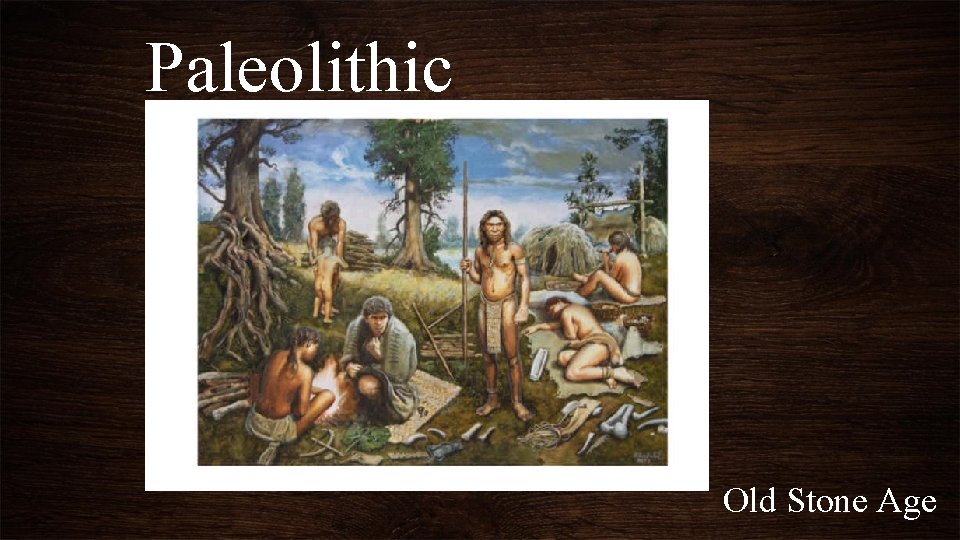
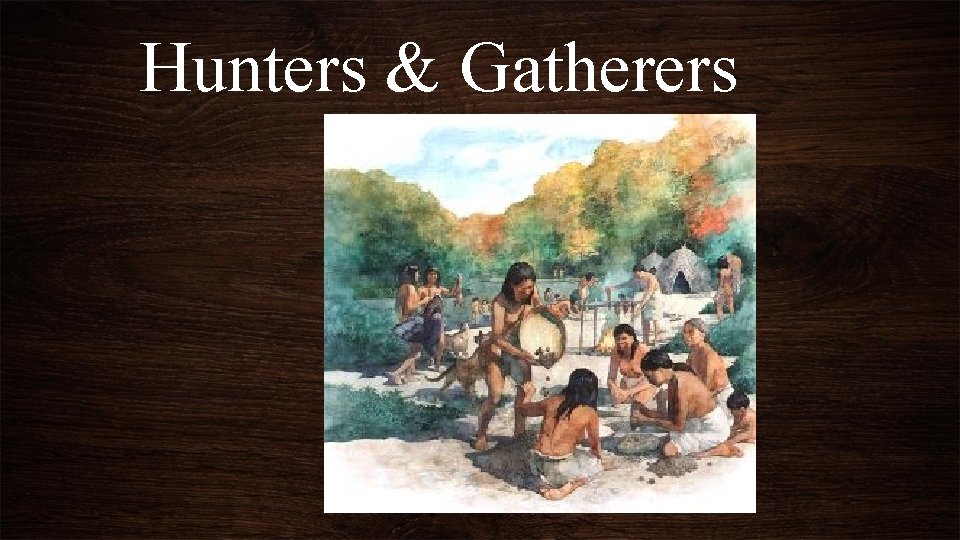
Paleolithic Age (2. 5 million years ago until 10, 000 BCE) Humans traveled in small hunting-gathering groups Migrated from origins in East Africa to Eurasia, Australia, and the Americas Mobile and adaptive to various climatic and geographical settings Use of fire: to aid in hunting, protection against predators, and adapt to cold environments Mostly hunter-gatherers; some groups exchanged people, ideas, food, and goods CULTURAL DIFFUSION!!!!!
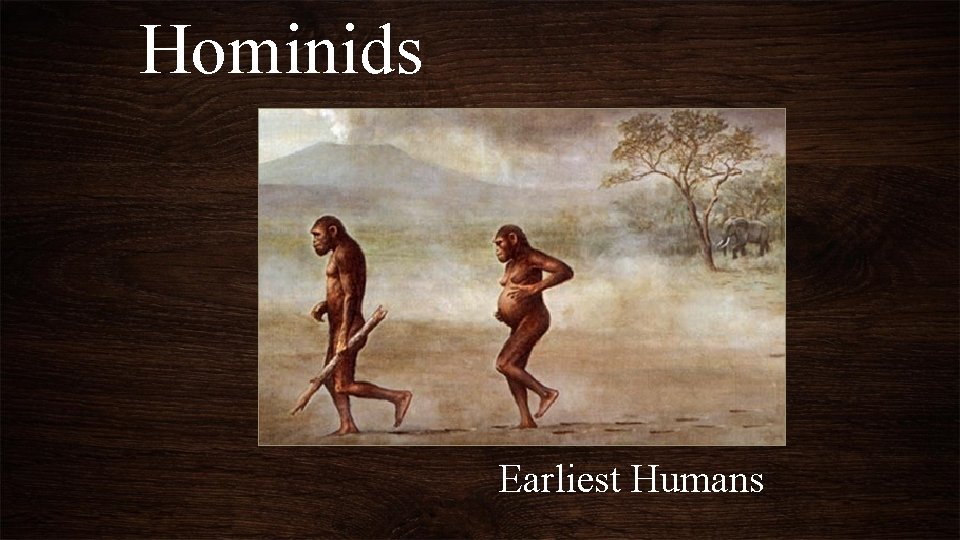
Hominids Earliest Humans
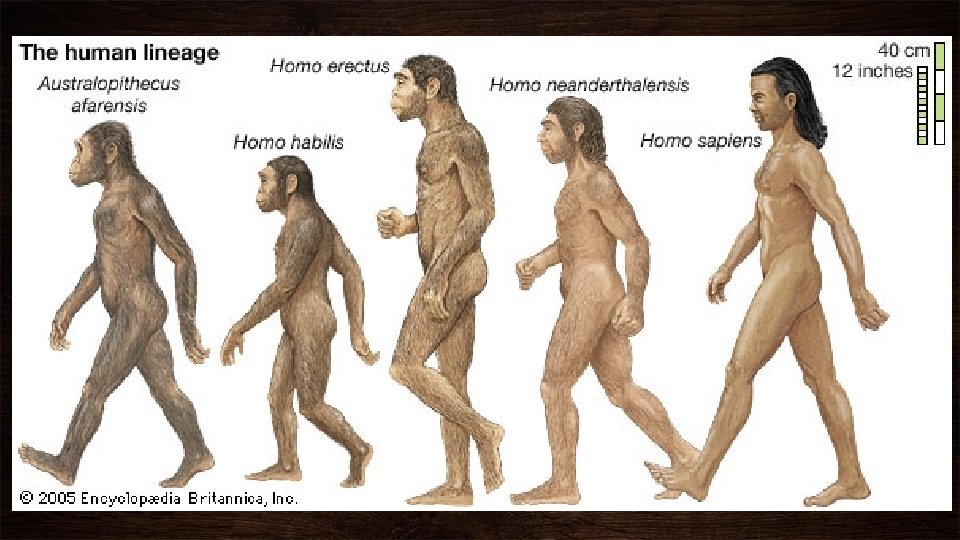
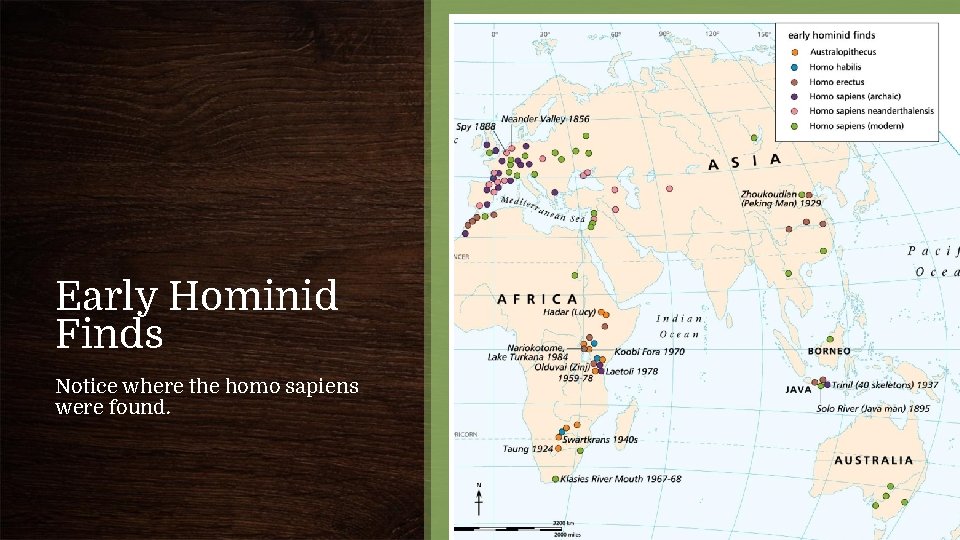
5 Stages of Hominids – Pre-History • Australopithecus – “southern ape” • “Lucy” (Johansen) Great Rift Valley – Ethiopia • diggers; lacked language, short, furry, omnivores • Homo Habilis – “handy man” • Louis and Mary Leakey – Kenya • Used stone tools; lacked complex language • Homo Erectus – “upright man” - bipedal • Not only in Africa but Asia and Europe • used complex tools and fire; first spoken language • Homo Sapiens – “wise man” • Neanderthal Man • Lived all over the world, religious rituals, advanced spoken language, cave painting, sculpting, identified by clans • Homo Sapiens – “wise, wise man” – US!
The Journey of Mankind – The Peopling of the World
Paleolithic Old Stone Age
Hunters & Gatherers
Stories from the Stone Age
Early Hominid Finds Notice where the homo sapiens were found.
Answer Question – Turn Into Tray • Based on your reading AND discussion/lecture: • What did the human species accomplish during the Paleolithic Age and what is the evidence of these accomplishments? • What were the advantages and disadvantages of the species?
THE NEOLITHIC REVOLUTION AND THE EARLY AGRICULTURAL SOCIETIES Chapter 2
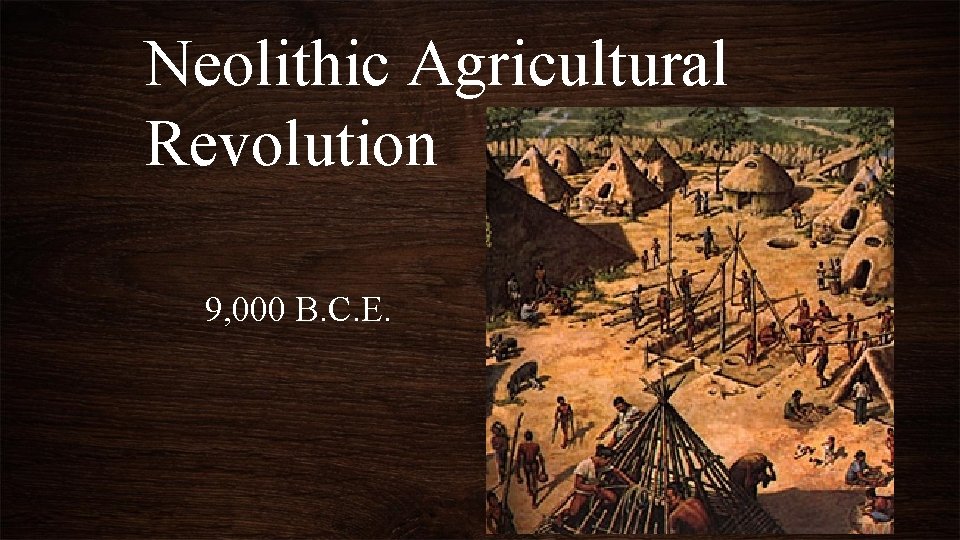
Neolithic Agricultural Revolution 9, 000 B. C. E.
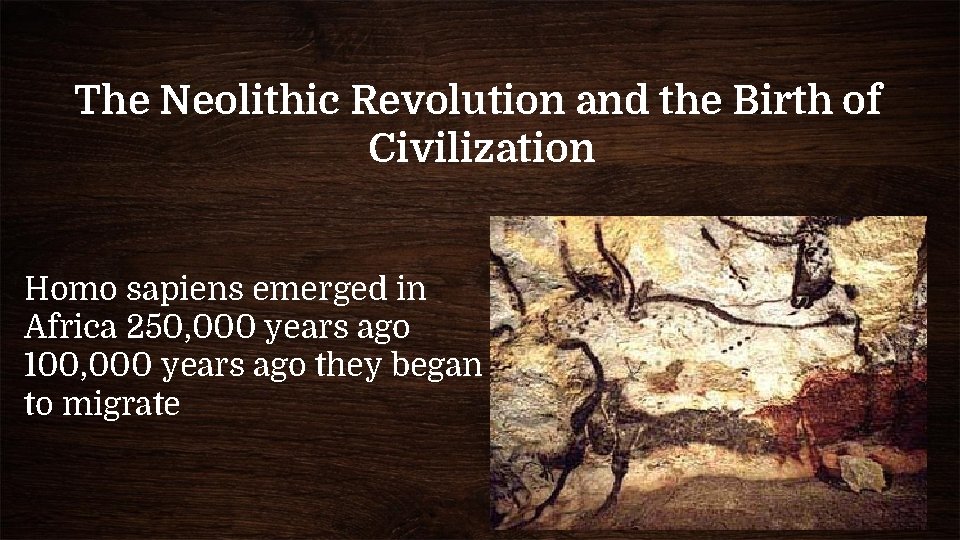
The Neolithic Revolution and the Birth of Civilization Homo sapiens emerged in Africa 250, 000 years ago 100, 000 years ago they began to migrate
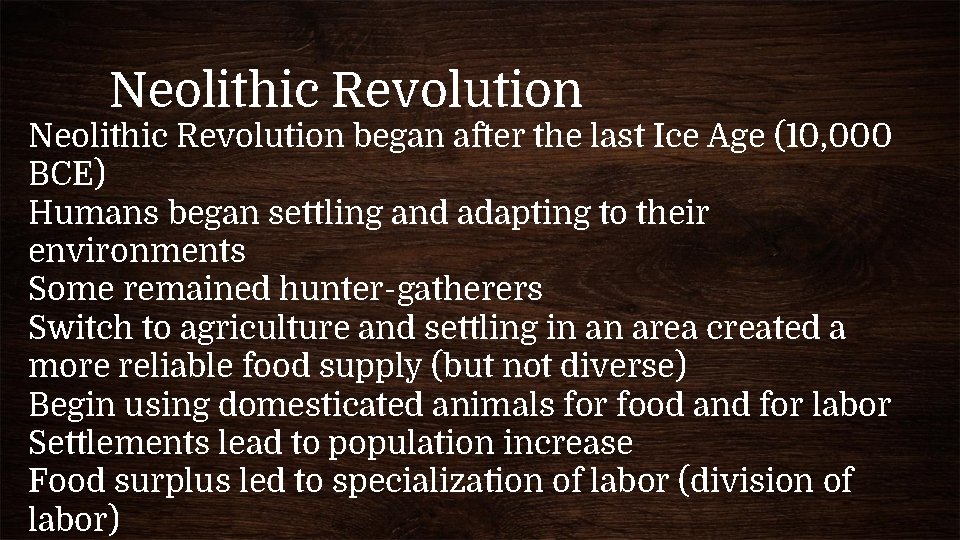
Neolithic Revolution began after the last Ice Age (10, 000 BCE) Humans began settling and adapting to their environments Some remained hunter-gatherers Switch to agriculture and settling in an area created a more reliable food supply (but not diverse) Begin using domesticated animals for food and for labor Settlements lead to population increase Food surplus led to specialization of labor (division of labor)
Answer Question – Turn Into Tray • Based on your reading AND discussion/lecture: • What technological changes occurred during the Paleolithic and Neolithic Ages?
Surplus Irrigation Food Surplus Civilization
THE DEVELOPMENT AND INTERACTIONS OF EARLY AGRICULTURAL, PASTORAL, AND URBAN SOCIETIES Chapter 3
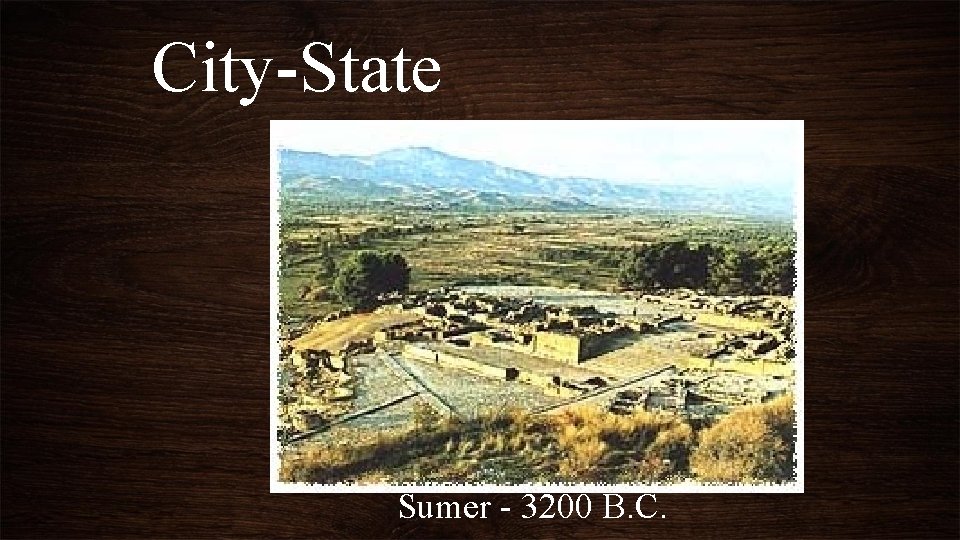
City-State Sumer - 3200 B. C.
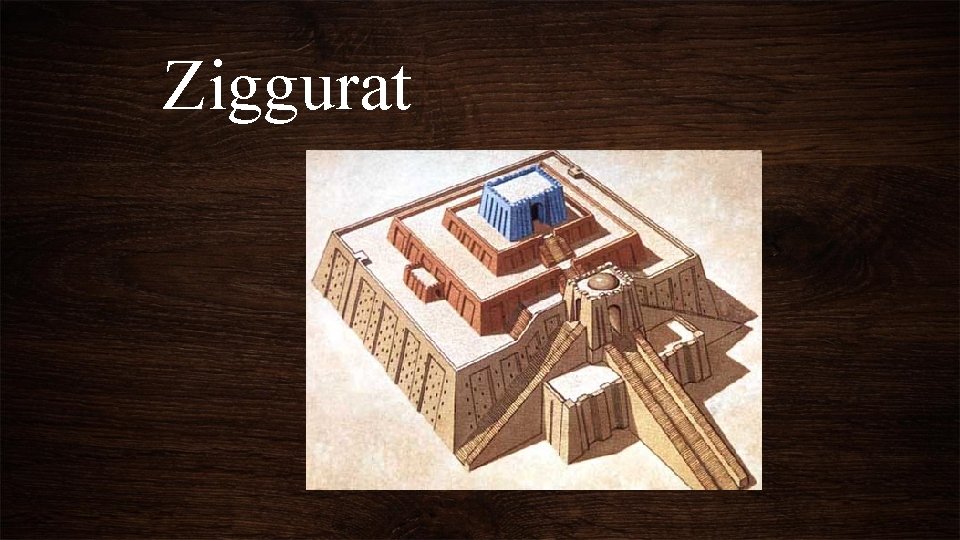
Ziggurat
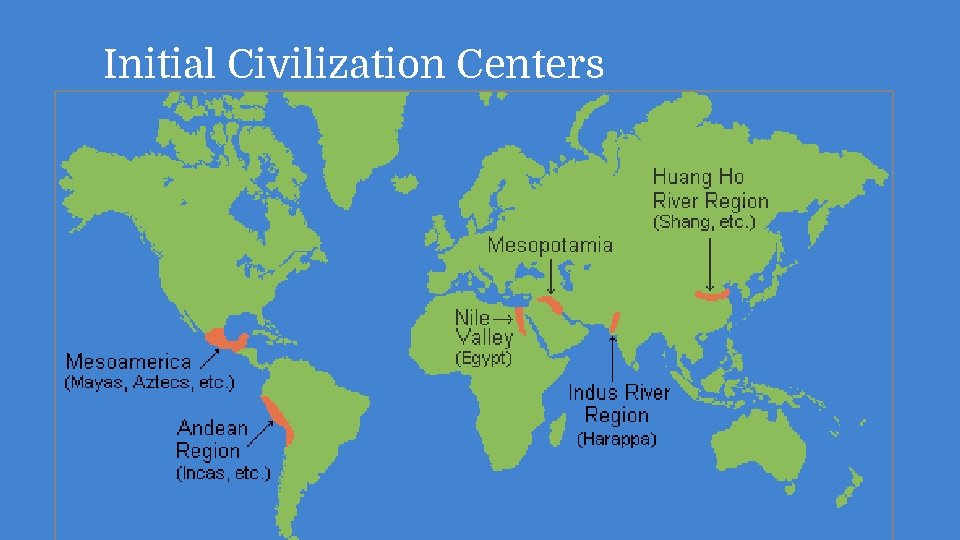
Initial Civilization Centers
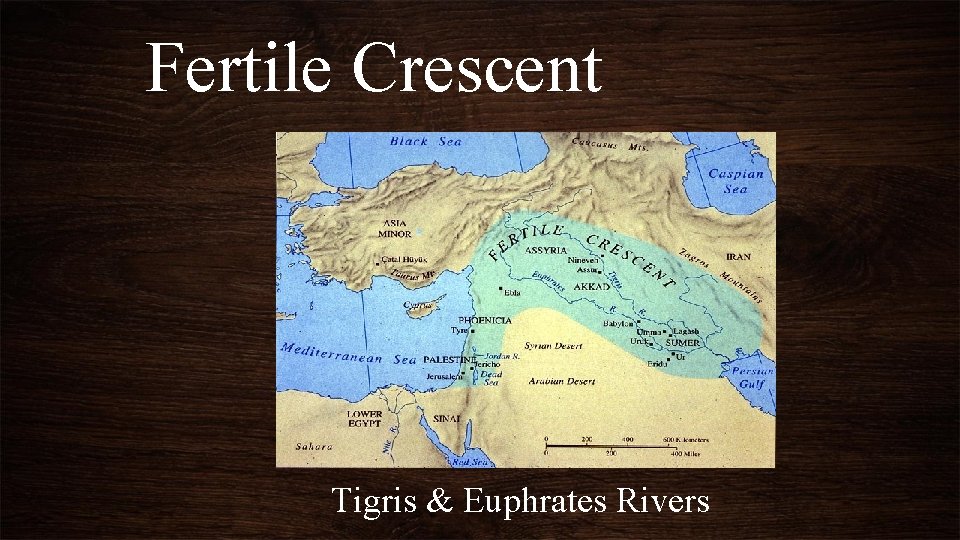
Fertile Crescent Tigris & Euphrates Rivers
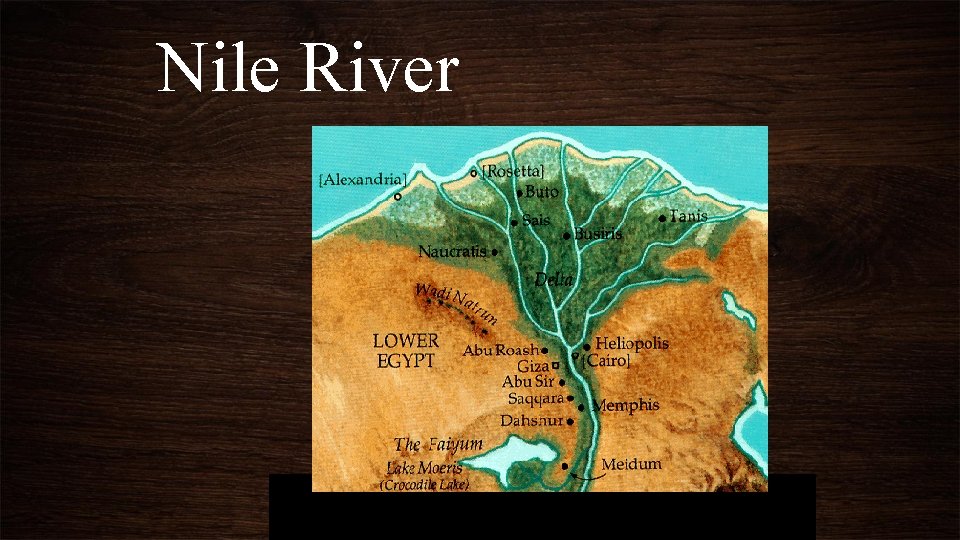
Nile River
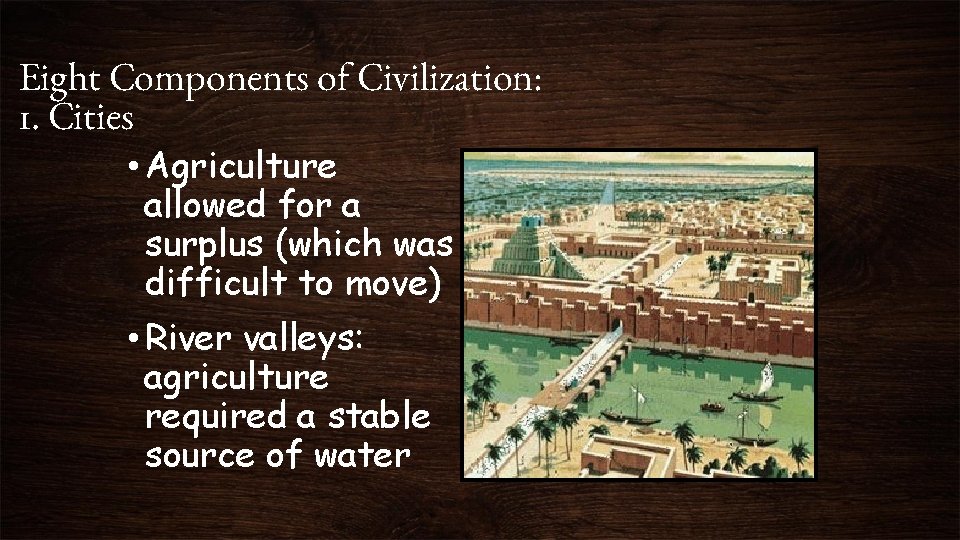
Eight Components of Civilization: 1. Cities • Agriculture allowed for a surplus (which was difficult to move) • River valleys: agriculture required a stable source of water
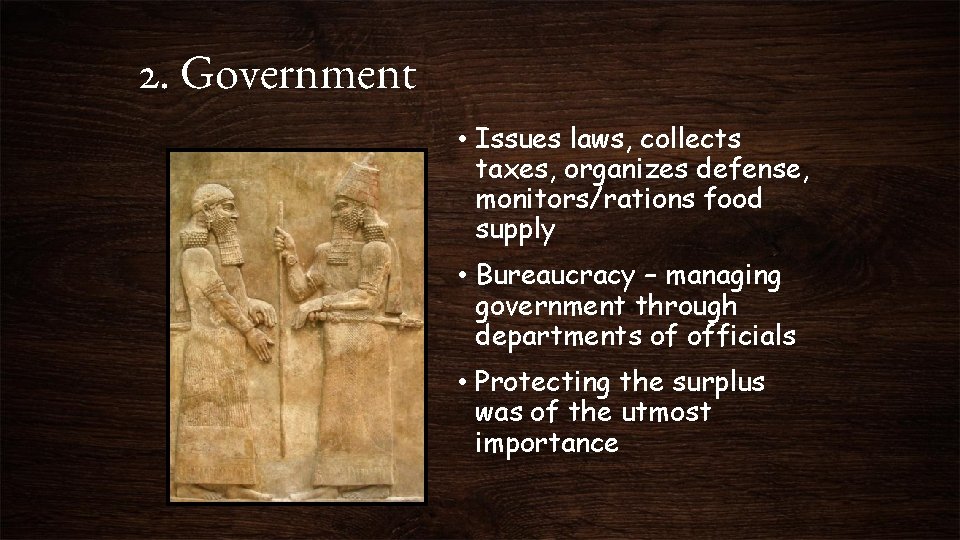
2. Government • Issues laws, collects taxes, organizes defense, monitors/rations food supply • Bureaucracy – managing government through departments of officials • Protecting the surplus was of the utmost importance
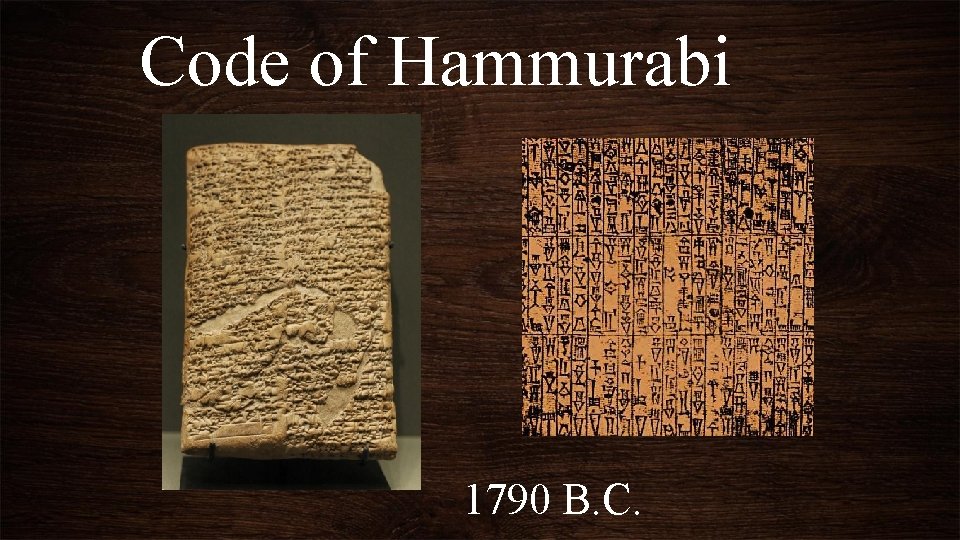
Code of Hammurabi 1790 B. C.
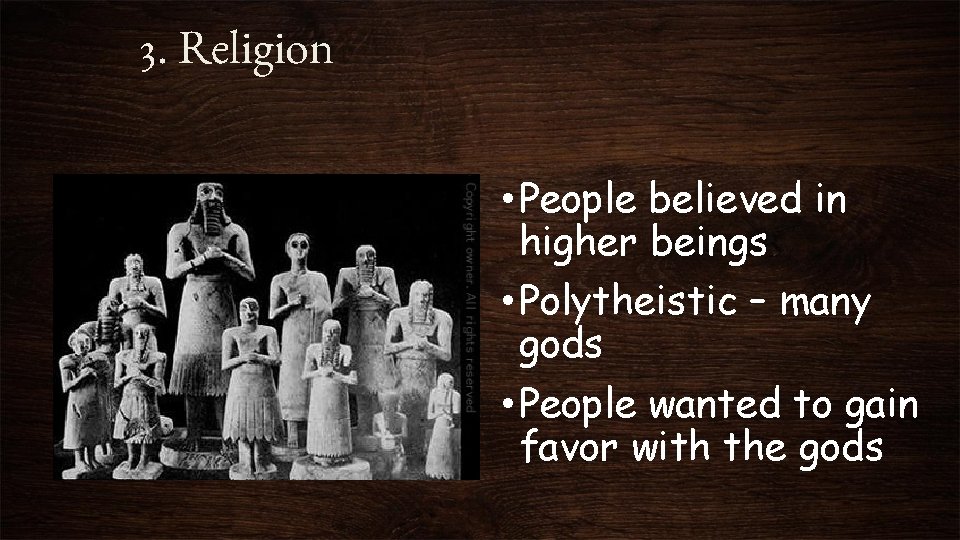
3. Religion • People believed in higher beings • Polytheistic – many gods • People wanted to gain favor with the gods
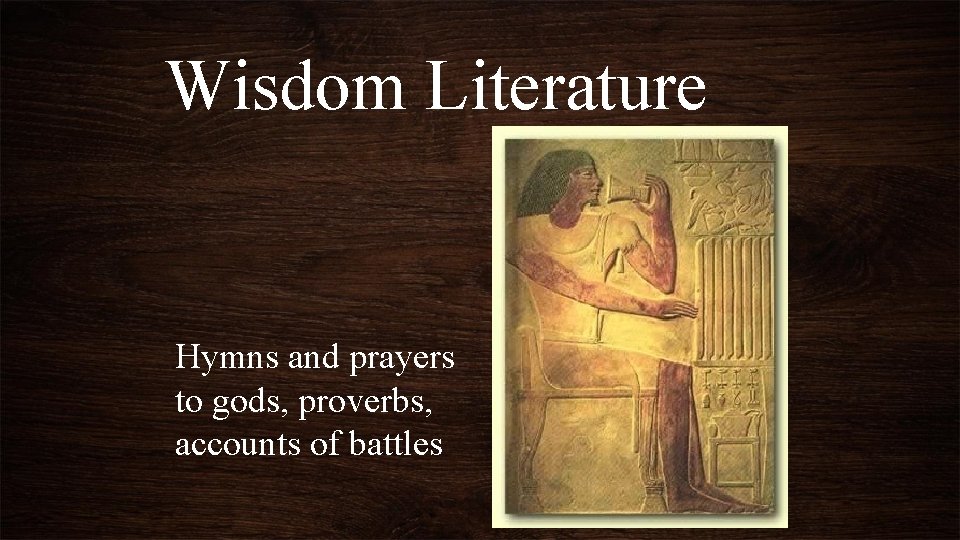
Wisdom Literature Hymns and prayers to gods, proverbs, accounts of battles
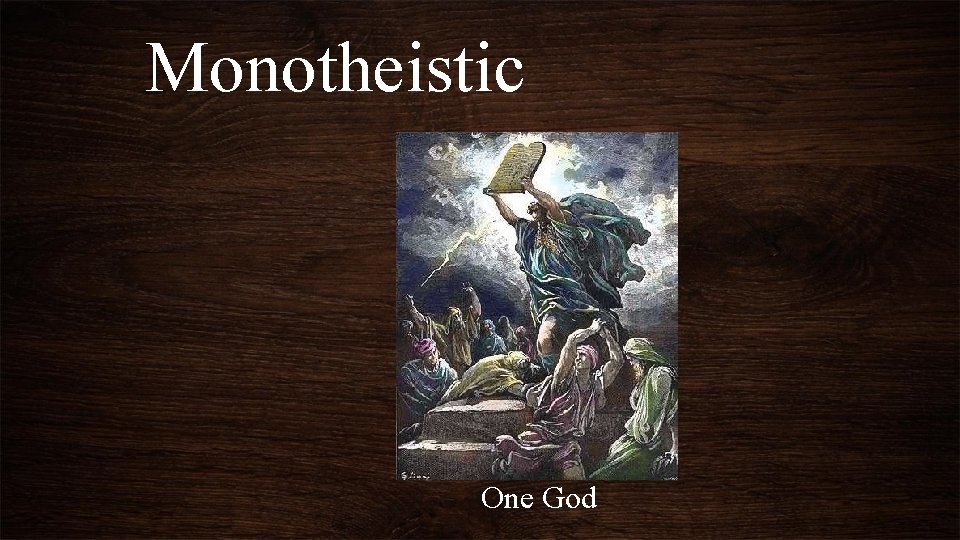
Monotheistic One God
Prophet
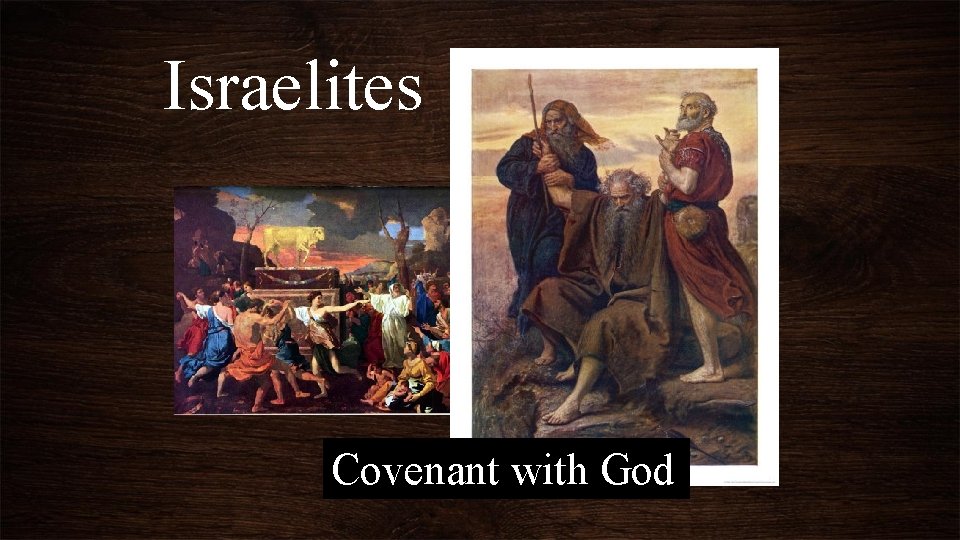
Israelites Covenant with God
Abraham: Root of Judaism, Christianity and Islam
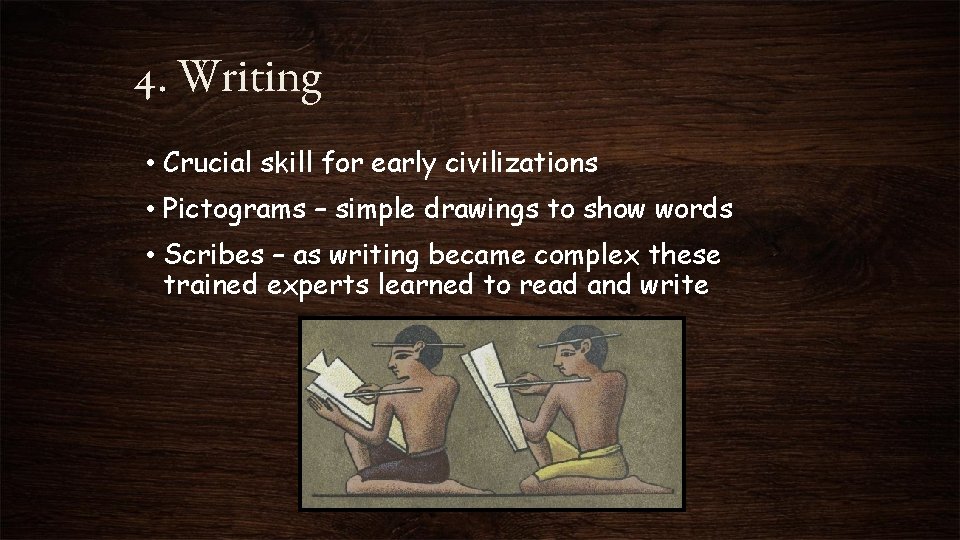
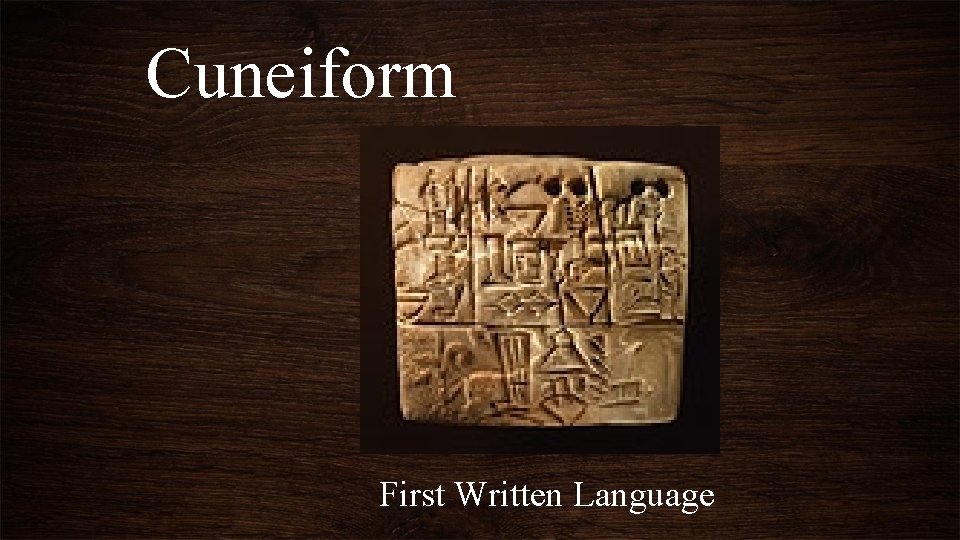
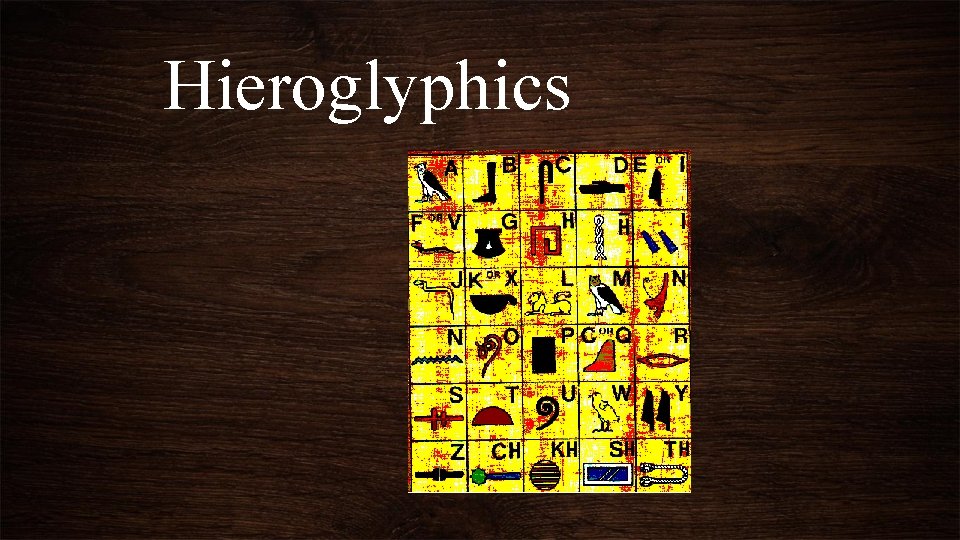
4. Writing • Crucial skill for early civilizations • Pictograms – simple drawings to show words • Scribes – as writing became complex these trained experts learned to read and write
Cuneiform First Written Language
Hieroglyphics
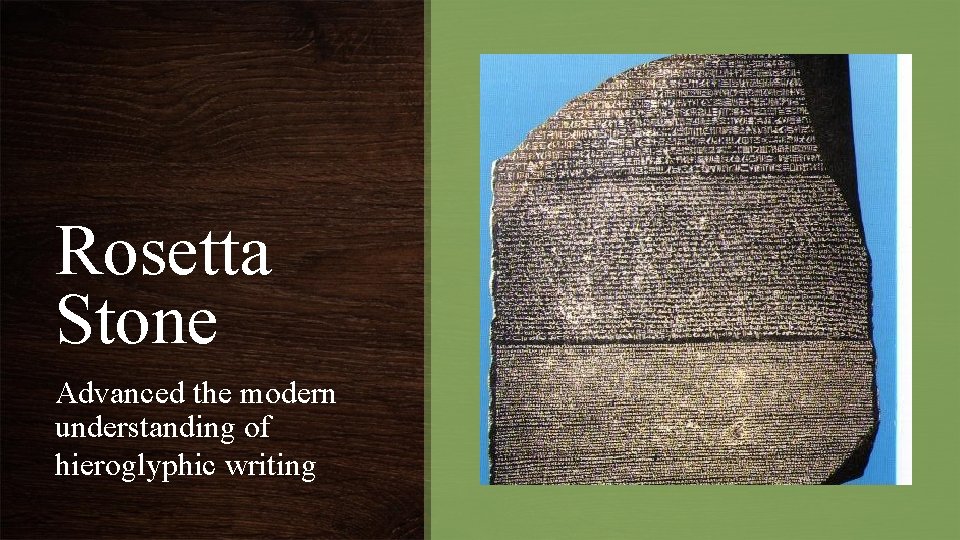
Rosetta Stone Advanced the modern understanding of hieroglyphic writing
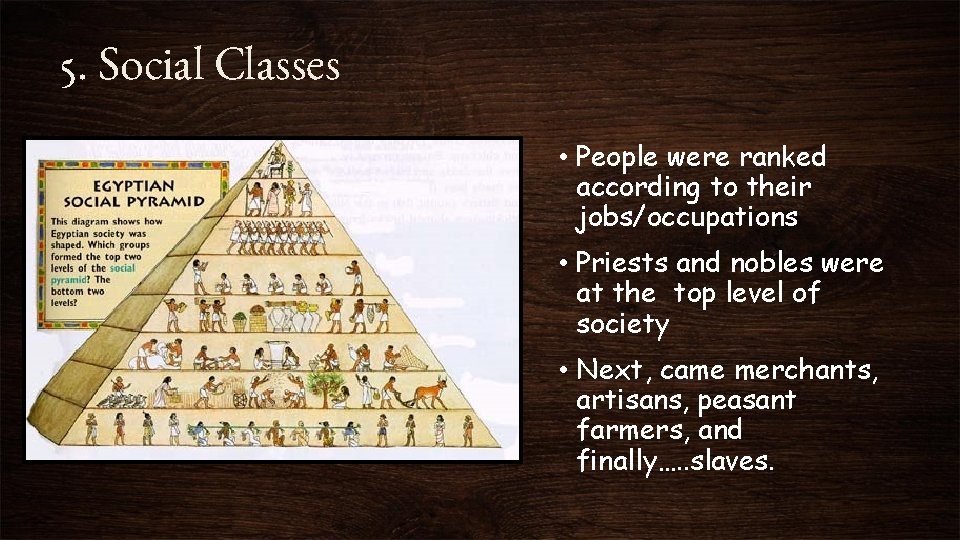
5. Social Classes • People were ranked according to their jobs/occupations • Priests and nobles were at the top level of society • Next, came merchants, artisans, peasant farmers, and finally…. . slaves.
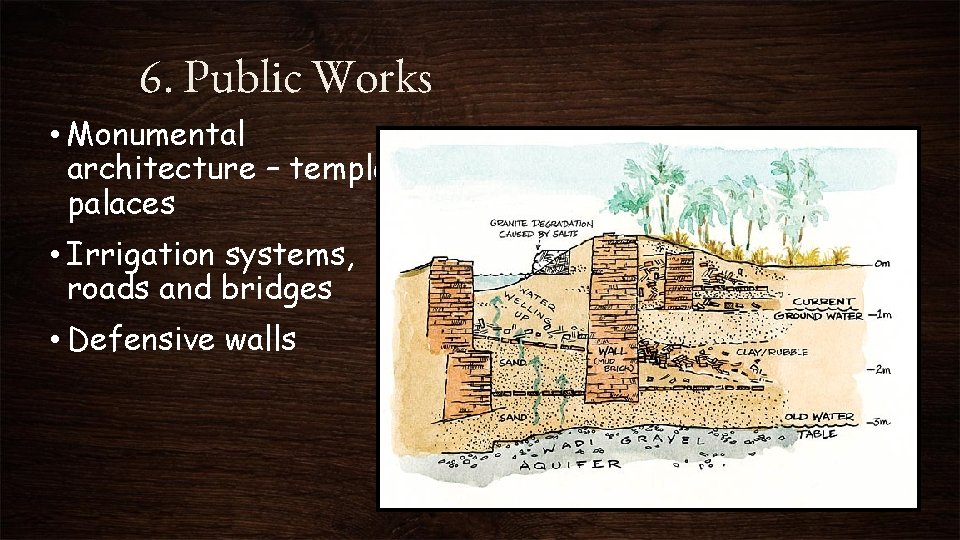
6. Public Works • Monumental architecture – temples, palaces • Irrigation systems, roads and bridges • Defensive walls
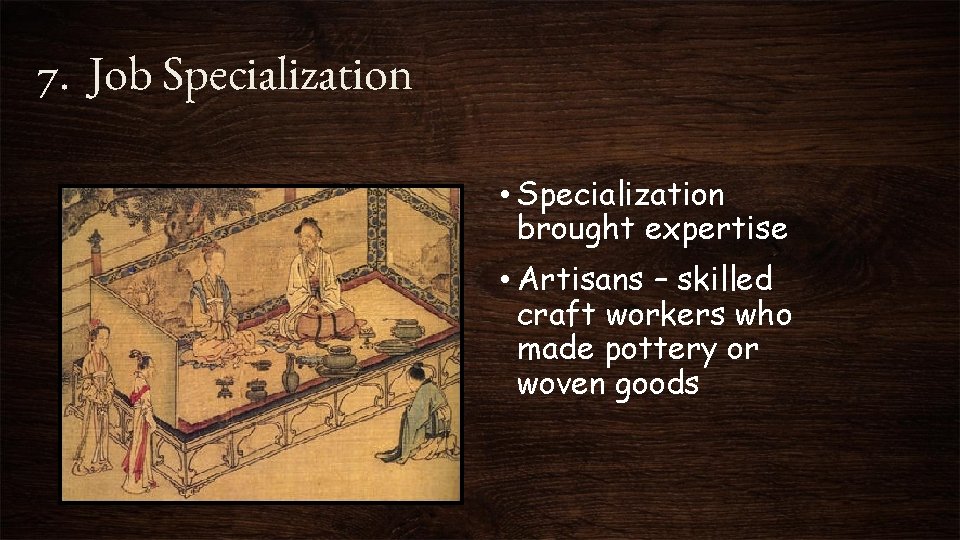
7. Job Specialization • Specialization brought expertise • Artisans – skilled craft workers who made pottery or woven goods
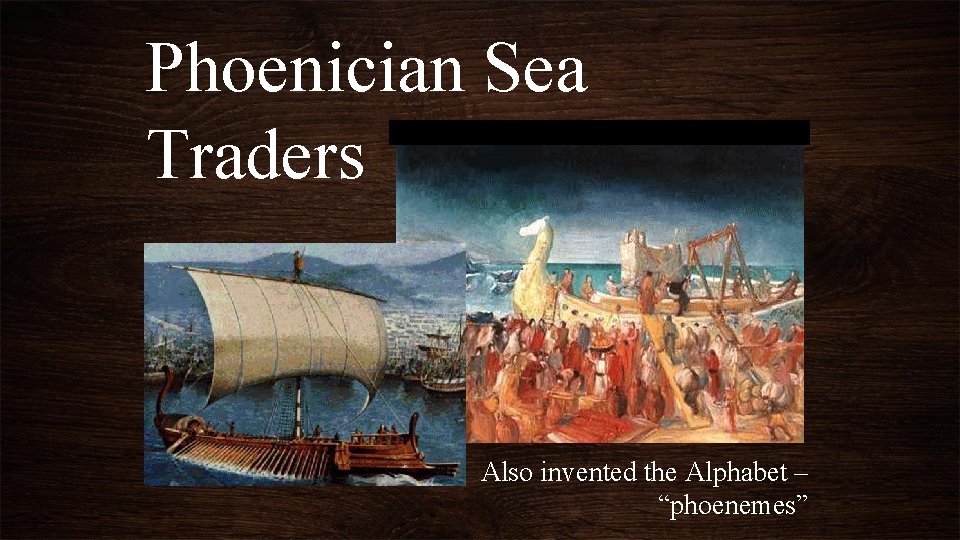
Phoenician Sea Traders Also invented the Alphabet – “phoenemes”
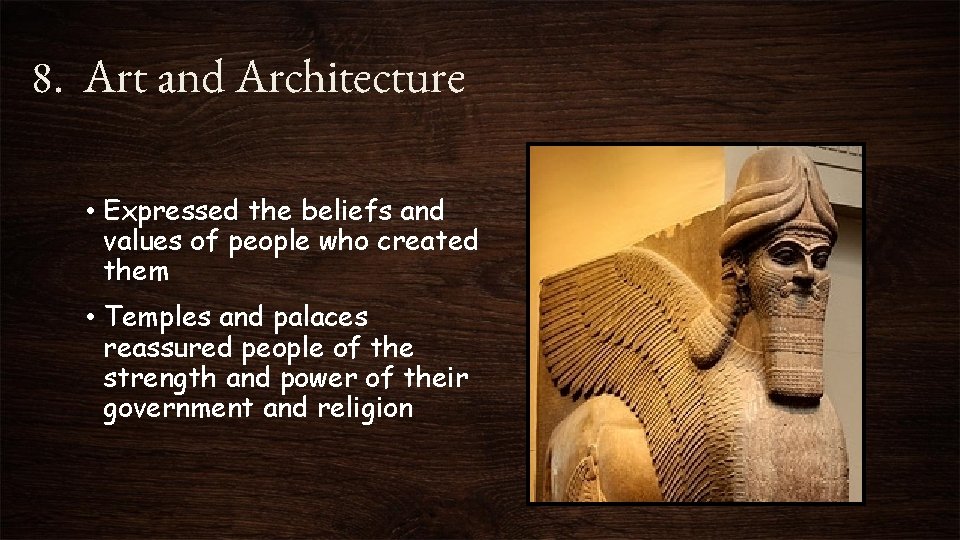
8. Art and Architecture • Expressed the beliefs and values of people who created them • Temples and palaces reassured people of the strength and power of their government and religion
Defensive Walls
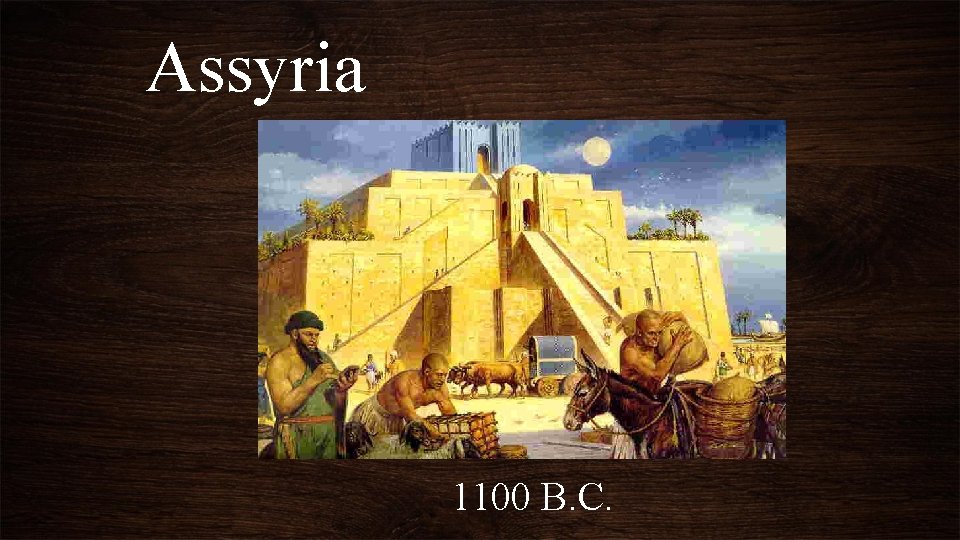
Assyria 1100 B. C.
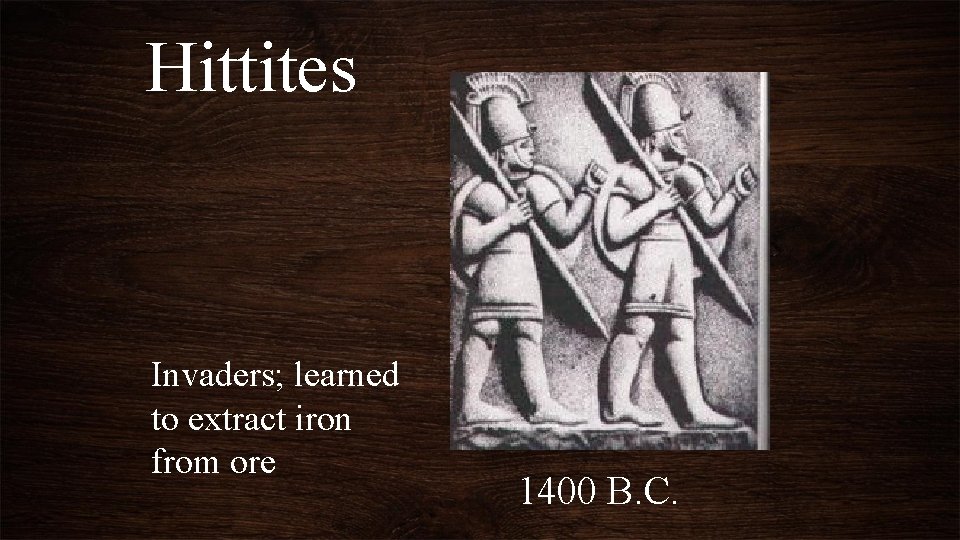
Hittites Invaders; learned to extract iron from ore 1400 B. C.
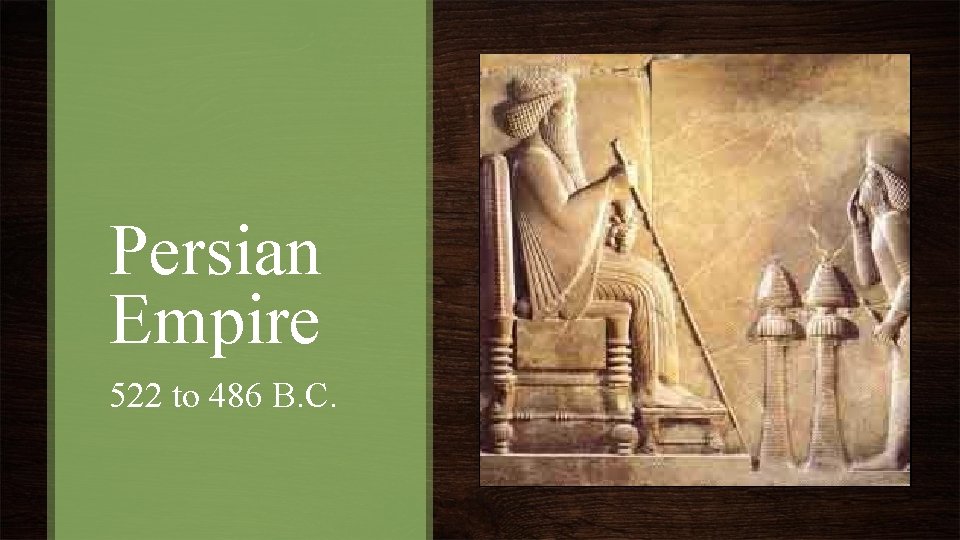
Persian Empire 522 to 486 B. C.
Answer Question – Turn Into Tray • Based on your reading AND discussion/lecture: • Where were the first civilizations and what were their names? • What evidences of civilization did they have?
HOMEWORK!!! Developing a Thesis • Compare and contrast the social and economic characteristics of agriculturally based societies with hunter-gatherer societies.