
Unit 1 Structure Function I Basic Terminology A
Unit 1: Structure & Function I. Basic Terminology A. Anatomy – the study of body structure (ana = up, tomy/tomo = to cut) 1. gross – large 2. microscopic – at the cellular or tissue level B. Physiology – the study of body function (physio = function, ology = study of) Does structure determine function or does function determine structure?
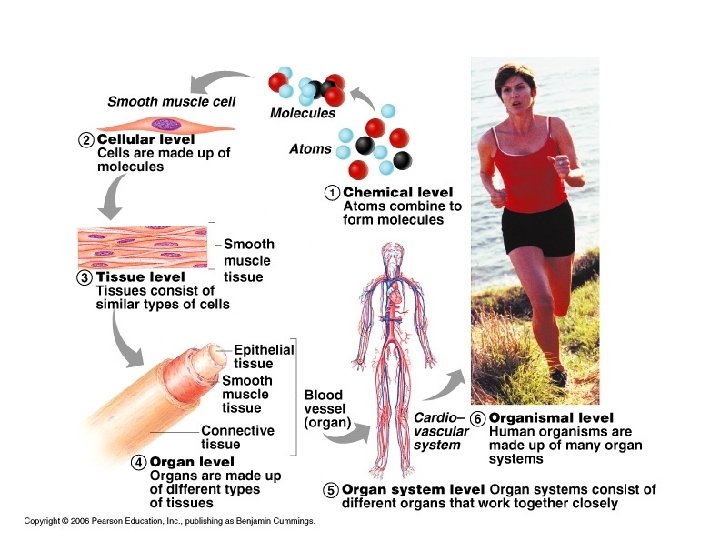
II. Levels of Organization (structural) A. Atoms – smallest unit of matter B. Molecules – made of atoms C. Cells – smallest unit of living matter D. Tissues – similar cells with common function E. Organs – 2 or more tissues with specific function F. Organ Systems – group of organs with a common purpose
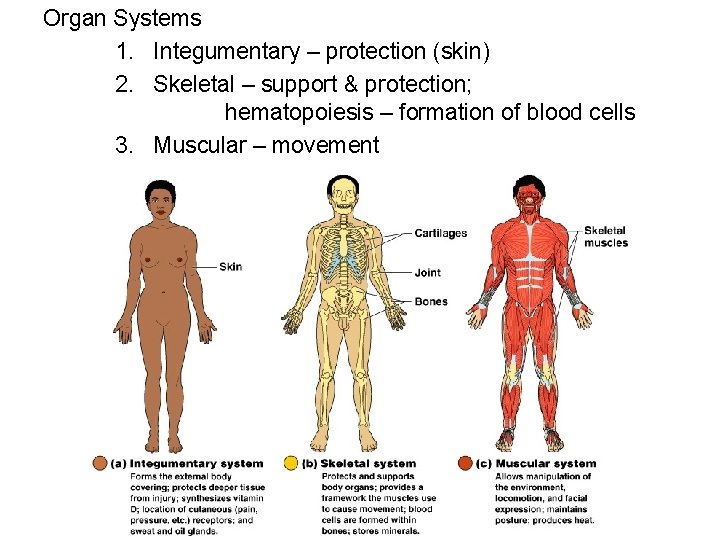
Organ Systems 1. Integumentary – protection (skin) 2. Skeletal – support & protection; hematopoiesis – formation of blood cells 3. Muscular – movement
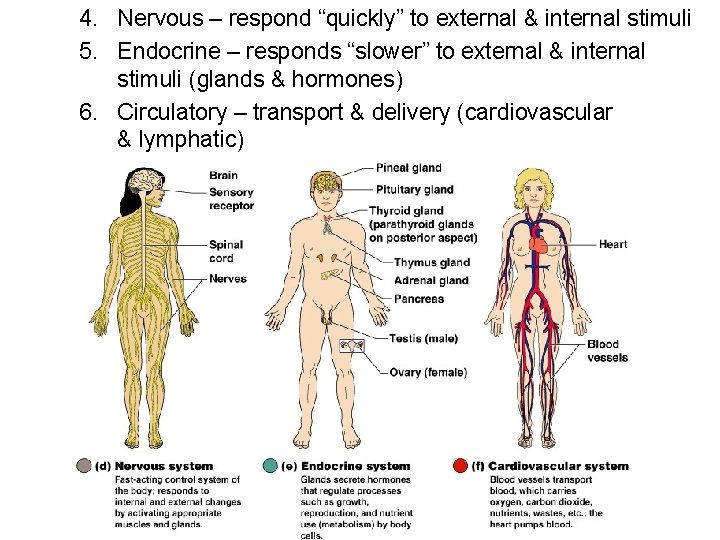
4. Nervous – respond “quickly” to external & internal stimuli 5. Endocrine – responds “slower” to external & internal stimuli (glands & hormones) 6. Circulatory – transport & delivery (cardiovascular & lymphatic)
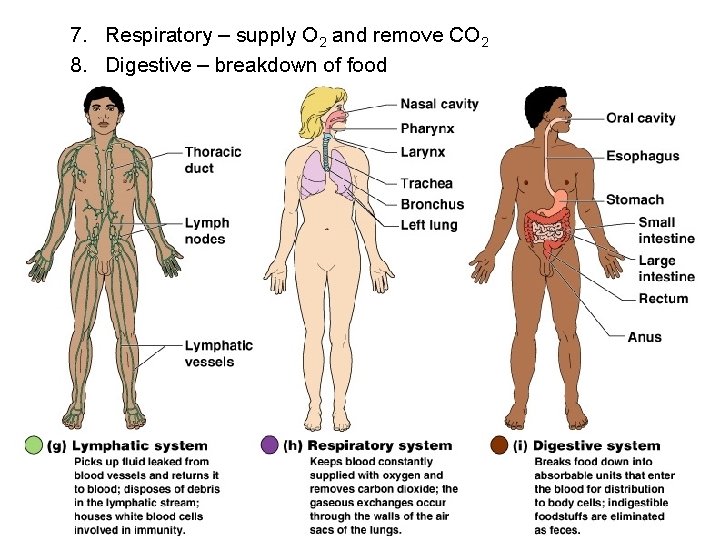
7. Respiratory – supply O 2 and remove CO 2 8. Digestive – breakdown of food
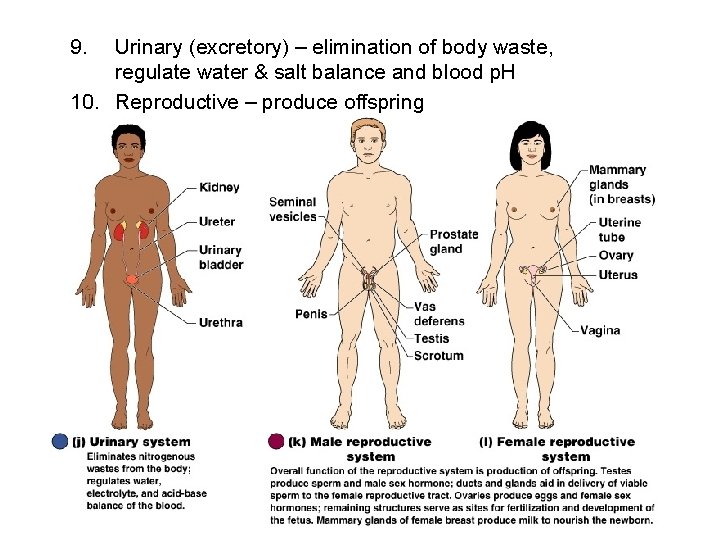
9. Urinary (excretory) – elimination of body waste, regulate water & salt balance and blood p. H 10. Reproductive – produce offspring
III. Life Functions A. Maintaining Boundaries (external & internal) – integumentary & cell membranes B. Movement – muscular, skeletal, cardiovascular, digestive, urinary, respiratory C. Responsiveness – nervous and endocrine D. Digestion – digestive & cardiovascular E. Metabolism = all chemical reactions in the body (anabolism - building up, catabolism - breaking down) – digestive, respiratory, cardiovascular, endocrine F. Excretion – digestive and urinary G. Reproduction – reproductive; regulated by hormones of the endocrine system H. Growth – size & number of cells
IV. Survival Needs (in appropriate amounts) A. Nutrients – energy; carbohydrates, fats, proteins, vitamins, & minerals B. Oxygen – 20% of air C. Water – 60 -80% of body weight D. Body Temperature - 37°C (98°F), most generated by activity of skeletal muscles E. Atmospheric Pressure – breathing depends on appropriate atm. pressure
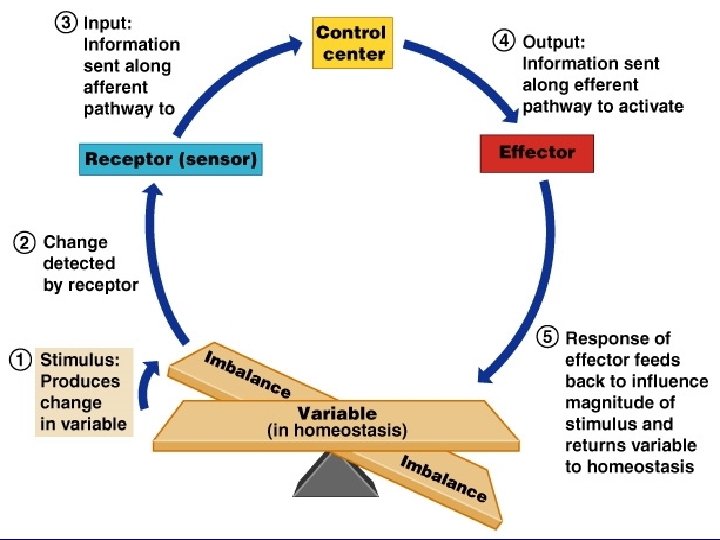
V. Homeostasis “dynamic equilibrium” nervous & endocrine systems A. Control Mechanisms – receptor control center effector most negative – shut off or decrease stimulus B. Negative Feedback Examples 1. O 2, CO 2, glucose, etc. concentrations in the blood 2. Blood pressure 3. Heart rate 4. Breathing/Respiratory rate C. Positive Feedback Examples 1. Childbirth 2. Blood clotting How is the concept of homeostasis (or its loss) related to disease and aging?

VI. Language of Anatomy A. Anatomical Position B. Directional Terms 1. Superior/Inferior (Cephalad/Caudal) – top/bottom 2. Anterior/Posterior (Ventral/Dorsal) – front/back
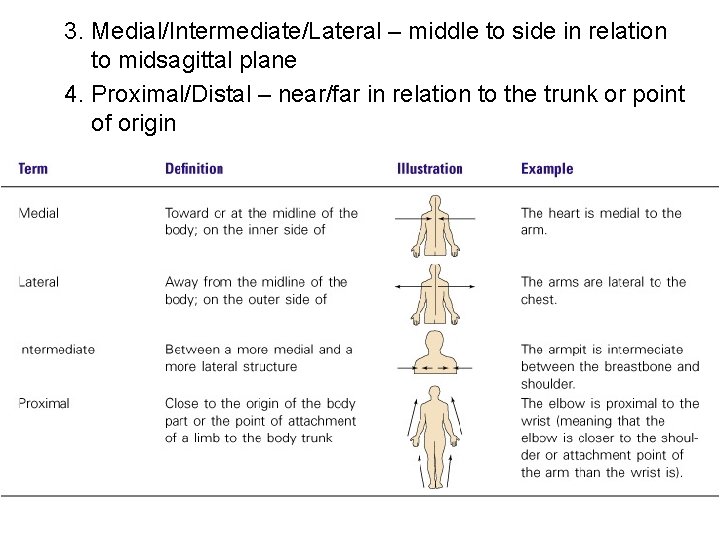
3. Medial/Intermediate/Lateral – middle to side in relation to midsagittal plane 4. Proximal/Distal – near/far in relation to the trunk or point of origin
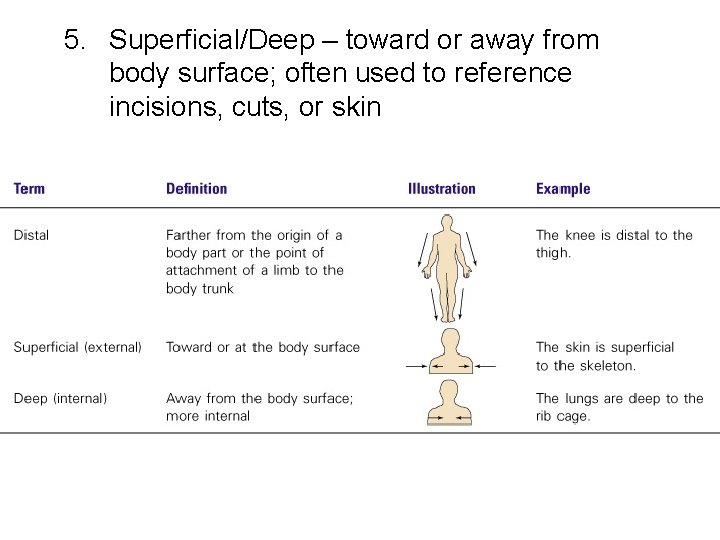
5. Superficial/Deep – toward or away from body surface; often used to reference incisions, cuts, or skin

• The gallbladder is located just below the liver. The directional terms that best describe this relationship include: Inferior/Caudal
• The kidneys are located behind the other abdominal organs. This relationship may be described as: Posterior/Dorsal

• The tips of the fingers and toes are farthest from the origin of these digits, so they are said to be the most: Distal
• The entrance to the stomach is nearest the point of origin or beginning of the stomach, so this part is said to be: Proximal
• The ears are located away from the midsagittal plane or toward the side, so they are describe as being: Lateral
• The head of the pancreas is nearer the midsagittal plane than its tail portion, so the head part is more: Medial
• The diaphragm is above the abdominal organs, so it may be described as: Superior
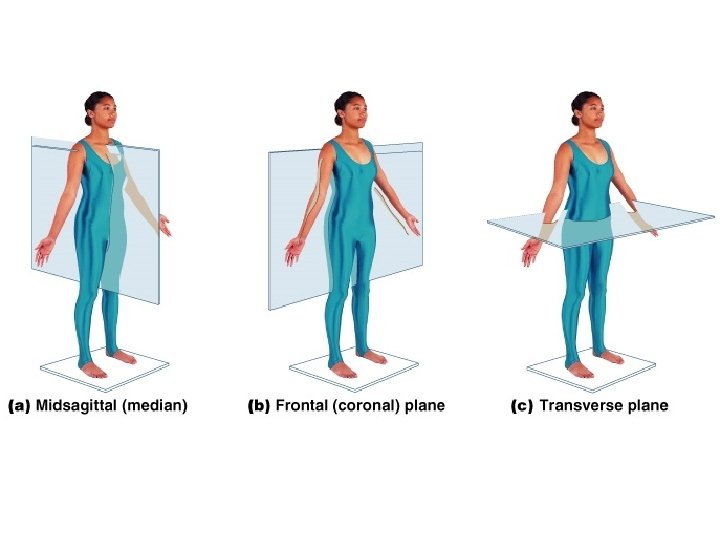
C. Body Planes and Sections 1. Sagittal – lengthwise/vertical – left & right half 2. Midsagittal – down the middle – equal left & right halves 3. Frontal – vertical dividing anterior & posterior 4. Transverse – cross/horizontal – upper & lower half 5. Oblique – at an angle
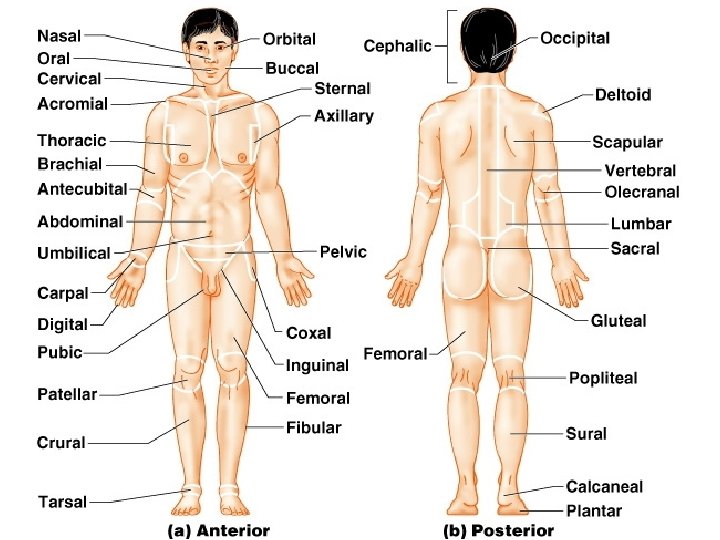
D. Regional Terms 1. Axial – Head & trunk cepahlic – head cranial – skull occipital – posterior head facial – face
frontal – forehead orbital/ophthalmic – eye buccal – cheek zygomatic – cheek temporal – side of skull nasal – nose oral – mouth cervical – neck cutaneous – skin deltoid – curve of shoulder scapular – shoulder blade supraclaviclar – area above clavicle
mammary – breast thoracic – chest abdominal – anterior torso below diaphragm naval/umbilical – area around naval inguinal - groin lumbar – back between ribs & hips pubic - genital pelvic – lower portion of torso gluteal - buttocks
2. Appendicular – appendages (arms & legs) axillary – armpit brachial – arm antecubital – front of elbow cubital – elbow antebrachial – forearm (elbow to wrist) carpal – wrist palmer – palm digital/phalangeal – fingers/toes
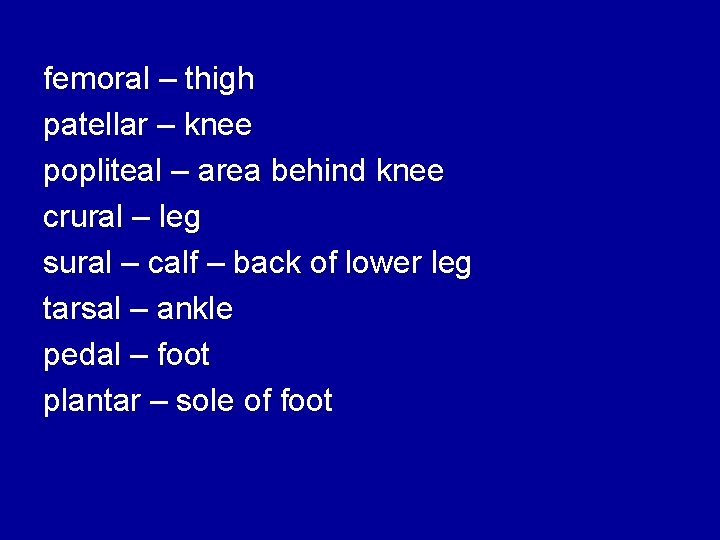
femoral – thigh patellar – knee popliteal – area behind knee crural – leg sural – calf – back of lower leg tarsal – ankle pedal – foot plantar – sole of foot
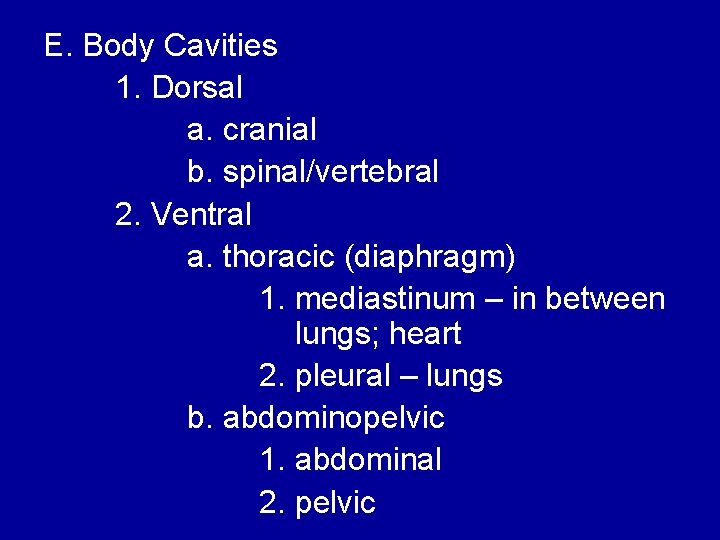
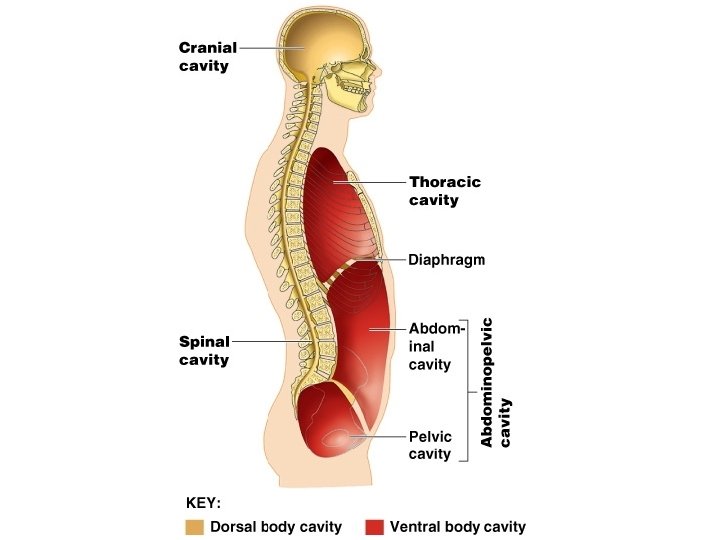
E. Body Cavities 1. Dorsal a. cranial b. spinal/vertebral 2. Ventral a. thoracic (diaphragm) 1. mediastinum – in between lungs; heart 2. pleural – lungs b. abdominopelvic 1. abdominal 2. pelvic
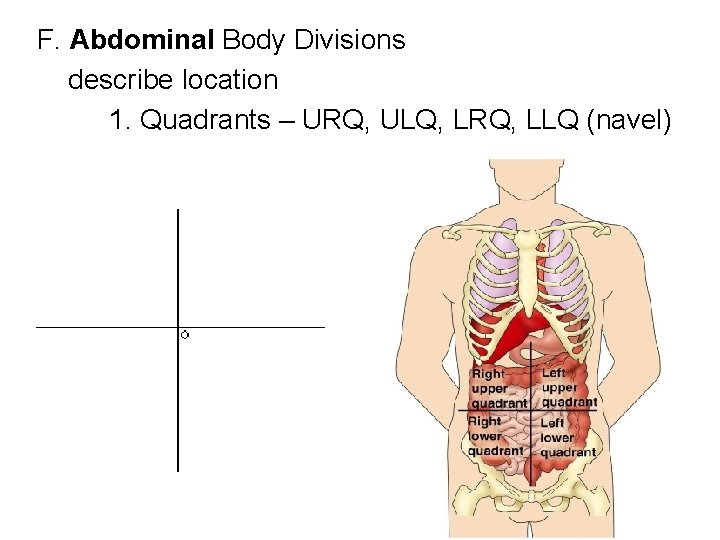
F. Abdominal Body Divisions describe location 1. Quadrants – URQ, ULQ, LRQ, LLQ (navel)
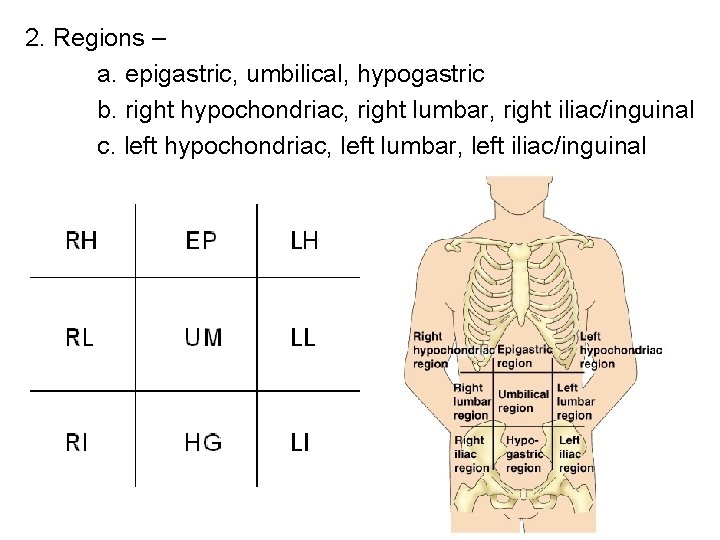
2. Regions – a. epigastric, umbilical, hypogastric b. right hypochondriac, right lumbar, right iliac/inguinal c. left hypochondriac, left lumbar, left iliac/inguinal
Billy had an appendectomy. The area of the abdomen in which the appendix is located is in the lower right side and is known as: Right iliac
• Jessica had a history of gallstones. The operation to remove these stones involved the upper right part of the abdominal cavity or the: Right hypochondriac
• Kelsey was injured in an automobile accident. In addition to a number of fractures, she suffered a ruptured urinary bladder. The area involved, in the lower midline part of the abdomen, was the: Hypogastric
• Eddie required an extensive exploratory operation that necessitated incision through the naval. This portion of the abdomen is the: Umbilical
- Slides: 37