
Unit 1 Psychologys History and Approaches How perspective


- Slides: 20
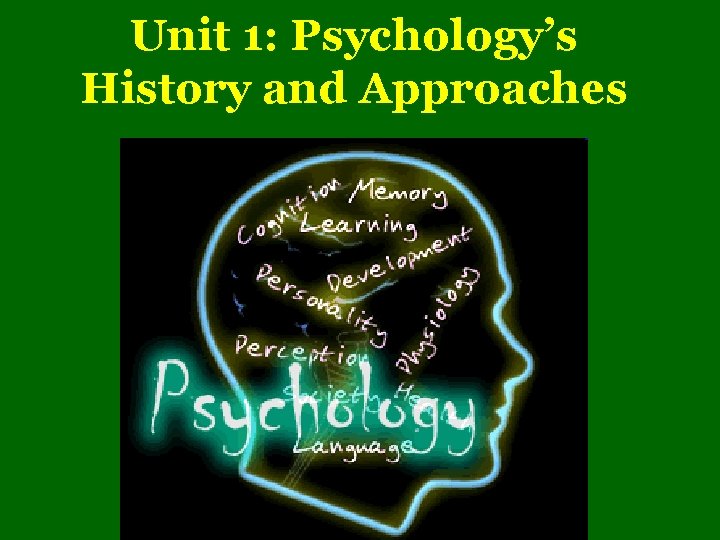
Unit 1: Psychology’s History and Approaches
How perspective has shaped psychology… • · Basic human functions have been questioned since the ancient civilizations. – Breathing – Hunger – Thinking? – Behavior? – · The organ originally thought to control our thinking, emotions, and body processes was the heart.
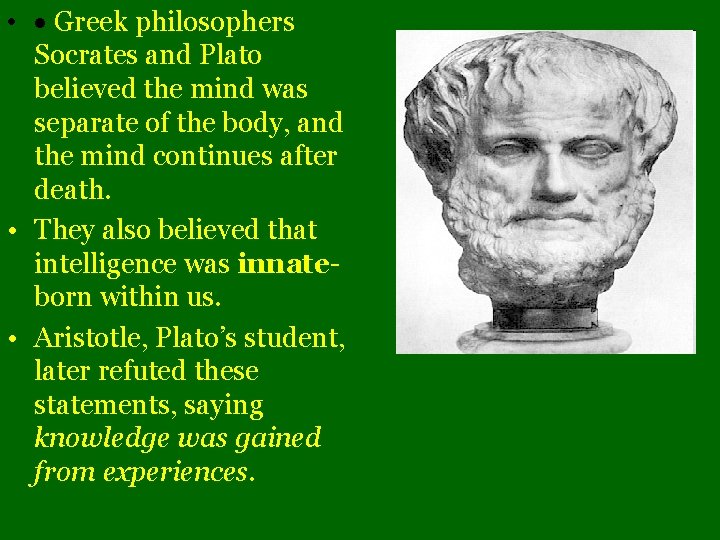
• · Greek philosophers Socrates and Plato believed the mind was separate of the body, and the mind continues after death. • They also believed that intelligence was innateborn within us. • Aristotle, Plato’s student, later refuted these statements, saying knowledge was gained from experiences.
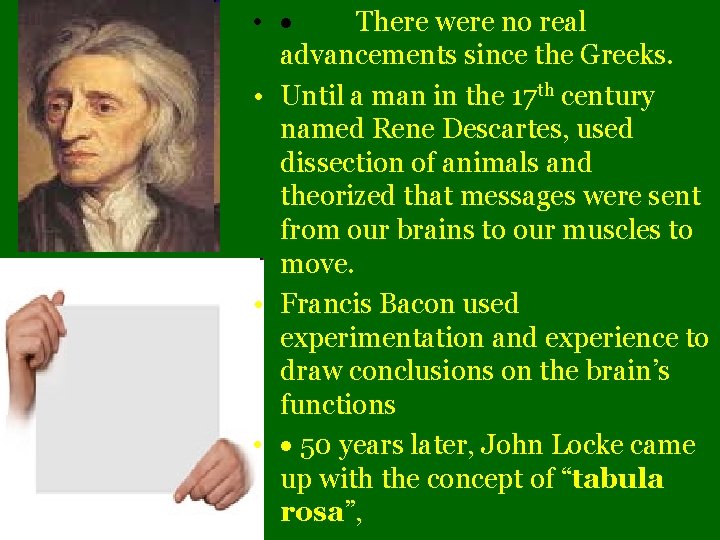
• · There were no real advancements since the Greeks. • Until a man in the 17 th century named Rene Descartes, used dissection of animals and theorized that messages were sent from our brains to our muscles to move. • Francis Bacon used experimentation and experience to draw conclusions on the brain’s functions • · 50 years later, John Locke came up with the concept of “tabula rosa”,
Think for a moment, how has perspective/basic human philosophy shaped our interpretation of psychology?
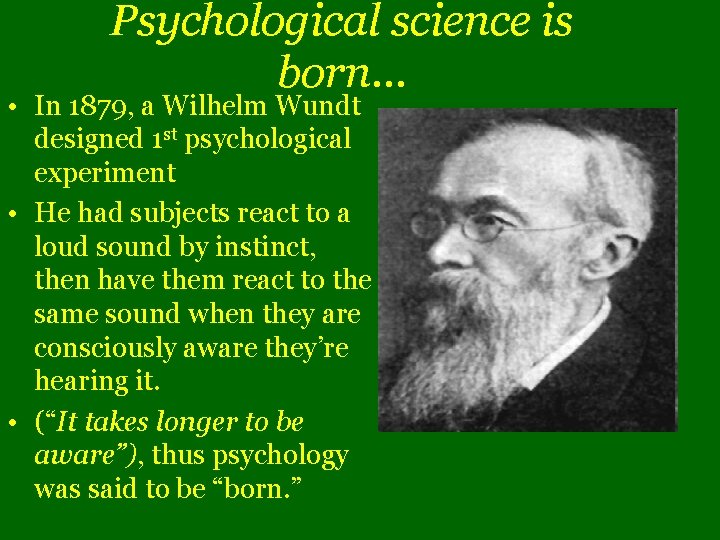
Psychological science is born… • In 1879, a Wilhelm Wundt designed 1 st psychological experiment • He had subjects react to a loud sound by instinct, then have them react to the same sound when they are consciously aware they’re hearing it. • (“It takes longer to be aware”), thus psychology was said to be “born. ”
• Wundt went on to develop a school of psychological thought called structuralism, which had patients use introspection.
• What are some strengths and weaknesses with using ‘introspection’ to study psychology? Explain.
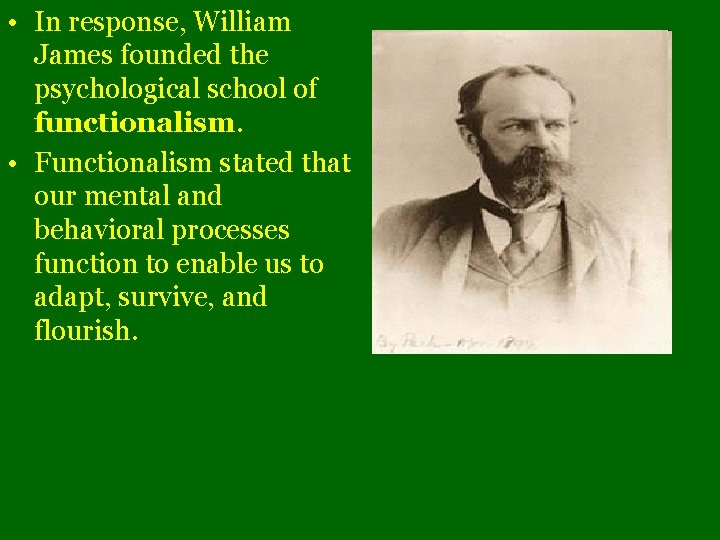
• In response, William James founded the psychological school of functionalism. • Functionalism stated that our mental and behavioral processes function to enable us to adapt, survive, and flourish.
• From here, the field of psychology began to flourish. • Many fields and subfields of psychology were formed to cover the massive content areas and different focuses of this new science.
• What are the differences between functionalism and structuralism?
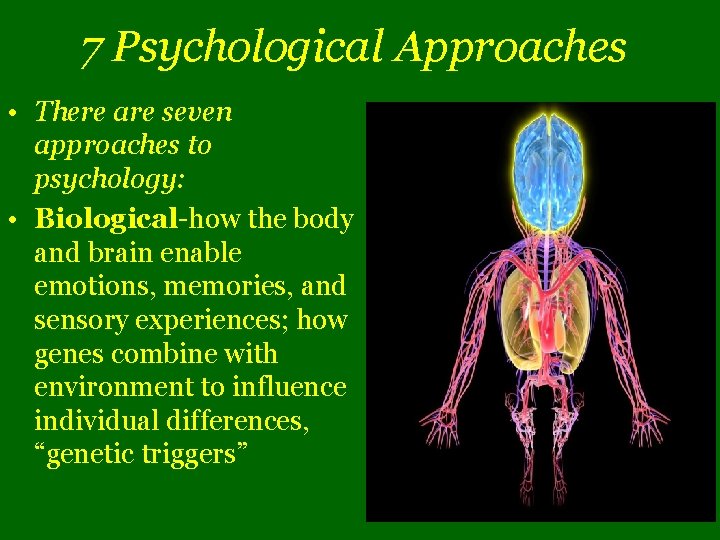
7 Psychological Approaches • There are seven approaches to psychology: • Biological-how the body and brain enable emotions, memories, and sensory experiences; how genes combine with environment to influence individual differences, “genetic triggers”
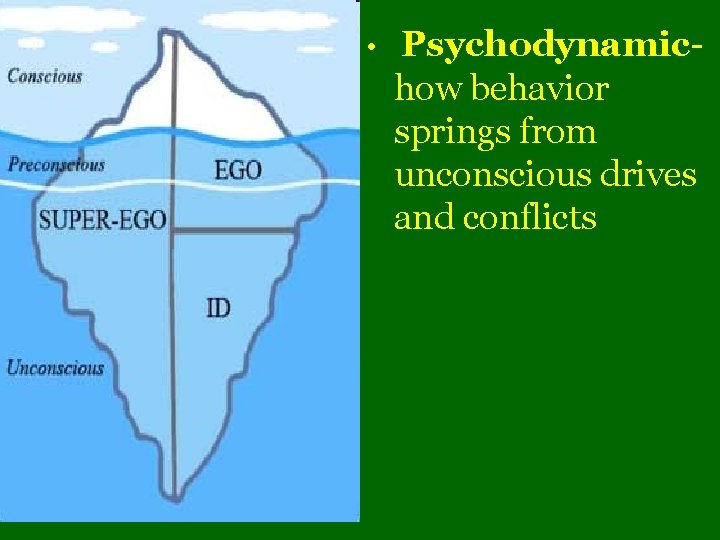
• Psychodynamic- how behavior springs from unconscious drives and conflicts
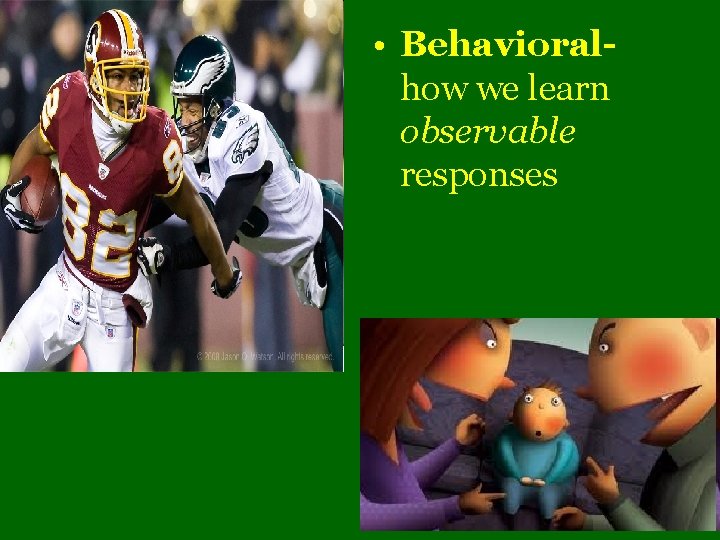
• Behavioral how we learn observable responses
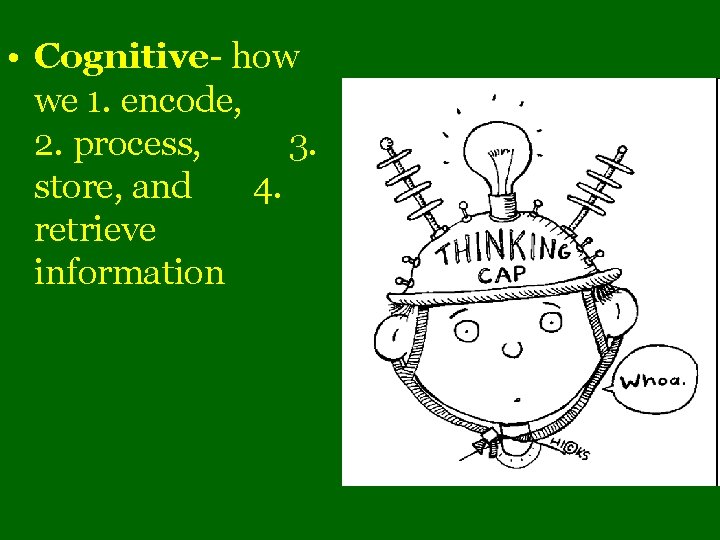
• Cognitive- how we 1. encode, 2. process, 3. store, and 4. retrieve information
• Humanistichow we meet our needs for love and acceptance and achieve selffulfillment
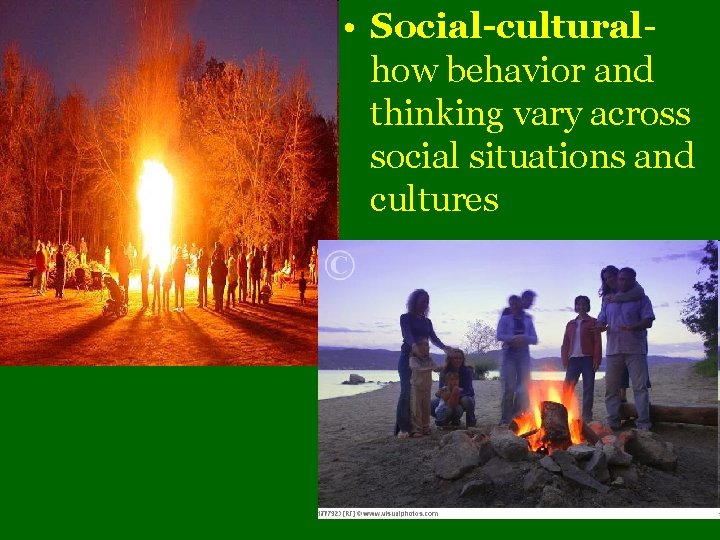
• Social culturalhow behavior and thinking vary across social situations and cultures
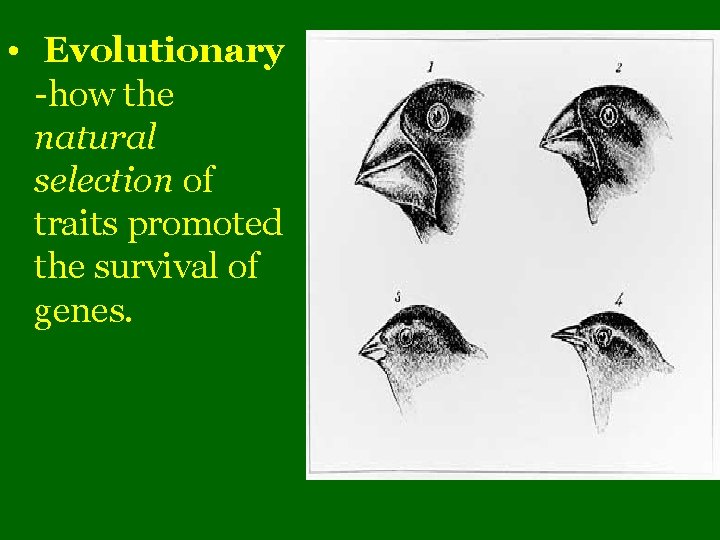
• Evolutionary -how the natural selection of traits promoted the survival of genes.
• What are the strengths of having 7 approaches? What are the weaknesses with using 7 approaches? Explain
• Which 3 approaches do you believe are the most commonly practiced today? Explain