
Unit 1 Neuroscience 1 28 16 Entry Task
![▪ Synapse [SIN-aps] ▪ junction between axon tip of sending neuron and dendrite or](https://slidetodoc.com/presentation_image_h2/25c3a1fd63dba4679d7ef30f8f3e1aba/image-10.jpg "▪ Synapse [SIN-aps] ▪ junction between axon tip of sending neuron and dendrite or")
![▪ Acetylcholine [ah-seat-el-KO-leen] ▪ a neurotransmitter that, among its functions, triggers muscle contraction ▪](https://slidetodoc.com/presentation_image_h2/25c3a1fd63dba4679d7ef30f8f3e1aba/image-17.jpg "▪ Acetylcholine [ah-seat-el-KO-leen] ▪ a neurotransmitter that, among its functions, triggers muscle contraction ▪")
- Slides: 18
Unit 1: Neuroscience 1. 28. 16
Entry Task Circle T if you think the statement is true or F if you think the statement is false.
Part 1 Neural Communication
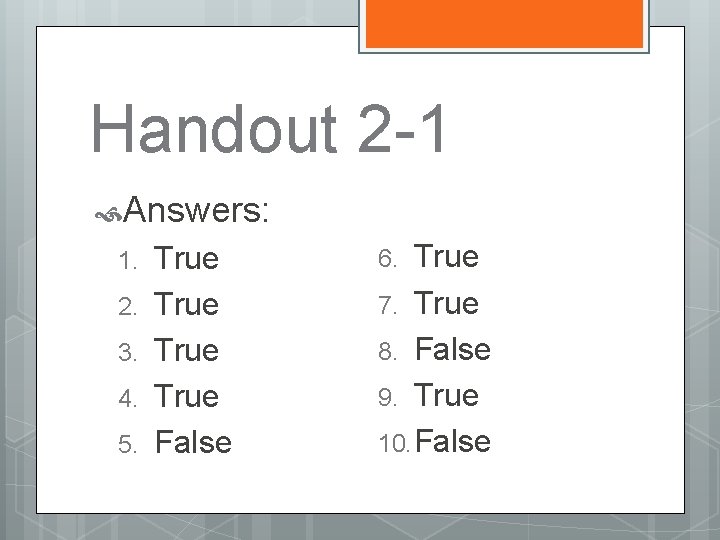
Handout 2 -1 Answers: 1. 2. 3. 4. 5. True False True 7. True 8. False 9. True 10. False 6.
▪ Biological Psychology ▪ branch of psychology concerned with the links between biology and behavior ▪ (also: behavioral neuroscientists, neuropsychologists, behavior geneticists, physiological psychologists, or biopsychologists)
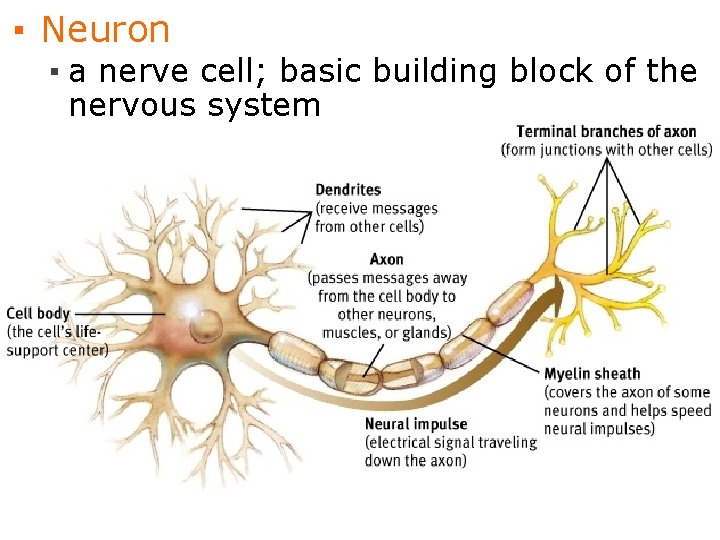
▪ Neuron ▪ a nerve cell; basic building block of the nervous system
▪ Dendrite ▪ bushy, branching extensions of a neuron, receives messages and conducts impulses toward the cell body ▪ Axon ▪ extension of a neuron, ends in branching terminal fibers through which messages are sent to other neurons/muscles/glands ▪ Myelin [MY-uh-lin] Sheath ▪ layer of fatty cells segmentally encasing the fibers of many neurons; enables vastly greater transmission speed of neural impulses
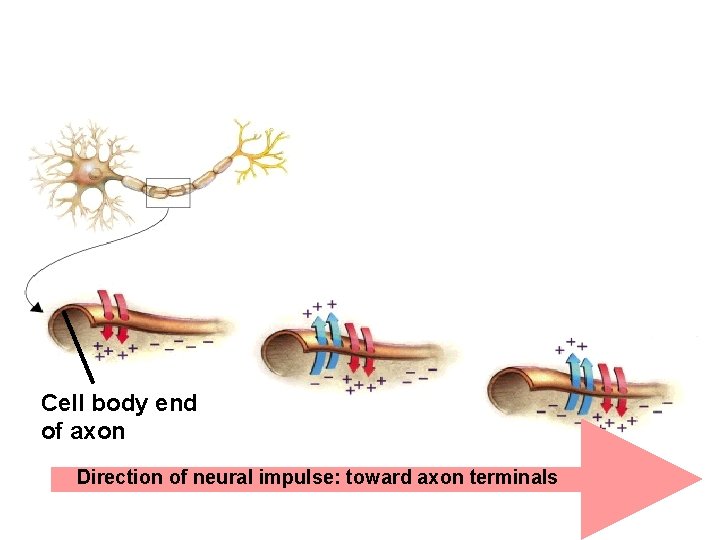
▪ Action Potential ▪ neural impulse; a brief electrical charge that travels down an axon; generated by movement of positively charged atoms in and out of channels in axon’s membrane ▪ Threshold ▪ level of stimulation required to trigger a neural impulse
Cell body end of axon Direction of neural impulse: toward axon terminals
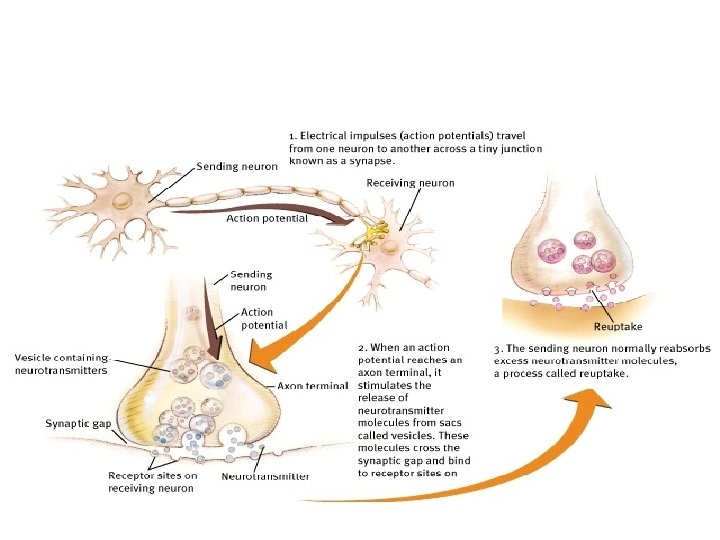
▪ Synapse [SIN-aps] ▪ junction between axon tip of sending neuron and dendrite or cell body of the receiving neuron ▪ tiny gap at this junction is called the synaptic gap or cleft ▪ Neurotransmitters ▪ chemical messengers that traverse synaptic gaps between neurons; when released by sending neuron, neurotransmitters travel across synapse and bind to receptor sites on receiving neuron, thereby influencing whether it will generate a neural impulse
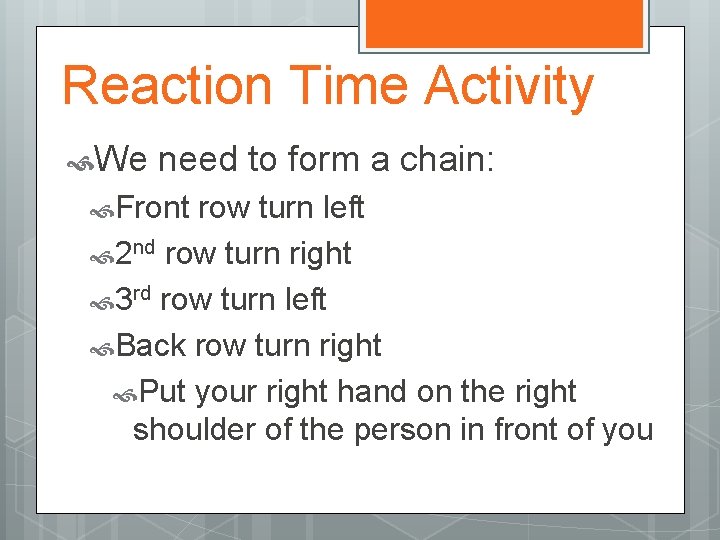
Reaction Time Activity We need to form a chain: Front row turn left 2 nd row turn right 3 rd row turn left Back row turn right Put your right hand on the right shoulder of the person in front of you
Reaction Time Activity You are going to squeeze the shoulder of the person in front of you as soon as you feel your shoulder squeezed We’ll time it and see how fast we can get to the end of the chain
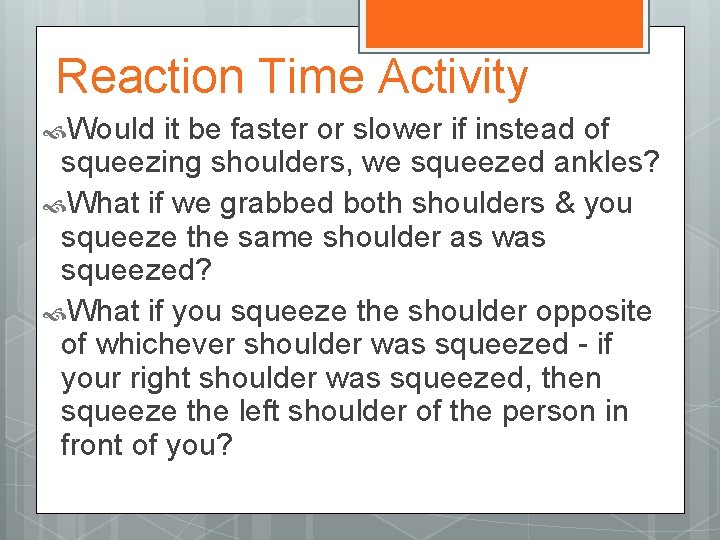
Reaction Time Activity Would it be faster or slower if instead of squeezing shoulders, we squeezed ankles? What if we grabbed both shoulders & you squeeze the same shoulder as was squeezed? What if you squeeze the shoulder opposite of whichever shoulder was squeezed - if your right shoulder was squeezed, then squeeze the left shoulder of the person in front of you?
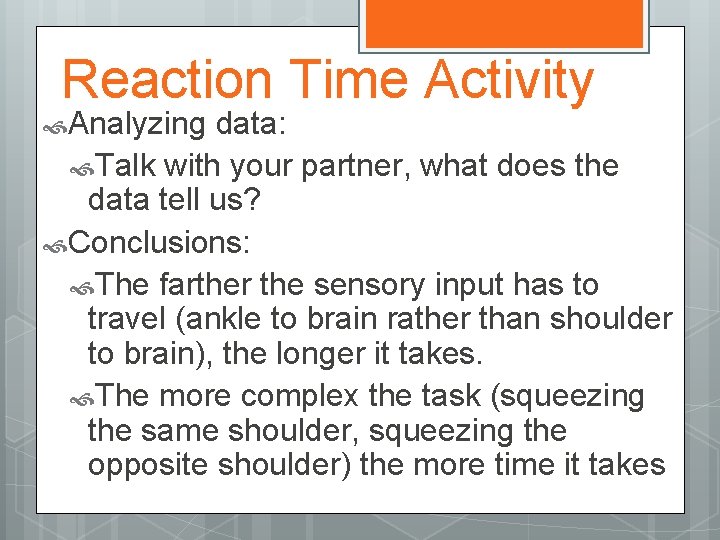
Reaction Time Activity Analyzing data: Talk with your partner, what does the data tell us? Conclusions: The farther the sensory input has to travel (ankle to brain rather than shoulder to brain), the longer it takes. The more complex the task (squeezing the same shoulder, squeezing the opposite shoulder) the more time it takes
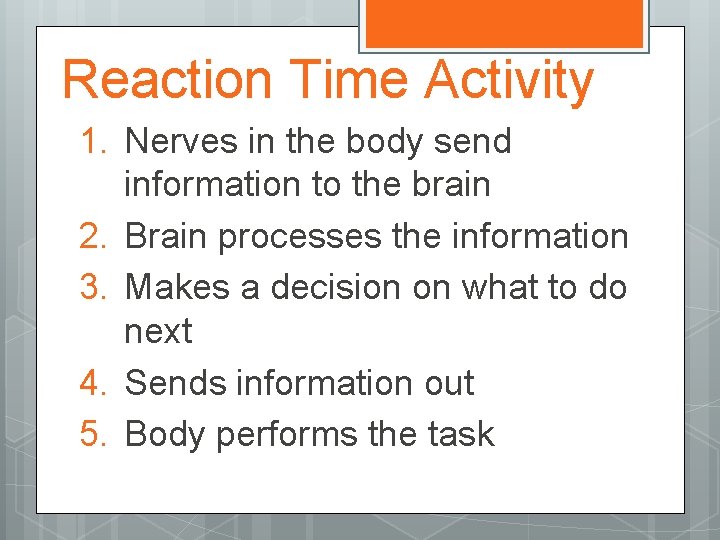
Reaction Time Activity 1. Nerves in the body send information to the brain 2. Brain processes the information 3. Makes a decision on what to do next 4. Sends information out 5. Body performs the task
▪ Acetylcholine [ah-seat-el-KO-leen] ▪ a neurotransmitter that, among its functions, triggers muscle contraction ▪ Endorphins [en-DOR-fins] ▪ “morphine within”; natural, opiate-like neurotransmitters; linked to pain control and pleasure
The Mind Episode 5, Endorphins: The Brain’s Natural Morphine