
Unit 1 Nature of Science YOU MUST KNOW







- Slides: 24
Unit 1 Nature of Science • • • YOU MUST KNOW Fundamental Principle of Biology Properties of Life Steps of Scientific Problem Solving How to use appropriate SI units and describe the relationship among the prefixes Use graphs to express patterns and relationships from sets of scientific data.
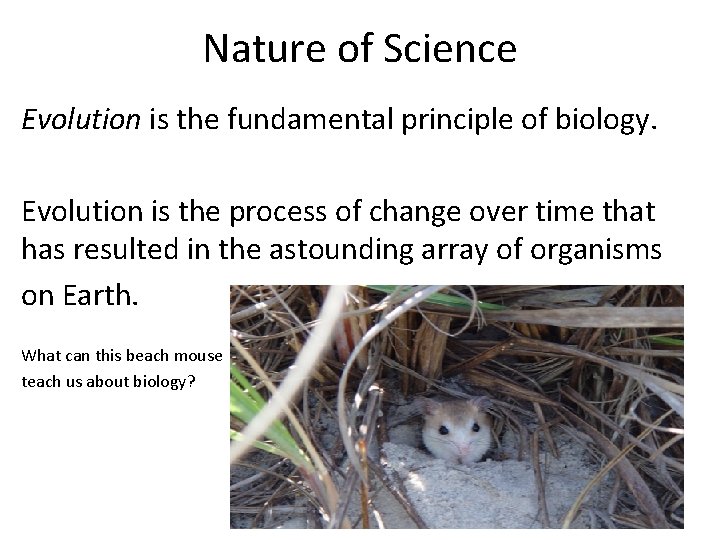
Nature of Science Evolution is the fundamental principle of biology. Evolution is the process of change over time that has resulted in the astounding array of organisms on Earth. What can this beach mouse teach us about biology?
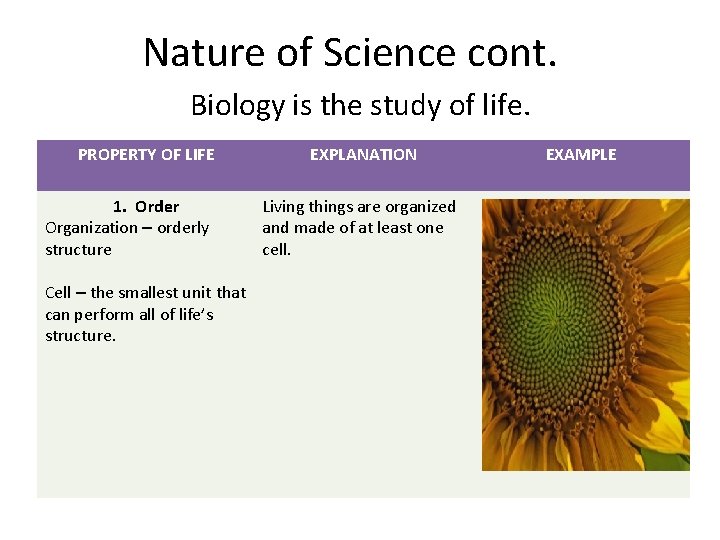
Nature of Science cont. Biology is the study of life. PROPERTY OF LIFE 1. Order Organization – orderly structure Cell – the smallest unit that can perform all of life’s structure. EXPLANATION Living things are organized and made of at least one cell. EXAMPLE
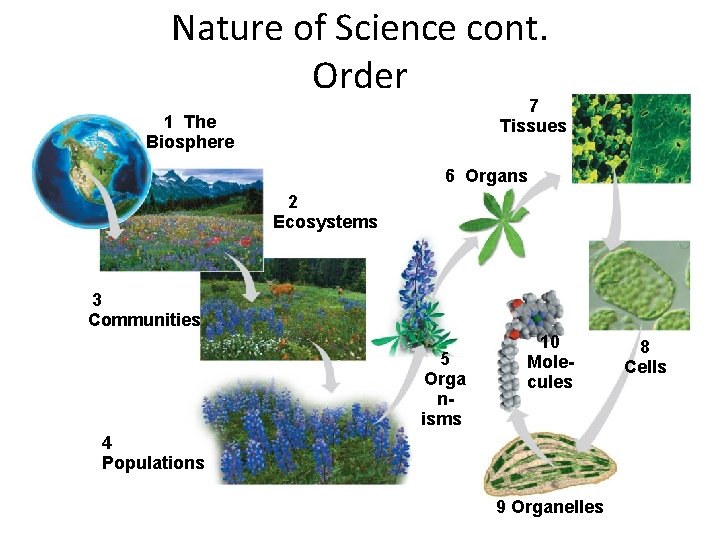
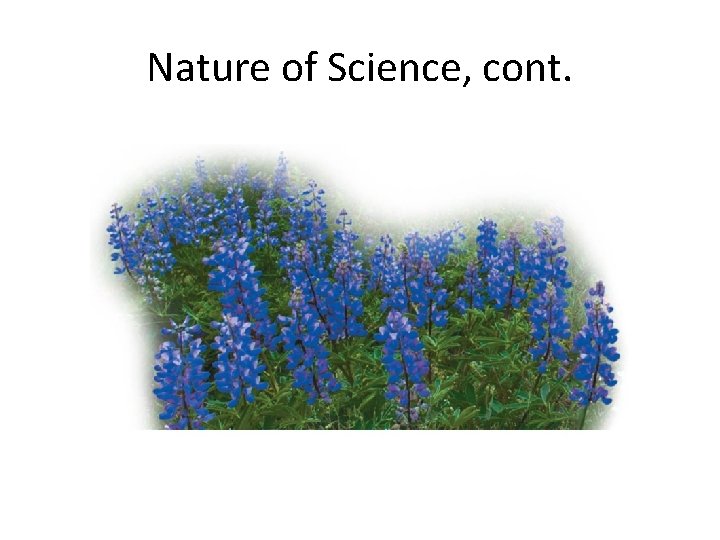
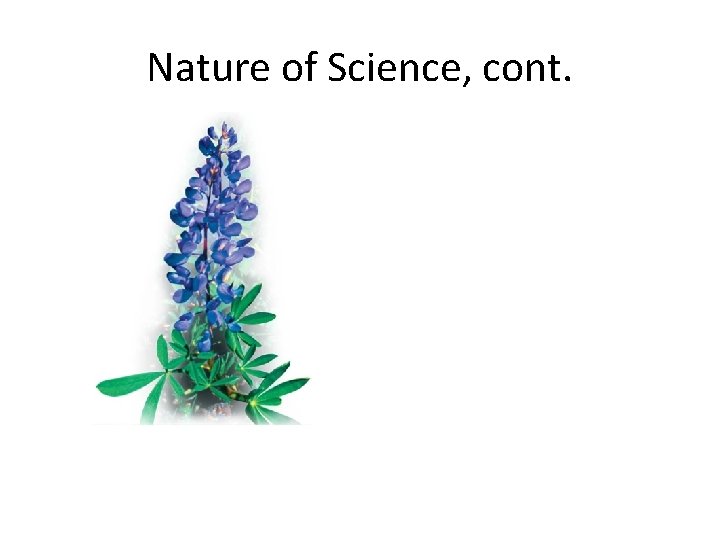
Nature of Science cont. Order • Life can be studied at different levels, from molecules to the entire living planet • This enormous range can be divided into different levels of biological organization .
Nature of Science cont. Order 7 Tissues 1 The Biosphere 6 Organs 2 Ecosystems 3 Communities 5 Orga nisms 10 Molecules 4 Populations 9 Organelles 8 Cells
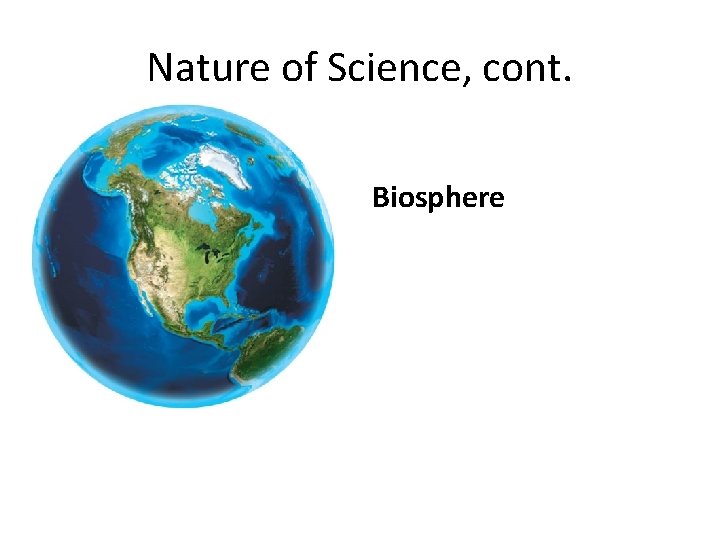
Nature of Science, cont. Biosphere
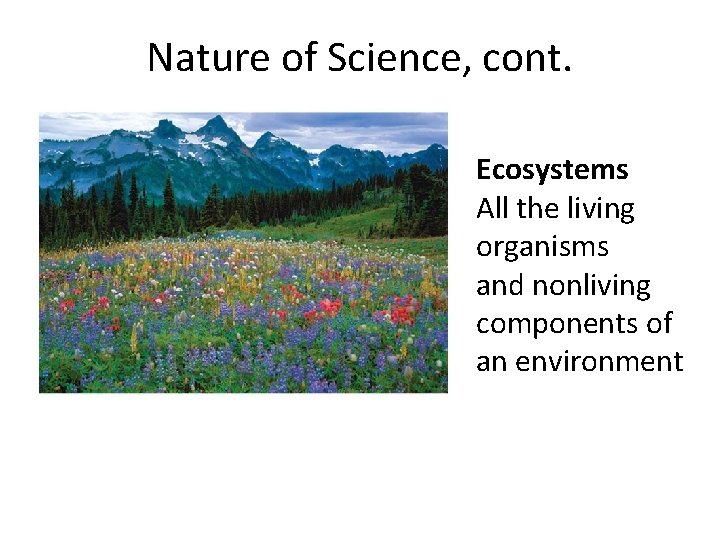
Nature of Science, cont. Ecosystems All the living organisms and nonliving components of an environment
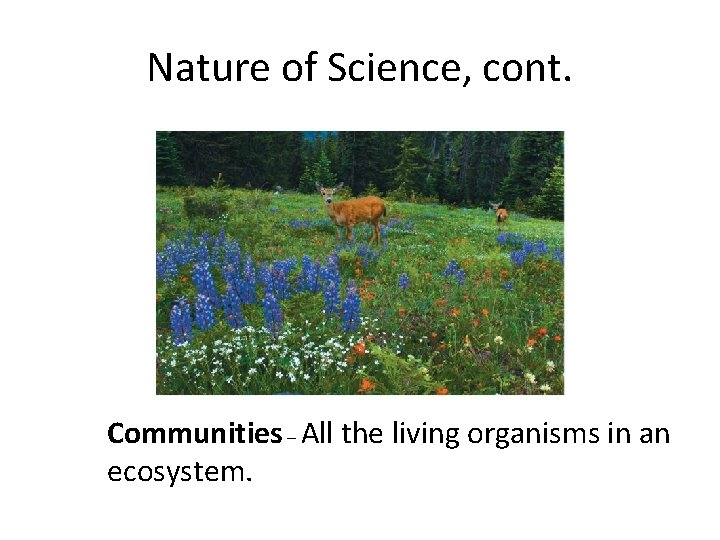
Nature of Science, cont. Communities – All the living organisms in an ecosystem.
Nature of Science, cont.
Nature of Science, cont.
Nature of Science, cont. Organ – A body part made up of multiple tissues and has a specific function. Tissues – A group of cells that work together performing a specialized function.
Nature of Science, cont. Cell – Basic unit of structure and function for an organism. Organelle – functional components within a cell.
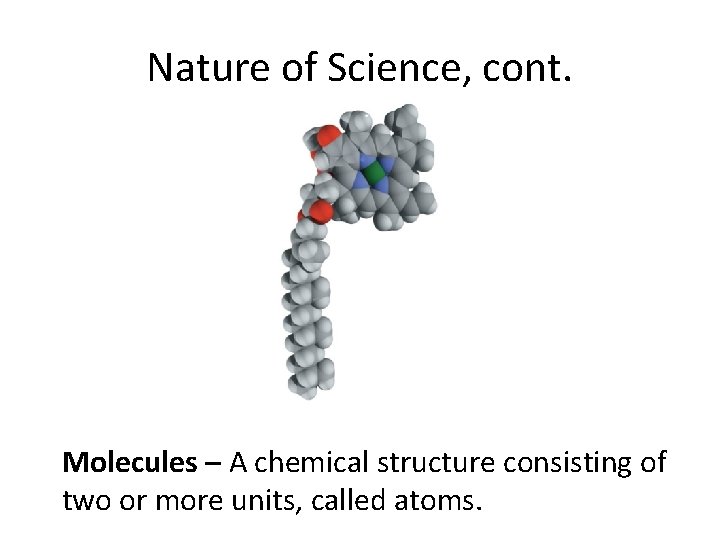
Nature of Science, cont. Molecules – A chemical structure consisting of two or more units, called atoms.
Which correctly orders the levels of biological organization from smallest to largest? A. cells, organelles, organ system, community, ecosystems B. molecules, organism, population, communities, biosphere C. molecules, cells, tissues, ecosystems, communities D. organelles, cells, population, biosphere, ecosystems E. cells, organs, population, ecosystems, communities
All of the gray squirrels that inhabit an oak forest is an example of a(n) _____.
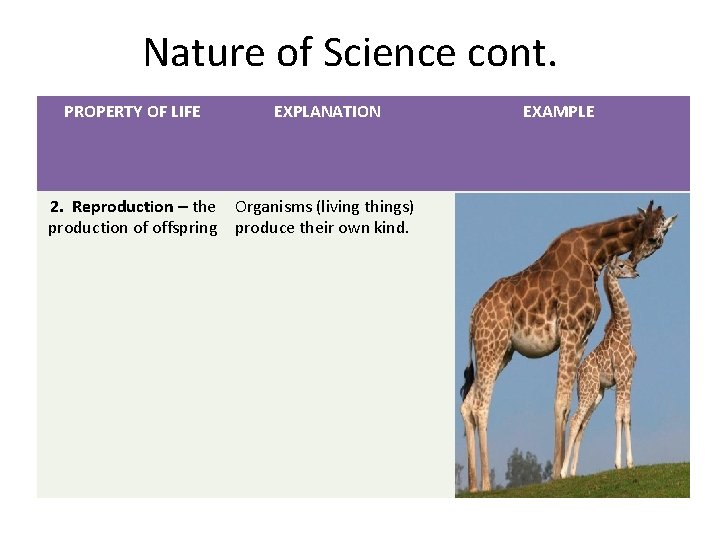
Nature of Science cont. PROPERTY OF LIFE EXPLANATION 2. Reproduction – the Organisms (living things) production of offspring produce their own kind. EXAMPLE
Nature of Science cont. PROPERTY OF LIFE 3. Homeostasis The ability of organisms to maintain conditions suitable for life. EXPLANATION • Keeping internal conditions the same, even when external conditions change. • Regulation of temperature, water content and uptake of nutrients. Long Eared Jackrabbit The jackrabbit’s ears helps maintain a constant body temperature. EXAMPLE
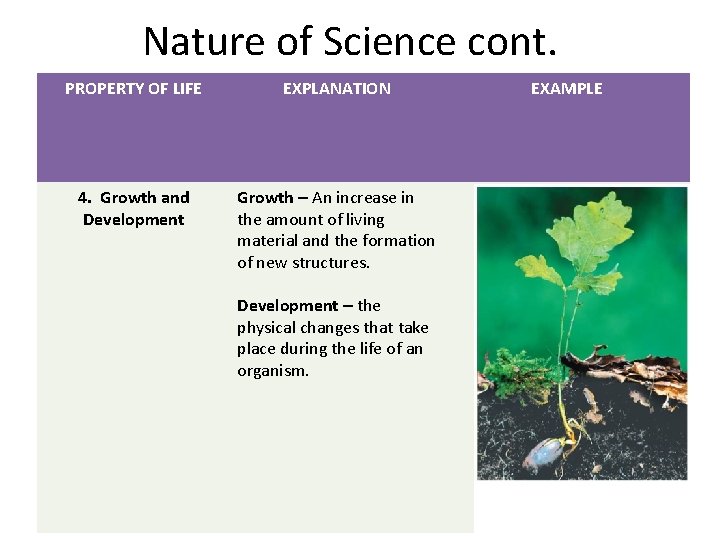
Nature of Science cont. PROPERTY OF LIFE EXPLANATION 4. Growth and Development Growth – An increase in the amount of living material and the formation of new structures. Development – the physical changes that take place during the life of an organism. EXAMPLE
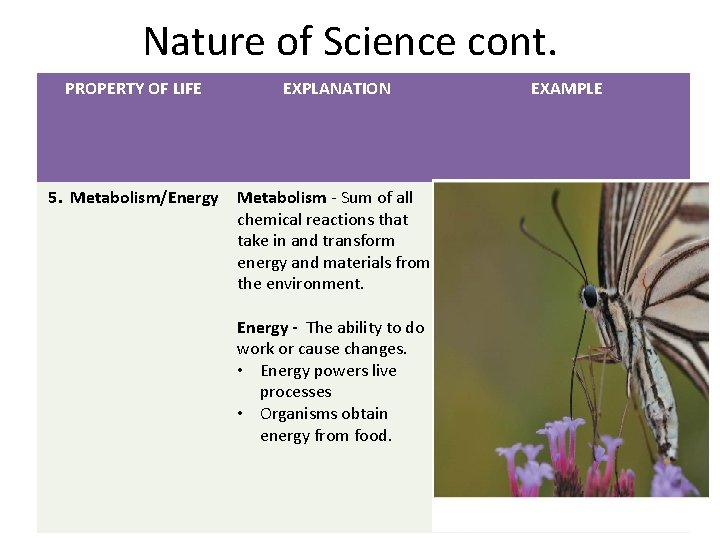
Nature of Science cont. PROPERTY OF LIFE EXPLANATION 5. Metabolism/Energy Metabolism - Sum of all chemical reactions that take in and transform energy and materials from the environment. Energy - The ability to do work or cause changes. • Energy powers live processes • Organisms obtain energy from food. EXAMPLE
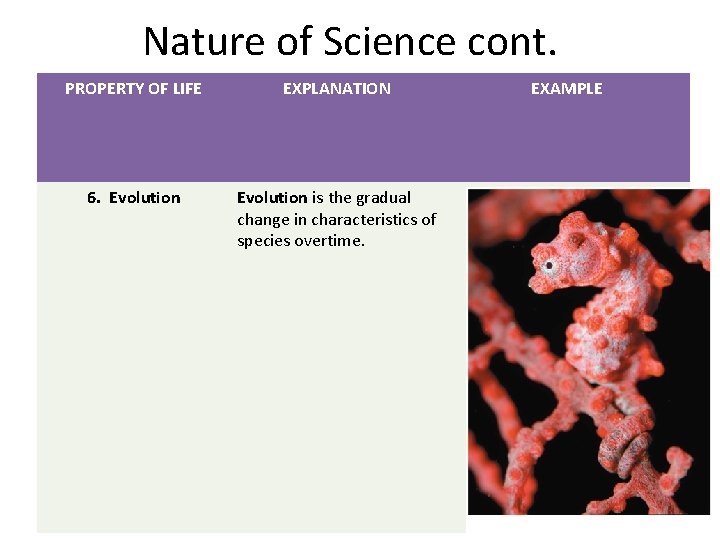
Nature of Science cont. PROPERTY OF LIFE EXPLANATION 6. Evolution is the gradual change in characteristics of species overtime. EXAMPLE
Nature of Science cont. PROPERTY OF LIFE EXPLANATION 7. Response to Stimuli Environment-Surroundings or external conditions Stimulus – any condition in the environment that requires an organism to adjust Response – Reaction to a stimulus EXAMPLE
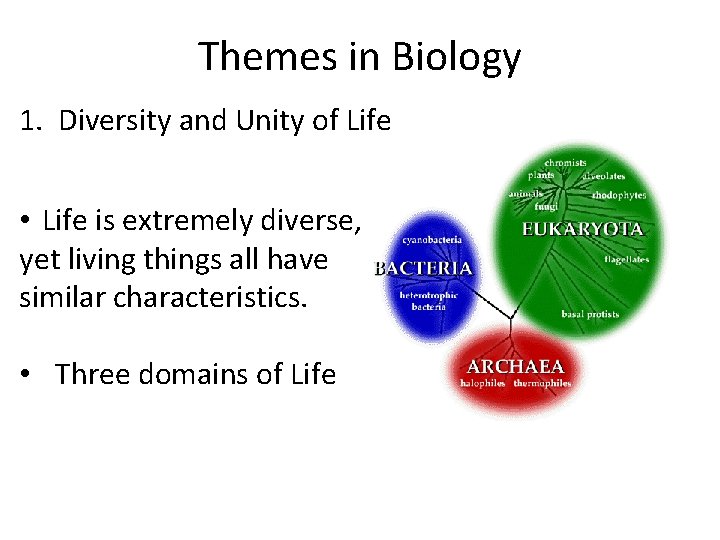
Themes in Biology 1. Diversity and Unity of Life • Life is extremely diverse, yet living things all have similar characteristics. • Three domains of Life
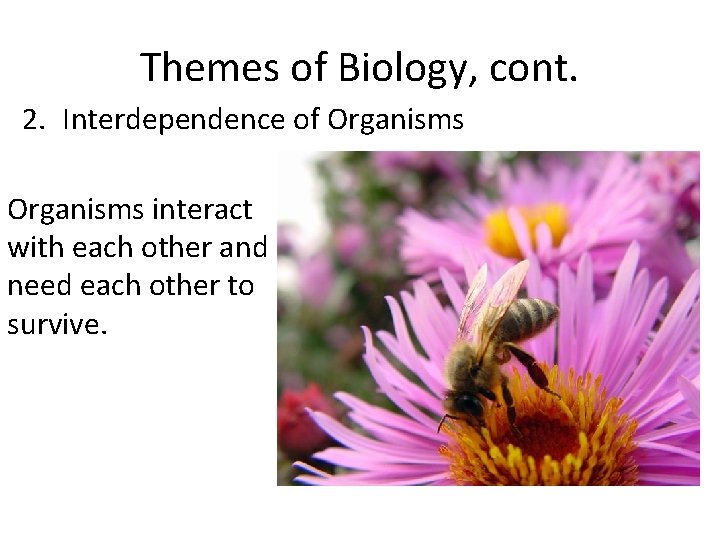
Themes of Biology, cont. 2. Interdependence of Organisms interact with each other and need each other to survive.
Themes of Biology, cont. 3. Evolution of Life Evolution – The gradual change in characteristics of species over time. Adaptation – Any characteristic that allows an Organism to better survive in an environment.