
Unit 1 MSSC Overview and Learning Techniques HighPerformance

- Slides: 31
Unit 1 MSSC Overview and Learning Techniques High-Performance Manufacturing Production Technician
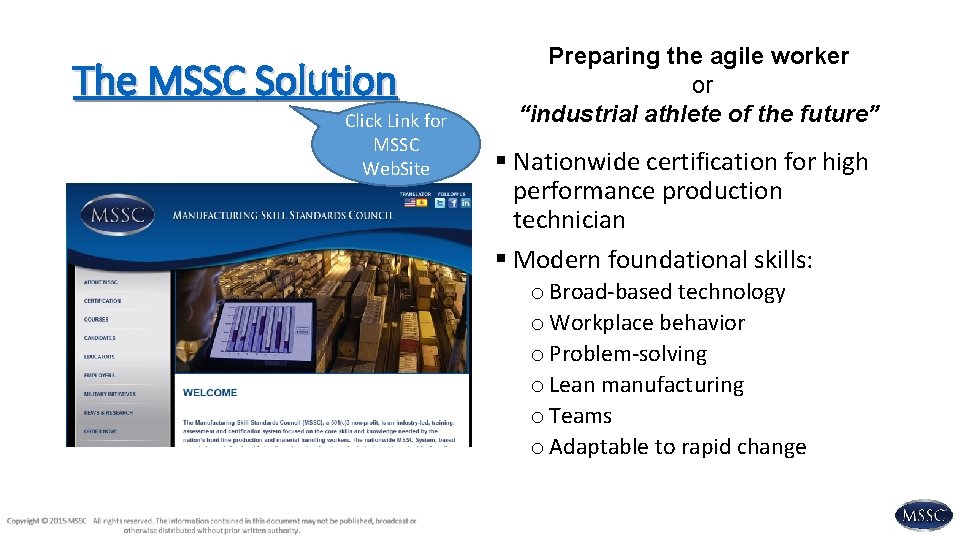
The MSSC Solution Click Link for MSSC Web. Site Preparing the agile worker or “industrial athlete of the future” § Nationwide certification for high performance production technician § Modern foundational skills: o Broad-based technology o Workplace behavior o Problem-solving o Lean manufacturing o Teams o Adaptable to rapid change
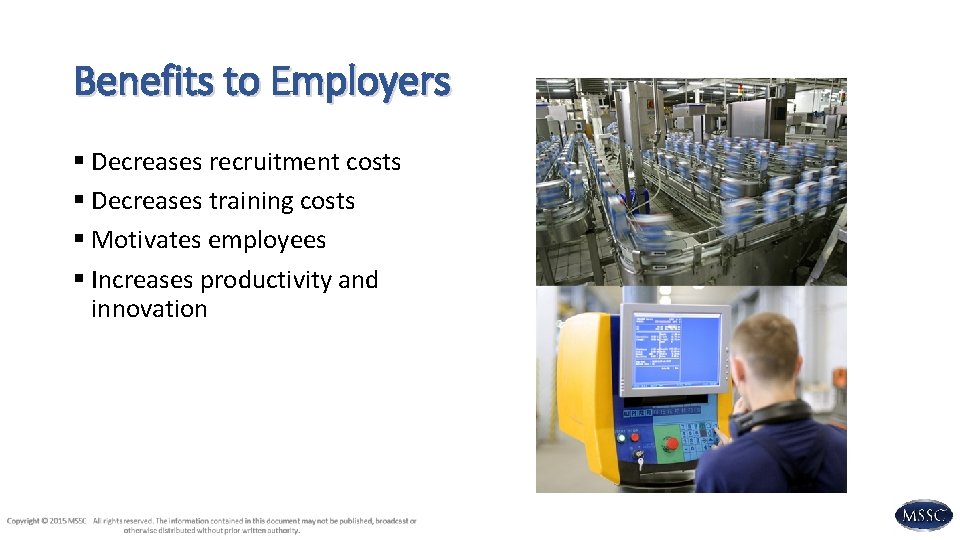
Benefits to Employers § Decreases recruitment costs § Decreases training costs § Motivates employees § Increases productivity and innovation
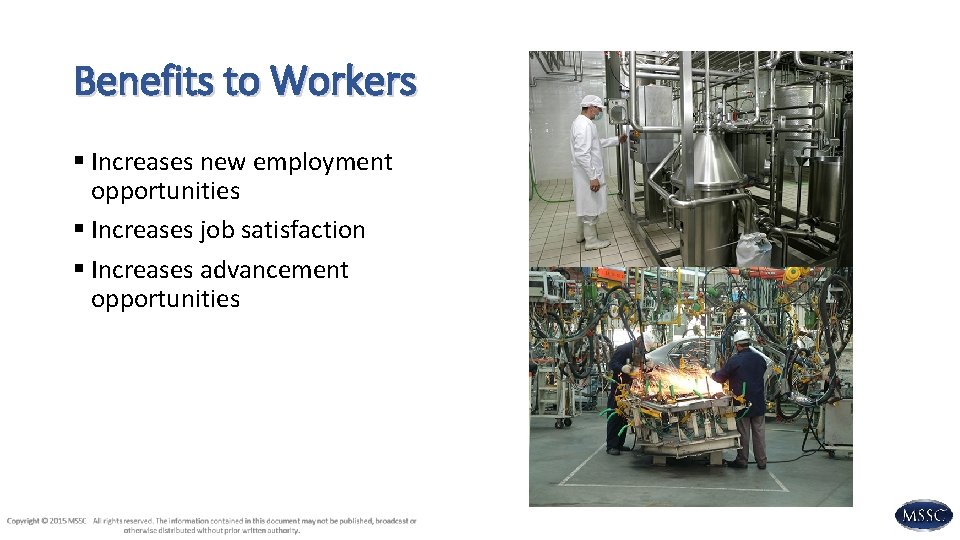
Benefits to Workers § Increases new employment opportunities § Increases job satisfaction § Increases advancement opportunities
Candidates for MSSC Production Technician Certification § All manufacturing sectors and all production occupations o Foundational skills for • Skilled workers (machinists, welders, maintenance, etc. ) • Semi-skilled (operators, assemblers, etc. ) § Wide variety of individuals o Entry level: high school students, 2 -year college students, under-employed, unemployed, career changers o Experienced workers: Incumbent workers, dislocated workers
MSSC Curriculum Features § Flexible Delivery Options o Online access 24/7 anytime, anywhere o Individualized instruction o Fast track, integrated, modular courses § High Pass Rate: 80% o Assessment-like simulations o Assessment terminology and content o Interactive practice and feedback o Consistent delivery of assessment content § Highly Engaging o Colorful graphics and animation o Interactive, simulation content § Develops Critical Workplace Skills o Computer (HMI) navigation and use o Cutting edge content • Lean manufacturing concepts § Continuous Improvement Keyed to MSSC o Updated to changes in MSSC o Ongoing enhancements to learning effectiveness
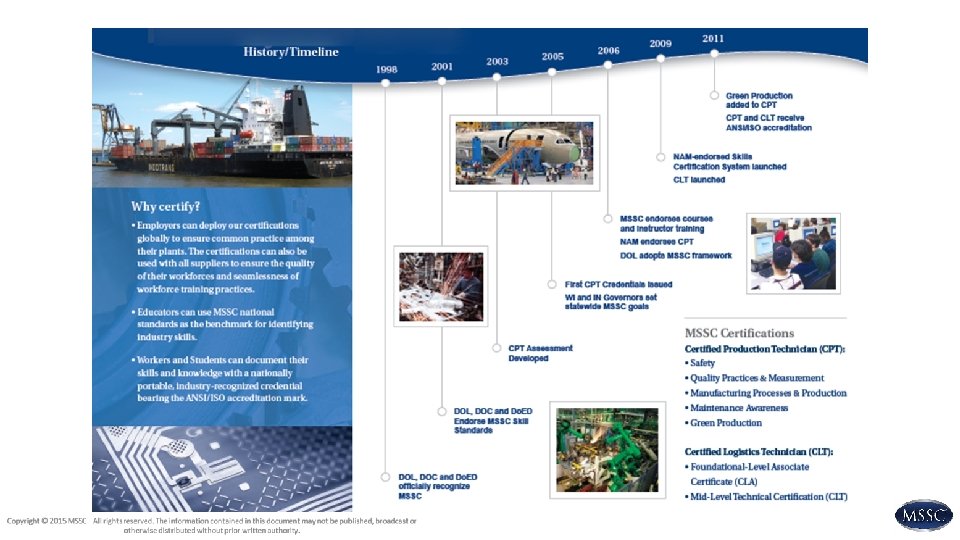
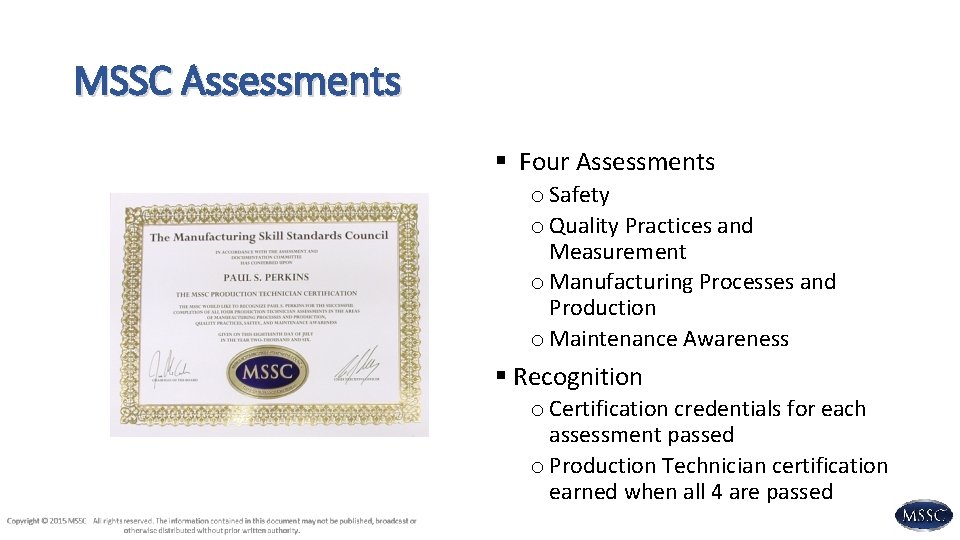
MSSC Assessments § Four Assessments o Safety o Quality Practices and Measurement o Manufacturing Processes and Production o Maintenance Awareness § Recognition o Certification credentials for each assessment passed o Production Technician certification earned when all 4 are passed
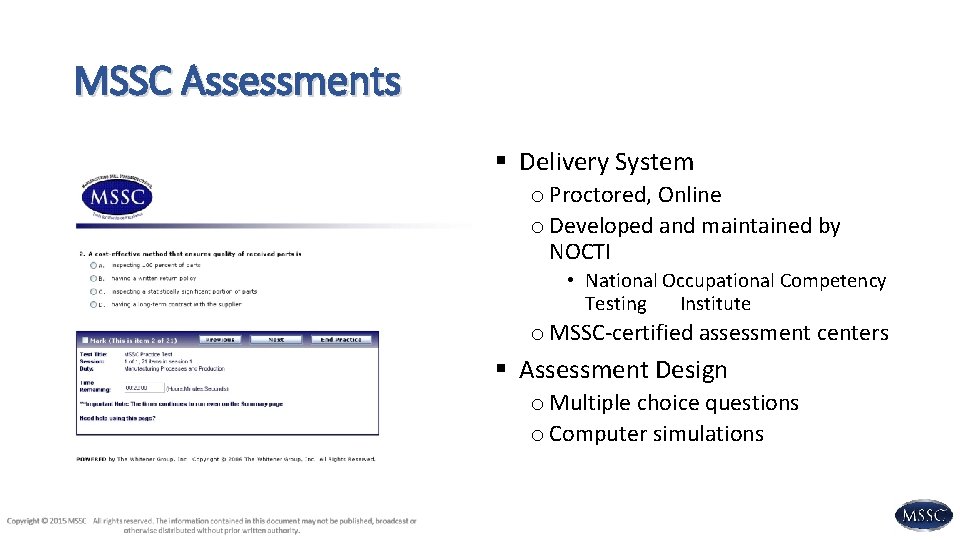
MSSC Assessments § Delivery System o Proctored, Online o Developed and maintained by NOCTI • National Occupational Competency Testing Institute o MSSC-certified assessment centers § Assessment Design o Multiple choice questions o Computer simulations
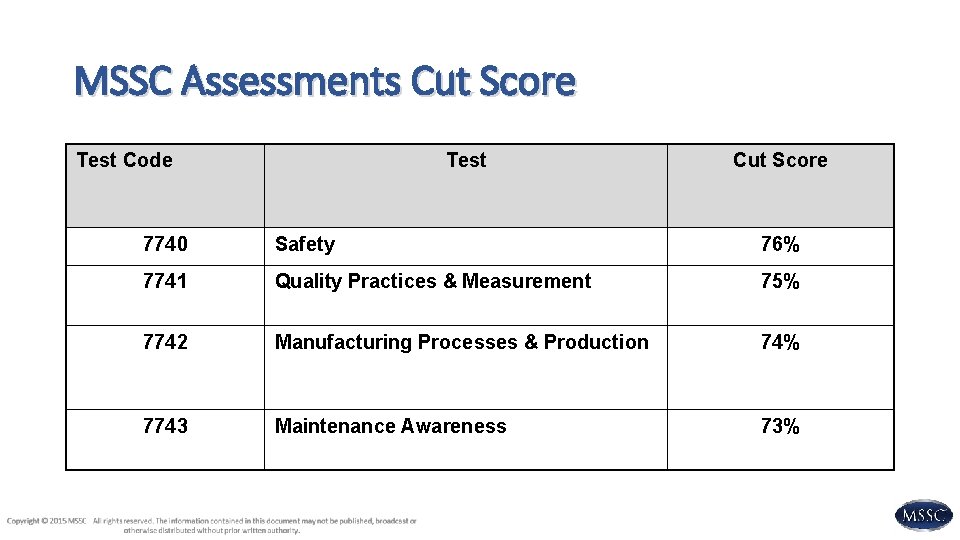
MSSC Assessments Cut Score Test Code Test Cut Score 7740 Safety 76% 7741 Quality Practices & Measurement 75% 7742 Manufacturing Processes & Production 74% 7743 Maintenance Awareness 73%
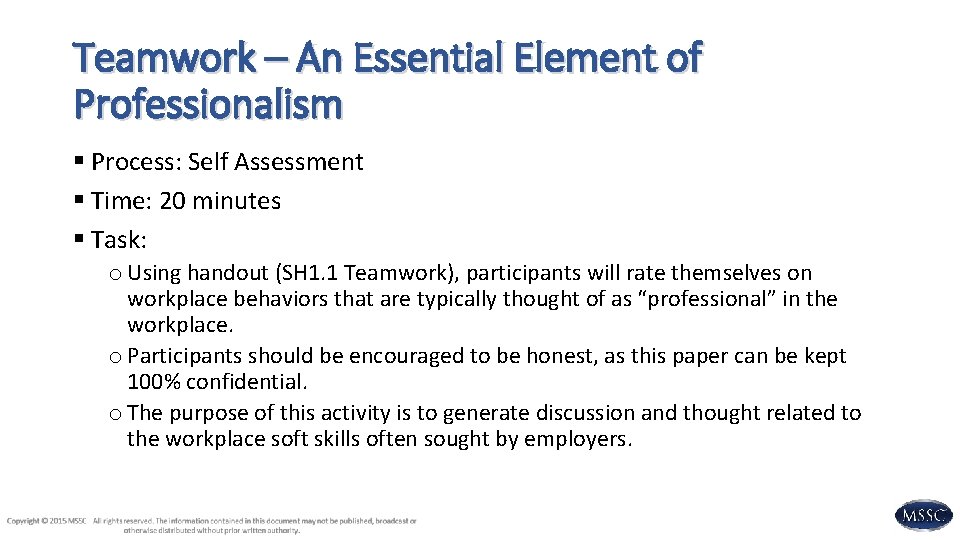
Teamwork – An Essential Element of Professionalism § Process: Self Assessment § Time: 20 minutes § Task: o Using handout (SH 1. 1 Teamwork), participants will rate themselves on workplace behaviors that are typically thought of as “professional” in the workplace. o Participants should be encouraged to be honest, as this paper can be kept 100% confidential. o The purpose of this activity is to generate discussion and thought related to the workplace soft skills often sought by employers.
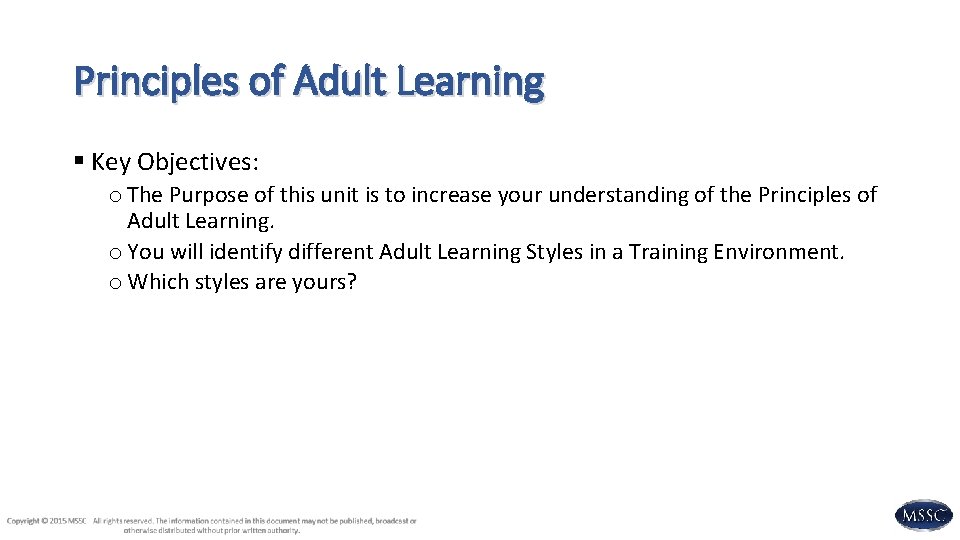
Principles of Adult Learning § Key Objectives: o The Purpose of this unit is to increase your understanding of the Principles of Adult Learning. o You will identify different Adult Learning Styles in a Training Environment. o Which styles are yours?
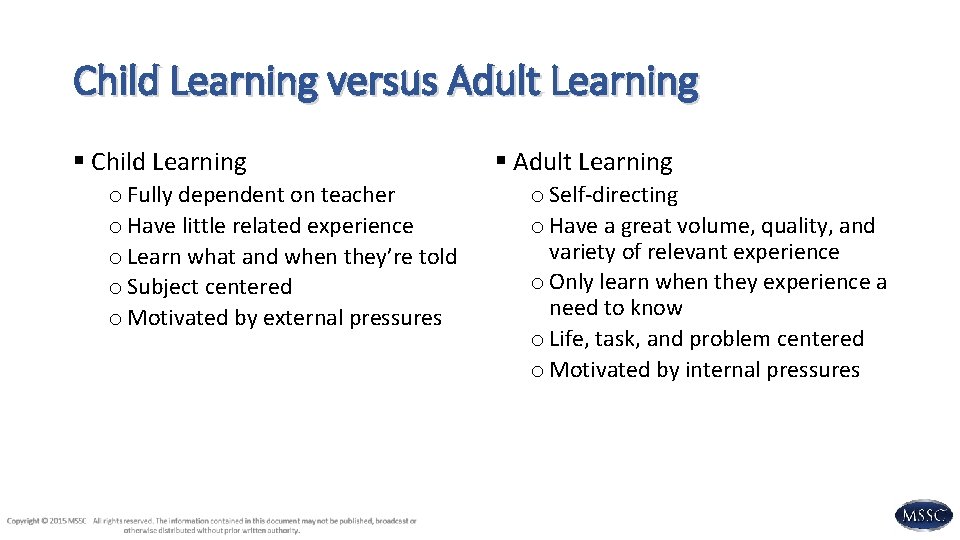
Child Learning versus Adult Learning § Child Learning o Fully dependent on teacher o Have little related experience o Learn what and when they’re told o Subject centered o Motivated by external pressures § Adult Learning o Self-directing o Have a great volume, quality, and variety of relevant experience o Only learn when they experience a need to know o Life, task, and problem centered o Motivated by internal pressures
Why and How People Learn § Key Points o Look for a way to link the training to a need that you have seen or experienced • The activities in this course attempt this o An instructor who has both skill and enthusiasm makes it a lot easier for the employee to learn • Experienced in both Manufacturing and Training
Why and How People Learn § Always make the training situation as much like the real job as possible o Visuals, group work, and on-line § Trainees will remember better what they said during the training than what was said by the trainer o You will teach other
Adult Learning Principles § Set the atmosphere § Keep‘em interested § “It’s Logical” said Spock § Kick up the activity § Get your direction
Adult Learning Principles § Repeat, repeat… § Lay It Out § Visual, visual §WIIFM § 3 -day Rule – Use It or Lose It
Adult Learning Styles § Visual § Auditory § Kinesthetic
Visual Learners § Generates internal pictures of everything they see § Uses words related to the way things “look” § Wants the “whole picture” § Use visual materials such as pictures, charts, maps, etc. § Use color to highlight important information § Use multi-media (e. g. computers, videos, etc. ) § Make mental pictures of information to enhance memory of it
Auditory Learners § Words are important to them § Likes to hold conversations § Uses words that are associated with sound § Read text out loud § Tape record information § Verbally explain new ideas to others § Remember the interesting examples, stories, jokes, etc.
Kinesthetic Learners § Likes a “hands-on” approach § Concerned about how things feel § Prefers “active” learning § Move around when learning things § When you need to sit for long periods of time, use props to stimulate the senses, (e. g. “koosh balls”, pencils, chew gum, etc. ) § Use pictures, photographs to illustrate an idea; dress up your work space with posters
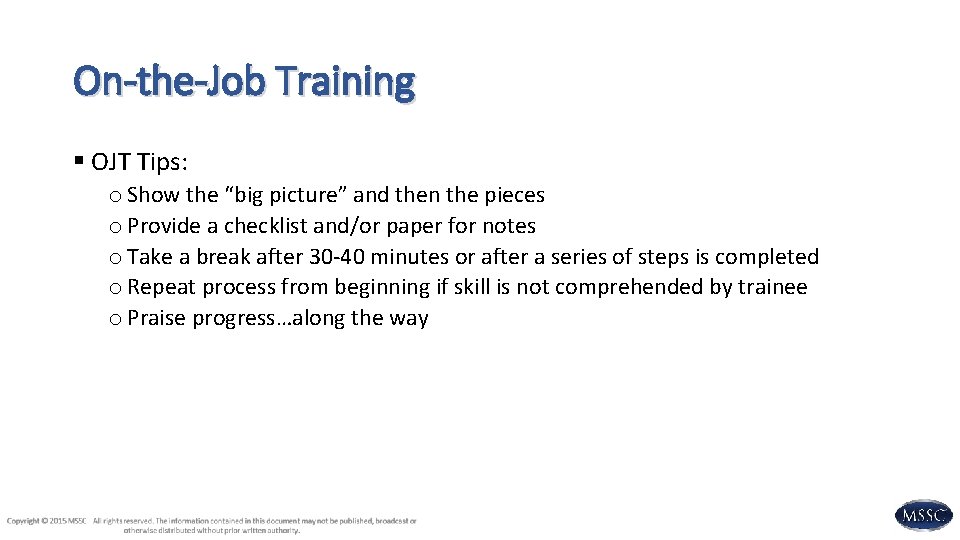
On-the-Job Training § OJT Tips: o Show the “big picture” and then the pieces o Provide a checklist and/or paper for notes o Take a break after 30 -40 minutes or after a series of steps is completed o Repeat process from beginning if skill is not comprehended by trainee o Praise progress…along the way
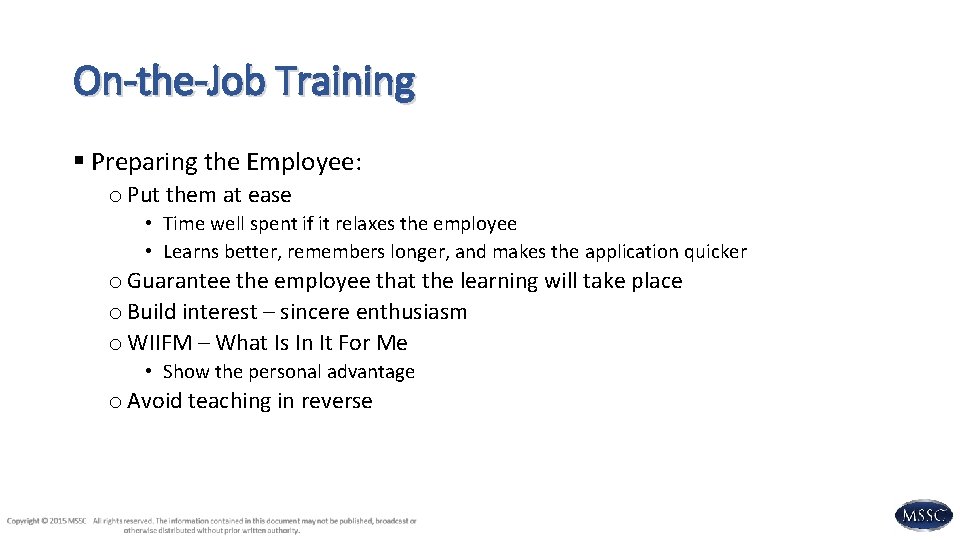
On-the-Job Training § Preparing the Employee: o Put them at ease • Time well spent if it relaxes the employee • Learns better, remembers longer, and makes the application quicker o Guarantee the employee that the learning will take place o Build interest – sincere enthusiasm o WIIFM – What Is In It For Me • Show the personal advantage o Avoid teaching in reverse
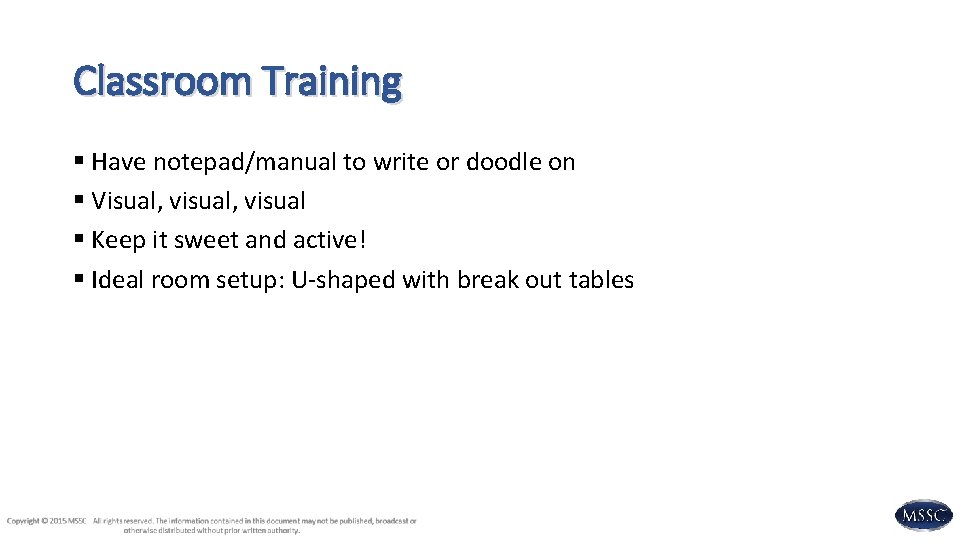
Classroom Training § Have notepad/manual to write or doodle on § Visual, visual § Keep it sweet and active! § Ideal room setup: U-shaped with break out tables
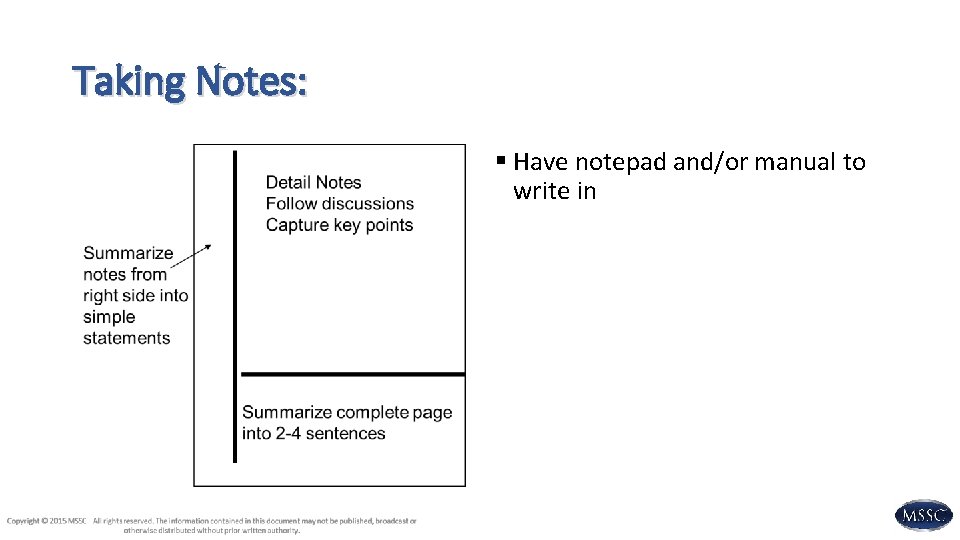
Taking Notes: § Have notepad and/or manual to write in
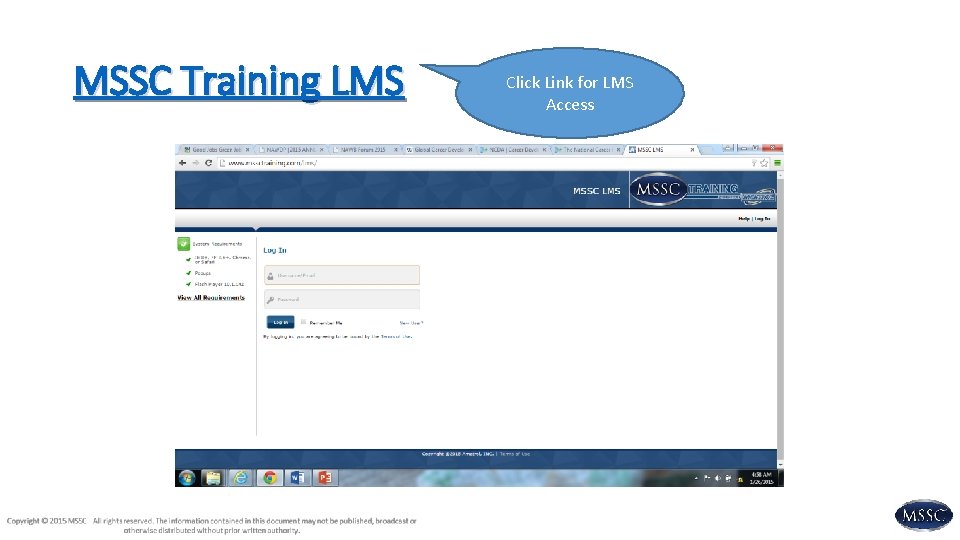
MSSC Training LMS Click Link for LMS Access
e. Learning § Read Segments and Objectives § Identify Key Terms § Complete simulations § Study Charts/Graphs/Photographs § Review