
Unit 1 Mix Matter Flow Topic 1 Lab
Unit 1 Mix Matter & Flow Topic 1 – Lab Safety & WHIMS And the Wonderful World of Fluids
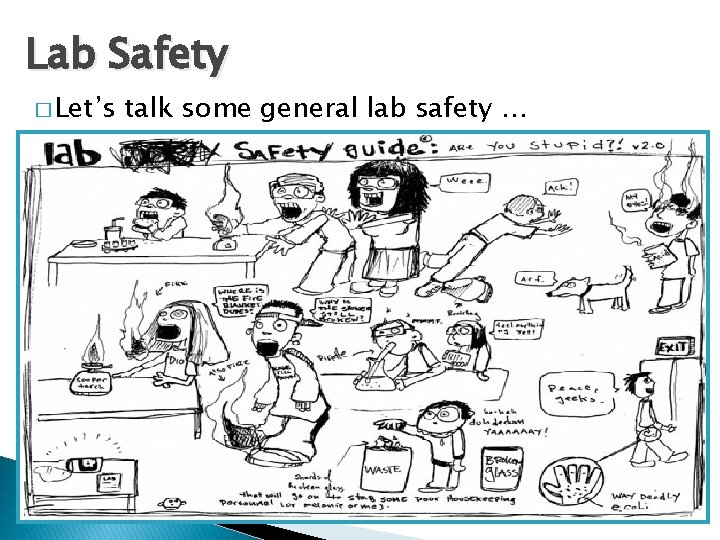
Lab Safety � Let’s talk some general lab safety …
Lab Safety � General ◦ ◦ ◦ ◦ ◦ rules here … No running in the lab No food in the lab (especially during experiments) No drinks (water is OK) Do not chemicals or other lab devices unless told Do not taste anything without permission Do not stick your face above a liquid and inhale Be respectful Always follow directions Let me know if you break something – glass for sure!
Let’s Science!
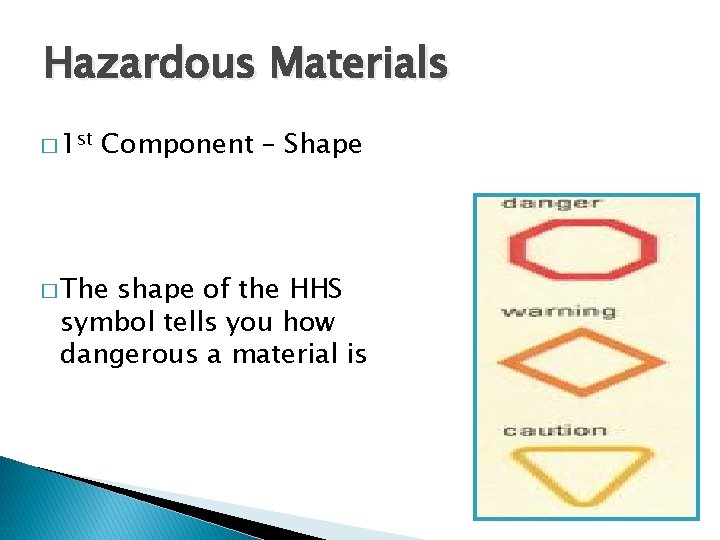
Hazardous Materials � 1 st Component – Shape � The shape of the HHS symbol tells you how dangerous a material is
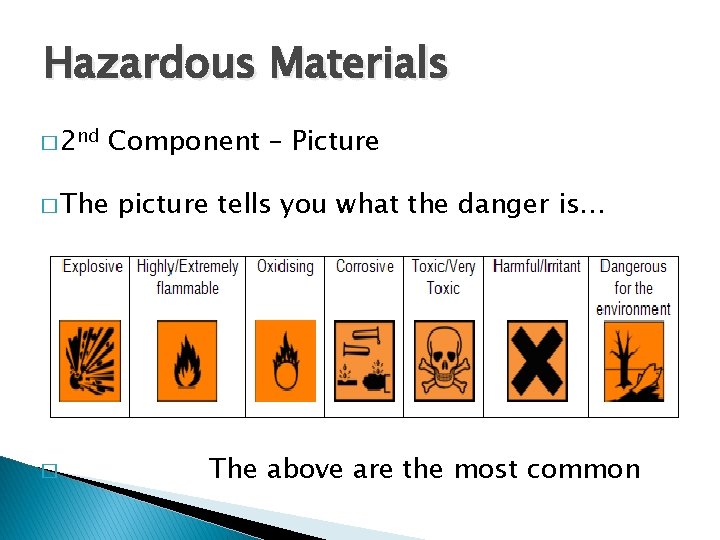
Hazardous Materials � 2 nd Component – Picture � The � picture tells you what the danger is… The above are the most common
WHMIS � WHMIS stands for … ◦ Workplace Hazardous Materials Information System � Fancy talk for … ◦ …what dangers/potential dangers a material possesses � These are commonly found in the workplace where you would interact with chemicals
WHMIS Question … � Here � If is a question for you … you were to get hired at a fast food place, do you think they will make you take a mini WHMIS training course?
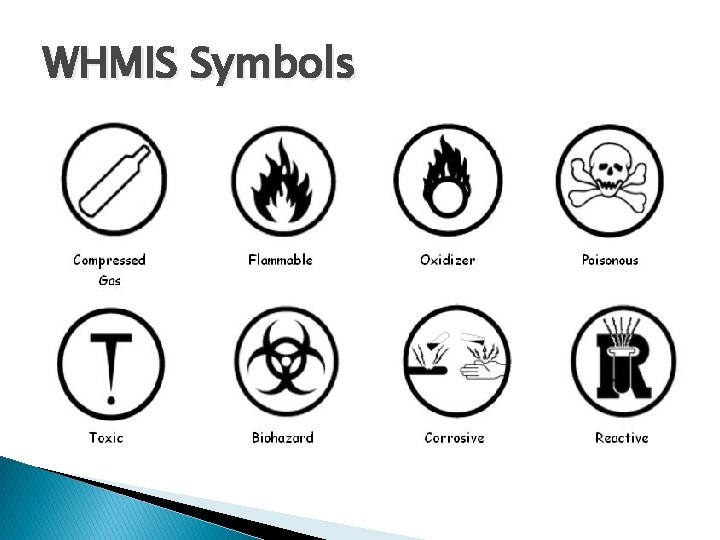
WHMIS Symbols
WHMIS � Time for some intense WHMIS and Hazard Symbol Trivia … � …time for a WHMIS Fun-Sheet!
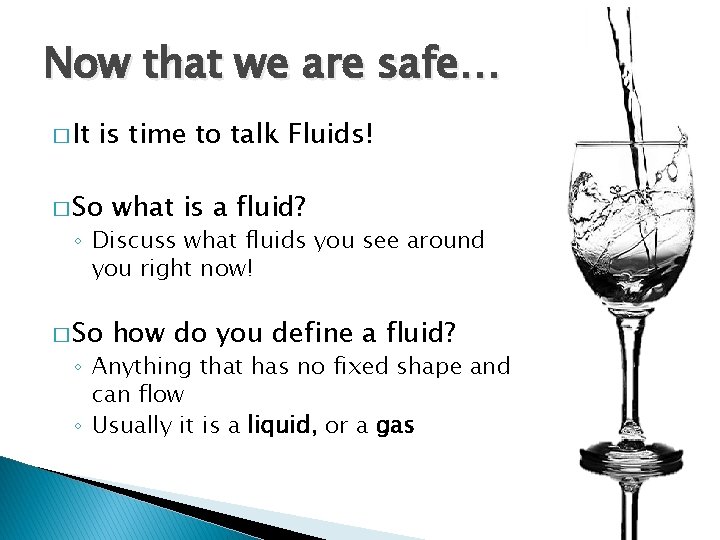
Now that we are safe… � It is time to talk Fluids! � So what is a fluid? � So how do you define a fluid? ◦ Discuss what fluids you see around you right now! ◦ Anything that has no fixed shape and can flow ◦ Usually it is a liquid, or a gas
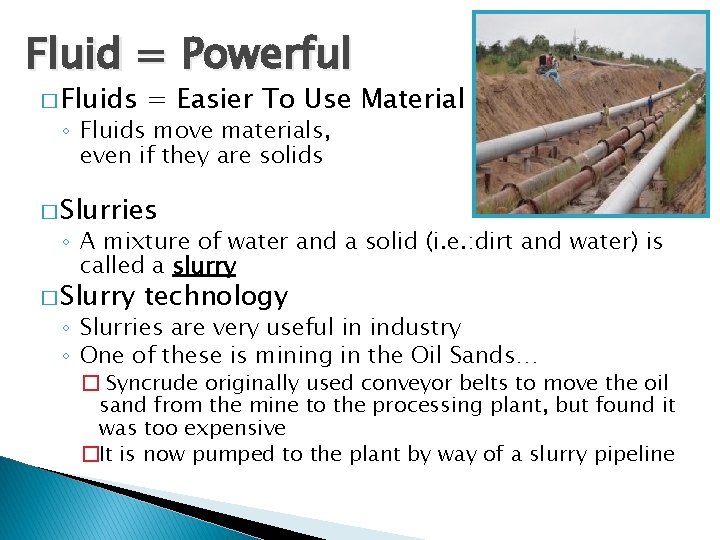
Fluid = Powerful � Fluids = Easier To Use Material ◦ Fluids move materials, even if they are solids � Slurries ◦ A mixture of water and a solid (i. e. : dirt and water) is called a slurry � Slurry technology ◦ Slurries are very useful in industry ◦ One of these is mining in the Oil Sands… � Syncrude originally used conveyor belts to move the oil sand from the mine to the processing plant, but found it was too expensive �It is now pumped to the plant by way of a slurry pipeline
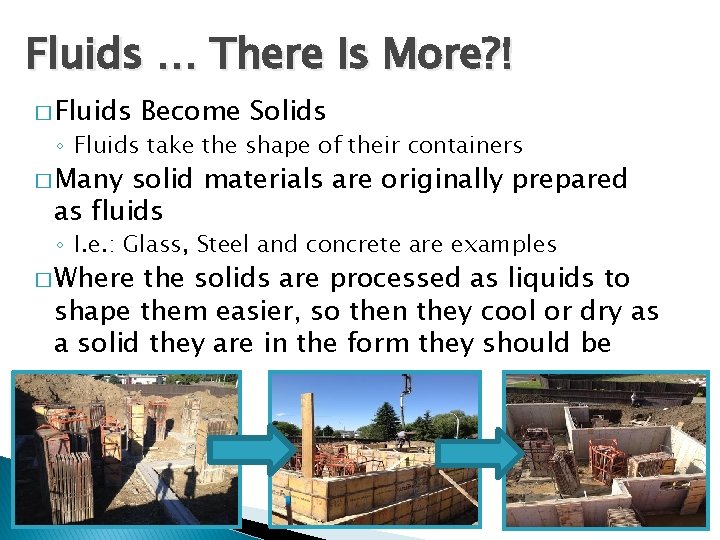
Fluids … There Is More? ! � Fluids Become Solids ◦ Fluids take the shape of their containers � Many solid materials are originally prepared as fluids ◦ I. e. : Glass, Steel and concrete are examples � Where the solids are processed as liquids to shape them easier, so then they cool or dry as a solid they are in the form they should be
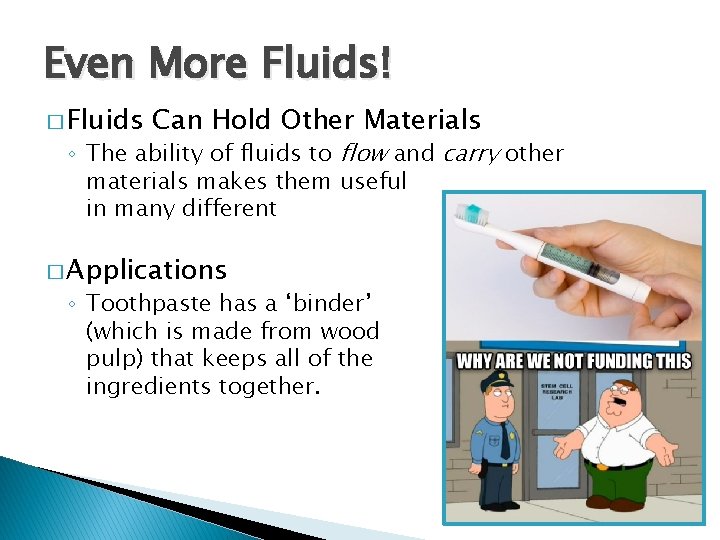
Even More Fluids! � Fluids Can Hold Other Materials ◦ The ability of fluids to flow and carry other materials makes them useful in many different � Applications ◦ Toothpaste has a ‘binder’ (which is made from wood pulp) that keeps all of the ingredients together.
Unit 1 Mix Matter & Flow Topic 2 – Properties of Fluids & A Whole ‘Lotta Science Fun!
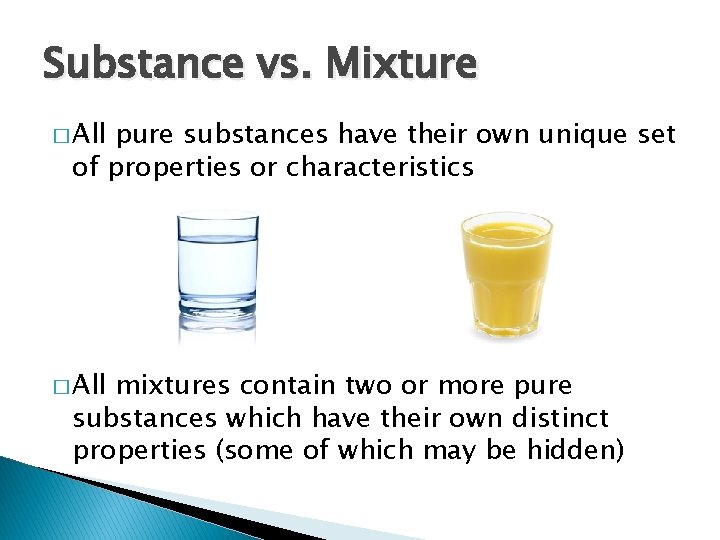
Substance vs. Mixture � All pure substances have their own unique set of properties or characteristics � All mixtures contain two or more pure substances which have their own distinct properties (some of which may be hidden)
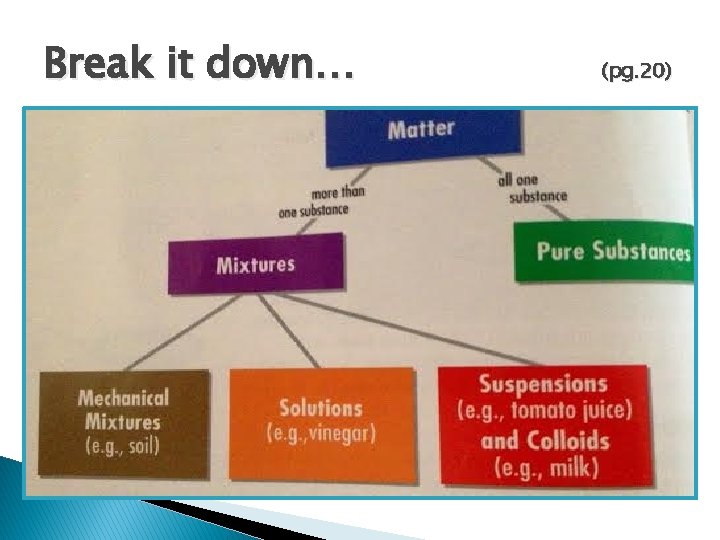
Break it down… (pg. 20)
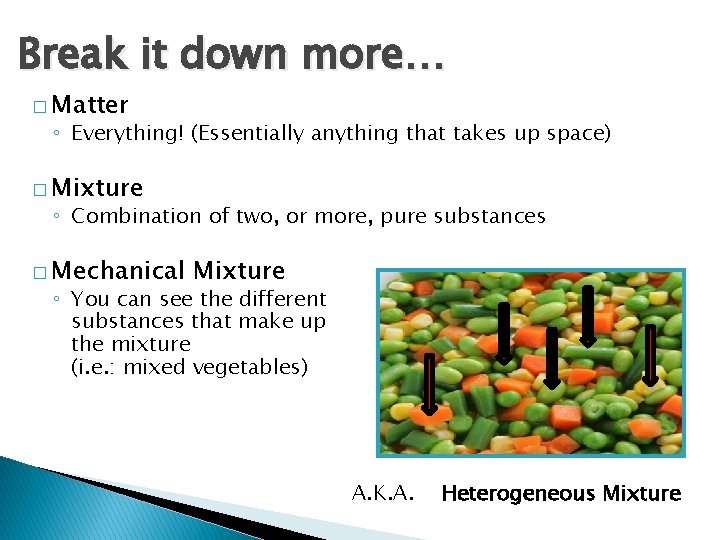
Break it down more… � Matter ◦ Everything! (Essentially anything that takes up space) � Mixture ◦ Combination of two, or more, pure substances � Mechanical Mixture ◦ You can see the different substances that make up the mixture (i. e. : mixed vegetables) A. K. A. Heterogeneous Mixture
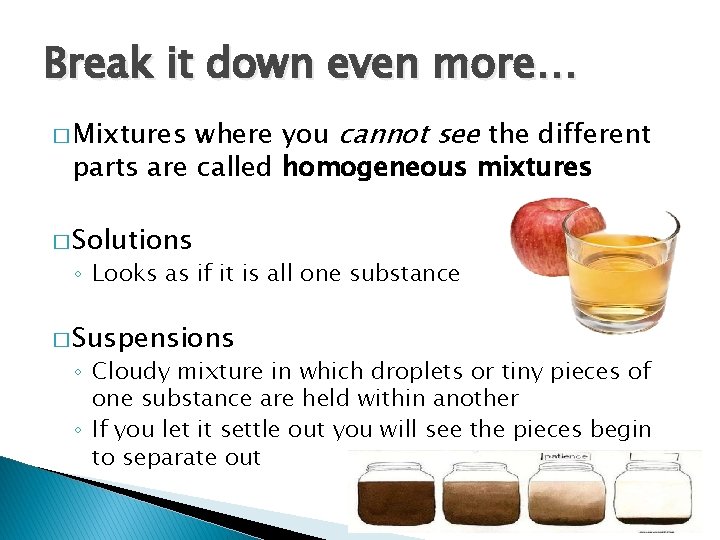
Break it down even more… where you cannot see the different parts are called homogeneous mixtures � Mixtures � Solutions ◦ Looks as if it is all one substance � Suspensions ◦ Cloudy mixture in which droplets or tiny pieces of one substance are held within another ◦ If you let it settle out you will see the pieces begin to separate out
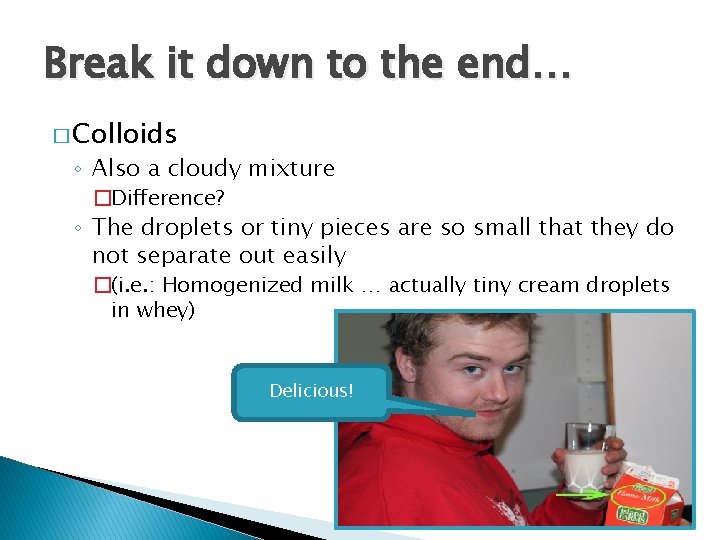
Break it down to the end… � Colloids ◦ Also a cloudy mixture �Difference? ◦ The droplets or tiny pieces are so small that they do not separate out easily �(i. e. : Homogenized milk … actually tiny cream droplets in whey) Delicious!
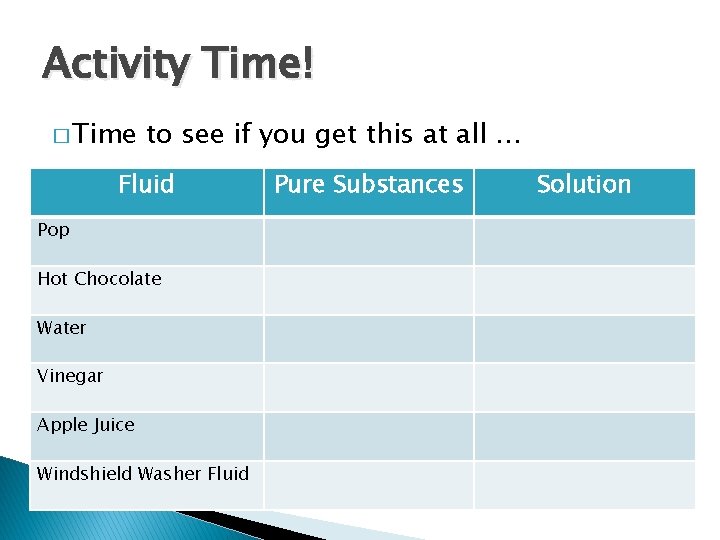
Activity Time! � Time to see if you get this at all … Fluid Pop Hot Chocolate Water Vinegar Apple Juice Windshield Washer Fluid Pure Substances Solution
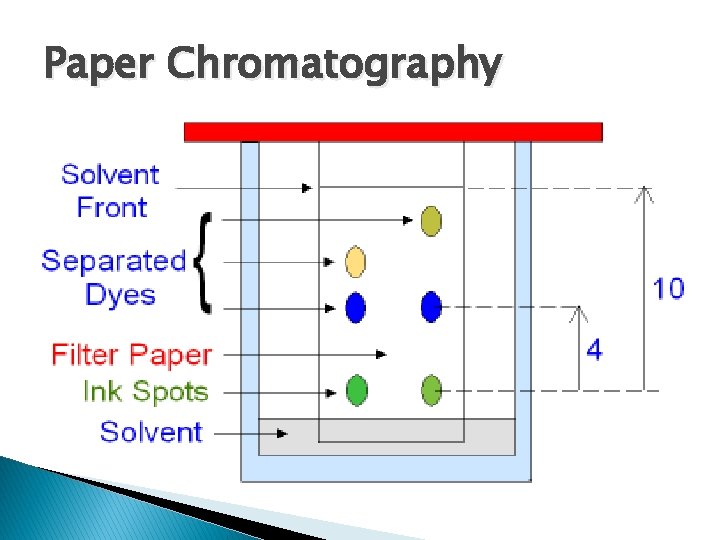
Paper Chromatography � What is that? �A paper chromatography test can be used to determine if a substance is pure or a solution �A filter paper is placed partially in a solution if the fluid moves up to only one level it is a pure substance � If it moves up to multiple levels showing each substance, then it is a solution
Paper Chromatography
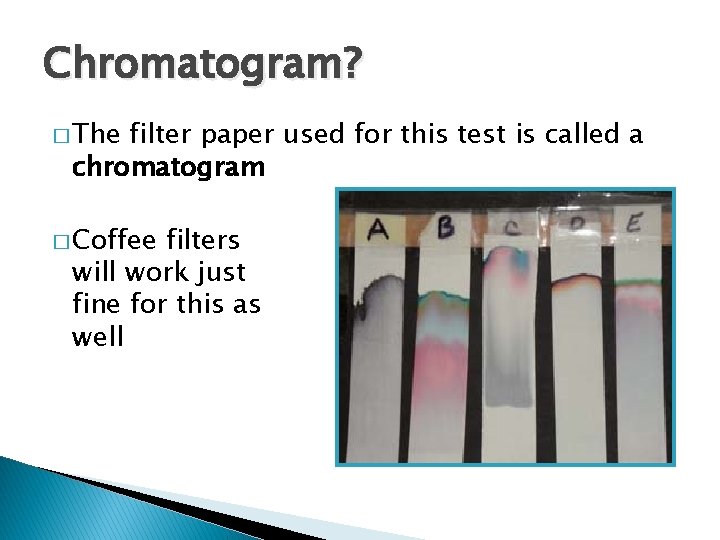
Chromatogram? � The filter paper used for this test is called a chromatogram � Coffee filters will work just fine for this as well
What colour is black? � Time to see what colour(s) black is actually made up of … if at all! � Mini Experiment time!
Concentration & Solubility � Forming a solution by mixing two or more materials together is called dissolving � The solute is the substance that dissolves in a solvent � The solvent is the substance that dissolves the solute to form a solution � Soluble means to be able to be dissolved in a particular solvent � Solutes and solvents can be gases or liquids
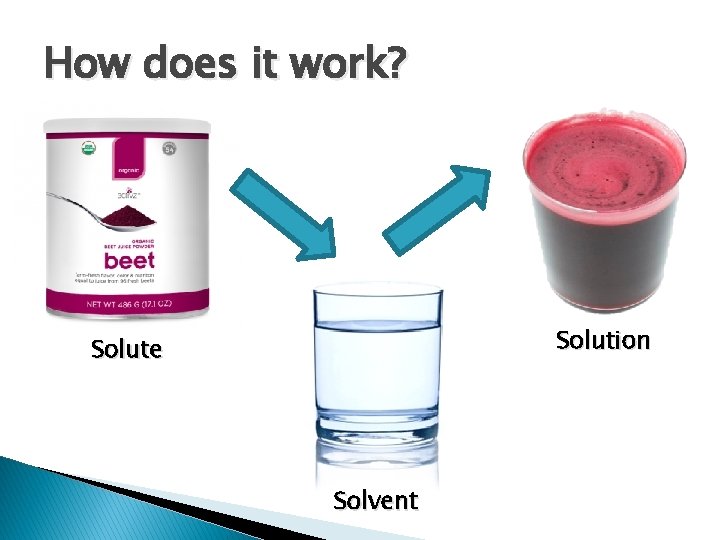
How does it work? Solution Solute Solvent
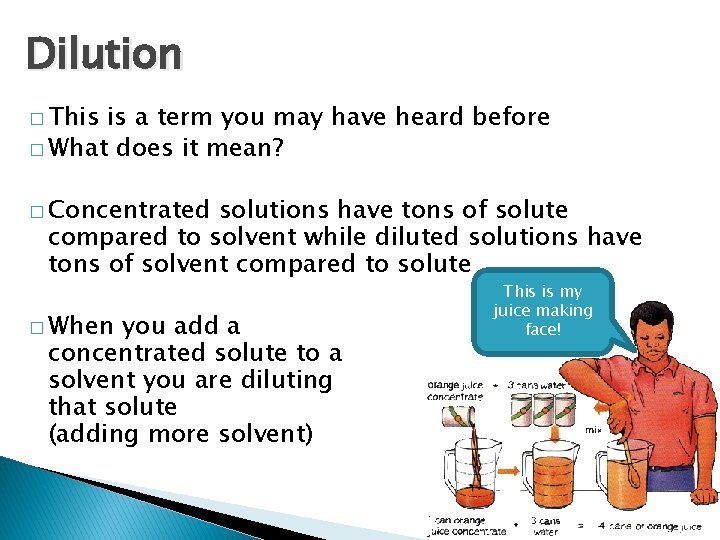
Dilution � This is a term you may have heard before � What does it mean? � Concentrated solutions have tons of solute compared to solvent while diluted solutions have tons of solvent compared to solute � When you add a concentrated solute to a solvent you are diluting that solute (adding more solvent) This is my juice making face!
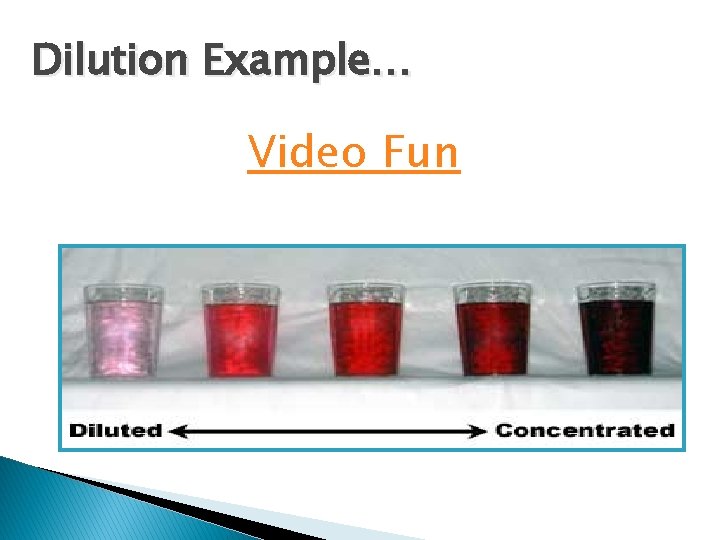
Dilution Example… Video Fun
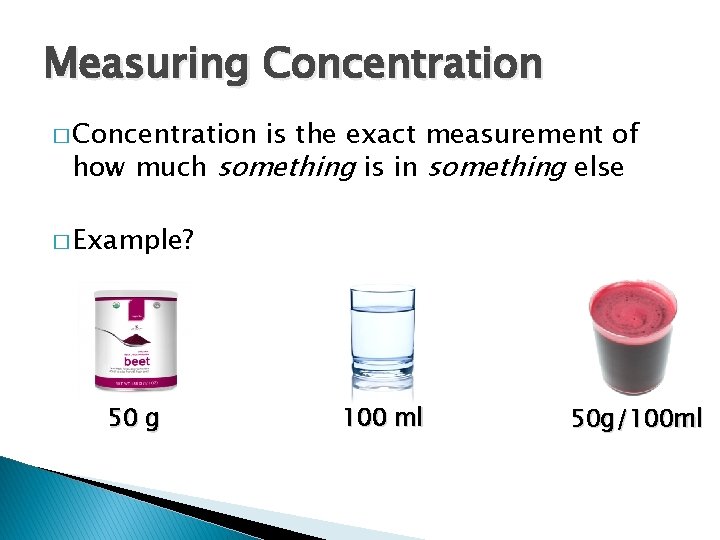
Measuring Concentration � Concentration is the exact measurement of how much something is in something else � Example? 50 g 100 ml 50 g/100 ml
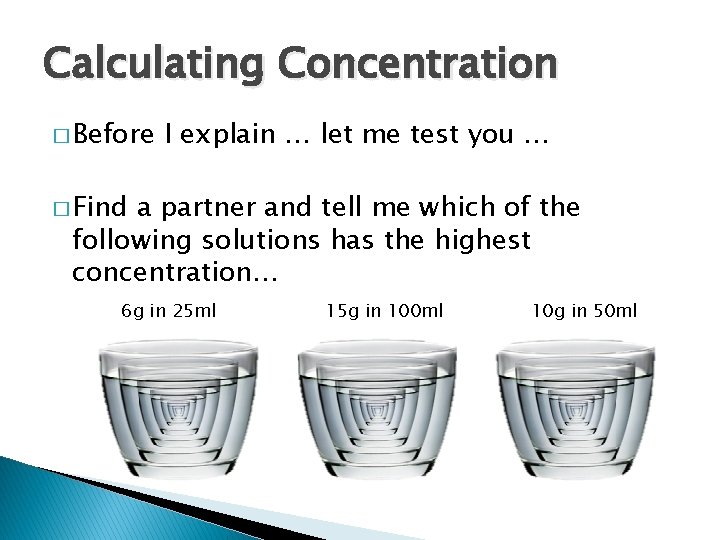
Calculating Concentration � Before I explain … let me test you … � Find a partner and tell me which of the following solutions has the highest concentration… 6 g in 25 ml 15 g in 100 ml 10 g in 50 ml
Comparing Concentrations � In order to compare concentrations you need the same amount of solvent! � Example: ◦ 10 g / 50 ml vs 25 g in 100 ml � Keep it simple bring 50 ml to 100 by x 2 ◦ … 20 g in 100 ml now and 25 g in 100 ml � Which is more concentrated? Go back and try the previous question with this new information!
Saturated vs. Unsaturated � As you add a solute to a solvent it will begin to dissolve in to the solvent � As long as the solute keeps dissolving the solution is unsaturated ◦ …that is to say it has room for the solute in it! � If you kept adding the solute into the solution until it could no longer be dissolved then you would have a saturated solution ◦ …that is to say nothing more can be dissolved in it
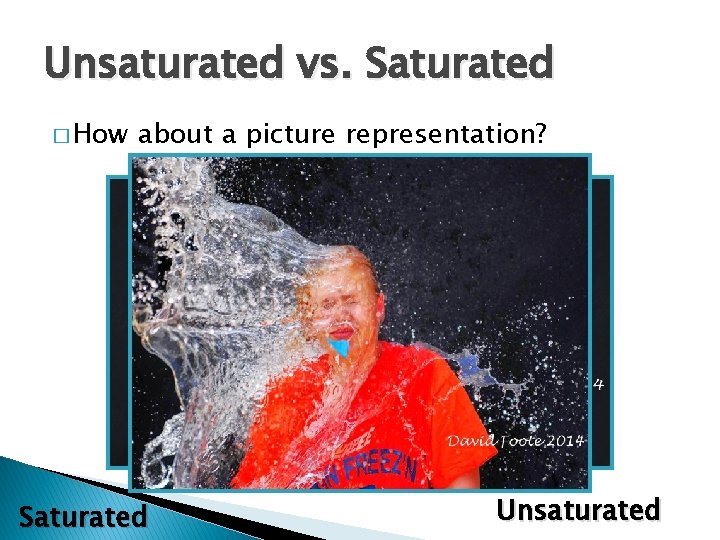
Unsaturated vs. Saturated � How about a picture representation? Saturated Unsaturated
Solubility � Now, there is a catch to this! � Saturation is directly related to the temperature of the solvent … why? every solution has a different saturation point at any given temperature! � So
Factors Affecting Solubility � The most common solvent in the world is water � No, no Mr. Meme… water not coconut water. � In conclusion coconut water is gross � What the? !
Factors Affecting Solubility � Back to it … regular ol’ water is the universal solvent ◦ Life tip: If you see “Aqueos Solution” on a label it means water is the solvent because Aqua is Latin for water) � Remember our conversation on fluids? Solutions are not always a liquid …
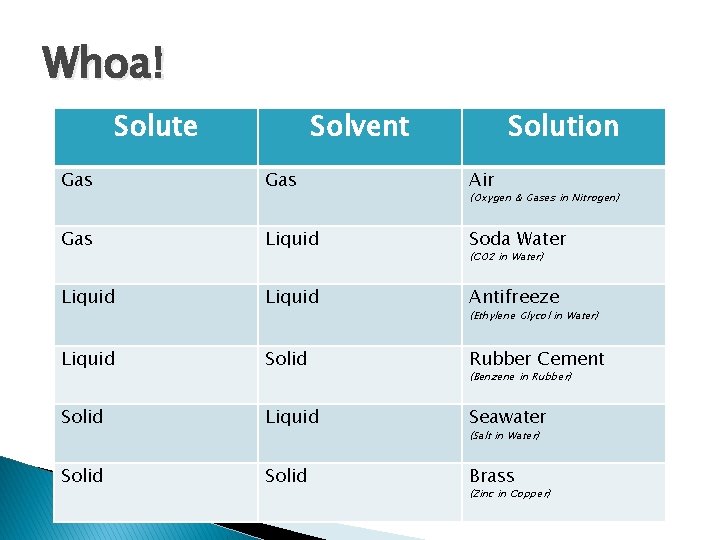
Whoa! Solute Solvent Solution Gas Air Gas Liquid Soda Water Liquid Antifreeze Liquid Solid Rubber Cement Solid Liquid Seawater Solid Brass (Oxygen & Gases in Nitrogen) (CO 2 in Water) (Ethylene Glycol in Water) (Benzene in Rubber) (Salt in Water) (Zinc in Copper)
Things That Make Me Laugh
Solubility & Temperature � For most substances, solubility increases as the temperature increases ◦ Ex: At 25 o. C you can dissolve 36. 2 g of salt in 100 m. L of water but at 100 o. C you can dissolve 39. 2 g � Interestingly enough the reverse is true for gasses! � As temperature increases the solubility of a gas in a liquid solvent decreases � Why does this matter?
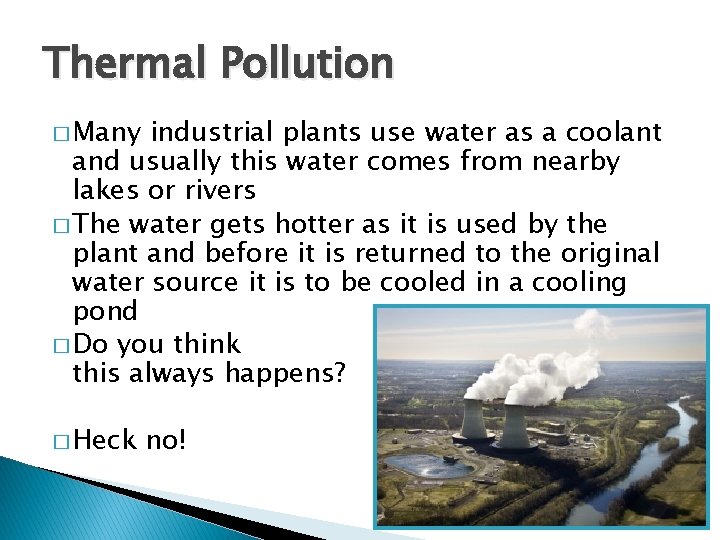
Thermal Pollution � Many industrial plants use water as a coolant and usually this water comes from nearby lakes or rivers � The water gets hotter as it is used by the plant and before it is returned to the original water source it is to be cooled in a cooling pond � Do you think this always happens? � Heck no!
Thermal Pollution: Part Two � If water temperature increases its ability to carry gasses decreases ◦ Ex: Hotter water = less oxygen � Life Tip: Oxygen is important! � Essentially aquatic life could drown … in water? ! � WHAT? !
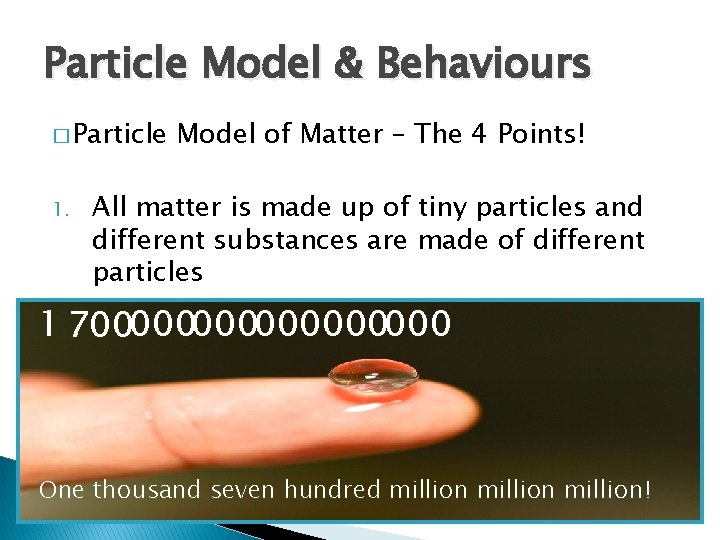
Particle Model & Behaviours � Particle 1. Model of Matter – The 4 Points! All matter is made up of tiny particles and different substances are made of different particles 1 7000000000 One thousand seven hundred million!
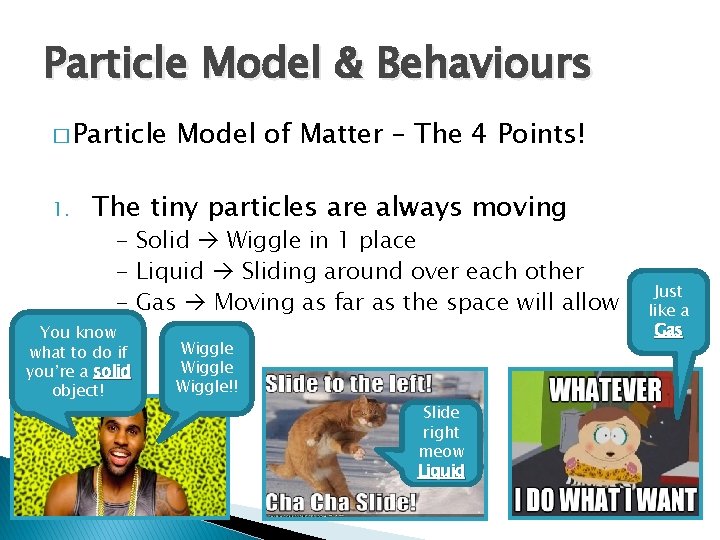
Particle Model & Behaviours � Particle 1. Model of Matter – The 4 Points! The tiny particles are always moving - Solid Wiggle in 1 place - Liquid Sliding around over each other - Gas Moving as far as the space will allow You know what to do if you’re a solid object! Wiggle!! Slide right meow Liquid Just like a Gas
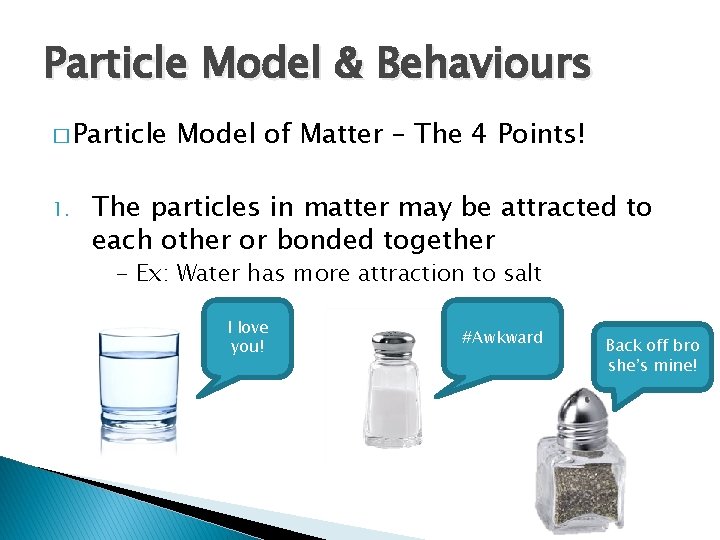
Particle Model & Behaviours � Particle 1. Model of Matter – The 4 Points! The particles in matter may be attracted to each other or bonded together - Ex: Water has more attraction to salt I love you! #Awkward Back off bro she’s mine!
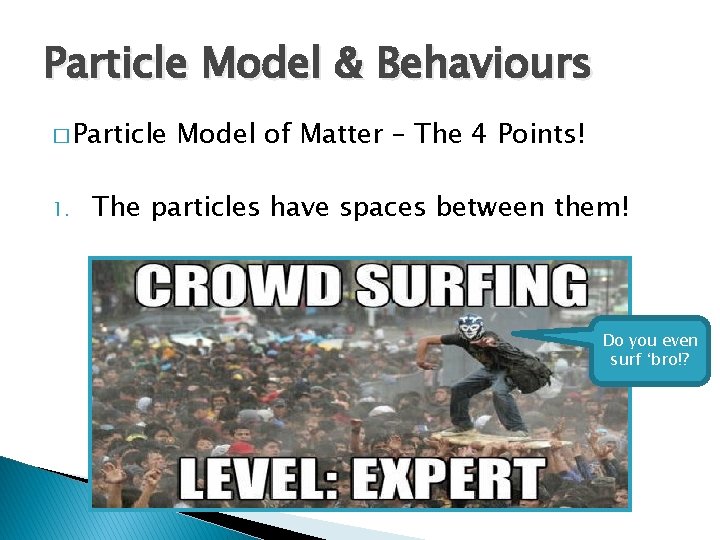
Particle Model & Behaviours � Particle 1. Model of Matter – The 4 Points! The particles have spaces between them! Do you even surf ‘bro!?
Double back … � Looking back at the water & rubbing alcohol problem … can you explain it? � Did you figure it out?
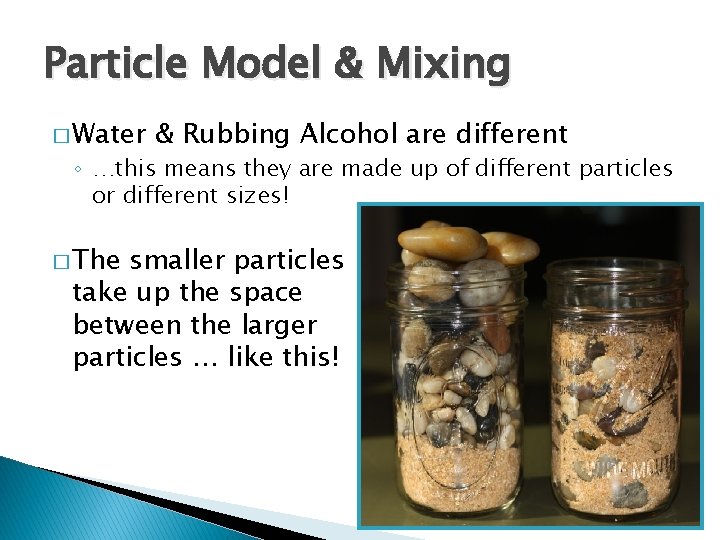
Particle Model & Mixing � Water & Rubbing Alcohol are different ◦ …this means they are made up of different particles or different sizes! � The smaller particles take up the space between the larger particles … like this!
Particle Model & Mixing Cont… � This model also explains why substances dissolve! � Particles of one substance can/are more attracted to particles in other substances � When I put potassium permanganate in water the potassium was more attracted to the water particles and went to “hang out” � This is the science behind dissolving! dissolving
Rate of Dissolving � There are 3 major ways you can affect the rate of dissolving that occurs in a solution � 1) Temperature �Particles of the solvent are moving faster and they bump into the solute particles faster
Rate of Dissolving � There are 3 major ways you can affect the rate of dissolving that occurs in a solution � 2) Size of Particles �Small pieces dissolve quickly compared to larger pieces because there is more surface area for the solvent to work with! FAIL!
Rate of Dissolving � There are 3 major ways you can affect the rate of dissolving that occurs in a solution � 3) Stirring �Stirring the particles moves them around and the solvent particles bump into them
Game on… � That’s 2 Topics down … Remember education is important!!
- Slides: 53