
Unit 1 Memories and Ideas ESLCO Lesson One

- Slides: 14
Unit 1 Memories and Ideas ESLCO Lesson One
Learning Goals • Learning New Words in English • Explain your ideas and stories in writing • Develop critical thinking skills by asking questions
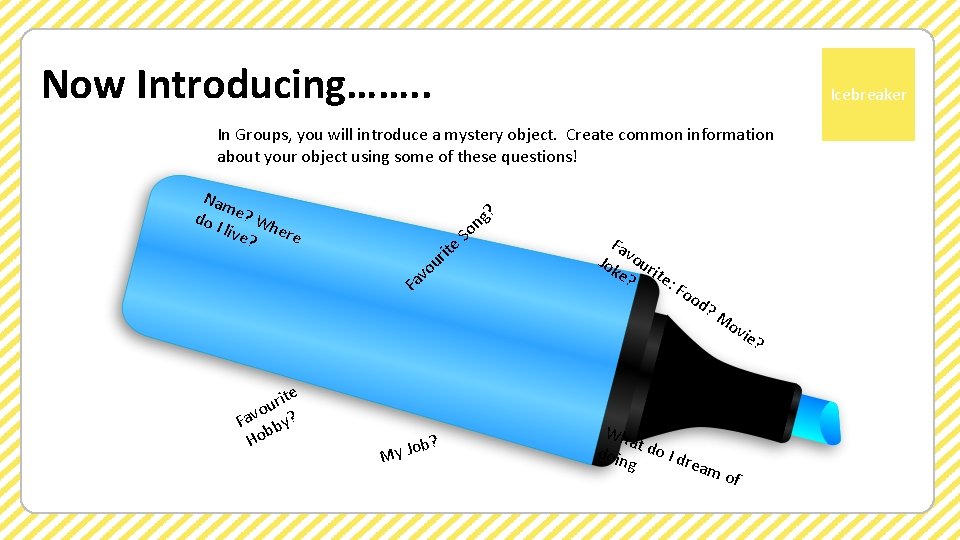
Now Introducing……. . Icebreaker In Groups, you will introduce a mystery object. Create common information about your object using some of these questions! Nam do e? W h I liv e? ere ? u e rit vo a F S g on Fa Jok vour e? ite: F oo d? Mo vie ? rite u o Fav bby? Ho ob? My J Wha doin t do I d rea g mo f
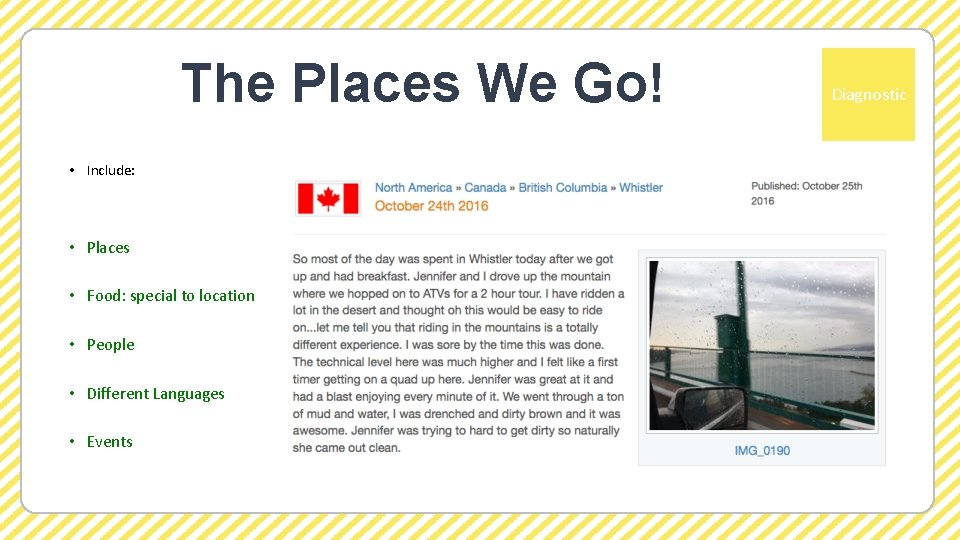
The Places We Go! • Include: • Places • Food: special to location • People • Different Languages • Events Diagnostic
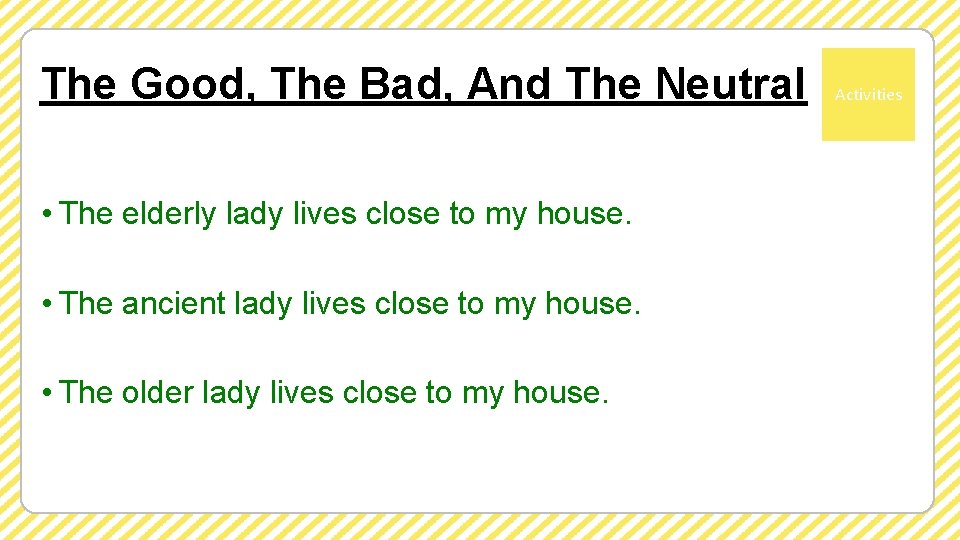
The Good, The Bad, And The Neutral • The elderly lady lives close to my house. • The ancient lady lives close to my house. • The older lady lives close to my house. Activities
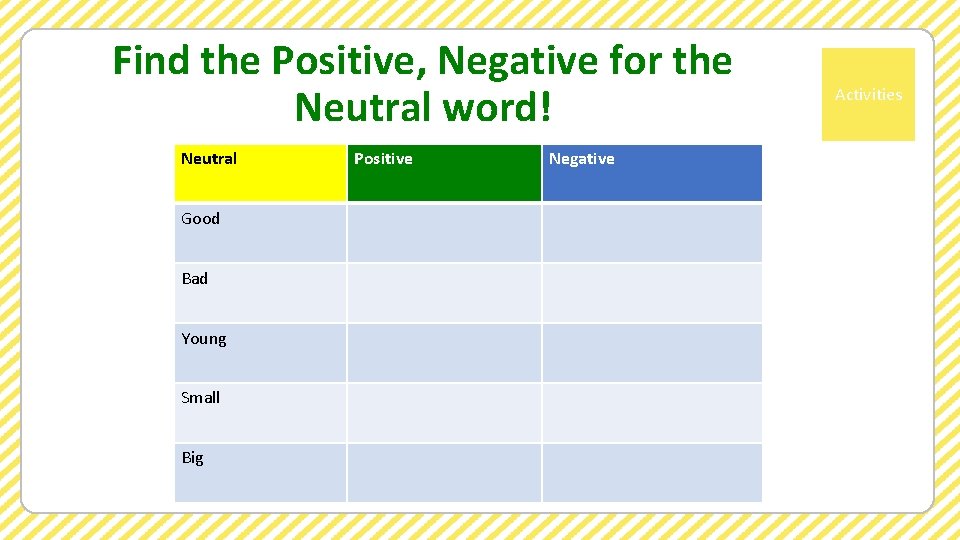
Find the Positive, Negative for the Neutral word! Neutral Good Bad Young Small Big Positive Negative Activities
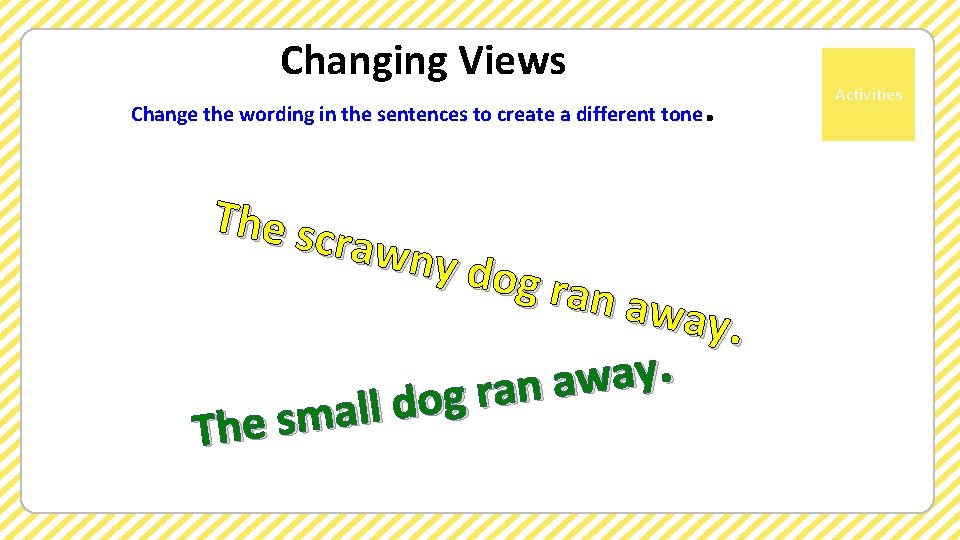
Changing Views Change the wording in the sentences to create a different tone . The sc rawny dog ra n awa y. . y a w a n a r g o d l l a The sm Activities
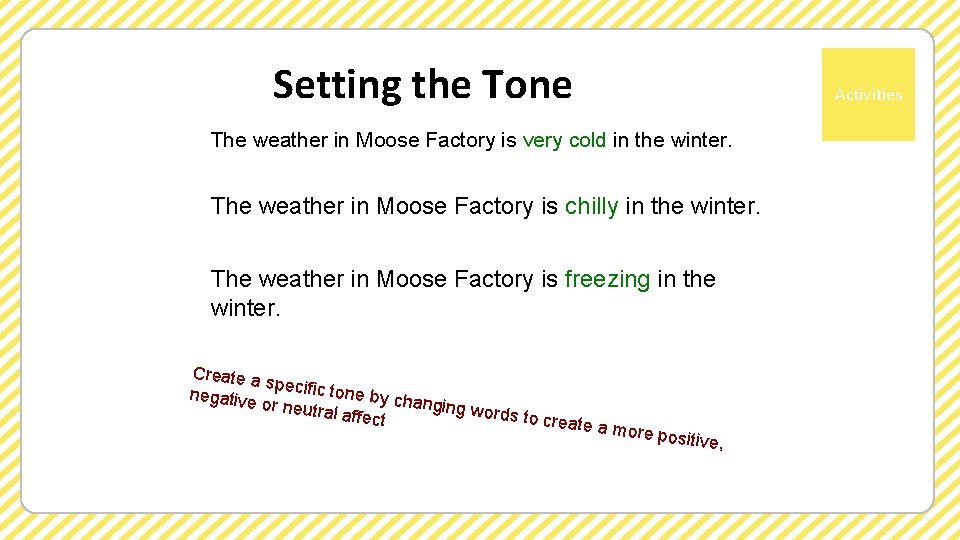
Setting the Tone Activities The weather in Moose Factory is very cold in the winter. The weather in Moose Factory is chilly in the winter. The weather in Moose Factory is freezing in the winter. Create a specific t one by c negative hanging or neutra words to l affect create a more pos itive,
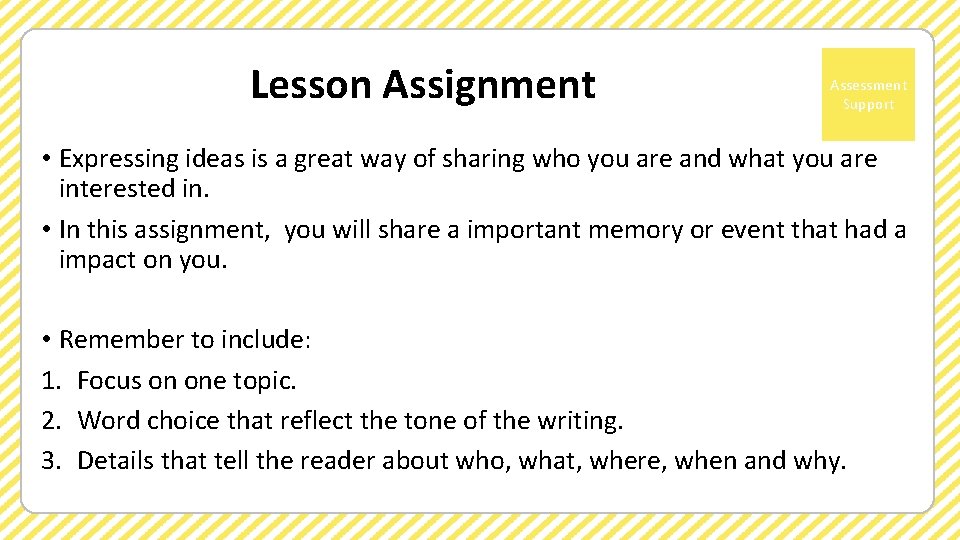
Lesson Assignment Assessment Support • Expressing ideas is a great way of sharing who you are and what you are interested in. • In this assignment, you will share a important memory or event that had a impact on you. • Remember to include: 1. Focus on one topic. 2. Word choice that reflect the tone of the writing. 3. Details that tell the reader about who, what, where, when and why.
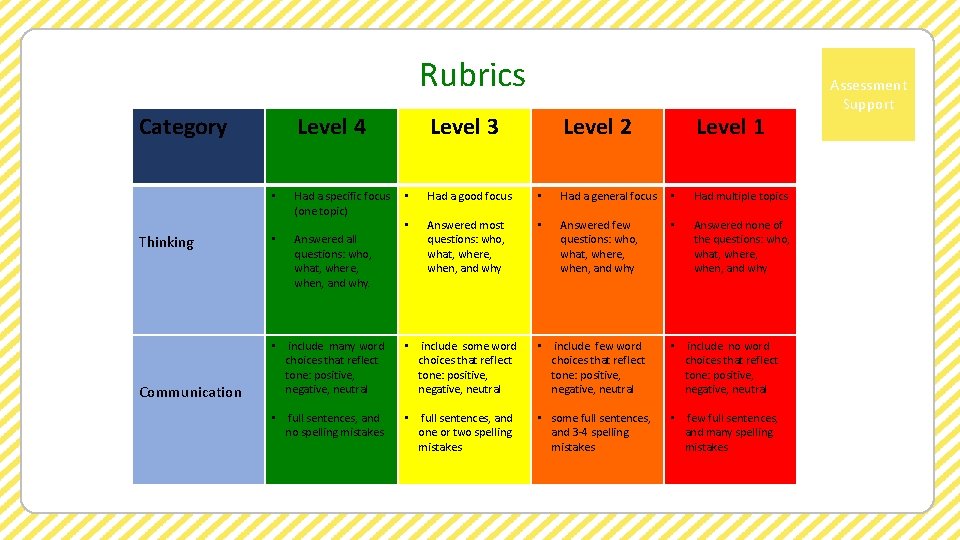
Rubrics Category Level 4 Level 3 Level 2 Level 1 • Had a specific focus (one topic) • Had a good focus • Had a general focus • Had multiple topics Thinking • Answered all questions: who, what, where, when, and why. • Answered most questions: who, what, where, when, and why • Answered few questions: who, what, where, when, and why • Answered none of the questions: who, what, where, when, and why Communication • include many word choices that reflect tone: positive, negative, neutral • include some word choices that reflect tone: positive, negative, neutral • include few word choices that reflect tone: positive, negative, neutral • include no word choices that reflect tone: positive, negative, neutral • full sentences, and no spelling mistakes • full sentences, and one or two spelling mistakes • some full sentences, and 3 -4 spelling mistakes • few full sentences, and many spelling mistakes Assessment Support
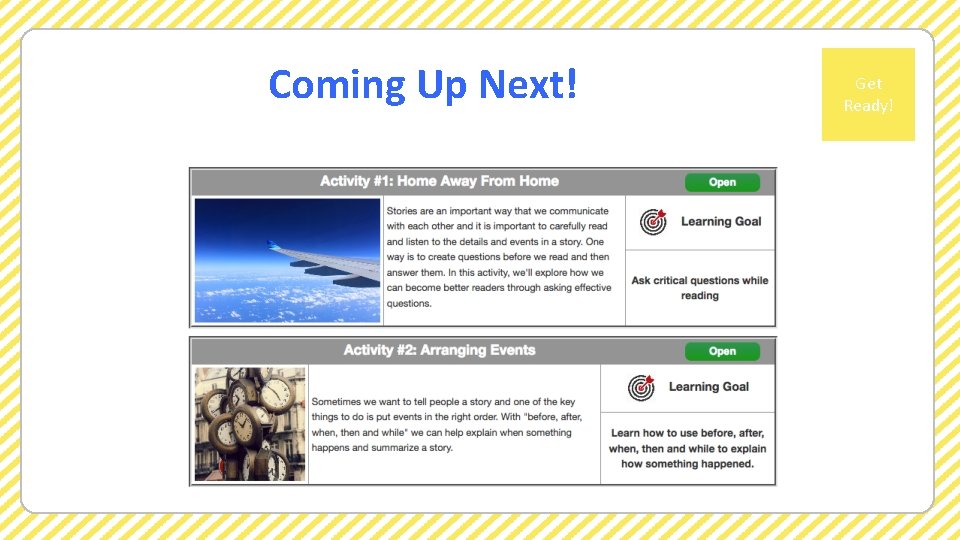
Coming Up Next! Get Ready!
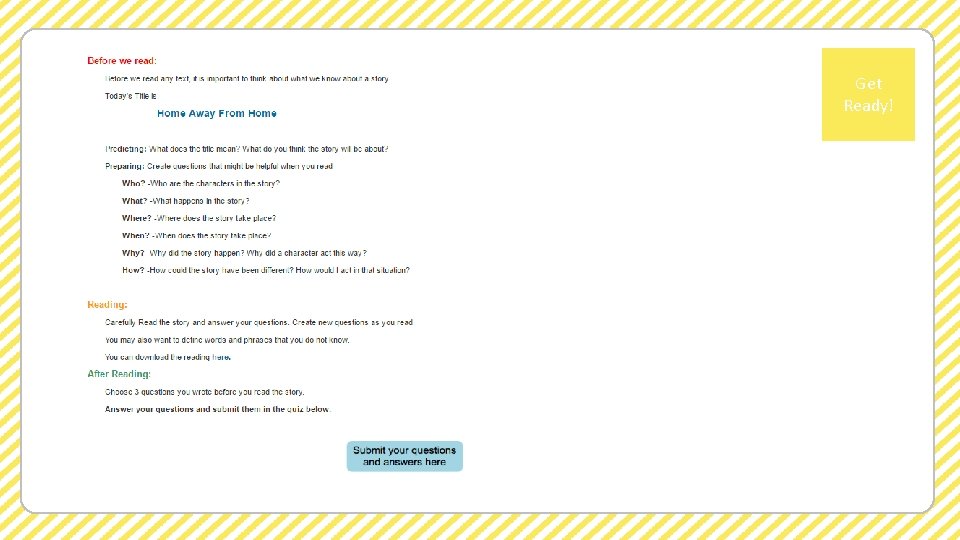
Get Ready!
Get Ready!
Thank you for joining our class