
Unit 1 Media accessibility Element 3 Universal design
Unit 1. Media accessibility Element 3. Universal design What is universal design? Anna Matamala Universitat Autònoma de Barcelona
Overview • Universal design. • Seven principles. • Associated guidelines.

Universal design Products Design Environments T Programmes Services O I A D A P A T N

Definition United Nations Convention on the Rights of Persons with Disabilities (CRPD). Included in CEN standard EN 17161: 2019. Note: No exclusion of assistive devices.
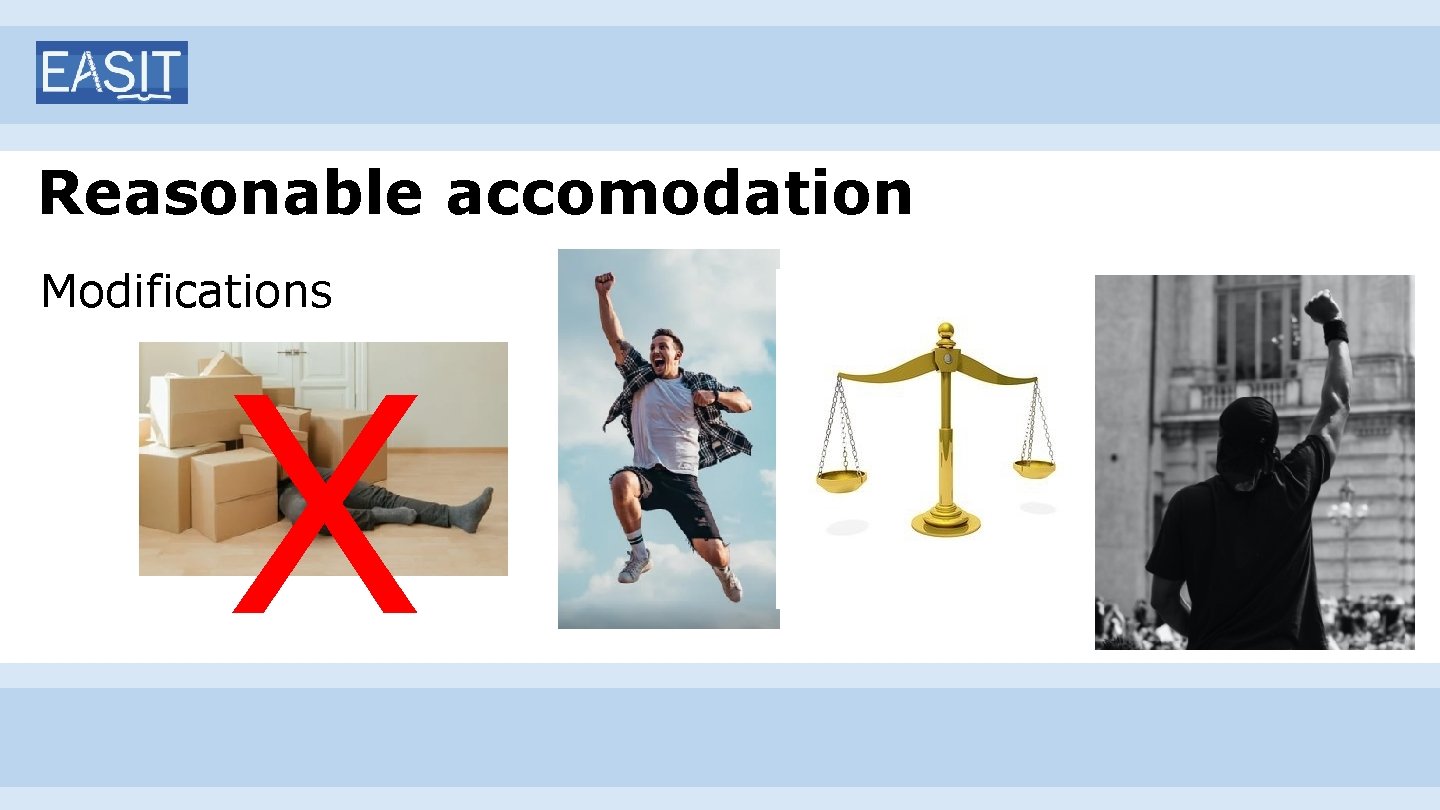
Reasonable accomodation Modifications X
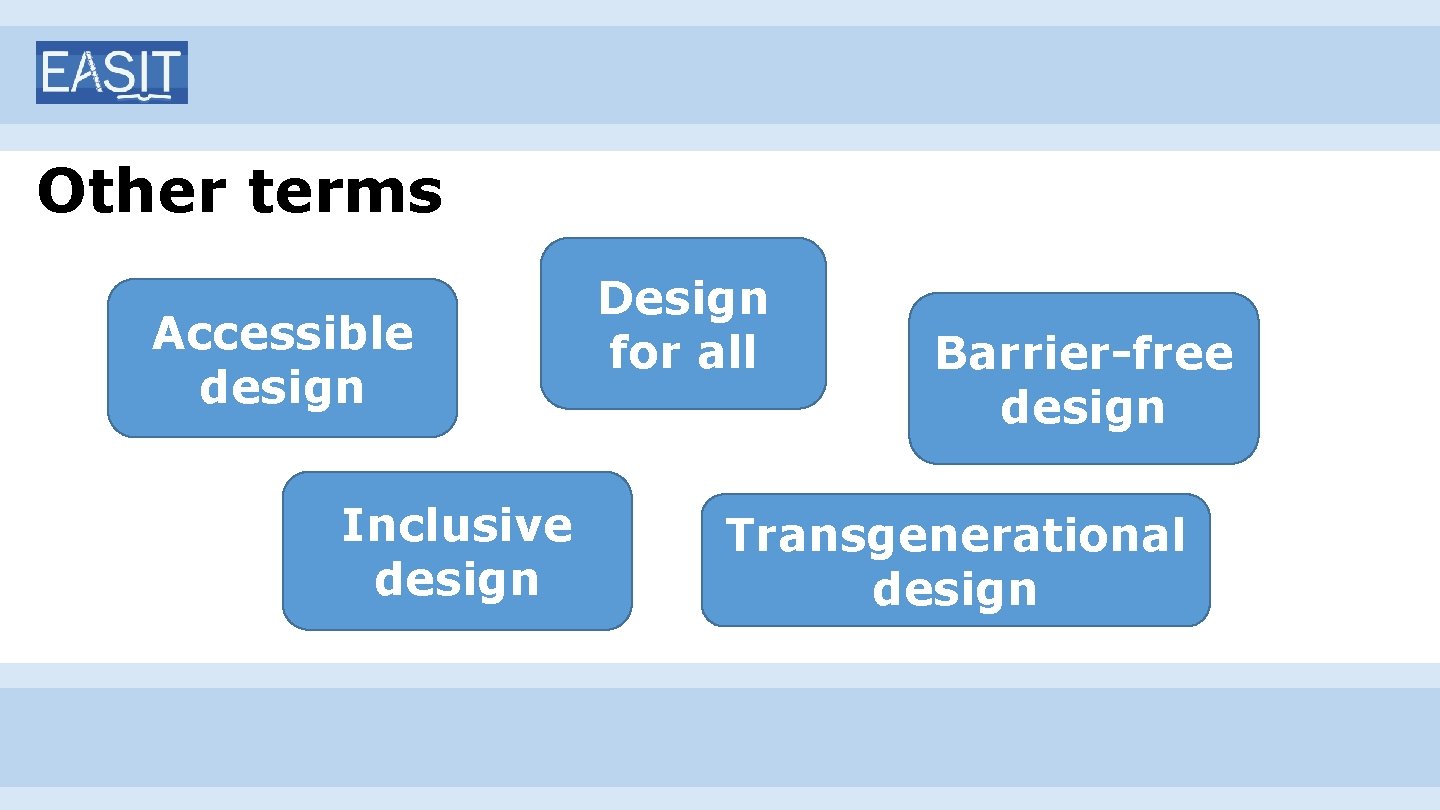
Other terms Accessible design Inclusive design Design for all Barrier-free design Transgenerational design
7 principles Proposed by a group led by Ronald Mace, from North Carolina’s State University (1997).
1. Equitable use • Identical or equivalent means of use. • No segregation or stigmatisation. • Privacy, security and safety available to all. • Appealing to all.
2. Flexibility in use • Choice in methods of use. • Right- or left-handed access and use. • Accuracy and precision. • Adaptability to the user’s pace.
3. Simple and intuitive use • No unnecessary complexity. • Consistent with expectations and intuition. • Literacy and language skills. • Information arrangement according to importance. • Feedback provision.
4. Perceptible information • Redundant presentation through different modes. • Contrast between essential and non-essential information. • Legibility. • Elements differentiation. • Compatibility.
5. Tolerance of error • Hazards and errors minimisation. • Warnings. • Fail safe features. • Unconscious action discouragement.
6. Low physical effort • Neutral body position. • Reasonable operating forces. • Repetitive actions minimisation. • Sustained physical effort minimisation.
7. Size and space • Clear line of sight. • Comfortable reach. • Variations in hand grip size. • Adequate assistance. space for assistive devices or personal
Pictures Source: pixabay. com, publicdomainvectors. org, pexels. com. License: Pixabay License, CC 0, Pexels License.
Anna Matamala anna. matamala@uab. cat
Acknowledgement The project EASIT has received funding from the European Commission under the Erasmus+ Strategic Partnerships for Higher Education programme, grant agreement 2018 -1 ES 01 -KA 203 -05275.
Disclaimer The European Commission support for the production of this publication does not constitute an endorsement of the contents, which reflect the views only of the authors, and the Commission cannot be held responsible for any use which may be made of the information contained therein.
Partners
EASIT pagines. uab. cat/easit
- Slides: 20