
Unit 1 Matter and Chemical Change Chapter 1

- Slides: 23
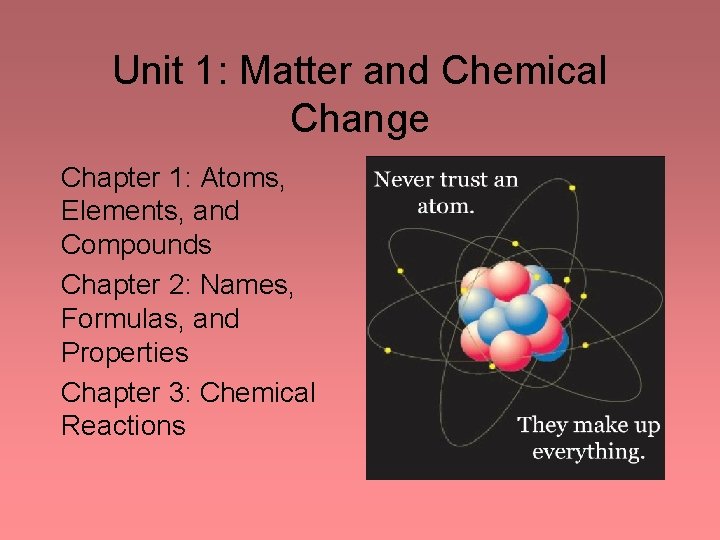
Unit 1: Matter and Chemical Change Chapter 1: Atoms, Elements, and Compounds Chapter 2: Names, Formulas, and Properties Chapter 3: Chemical Reactions
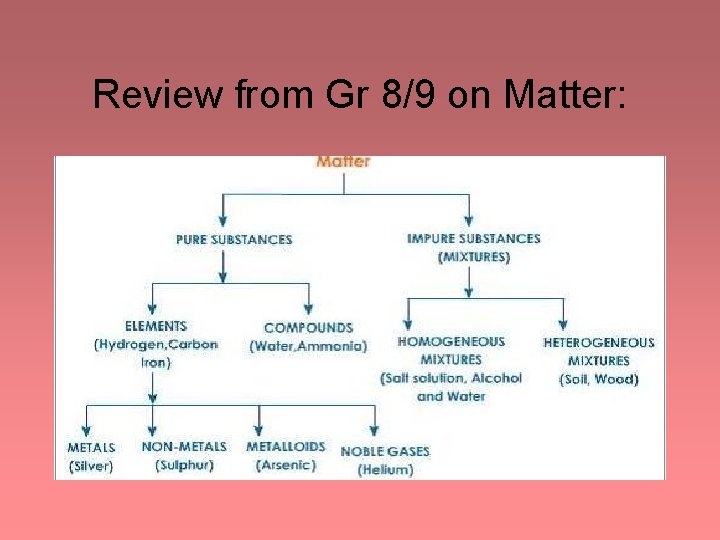
Review from Gr 8/9 on Matter:
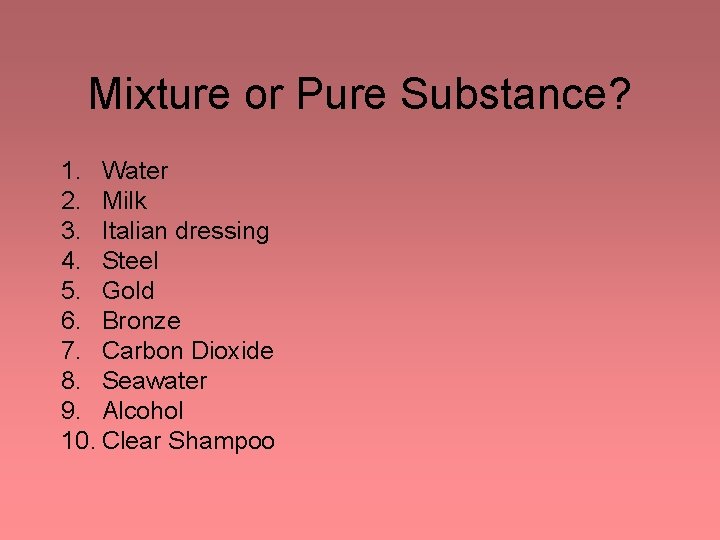
Mixture or Pure Substance? 1. Water 2. Milk 3. Italian dressing 4. Steel 5. Gold 6. Bronze 7. Carbon Dioxide 8. Seawater 9. Alcohol 10. Clear Shampoo
Intro to Lab Safety
A Darwin Award for Those Who Ignore Safety • A homeowner was doing some welding on the roof of his house at Port Macquarie in New South Wales. He had problems with his oxyacetylene tanks slipping, so he decided to tack weld them to the roofing iron. That was the last thing he ever did. • Pure acetylene is explosive at a mere 15 pounds of pressure per square inch, and can also explode when exposed to air.
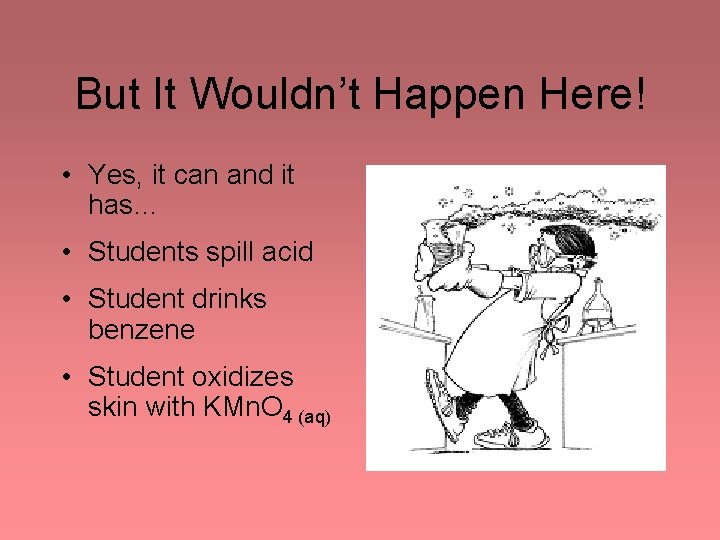
But It Wouldn’t Happen Here! • Yes, it can and it has… • Students spill acid • Student drinks benzene • Student oxidizes skin with KMn. O 4 (aq)
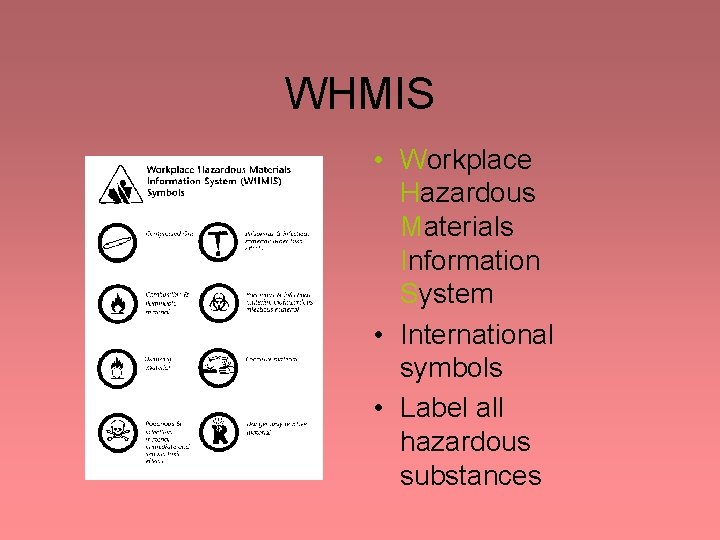
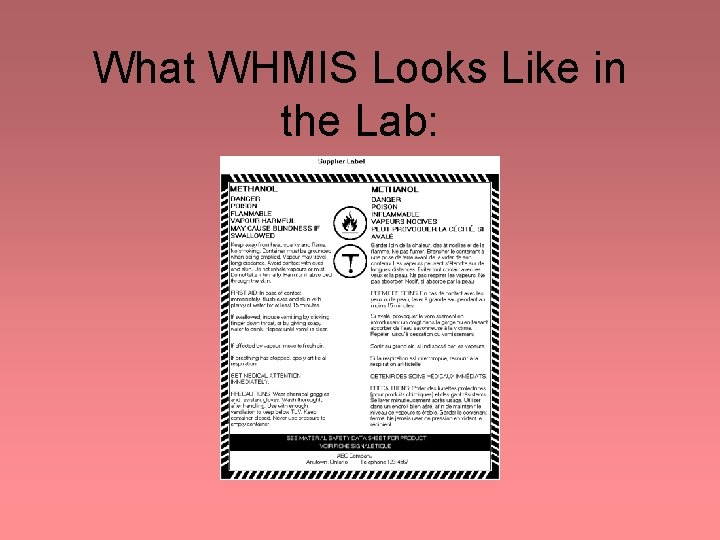
WHMIS • Workplace Hazardous Materials Information System • International symbols • Label all hazardous substances
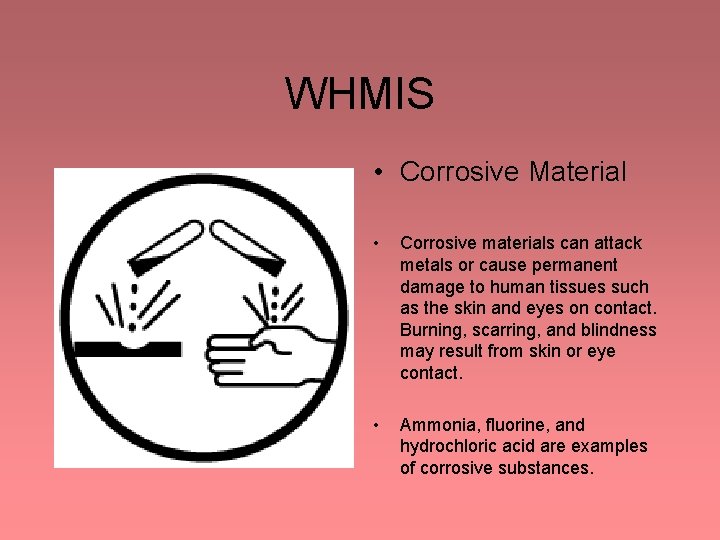
WHMIS • Corrosive Material • Corrosive materials can attack metals or cause permanent damage to human tissues such as the skin and eyes on contact. Burning, scarring, and blindness may result from skin or eye contact. • Ammonia, fluorine, and hydrochloric acid are examples of corrosive substances.
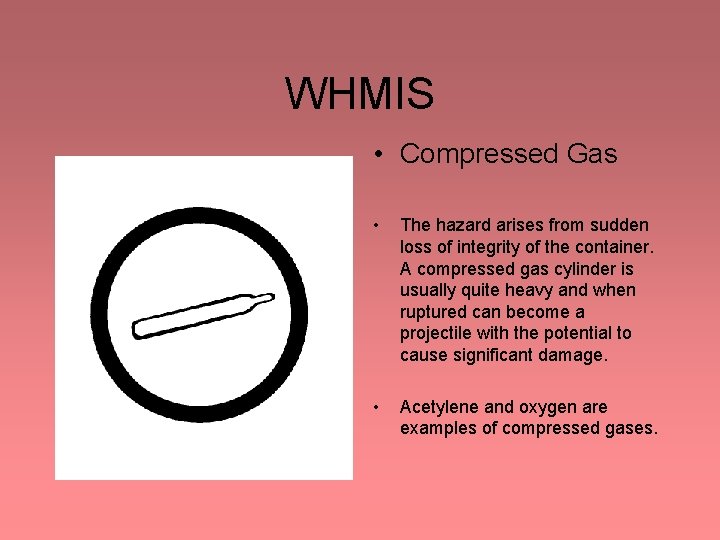
WHMIS • Compressed Gas • The hazard arises from sudden loss of integrity of the container. A compressed gas cylinder is usually quite heavy and when ruptured can become a projectile with the potential to cause significant damage. • Acetylene and oxygen are examples of compressed gases.
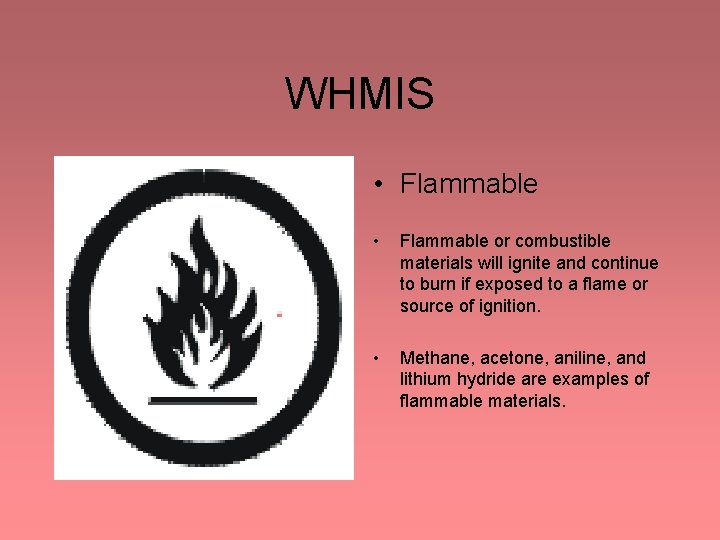
WHMIS • Flammable • Flammable or combustible materials will ignite and continue to burn if exposed to a flame or source of ignition. • Methane, acetone, aniline, and lithium hydride are examples of flammable materials.
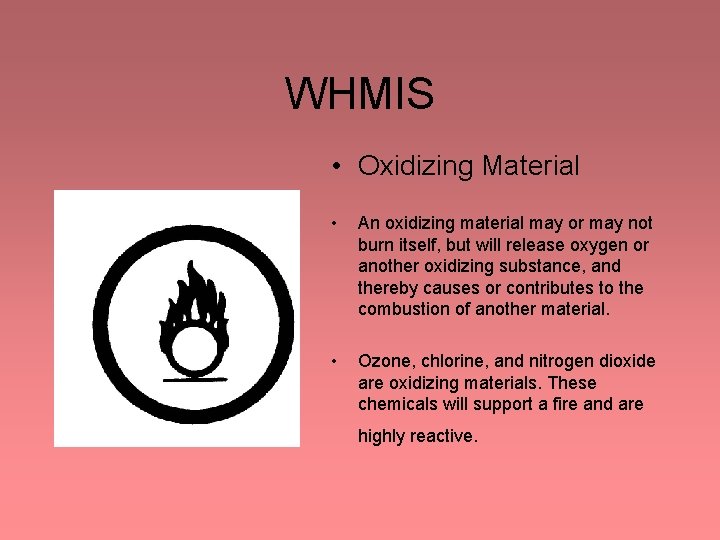
WHMIS • Oxidizing Material • An oxidizing material may or may not burn itself, but will release oxygen or another oxidizing substance, and thereby causes or contributes to the combustion of another material. • Ozone, chlorine, and nitrogen dioxide are oxidizing materials. These chemicals will support a fire and are highly reactive.
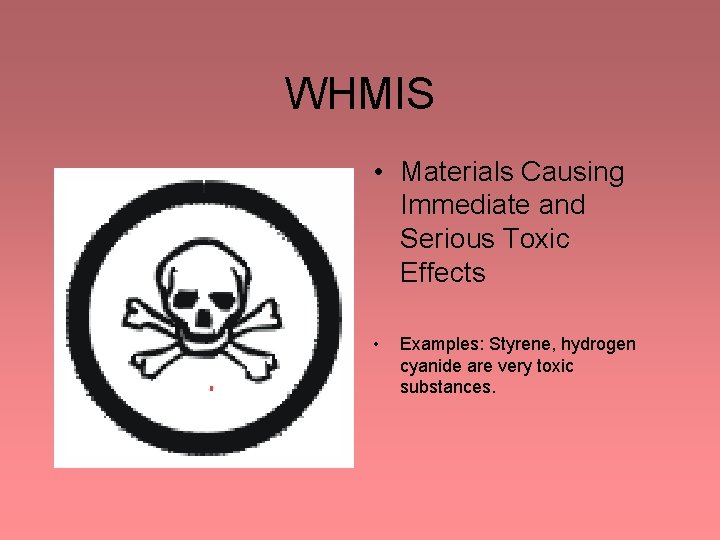
WHMIS • Materials Causing Immediate and Serious Toxic Effects • Examples: Styrene, hydrogen cyanide are very toxic substances.
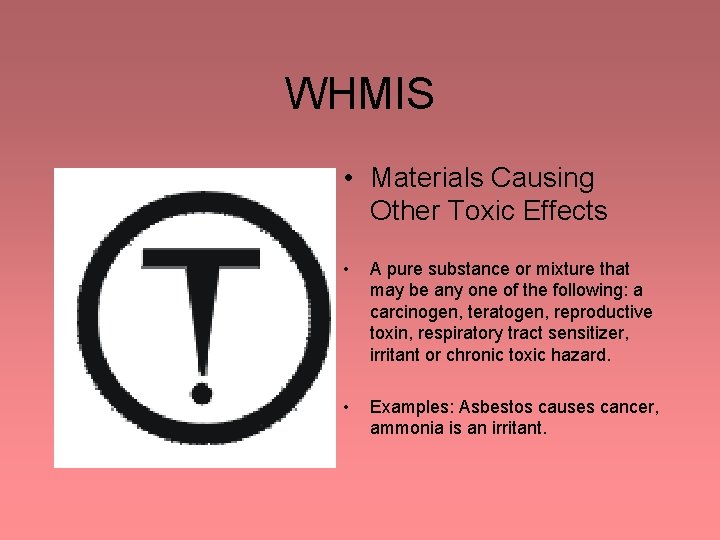
WHMIS • Materials Causing Other Toxic Effects • A pure substance or mixture that may be any one of the following: a carcinogen, teratogen, reproductive toxin, respiratory tract sensitizer, irritant or chronic toxic hazard. • Examples: Asbestos causes cancer, ammonia is an irritant.
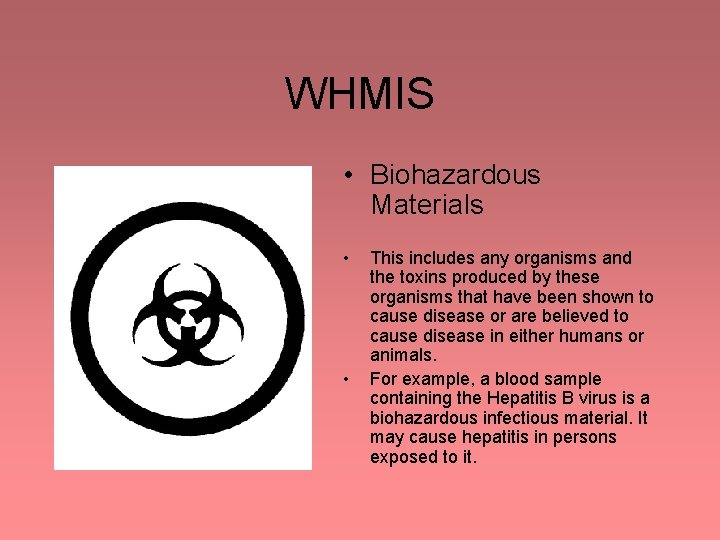
WHMIS • Biohazardous Materials • • This includes any organisms and the toxins produced by these organisms that have been shown to cause disease or are believed to cause disease in either humans or animals. For example, a blood sample containing the Hepatitis B virus is a biohazardous infectious material. It may cause hepatitis in persons exposed to it.
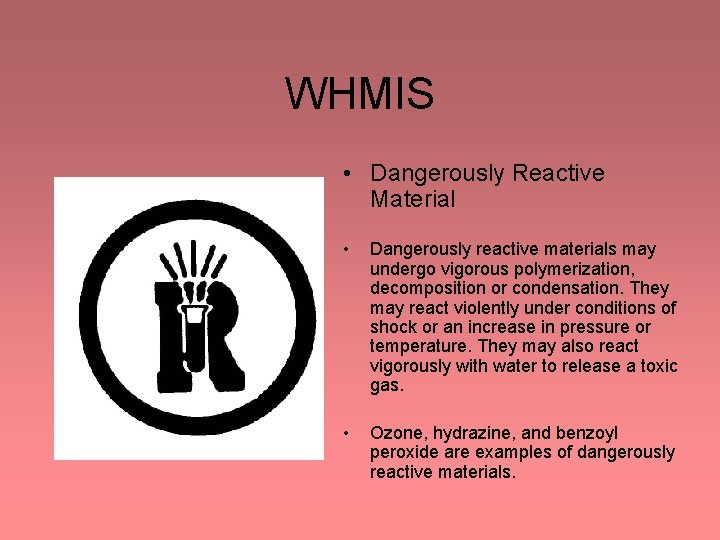
WHMIS • Dangerously Reactive Material • Dangerously reactive materials may undergo vigorous polymerization, decomposition or condensation. They may react violently under conditions of shock or an increase in pressure or temperature. They may also react vigorously with water to release a toxic gas. • Ozone, hydrazine, and benzoyl peroxide are examples of dangerously reactive materials.
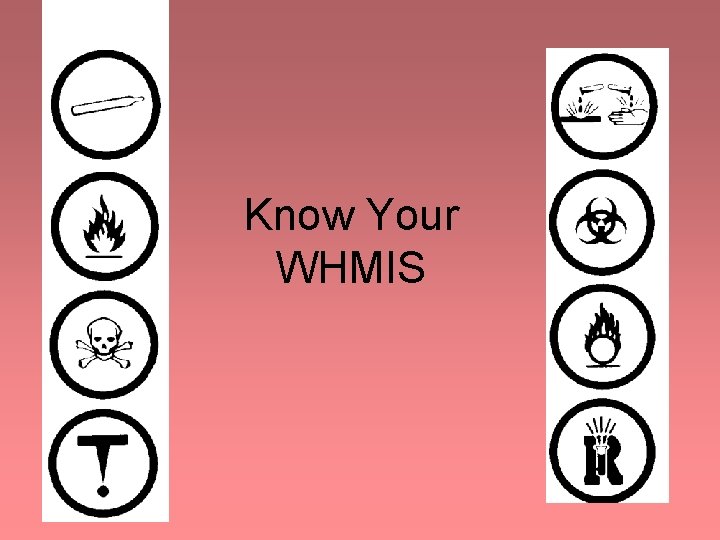
Know Your WHMIS
What WHMIS Looks Like in the Lab:
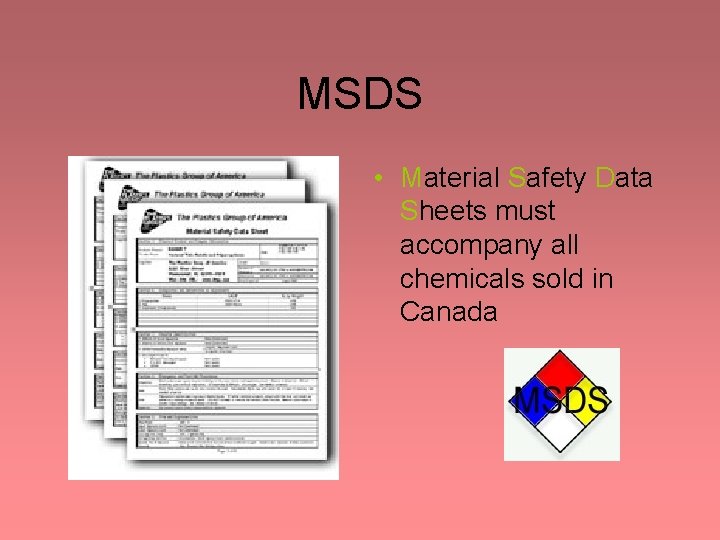
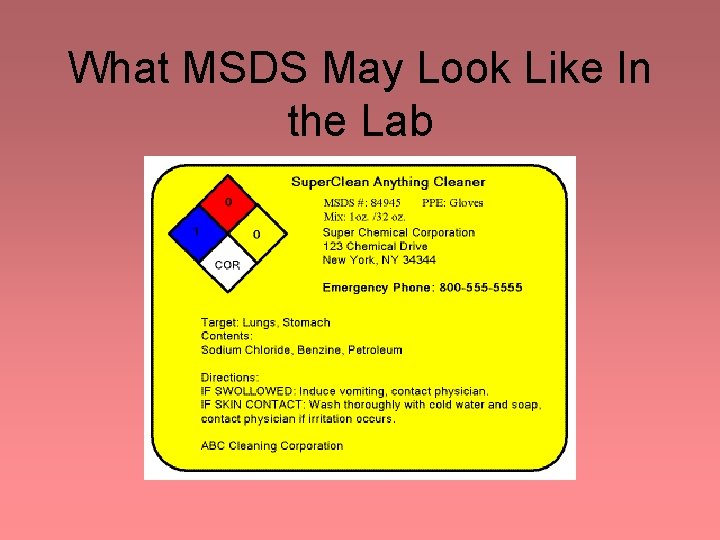
MSDS • Material Safety Data Sheets must accompany all chemicals sold in Canada
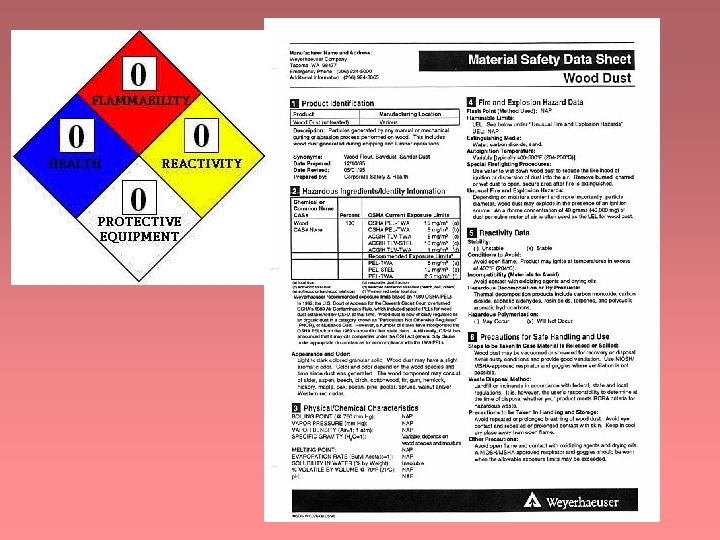
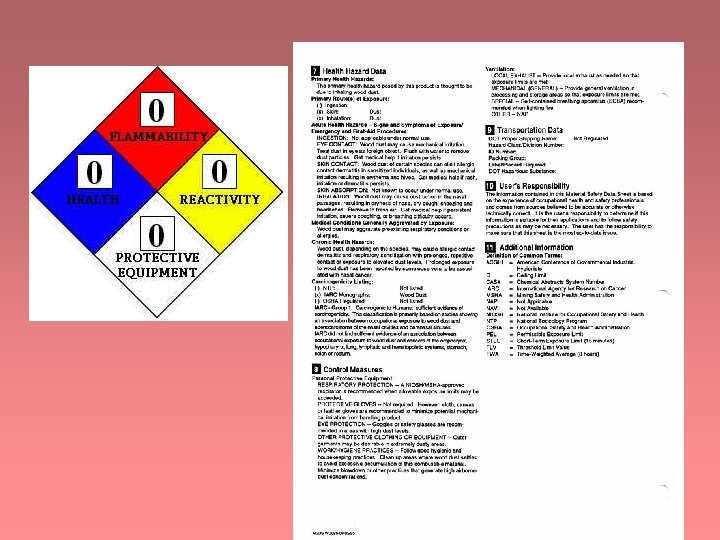
What MSDS May Look Like In the Lab
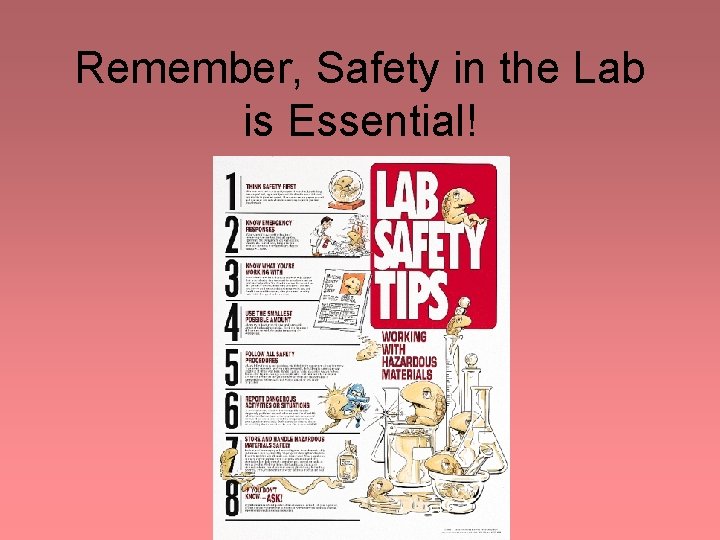
Remember, Safety in the Lab is Essential!
Assignment • Read Pages x-xiii and 6 -8 • Complete WHIMIS Worksheet for portfolio (found on Website)