
Unit 1 Materials Formulating Matter SECTION A BUILDING
Unit 1: Materials: Formulating Matter SECTION A: BUILDING BLOCKS OF CHEMISTRY
Properties Physical Properties: properties that can be determined without altering the chemical makeup of the material color, density and odor Physical changes: the identity of the substance is not changed melting, boiling and bending
Properties Chemical properties: properties that involve transforming the substance into new materials reactivity with acids tendency to rust
Properties Chemical change: the identity of one or more substances changes and one or more new substances are formed
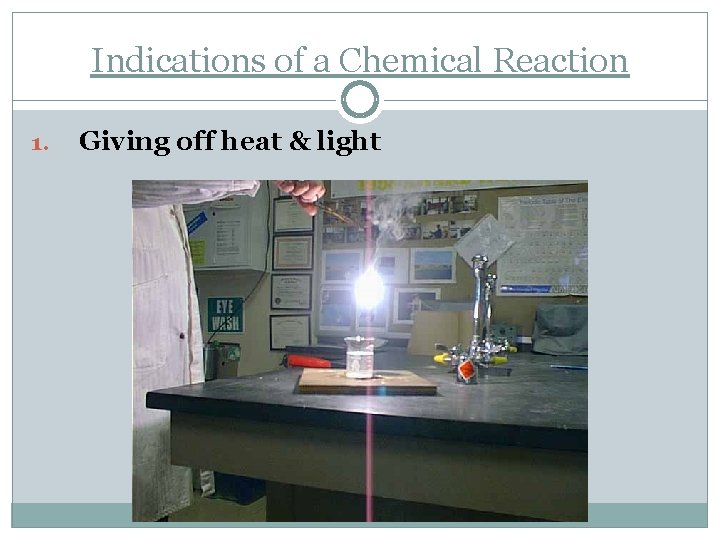
Indications of a Chemical Reaction 1. Giving off heat & light
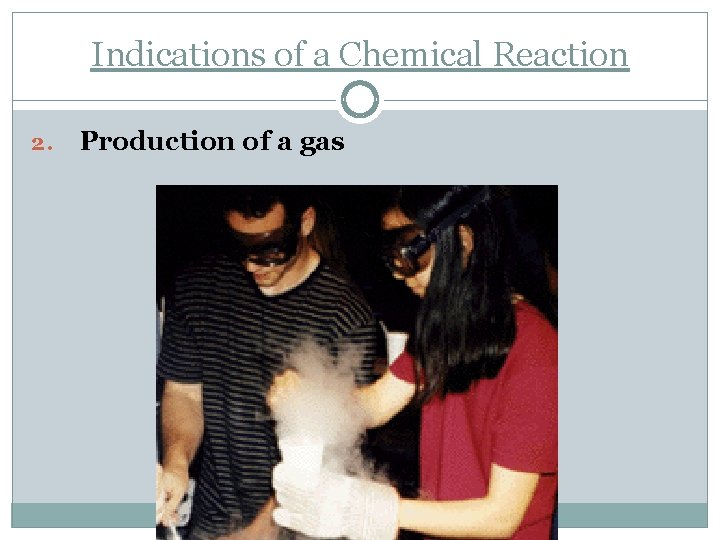
Indications of a Chemical Reaction 2. Production of a gas
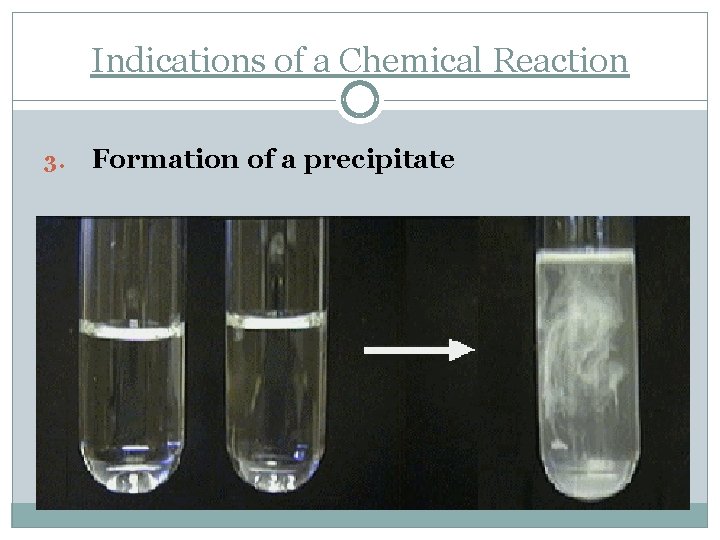
Indications of a Chemical Reaction 3. Formation of a precipitate
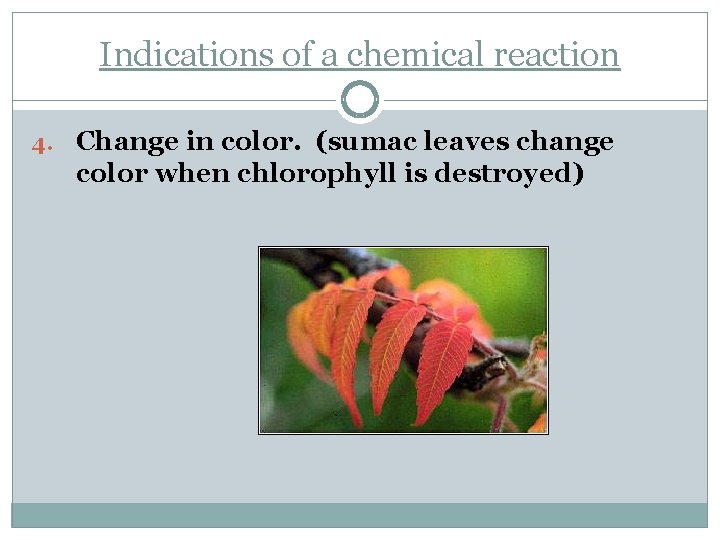
Indications of a chemical reaction 4. Change in color. (sumac leaves change color when chlorophyll is destroyed)
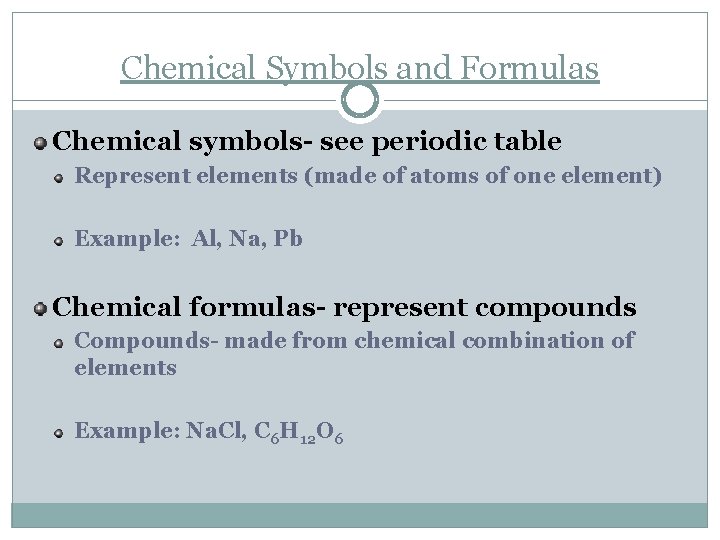
Chemical Symbols and Formulas Chemical symbols- see periodic table Represent elements (made of atoms of one element) Example: Al, Na, Pb Chemical formulas- represent compounds Compounds- made from chemical combination of elements Example: Na. Cl, C 6 H 12 O 6
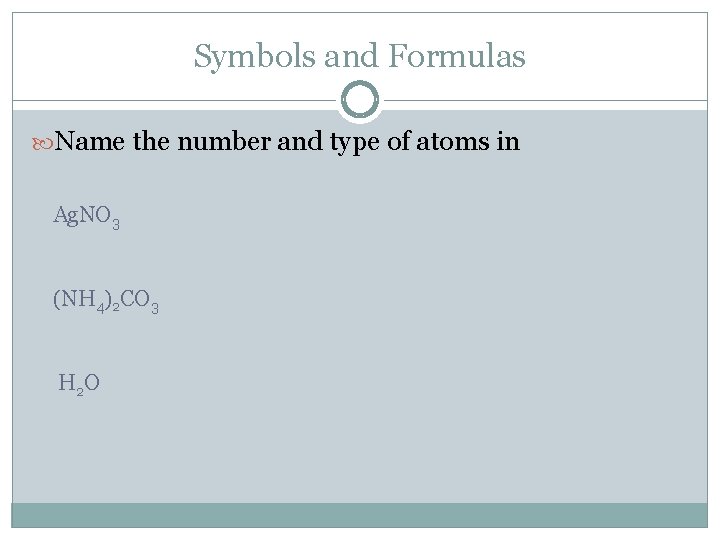
Symbols and Formulas Name the number and type of atoms in Ag. NO 3 (NH 4)2 CO 3 H 2 O
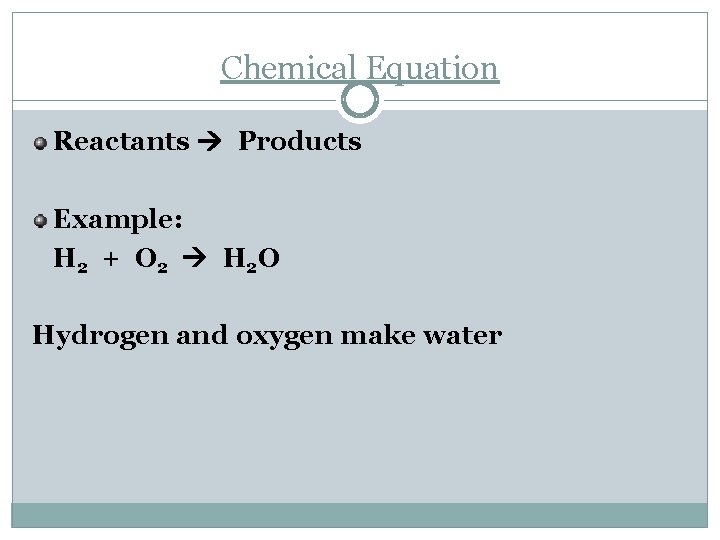
Chemical Equation Reactants Products Example: H 2 + O 2 H 2 O Hydrogen and oxygen make water
The Chemical Elements Metals: most of the elements on the periodic table hard and shiny conductive malleable ductile Examples: iron, tin, zinc and copper
The Chemical Elements Nonmetals: generally gases or brittle solids nonconductive Examples: carbon and oxygen
The Chemical Elements Metalloids: elements with properties of both metals and nonmetals Found on the “stair step line” silicon and germanium
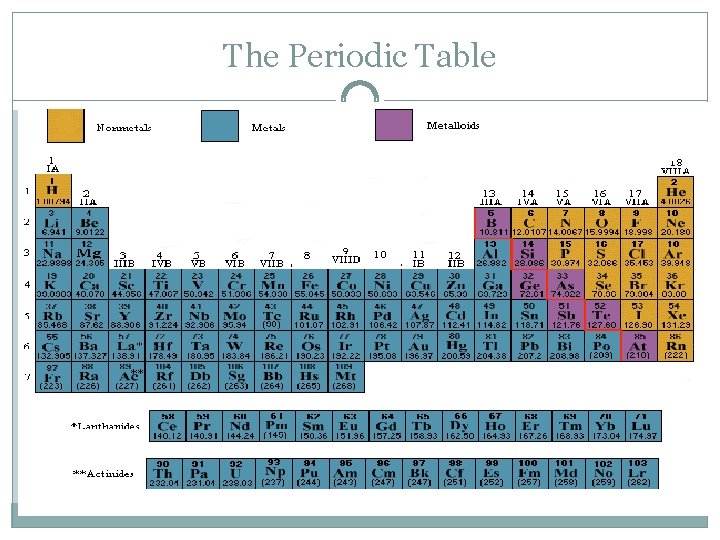
The Periodic Table
- Slides: 15