
Unit 1 Lesson 3 Erosion and Deposition by
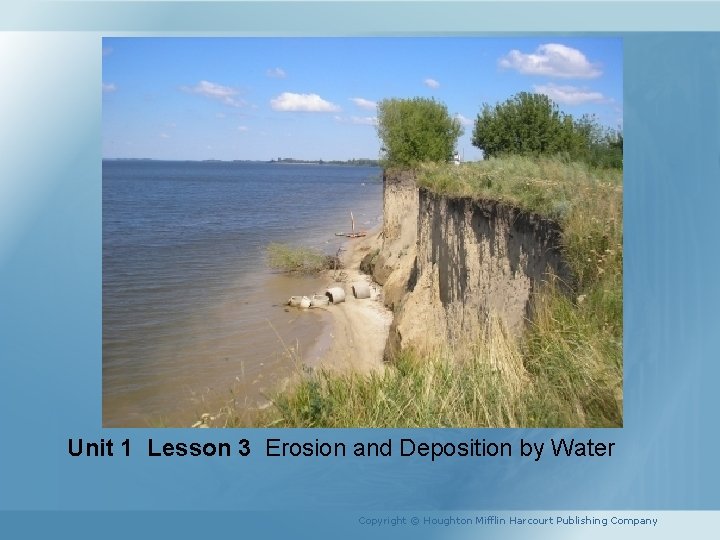
Unit 1 Lesson 3 Erosion and Deposition by Water Copyright © Houghton Mifflin Harcourt Publishing Company
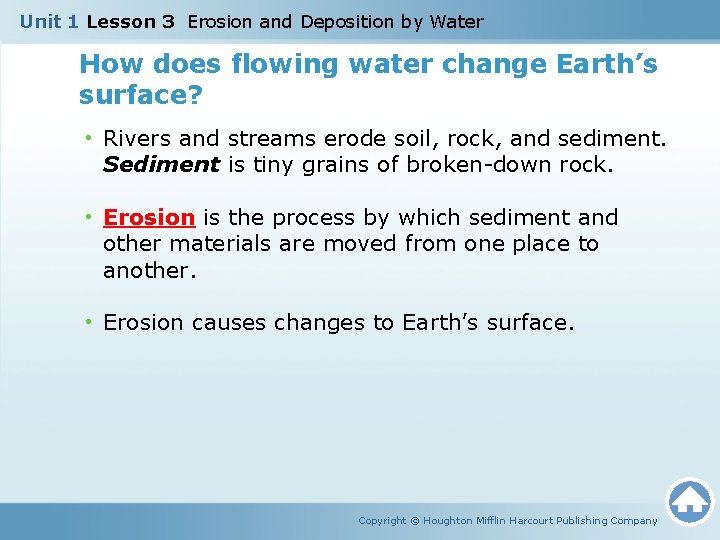
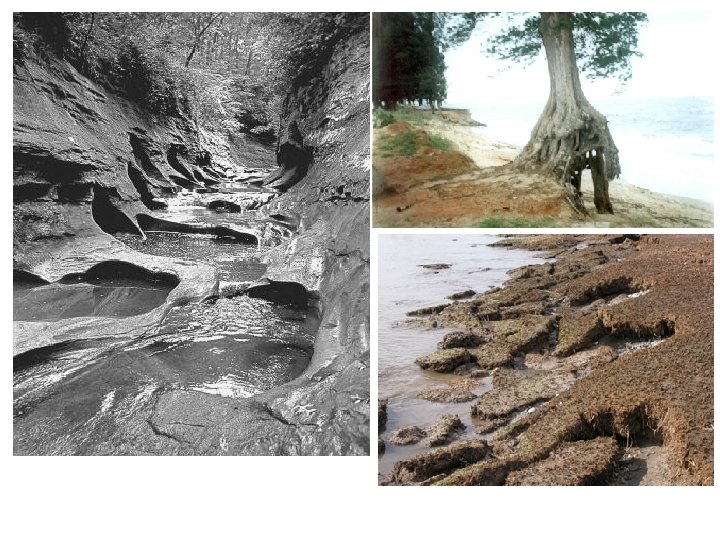
Unit 1 Lesson 3 Erosion and Deposition by Water How does flowing water change Earth’s surface? • Rivers and streams erode soil, rock, and sediment. Sediment is tiny grains of broken-down rock. • Erosion is the process by which sediment and other materials are moved from one place to another. • Erosion causes changes to Earth’s surface. Copyright © Houghton Mifflin Harcourt Publishing Company
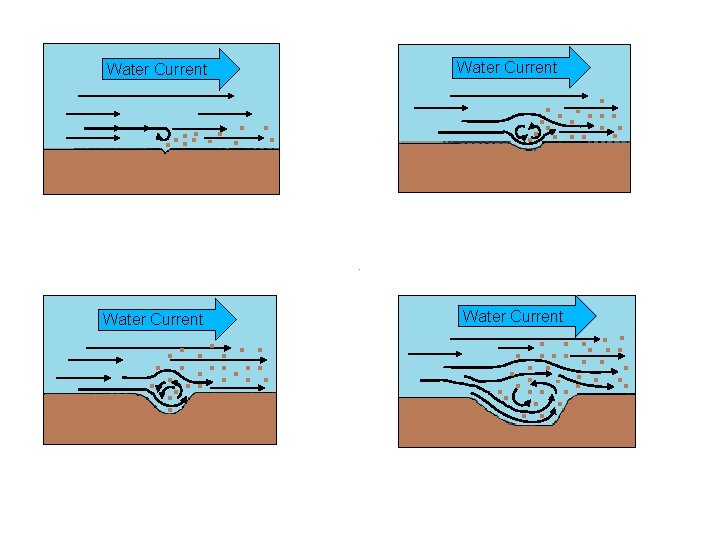
Water Current
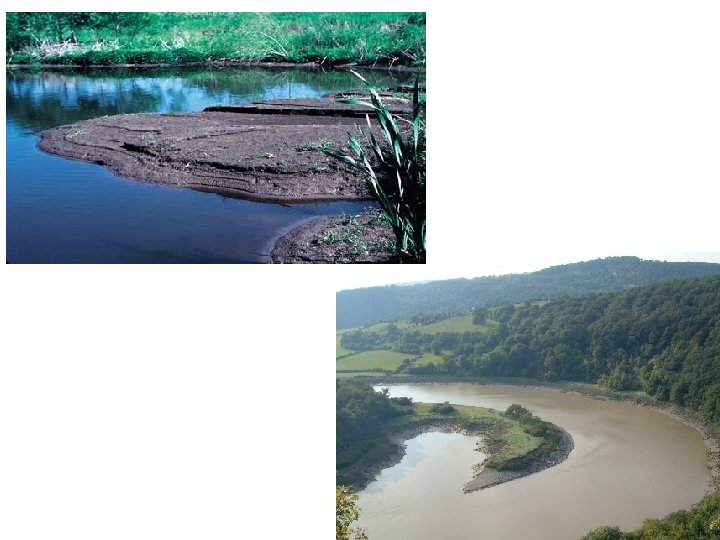
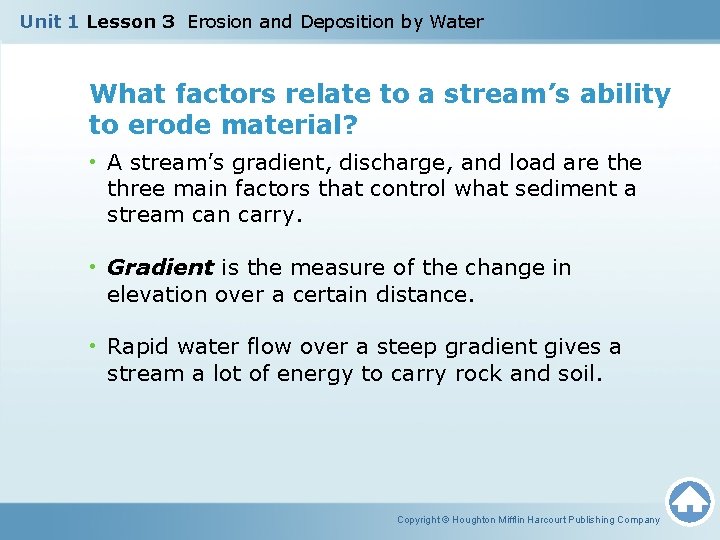
Unit 1 Lesson 3 Erosion and Deposition by Water How does flowing water change Earth’s surface? • Materials in rivers and streams are eventually dropped, or deposited, downstream. • Deposition is the process by which eroded material is dropped. • Deposition occurs when gravity’s downward pull on sediment is greater than the push of flowing water or wind. Copyright © Houghton Mifflin Harcourt Publishing Company
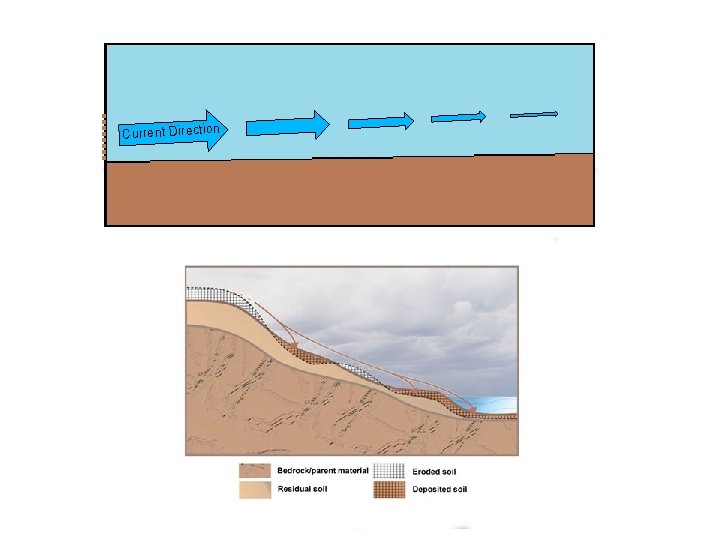
Current Direction
Unit 1 Lesson 3 Erosion and Deposition by Water What factors relate to a stream’s ability to erode material? • A stream’s gradient, discharge, and load are three main factors that control what sediment a stream can carry. • Gradient is the measure of the change in elevation over a certain distance. • Rapid water flow over a steep gradient gives a stream a lot of energy to carry rock and soil. Copyright © Houghton Mifflin Harcourt Publishing Company
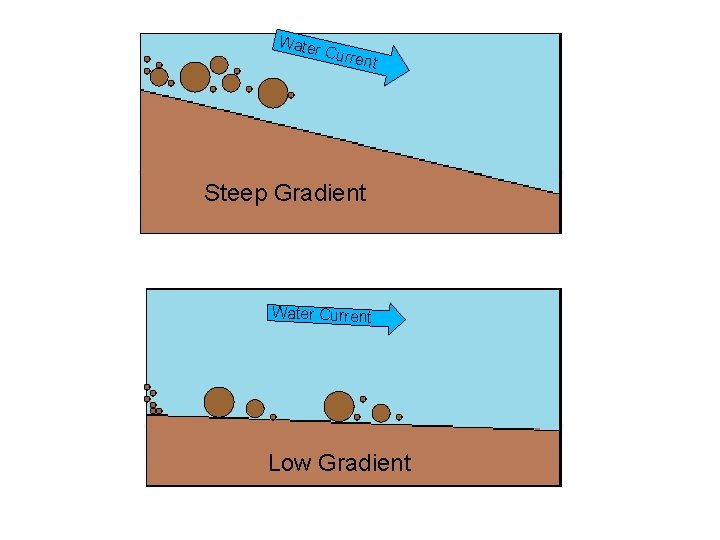
Wate r Curr ent Steep Gradient Water Current Low Gradient
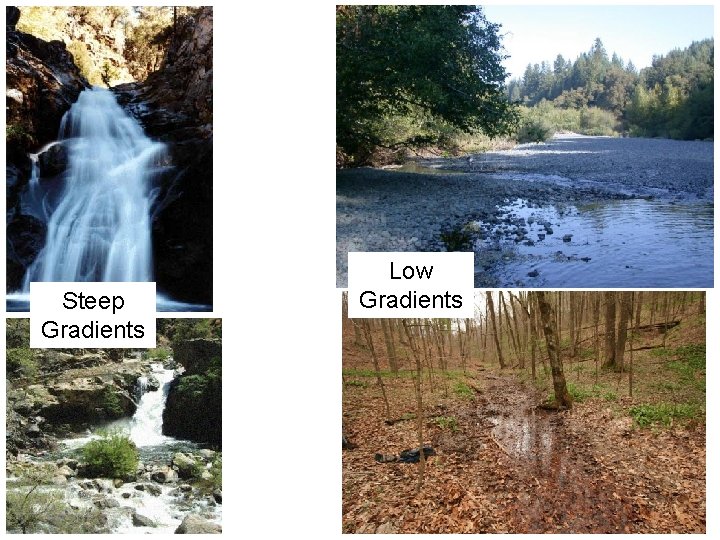
Steep Gradients Low Gradients
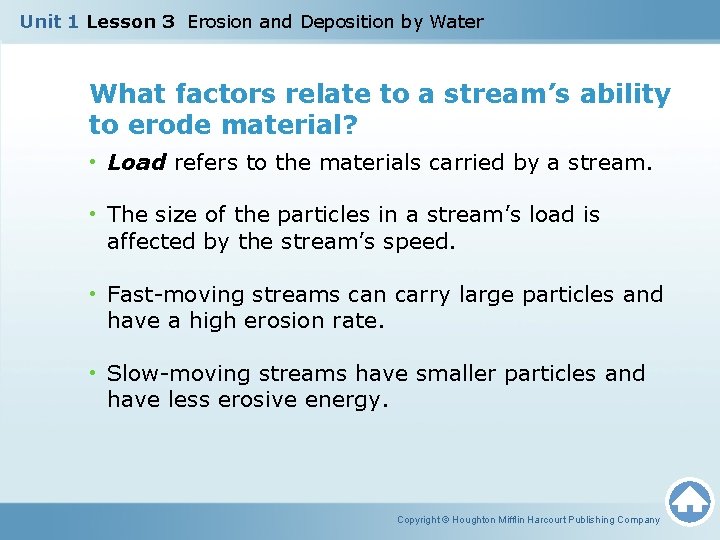
Unit 1 Lesson 3 Erosion and Deposition by Water What factors relate to a stream’s ability to erode material? • Load refers to the materials carried by a stream. • The size of the particles in a stream’s load is affected by the stream’s speed. • Fast-moving streams can carry large particles and have a high erosion rate. • Slow-moving streams have smaller particles and have less erosive energy. Copyright © Houghton Mifflin Harcourt Publishing Company
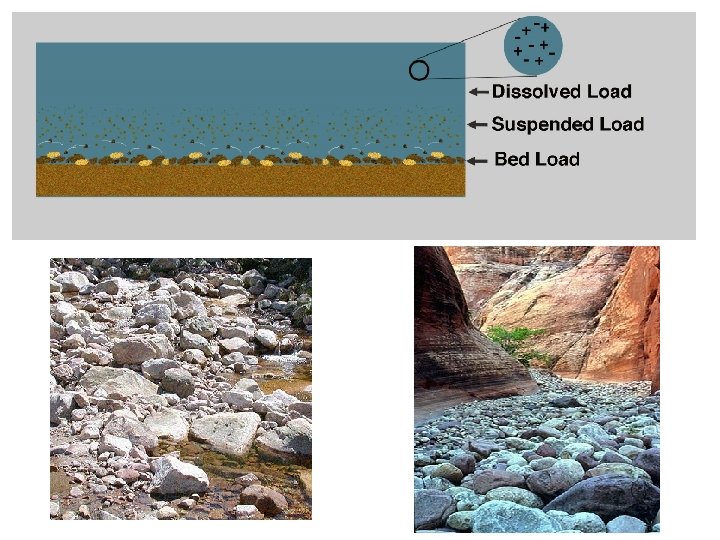
Unit 1 Lesson 3 Erosion and Deposition by Water What factors relate to a stream’s ability to erode material? • Discharge refers to the amount of water that a stream carries in a given amount of time. • Stream discharge increases after large storms and rapid snow melts. • As a stream’s discharge increases, its erosive energy, speed, and load increase. Copyright © Houghton Mifflin Harcourt Publishing Company
Unit 1 Lesson 3 Erosion and Deposition by Water Run of a River What landforms can streams create? • A stream forms as water erodes soil and rock to make a channel. A channel is the path that a stream follows. • Landforms, such as canyons and valleys, are created by the flow of water through streams and rivers. Copyright © Houghton Mifflin Harcourt Publishing Company
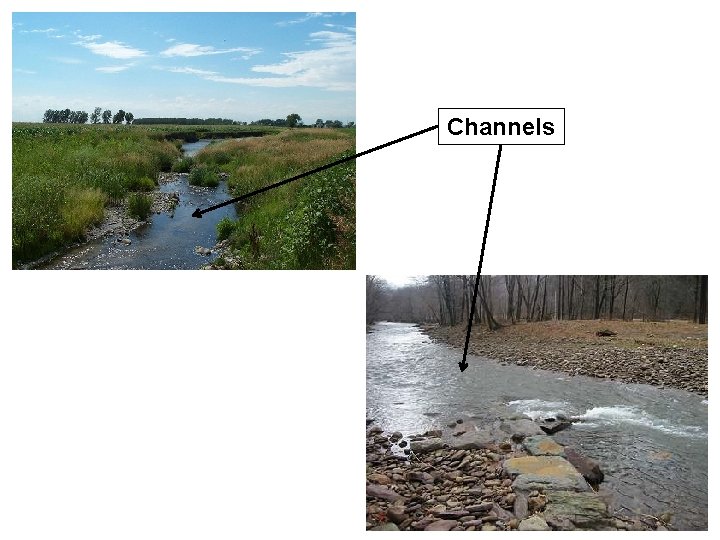
Channels
Unit 1 Lesson 3 Erosion and Deposition by Water What landforms can streams create? • When a stream floods, a layer of sediment is deposited over the flooded land. • A floodplain is a flat area formed from many layers of deposited sediment. • Sediment often contains nutrients for plant growth. As a result, floodplains are often very fertile. Copyright © Houghton Mifflin Harcourt Publishing Company
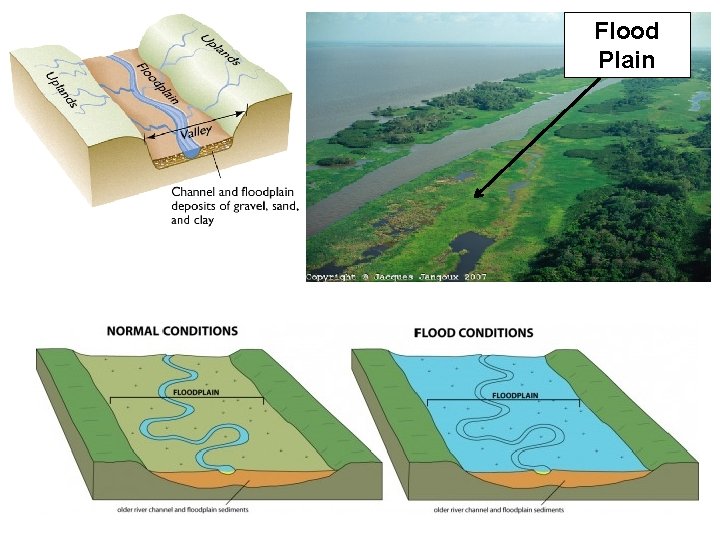
Flood Plain
Unit 1 Lesson 3 Erosion and Deposition by Water What landforms can streams create? • Curves and bends in a stream channel are called meanders. • Moving water erodes the outside banks and deposits sediment along the inside banks. • During a flood, a meander can be cut off, forming a crescent-shaped lake called an oxbow lake. Copyright © Houghton Mifflin Harcourt Publishing Company
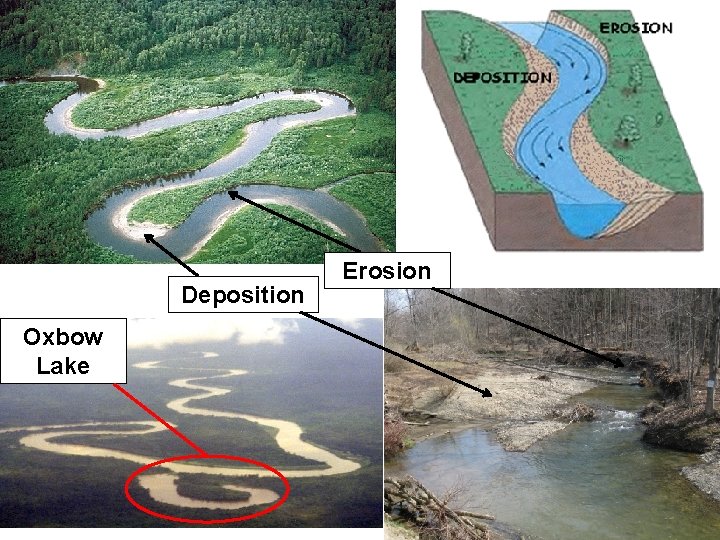
Deposition Oxbow Lake Erosion
Unit 1 Lesson 3 Erosion and Deposition by Water What landforms can streams create? • When a stream empties into another body of water, its current slows and it deposits load. • A delta is a fan-shaped pattern of deposited sediment load. • An alluvial fan is a fan-shaped deposit that forms on dry land. Copyright © Houghton Mifflin Harcourt Publishing Company
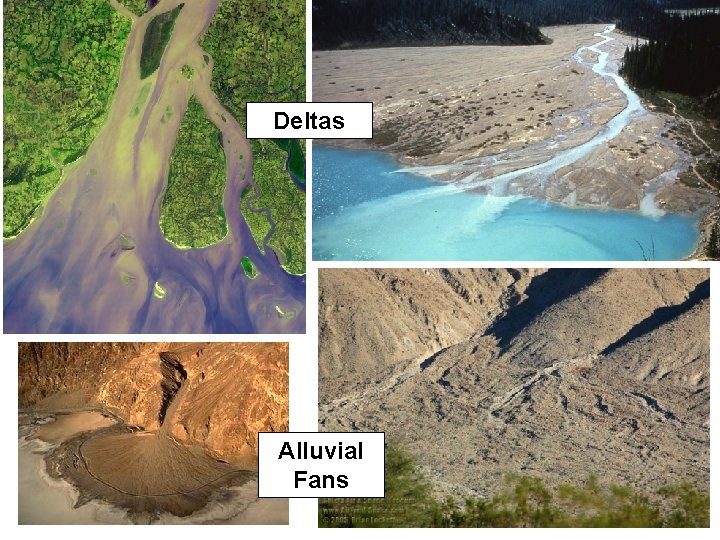
Deltas Alluvial Fans
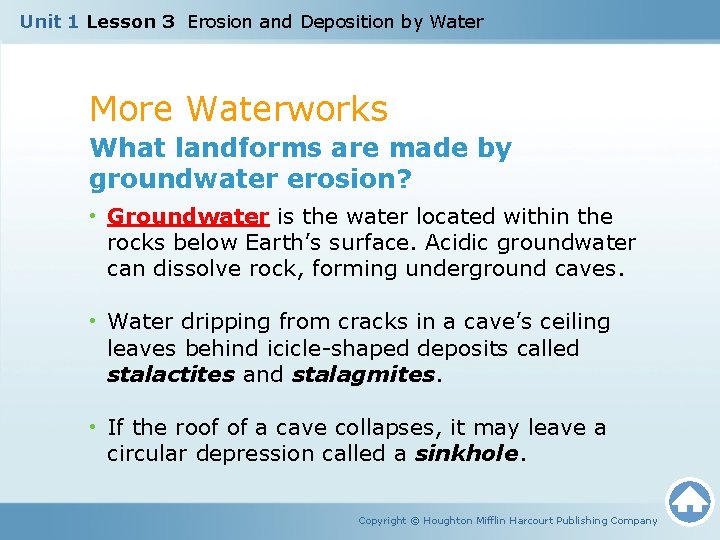
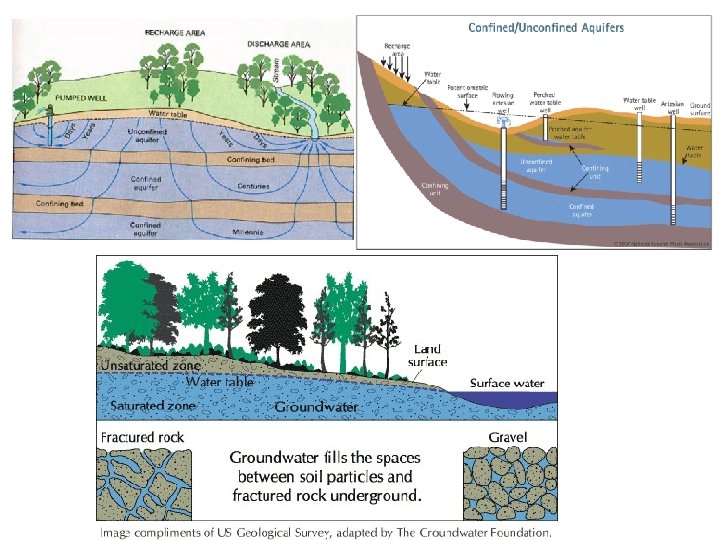
Unit 1 Lesson 3 Erosion and Deposition by Water More Waterworks What landforms are made by groundwater erosion? • Groundwater is the water located within the rocks below Earth’s surface. Acidic groundwater can dissolve rock, forming underground caves. • Water dripping from cracks in a cave’s ceiling leaves behind icicle-shaped deposits called stalactites and stalagmites. • If the roof of a cave collapses, it may leave a circular depression called a sinkhole. Copyright © Houghton Mifflin Harcourt Publishing Company
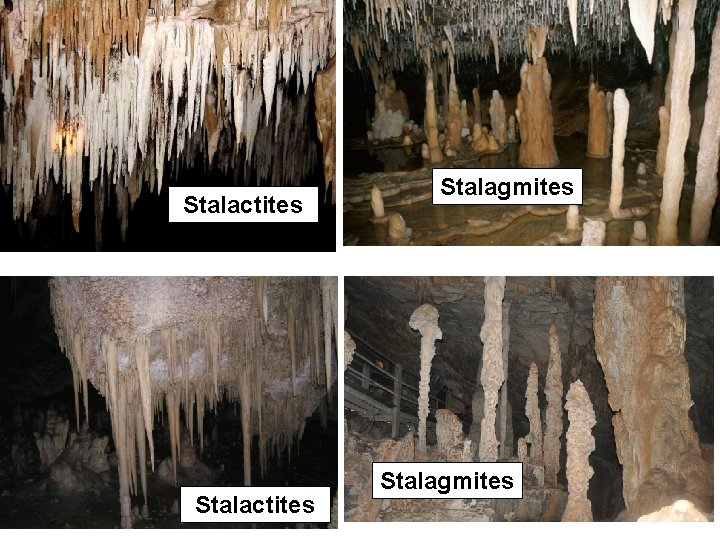
Stalactites Stalagmites
Unit 1 Lesson 3 Erosion and Deposition by Water What forces shape a shoreline? • A shoreline is the place where land a body of water meet. • Ocean waves and currents, or stream like movements of water, can erode and deposit materials. Copyright © Houghton Mifflin Harcourt Publishing Company
Unit 1 Lesson 3 Erosion and Deposition by Water What forces shape a shoreline? • Waves slow down as they approach a shoreline. • The first parts of the shoreline that waves meet are the headlands, or pieces of land that project into the water. • Waves striking headlands have high energy and erode materials. Waves striking areas between headlands have less energy and deposit materials. Copyright © Houghton Mifflin Harcourt Publishing Company
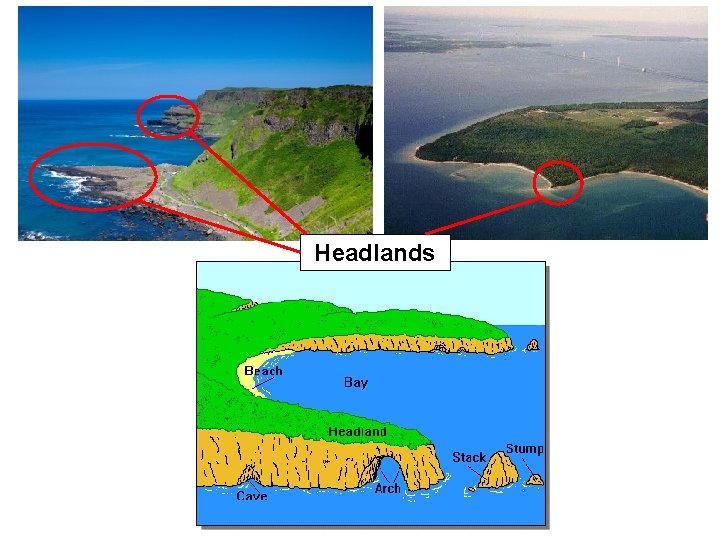
Headlands
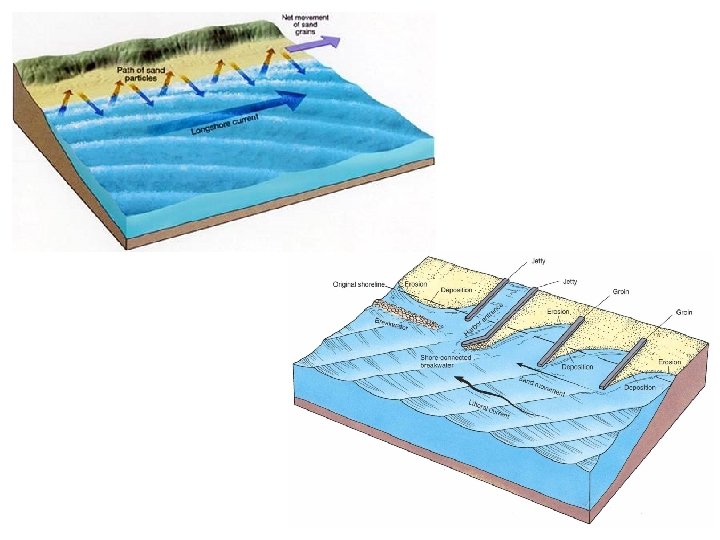
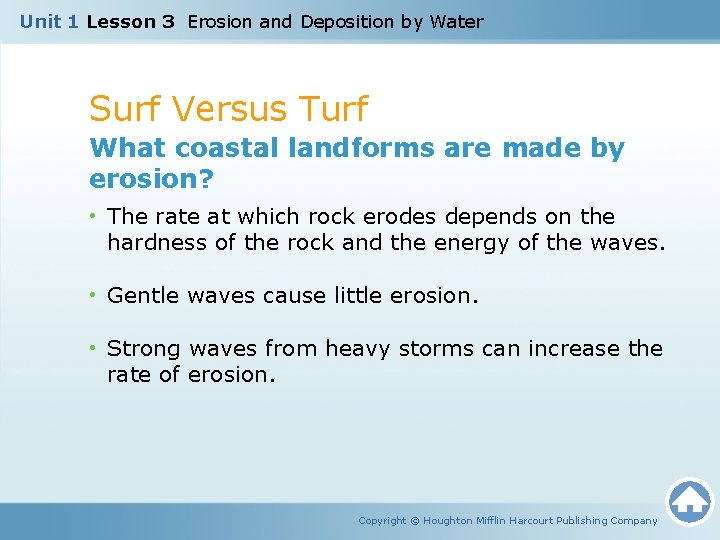
Unit 1 Lesson 3 Erosion and Deposition by Water What forces shape a shoreline? • Longshore currents are currents that travel almost parallel to the shoreline very near shore. • Longshore currents are caused by waves hitting the shore at an angle. • As sand moves down a beach, the upcurrent end of the beach is eroded away while the downcurrent end of the beach is built up. Copyright © Houghton Mifflin Harcourt Publishing Company
Unit 1 Lesson 3 Erosion and Deposition by Water Surf Versus Turf What coastal landforms are made by erosion? • The rate at which rock erodes depends on the hardness of the rock and the energy of the waves. • Gentle waves cause little erosion. • Strong waves from heavy storms can increase the rate of erosion. Copyright © Houghton Mifflin Harcourt Publishing Company
Unit 1 Lesson 3 Erosion and Deposition by Water What coastal landforms are made by erosion? • Very hard rock can slow the rate of erosion because it takes more wave energy to break the rock. • Soft rock erodes more rapidly. • Bays, sea caves, wave-cut platforms, and headlands can form as a result of differences in the hardness of rock. Copyright © Houghton Mifflin Harcourt Publishing Company
Unit 1 Lesson 3 Erosion and Deposition by Water What coastal landforms are made by erosion? • A sea cliff forms when waves erode and undercut rock to make steep slopes. • As a sea cliff erodes above the waterline, a bench of rock, called a wave-cut platform, can remain below the waterline. • The erosion of sea cliffs and headlands can create holes that become sea caves. Further erosion can produce a sea arch and sea stacks. Copyright © Houghton Mifflin Harcourt Publishing Company
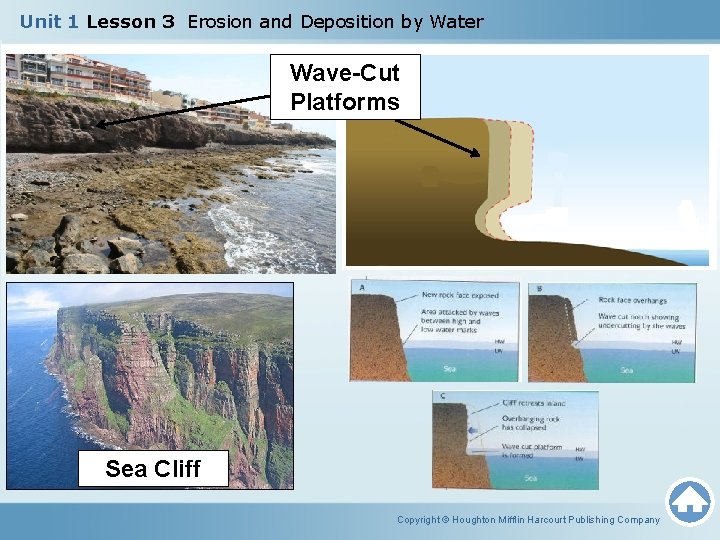
Unit 1 Lesson 3 Erosion and Deposition by Water Wave-Cut Platforms Sea Cliff Copyright © Houghton Mifflin Harcourt Publishing Company
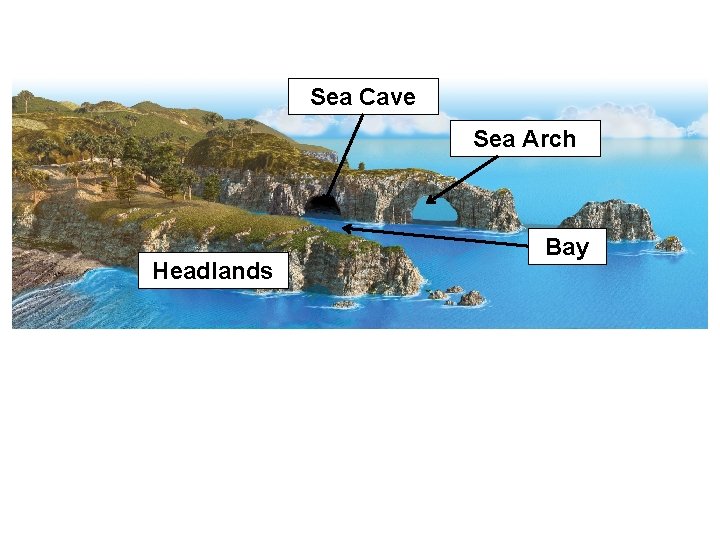
Sea Cave Sea Arch Headlands Bay
Unit 1 Lesson 3 Erosion and Deposition by Water Shifting Sands What coastal landforms are made by deposition? • A beach is an area of shoreline that is made up of material deposited by waves and currents. • The size and shape of materials on a beach depend on how far the material has traveled, the type of material, and how it is eroded. Copyright © Houghton Mifflin Harcourt Publishing Company
Unit 1 Lesson 3 Erosion and Deposition by Water What coastal landforms are made by deposition? • A sandbar is an underwater or exposed ridge of sand, gravel, or shell material. • A barrier island is a long, narrow island, usually made of sand, that forms parallel to the shoreline a short distance offshore. Copyright © Houghton Mifflin Harcourt Publishing Company
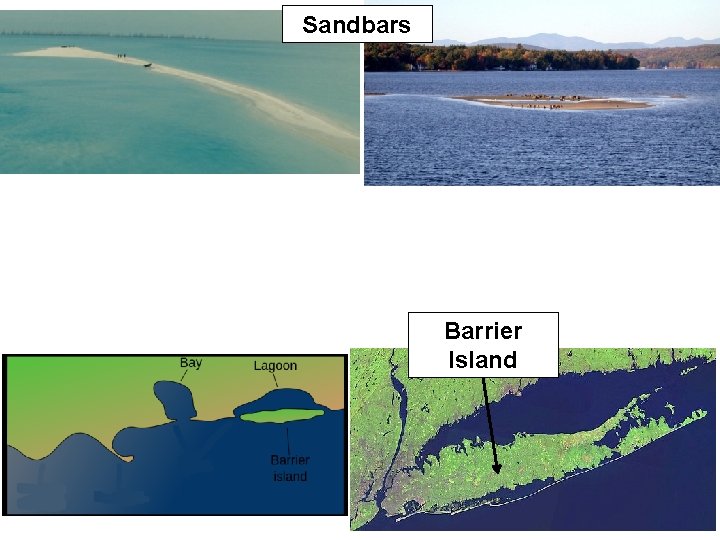
Sandbars Barrier Island
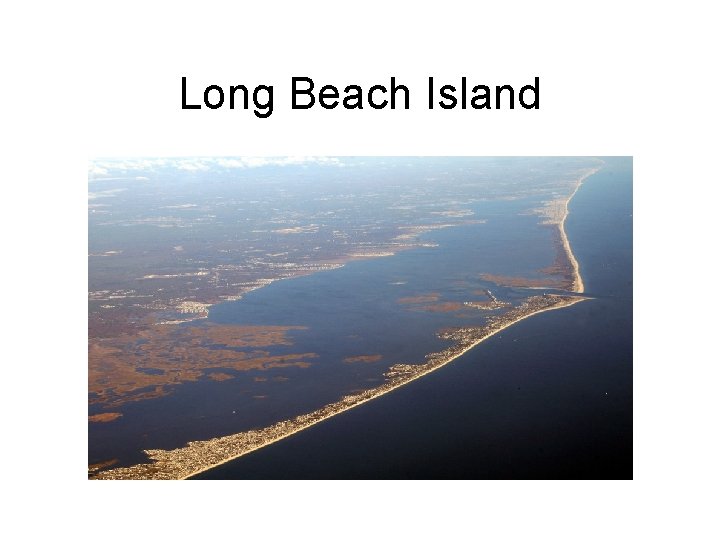
Long Beach Island
- Slides: 38