
Unit 1 Landforms September 2014 What is Geography
Unit 1: Landforms September 2014
What is Geography? • Geography is the study of how the earth works and how people interact with it. • We are first concerned about understanding the forces that shaped the earth’s surface
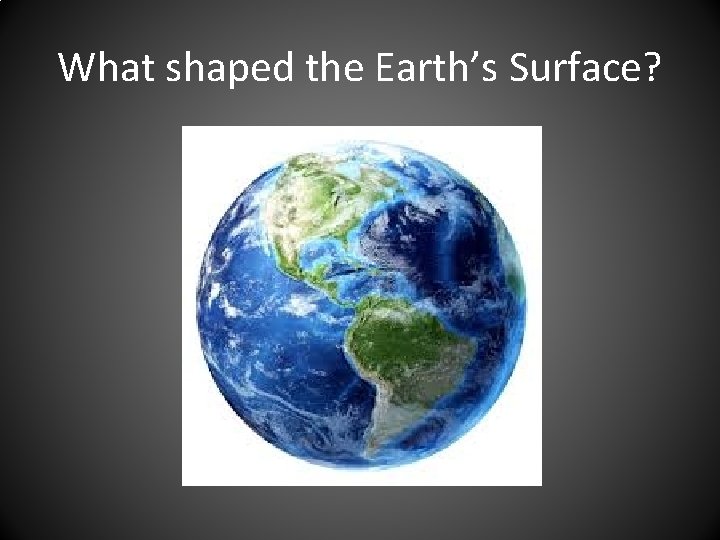
What shaped the Earth’s Surface?
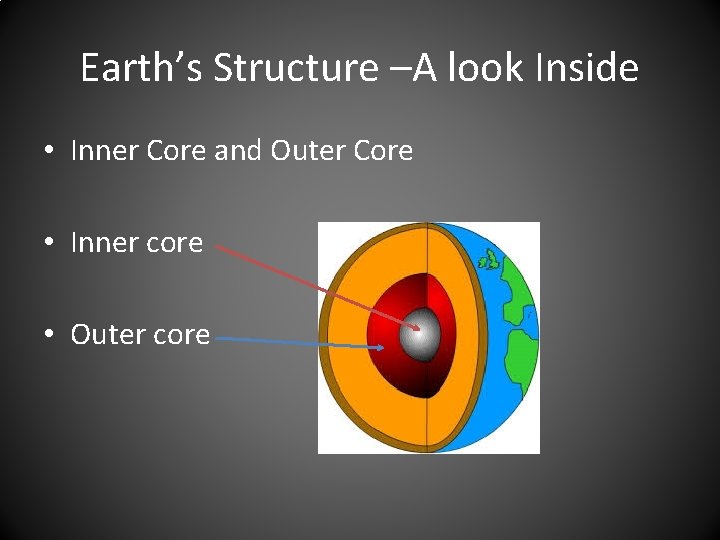
Earth’s Structure –A look Inside • Inner Core and Outer Core • Inner core • Outer core
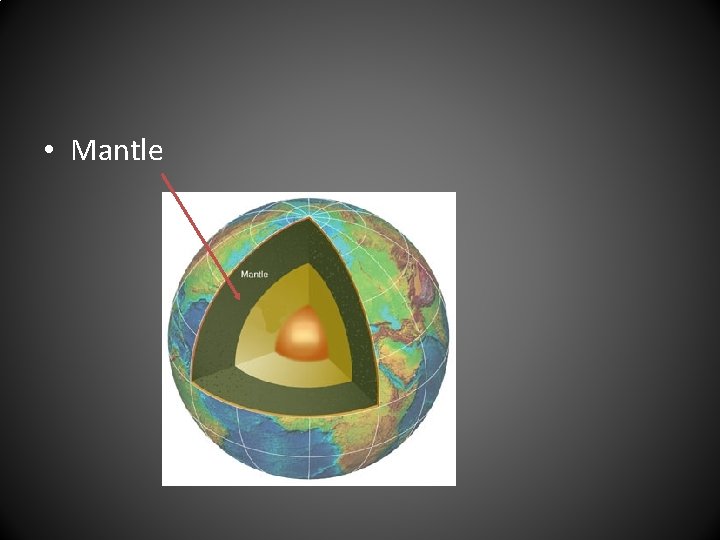
• Mantle
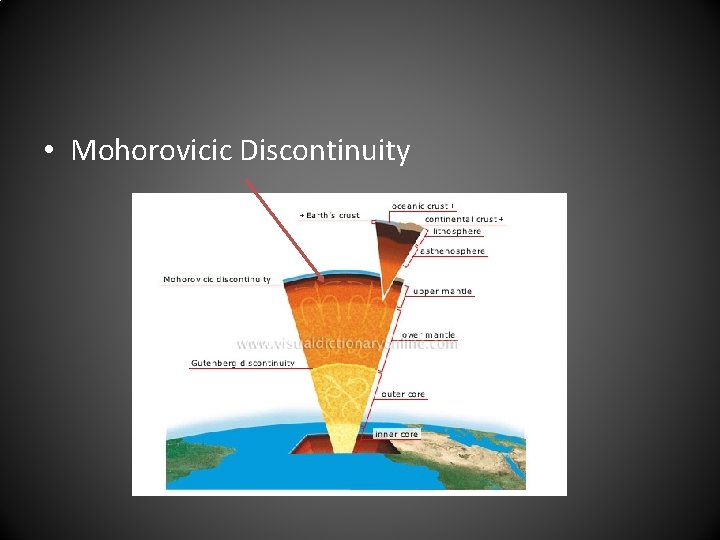
• Mohorovicic Discontinuity
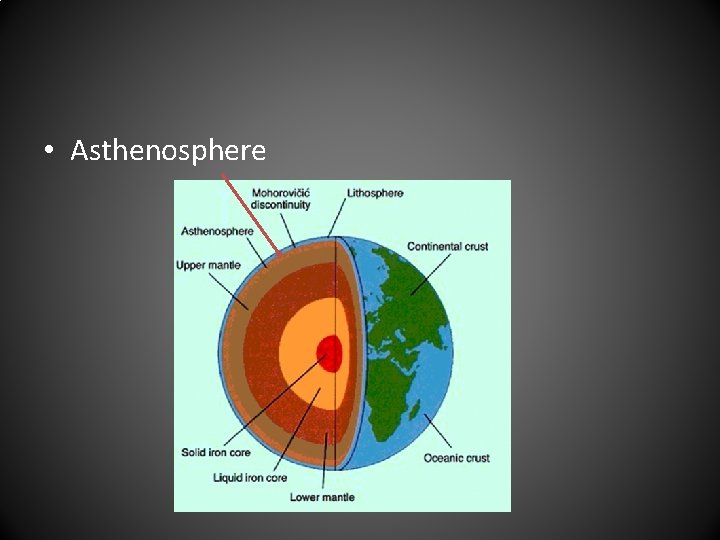
• Asthenosphere
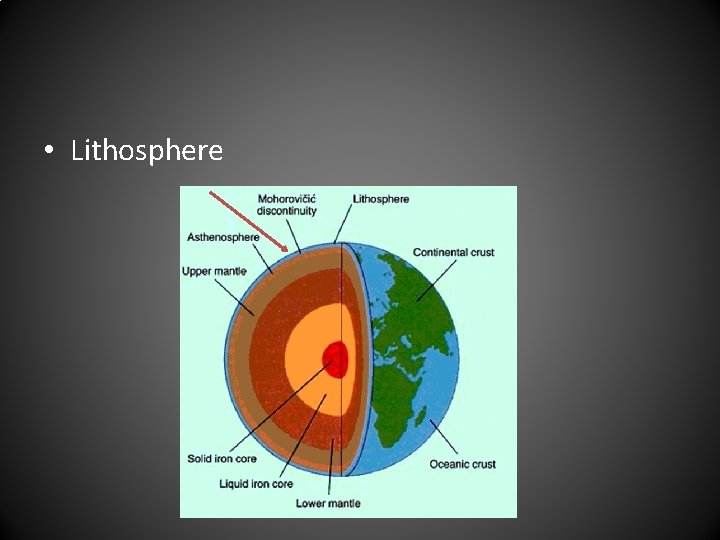
• Lithosphere
Earth’s Structure (cont’d) • Review video: • http: //www. youtube. com/watch? v=3 MFr 2 c. C 3 erk
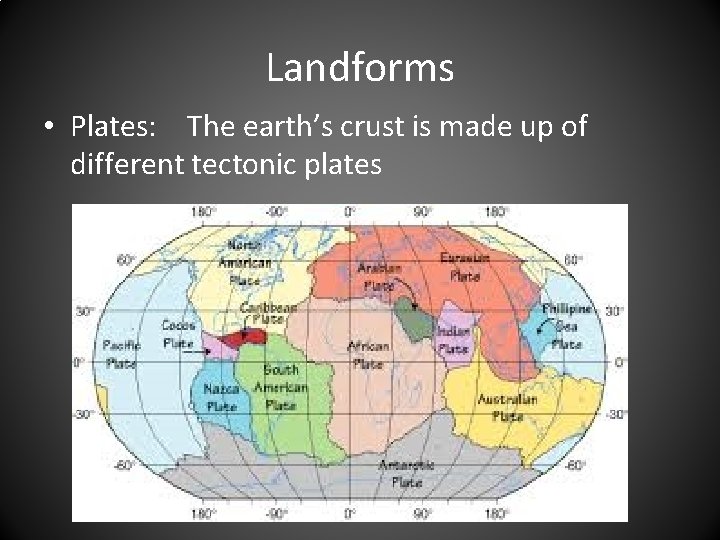
Landforms • Plates: The earth’s crust is made up of different tectonic plates
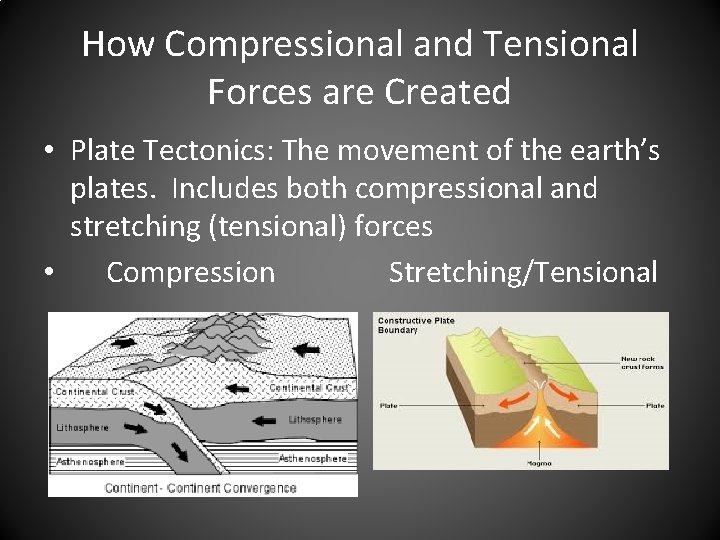
How Compressional and Tensional Forces are Created • Plate Tectonics: The movement of the earth’s plates. Includes both compressional and stretching (tensional) forces • Compression Stretching/Tensional
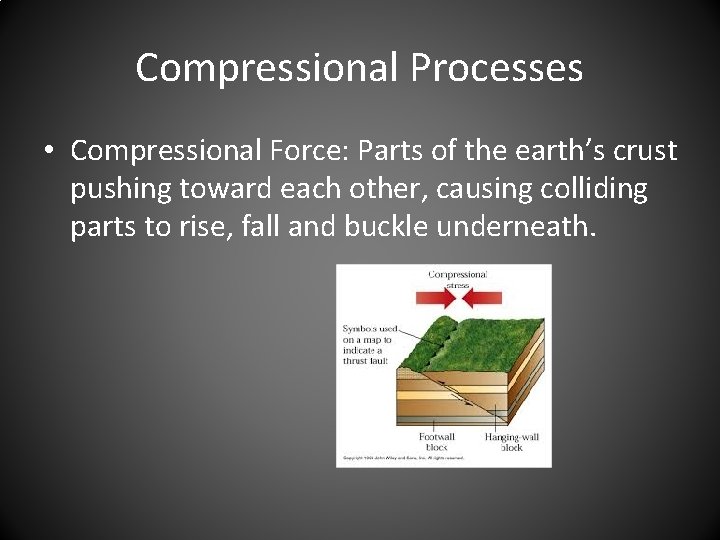
Compressional Processes • Compressional Force: Parts of the earth’s crust pushing toward each other, causing colliding parts to rise, fall and buckle underneath.
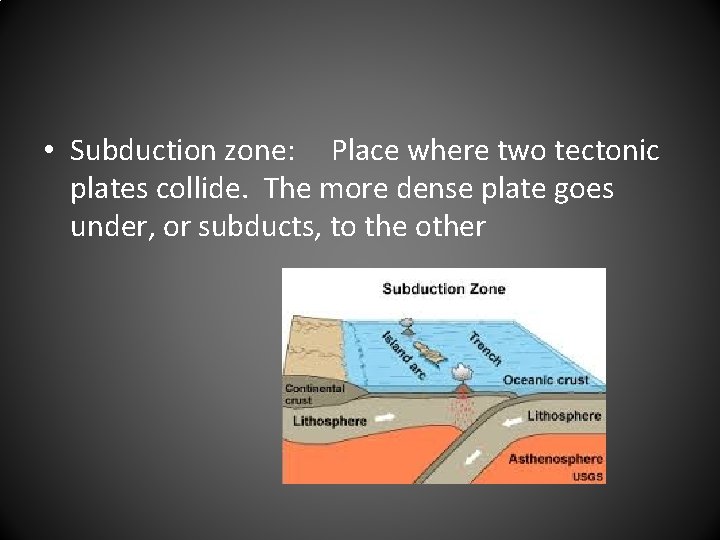
• Subduction zone: Place where two tectonic plates collide. The more dense plate goes under, or subducts, to the other
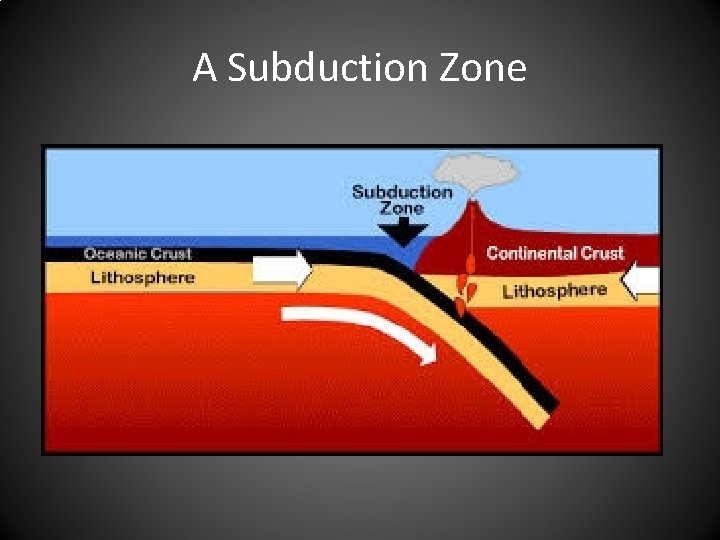
A Subduction Zone
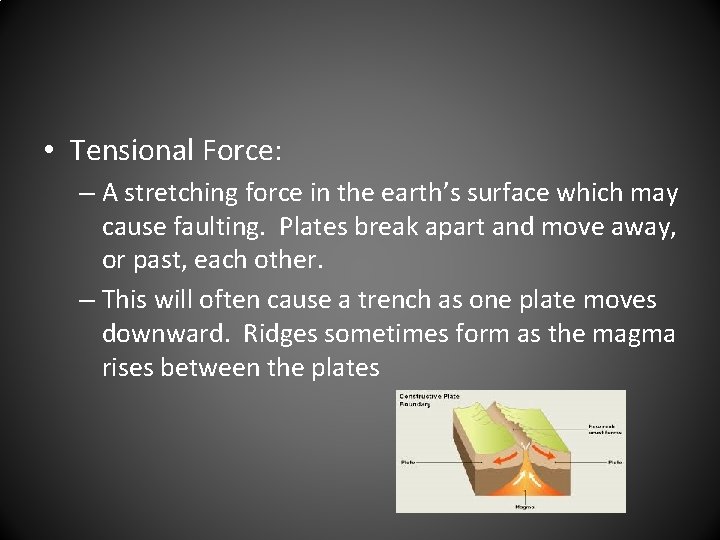
• Tensional Force: – A stretching force in the earth’s surface which may cause faulting. Plates break apart and move away, or past, each other. – This will often cause a trench as one plate moves downward. Ridges sometimes form as the magma rises between the plates
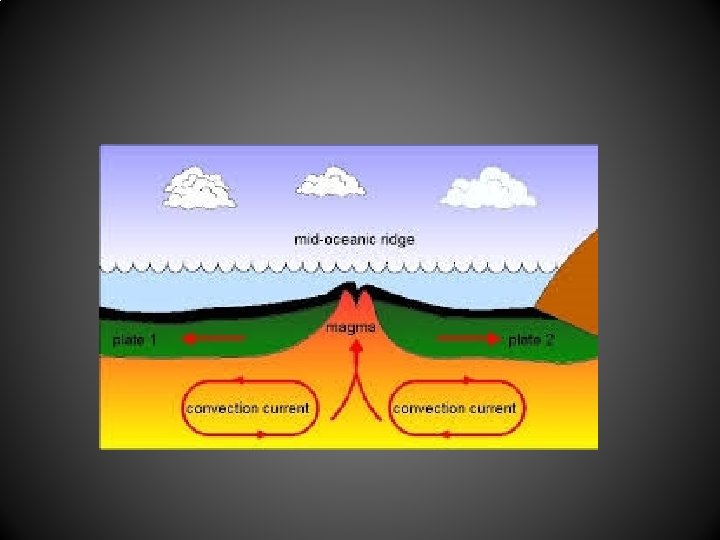
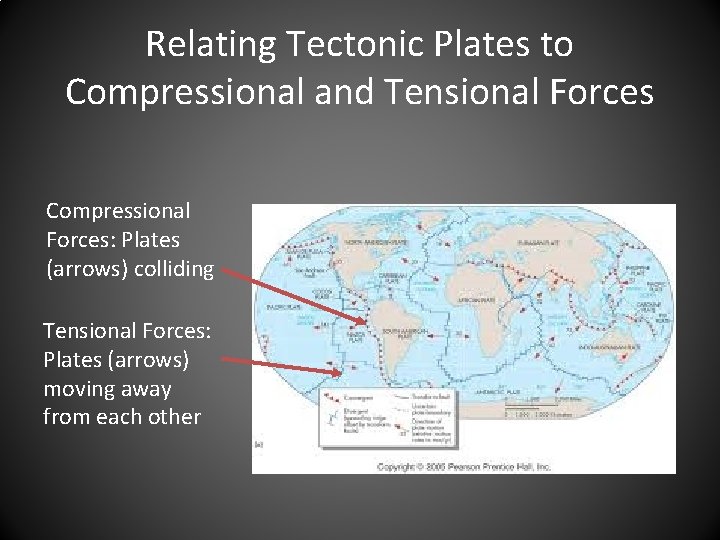
Relating Tectonic Plates to Compressional and Tensional Forces Compressional Forces: Plates (arrows) colliding Tensional Forces: Plates (arrows) moving away from each other
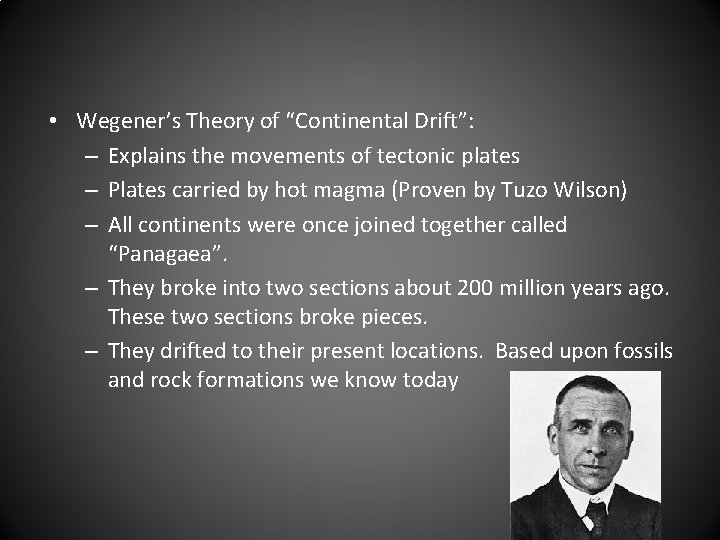
• Wegener’s Theory of “Continental Drift”: – Explains the movements of tectonic plates – Plates carried by hot magma (Proven by Tuzo Wilson) – All continents were once joined together called “Panagaea”. – They broke into two sections about 200 million years ago. These two sections broke pieces. – They drifted to their present locations. Based upon fossils and rock formations we know today
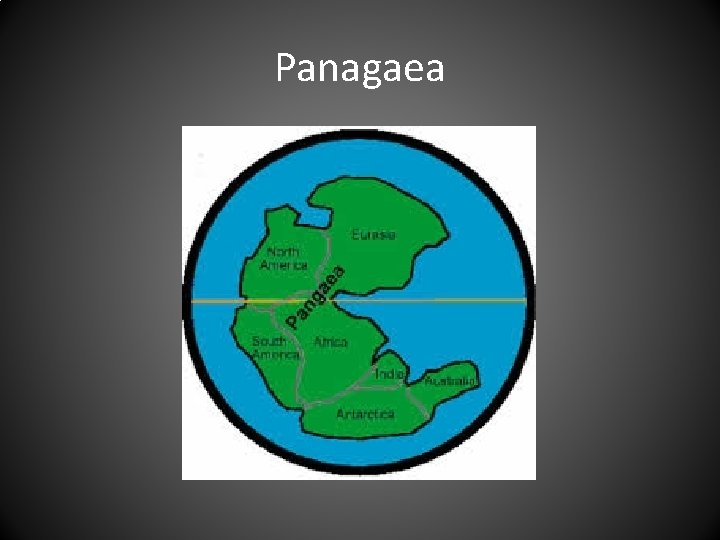
Panagaea
Wegener’s Critics • Argued how did the plates move? • Wegener could not prove it
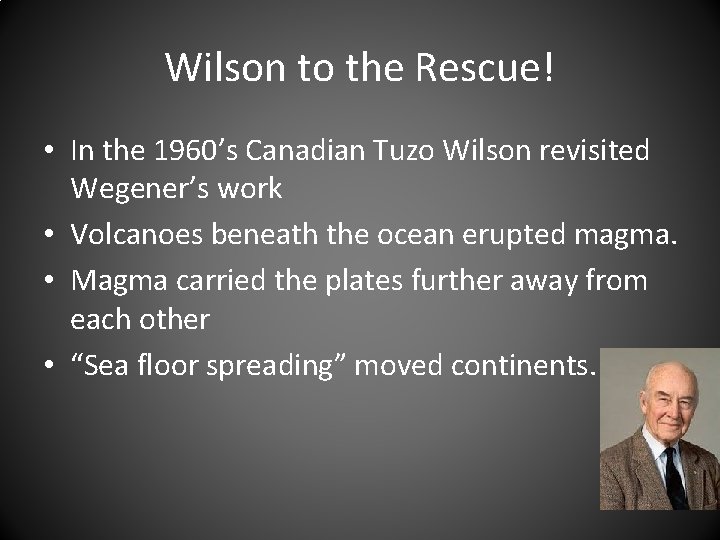
Wilson to the Rescue! • In the 1960’s Canadian Tuzo Wilson revisited Wegener’s work • Volcanoes beneath the ocean erupted magma. • Magma carried the plates further away from each other • “Sea floor spreading” moved continents.
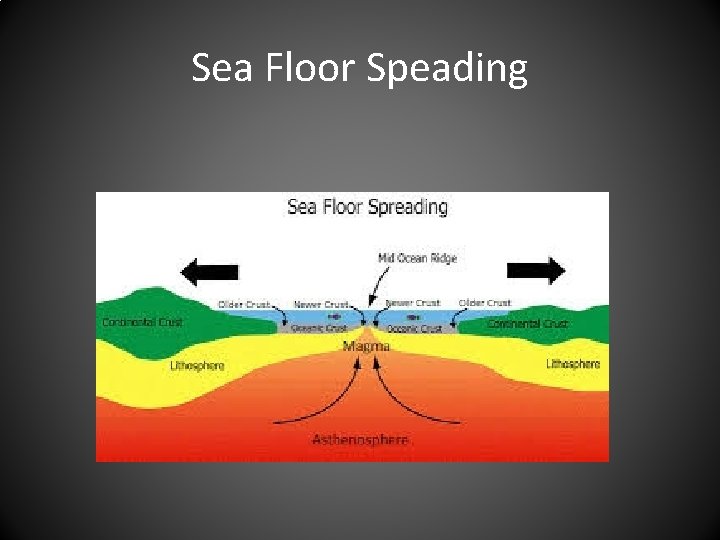
Sea Floor Speading
Landforms • Read pp. 6 -10
Compressional Forces Creating Fold Mountains: • Caused by compressional forces moving the earth’s crust together to collide • Different forces and pressures create simple or complex forms
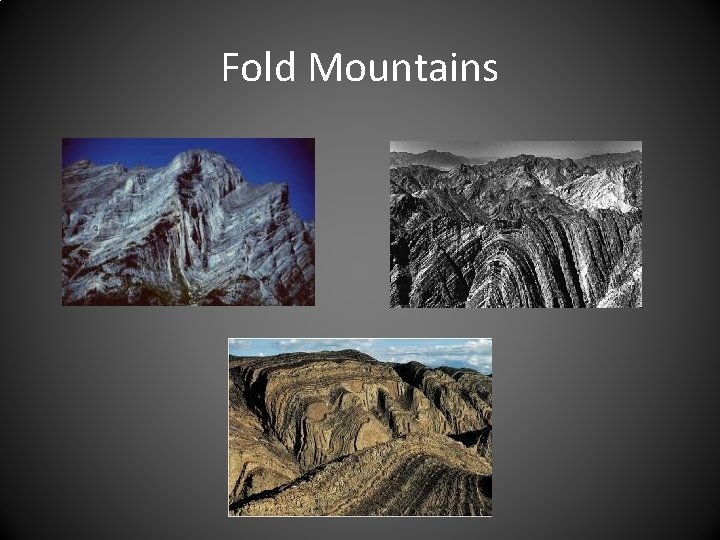
Fold Mountains
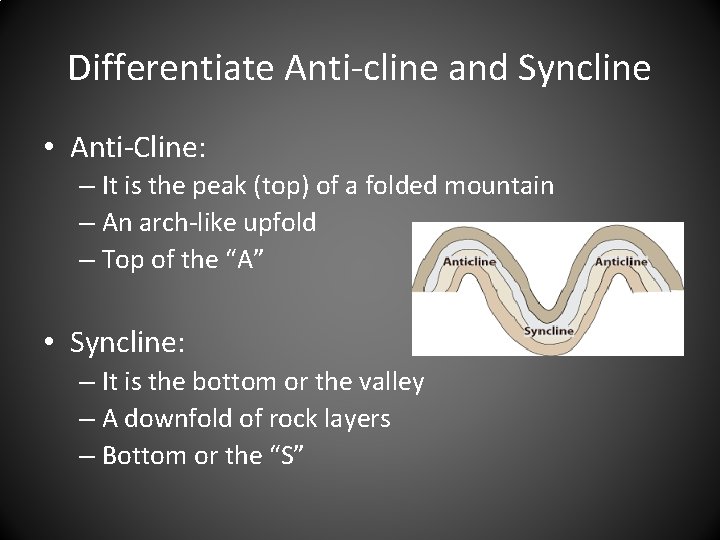
Differentiate Anti-cline and Syncline • Anti-Cline: – It is the peak (top) of a folded mountain – An arch-like upfold – Top of the “A” • Syncline: – It is the bottom or the valley – A downfold of rock layers – Bottom or the “S”
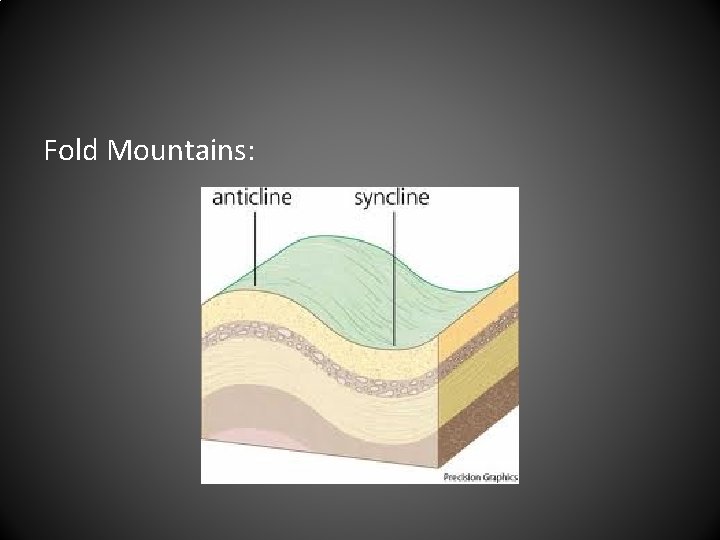
Fold Mountains:
What is Faulting? • Faulting: – The breaking apart or fracturing of rock – Caused when rocks are compressed together under intense pressure – On earth’s surface or deep into the earth’s crust – Result of earth’s crust pushed up or dropped down – Plates move over, away, or past each other
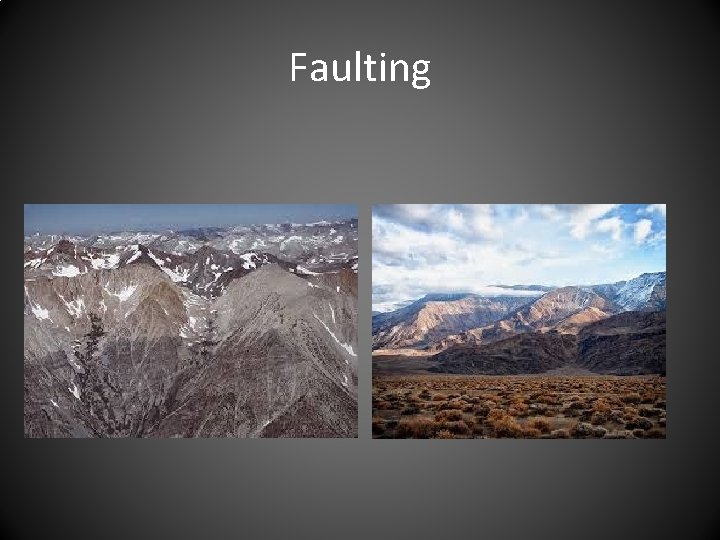
Faulting
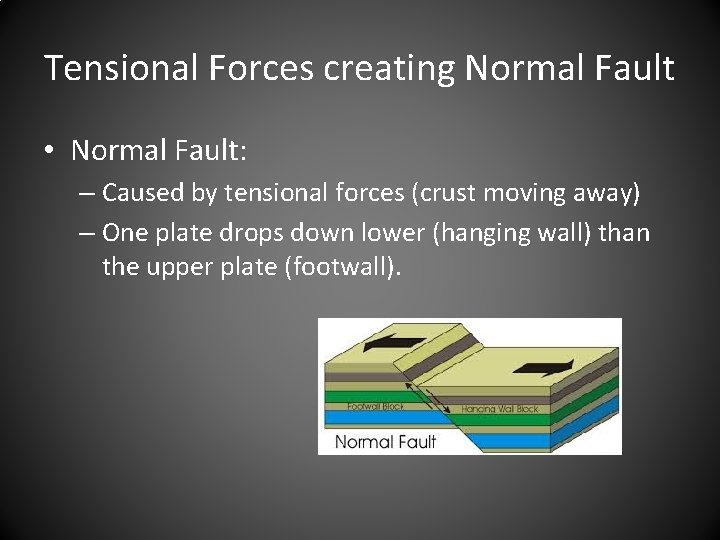
Tensional Forces creating Normal Fault • Normal Fault: – Caused by tensional forces (crust moving away) – One plate drops down lower (hanging wall) than the upper plate (footwall).
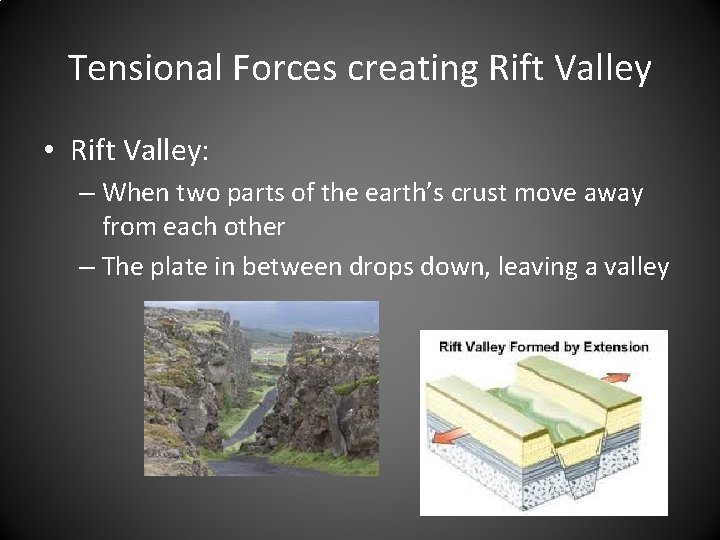
Tensional Forces creating Rift Valley • Rift Valley: – When two parts of the earth’s crust move away from each other – The plate in between drops down, leaving a valley
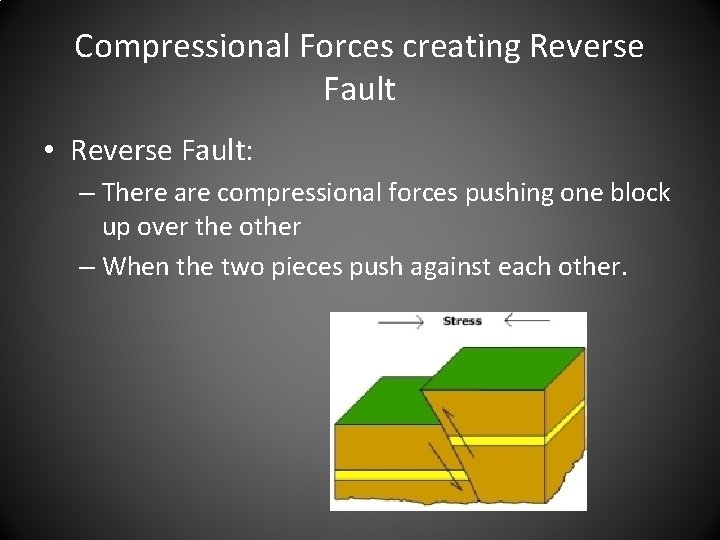
Compressional Forces creating Reverse Fault • Reverse Fault: – There are compressional forces pushing one block up over the other – When the two pieces push against each other.
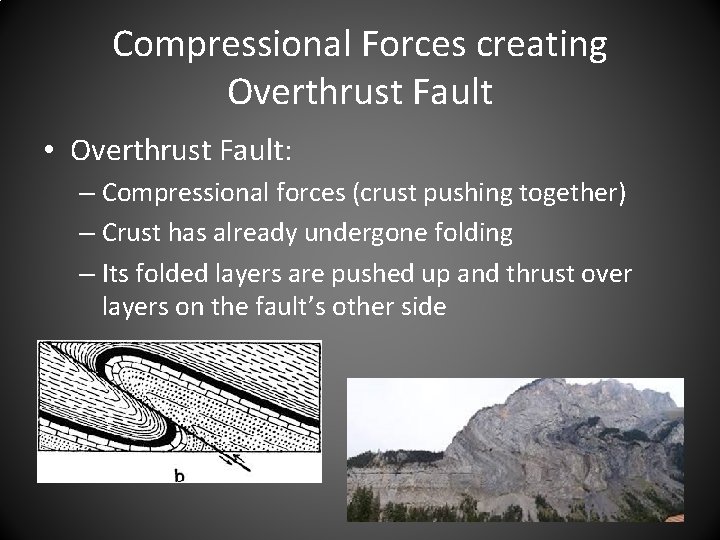
Compressional Forces creating Overthrust Fault • Overthrust Fault: – Compressional forces (crust pushing together) – Crust has already undergone folding – Its folded layers are pushed up and thrust over layers on the fault’s other side
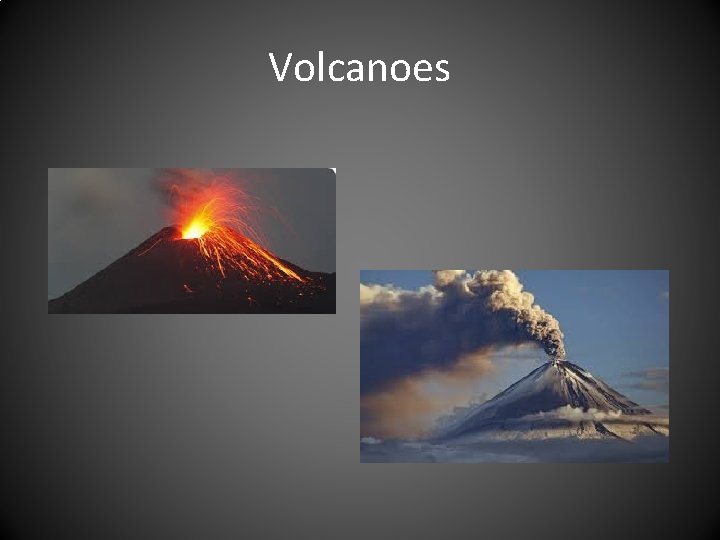
Volcanoes
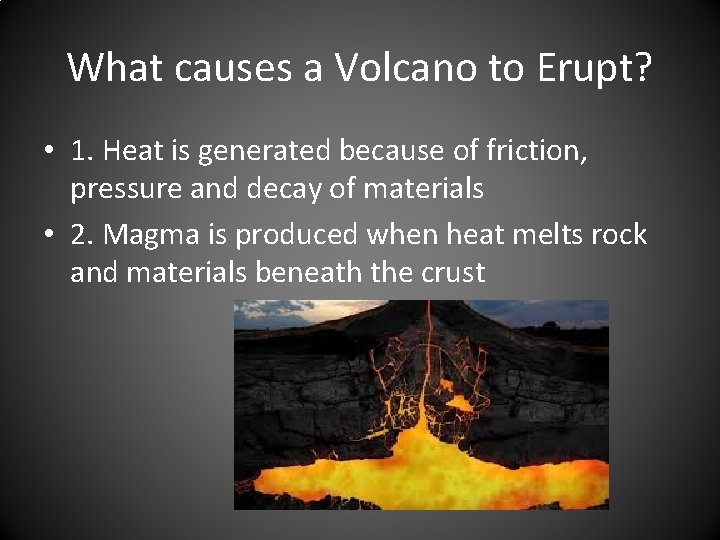
What causes a Volcano to Erupt? • 1. Heat is generated because of friction, pressure and decay of materials • 2. Magma is produced when heat melts rock and materials beneath the crust
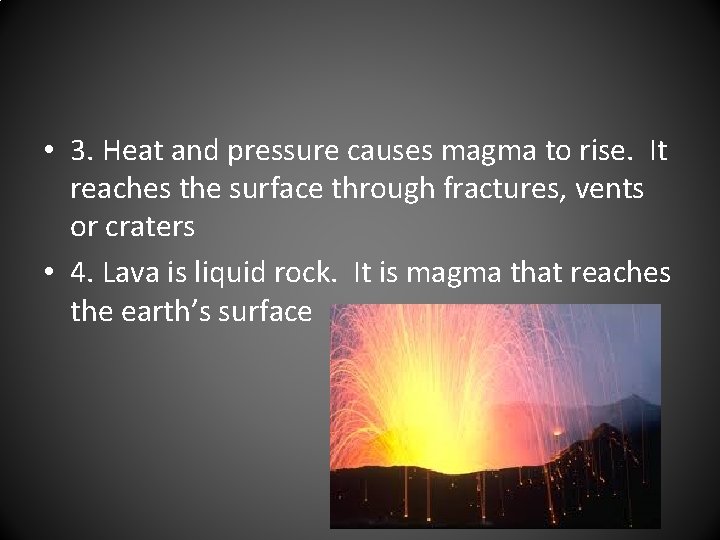
• 3. Heat and pressure causes magma to rise. It reaches the surface through fractures, vents or craters • 4. Lava is liquid rock. It is magma that reaches the earth’s surface
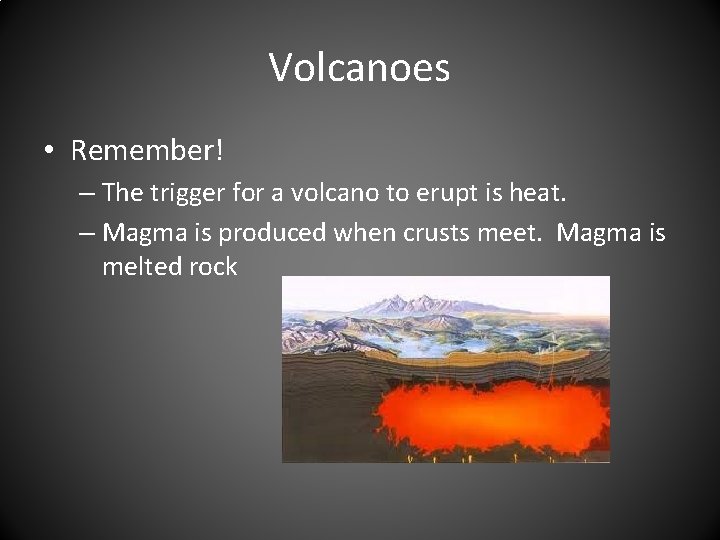
Volcanoes • Remember! – The trigger for a volcano to erupt is heat. – Magma is produced when crusts meet. Magma is melted rock
Volcano Terms • Ash: Small dust like fragments of rock, minerals and glass emitted from volcanoes • Vent: Small opening where magma erupts • Crater: Large opening where magma erupts • Cinder: Low density igneous rock, characterized by bubbles, emitted from volcanoes. Larger than ash.
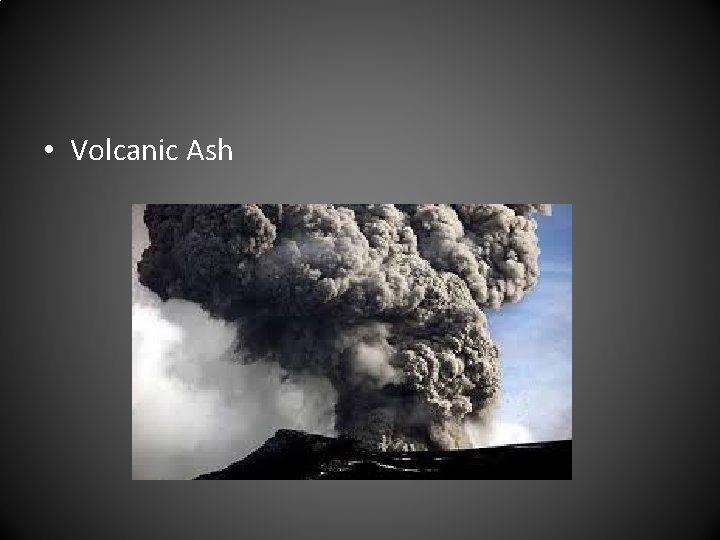
• Volcanic Ash
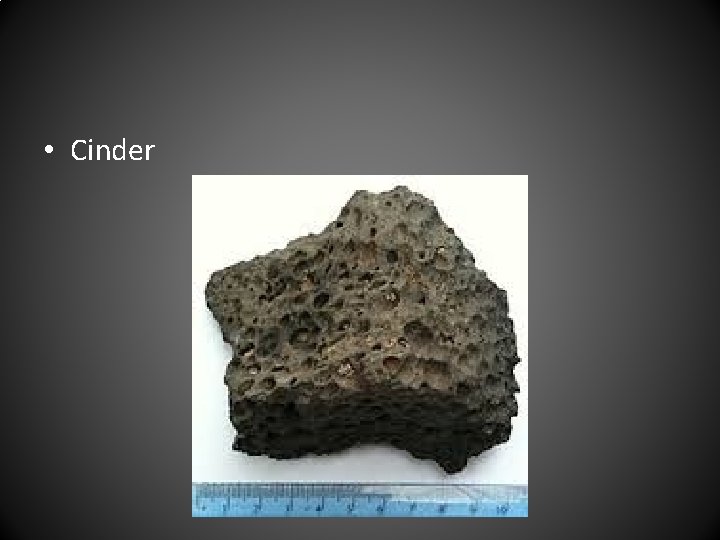
• Cinder
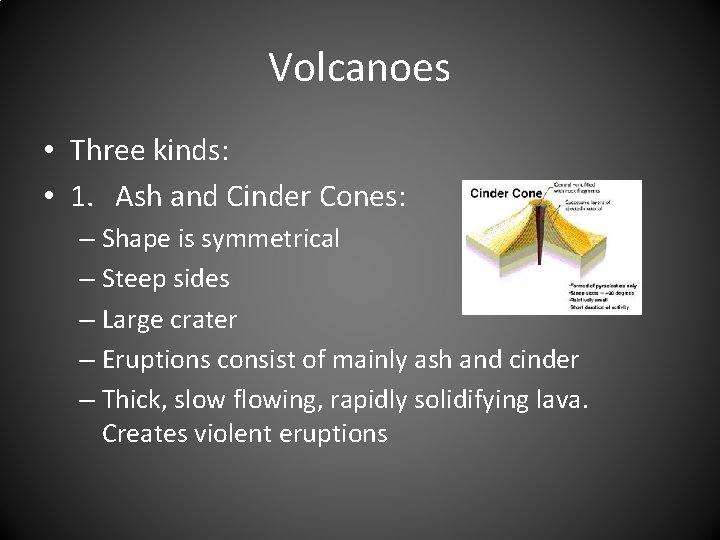
Volcanoes • Three kinds: • 1. Ash and Cinder Cones: – Shape is symmetrical – Steep sides – Large crater – Eruptions consist of mainly ash and cinder – Thick, slow flowing, rapidly solidifying lava. Creates violent eruptions
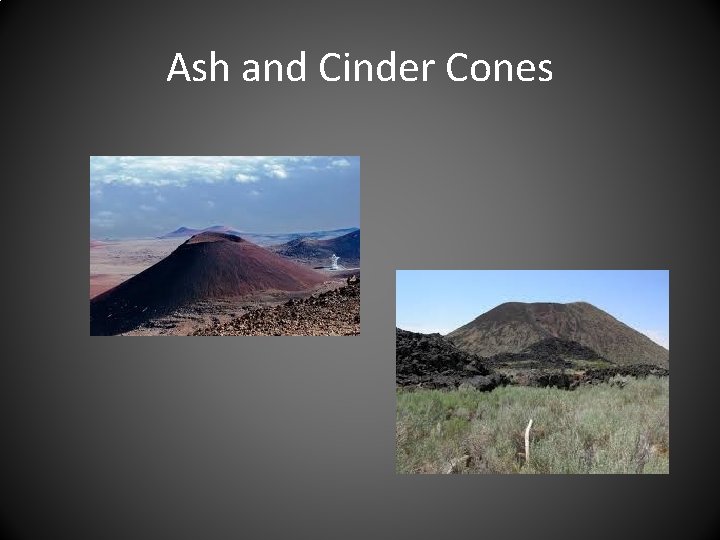
Ash and Cinder Cones
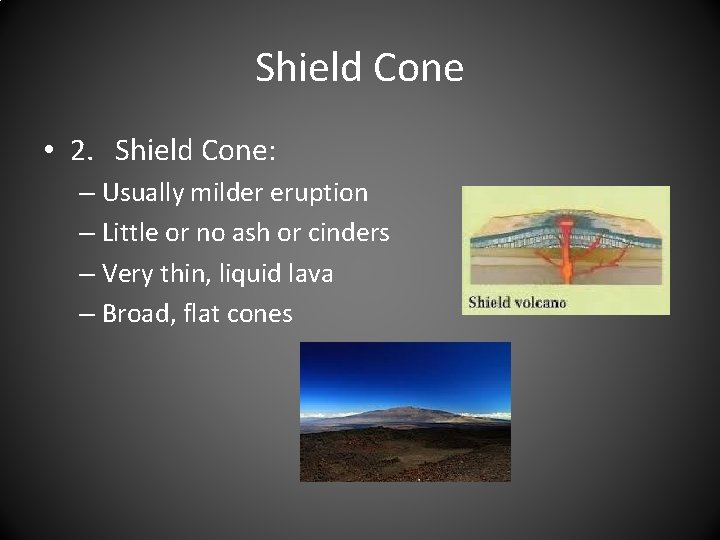
Shield Cone • 2. Shield Cone: – Usually milder eruption – Little or no ash or cinders – Very thin, liquid lava – Broad, flat cones
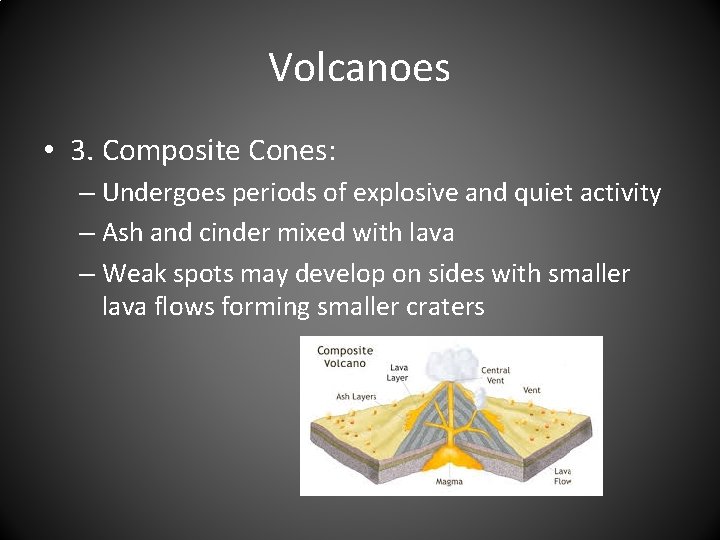
Volcanoes • 3. Composite Cones: – Undergoes periods of explosive and quiet activity – Ash and cinder mixed with lava – Weak spots may develop on sides with smaller lava flows forming smaller craters
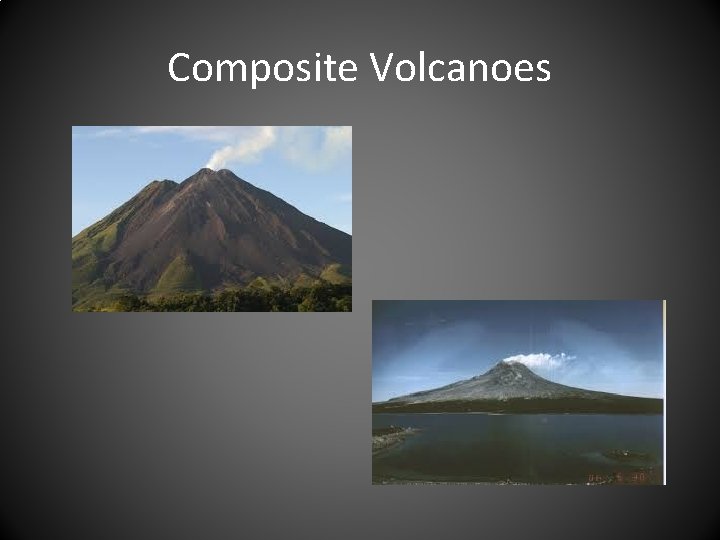
Composite Volcanoes
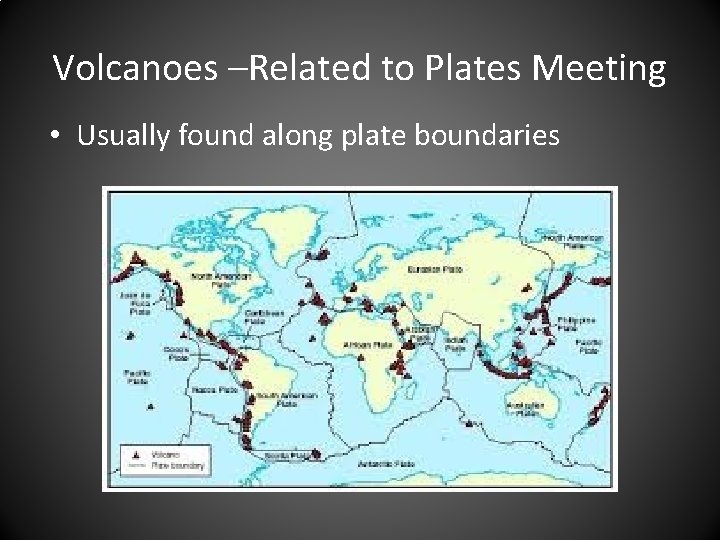
Volcanoes –Related to Plates Meeting • Usually found along plate boundaries
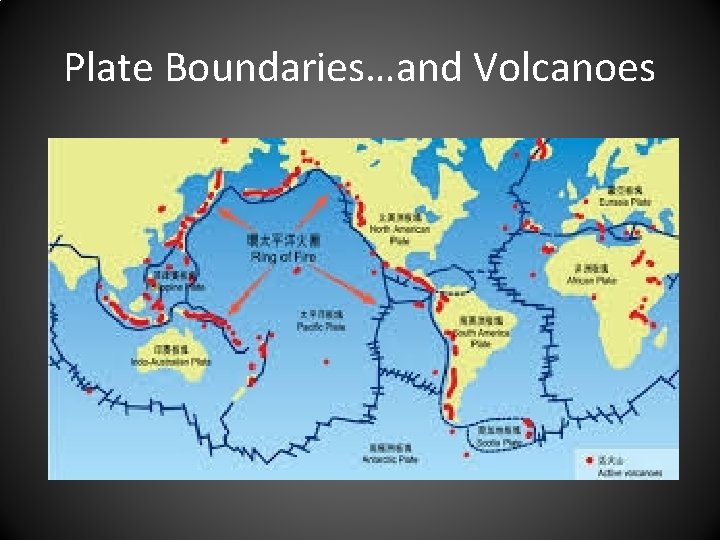
Plate Boundaries…and Volcanoes
Plate Boundaries…and Volcanoes. • Why are Most Volcanos found where Plates Meet? – Because that’s where plates collide or converge – Denser plate melts at the subduction zone – Rocks melt to form magma – Pressure increases, magma rises and erupts – Volcanoes form
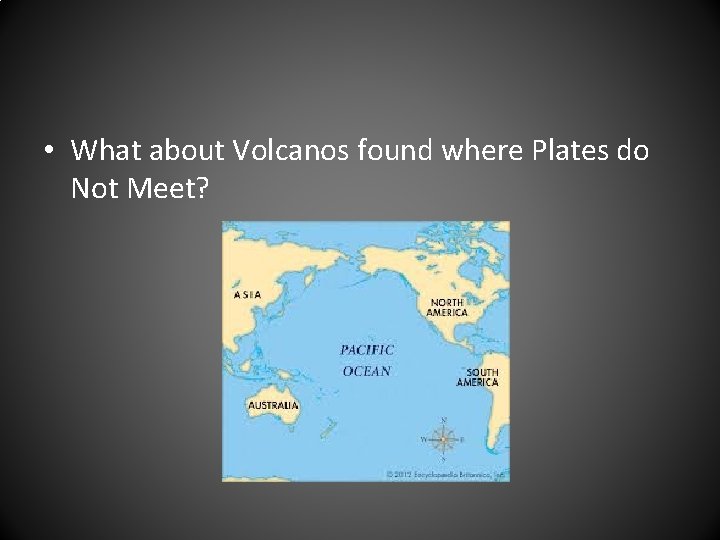
• What about Volcanos found where Plates do Not Meet?
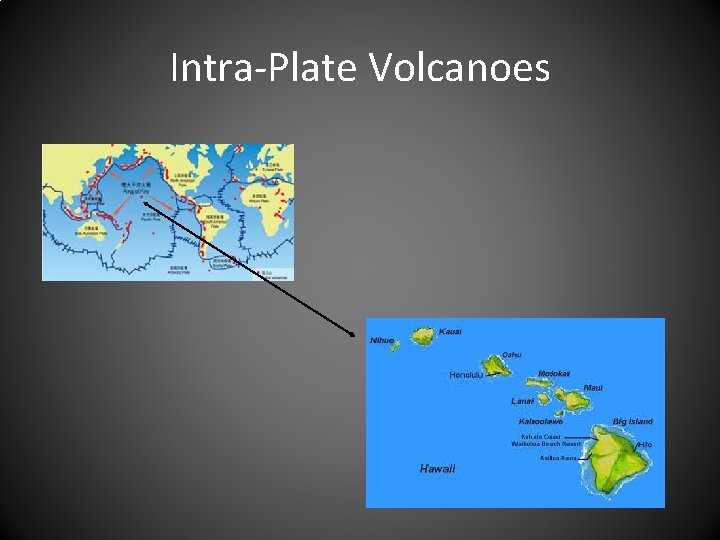
Intra-Plate Volcanoes
Intra-Plate Volcanoes • Why? – Plates move over magma hot spots in the lithosphere – Magma bursts through the crust – Forms linear chain of volcanic mountains – i. e. Hawaiian Islands
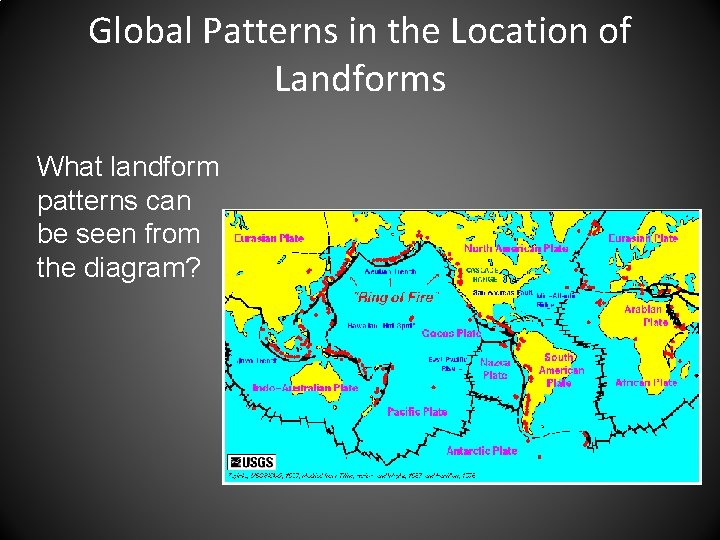
Global Patterns in the Location of Landforms What landform patterns can be seen from the diagram?
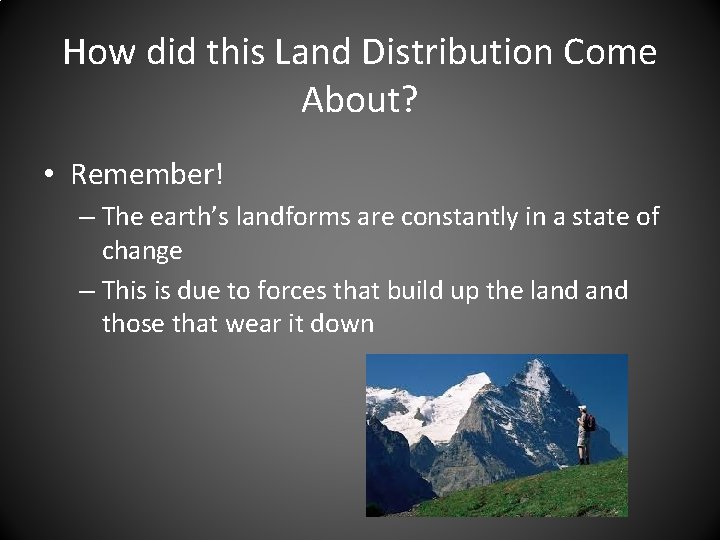
How did this Land Distribution Come About? • Remember! – The earth’s landforms are constantly in a state of change – This is due to forces that build up the land those that wear it down
In Conclusion • First, we looked at forces that build up and shape landforms…. next we will look at forces which wear down the land
- Slides: 54