
Unit 1 Introduction to Quality Control Quality Defined
- Slides: 48
Unit 1 Introduction to Quality Control
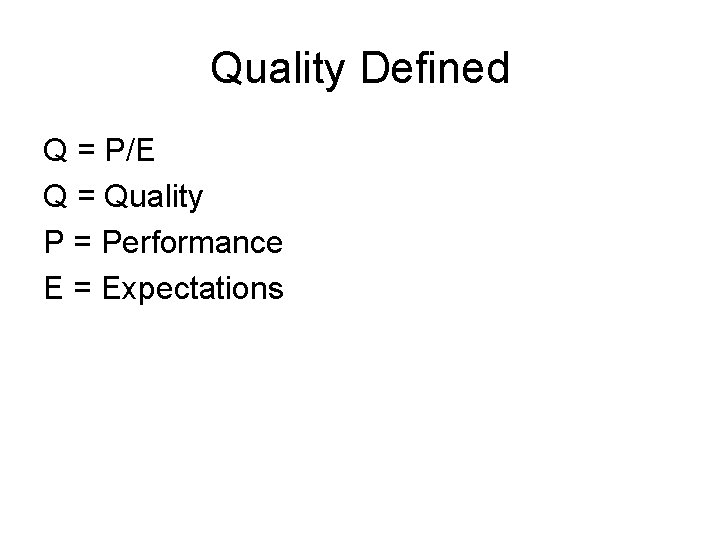
Quality Defined Q = P/E Q = Quality P = Performance E = Expectations
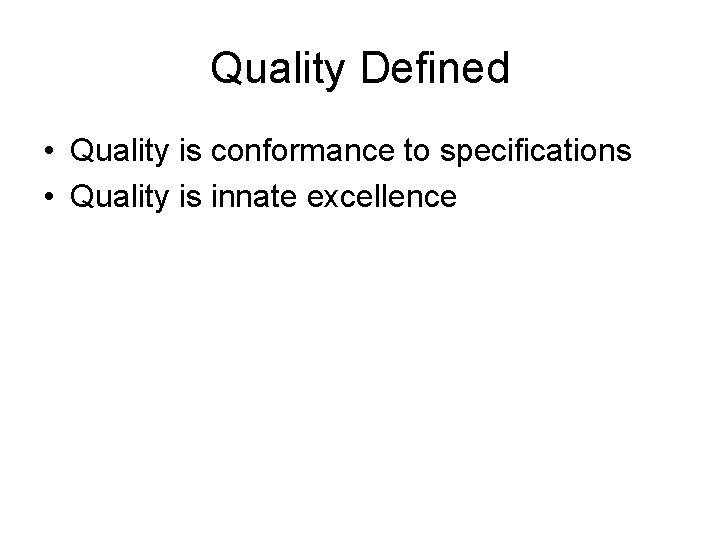
Quality Defined • Quality is conformance to specifications • Quality is innate excellence
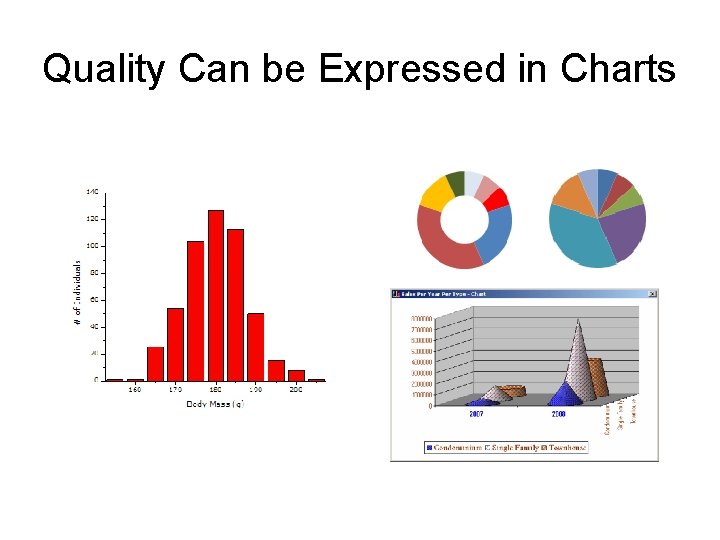
Quality Can be Expressed in Charts
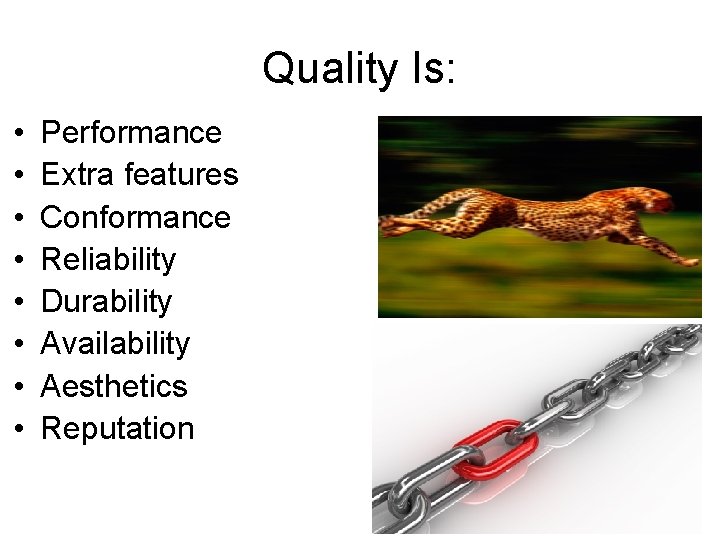
Quality Is: • • Performance Extra features Conformance Reliability Durability Availability Aesthetics Reputation
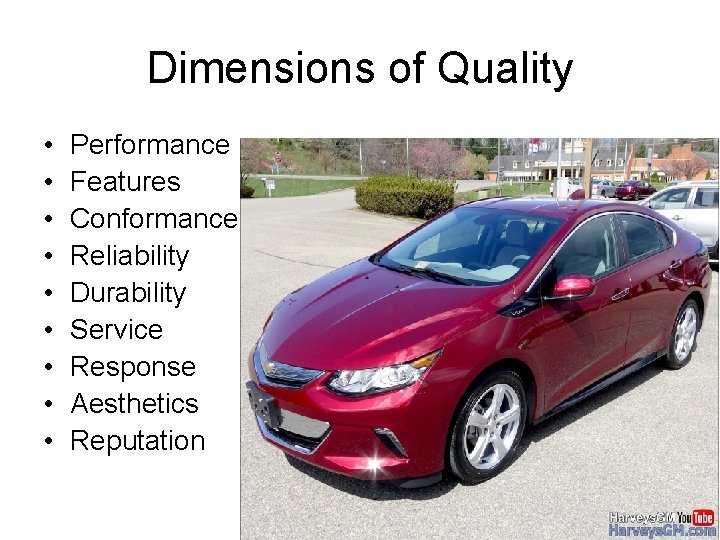
Dimensions of Quality • • • Performance Features Conformance Reliability Durability Service Response Aesthetics Reputation
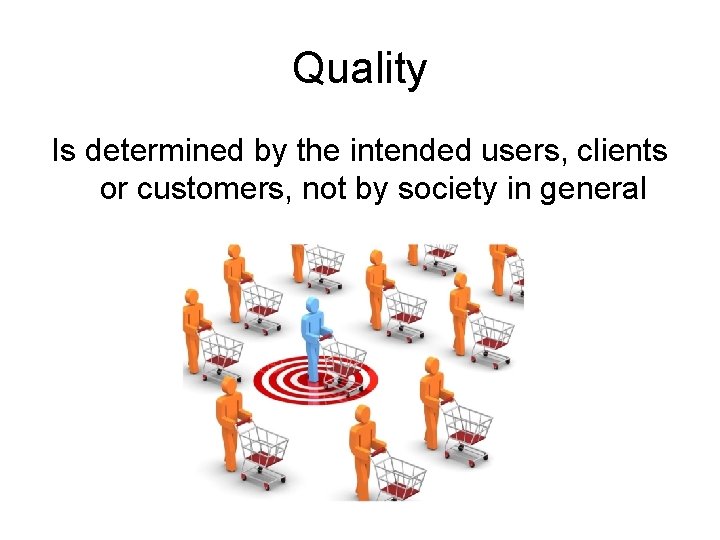
Quality Is determined by the intended users, clients or customers, not by society in general
The Way To Quality • Quality is designed into both the product and the manufacturing processes by: – Blueprint/design or drawing with specs – Materials selection for the product – Manufacturing processes employed – The level of technology available – The workers and level of know-how
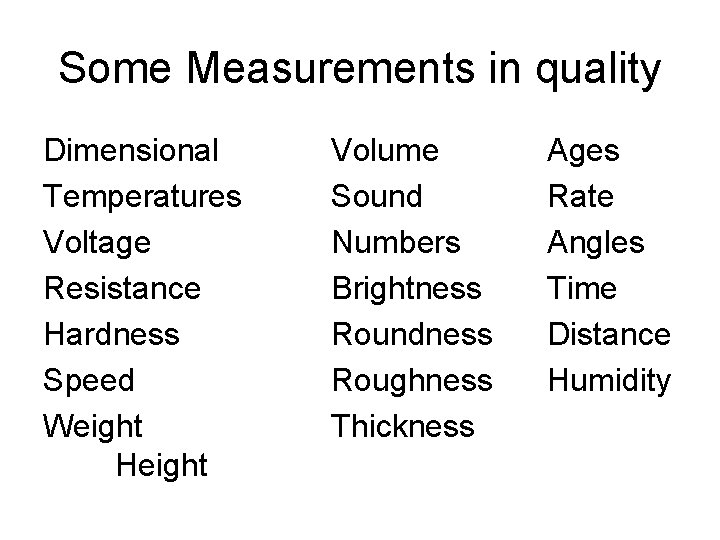
Some Measurements in quality Dimensional Temperatures Voltage Resistance Hardness Speed Weight Height Volume Sound Numbers Brightness Roundness Roughness Thickness Ages Rate Angles Time Distance Humidity
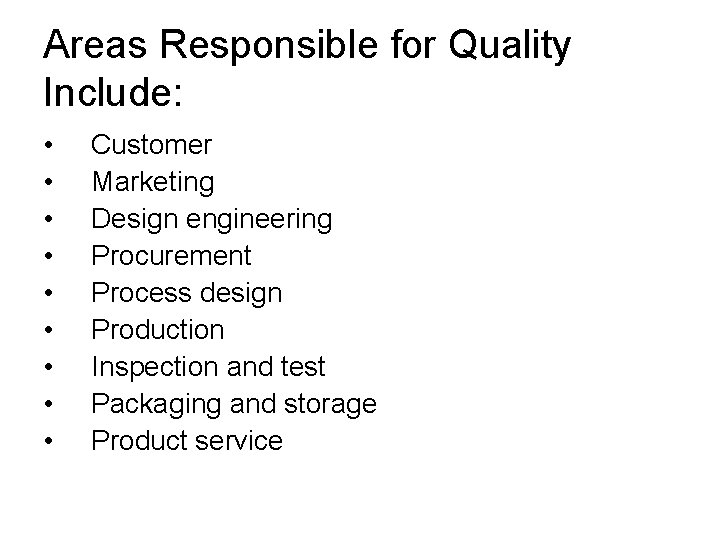
Areas Responsible for Quality Include: • • • Customer Marketing Design engineering Procurement Process design Production Inspection and test Packaging and storage Product service
Quality Control Process employed to ensure a certain level of quality in a product or service
Quality Assurance, or QA A program for the systematic monitoring and evaluation of the various aspects of a project, service, or facility to ensure that standards of quality are being met
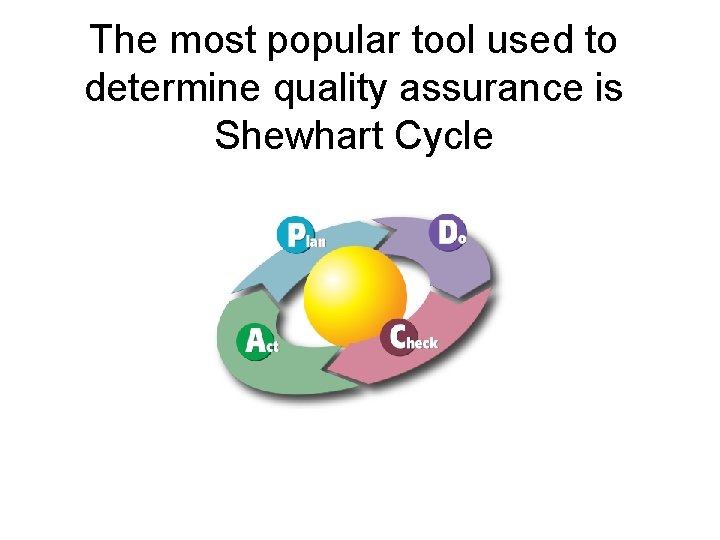
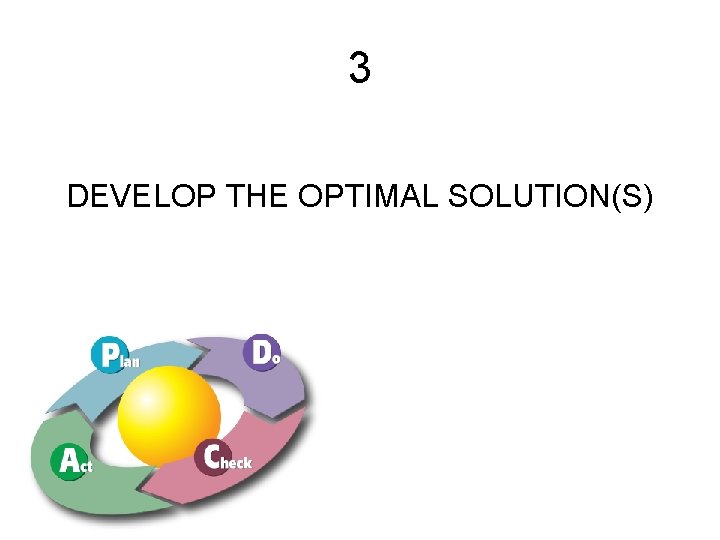
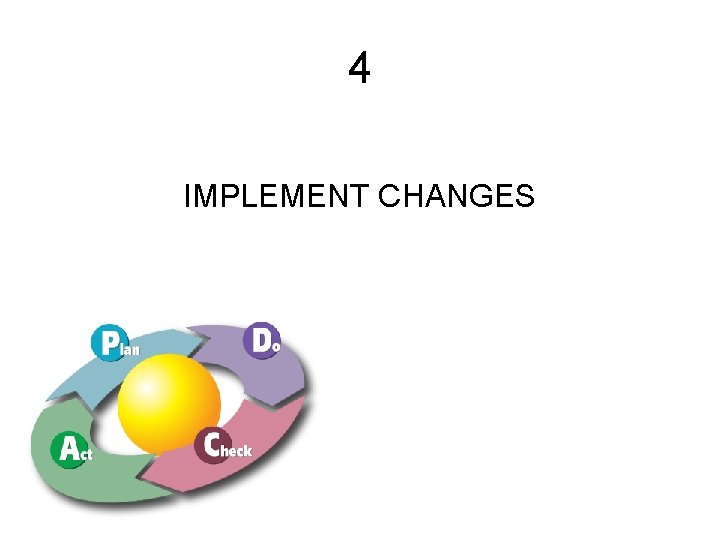
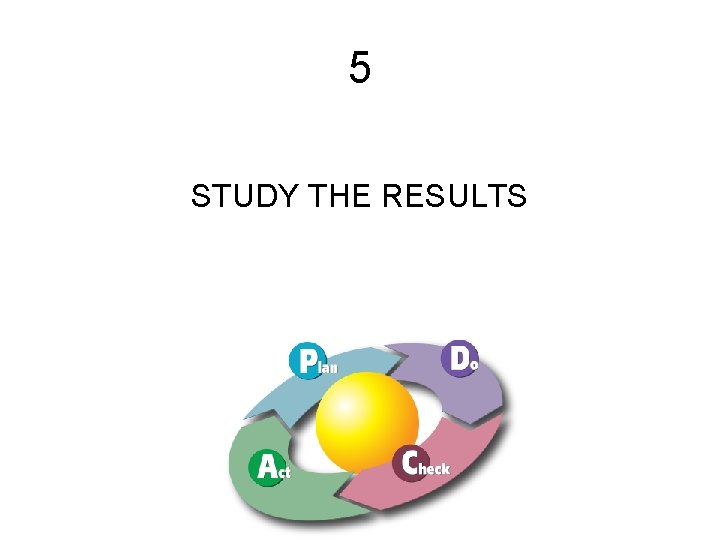
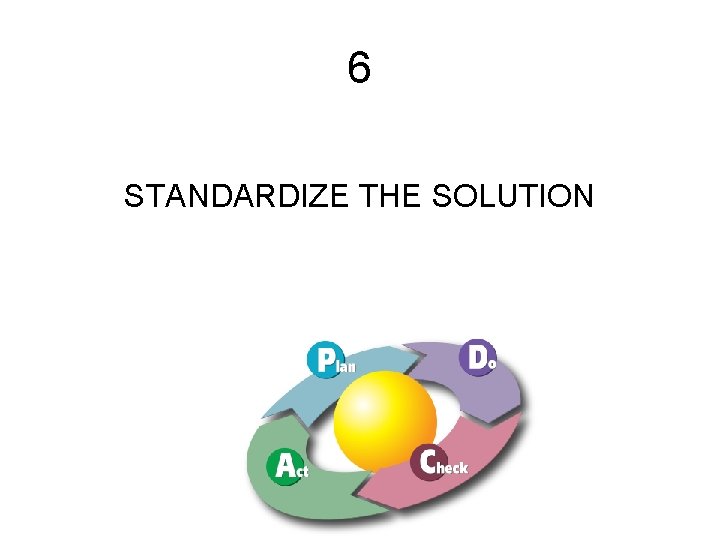
The most popular tool used to determine quality assurance is Shewhart Cycle
Three Main Components of Quality Management • Quality control • Quality assurance • Quality improvement
Quality Improvement Tools • • Failure mode analysis (FMEA) Quality function deployment ISO 9000 and 14000 Benchmarking Total productive maintenance Quality by design Products liability Information technology
Lean Fundamentals • Types and categories of waste: – – – – Overproduction Waiting Transportation Defects Inventory Motion Extra processing • Workplace organization • Concept of flow • Inventory control • Visual management • Kaizen • Value stream
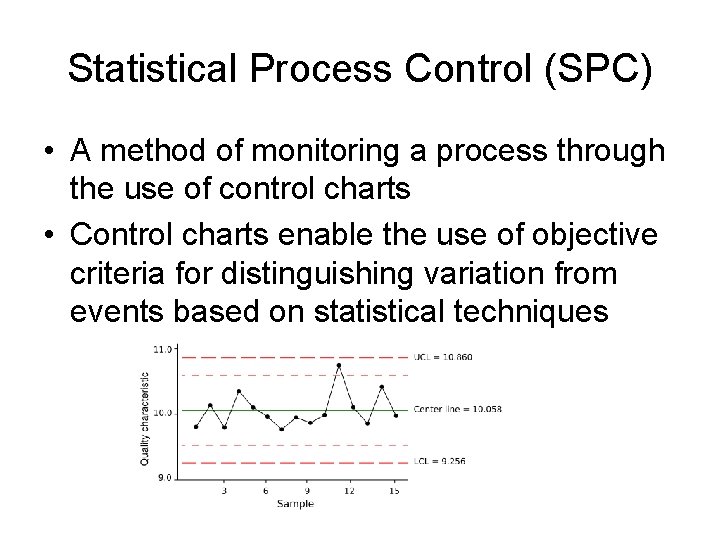
Statistical Process Control (SPC) • A method of monitoring a process through the use of control charts • Control charts enable the use of objective criteria for distinguishing variation from events based on statistical techniques
ISO 9000 & 14000 • Families of standards for quality management systems maintained by ISO, the International Organization for Standardization • ISO 9000 is the international standard for qality management system • ISO 14000 is the international standard for environmental management system • Is administered by accreditation and certification bodies
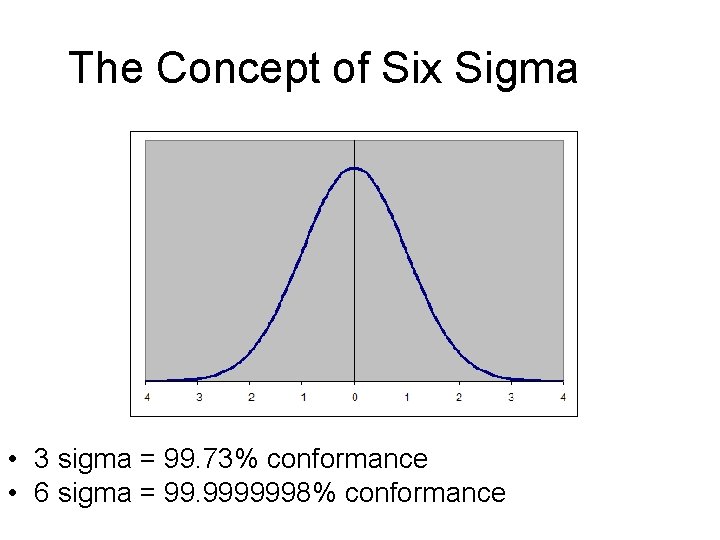
The Concept of Six Sigma • 3 sigma = 99. 73% conformance • 6 sigma = 99. 9999998% conformance
Computers and Quality Control • • • Data collection Data analysis, reduction, and reporting Statistical analysis Process control Automated test and inspection System design
SIX REQUIREMENTS OF TQM NUMBER 1 A COMMITTED AND INVOLVED MANAGEMENT TO PROVIDE LONGTERM TOP-TO-BOTTOM ORGANIZATIONAL SUPPORT
NUMBER 2 AN UNWAVERING FOCUS ON THE CUSTOMER, BOTH INTERNALLY AND EXTERNALLY
NUMBER 3 EFFECTIVE INVOLVEMENT AND UTILIZATION OF THE ENTIRE WORK FORCE
NUMBER 4 CONTINUOUS IMPROVEMENT OF THE BUSINESS AND PRODUCTION PROCESSES
NUMBER 5 TREATING SUPPLIERS AS PARTNERS
NUMBER 6 ESTABLISHING PERFORMANCE MEASURES FOR THE PROCESSES
Leadership • • • Implementation Quality council Core values (see values for Malcolm Baldrige national quality award) Quality statements Seven steps to strategic planning: • • – – – – – Customer needs Customer positioning Predict the future Gap analysis Closing the gap Alignment Implementation Annual quality improvement program CEO commitment
Customer satisfaction • • Who is the customer? Customer feedback Customer complaints Service after sale
Employee Involvement • • • Project teams Education and training Suggestion system
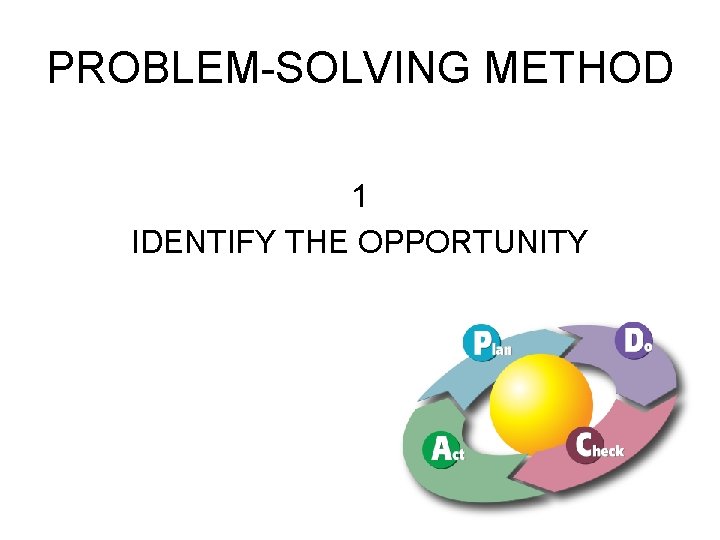
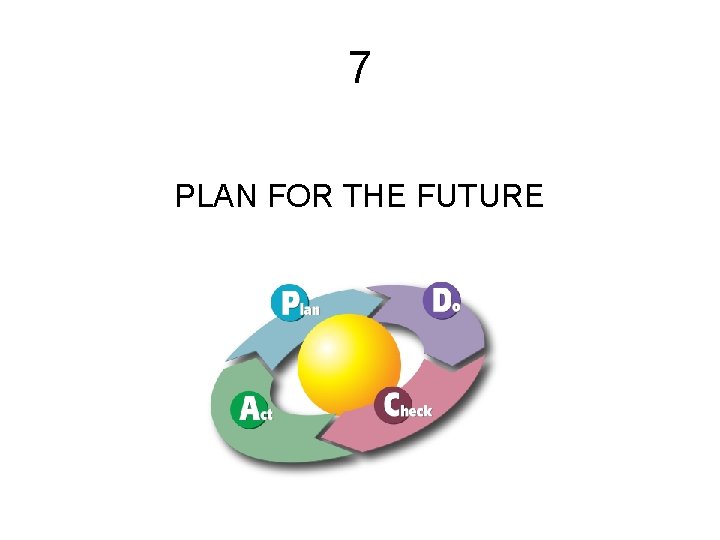
PROBLEM-SOLVING METHOD 1 IDENTIFY THE OPPORTUNITY
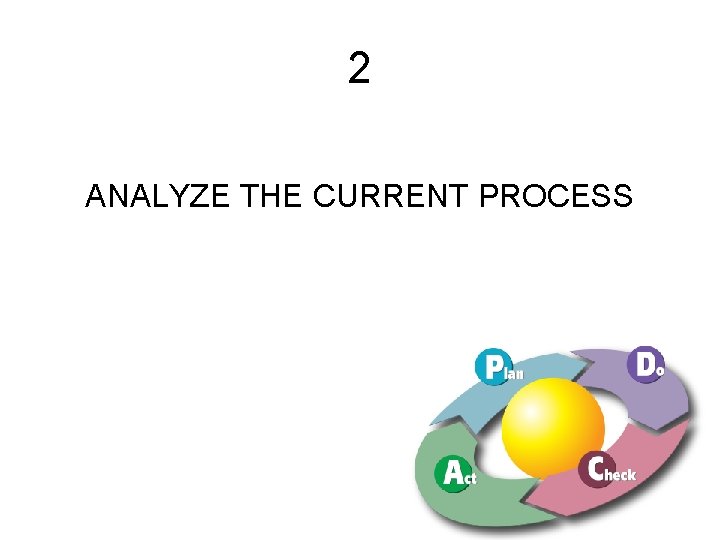
2 ANALYZE THE CURRENT PROCESS
3 DEVELOP THE OPTIMAL SOLUTION(S)
4 IMPLEMENT CHANGES
5 STUDY THE RESULTS
6 STANDARDIZE THE SOLUTION
7 PLAN FOR THE FUTURE
COST OF POOR QUALITY THOSE COSTS ASSOCIATED WITH THE NONACHIEVEMENT OF PRODUCT OR SERVICE QUALITY AS DEFINED BY THE REQUIREMENTS ESTABLISHED BY THE ORGANIZATION AND ITS CONTRACTS WITH CUSTOMERS AND SOCIETY
COST OF POOR QUALITY CATEGORIES • • PREVENTIVE COST CATEGORY APPRAISAL COST CATEGORY INTERNAL FAILURE COST CATEGORY EXTERNAL FAILURE COST CATEGORY
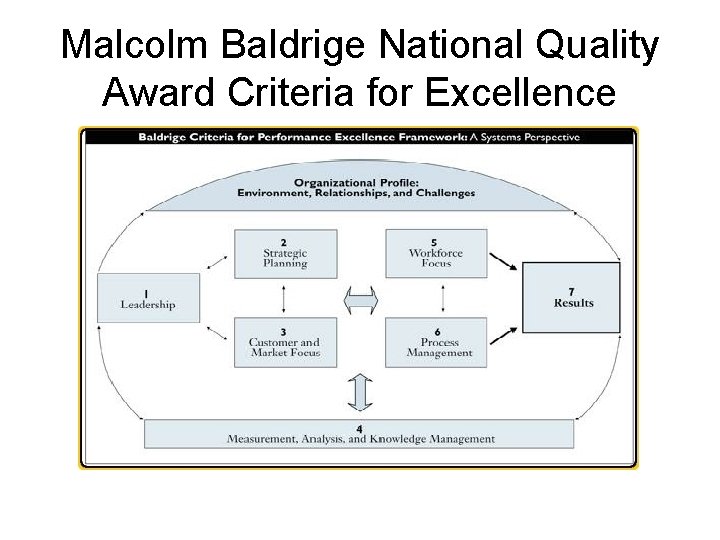
Malcolm Baldrige National Quality Award Criteria for Excellence
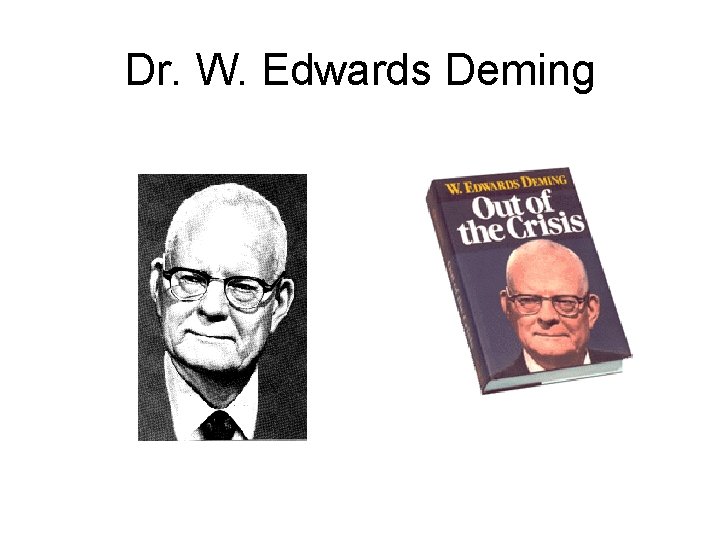
Dr. W. Edwards Deming
Dr. W. Edwards Deming • Dr. W. Edwards Deming is known as the father of the Japanese post-war industrial revival and was regarded by many as the leading quality guru in the United States. He passed on in 1993. • Trained as a statistician, his expertise was used during World War II to assist the United States in its effort to improve the quality of war materials. • He was invited to Japan at the end of World War II by Japanese industrial leaders and engineers. They asked Dr. Deming how long it would take to shift the perception of the world from the existing paradigm that Japan produced cheap, shoddy imitations to one of producing innovative quality products.
Deming’s 14 Points: 1. Create constancy of purpose toward improvement of product and service, with the aim to become competitive and stay in business, and to provide jobs. 2. Adopt the new philosophy. We are in a new economic age. Western management must awaken to the challenge, must learn their responsibilities, and take on leadership for change. 3. Cease dependence on inspection to achieve quality. Eliminate the need for massive inspection by building quality into the product in the first place.
Deming’s 14 Points: 4. 5. 6. End the practice of awarding business on the basis of price tag. Instead, minimize total cost. Move towards a single supplier for any one item, on a long-term relationship of loyalty and trust. Improve constantly and forever the system of production and service, to improve quality and productivity, and thus constantly decrease costs. Institute training on the job.
Deming’s 14 Points: 7. Institute leadership. The aim of supervision should be to help people and machines and gadgets to do a better job. Supervision of management is in need of overhaul, as well as supervision of production workers. 8. Drive out fear, so that everyone may work effectively for the company. 9. Break down barriers between departments. People in research, design, sales, and production must work as a team, to foresee problems of production that may be encountered with the product or service.
Deming’s 14 Points: 10. Eliminate slogans, exhortations, and targets for the work force asking for zero defects and new levels of productivity. Such exhortations only create adversarial relationships, as the bulk of the causes of low quality and low productivity belong to the system and thus lie beyond the power of the work force. 11 A. Eliminate work standards (quotas) on the factory floor. Substitute leadership. 11 B. Eliminate management by objective. Eliminate management by numbers, numerical goals. Substitute leadership.
Deming’s 14 Points: 12 A. Remove barriers that rob the hourly worker of his right to pride of workmanship. The responsibility of supervisors must be changed from sheer numbers to quality. 12 B. Remove barriers that rob people in management and in engineering of their right to pride of workmanship. 13. Institute a vigorous program of education and selfimprovement. 14. Put everybody in the company to work to accomplish the transformation. The transformation is everybody's job.
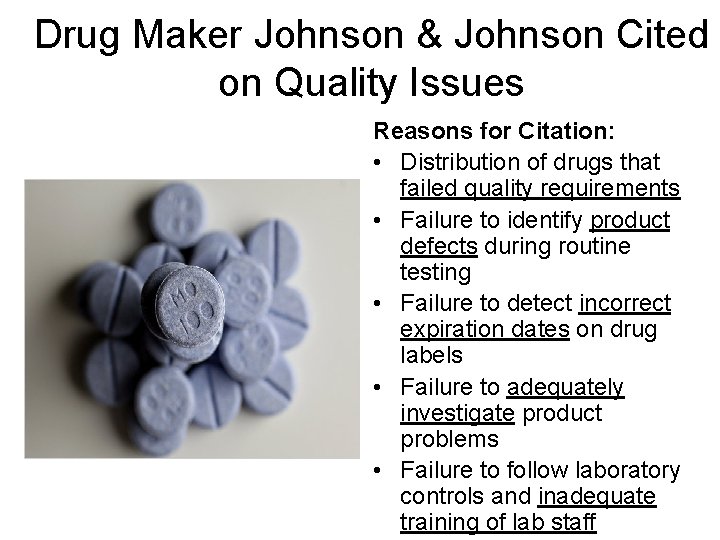
Drug Maker Johnson & Johnson Cited on Quality Issues Reasons for Citation: • Distribution of drugs that failed quality requirements • Failure to identify product defects during routine testing • Failure to detect incorrect expiration dates on drug labels • Failure to adequately investigate product problems • Failure to follow laboratory controls and inadequate training of lab staff