
Unit 1 Introduction To Earth Science Why Earth

- Slides: 17
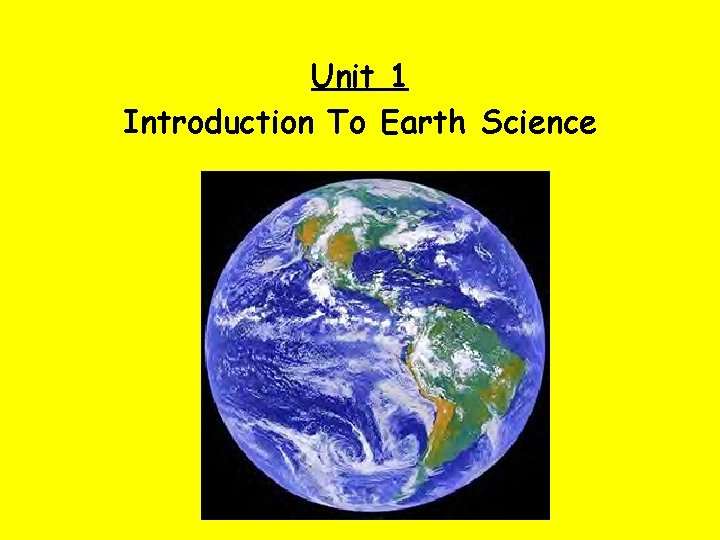
Unit 1 Introduction To Earth Science
“Why Earth Science” – You. Tube Video
Topic 1: Earth Systems As A Science • Earth Science differs from other sciences in that: 1. Earth Science has a global perspective. Things are often looked at as part of a series of interactions. 2. Earth Science draws from all other areas of science such as physics, chemistry, biology, astronomy, meteorology, etc. For this reason, earth scientists must be trained in a variety of areas. 3. Earth Science requires a consideration of vast amounts of time with sequencing of events (chronology) and ages.
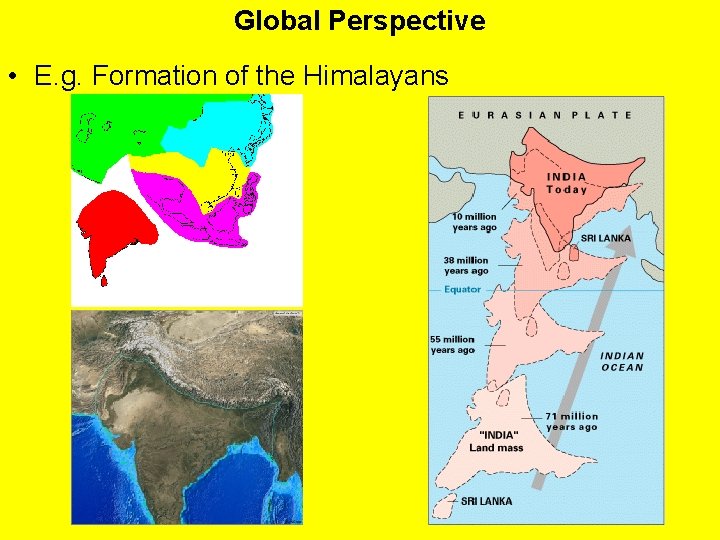
Global Perspective • E. g. Formation of the Himalayans
Combination Science • Earth scientists are “experts” in many sciences.
• Why Do You Think That Earth Science Is Important In Everyday Life? • Brainstorm and Share!
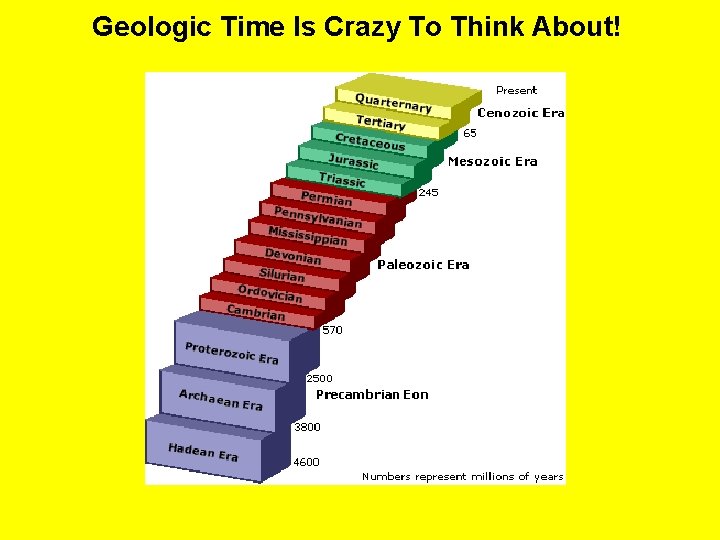
Geologic Time Is Crazy To Think About!
Probing Questions • If I have several rocks in layers, how can I determine which is the oldest? • How can I determine whether a particular mountain peak owes its shape to folding, faulting, glaciation, or volcanism? • How can I identify these rock samples? (Demonstrate) • How can I determine thickness of Earth’s crust? • How can I determine the nature of Earth’s interior? • How can I determine the general look of Earth at particular times during its history? • How can I determine the origin of Earth’s atmosphere and hydrosphere?
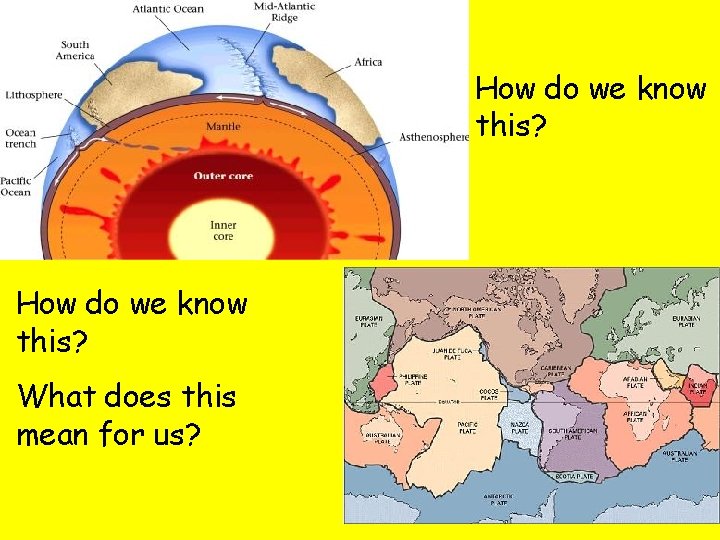
How do we know this? What does this mean for us?
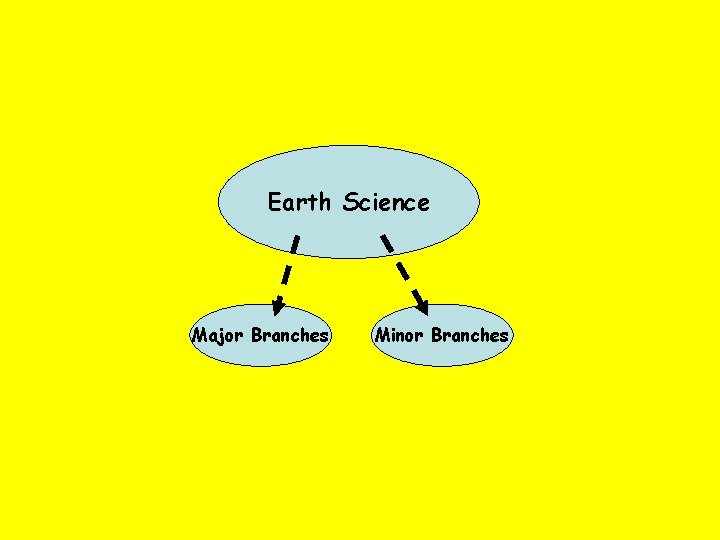
Earth Science Major Branches Minor Branches
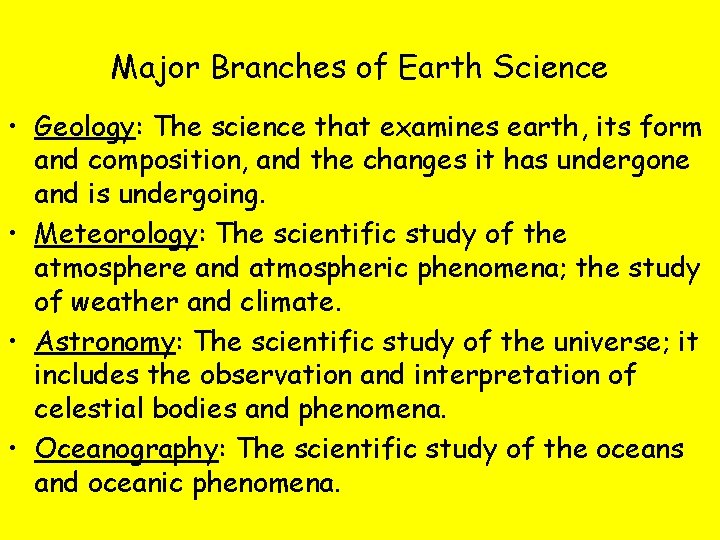
Major Branches of Earth Science • Geology: The science that examines earth, its form and composition, and the changes it has undergone and is undergoing. • Meteorology: The scientific study of the atmosphere and atmospheric phenomena; the study of weather and climate. • Astronomy: The scientific study of the universe; it includes the observation and interpretation of celestial bodies and phenomena. • Oceanography: The scientific study of the oceans and oceanic phenomena.
Minor Branches Of Earth Science • Can you list some?
Minor Branches Of Earth Science Crystallography Geochemistry Geophysics Geomorphology Hydrology Mineralogy Paleontology Petrology Seismology Stratigraphy Volcanology ACTIVITY: • Work in groups to develop brief descriptions of each field of study (or branch). • Then categorize the terms under the main branches of Earth science, which include: astronomy; geology; oceanography; and meteorology.
How is Earth Science related to other scientific fields? • In a system approach, Earth Science integrates many other sciences. • Like other sciences, Earth Science can approach problems in a systematic method (i. e. scientific method). In this regard, Earth Science is related to other scientific fields. • Who can think of specific examples to prove the relationship?
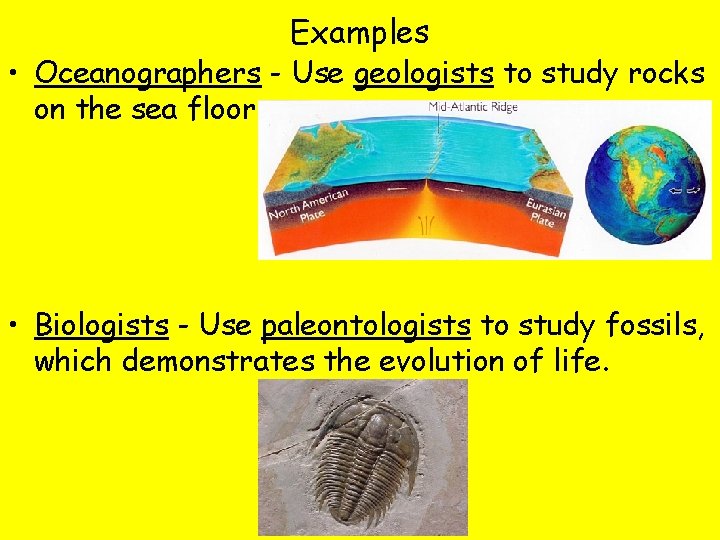
Examples • Oceanographers - Use geologists to study rocks on the sea floor. • Biologists - Use paleontologists to study fossils, which demonstrates the evolution of life.
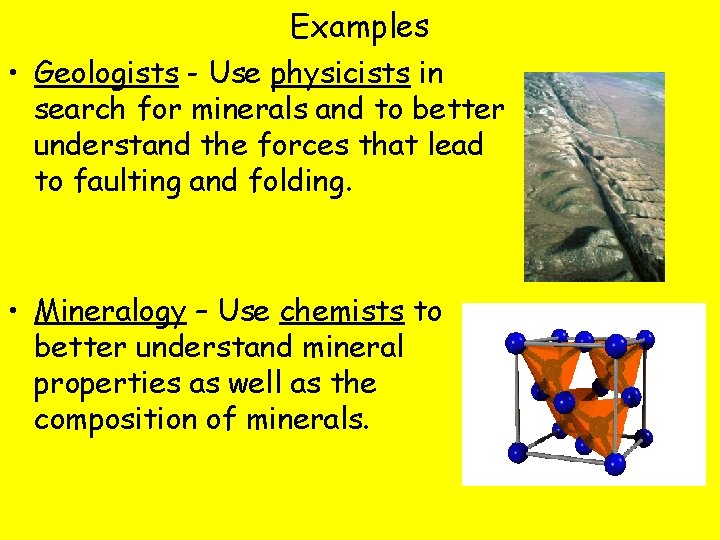
Examples • Geologists - Use physicists in search for minerals and to better understand the forces that lead to faulting and folding. • Mineralogy – Use chemists to better understand mineral properties as well as the composition of minerals.
Earth And Space – Video Clip • http: //dingo. care 2. com/cards/flash/5409/galaxy. swf