
Unit 1 Intro to IR Complete PPT International
- Slides: 35
Unit 1: Intro to IR Complete PPT
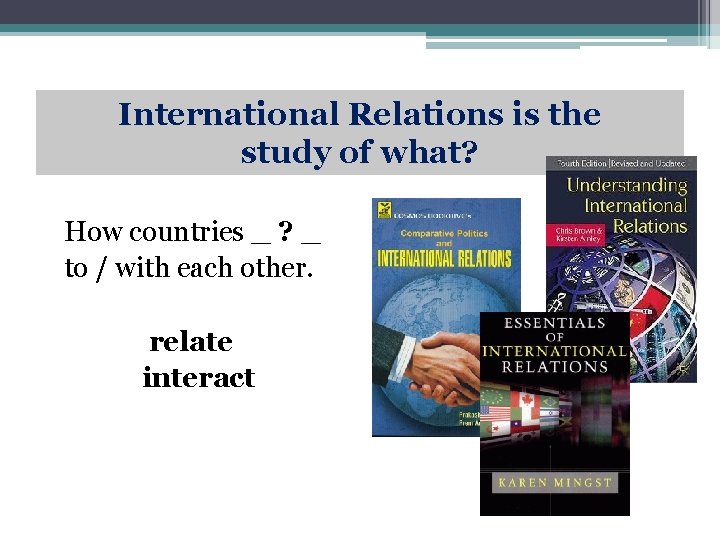
International Relations is the study of what? How countries _ ? _ to / with each other. relate interact
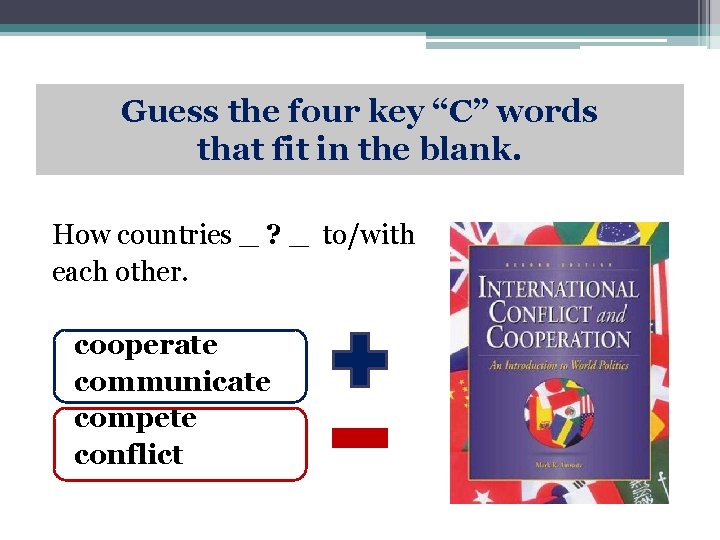
Guess the four key “C” words that fit in the blank. How countries _ ? _ to/with each other. cooperate communicate compete conflict
Definitions of International Relations “The study of how countries relate to one another, how they work together, and how they conflict. ” “The study of how states and non-state actors interact with and relate to each other. ”
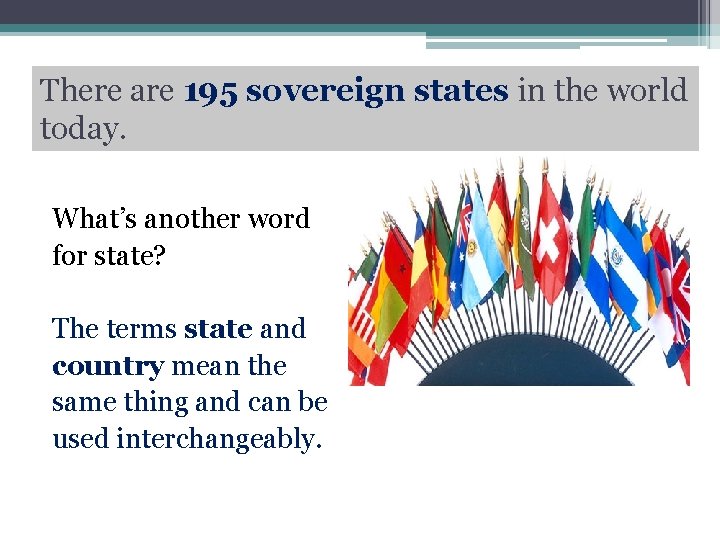
There are 195 sovereign states in the world today. What’s another word for state? The terms state and country mean the same thing and can be used interchangeably.
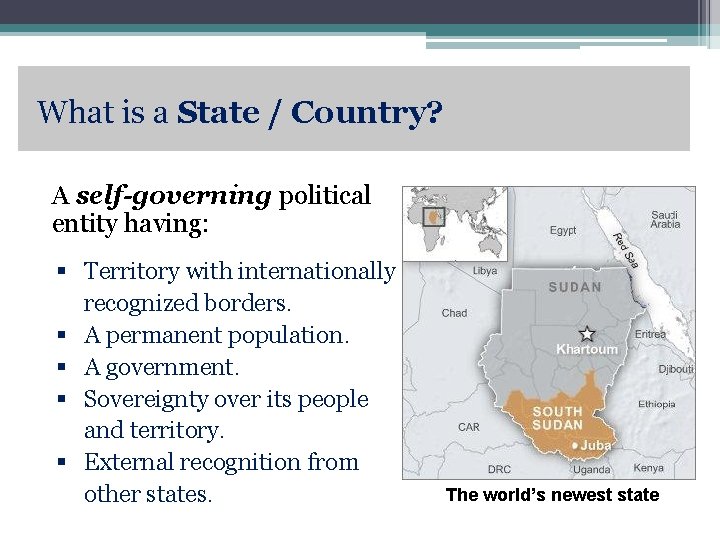
What is a State / Country? A self-governing political entity having: § Territory with internationally recognized borders. § A permanent population. § A government. § Sovereignty over its people and territory. § External recognition from The world’s newest state other states.
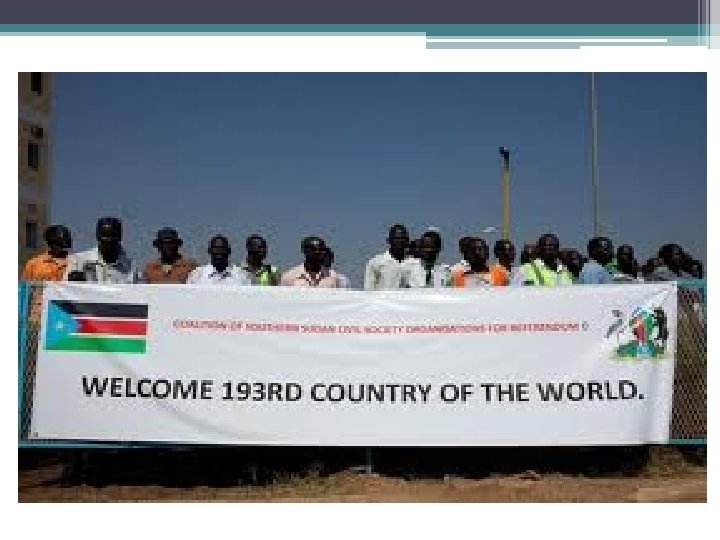
Name the country… • Largest? Russia • Smallest? Vatican City • Most populated? China • Newest? South Sudan • Richest? U. S. • Poorest? Burundi • Most visited? France • Most obese people? U. S. • Highest quality of life? Norway • Cleanest? Finland • Most Miss Universe & Miss World winners? Venezuela • Most billionaires? U. S.
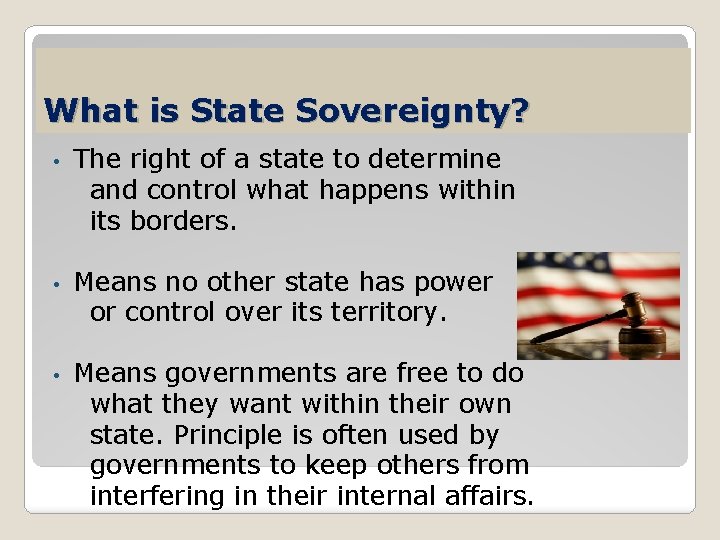
What is State Sovereignty? The right of a state to determine and control what happens within its borders. • Means no other state has power or control over its territory. • Means governments are free to do what they want within their own state. Principle is often used by governments to keep others from interfering in their internal affairs. •
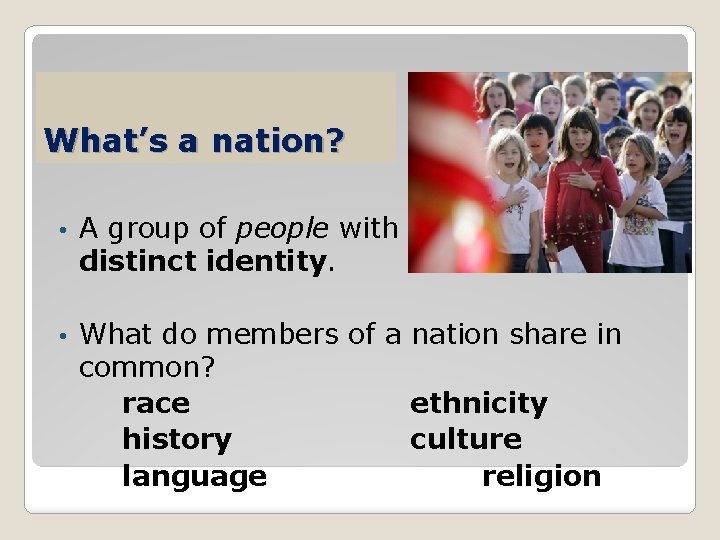
What’s a nation? • A group of people with a distinct identity. • What do members of a nation share in common? race ethnicity history culture language religion
What’s a nation-state? § A nation that has a state or country of their own. § Examples * France Germany Egypt Japan Ireland Iceland Hungary Lebanon Mongolia Korea(s) Portugal Poland * Countries where more than 95% of the population is from same ethnic group.
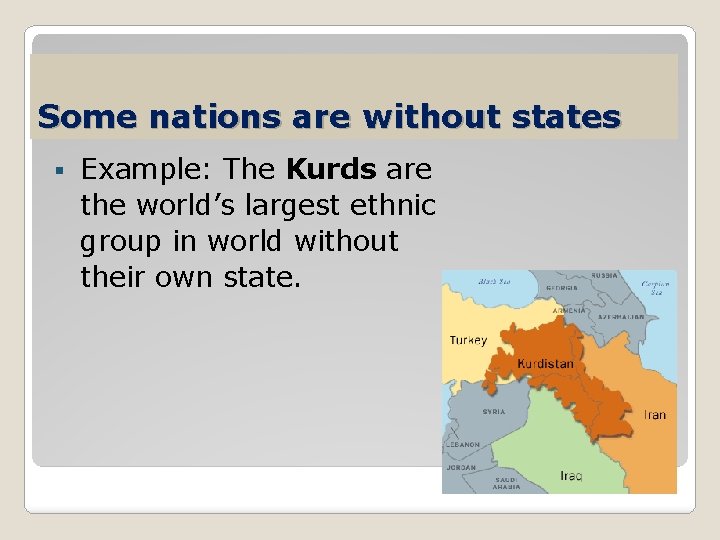
Some nations are without states § Example: The Kurds are the world’s largest ethnic group in world without their own state.
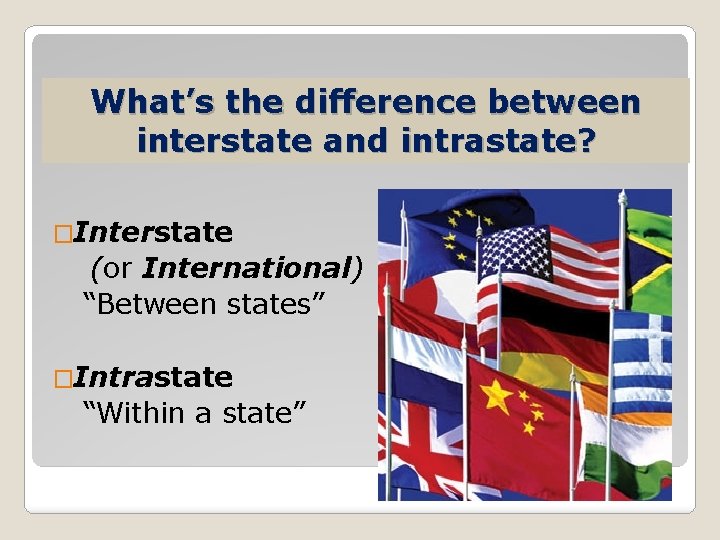
What’s the difference between interstate and intrastate? �Interstate (or International) “Between states” �Intrastate “Within a state”
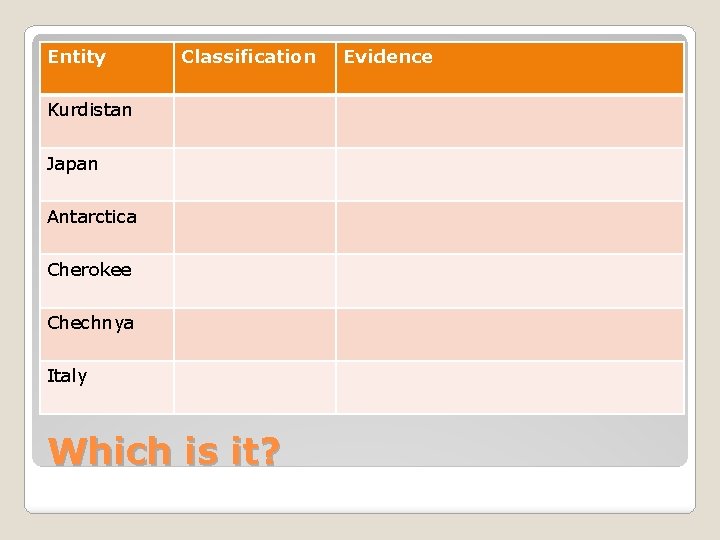
Entity Classification Kurdistan Japan Antarctica Cherokee Chechnya Italy Which is it? Evidence
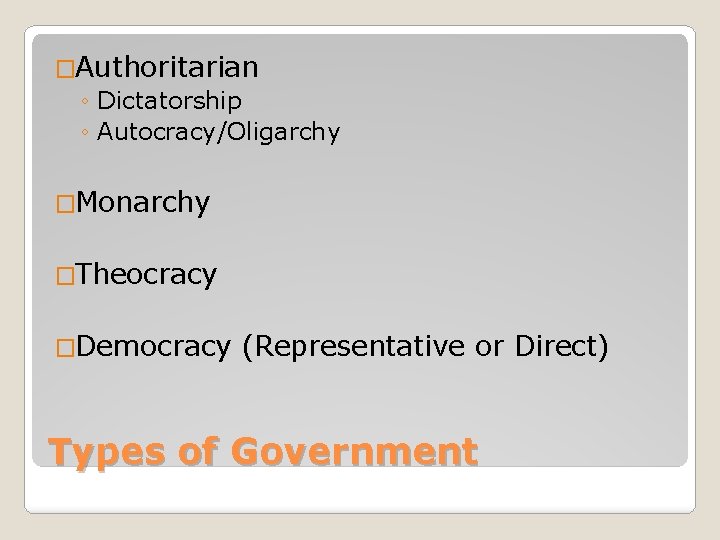
�Authoritarian ◦ Dictatorship ◦ Autocracy/Oligarchy �Monarchy �Theocracy �Democracy (Representative or Direct) Types of Government
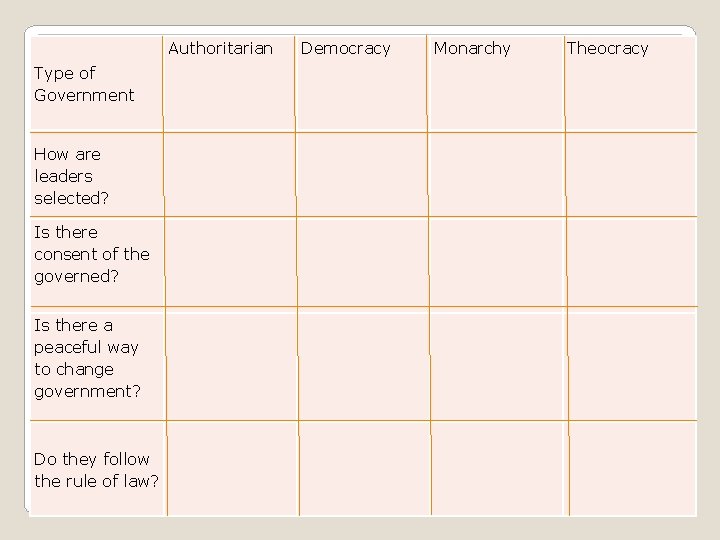
Authoritarian Democracy Monarchy Theocracy Is there consent of the governed? Is there a peaceful way to change government? Type of Government How are leaders selected? Government Analysis Do they follow the rule of law?
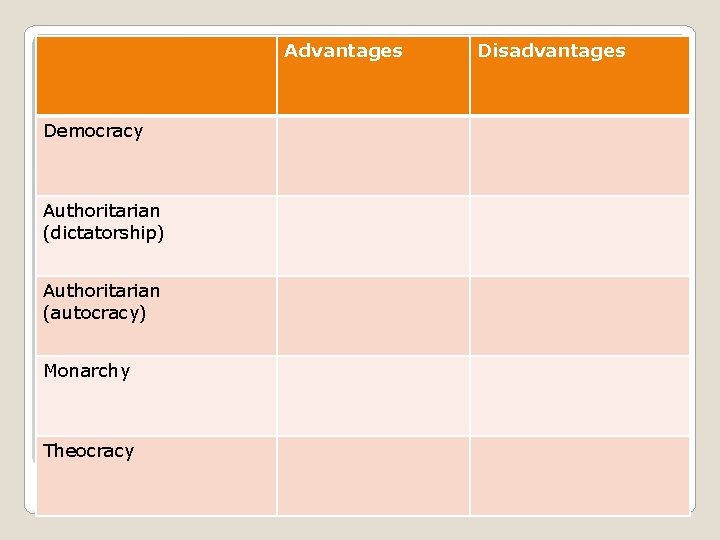
Advantages Disadvantages Democracy Authoritarian (dictatorship) Authoritarian (autocracy) Monarchy Comparative Governments Theocracy
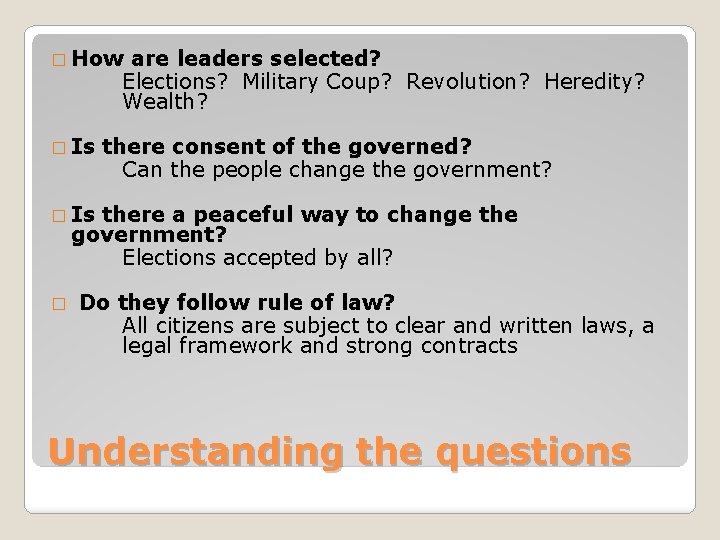
� How are leaders selected? Elections? Military Coup? Revolution? Heredity? Wealth? � Is there consent of the governed? Can the people change the government? � Is there a peaceful way to change the government? Elections accepted by all? � Do they follow rule of law? All citizens are subject to clear and written laws, a legal framework and strong contracts Understanding the questions
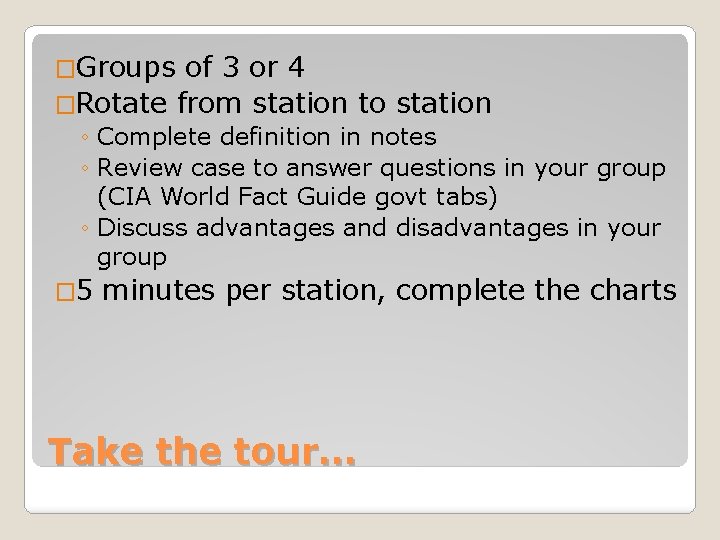
�Groups of 3 or 4 �Rotate from station to station ◦ Complete definition in notes ◦ Review case to answer questions in your group (CIA World Fact Guide govt tabs) ◦ Discuss advantages and disadvantages in your group � 5 minutes per station, complete the charts Take the tour…
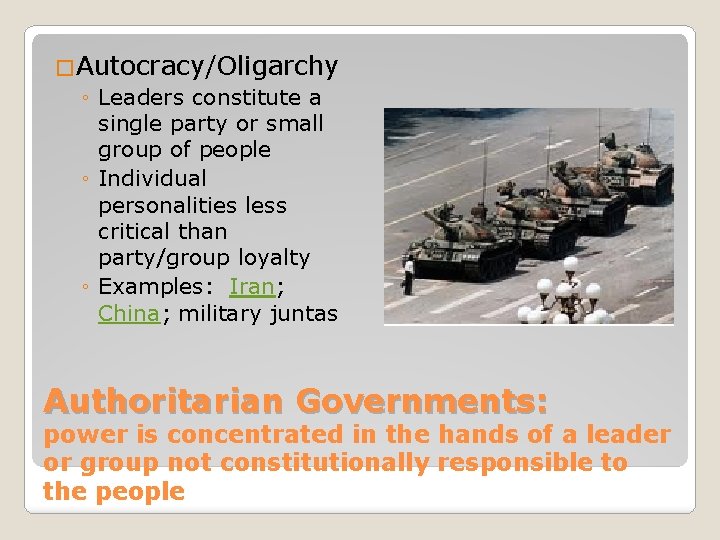
�Autocracy/Oligarchy ◦ Leaders constitute a single party or small group of people ◦ Individual personalities less critical than party/group loyalty ◦ Examples: Iran; China; military juntas Authoritarian Governments: power is concentrated in the hands of a leader or group not constitutionally responsible to the people
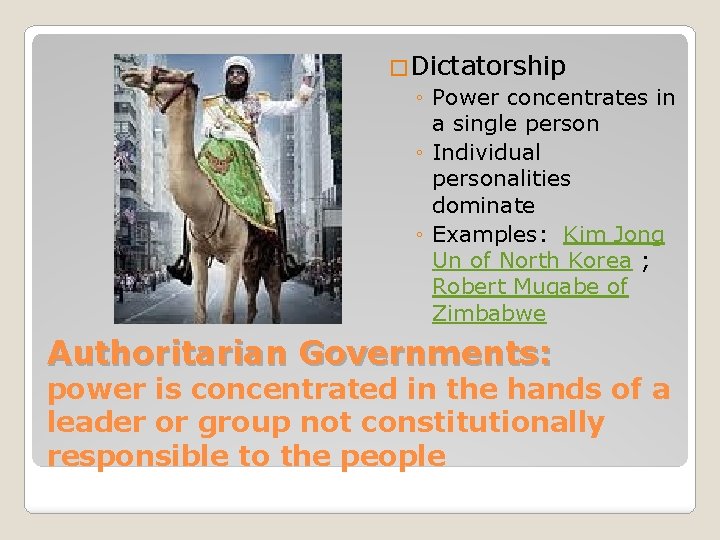
�Dictatorship ◦ Power concentrates in a single person ◦ Individual personalities dominate ◦ Examples: Kim Jong Un of North Korea ; Robert Mugabe of Zimbabwe Authoritarian Governments: power is concentrated in the hands of a leader or group not constitutionally responsible to the people
�Constitutional Monarchy: monarch is head of state (figure head) rather than head of government (final “decider”) �Example: United Kingdom �Traditional Monarchy: monarch is both head of state and government �Example: Saudi Arabia Monarchy: power is in the hands of a king or queen. Power is inherited through family blood lines.
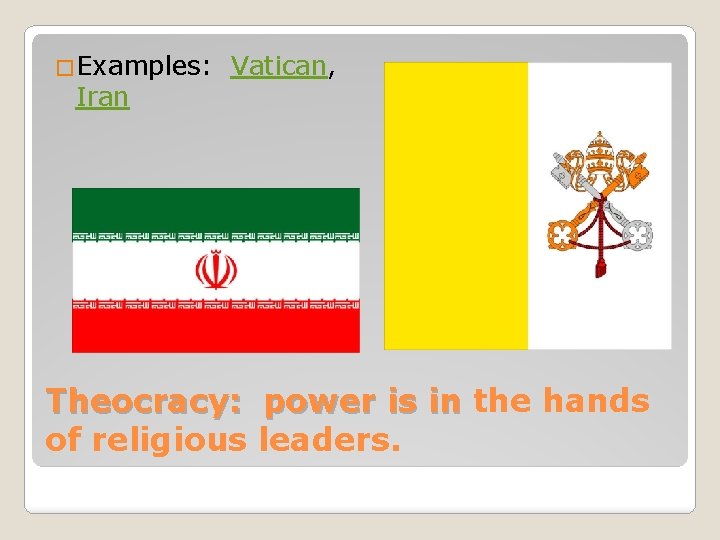
�Examples: Vatican, Iran Theocracy: power is in the hands of religious leaders.
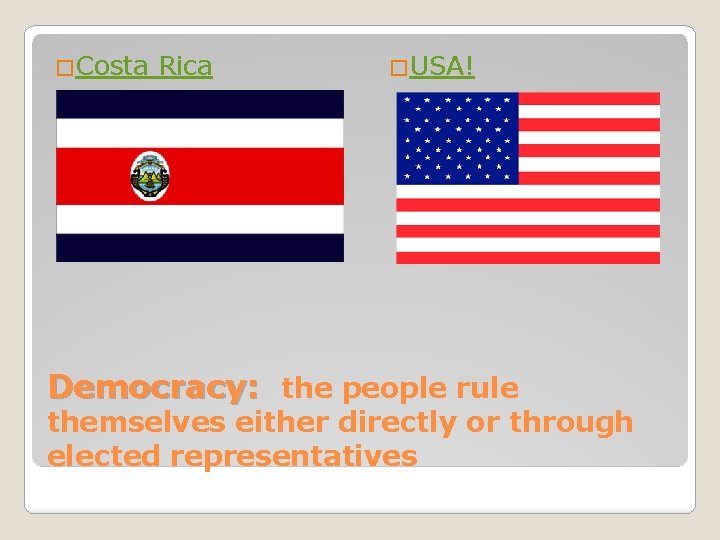
�Costa Rica �USA! Democracy: the people rule themselves either directly or through elected representatives
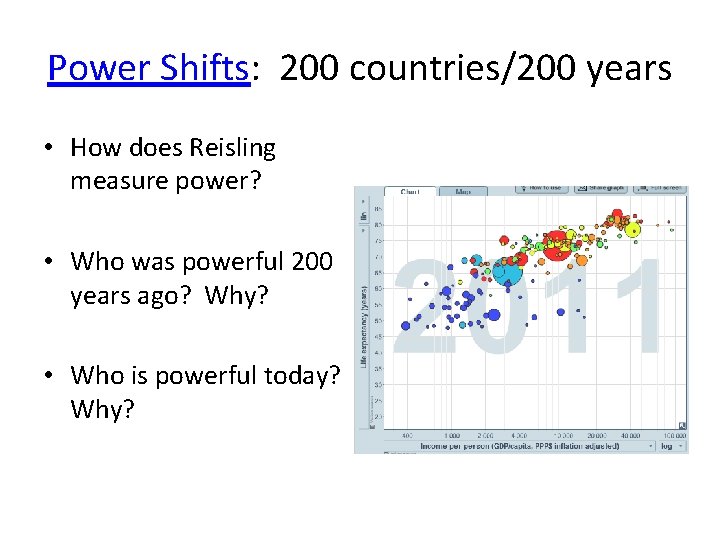
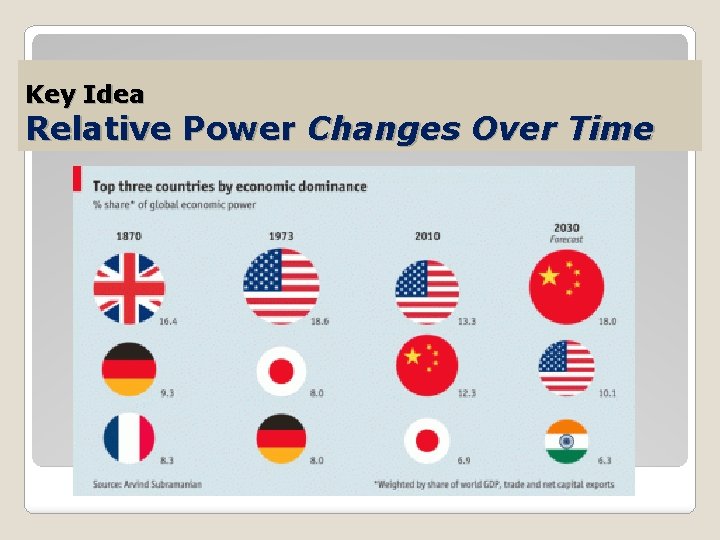
Power Shifts: 200 countries/200 years • How does Reisling measure power? • Who was powerful 200 years ago? Why? • Who is powerful today? Why?
The Concept of Power in International Relations • What is power? Power refers to a state’s ability to influence the behavior of other states. • Why is power important? Powerful states are more likely to reach their foreign policy goals than less powerful states.
The Distribution of Power in the World
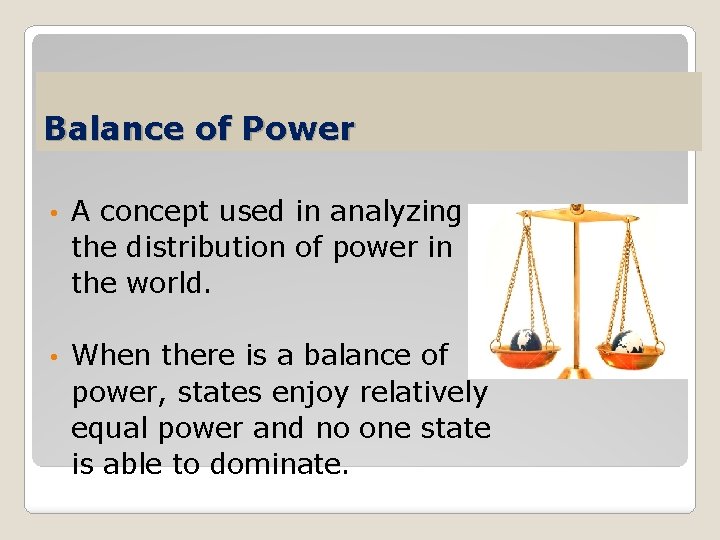
Balance of Power • A concept used in analyzing the distribution of power in the world. • When there is a balance of power, states enjoy relatively equal power and no one state is able to dominate.
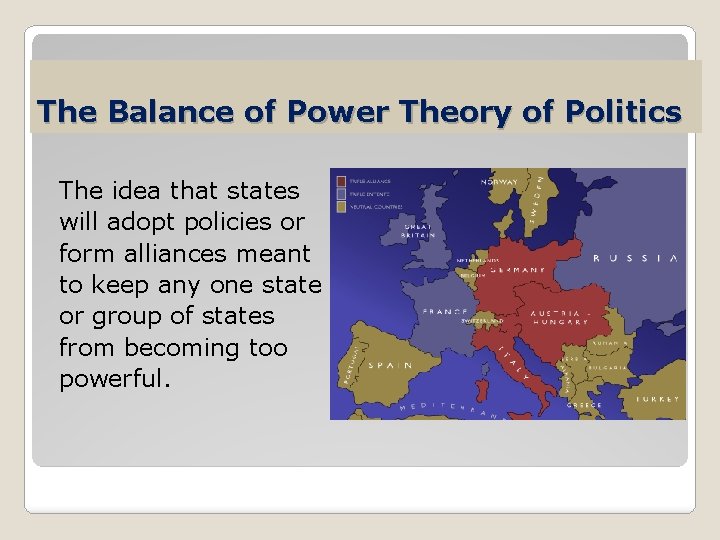
The Balance of Power Theory of Politics The idea that states will adopt policies or form alliances meant to keep any one state or group of states from becoming too powerful.
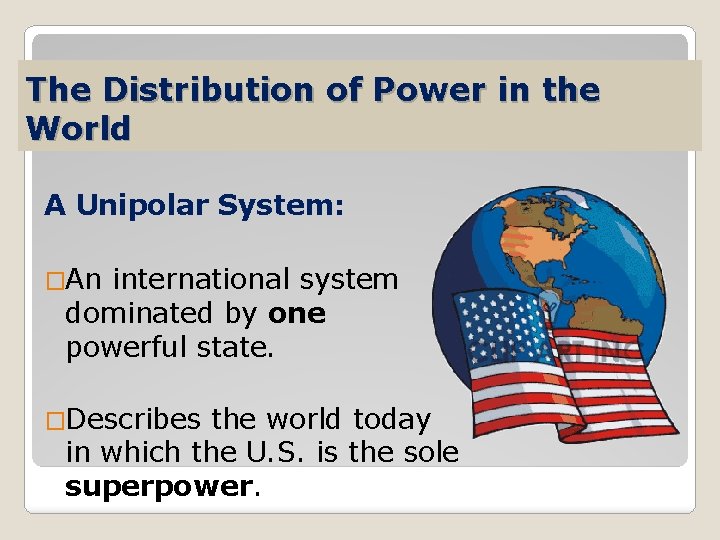
The Distribution of Power in the World A Unipolar System: �An international system dominated by one powerful state. �Describes the world today in which the U. S. is the sole superpower.
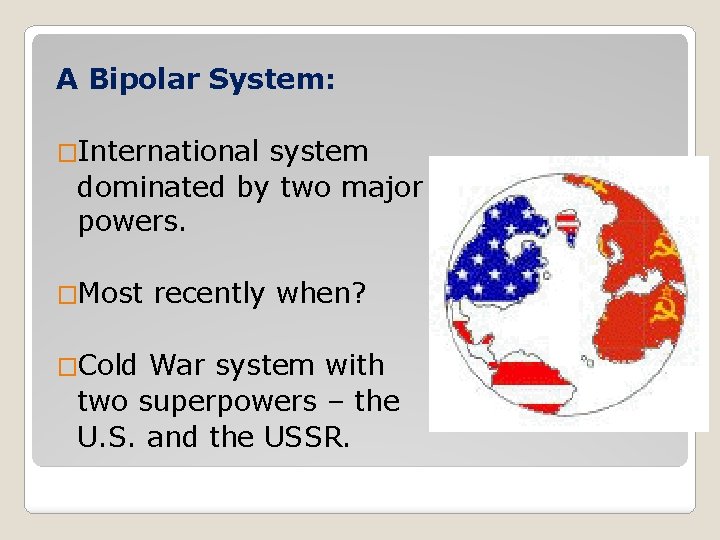
A Bipolar System: �International system dominated by two major powers. �Most recently when? �Cold War system with two superpowers – the U. S. and the USSR.
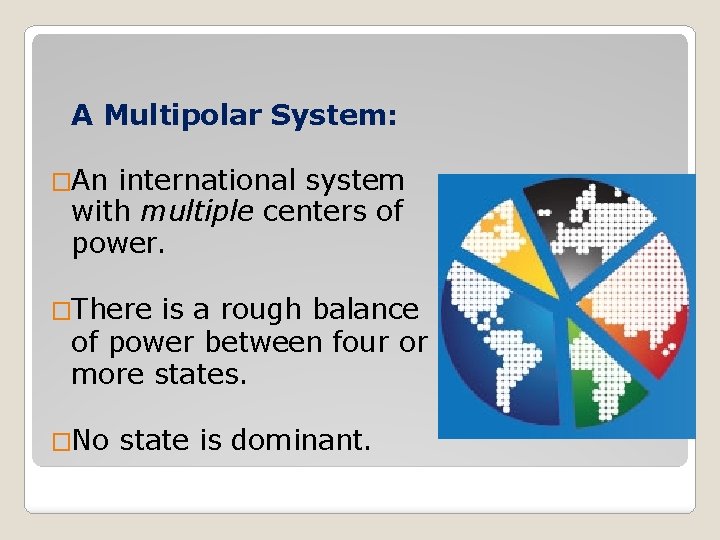
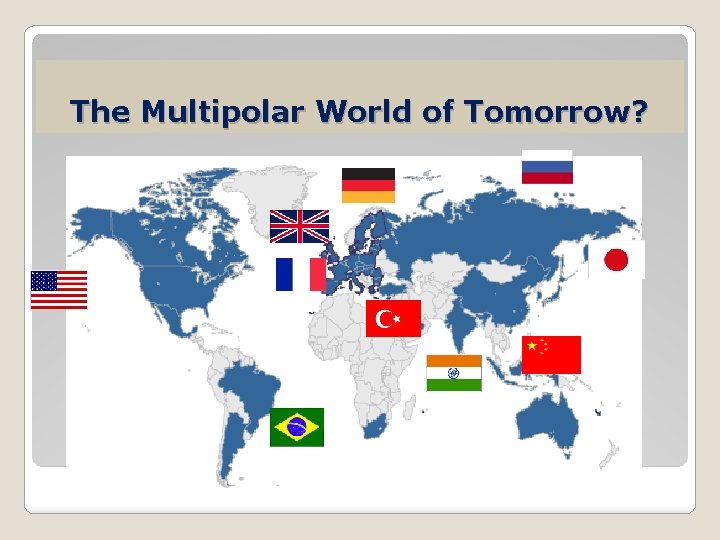
A Multipolar System: �An international system with multiple centers of power. �There is a rough balance of power between four or more states. �No state is dominant.
Key Idea Relative Power Changes Over Time
The Multipolar World of Tomorrow?
�States and Nations Notes & Chart �Government Types Organizer �Who’s in Charge—Power Distribution �Vocabulary Activity & Sheet Unit 1 Open Note Quiz