
Unit 1 Human Lifespan Development C Effects of
- Slides: 11
Unit 1 Human Lifespan Development C – Effects of Ageing
C 2 – The psychological changes of ageing • Effects on confidence and self-esteem • Effects of social changes – Role changes – Loss of a partner – Loss of friends – Increase in leisure time • • Financial concerns Effects of culture religion and beliefs Social disengagement theory Activity theory
Psychological effects of ageing on confidence and self-esteem • Confidence and self-esteem may increase as you get older as you feel more settled and have achieved many life goals – job, house, family, enjoying retirement • It may also decrease as the physical effects of ageing make daily tasks difficult or impossible, they can feel marginalised by society, they may feel less worthy as the don’t have a job anymore, so may lose purpose. They may struggle for money if they only have a state pension.
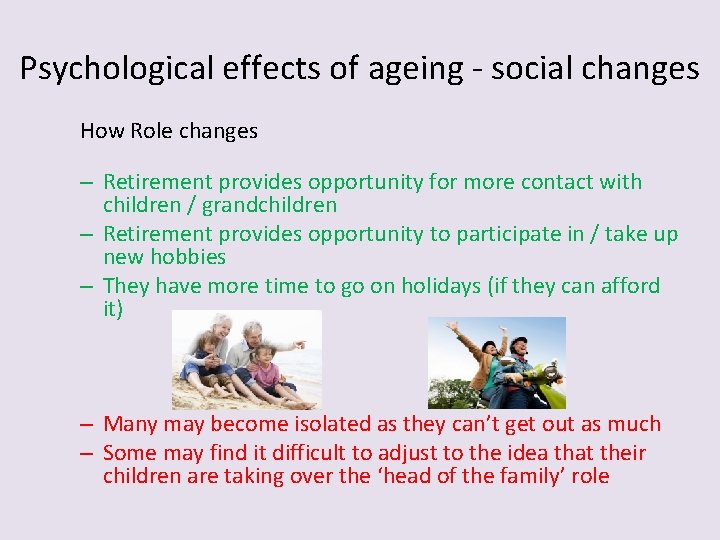
Psychological effects of ageing - social changes How Role changes – Retirement provides opportunity for more contact with children / grandchildren – Retirement provides opportunity to participate in / take up new hobbies – They have more time to go on holidays (if they can afford it) – Many may become isolated as they can’t get out as much – Some may find it difficult to adjust to the idea that their children are taking over the ‘head of the family’ role
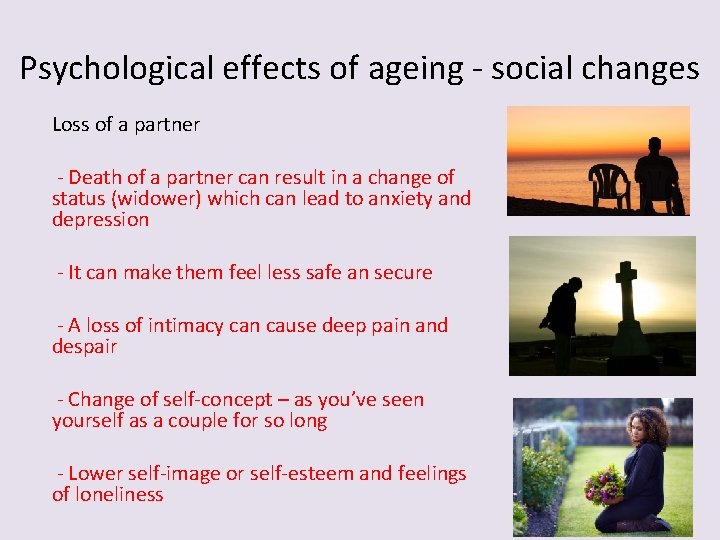
Psychological effects of ageing - social changes Loss of a partner - Death of a partner can result in a change of status (widower) which can lead to anxiety and depression - It can make them feel less safe an secure - A loss of intimacy can cause deep pain and despair - Change of self-concept – as you’ve seen yourself as a couple for so long - Lower self-image or self-esteem and feelings of loneliness
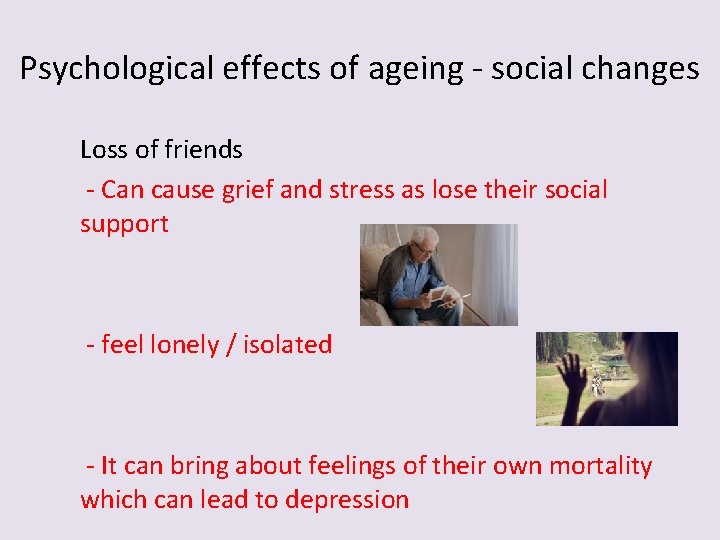
Psychological effects of ageing - social changes Loss of friends - Can cause grief and stress as lose their social support - feel lonely / isolated - It can bring about feelings of their own mortality which can lead to depression
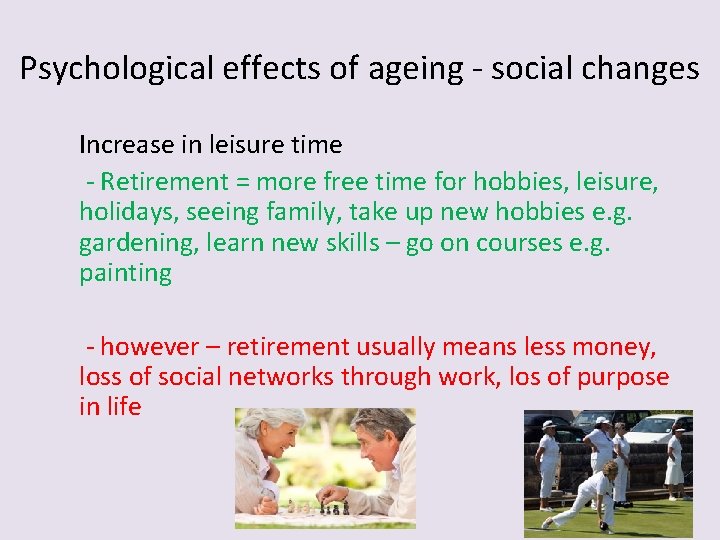
Psychological effects of ageing - social changes Increase in leisure time - Retirement = more free time for hobbies, leisure, holidays, seeing family, take up new hobbies e. g. gardening, learn new skills – go on courses e. g. painting - however – retirement usually means less money, loss of social networks through work, los of purpose in life
Psychological effects of ageing Financial concerns • Some people have their own property, have paid off their mortgage and have good pensions to live comfortably • Some people rent properties still, and may only get a state pension that doesn’t cover all their bills, especially rising costs of heating and electricity if you are at home more – which could lead to stress – ? How much do you get for a state pension? – ? What kinds of private pensions are there – how much can you get for some of these?
Psychological effects of ageing on Effects of culture religion and beliefs • Research different religions and cultures to see their views on how older people should be cared for – How are old people viewed in different cultures? – Does every country have a state pension? – Which cultures expect family members to look after their parents in old age? – Does every country provide sheltered housing or free medical care for older people? – How do different cultures and religions view death?
Social disengagement theory Cumming and Henry (1961) proposed that older people naturally withdraw from social involvement as they get older. • Older people have restricted opportunities to interact with others due to: ill health, geographical mobility, retirement and ill health of friends and relatives. • Older people experience reduced social contact and become increasingly ‘individual’ and less concerned with others’ expectations – disengagement is a natural part of ageing. • Reading https: //health. howstuffworks. com/wellness/aging/elder-care/disengagement-theory 1. htm
Activity theory • Roberts Havighurst (1960 s) • His ill health study of older people showed that, rather than an inevitable decline in interest in life and isolation, older people tend to adjust to the ageing process. • He believed that people’s needs can be satisfied by taking on new roles following retirement (charity work, joining social groups, learning a new skill) • He found that when people remain physically and socially active, their overall satisfaction and wellbeing is increased, which is important for reducing the risk of illness and increasing longevity. • Reading https: //health. howstuffworks. com/wellness/aging/retirement/activity-theory-of-aging. htm