
UNIT 1 Gilded Age Presidential Review 1864 Abraham
UNIT 1 Gilded Age

Presidential Review • 1864 – Abraham Lincoln - Republican Andrew Johnson - Democrat • 1868 – Ulysses S. Grant - Republican • 1872 – Ulysses S. Grant - Republican • 1876 - 1877 Compromise of 1877 Rutherford B Hayes - Republican
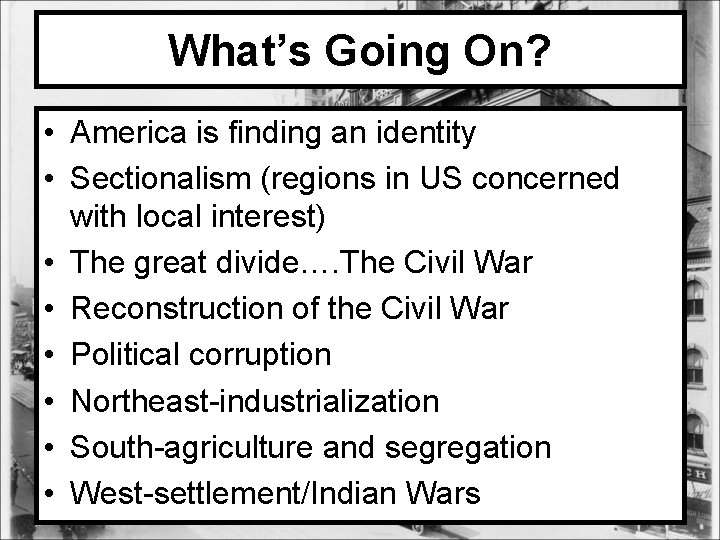
What’s Going On? • America is finding an identity • Sectionalism (regions in US concerned with local interest) • The great divide…. The Civil War • Reconstruction of the Civil War • Political corruption • Northeast-industrialization • South-agriculture and segregation • West-settlement/Indian Wars
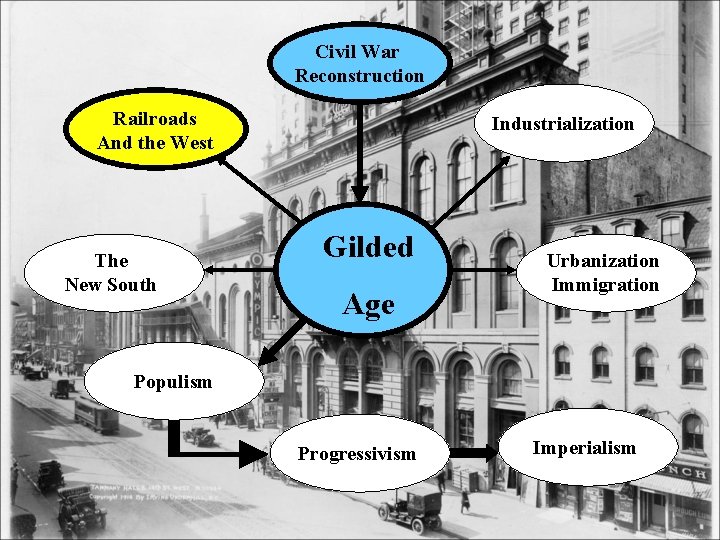
Civil War Reconstruction Railroads And the West The New South Industrialization Gilded Age Urbanization Immigration Populism Progressivism Imperialism
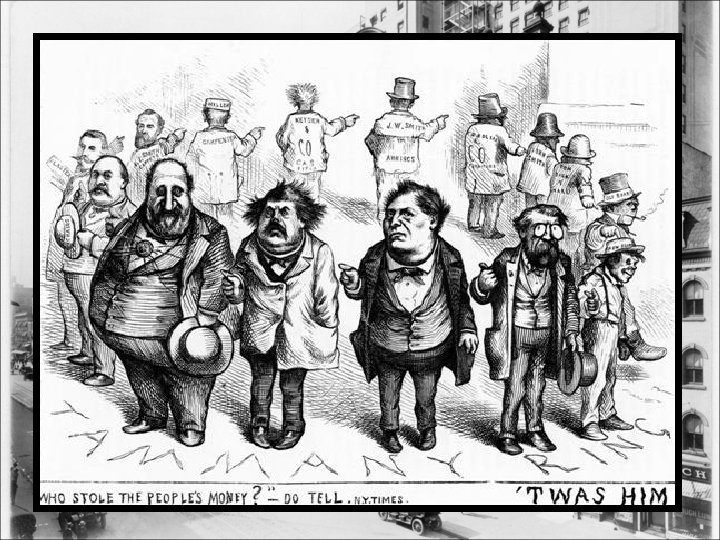
Political Corruption Runs Rampant
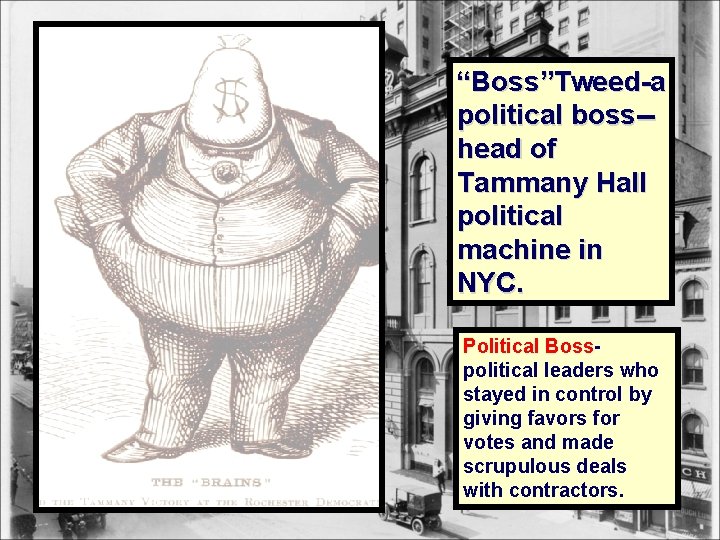
“Boss”Tweed-a political boss-head of Tammany Hall political machine in NYC. Political Bosspolitical leaders who stayed in control by giving favors for votes and made scrupulous deals with contractors.
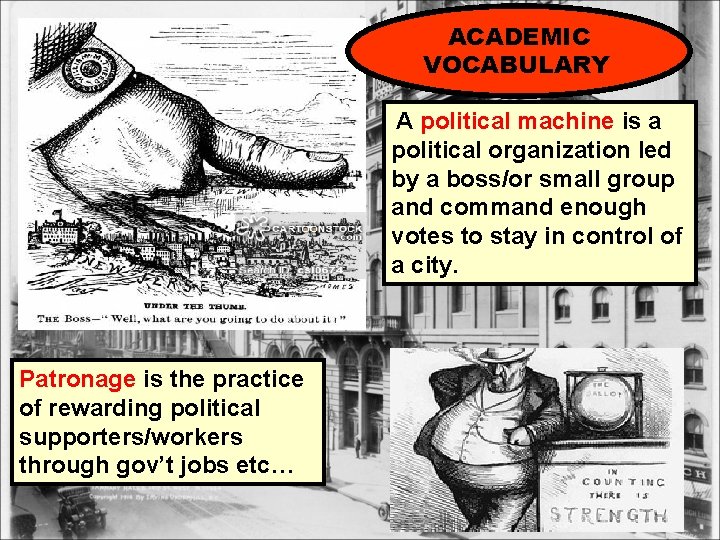
ACADEMIC VOCABULARY A political machine is a political organization led by a boss/or small group and command enough votes to stay in control of a city. Patronage is the practice of rewarding political supporters/workers through gov’t jobs etc…
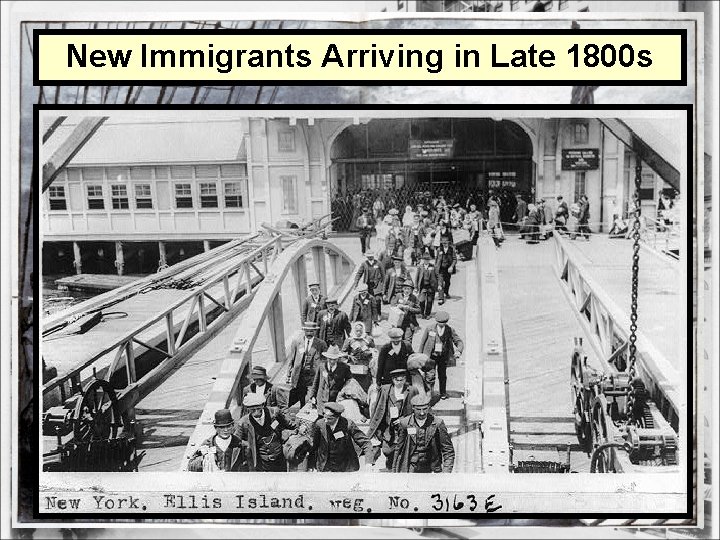
New Immigrants Arriving in Late 1800 s
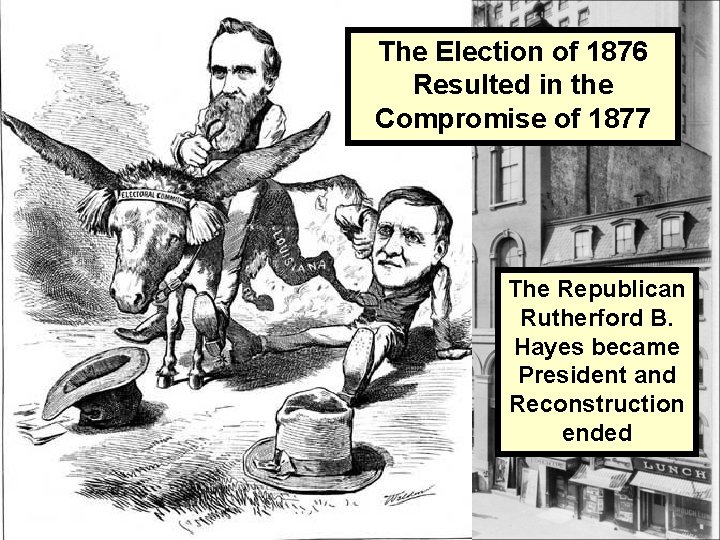
The Election of 1876 Resulted in the Compromise of 1877 The Republican Rutherford B. Hayes became President and Reconstruction ended
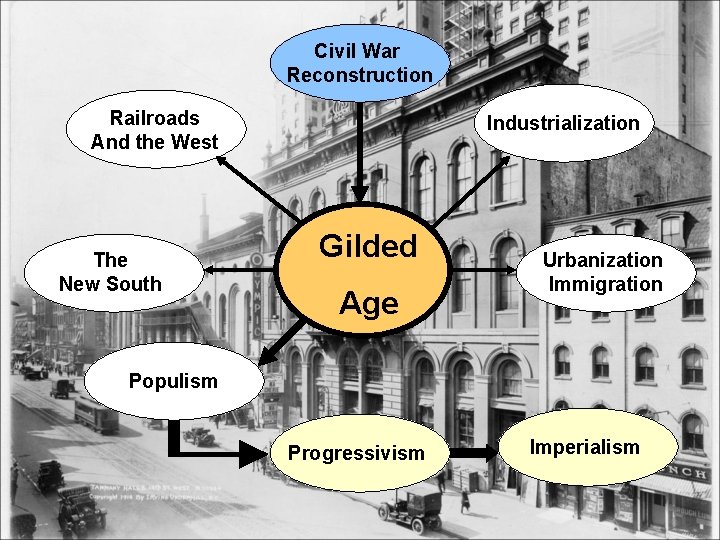
Civil War Reconstruction Railroads And the West The New South Industrialization Gilded Age Urbanization Immigration Populism Progressivism Imperialism
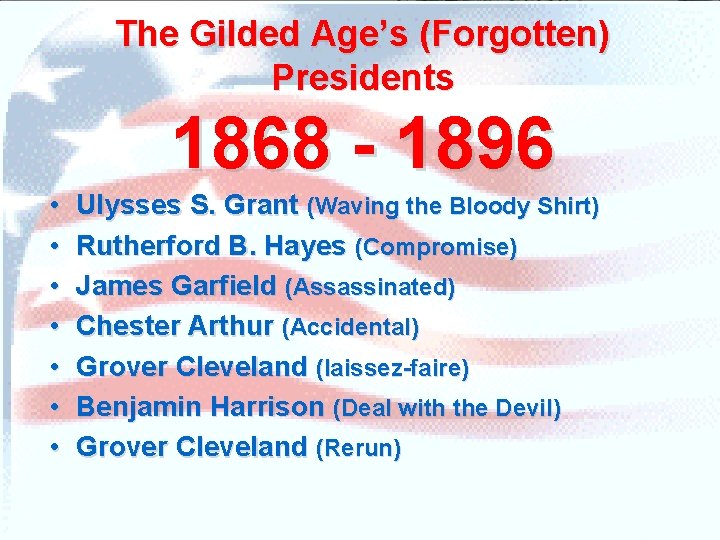
The Gilded Age’s (Forgotten) Presidents 1868 - 1896 • • Ulysses S. Grant (Waving the Bloody Shirt) Rutherford B. Hayes (Compromise) James Garfield (Assassinated) Chester Arthur (Accidental) Grover Cleveland (laissez-faire) Benjamin Harrison (Deal with the Devil) Grover Cleveland (Rerun)
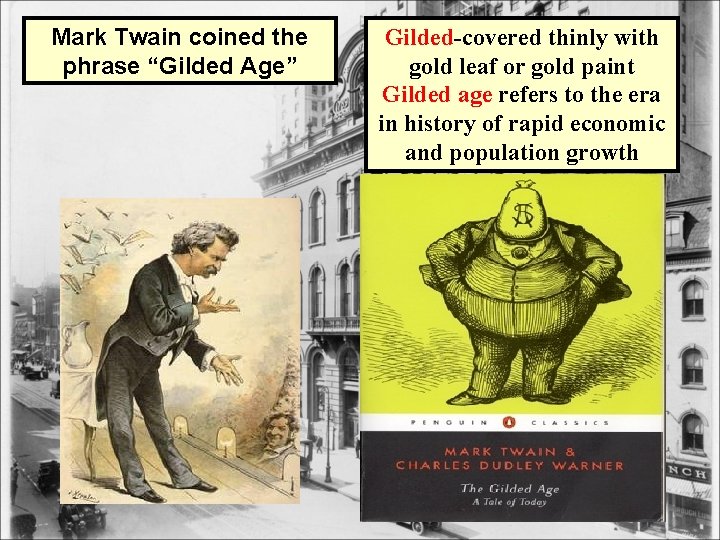
Mark Twain coined the phrase “Gilded Age” Gilded-covered thinly with gold leaf or gold paint Gilded age refers to the era in history of rapid economic and population growth
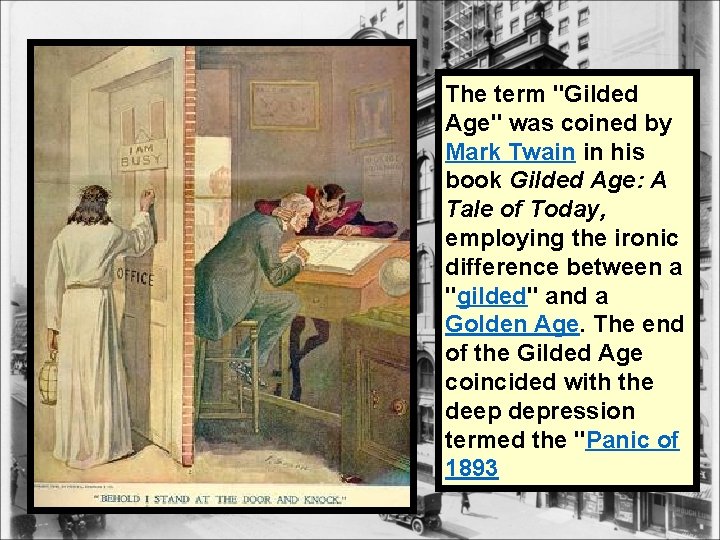
The term "Gilded Age" was coined by Mark Twain in his book Gilded Age: A Tale of Today, employing the ironic difference between a "gilded" and a Golden Age. The end of the Gilded Age coincided with the deep depression termed the "Panic of 1893
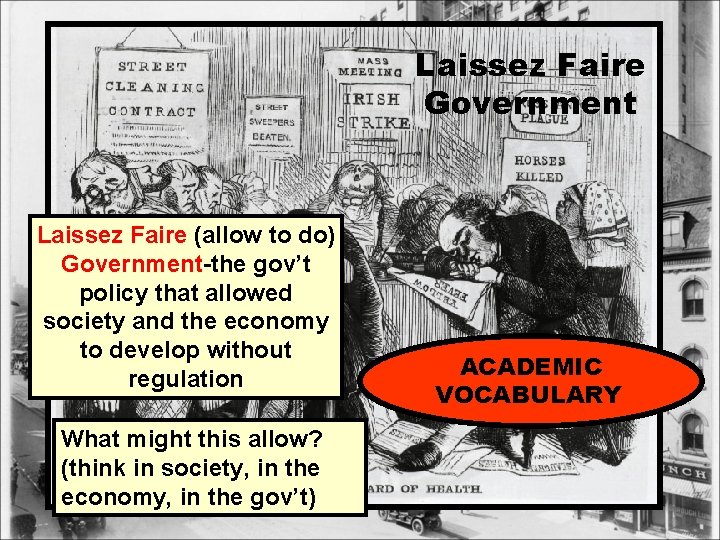
Laissez Faire Government Laissez Faire (allow to do) Government-the gov’t policy that allowed society and the economy to develop without regulation What might this allow? (think in society, in the economy, in the gov’t) ACADEMIC VOCABULARY
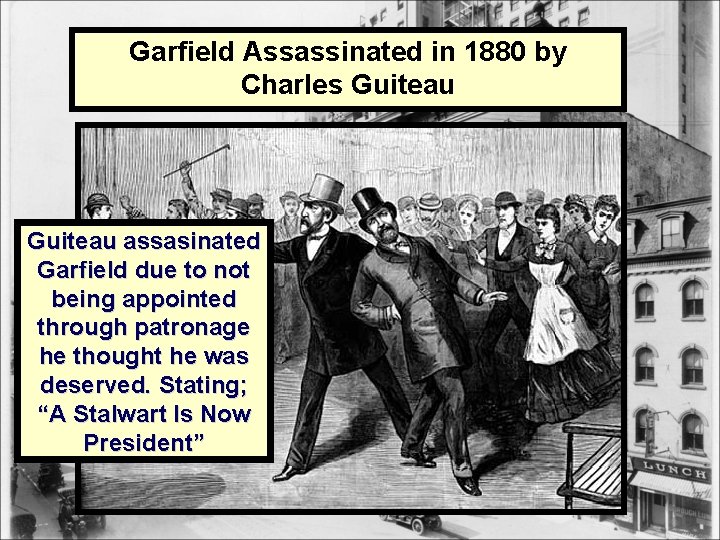
Garfield Assassinated in 1880 by Charles Guiteau assasinated Garfield due to not being appointed through patronage he thought he was deserved. Stating; “A Stalwart Is Now President”
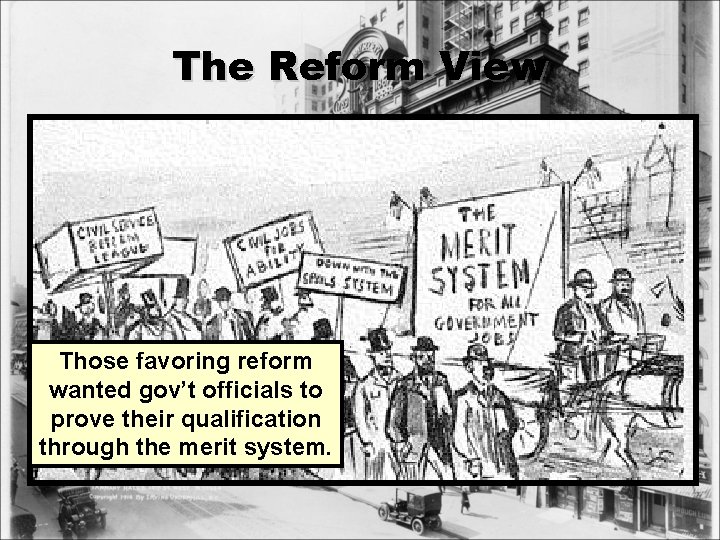
The Reform View Those favoring reform wanted gov’t officials to prove their qualification through the merit system.
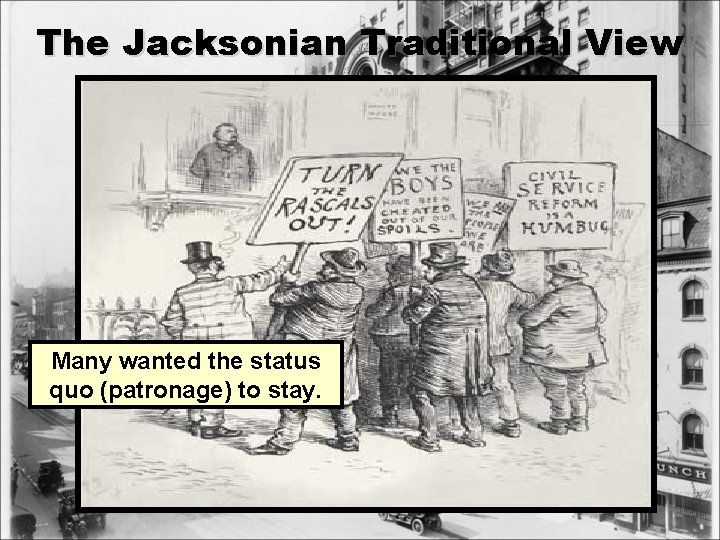
The Jacksonian Traditional View Many wanted the status quo (patronage) to stay.
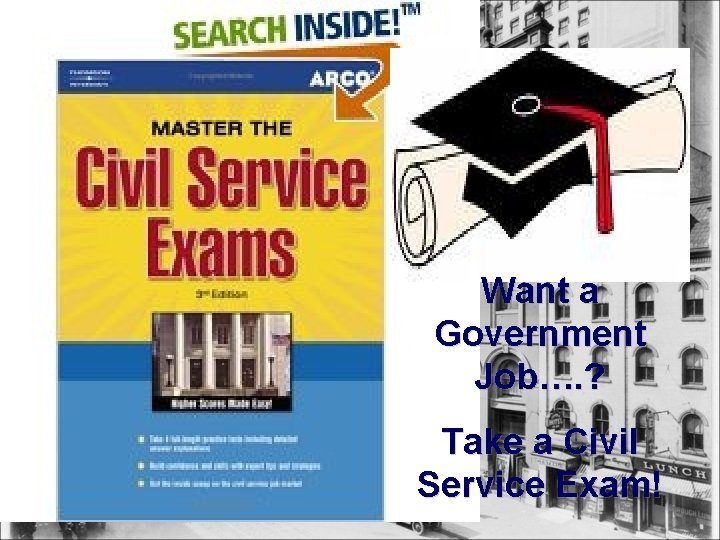
Want a Government Job…. ? Take a Civil Service Exam!
The Pendleton Civil Service Reform Act An 1883 federal law that established the United States Civil Service Commission, which placed federal employees on the merit system and marked the end of the so-called "spoils system. " Drafted during the Chester A. Arthur administration, the Pendleton Act served as a response to President James Garfield's assassination by Charles J. Guiteau. The Act was sponsored by Senator George H. Pendleton and often called the Pendleton Act.
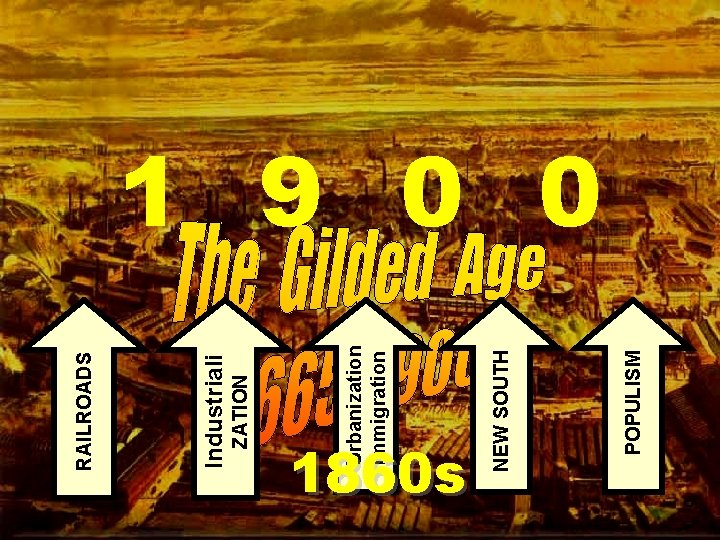
ZATION Industriali RAILROADS 1860 s POPULISM NEW SOUTH Urbanization Immigration 1 9 0 0
Railroads and the West • Homestead Act of 1862 -free land to move West • Railroad Act of 1862 -expand the railroad • The Interstate Commerce Commission-the gov’t attempts to regulate the railroad • Dawes Severalty Act of 1887 attempted to assimilate the Indians
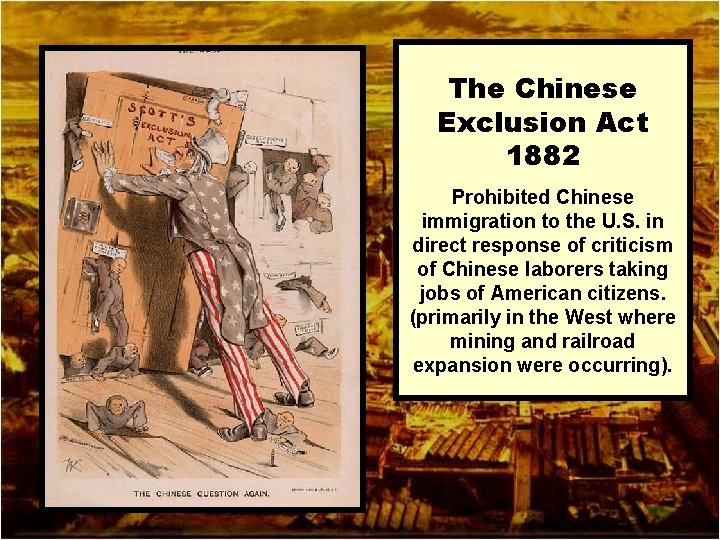
The Chinese Exclusion Act 1882 Prohibited Chinese immigration to the U. S. in direct response of criticism of Chinese laborers taking jobs of American citizens. (primarily in the West where mining and railroad expansion were occurring).
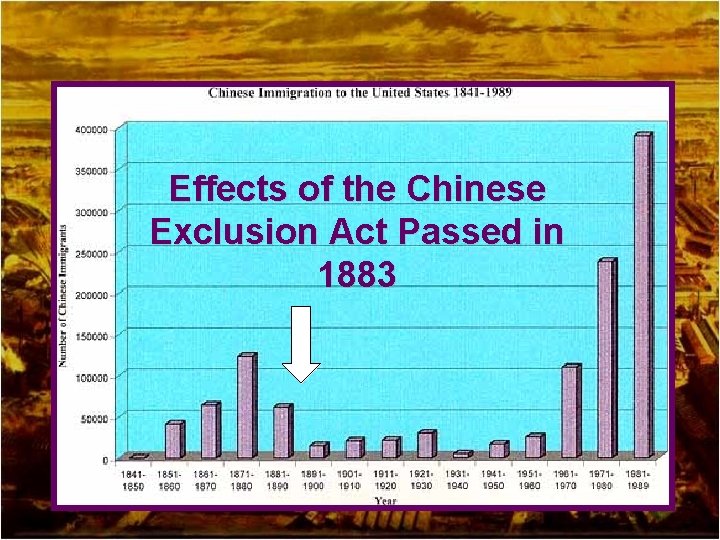
Effects of the Chinese Exclusion Act Passed in 1883
Industrialization • Laissez Faire Environment • Development of “Trust” (monopolies)-big business through merger/consolidation • Social Darwinism-belief of “survival of the fittest” applied to society • Gospel of Wealth- belief God chose some to be wealthy and those who become wealthy have a responsibility to help society • Robber Barons / Captains of Industry-the industrialist or big business leaders
Urbanization and Immigration; • • Urbanization-growth of cities (urban areas) Rural to Urban Migration New Immigration from Europe The Settlement House Movement-centers motivated to help the poor (society helping society) • Social Gospel Movement-motivated to help failing society by applying Christian principles • Nativist-(anti-immigrant) Movement • Labor Conflicts-workers vs. big biz (why? )
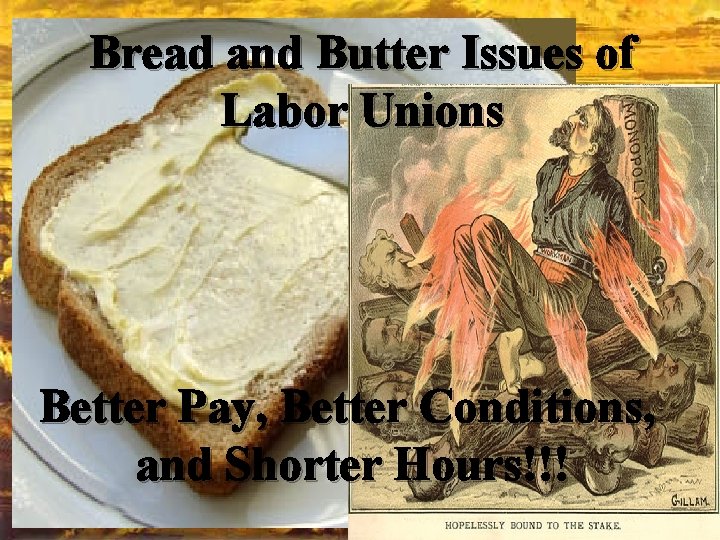
Bread and Butter Issues of Labor Unions Better Pay, Better Conditions, and Shorter Hours!!!
The New South and African- Americans • The denial of the 13 th, 14 th, and 15 th Amendments to A. A. through black codes and segregation • Plessy vs Ferguson-Supreme Court case that allowed segregation • Jim Crowism-segregation laws • Sharecropping-farming system where landowner rented a piece of land to a tenant for a share of the crops (kept A. A. very poor) • Exodusters-migration of A. A. to Kansas from states in south • Great Migration-migration of A. A. from south to north in search of jobs during WWI
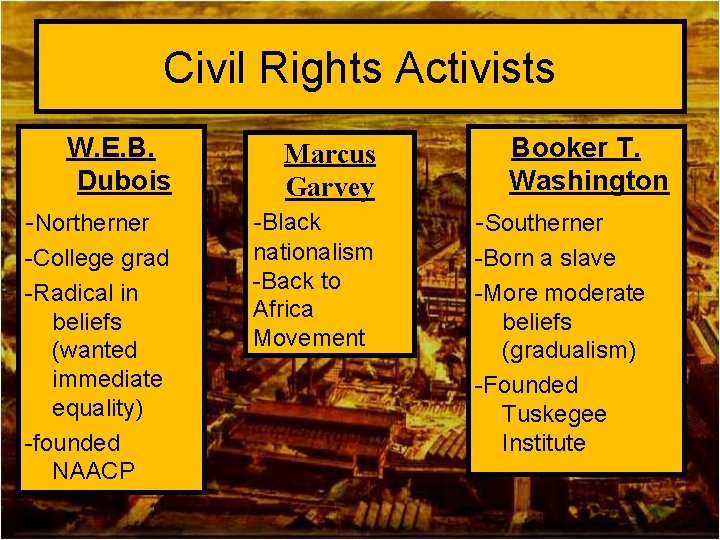
Civil Rights Activists W. E. B. Dubois Marcus Garvey Booker T. Washington -Northerner -Black -Southerner -College grad -Radical in beliefs (wanted immediate equality) -founded NAACP nationalism -Back to Africa Movement -Born a slave -More moderate beliefs (gradualism) -Founded Tuskegee Institute
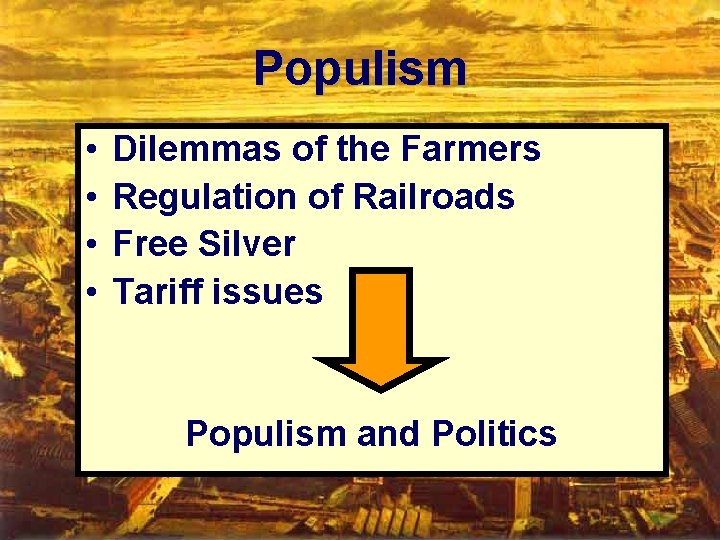
Populism • • Dilemmas of the Farmers Regulation of Railroads Free Silver Tariff issues Populism and Politics
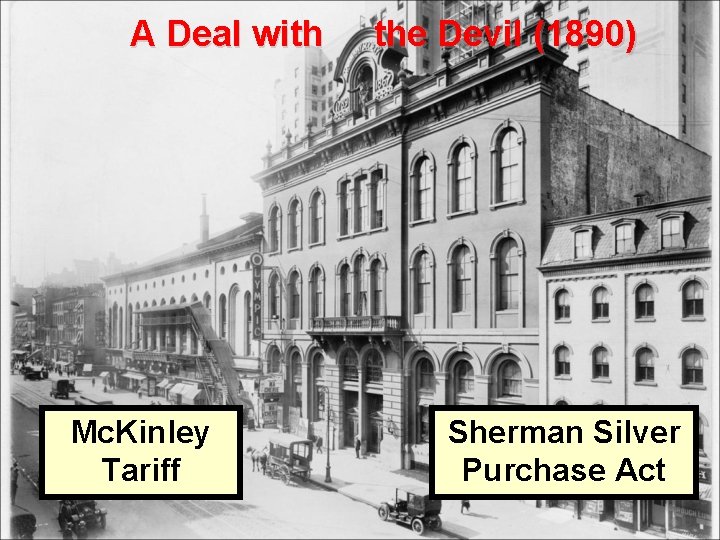
A Deal with Mc. Kinley Tariff the Devil (1890) Sherman Silver Purchase Act
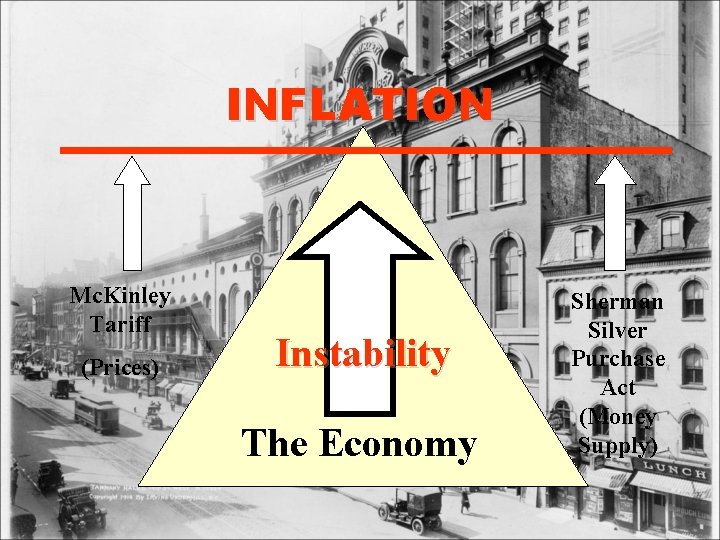
INFLATION Mc. Kinley Tariff (Prices) Instability The Economy Sherman Silver Purchase Act (Money Supply)
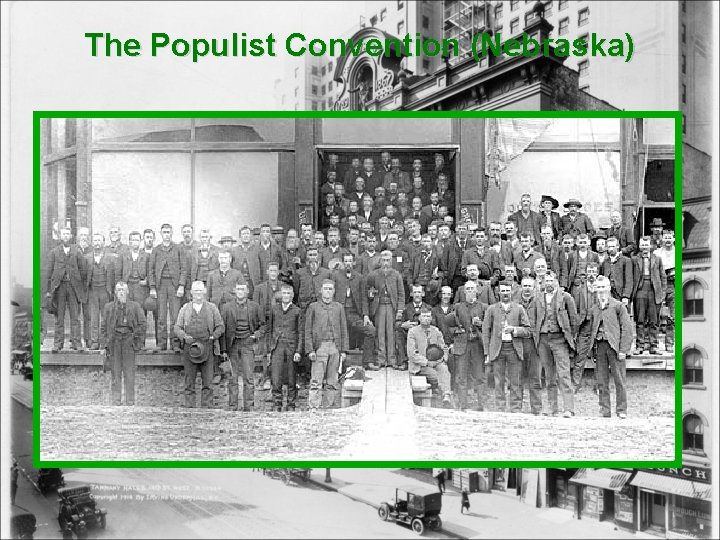
The Populist Convention (Nebraska)
Free and Unlimited Coinage of Silver at 16 to 1
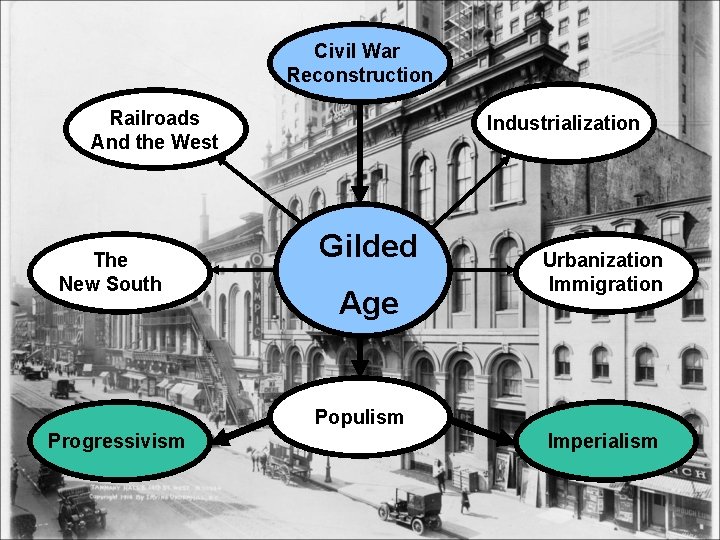
Civil War Reconstruction Railroads And the West The New South Industrialization Gilded Age Urbanization Immigration Populism Progressivism Imperialism
- Slides: 36