
Unit 1 FITT Components Training Principles High Performance


- Slides: 10
Unit 1 FITT, Components, Training Principles High Performance Centennial Collegiate
Benefits of Activity Strength Training • Aerobic Exercise §
• Frequency (how often) FITT Principle Physical activity must be done regularly to increase physical fitness Most programs encourage a minimum of 3 X a week Rest in between sessions is important • Intensity (how hard) Body must be pushed to respond to workload. Can be measured by repetitions, resistance and speed • Time (how long) Exercise must be completed for a certain period of time. Minimum of 15 -20 mins • Type (What) Depends on what type of activity. Eg. Aerobic – large muscle group activities and/or core exercises
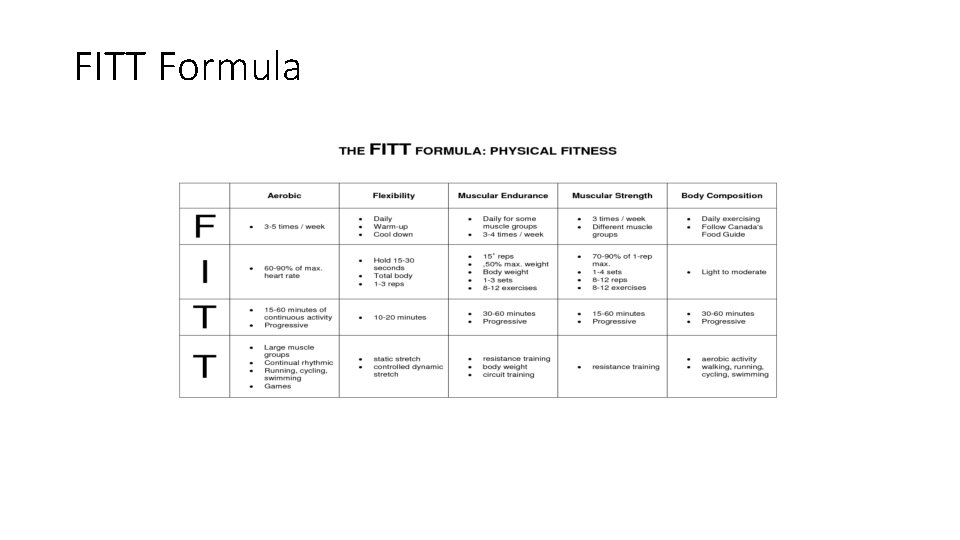
FITT Formula
Components of Fitness • Cardiorespiratory Fitness • Body’s ability to bring oxygen into the lungs • Ability to transport oxygen to tissues and have the tissues use the oxygen to produce energy for physical work • System includes: heart, lungs and blood vessels • Muscular Strength • Muscle’s ability to produce force (heavier weight, less repetitions)
• Muscular Endurance • Muscle’s ability to contract repeatedly and produce force (less weight, more repetitions) • Flexibility • Joints ability to move within their range of motion (ROM) • This will vary person to person and joint to joint. • Factors affecting: age, gender and activity level • Body Composition • Measure of percentage of body weight…fat vs. lean body mass • Avg range is 18 -24% for females, 10 -15% for males • Many influences – genetics, nutrition, gender, age, and activity levels
Principles of Training and Conditioning • Needs to be understood before training programs can be safely implemented into daily routine • Progressive – • Fitness improvements occur gradually by adding to the overload • During early program implementation, massive gains are normally experienced • This will slow down as one progresses and be more evenly paced
• Specificity or (SAID Principle) • Maximum training effect will occur when you mimic the effort required in the actual sport as close as possible. • You’ll become more competent by practicing specific activity over and over. • Reversibility • If you stop training (detraining), you will lose what was gained by working out or ‘reverse your gains’. • Strength gains may occur within 3 days
• Overload • Giving the body more to accomplish than usual • If this doesn’t occur, it will be no benefit to you • Your body will eventually adapt by becoming more efficient • Individual Differences • Determine goals of participant • Each person will respond differently to training programs • Fitness level at the start of exercise, age, gender, genetics, nutrition and effort will impact results
Goals for Class 1. Why did you chose to enroll in this class? 2 -3 sentences 2. Think about your activity level right now and decide on two realistic short term goals you can strive to achieve this semester 1. 2.