
Unit 1 Elements of Art Line Essential Question
- Slides: 16
Unit 1: Elements of Art (Line) Essential Question: How do lines define an object?
What are the Elements of Art? Artists use ELEMENTS to express their ideas within a COMPOSITION Composition: the act of organizing the ELEMENTS of an artwork into a unified whole.
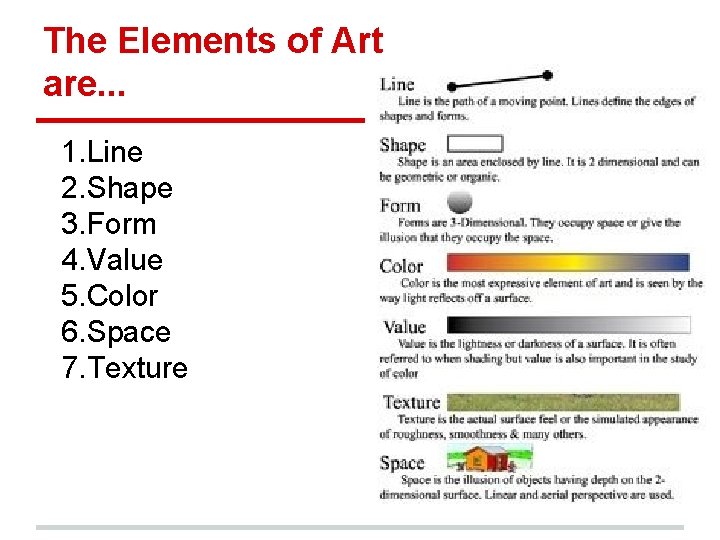
The Elements of Art are. . . 1. Line 2. Shape 3. Form 4. Value 5. Color 6. Space 7. Texture
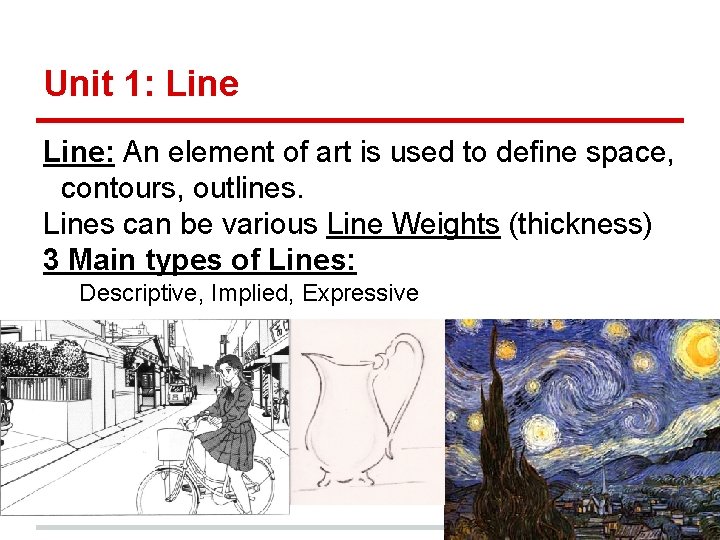
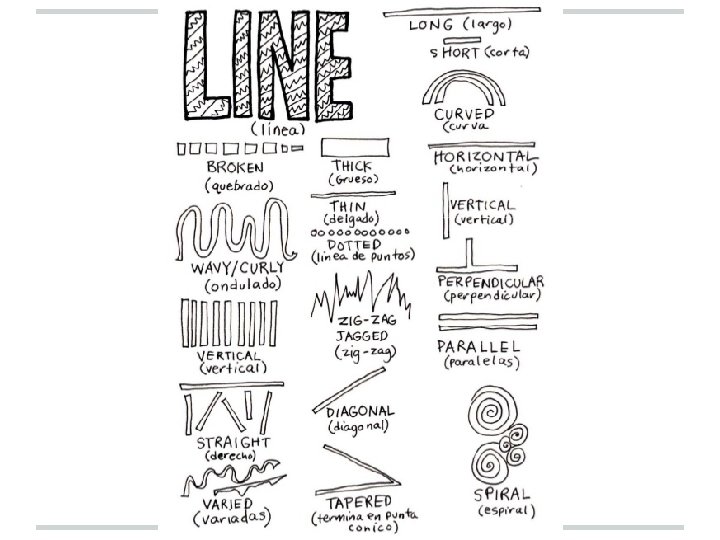
Unit 1: Line: An element of art is used to define space, contours, outlines. Lines can be various Line Weights (thickness) 3 Main types of Lines: Descriptive, Implied, Expressive
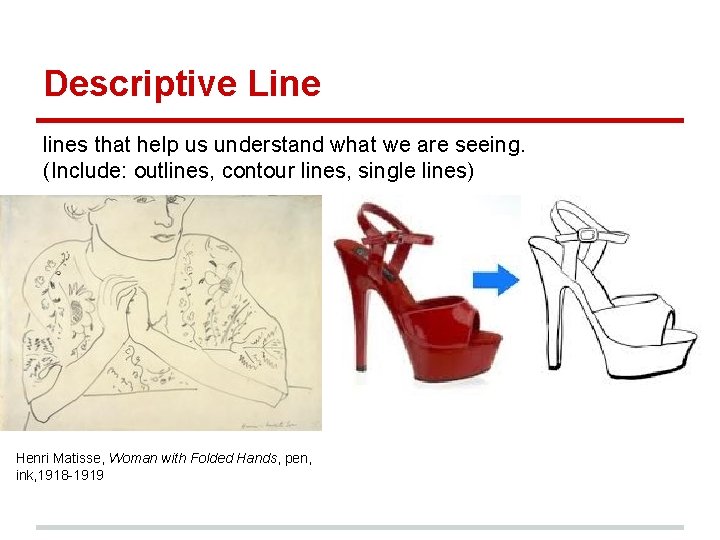
Descriptive Line lines that help us understand what we are seeing. (Include: outlines, contour lines, single lines) Henri Matisse, Woman with Folded Hands, pen, ink, 1918 -1919
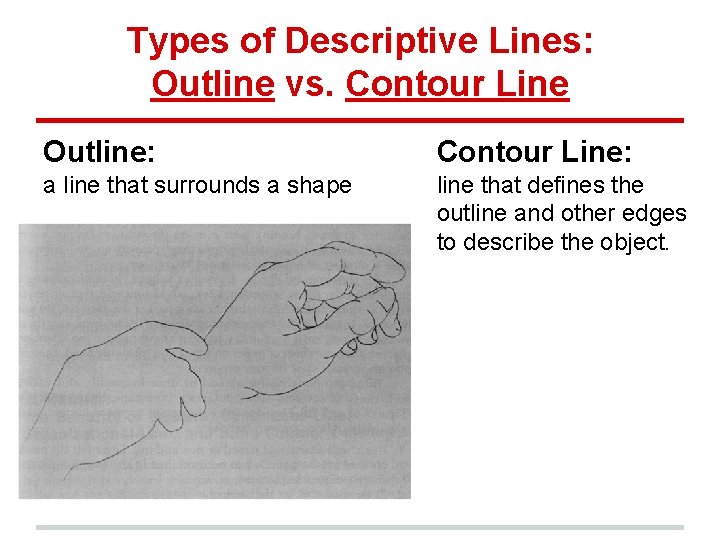
Types of Descriptive Lines: Outline vs. Contour Line Outline: Contour Line: a line that surrounds a shape line that defines the outline and other edges to describe the object.
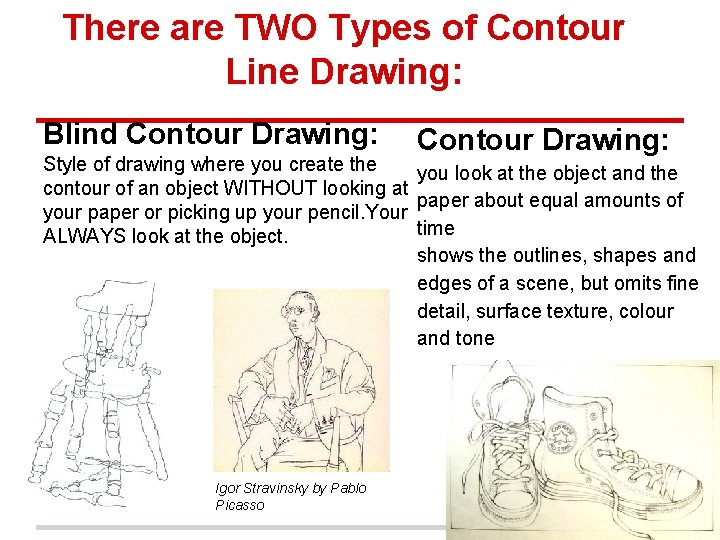
There are TWO Types of Contour Line Drawing: Blind Contour Drawing: Style of drawing where you create the you look at the object and the contour of an object WITHOUT looking at paper about equal amounts of your paper or picking up your pencil. Your time ALWAYS look at the object. shows the outlines, shapes and edges of a scene, but omits fine detail, surface texture, colour and tone Igor Stravinsky by Pablo Picasso
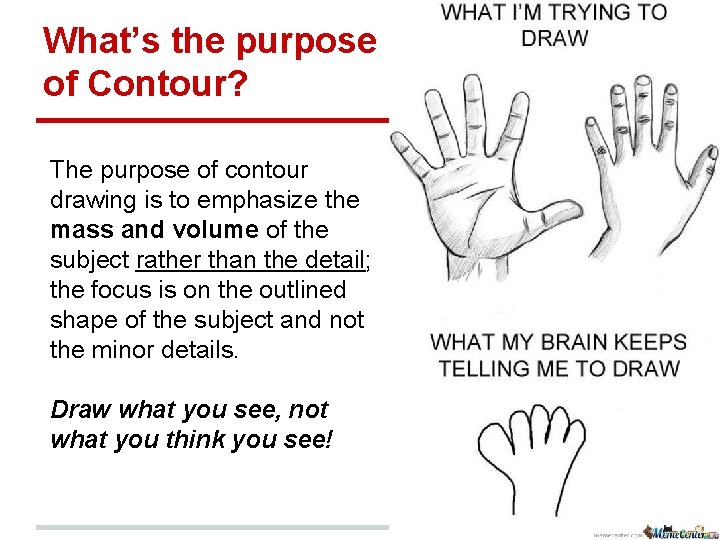
What’s the purpose of Contour? The purpose of contour drawing is to emphasize the mass and volume of the subject rather than the detail; the focus is on the outlined shape of the subject and not the minor details. Draw what you see, not what you think you see!
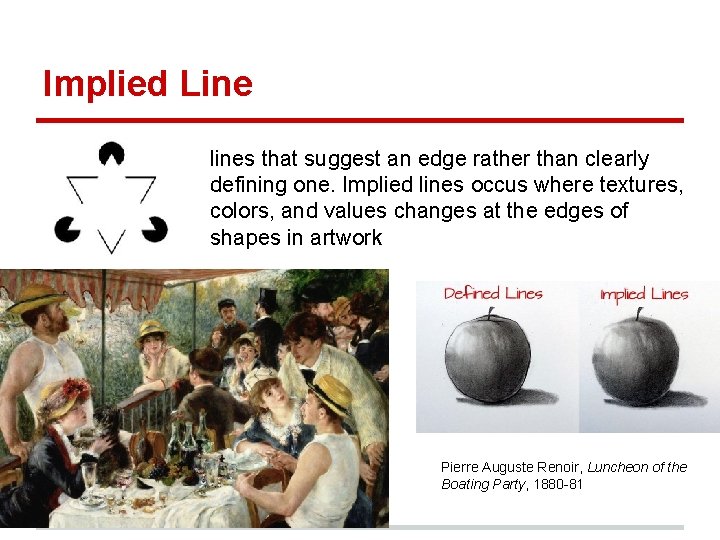
Implied Line lines that suggest an edge rather than clearly defining one. Implied lines occus where textures, colors, and values changes at the edges of shapes in artwork Pierre Auguste Renoir, Luncheon of the Boating Party, 1880 -81
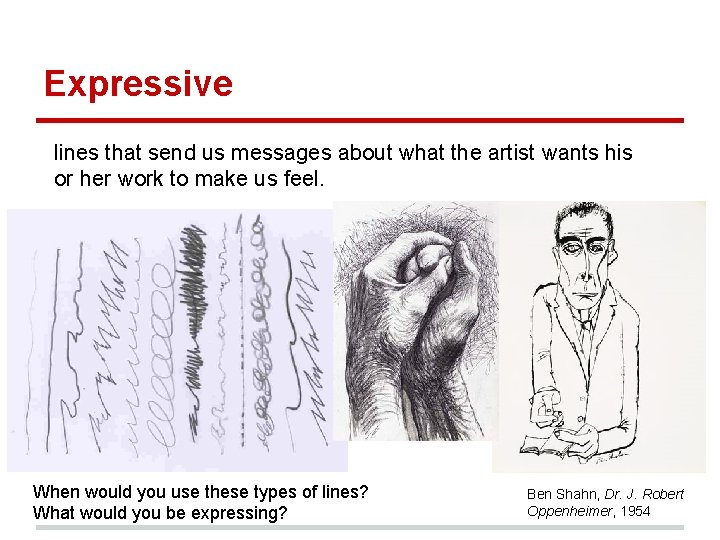
Expressive lines that send us messages about what the artist wants his or her work to make us feel. When would you use these types of lines? What would you be expressing? Ben Shahn, Dr. J. Robert Oppenheimer, 1954
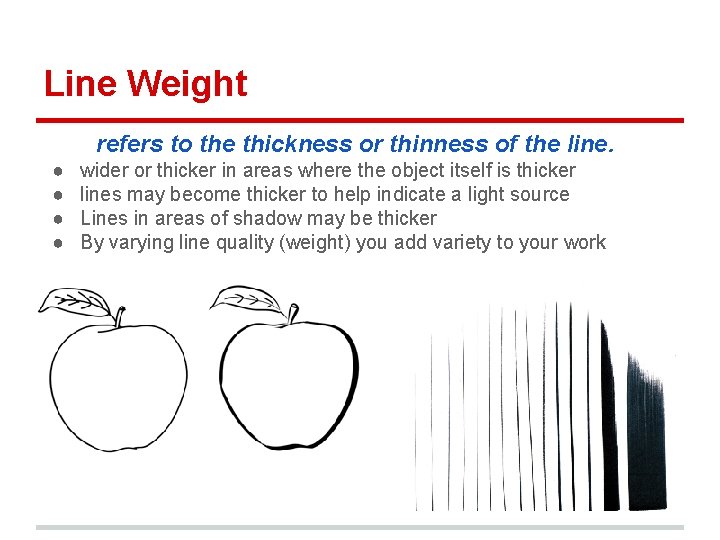
Line Weight refers to the thickness or thinness of the line. ● ● wider or thicker in areas where the object itself is thicker lines may become thicker to help indicate a light source Lines in areas of shadow may be thicker By varying line quality (weight) you add variety to your work
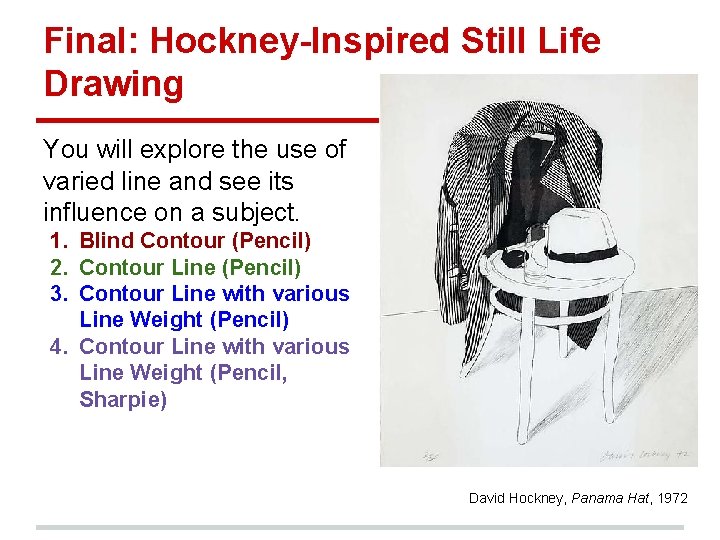
Final: Hockney-Inspired Still Life Drawing You will explore the use of varied line and see its influence on a subject. 1. Blind Contour (Pencil) 2. Contour Line (Pencil) 3. Contour Line with various Line Weight (Pencil) 4. Contour Line with various Line Weight (Pencil, Sharpie) David Hockney, Panama Hat, 1972
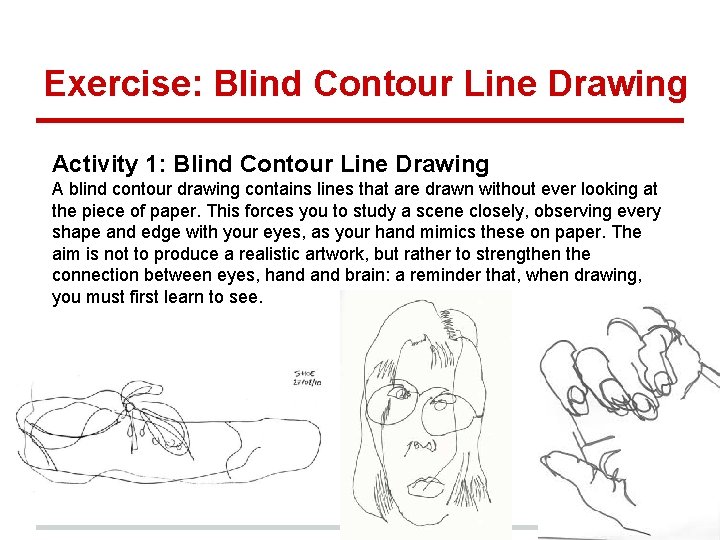
Exercise: Blind Contour Line Drawing Activity 1: Blind Contour Line Drawing A blind contour drawing contains lines that are drawn without ever looking at the piece of paper. This forces you to study a scene closely, observing every shape and edge with your eyes, as your hand mimics these on paper. The aim is not to produce a realistic artwork, but rather to strengthen the connection between eyes, hand brain: a reminder that, when drawing, you must first learn to see.
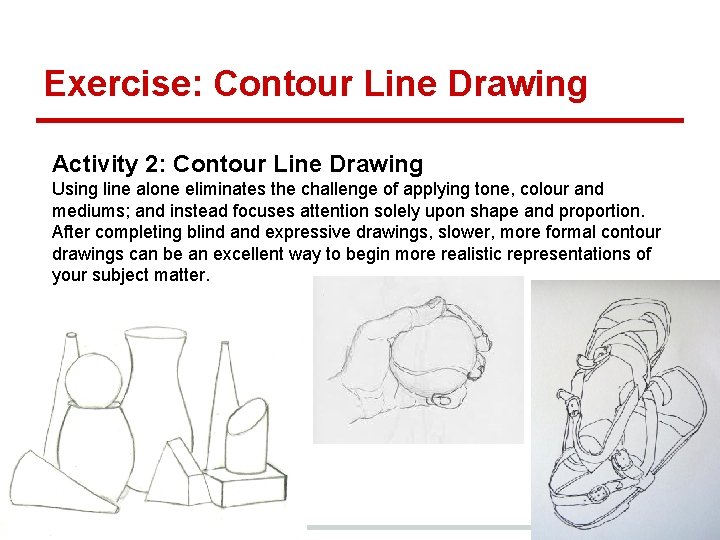
Exercise: Contour Line Drawing Activity 2: Contour Line Drawing Using line alone eliminates the challenge of applying tone, colour and mediums; and instead focuses attention solely upon shape and proportion. After completing blind and expressive drawings, slower, more formal contour drawings can be an excellent way to begin more realistic representations of your subject matter.