
UNIT 1 Ecology What are the levels of
- Slides: 11
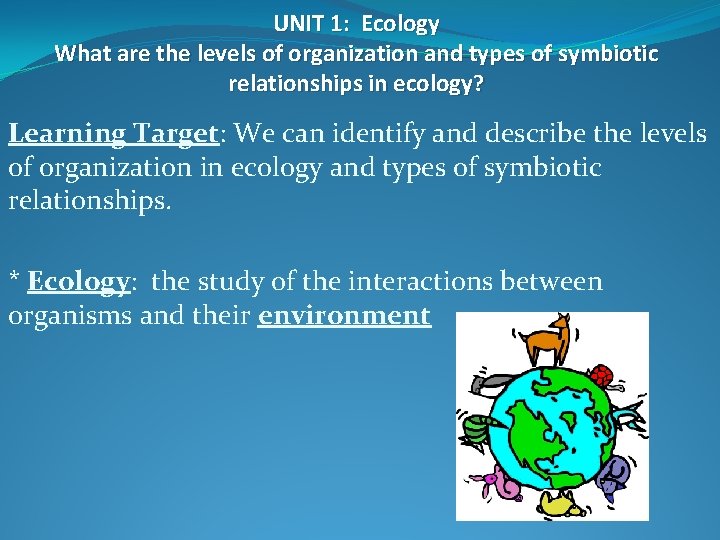
UNIT 1: Ecology What are the levels of organization and types of symbiotic relationships in ecology? Learning Target: We can identify and describe the levels of organization in ecology and types of symbiotic relationships. * Ecology: the study of the interactions between organisms and their environment
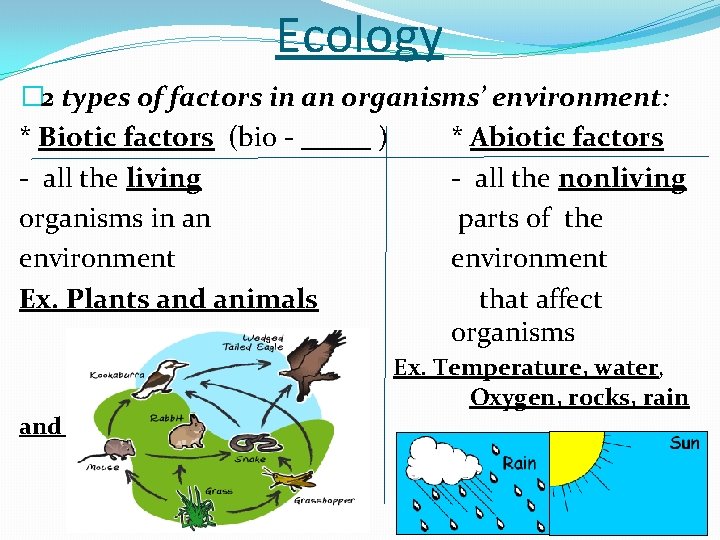
Ecology � 2 types of factors in an organisms’ environment: * Biotic factors (bio - _____ ) * Abiotic factors - all the living - all the nonliving organisms in an parts of the environment Ex. Plants and animals that affect organisms and sun Ex. Temperature, water, Oxygen, rocks, rain
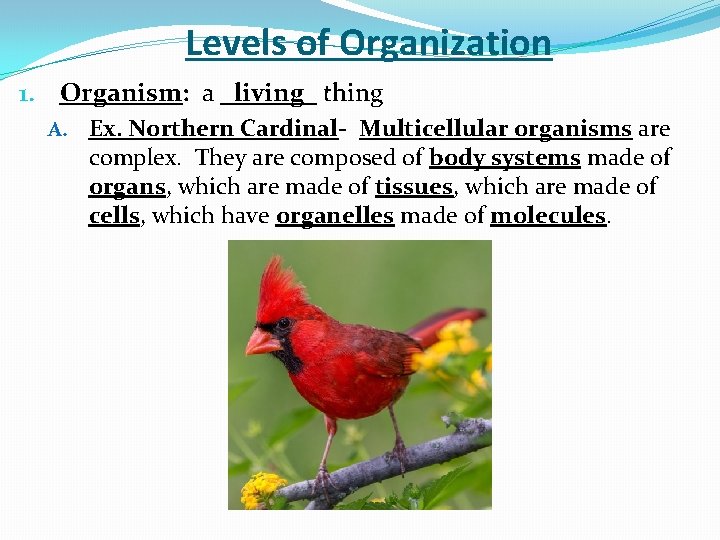
Levels of Organization 1. Organism: a _living_ thing A. Ex. Northern Cardinal- Multicellular organisms are complex. They are composed of body systems made of organs, which are made of tissues, which are made of cells, which have organelles made of molecules.
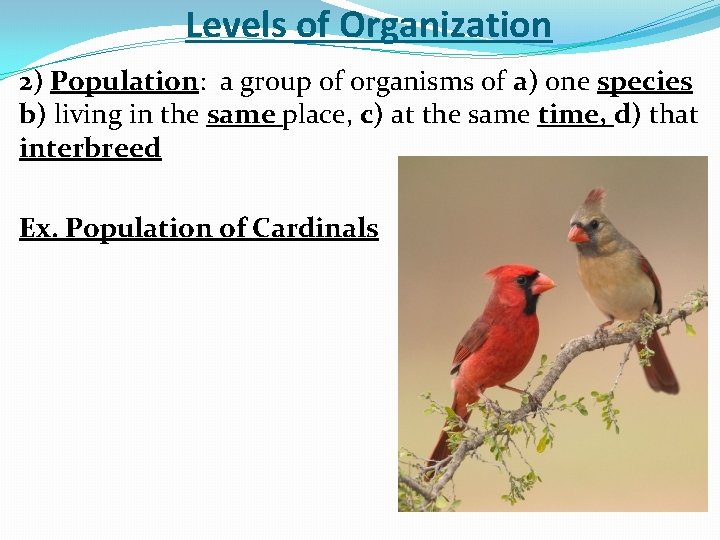
Levels of Organization 2) Population: a group of organisms of a) one species b) living in the same place, c) at the same time, d) that interbreed Ex. Population of Cardinals
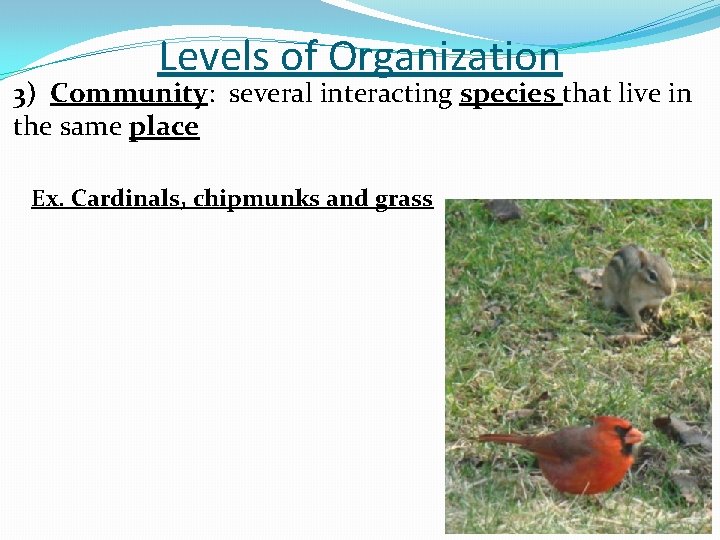
Levels of Organization 3) Community: several interacting species that live in the same place Ex. Cardinals, chipmunks and grass
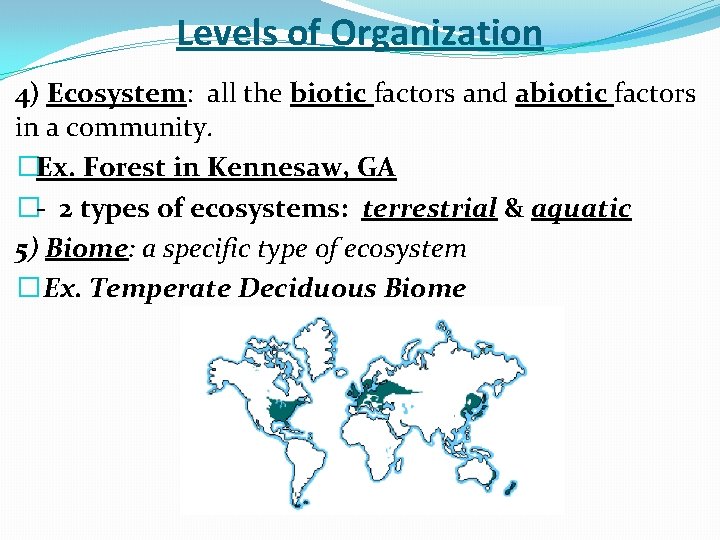
Levels of Organization 4) Ecosystem: all the biotic factors and abiotic factors in a community. �Ex. Forest in Kennesaw, GA �- 2 types of ecosystems: terrestrial & aquatic 5) Biome: a specific type of ecosystem � Ex. Temperate Deciduous Biome
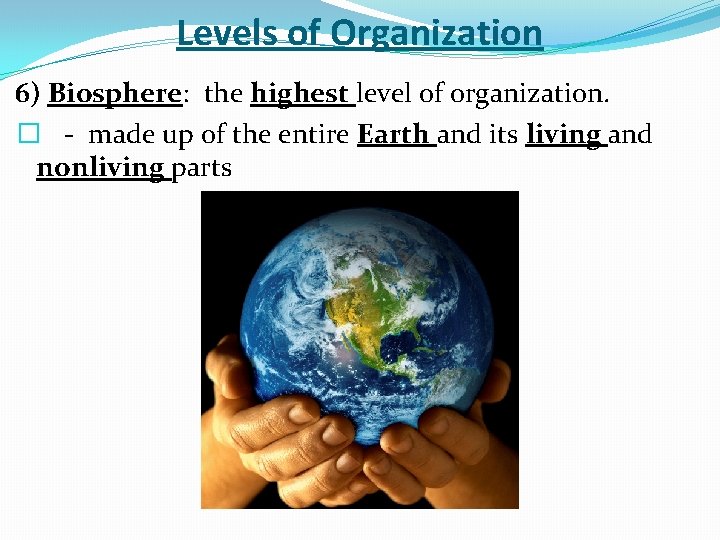
Levels of Organization 6) Biosphere: the highest level of organization. � - made up of the entire Earth and its living and nonliving parts
WHERE AND HOW ORGANISMS LIVE �* Niche: the role a species plays in a community. �* Habitat: the place where an organism lives out its life For Example: The Northern Cardinal’s habitat would be the forest and its niche would be that they eat lots of seeds and fruit, so they may help other populations of plants by dispersing their seeds.
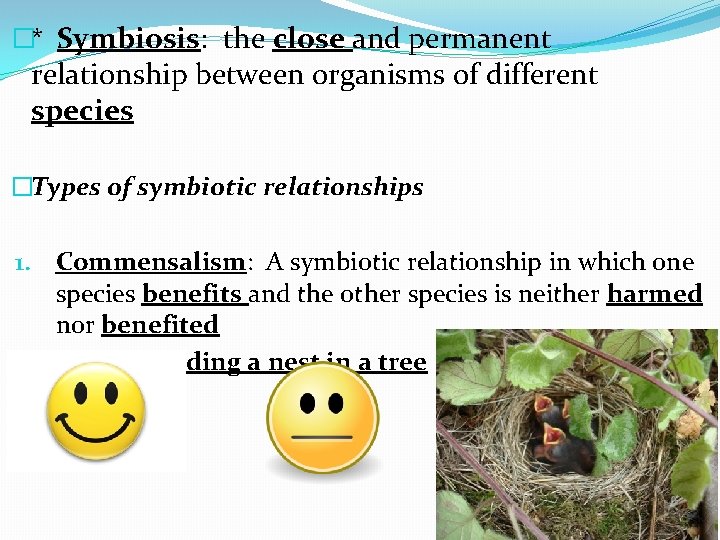
�* Symbiosis: the close and permanent relationship between organisms of different species �Types of symbiotic relationships 1. Commensalism: A symbiotic relationship in which one species benefits and the other species is neither harmed nor benefited Ex. Birds building a nest in a tree
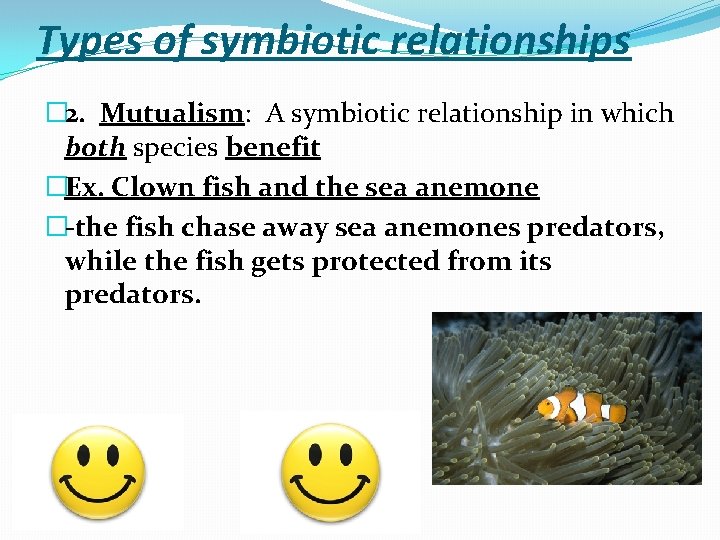
Types of symbiotic relationships � 2. Mutualism: A symbiotic relationship in which both species benefit �Ex. Clown fish and the sea anemone �-the fish chase away sea anemones predators, while the fish gets protected from its predators.
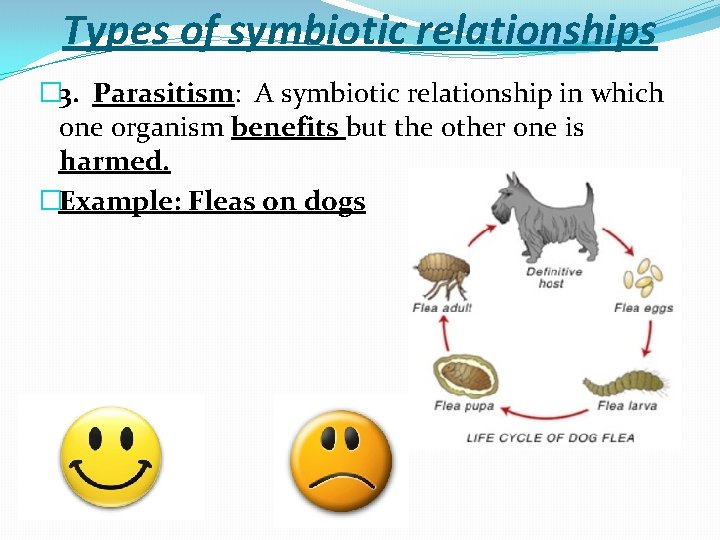
Types of symbiotic relationships � 3. Parasitism: A symbiotic relationship in which one organism benefits but the other one is harmed. �Example: Fleas on dogs