
Unit 1 Ecology Nutrient Cycles How do nutrients
- Slides: 8
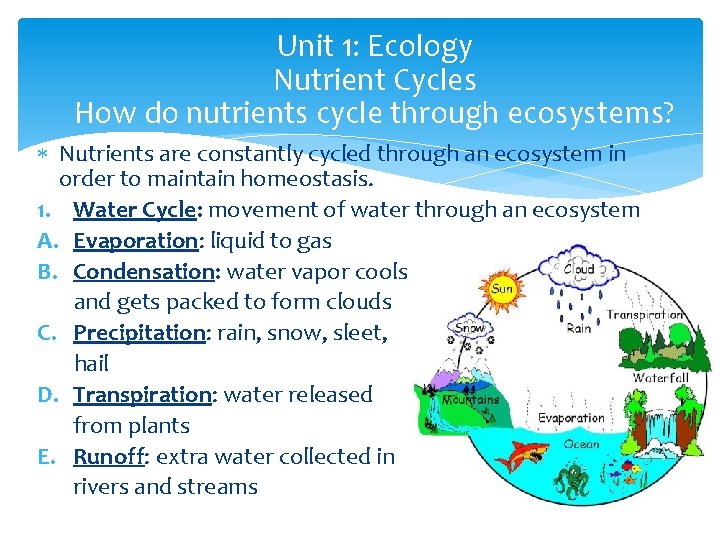
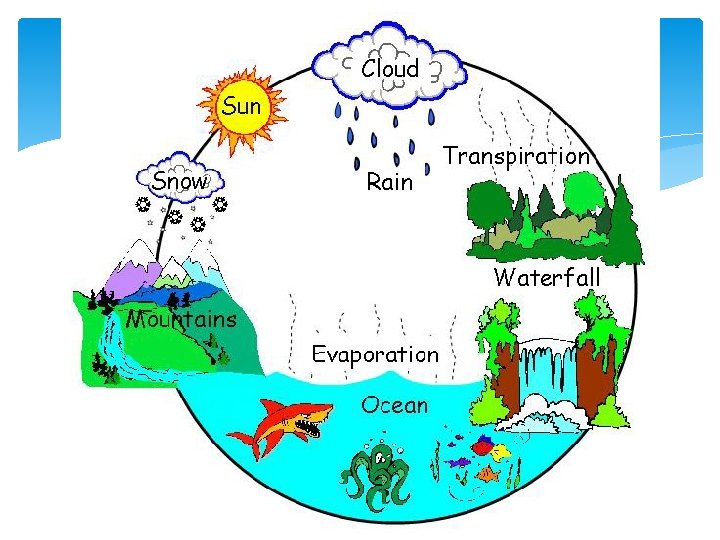
Unit 1: Ecology Nutrient Cycles How do nutrients cycle through ecosystems? Nutrients are constantly cycled through an ecosystem in order to maintain homeostasis. 1. Water Cycle: movement of water through an ecosystem A. Evaporation: liquid to gas B. Condensation: water vapor cools and gets packed to form clouds C. Precipitation: rain, snow, sleet, hail D. Transpiration: water released from plants E. Runoff: extra water collected in rivers and streams
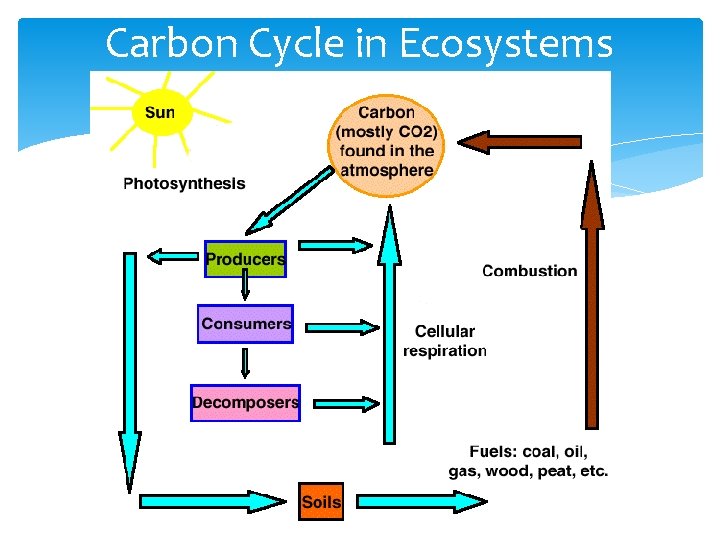
Carbon Cycle in Ecosystems Carbon is most commonly found in the form of CO 2 gas in the atmosphere Carbon released in the atmosphere by… 1. Burning of fossil fuels (Combustion) 2. Cellular respiration 3. Decomposition Carbon is used by… 1. Photosynthesis
Carbon Cycle in Ecosystems
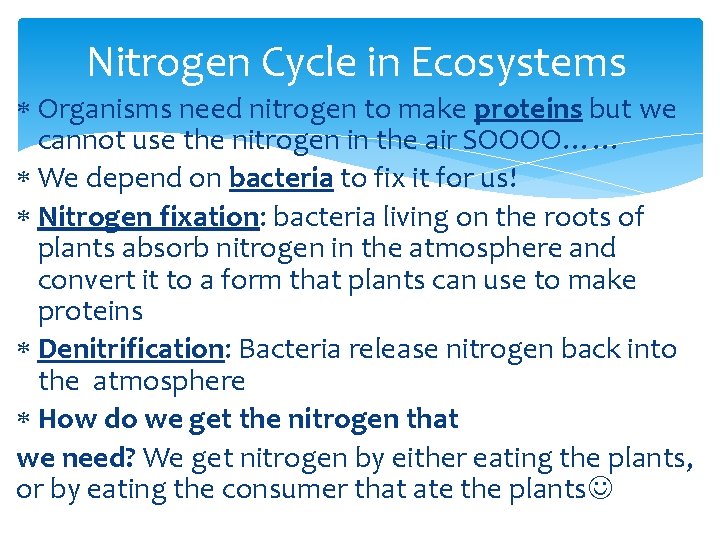
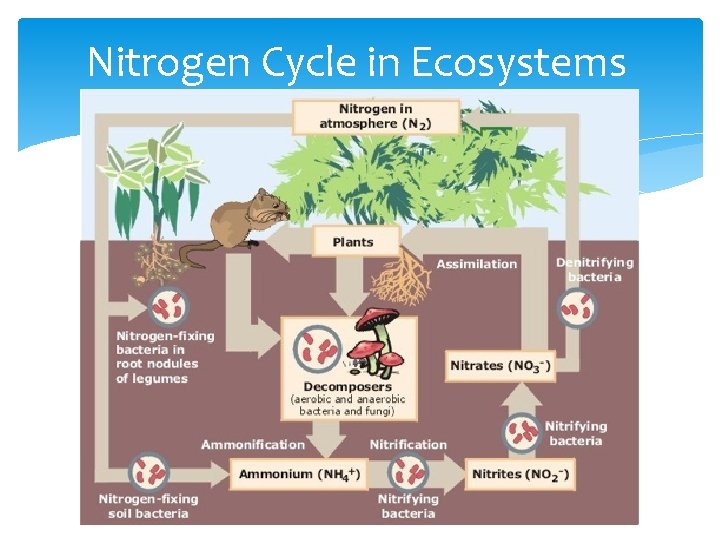
Nitrogen Cycle in Ecosystems Organisms need nitrogen to make proteins but we cannot use the nitrogen in the air SOOOO…… We depend on bacteria to fix it for us! Nitrogen fixation: bacteria living on the roots of plants absorb nitrogen in the atmosphere and convert it to a form that plants can use to make proteins Denitrification: Bacteria release nitrogen back into the atmosphere How do we get the nitrogen that we need? We get nitrogen by either eating the plants, or by eating the consumer that ate the plants
Nitrogen Cycle in Ecosystems
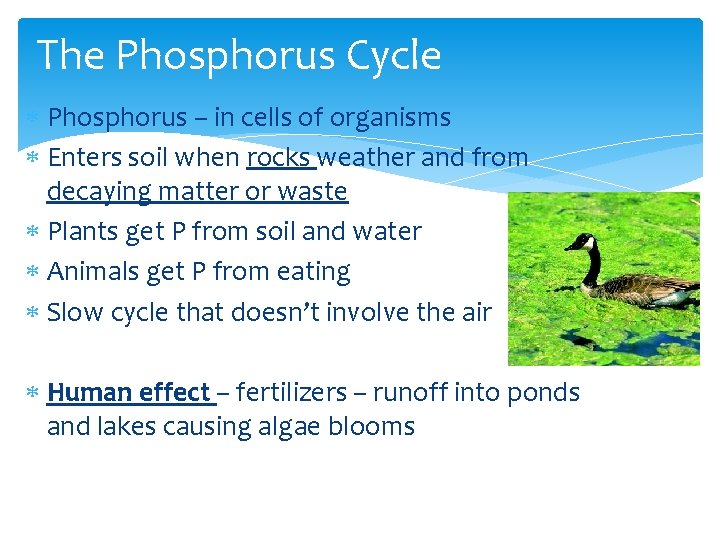
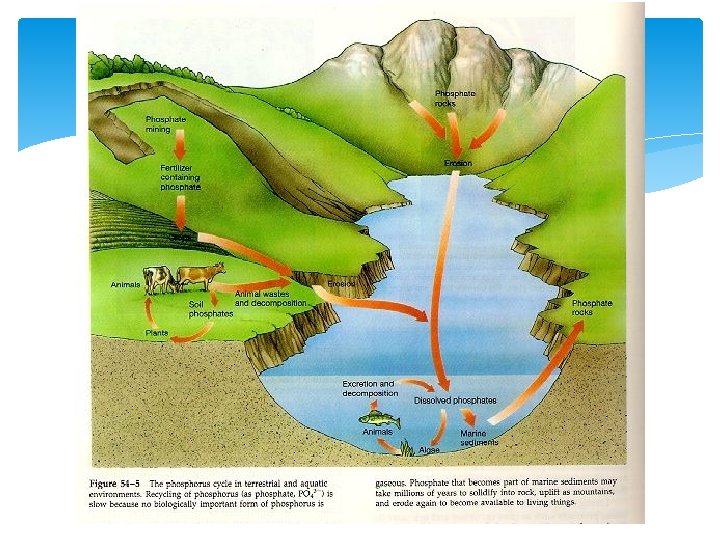
The Phosphorus Cycle Phosphorus – in cells of organisms Enters soil when rocks weather and from decaying matter or waste Plants get P from soil and water Animals get P from eating Slow cycle that doesn’t involve the air Human effect – fertilizers – runoff into ponds and lakes causing algae blooms