
Unit 1 Eating Patterns Meal Planning Eating Patterns

- Slides: 26
Unit 1 Eating Patterns & Meal Planning
Eating Patterns • A mix of food customs and habits that include when, what and how much people eat • vary over time and among different cultures
• • • Influences On Choices Food resources - time, money, knowledge family food customs friends media - advertising & news personal influences – daily routine – values – emotions
History of Eating Patterns • before Industrial Revolution (mid-1800 s) –families lived & worked together to produce food through hunting, fishing or raising crops • Turn of Century (1900) –families moved to cities, mealtimes depended more on job schedules, more foods were
History cont…. • 1930’s - Great Depression – food shortages that continued through 1940 s due to WWII – foods were rationed – women joined the labor force in factories and shipyards, so reliance on convenience foods increased • 1950’s – new appliances and technology – more diverse restaurants
History cont…. • Modern Times –shifting social & family roles –eating more away from home (restaurants and fast food) –consumers demanding more healthful options
Bellwork #1 • Is it possible to eat out (in a restaurant or fast food) and make healthy choices? Explain your answer by giving specific examples.
Daily Meal Patterns • Breakfast – “breaking the fast” – students who eat breakfast tend to do better in school • Midday & Evening Meals – go by different names depending on where you live – in the US, midday meal (lunch) is typically lighter and evening meal (dinner) is the largest meal of the day
Grazing • Eating five or more small meals throughout the day instead of three large ones • Can be convenient and healthful
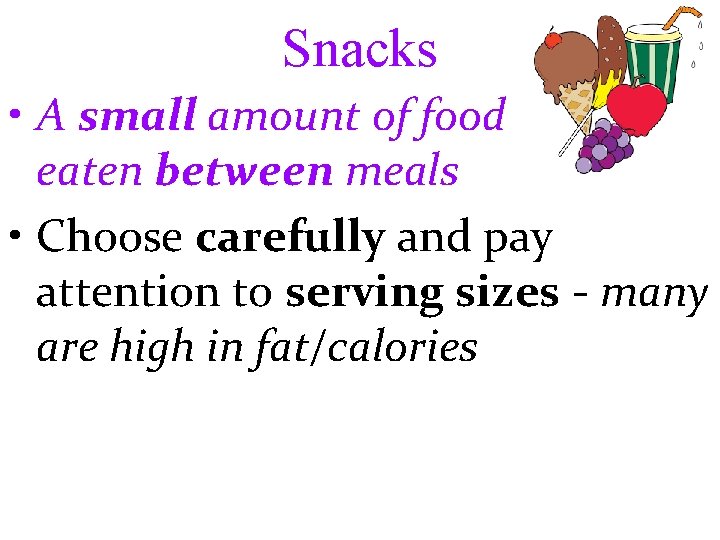
Snacks • A small amount of food eaten between meals • Choose carefully and pay attention to serving sizes - many are high in fat/calories
Healthy Choices for Eating Out • Be mindful of portion sizes: – build meal around several appetizers or side dishes instead of one large main dish – ask for a container for leftovers • Pay attention to menu descriptions: – DO order items that are broiled, steamed or roasted. – AVOID items described as batter dipped, fried, or creamy.
Healthy Choices Eating Out cont… • Choose salads with care – creamy dressings are high in fat – the more items added to a salad, usually means more calories and fat • Choose pasta dishes served with red sauce rather than creamy sauces.
Bellwork #2 • If you could make changes to school lunch options to make them healthier and more appealing to students, what changes would you make? Identify at least TWO changes you would make.
Bellwork #3 • LIST ALL of the ingredients & kitchen equipment needed to cook your favorite meal. • If didn’t turn in Dining Out assignment last week, DUE TODAY
Meal Planning Resources that affect meal planning: • money • available food • time and energy • skills and equipment
Meal Planning Cont… Scratch Cooking • Preparing a dish/meal from basic ingredients and unprepared foods Convenience Cooking • Preparing a dish/meal using partially fully prepared, or processed foods LIST advantages and disadvantages on TEST
Scratch Cooking ADVANTAGES • costs less • fresh ingredients • control over ingredients • prepared to personal taste DISADVANTAGES • time-consuming • requires more skill in kitchen
Convenience Cooking ADVANTAGES • create meals quickly • easy - requires less effort & kitchen knowledge DISADVANTAGES • costs more • less control over ingredients • may not be as healthy
Speed-Scratch Cooking • preparing meals using a few convenience foods along with basic ingredients for easier meal preparation
Bellwork #4 • Explain at least THREE ways families can save money on food.
Food Budgets • food budget - amount of money planned to spend on food – Includes both groceries to eat at home and foods eaten at restaurants – a family’s food budget averages just over 10% of their disposable income
Food Budgets Factors that influence amount of money spent on food: • income • number of family members • age of family members • time and skill for food prep • how often family eats out • amount of food wasted
Weekly Meal Planning Benefits of planning a weekly menu: • nutritional needs are met • grocery shopping is easier • less money wasted while grocery shopping • helps avoid wasting food
Bellwork #5 • Explain how meal planning might be different if you only had to plan for one person.
Planning Meals for ONE Challenges: • foods are usually packaged to serve more than one person • food may spoil (go bad) before one person can eat it all • smaller sizes usually cost more per serving • can lead to poor eating habits – fast food, packaged frozen meals, substituting snacks for regular meals
Planning Meals for ONE Suggestions: • adjust recipes to smaller servings • freeze larger servings into single-serve sizes • share with family & friends