
Unit 1 Citizens and Citizenship Rights and Responsibilities
Unit 1 { Citizens and Citizenship, Rights and Responsibilities, Sources of Law, and Types of Government
On a blank sheet of paper, answer the question “What is Civics? ” Responses should be at least 2 paragraphs in length What is Civics?
Civics Citizen Study of Citizenship and Government A person with certain rights and duties under a government Government The power or authority that rules a country What is Civics?
Refers to the well being of all citizens The rights and freedoms of all Americans must be protected—it’s government’s responsibility We are all promised equal protection under the law (14 th Amendment) We can contribute to the common good by volunteering and obeying laws—civic virtue The Common Good
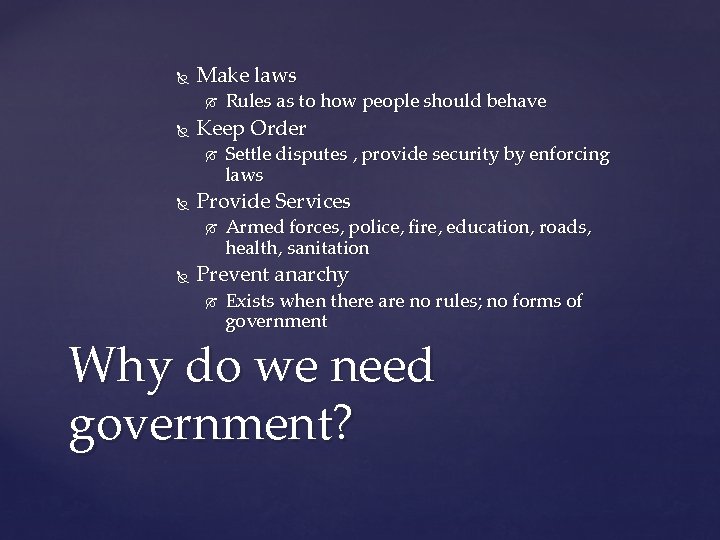
Make laws Keep Order Settle disputes , provide security by enforcing laws Provide Services Rules as to how people should behave Armed forces, police, fire, education, roads, health, sanitation Prevent anarchy Exists when there are no rules; no forms of government Why do we need government?
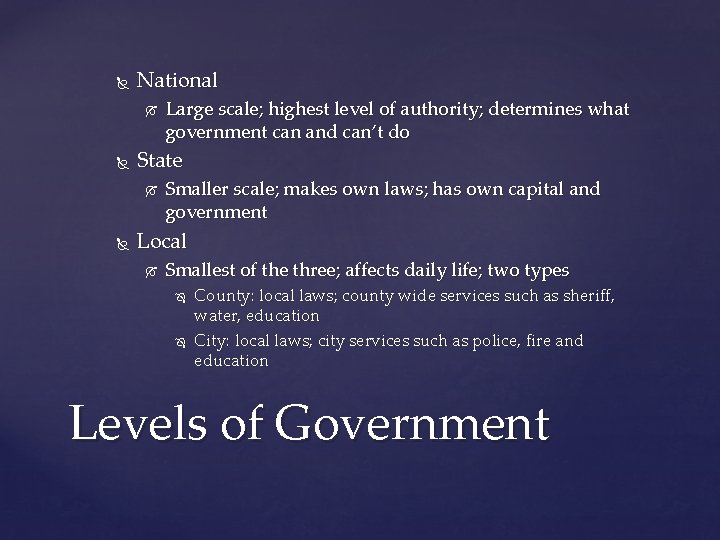
National State Large scale; highest level of authority; determines what government can and can’t do Smaller scale; makes own laws; has own capital and government Local Smallest of the three; affects daily life; two types County: local laws; county wide services such as sheriff, water, education City: local laws; city services such as police, fire and education Levels of Government
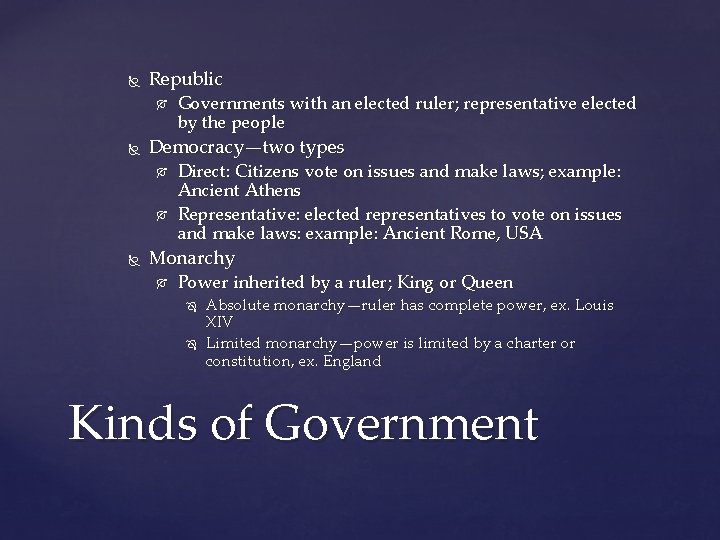
Republic Democracy—two types Governments with an elected ruler; representative elected by the people Direct: Citizens vote on issues and make laws; example: Ancient Athens Representative: elected representatives to vote on issues and make laws: example: Ancient Rome, USA Monarchy Power inherited by a ruler; King or Queen Absolute monarchy—ruler has complete power, ex. Louis XIV Limited monarchy—power is limited by a charter or constitution, ex. England Kinds of Government
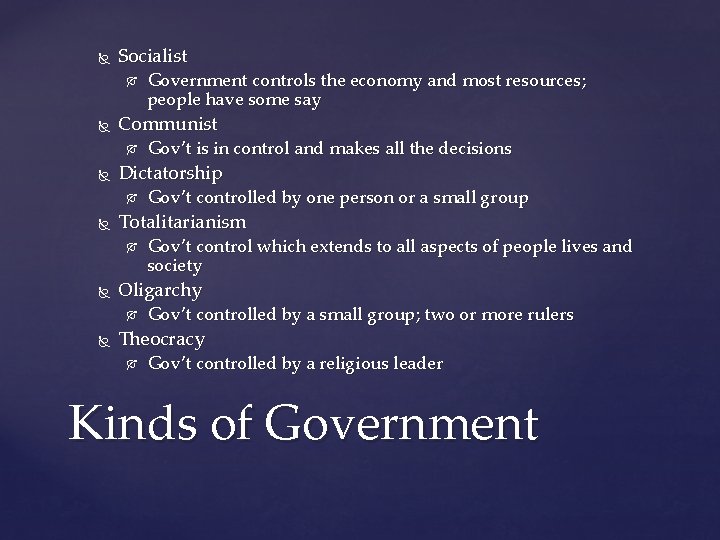
Socialist Communist Gov’t control which extends to all aspects of people lives and society Oligarchy Gov’t controlled by one person or a small group Totalitarianism Gov’t is in control and makes all the decisions Dictatorship Government controls the economy and most resources; people have some say Gov’t controlled by a small group; two or more rulers Theocracy Gov’t controlled by a religious leader Kinds of Government
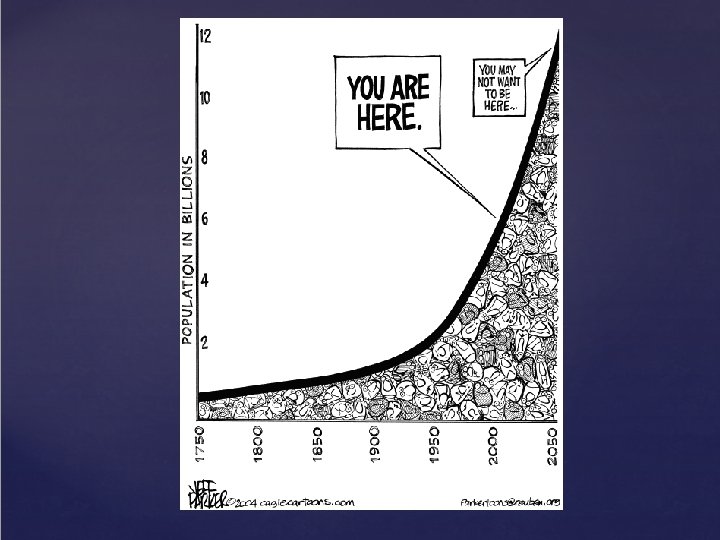
Late 1700 s Today Less than 4 million people (mostly rural, East Coast, farmers) Over 305 million spread over 50 states What caused the growth? ? ? Two Reasons Immigration—leaving home country to live in new country Birthrate– 1. originally high need for children on farms and high infant mortality 2. declining death rate American Population
What is a citizen? A person with certain rights and responsibilities Two ways to become a citizen: Born a citizen: born on US soil or if parent is a citizen Naturalization: the legal process to become a citizen; requires passing of a written examination Citizenship
Born anywhere in any part of the United States If your parents are citizens, no matter where you are born Possible to be a dual citizen at birth How do you think this is possible? Citizen by Birth
Five Requirements: 1. File an intent form 2. Live in the U. S. for 5 years 3. Be 18 years old 4. Take naturalization test U. S. History, English, Civics Take citizenship oath Pledge loyalty to the United States Naturalization
"I hereby declare, on oath, that I absolutely and entirely renounce and abjure allegiance and fidelity to any foreign prince, potentate, state, or sovereignty, of whom or which I have heretofore been a subject or citizen; that I will support and defend the Constitution and laws of the United States of America against all enemies, foreign and domestic; that I will bear true faith and allegiance to the same; that I will bear arms on behalf of the United States when required by the law; that I will perform noncombatant service in the Armed Forces of the United States when required by the law; that I will perform work of national importance under civilian direction when required by the law; and that I take this obligation freely, without any mental reservation or purpose of evasion; so help me God. " Oath of Citizenship
Legal Alien Immigrant Person who leaves country of birth to live in another country Visa Has written permission to be in the U. S. : permission obtained through the state department and U. S. Embassies Can’t vote or hold public office Have same legal rights as citizens; has all civil rights such as work, own property, be safe Granted to tourists Green card Granted to foreign workers Legal Aliens
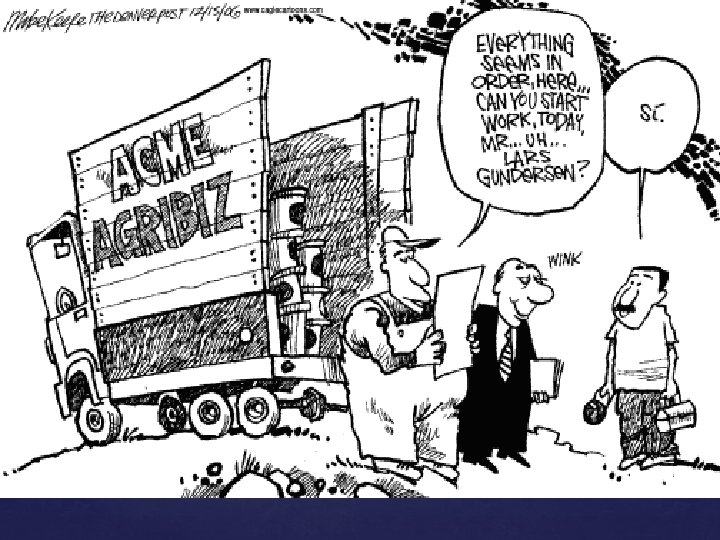
Have no permission to be in the United States Cannot do anything legally in the U. S. (vote, hold office, work) Can be deported if found; sent back to home country Why would someone come here if they would be an illegal alien? To escape harsh rule, poverty, religious or political oppression Illegal Aliens
Things you MUST do Duties as Citizens
This is a citizen’s most important duty Helps to maintain order and safety Obey the Laws
Taxes pay for government services: Defense, roads, police, fire, education Types of Taxes Income, property, sales Pay Taxes
All men 18 years of age must register with Selective Service Government has the right to draft in case of war Defend the Nation
Every citizen must serve on a jury if called Serve as a witness at a trial if called Serve in Court
Required to attend until age 16 Help us acquire skills and knowledge needed to be a good citizen Go to School
Things we SHOULD do as citizens Responsibilities
We should stay informed about what our government is doing Voice our opinion Know your rights Be Informed
Your way to exercise self-government Make your voice heard; express your opinion Important to the function of democratic institutions Leadership changed in an orderly manner Vote in Elections
Communities and government need people to participate by volunteering Volunteering contributes to the common good Participate
Show respect for others’ property, even public property We all pay for damage to public property (repaired with tax dollars) Respect for Property
Respect others’ rights Example: keep volume down on radio and/or television Don’t disturb others Respect for Others
Put yourselves into groups of 5. Research an issue or problem in our government/society. Brainstorm with your group and come up with an idea of how you as citizens can help. Write a three paragraph essay stating and explaining the issue and your proposed solution. Then research and list at least 5 volunteer opportunities in our community. Research
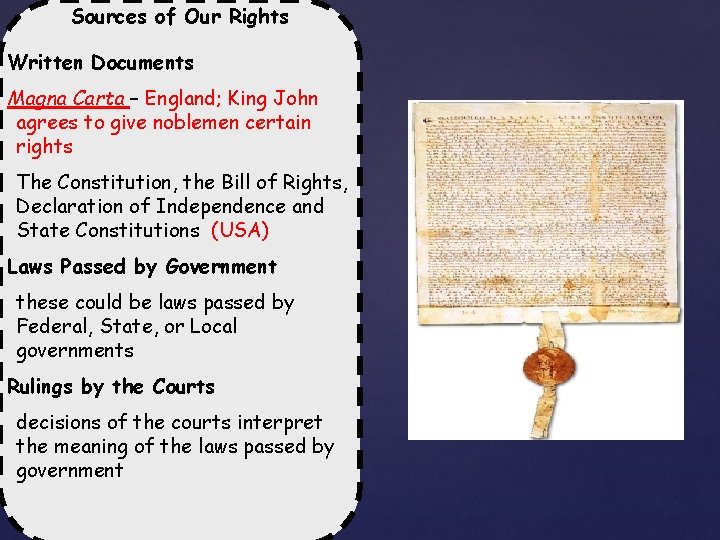
Sources of Our Rights Written Documents Magna Carta – England; King John agrees to give noblemen certain rights The Constitution, the Bill of Rights, Declaration of Independence and State Constitutions (USA) Laws Passed by Government these could be laws passed by Federal, State, or Local governments Rulings by the Courts decisions of the courts interpret the meaning of the laws passed by government
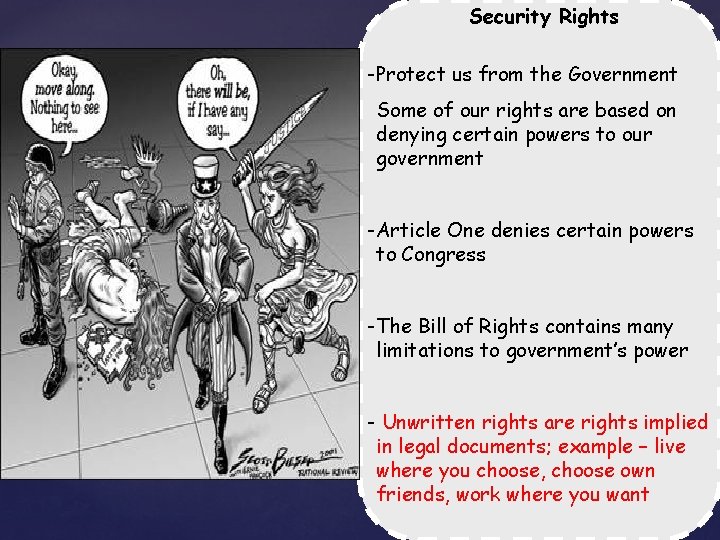
Security Rights -Protect us from the Government Some of our rights are based on denying certain powers to our government -Article One denies certain powers to Congress -The Bill of Rights contains many limitations to government’s power - Unwritten rights are rights implied in legal documents; example – live where you choose, choose own friends, work where you want
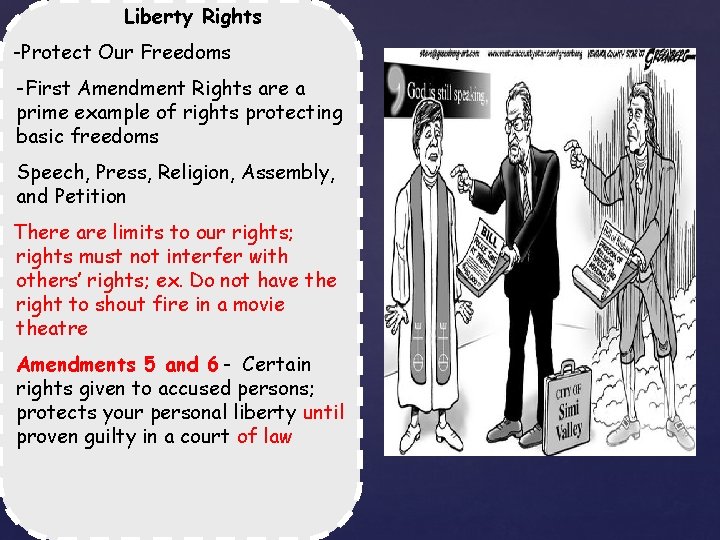
Liberty Rights -Protect Our Freedoms -First Amendment Rights are a prime example of rights protecting basic freedoms Speech, Press, Religion, Assembly, and Petition There are limits to our rights; rights must not interfer with others’ rights; ex. Do not have the right to shout fire in a movie theatre Amendments 5 and 6 - Certain rights given to accused persons; protects your personal liberty until proven guilty in a court of law
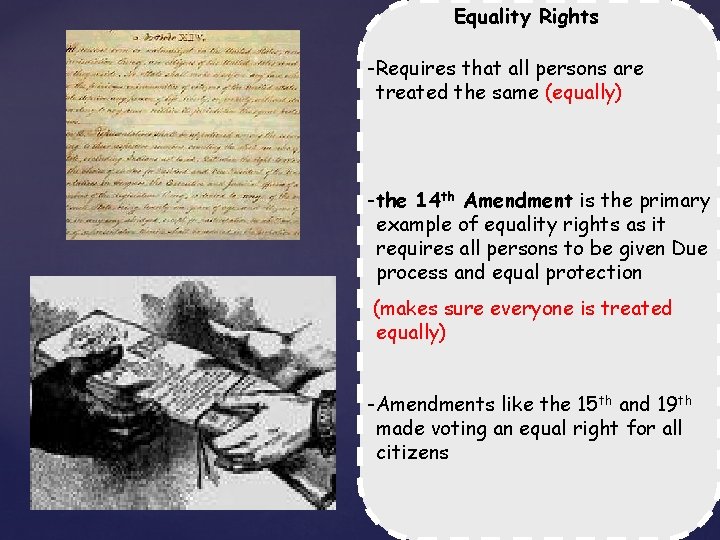
Equality Rights -Requires that all persons are treated the same (equally) -the 14 th Amendment is the primary example of equality rights as it requires all persons to be given Due process and equal protection (makes sure everyone is treated equally) -Amendments like the 15 th and 19 th made voting an equal right for all citizens
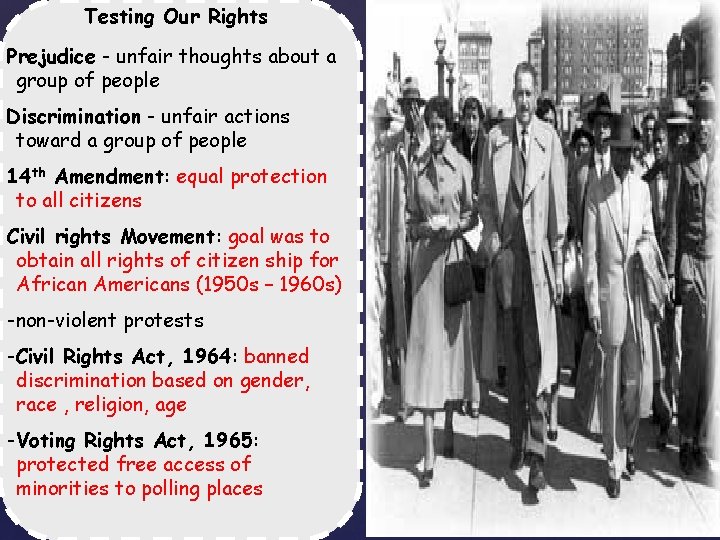
Testing Our Rights Prejudice - unfair thoughts about a group of people Discrimination - unfair actions toward a group of people 14 th Amendment: equal protection to all citizens Civil rights Movement: goal was to obtain all rights of citizen ship for African Americans (1950 s – 1960 s) -non-violent protests -Civil Rights Act, 1964: banned discrimination based on gender, race , religion, age -Voting Rights Act, 1965: protected free access of minorities to polling places
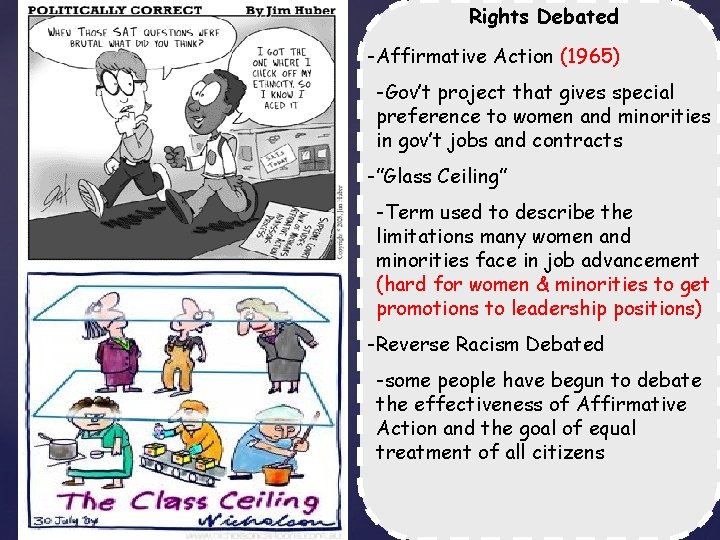
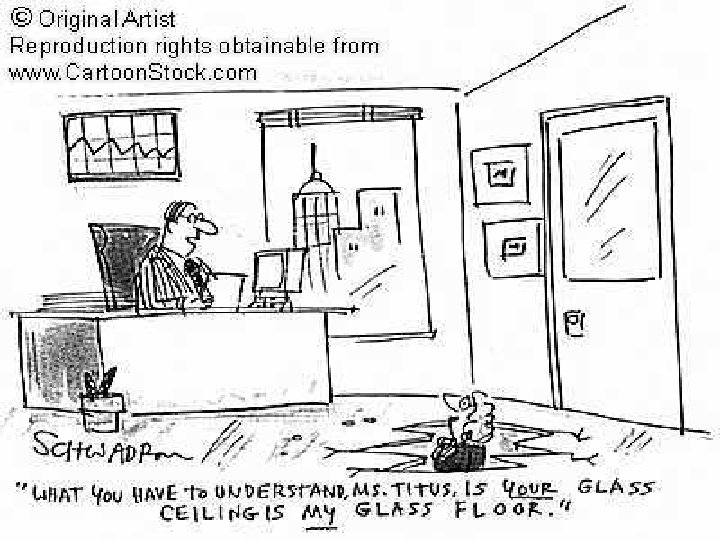
Rights Debated -Affirmative Action (1965) -Gov’t project that gives special preference to women and minorities in gov’t jobs and contracts -”Glass Ceiling” -Term used to describe the limitations many women and minorities face in job advancement (hard for women & minorities to get promotions to leadership positions) -Reverse Racism Debated -some people have begun to debate the effectiveness of Affirmative Action and the goal of equal treatment of all citizens
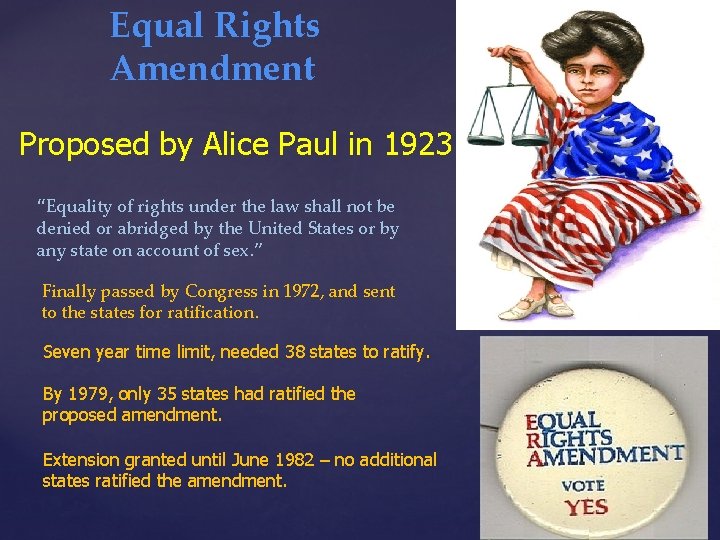
Equal Rights Amendment Proposed by Alice Paul in 1923 “Equality of rights under the law shall not be denied or abridged by the United States or by any state on account of sex. ” Finally passed by Congress in 1972, and sent to the states for ratification. Seven year time limit, needed 38 states to ratify. By 1979, only 35 states had ratified the proposed amendment. Extension granted until June 1982 – no additional states ratified the amendment.
Who Are Americans? { E Pluribus Unum “out of many, one” (America’s Motto)
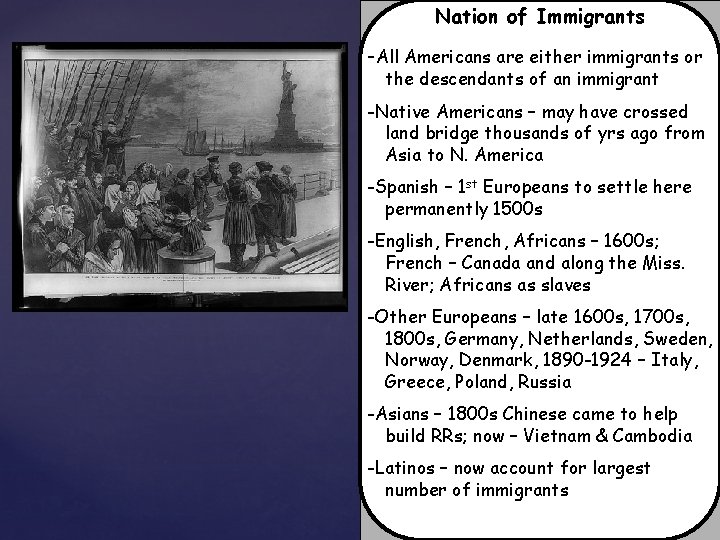
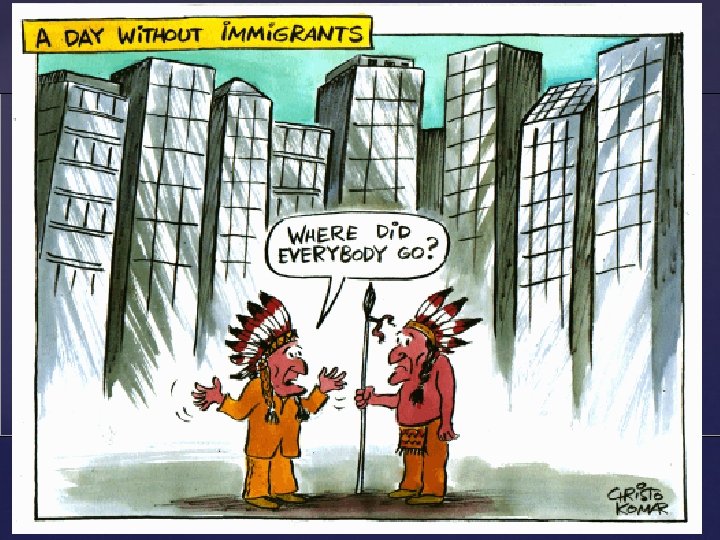
Nation of Immigrants -All Americans are either immigrants or the descendants of an immigrant -Native Americans – may have crossed land bridge thousands of yrs ago from Asia to N. America -Spanish – 1 st Europeans to settle here permanently 1500 s -English, French, Africans – 1600 s; French – Canada and along the Miss. River; Africans as slaves -Other Europeans – late 1600 s, 1700 s, 1800 s, Germany, Netherlands, Sweden, Norway, Denmark, 1890 -1924 – Italy, Greece, Poland, Russia -Asians – 1800 s Chinese came to help build RRs; now – Vietnam & Cambodia -Latinos – now account for largest number of immigrants
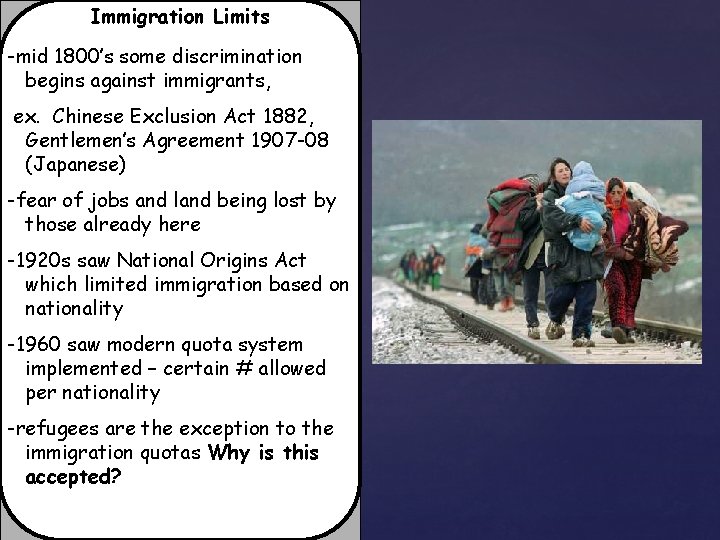
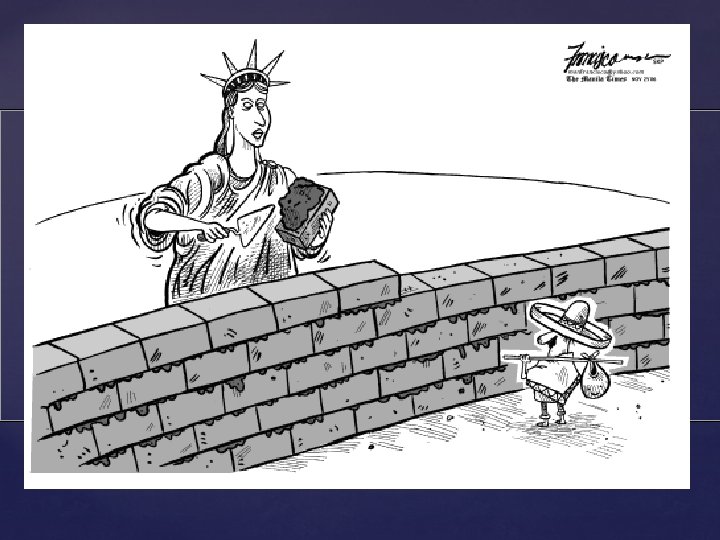
Immigration Limits -mid 1800’s some discrimination begins against immigrants, ex. Chinese Exclusion Act 1882, Gentlemen’s Agreement 1907 -08 (Japanese) -fear of jobs and land being lost by those already here -1920 s saw National Origins Act which limited immigration based on nationality -1960 saw modern quota system implemented – certain # allowed per nationality -refugees are the exception to the immigration quotas Why is this accepted?
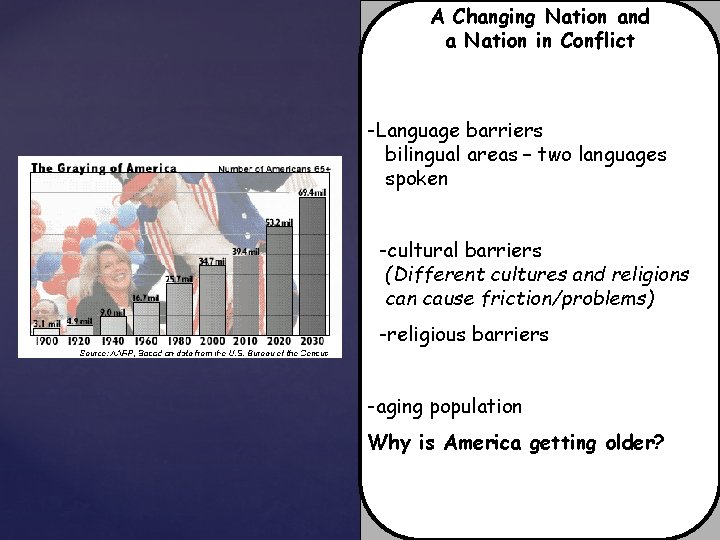
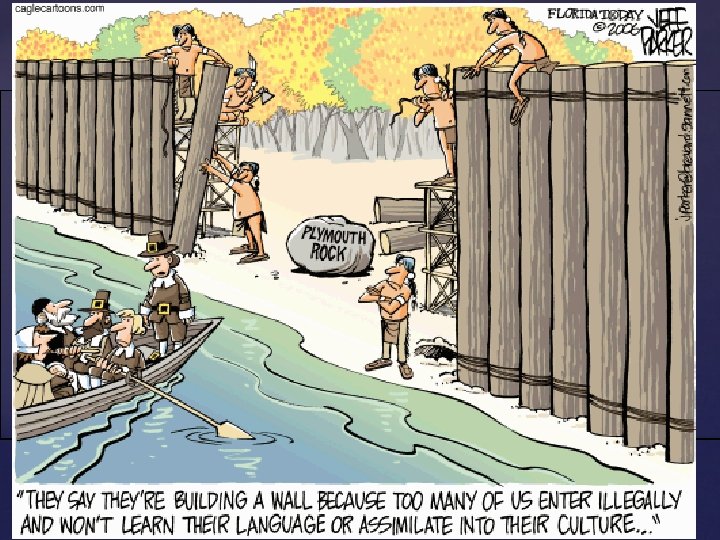
A Changing Nation and a Nation in Conflict -Language barriers bilingual areas – two languages spoken -cultural barriers (Different cultures and religions can cause friction/problems) -religious barriers -aging population Why is America getting older?
Values We Share American Dream – right to life liberty and the pursuit of happiness Ex. Home ownership -Legacy of freedoms -Government by the People -equality of all persons (14 th Amendment) -Justice Civic virtue – morality of citizens; good qualities of citizenship -Imperfect Society in reality Gap between rich and poor ex.
- Slides: 46