
Unit 1 Chapter 5 Mineral Nutrition 1 Essential

- Slides: 78
Unit 1 Chapter 5 Mineral Nutrition 1
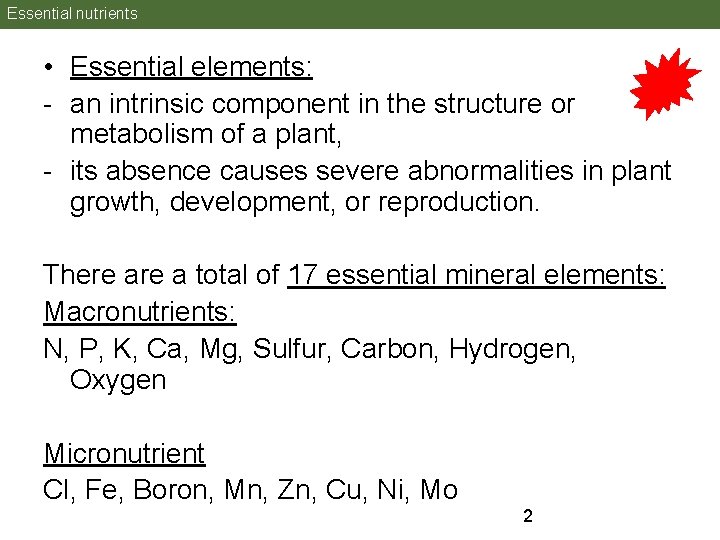
Essential nutrients • Essential elements: - an intrinsic component in the structure or metabolism of a plant, - its absence causes severe abnormalities in plant growth, development, or reproduction. There a total of 17 essential mineral elements: Macronutrients: N, P, K, Ca, Mg, Sulfur, Carbon, Hydrogen, Oxygen Micronutrient Cl, Fe, Boron, Mn, Zn, Cu, Ni, Mo 2
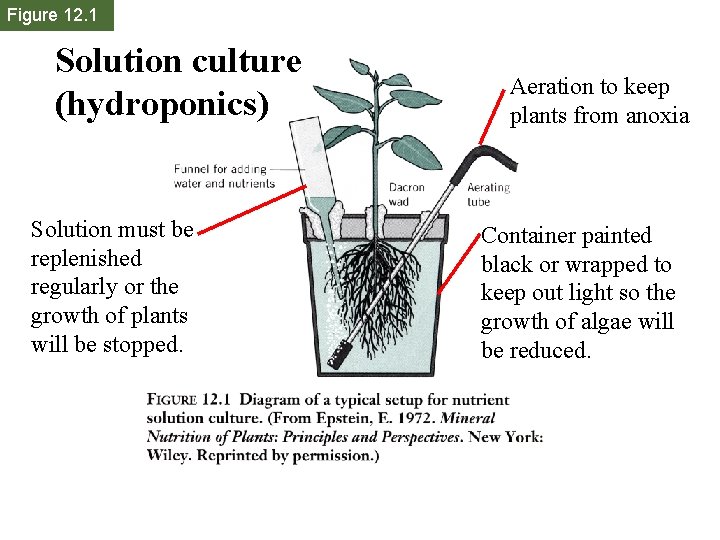
Figure 12. 1 Solution culture (hydroponics) Solution must be replenished regularly or the growth of plants will be stopped. Aeration to keep plants from anoxia Container painted black or wrapped to keep out light so the growth of algae will be reduced.
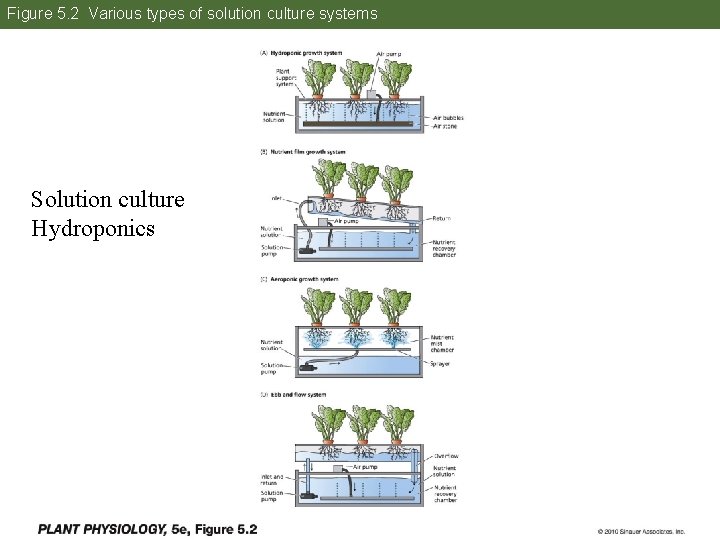
Figure 5. 2 Various types of solution culture systems Solution culture Hydroponics 4
Plant and Inorganic Nutrients • The acquisition of inorganic nutrients (minerals) is part of the plant nutrition. • Plant nutrition can be viewed as two parts: organic nutrition, which is mainly dealing with photosynthesis; and inorganic nutrition. • Organic nutrition (photosynthesis) and inorganic nutrition are highly interdependent.
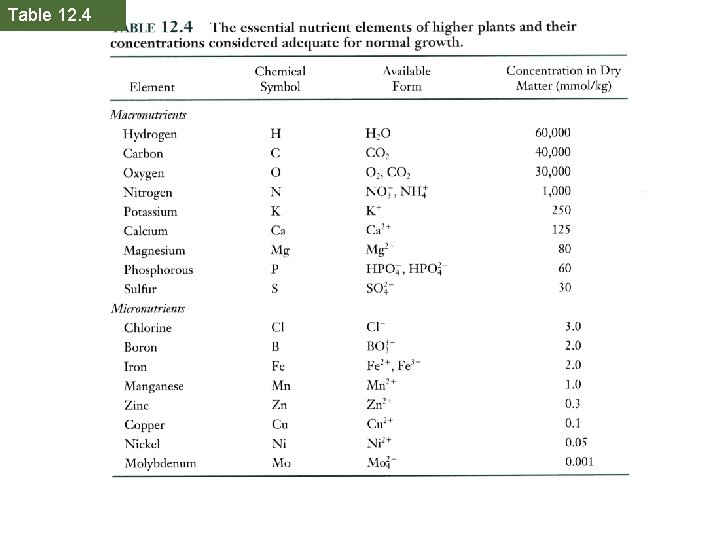
Essential nutrient elements There are 17 essential elements in plants. Absence of any one of the element could prevent plants from completing its normal life cycle or some essential plant constituent or metabolite will not be manufactured. According to the relative concentrations found in tissue (or the relative concentrations required in nutrient solution), these 17 elements are classified as macronutrients and micronutrients (trace elements). Macronutrients are more than 10 mmole per kilogram of dry weight, micronutrient are less than 10 mmole per kilogram of dry weight.
Chapter Outline • Mineral nutrition study methods • Essential and benefical elements • Macronutrients and micronutrients • The metabolic roles of the 17 essential mineral elements • The concept of critical and deficient concentration • Deficiency symptoms • Micronutrient toxicity
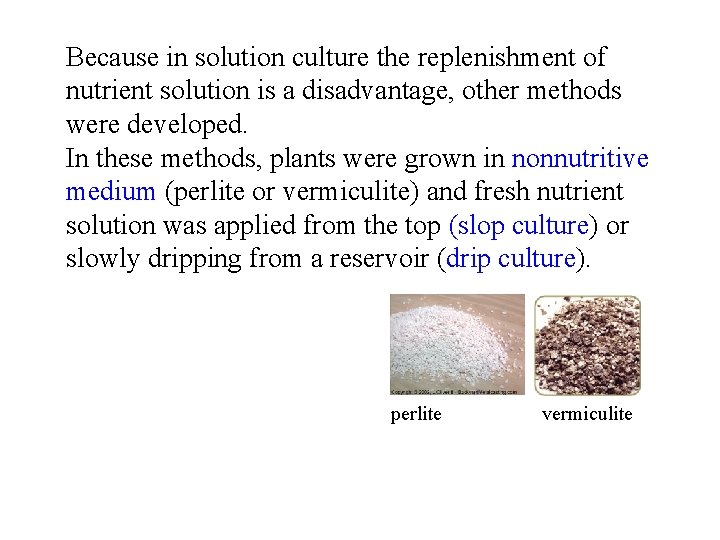
Because in solution culture the replenishment of nutrient solution is a disadvantage, other methods were developed. In these methods, plants were grown in nonnutritive medium (perlite or vermiculite) and fresh nutrient solution was applied from the top (slop culture) or slowly dripping from a reservoir (drip culture). perlite vermiculite
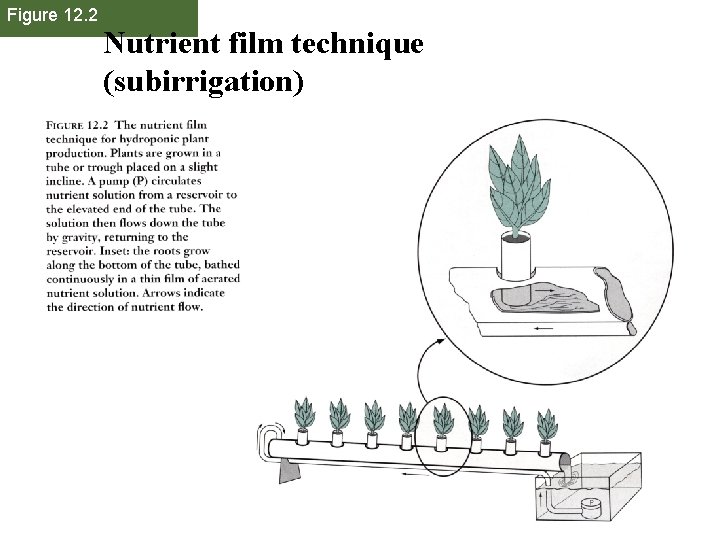
Figure 12. 2 Nutrient film technique (subirrigation)
Table 12. 4
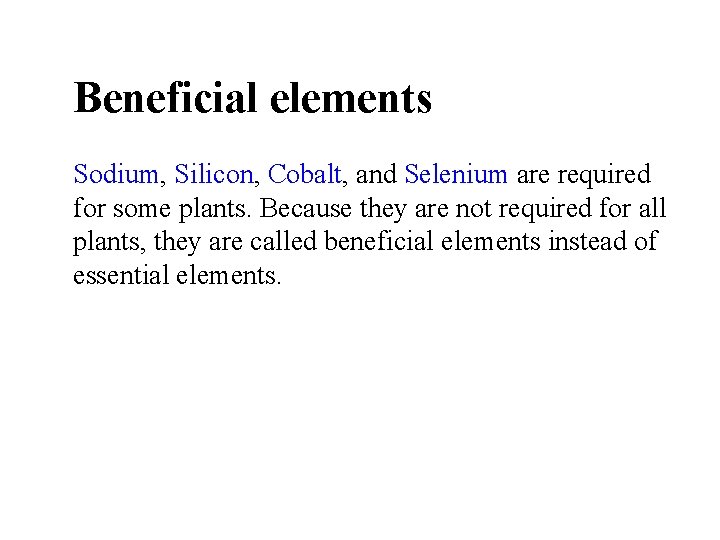
Beneficial elements Sodium, Silicon, Cobalt, and Selenium are required for some plants. Because they are not required for all plants, they are called beneficial elements instead of essential elements.
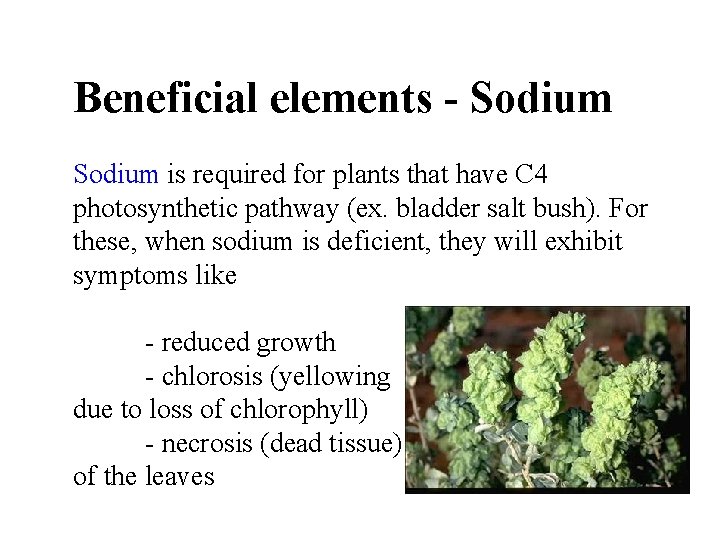
Beneficial elements - Sodium is required for plants that have C 4 photosynthetic pathway (ex. bladder salt bush). For these, when sodium is deficient, they will exhibit symptoms like - reduced growth - chlorosis (yellowing due to loss of chlorophyll) - necrosis (dead tissue) of the leaves
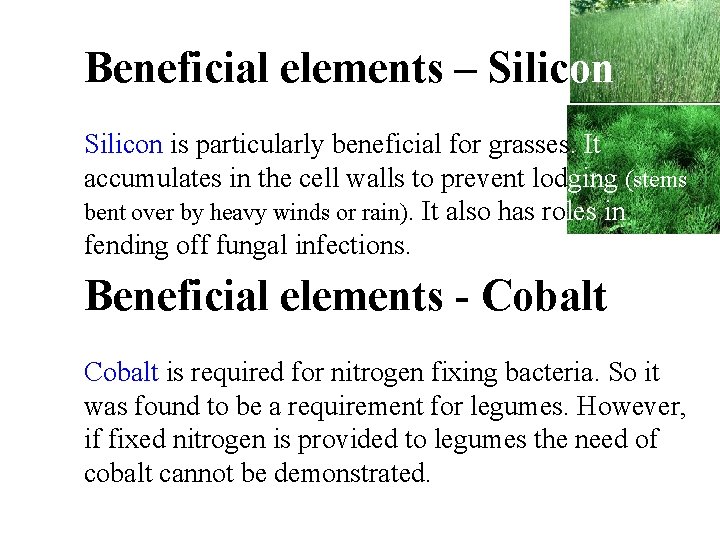
Beneficial elements – Silicon is particularly beneficial for grasses. It accumulates in the cell walls to prevent lodging (stems bent over by heavy winds or rain). It also has roles in fending off fungal infections. Beneficial elements - Cobalt is required for nitrogen fixing bacteria. So it was found to be a requirement for legumes. However, if fixed nitrogen is provided to legumes the need of cobalt cannot be demonstrated.
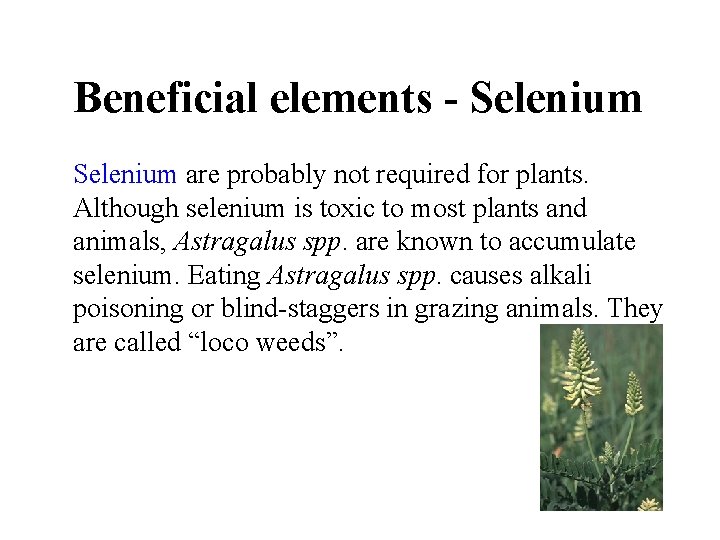
Beneficial elements - Selenium are probably not required for plants. Although selenium is toxic to most plants and animals, Astragalus spp. are known to accumulate selenium. Eating Astragalus spp. causes alkali poisoning or blind-staggers in grazing animals. They are called “loco weeds”.
Nutrient roles and deficiency symptoms It is difficult to categorize the nutrient element according to their functions because one nutrient element could have several different functions.
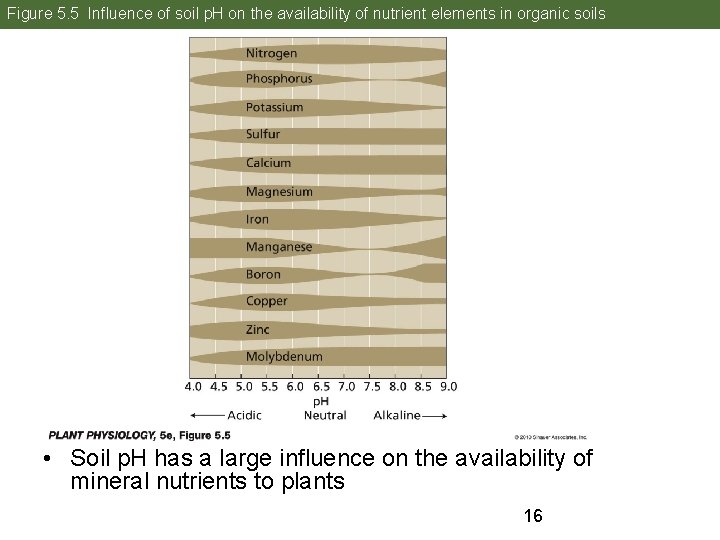
Figure 5. 5 Influence of soil p. H on the availability of nutrient elements in organic soils • Soil p. H has a large influence on the availability of mineral nutrients to plants 16
• The soil is a complex substrate – physically, chemically, and biologically. The size of soil particles and the cation exchange capacity of the soil determines the extent to which a soil provides a reservoir for water and nutrients • A soil with higher cation exchange capacity generally has a larger reserve of mineral nutrients
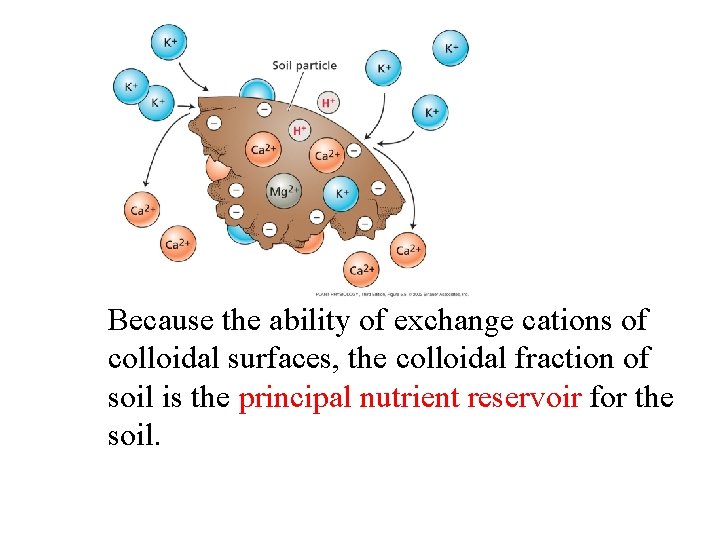
Because the ability of exchange cations of colloidal surfaces, the colloidal fraction of soil is the principal nutrient reservoir for the soil.
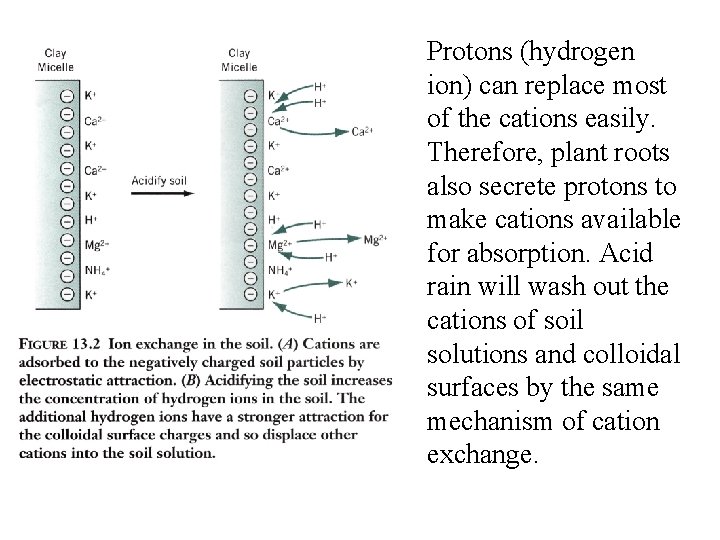
Protons (hydrogen ion) can replace most of the cations easily. Therefore, plant roots also secrete protons to make cations available for absorption. Acid rain will wash out the cations of soil solutions and colloidal surfaces by the same mechanism of cation exchange.
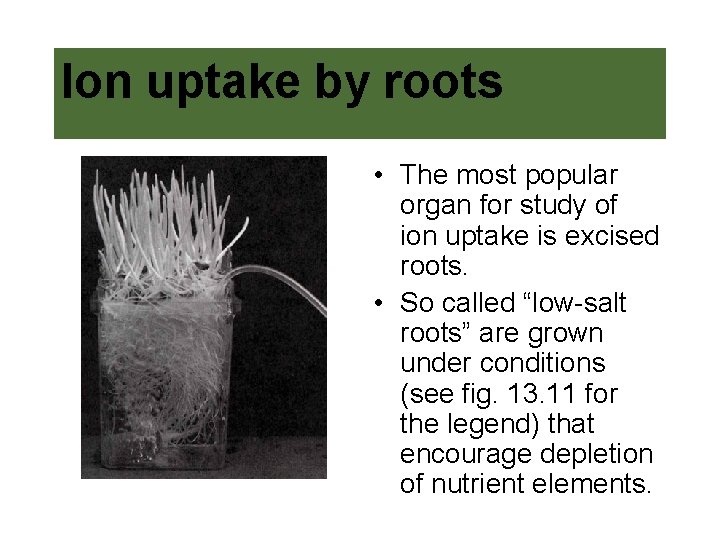
Ion uptake by roots • The most popular organ for study of ion uptake is excised roots. • So called “low-salt roots” are grown under conditions (see fig. 13. 11 for the legend) that encourage depletion of nutrient elements.
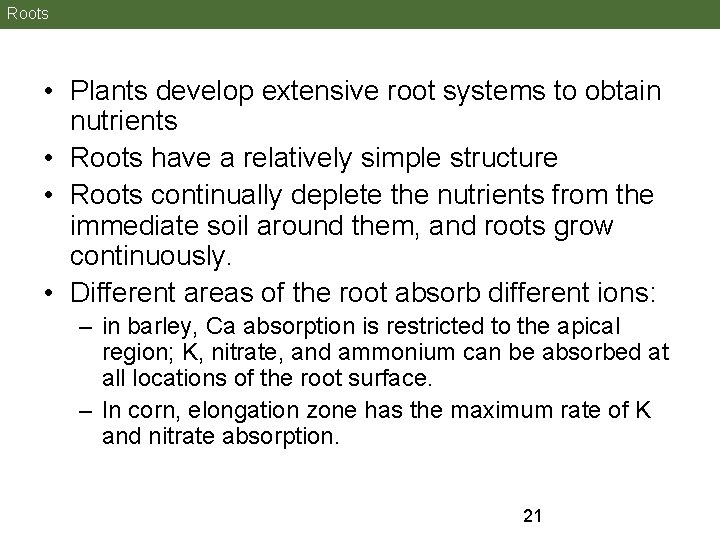
Roots • Plants develop extensive root systems to obtain nutrients • Roots have a relatively simple structure • Roots continually deplete the nutrients from the immediate soil around them, and roots grow continuously. • Different areas of the root absorb different ions: – in barley, Ca absorption is restricted to the apical region; K, nitrate, and ammonium can be absorbed at all locations of the root surface. – In corn, elongation zone has the maximum rate of K and nitrate absorption. 21
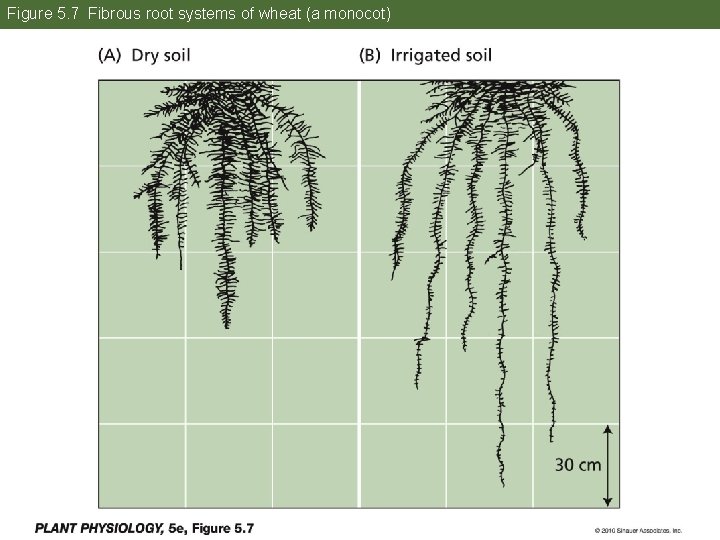
Figure 5. 7 Fibrous root systems of wheat (a monocot) 22
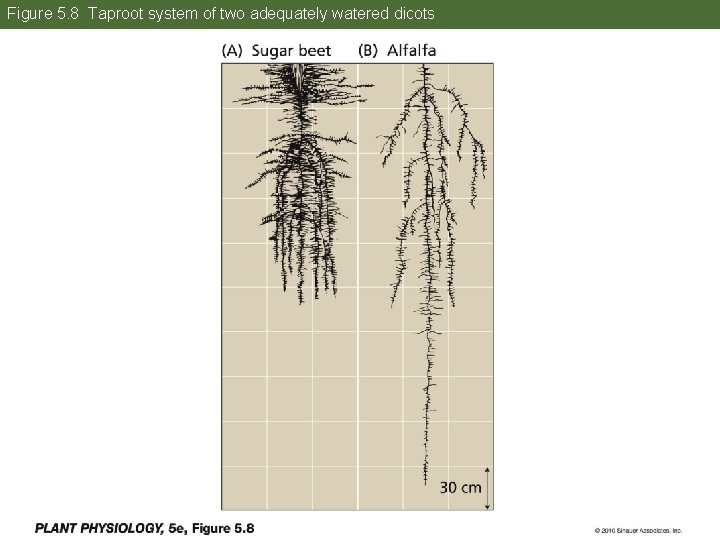
Figure 5. 8 Taproot system of two adequately watered dicots 23
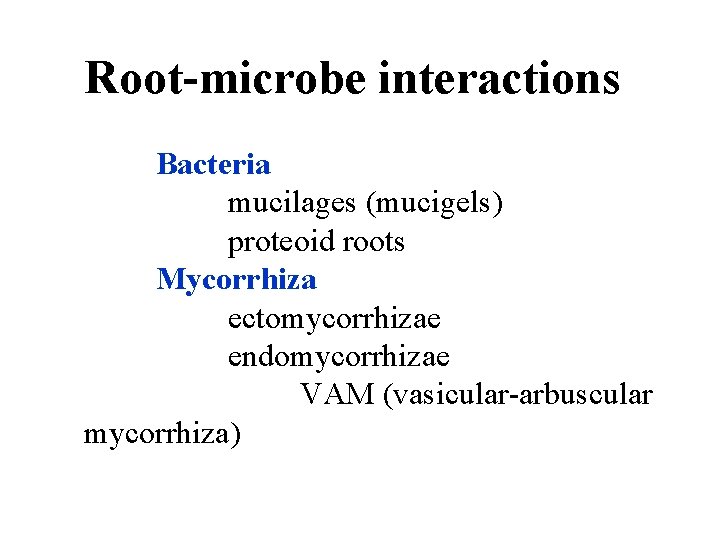
Root-microbe interactions Bacteria mucilages (mucigels) proteoid roots Mycorrhiza ectomycorrhizae endomycorrhizae VAM (vasicular-arbuscular mycorrhiza)
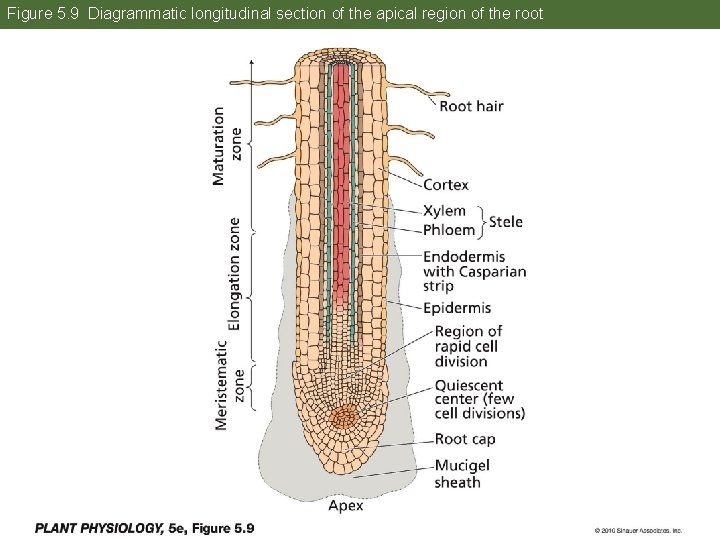
Figure 5. 9 Diagrammatic longitudinal section of the apical region of the root 25
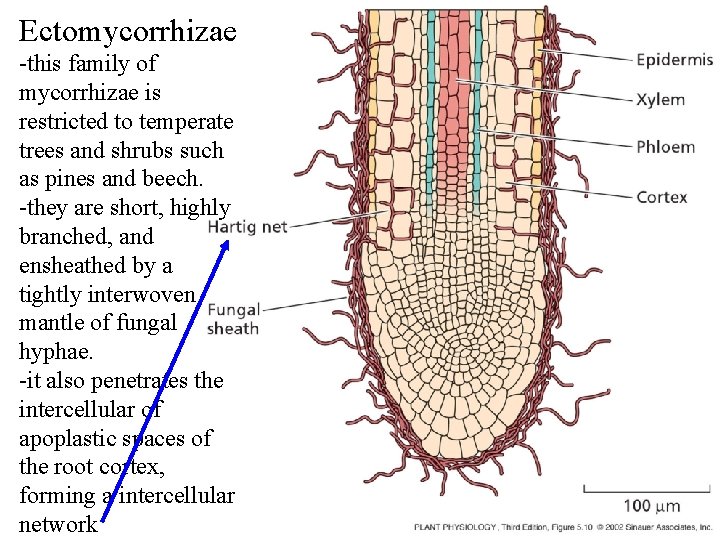
Ectomycorrhizae -this family of mycorrhizae is restricted to temperate trees and shrubs such as pines and beech. -they are short, highly branched, and ensheathed by a tightly interwoven mantle of fungal hyphae. -it also penetrates the intercellular of apoplastic spaces of the root cortex, forming a intercellular network
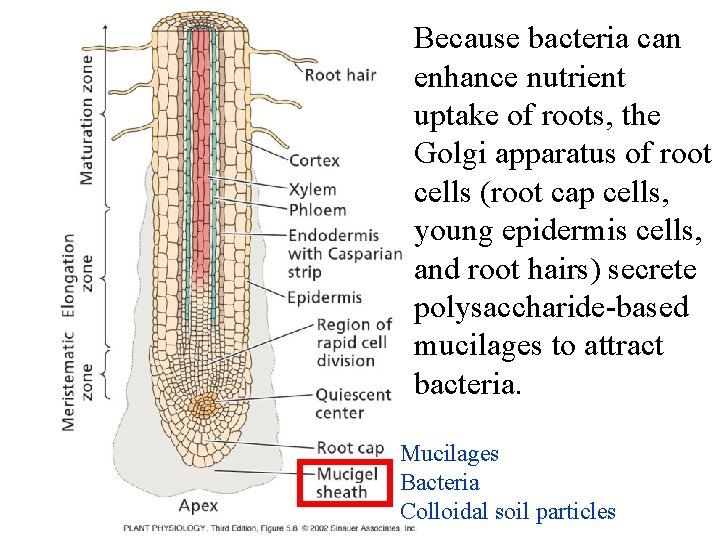
Because bacteria can enhance nutrient uptake of roots, the Golgi apparatus of root cells (root cap cells, young epidermis cells, and root hairs) secrete polysaccharide-based mucilages to attract bacteria. Mucilages Bacteria Colloidal soil particles
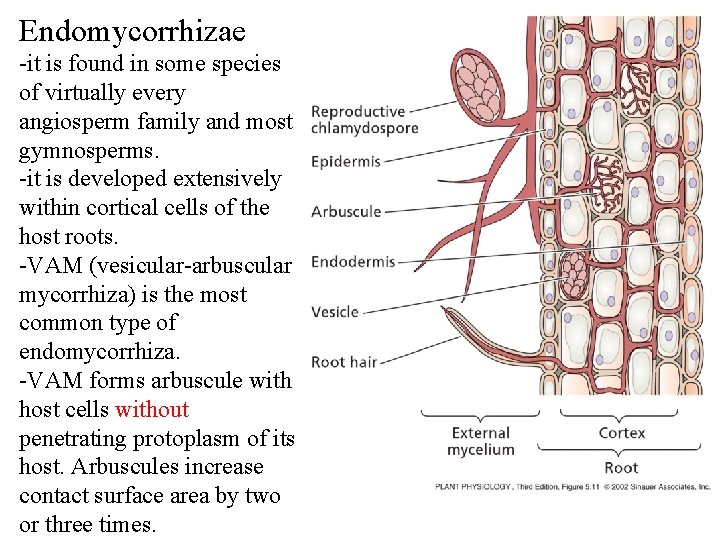
Endomycorrhizae -it is found in some species of virtually every angiosperm family and most gymnosperms. -it is developed extensively within cortical cells of the host roots. -VAM (vesicular-arbuscular mycorrhiza) is the most common type of endomycorrhiza. -VAM forms arbuscule with host cells without penetrating protoplasm of its host. Arbuscules increase contact surface area by two or three times.
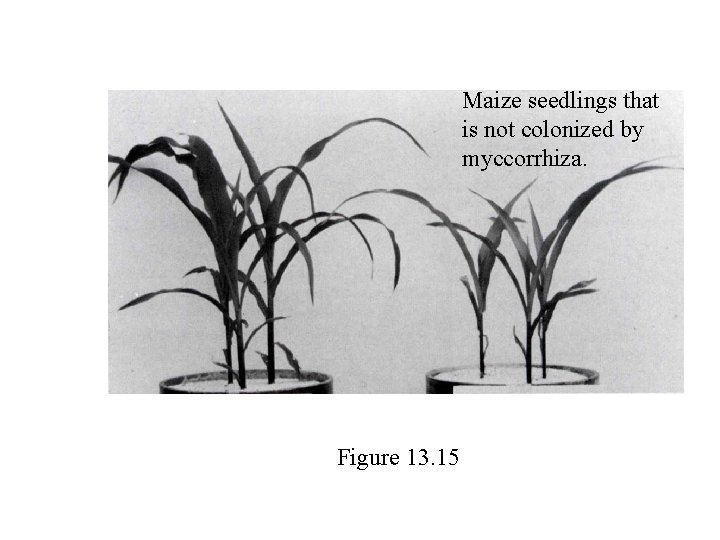
Maize seedlings that is not colonized by myccorrhiza. Figure 13. 15
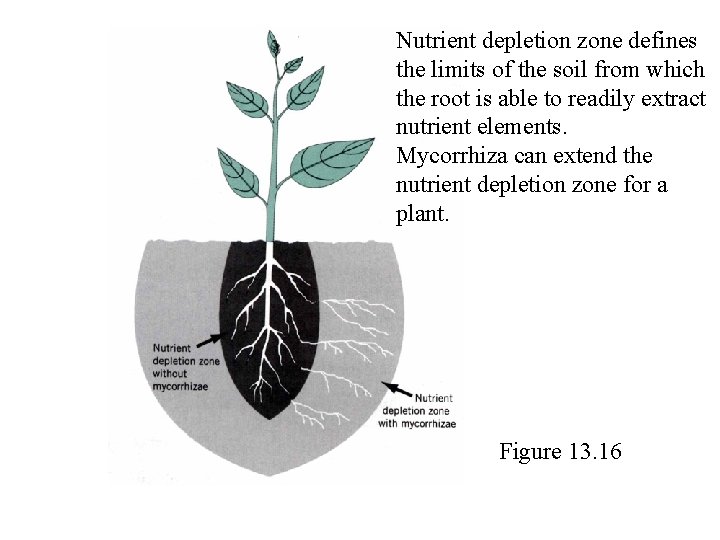
Nutrient depletion zone defines the limits of the soil from which the root is able to readily extract nutrient elements. Mycorrhiza can extend the nutrient depletion zone for a plant. Figure 13. 16
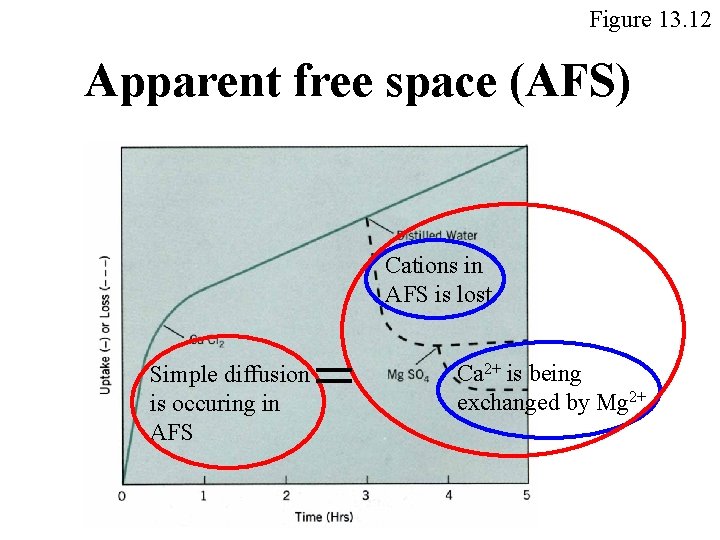
Figure 13. 12 Apparent free space (AFS) Cations in AFS is lost Simple diffusion is occuring in AFS = Ca 2+ is being exchanged by Mg 2+
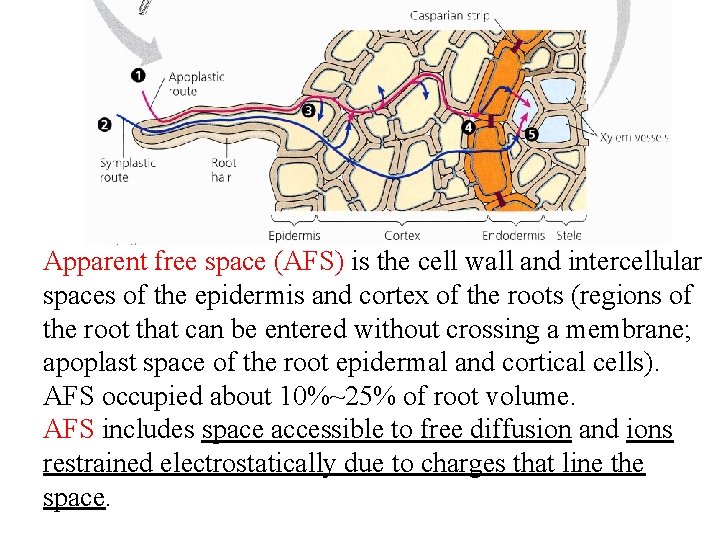
Ions lost in the AFS is a two-step process • Because cell wall component (galacturonic acid residues of pectic acid), which is the main constituent of AFS, is negatively charged, cations will not be readily lost once they have been absorbed. However, it can be exchanged.
Apparent free space (AFS) is the cell wall and intercellular spaces of the epidermis and cortex of the roots (regions of the root that can be entered without crossing a membrane; apoplast space of the root epidermal and cortical cells). AFS occupied about 10%~25% of root volume. AFS includes space accessible to free diffusion and ions restrained electrostatically due to charges that line the space.
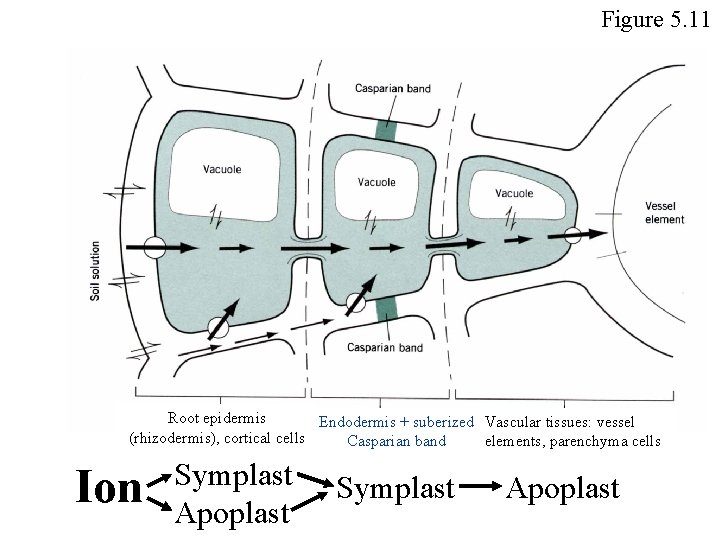
Figure 5. 11 Root epidermis Endodermis + suberized Vascular tissues: vessel (rhizodermis), cortical cells Casparian band elements, parenchyma cells Ion Symplast Apoplast
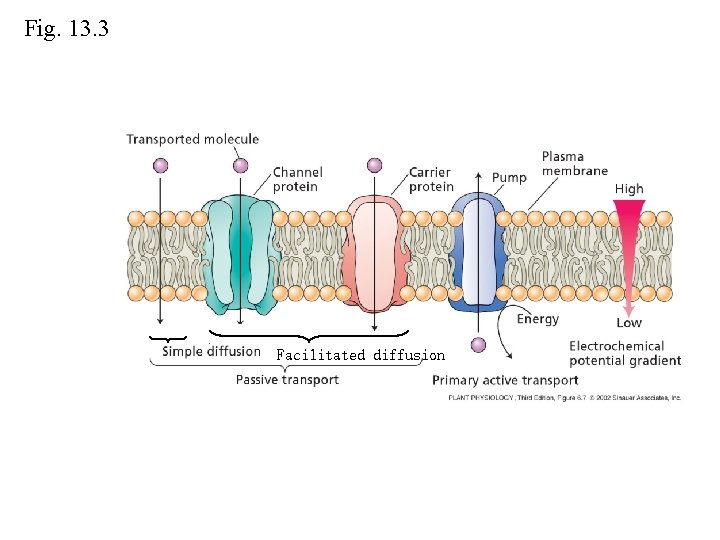
Fig. 13. 3 Facilitated diffusion
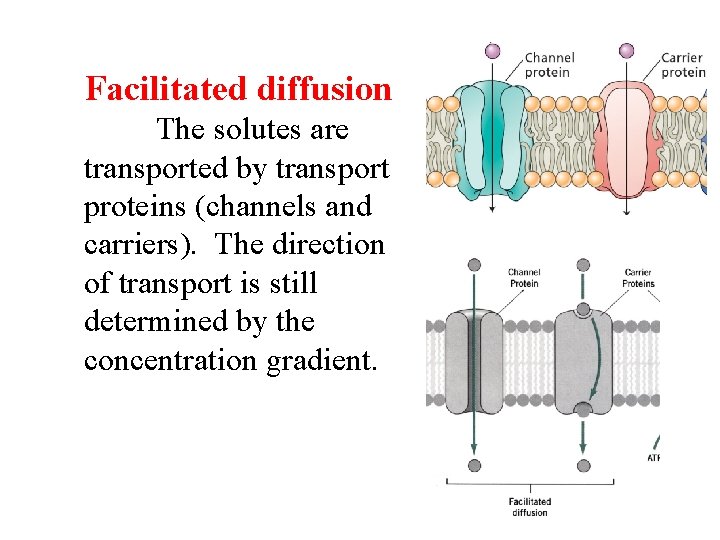
Facilitated diffusion The solutes are transported by transport proteins (channels and carriers). The direction of transport is still determined by the concentration gradient.
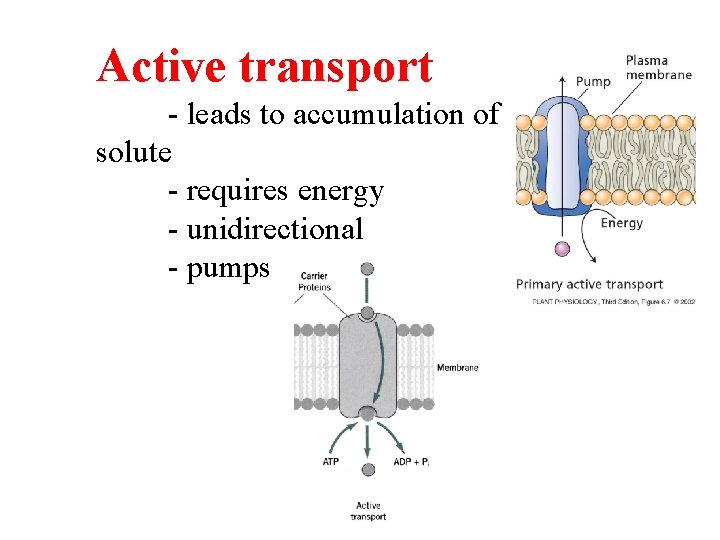
Active transport - leads to accumulation of solute - requires energy - unidirectional - pumps
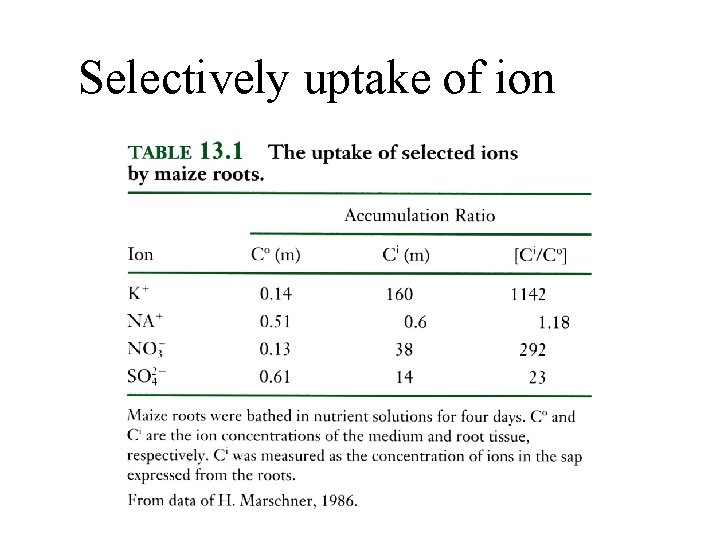
Selectively uptake of ion
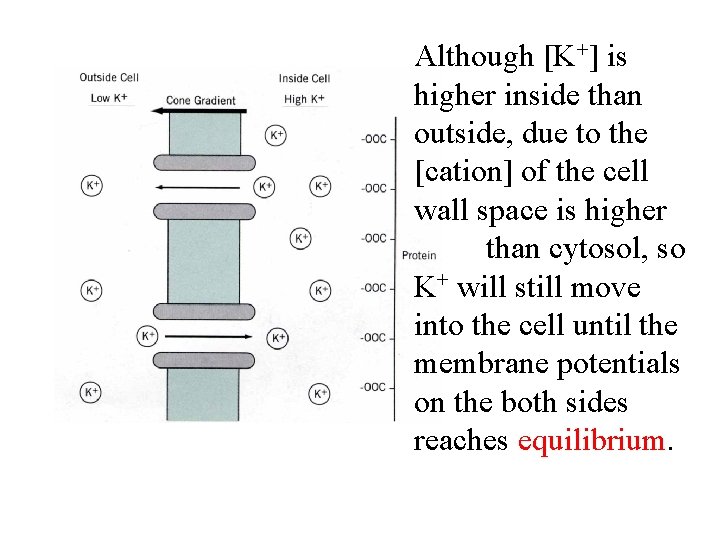
Although [K+] is higher inside than outside, due to the [cation] of the cell wall space is higher than cytosol, so K+ will still move into the cell until the membrane potentials on the both sides reaches equilibrium.
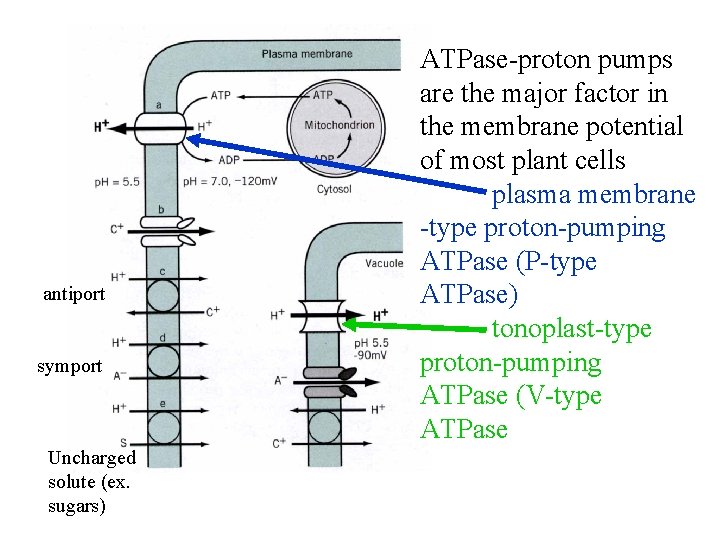
antiport symport Uncharged solute (ex. sugars) ATPase-proton pumps are the major factor in the membrane potential of most plant cells plasma membrane -type proton-pumping ATPase (P-type ATPase) tonoplast-type proton-pumping ATPase (V-type ATPase
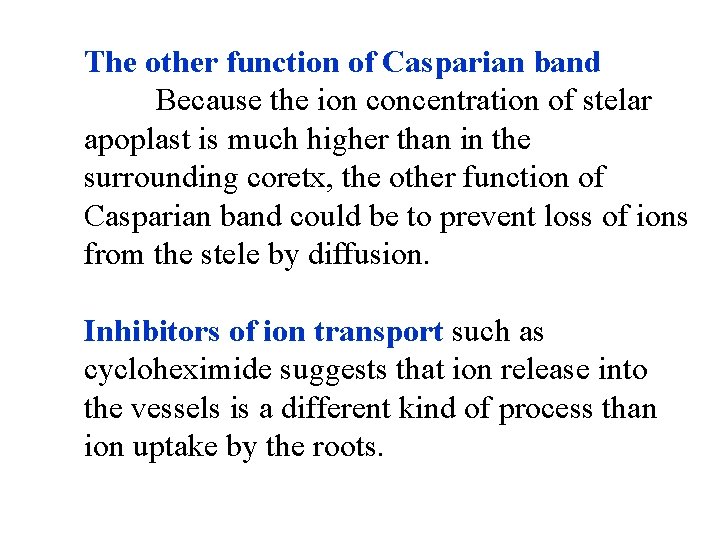
The other function of Casparian band Because the ion concentration of stelar apoplast is much higher than in the surrounding coretx, the other function of Casparian band could be to prevent loss of ions from the stele by diffusion. Inhibitors of ion transport such as cycloheximide suggests that ion release into the vessels is a different kind of process than ion uptake by the roots.
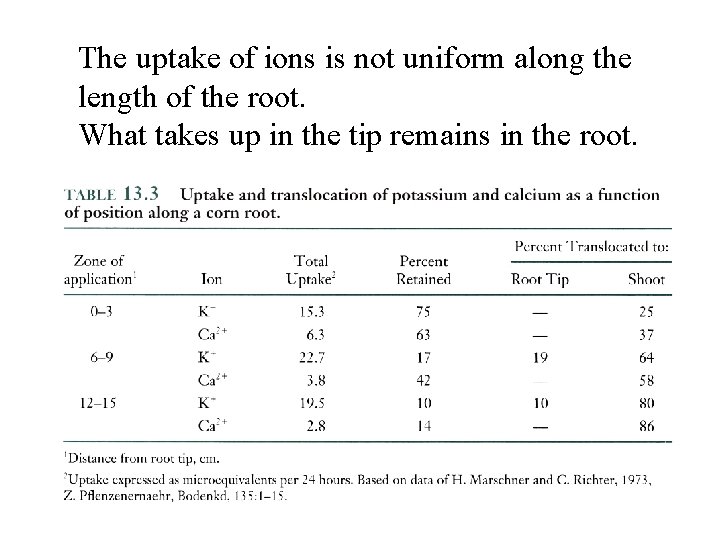
The uptake of ions is not uniform along the length of the root. What takes up in the tip remains in the root.
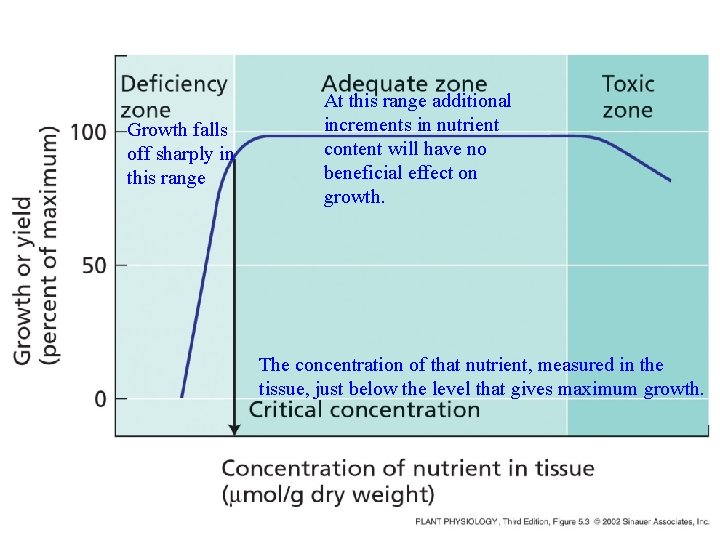
Growth falls off sharply in this range At this range additional increments in nutrient content will have no beneficial effect on growth. The concentration of that nutrient, measured in the tissue, just below the level that gives maximum growth.
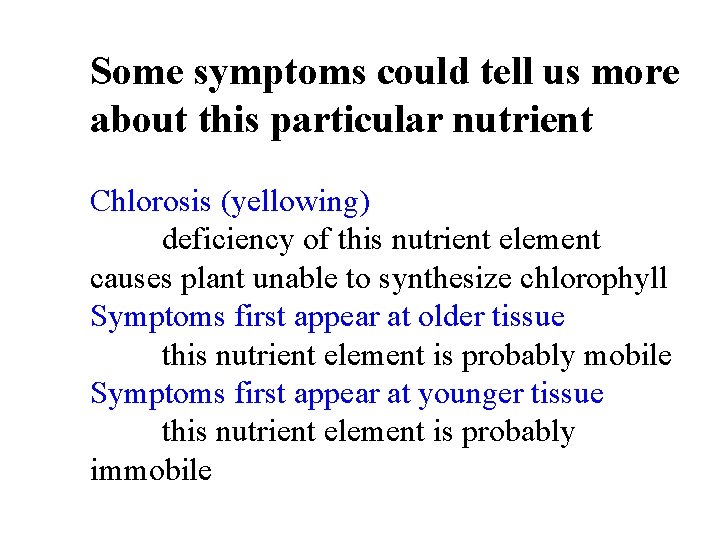
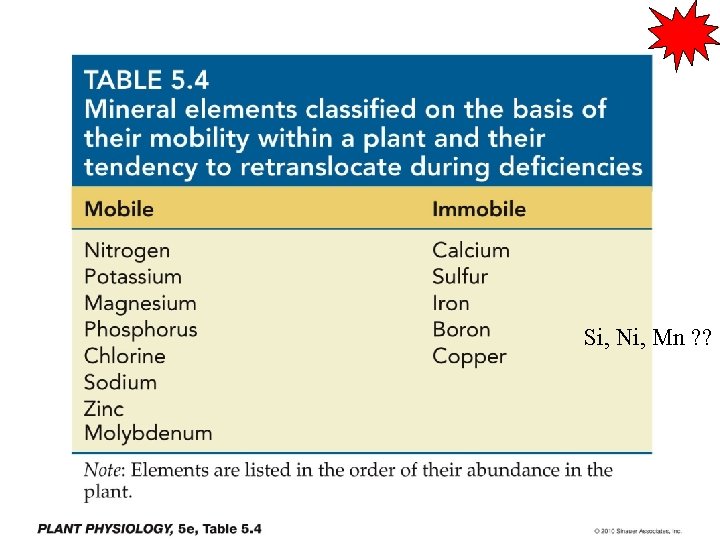
Some symptoms could tell us more about this particular nutrient Chlorosis (yellowing) deficiency of this nutrient element causes plant unable to synthesize chlorophyll Symptoms first appear at older tissue this nutrient element is probably mobile Symptoms first appear at younger tissue this nutrient element is probably immobile
Mineral deficiencies • If an essential element is mobile, deficiency symptoms tend to appear first in older leaves. • Deficiency of an immobile essential element becomes evident first in younger leaves.
Si, Ni, Mn ? ?
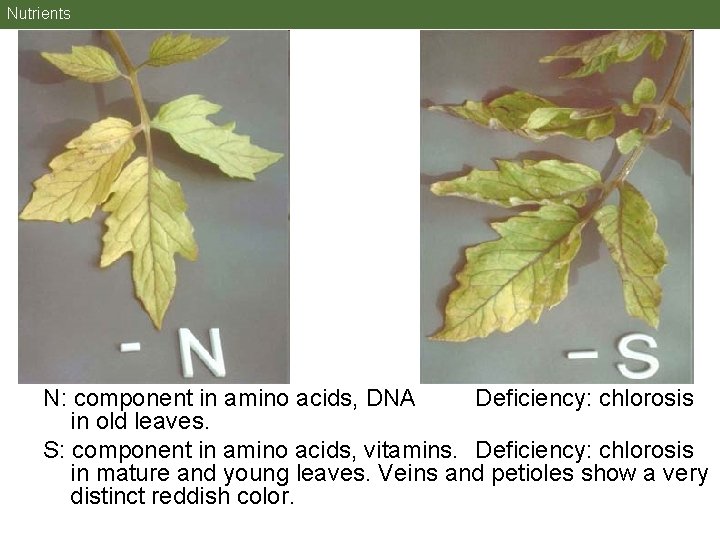
Nutrients N: component in amino acids, DNA Deficiency: chlorosis in old leaves. S: component in amino acids, vitamins. Deficiency: chlorosis in mature and young leaves. Veins and petioles show a very distinct reddish color.
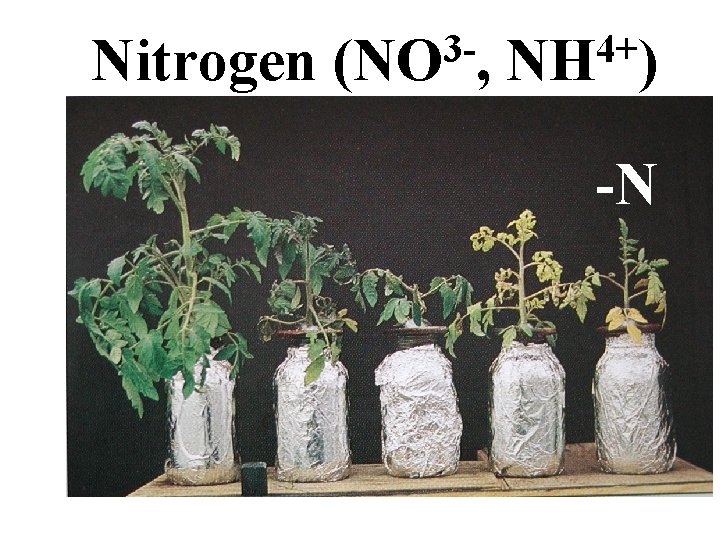
Nitrogen 3(NO , 4+ NH ) -N
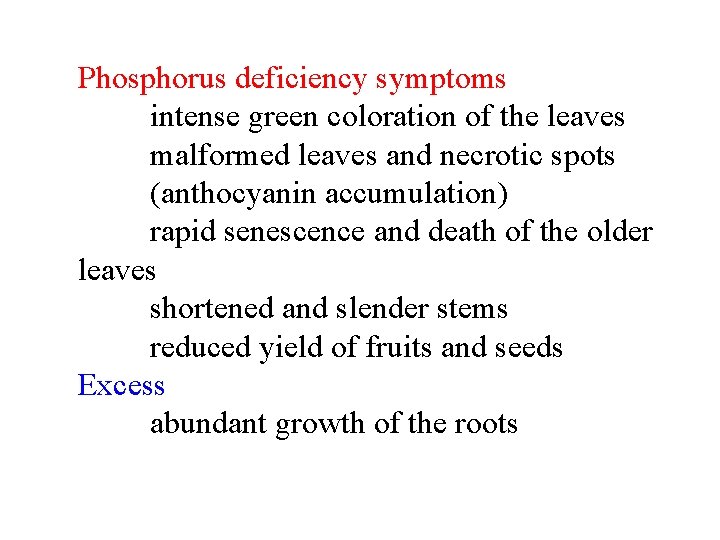
Phosphorus deficiency symptoms intense green coloration of the leaves malformed leaves and necrotic spots (anthocyanin accumulation) rapid senescence and death of the older leaves shortened and slender stems reduced yield of fruits and seeds Excess abundant growth of the roots
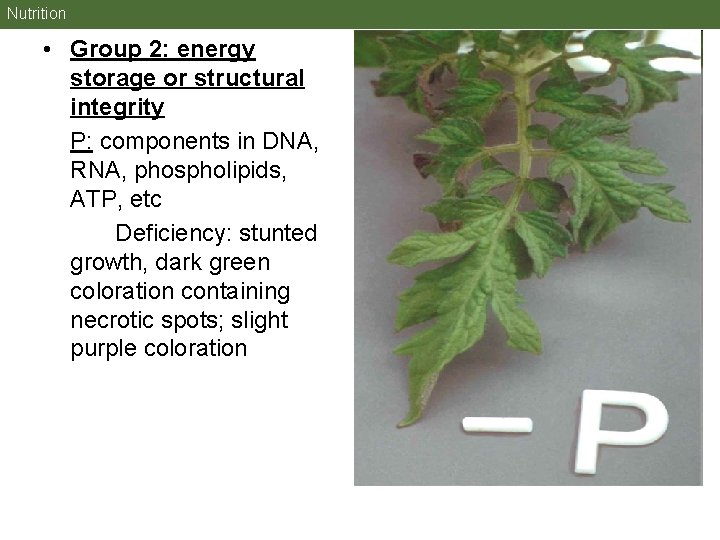
Nutrition • Group 2: energy storage or structural integrity P: components in DNA, RNA, phospholipids, ATP, etc Deficiency: stunted growth, dark green coloration containing necrotic spots; slight purple coloration
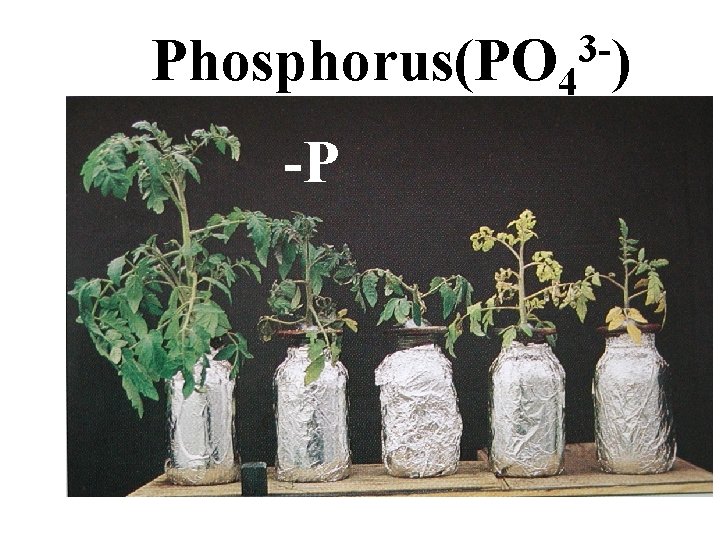
3 Phosphorus(PO 4 ) -P
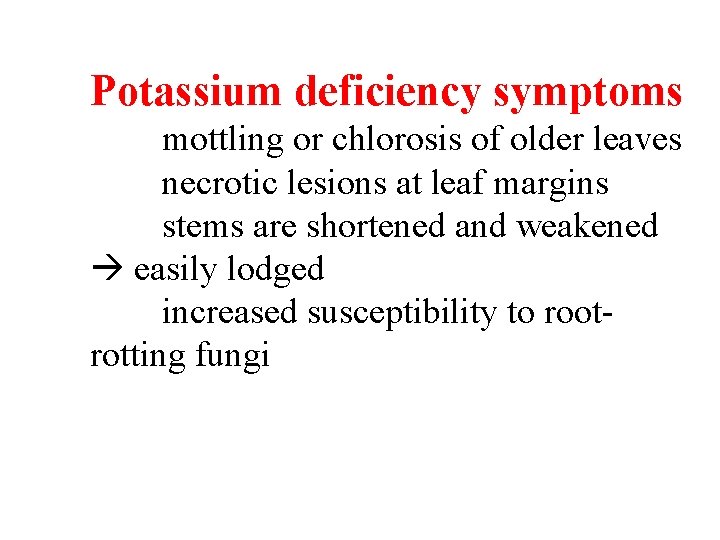
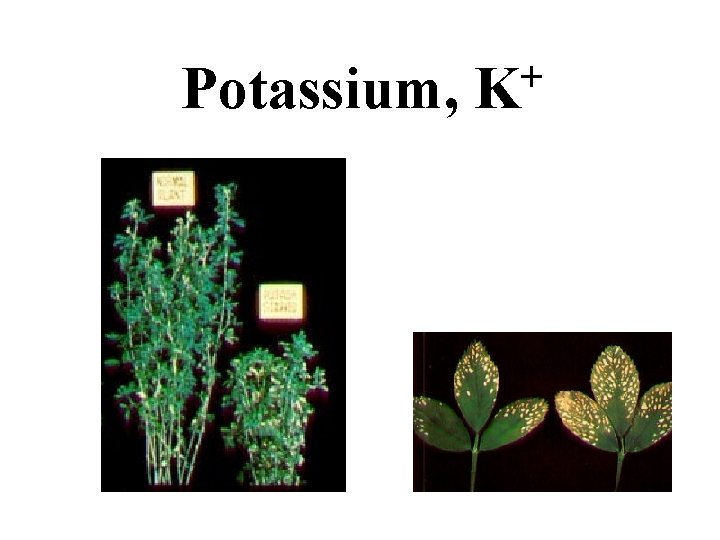
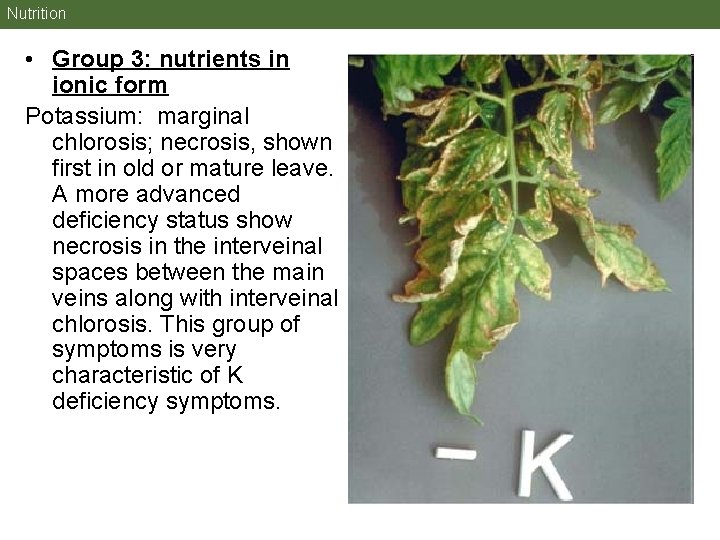
Potassium deficiency symptoms mottling or chlorosis of older leaves necrotic lesions at leaf margins stems are shortened and weakened easily lodged increased susceptibility to rootrotting fungi
Potassium, + K
Nutrition • Group 3: nutrients in ionic form Potassium: marginal chlorosis; necrosis, shown first in old or mature leave. A more advanced deficiency status show necrosis in the interveinal spaces between the main veins along with interveinal chlorosis. This group of symptoms is very characteristic of K deficiency symptoms.
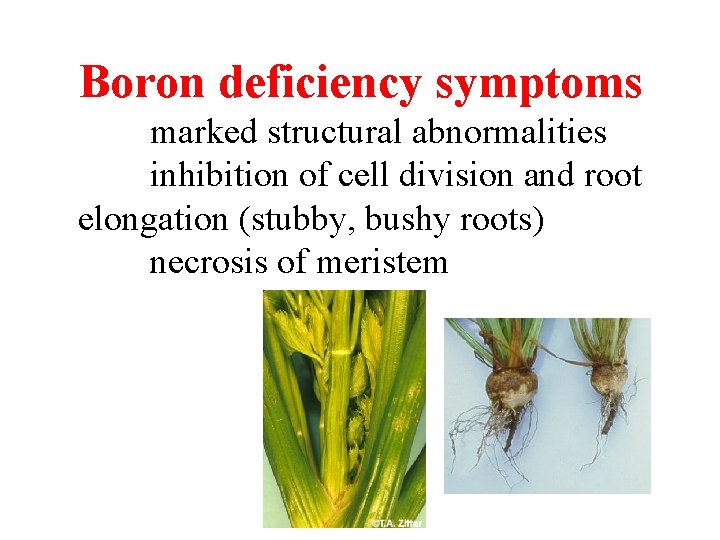
Silicon: components of cell wall Deficiency: lodging and fungal infection Boron: function unclear (cell wall component) Deficiency: necrosis of young leaves and terminal buds
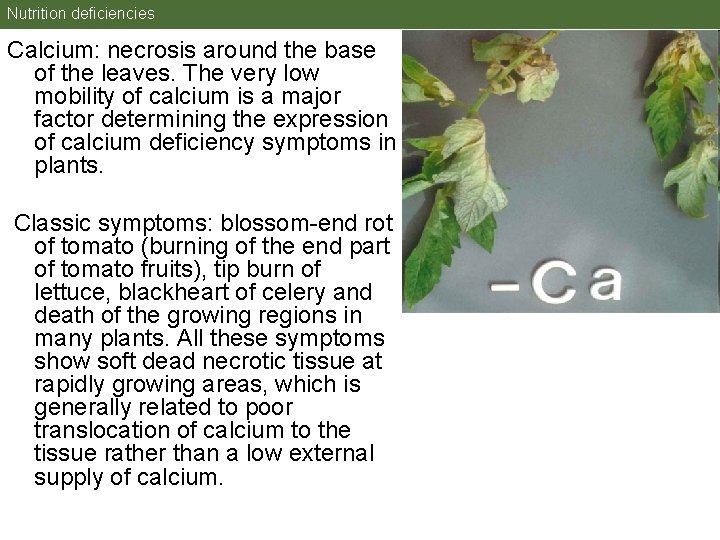
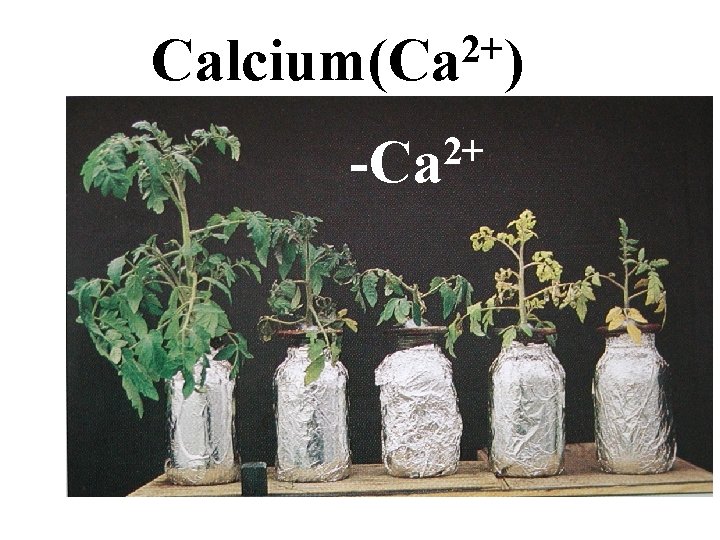
Nutrition deficiencies Calcium: necrosis around the base of the leaves. The very low mobility of calcium is a major factor determining the expression of calcium deficiency symptoms in plants. Classic symptoms: blossom-end rot of tomato (burning of the end part of tomato fruits), tip burn of lettuce, blackheart of celery and death of the growing regions in many plants. All these symptoms show soft dead necrotic tissue at rapidly growing areas, which is generally related to poor translocation of calcium to the tissue rather than a low external supply of calcium.
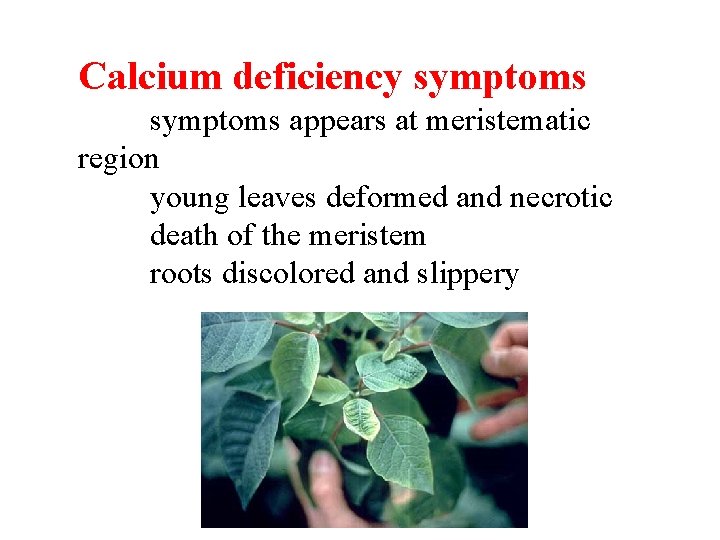
Calcium deficiency symptoms appears at meristematic region young leaves deformed and necrotic death of the meristem roots discolored and slippery
2+ Calcium(Ca ) 2+ -Ca
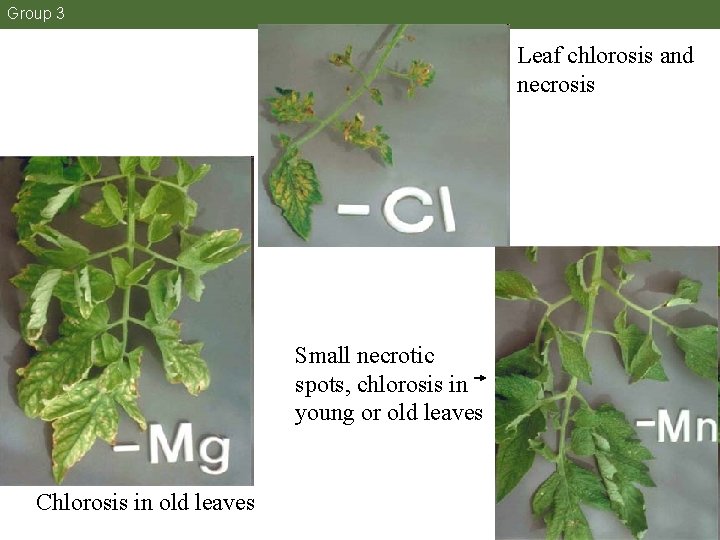
Group 3 Leaf chlorosis and necrosis Small necrotic spots, chlorosis in young or old leaves Chlorosis in old leaves
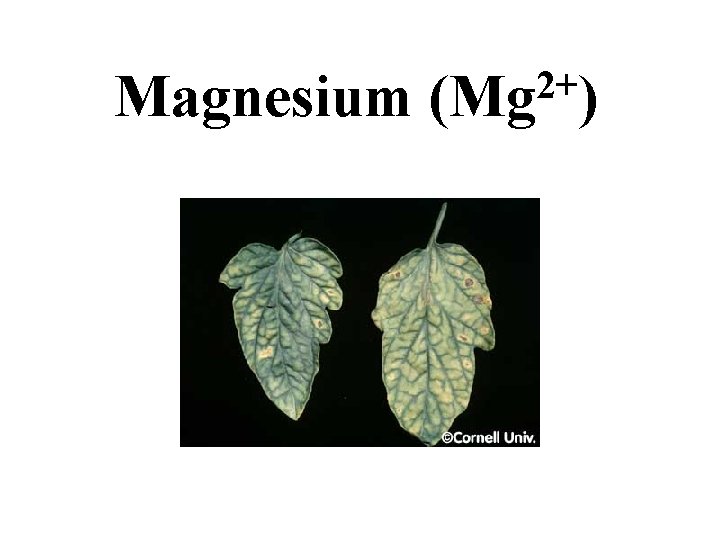
Magnesium deficiency symptoms usually happens in strongly acid, sandy soils chlorosis in the interveinal region symptoms first appears at older leaves
Magnesium 2+ (Mg )
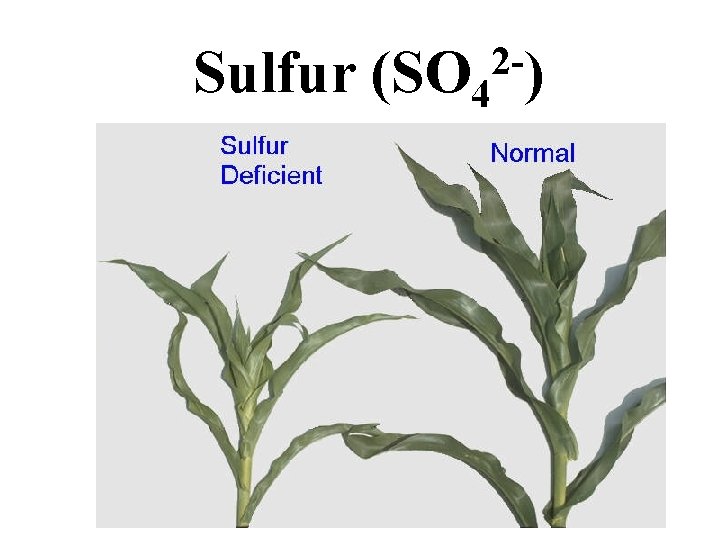
Sulfur 2(SO 4 )
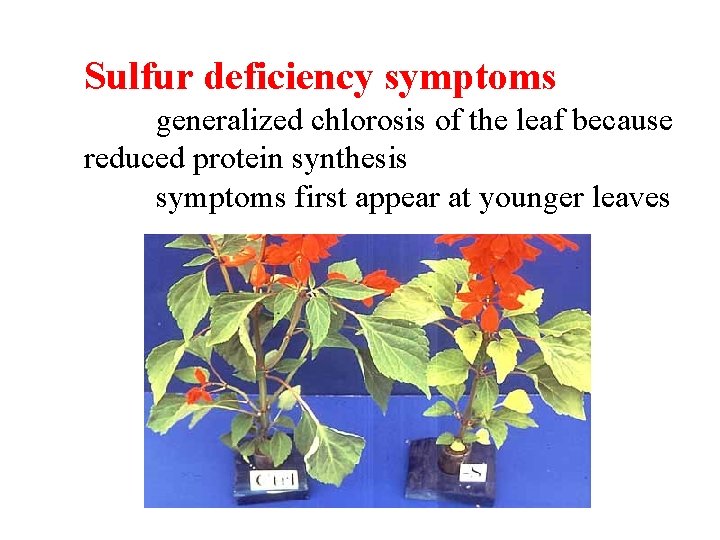
Sulfur deficiency symptoms generalized chlorosis of the leaf because reduced protein synthesis symptoms first appear at younger leaves
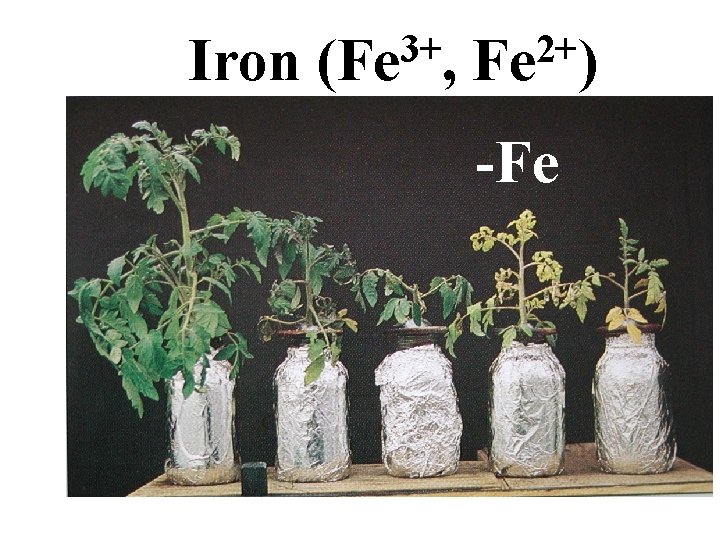
Iron 3+ (Fe , 2+ Fe ) -Fe
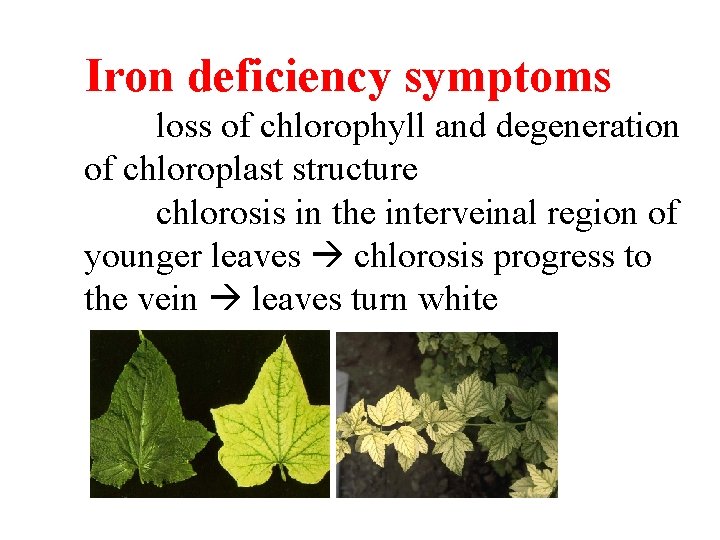
Iron deficiency symptoms loss of chlorophyll and degeneration of chloroplast structure chlorosis in the interveinal region of younger leaves chlorosis progress to the vein leaves turn white
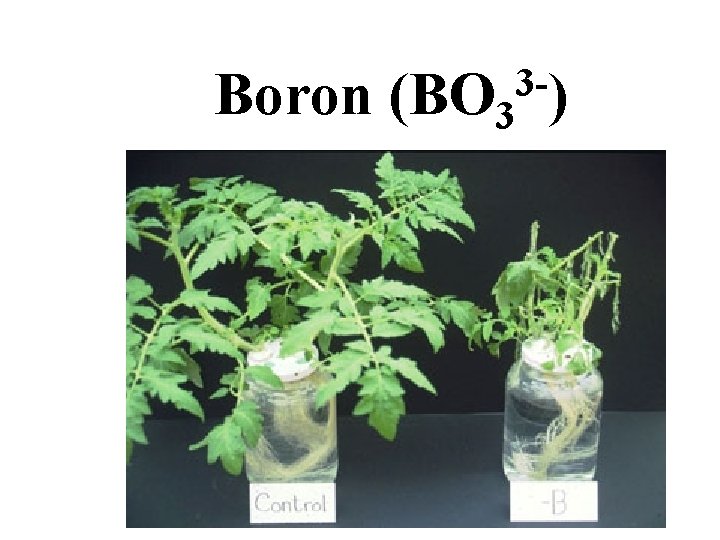
Boron deficiency symptoms marked structural abnormalities inhibition of cell division and root elongation (stubby, bushy roots) necrosis of meristem
Boron 3(BO 3 )
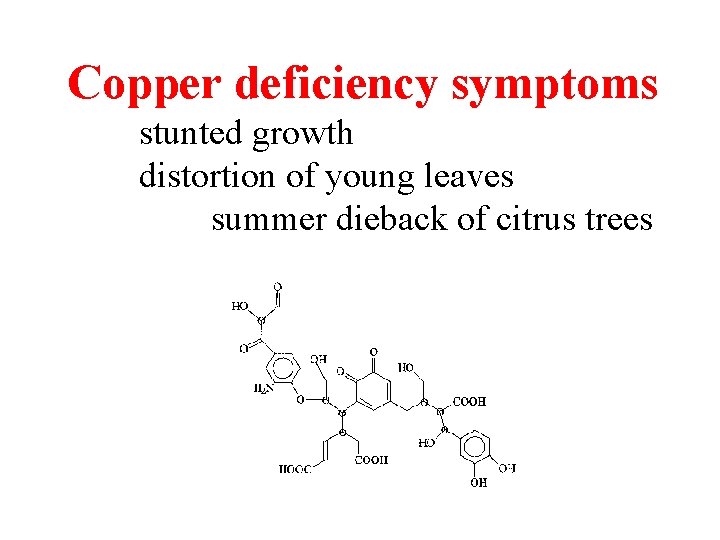
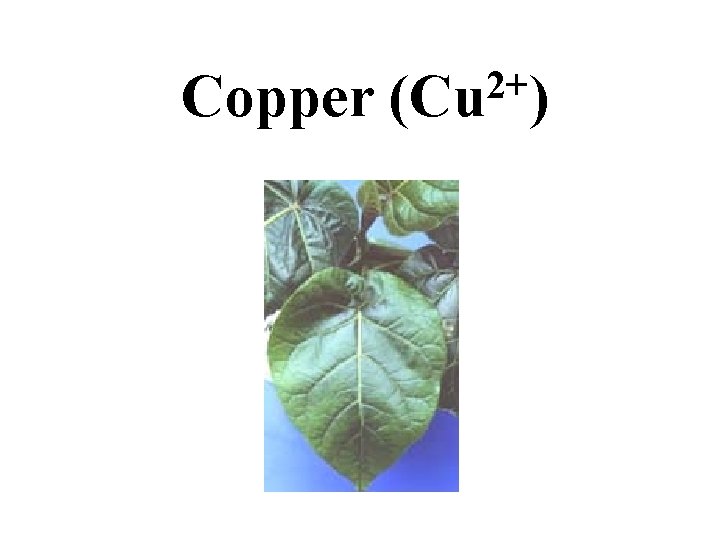
Copper deficiency symptoms stunted growth distortion of young leaves summer dieback of citrus trees
Copper 2+ (Cu )
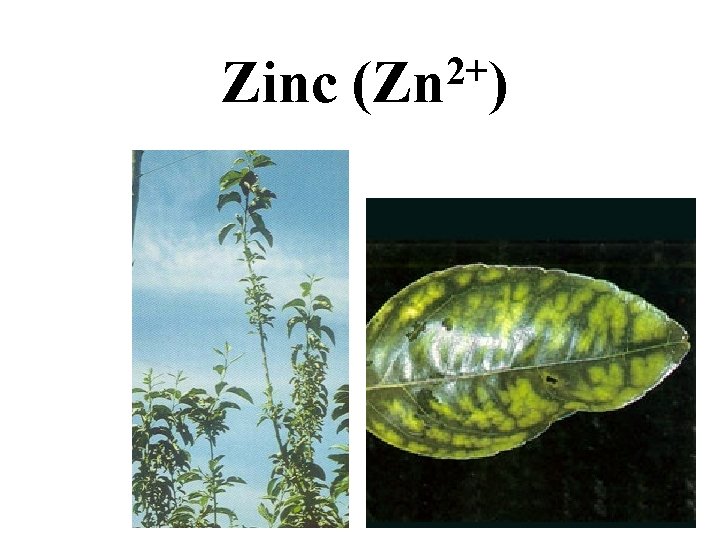
Zinc deficiency symptoms shortened internode smaller leaves
Zinc 2+ (Zn )
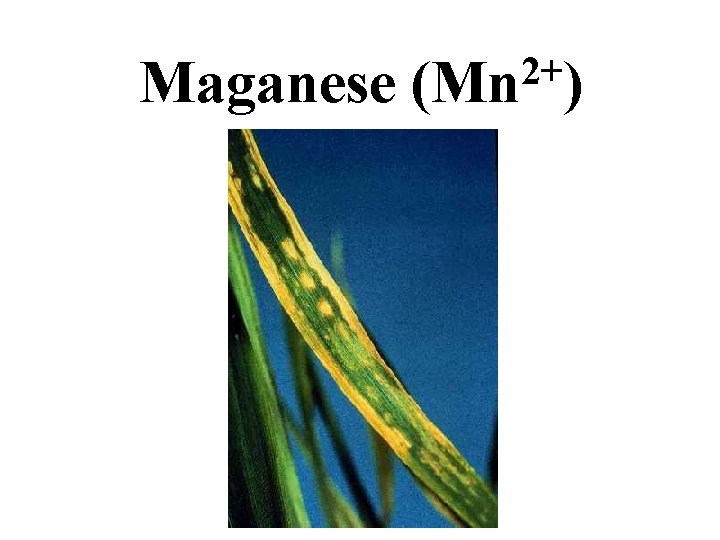
Maganese 2+ (Mn )
Manganese deficiency symptoms grey speck of cereal grains greenish grey, oval-shaped spots on the basal regions of young leaves interveinal chlorosis, discoloration and defromities in legume seeds
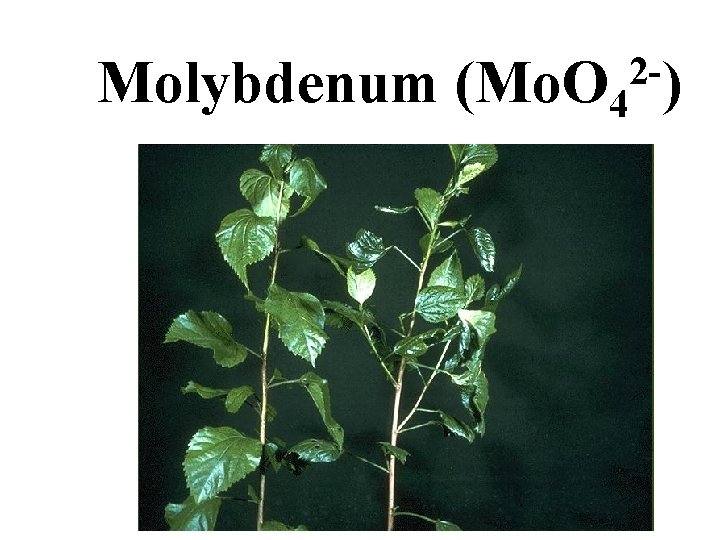
Molybdenum (Mo. O 4 2 -)
Molybdenum deficiency symptoms whip-tail (twisted and deformed young leaves) interveinal chlorosis necrosis along the veins of older leaves
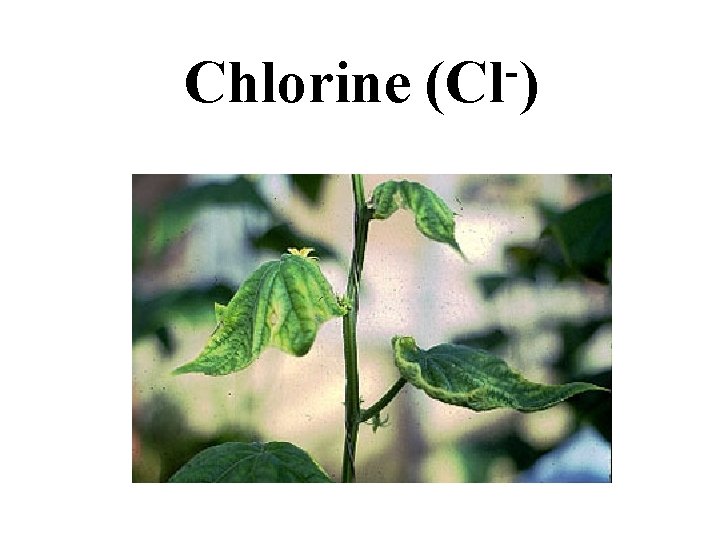
Chlorine (Cl )
Chlorine deficiency symptoms reduced growth wilting of the leaf tips general chlorosis
Nickel 2+ (Ni ) Nickel deficiency symptoms low germination rate depressed seedling vigor chlorosis necrotic lesions in the leaves