
Unit 1 C Pump Inspections and Maintenance 1
- Slides: 38
Unit 1 C – Pump Inspections and Maintenance 1
§ Inspect a pump package and describe pump maintenance procedures as outlined in the FEMPR. § Correctly enter all pump information in the FEMPR. § Conduct a pump performance test and record the results in the FEMPR. 2
§ Discuss winterization procedures as outlined in the FEMPR. § Troubleshoot and correct common problems with the pump and pump plumbing. 3
4
5
6
7
8
9
10
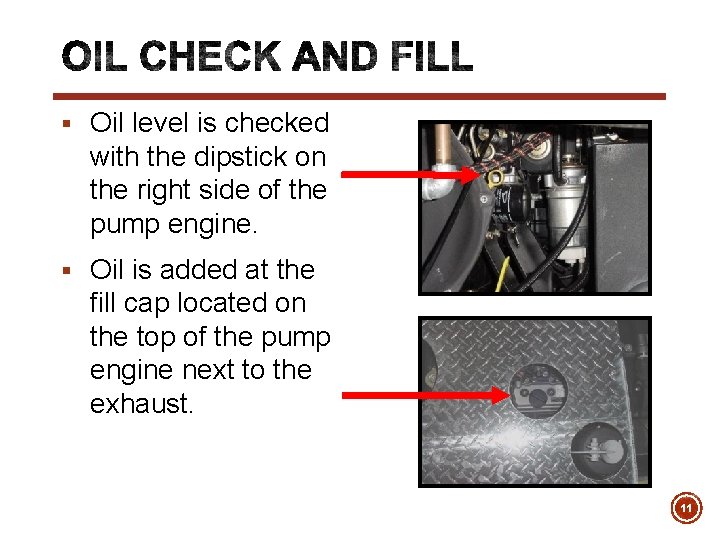
§ Oil level is checked with the dipstick on the right side of the pump engine. § Oil is added at the fill cap located on the top of the pump engine next to the exhaust. 11
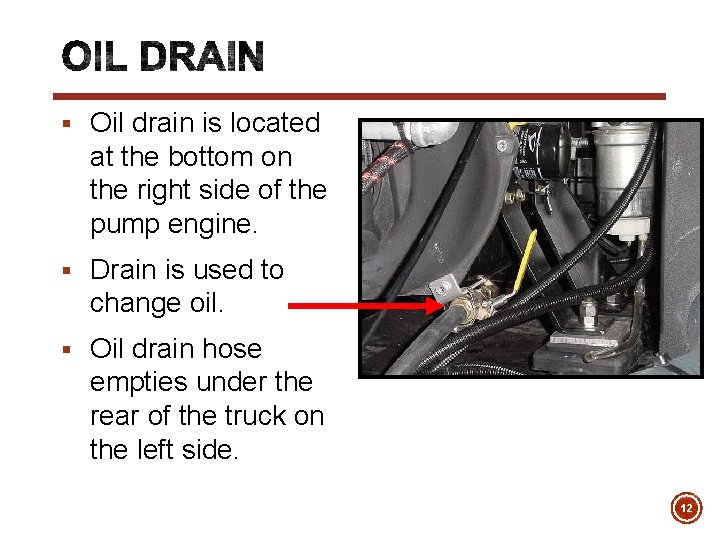
§ Oil drain is located at the bottom on the right side of the pump engine. § Drain is used to change oil. § Oil drain hose empties under the rear of the truck on the left side. 12
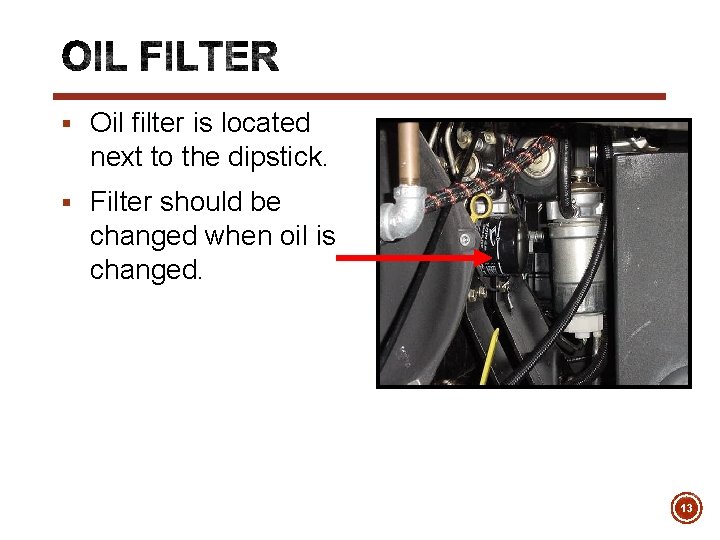
§ Oil filter is located next to the dipstick. § Filter should be changed when oil is changed. 13
14
15
16
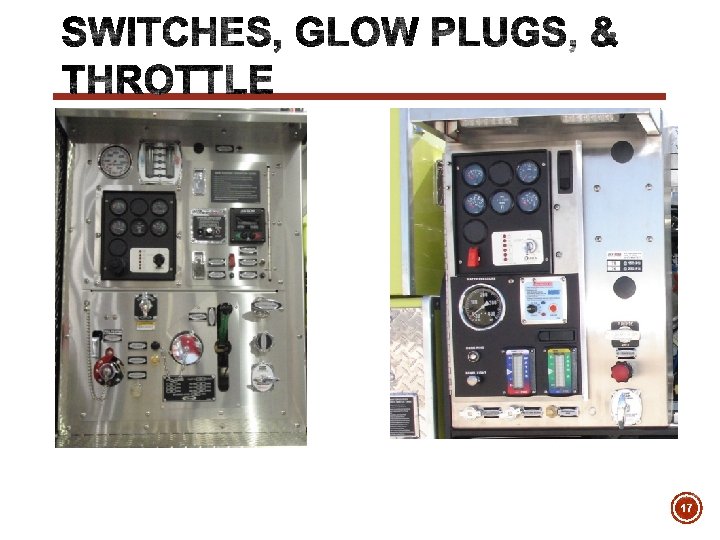
17
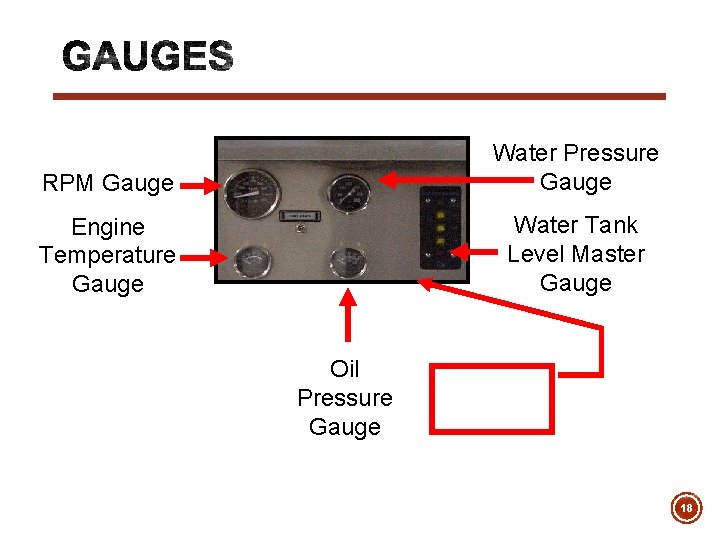
RPM Gauge Water Pressure Gauge Engine Temperature Gauge Water Tank Level Master Gauge Oil Pressure Gauge 18
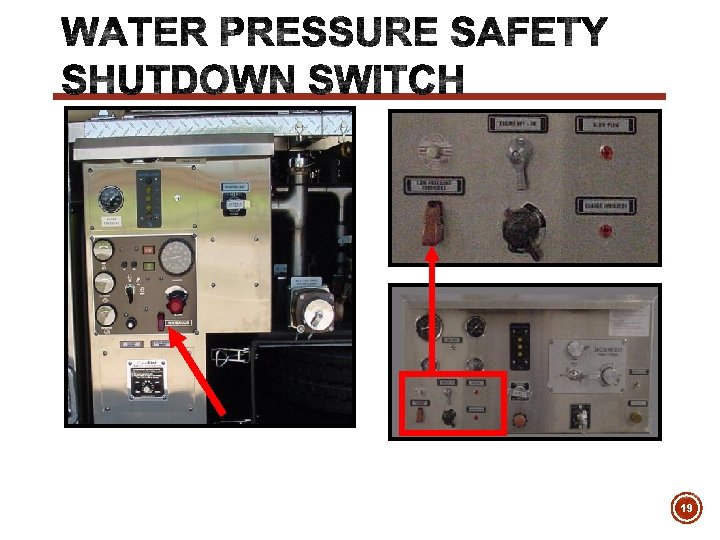
19
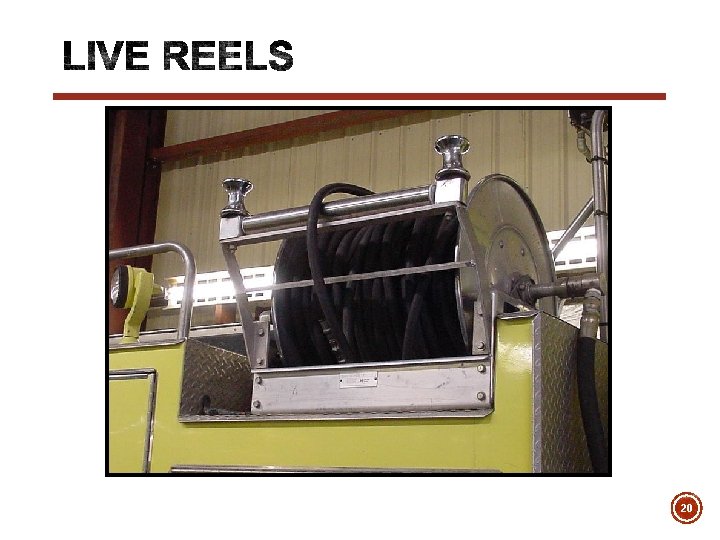
20
21
22
23
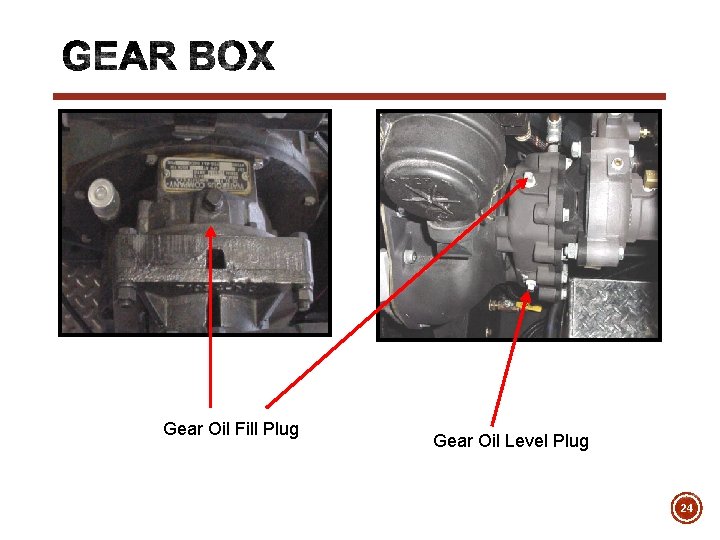
Gear Oil Fill Plug Gear Oil Level Plug 24
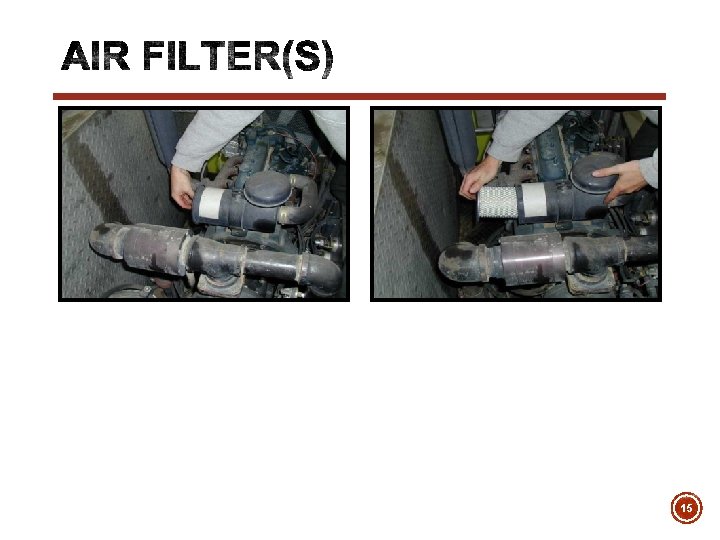
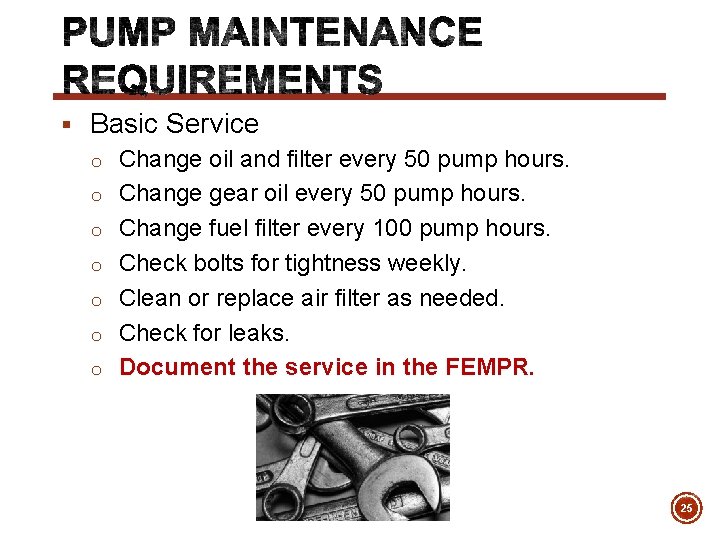
§ Basic Service o Change oil and filter every 50 pump hours. o Change gear oil every 50 pump hours. o Change fuel filter every 100 pump hours. o Check bolts for tightness weekly. o Clean or replace air filter as needed. o Check for leaks. o Document the service in the FEMPR. 25
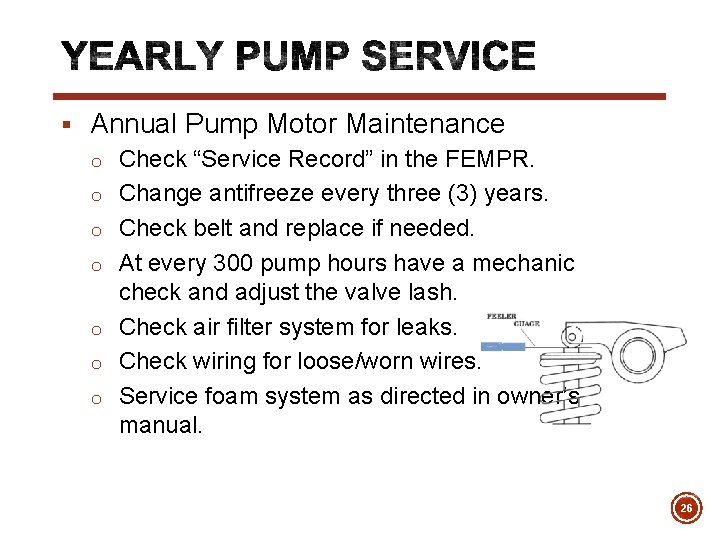
§ Annual Pump Motor Maintenance o Check “Service Record” in the FEMPR. o Change antifreeze every three (3) years. o Check belt and replace if needed. o At every 300 pump hours have a mechanic check and adjust the valve lash. o Check air filter system for leaks. o Check wiring for loose/worn wires. o Service foam system as directed in owner’s manual. 26
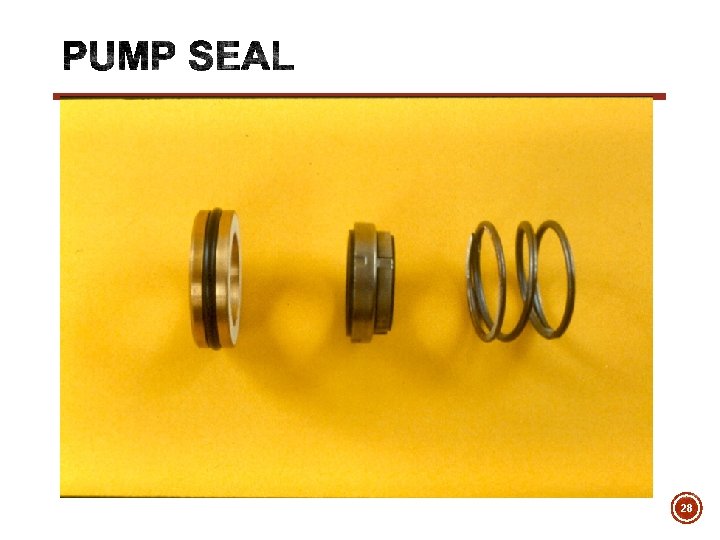
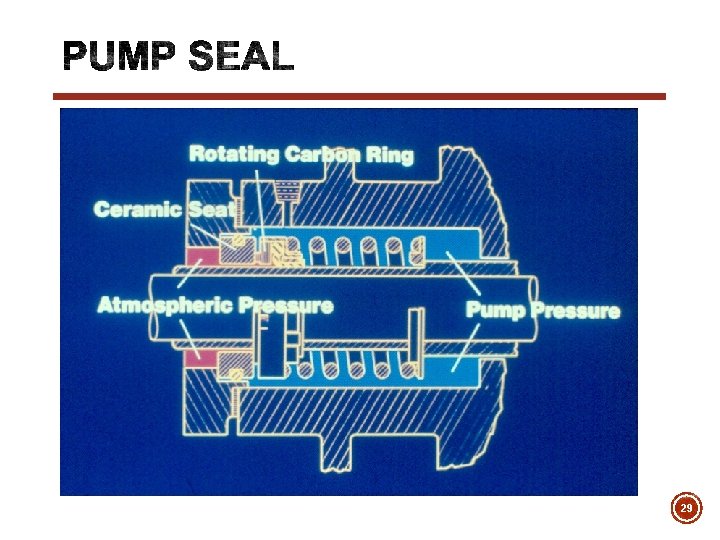
§ The real question is how much and when? o Seals need water to cool the sealing surface between the seal and shaft. o An 11 -15 drop per minute is acceptable while running at pressure. o Small leaks after sitting for hours/days may be OK. o Large leaks at pressure the seal should be changed. o Document leaks and any repairs in the FEMPR. 27
28
29
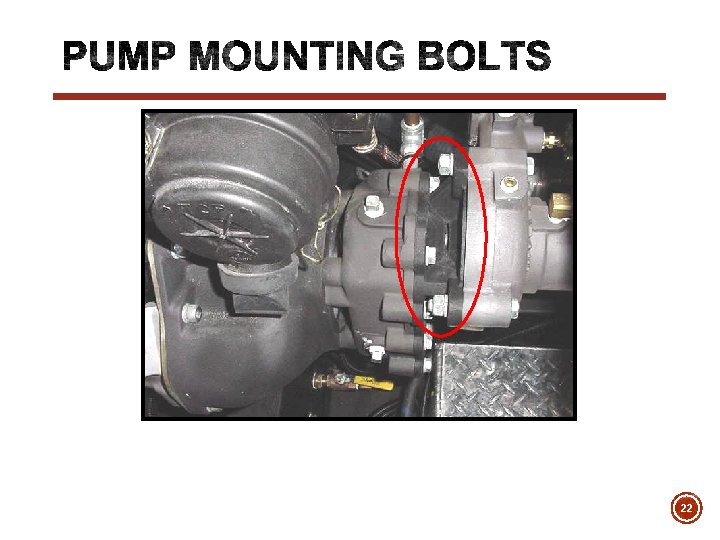
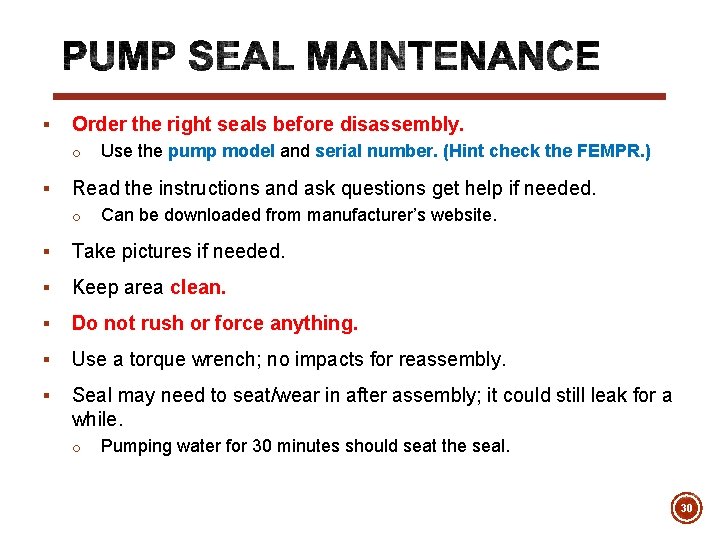
§ Order the right seals before disassembly. o § Use the pump model and serial number. (Hint check the FEMPR. ) Read the instructions and ask questions get help if needed. o Can be downloaded from manufacturer’s website. § Take pictures if needed. § Keep area clean. § Do not rush or force anything. § Use a torque wrench; no impacts for reassembly. § Seal may need to seat/wear in after assembly; it could still leak for a while. o Pumping water for 30 minutes should seat the seal. 30
§ Field or short-term § Full 31
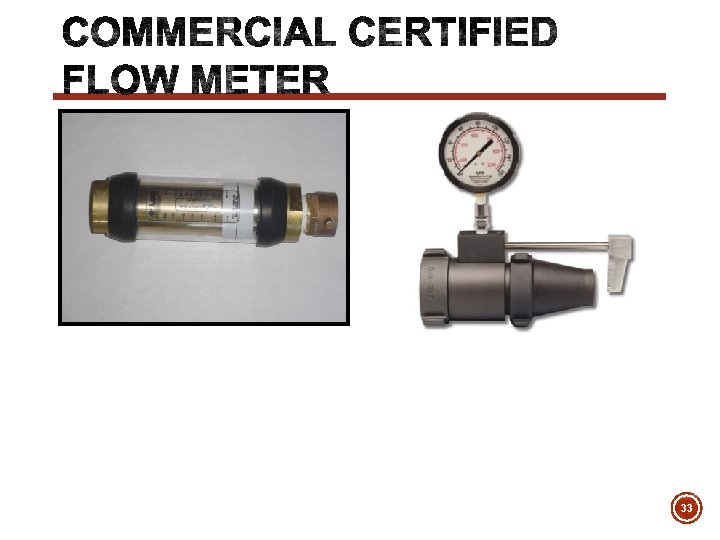
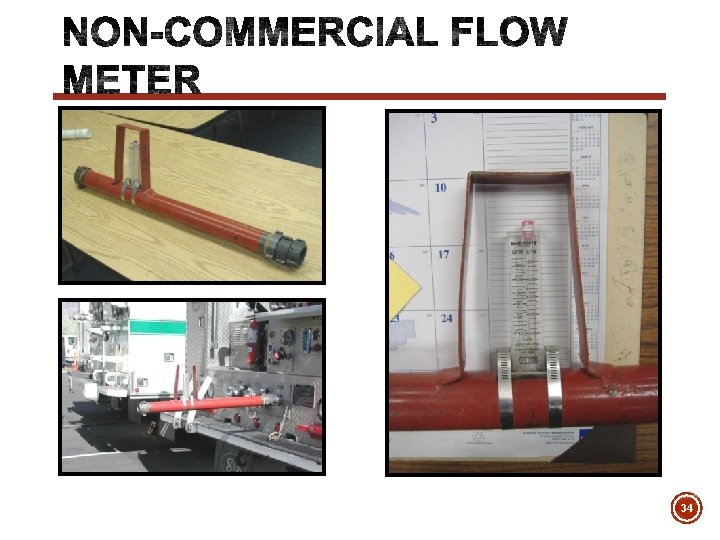
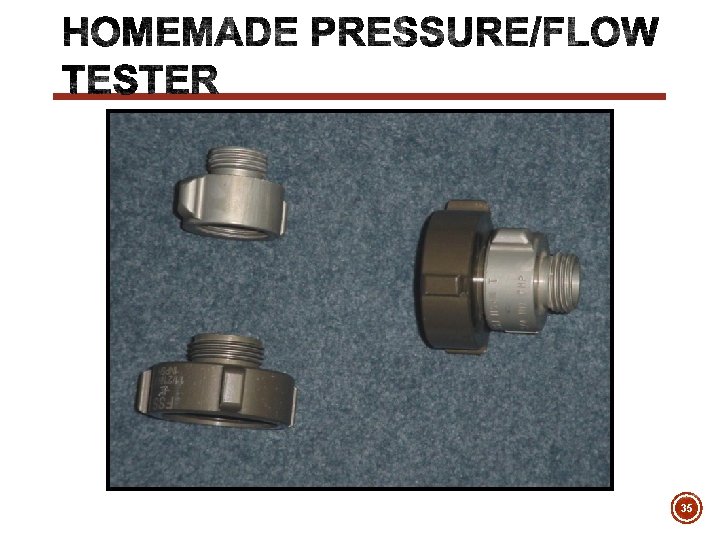
§ Test according to FEMPR or local standards. § Use same discharge port. § Document test results and identify trends. 32
33
34
35
§ Lights o Not illuminated § Pump engine o Will not start o Starts but will not keep running o Starts and runs but no water pressure exists § Other problems 36
§ Inspect a pump package and describe pump maintenance procedures as outlined in the FEMPR. § Correctly enter all pump information in the FEMPR. § Conduct a pump performance test and record the results in the FEMPR. 37
§ Discuss winterization procedures as outlined in the FEMPR. § Troubleshoot and correct common problems with the pump and pump plumbing. 38