
Unit 1 Basics of Geography Chapter 1 Looking
Unit 1: Basics of Geography Chapter 1: Looking at the Earth
Chapter 1, Section 1: The 5 Themes of Geography
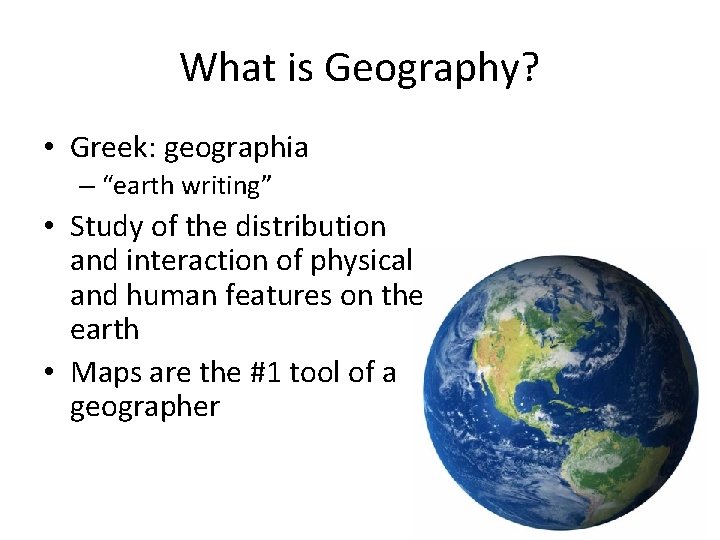
What is Geography? • Greek: geographia – “earth writing” • Study of the distribution and interaction of physical and human features on the earth • Maps are the #1 tool of a geographer
The 5 Themes of Geography • Location – Where is it? • Place – What is it like? • Region – How are places similar/different? • Movement – How do people, goods, and ideas move from one location to another? • Human-Environment Interaction – How do people relate to the physical world?
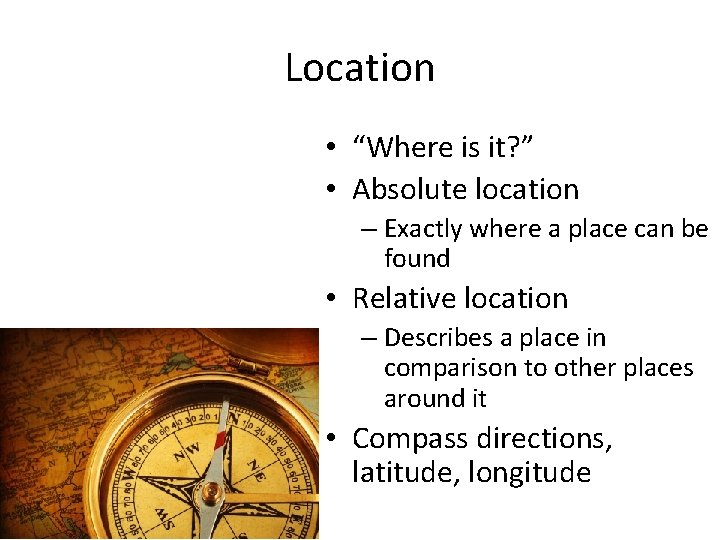
Location • “Where is it? ” • Absolute location – Exactly where a place can be found • Relative location – Describes a place in comparison to other places around it • Compass directions, latitude, longitude
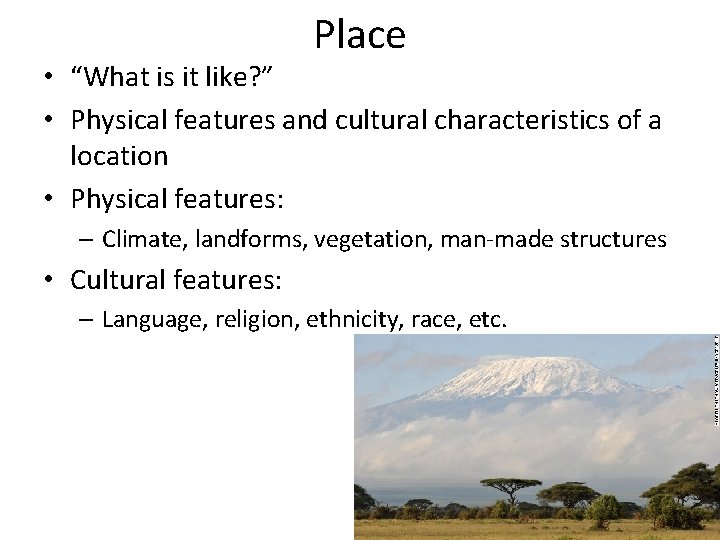
Place • “What is it like? ” • Physical features and cultural characteristics of a location • Physical features: – Climate, landforms, vegetation, man-made structures • Cultural features: – Language, religion, ethnicity, race, etc.
Region • “How are places similar/different? ” • Area of earth’s surface with similar characteristics. – Physical, political, economic, cultural • 3 types of regions: – Formal, functional, perceptual/vernacular
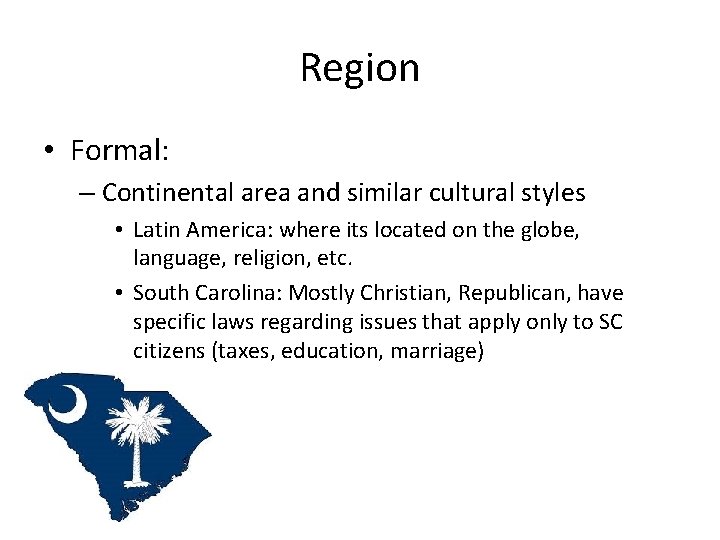
Region • Formal: – Continental area and similar cultural styles • Latin America: where its located on the globe, language, religion, etc. • South Carolina: Mostly Christian, Republican, have specific laws regarding issues that apply only to SC citizens (taxes, education, marriage)
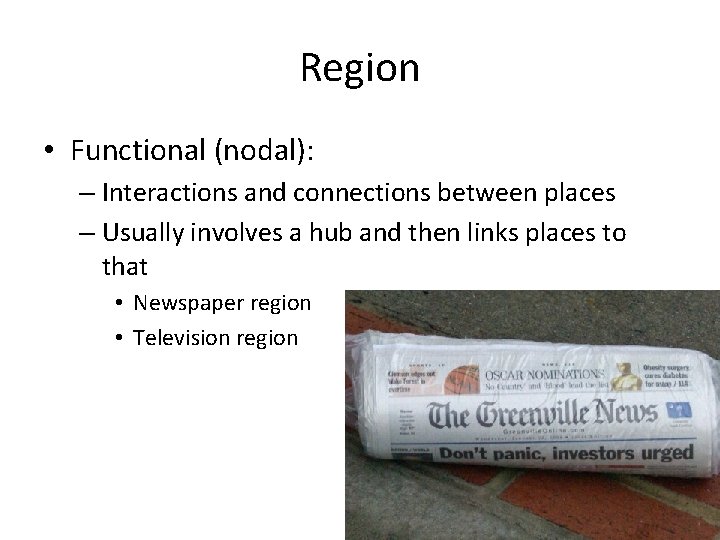
Region • Functional (nodal): – Interactions and connections between places – Usually involves a hub and then links places to that • Newspaper region • Television region
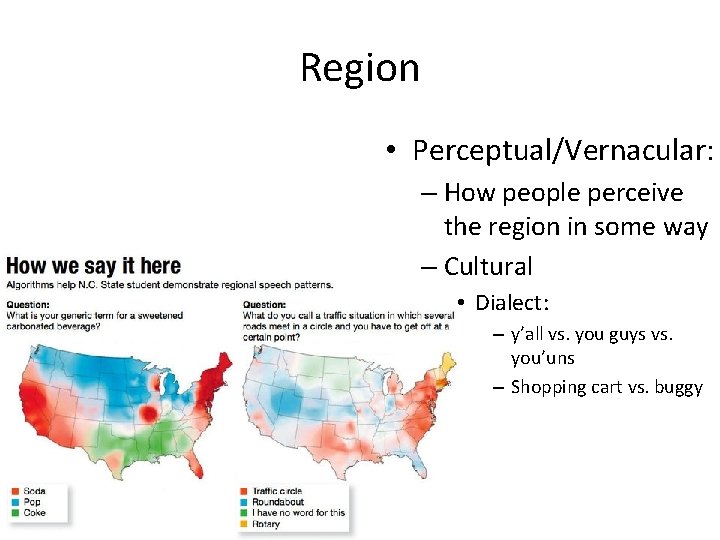
Region • Perceptual/Vernacular: – How people perceive the region in some way – Cultural • Dialect: – y’all vs. you guys vs. you’uns – Shopping cart vs. buggy
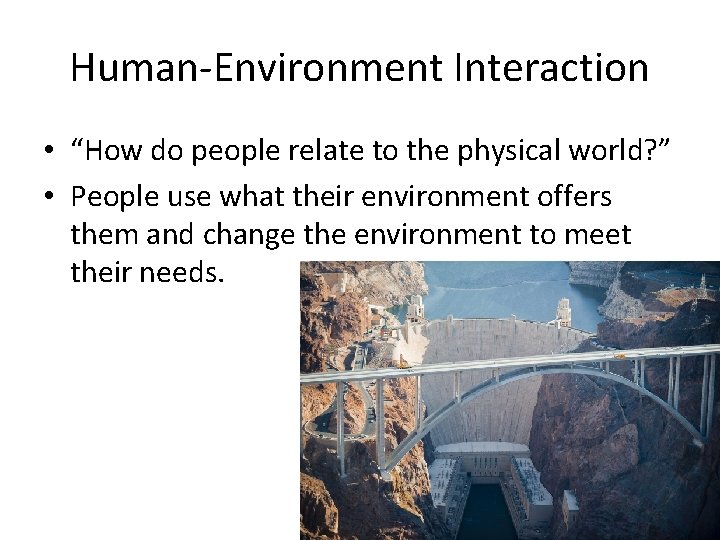
Human-Environment Interaction • “How do people relate to the physical world? ” • People use what their environment offers them and change the environment to meet their needs.
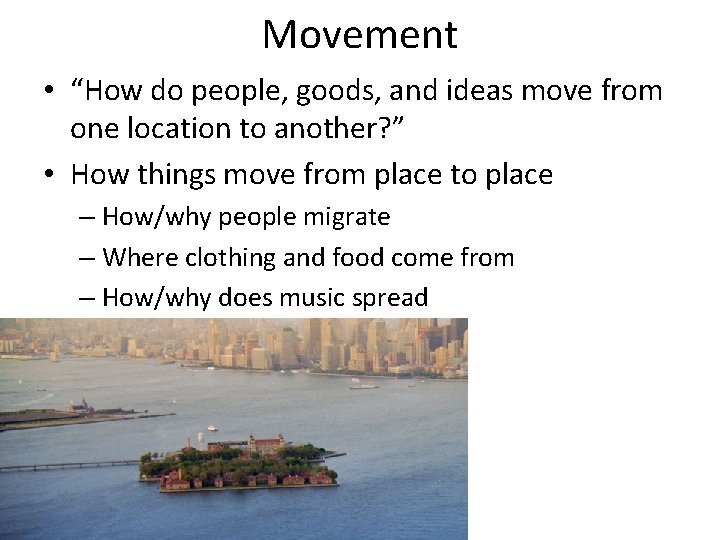
Movement • “How do people, goods, and ideas move from one location to another? ” • How things move from place to place – How/why people migrate – Where clothing and food come from – How/why does music spread
Chapter 1, Section 2: The Geographer’s Tools
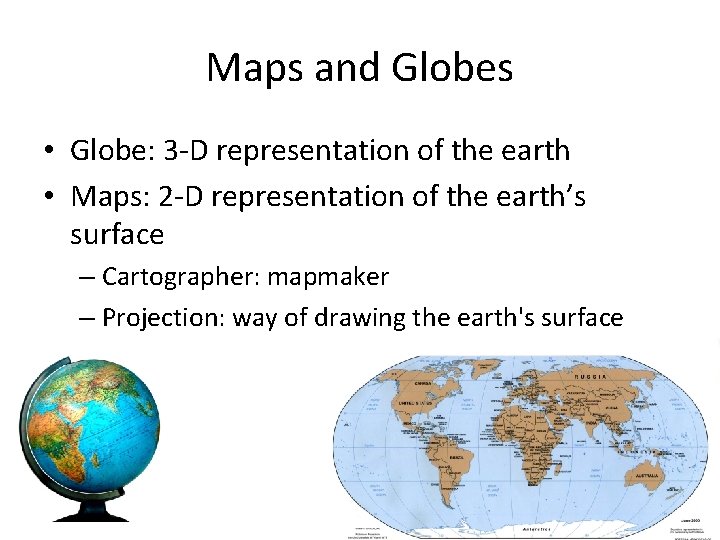
Maps and Globes • Globe: 3 -D representation of the earth • Maps: 2 -D representation of the earth’s surface – Cartographer: mapmaker – Projection: way of drawing the earth's surface
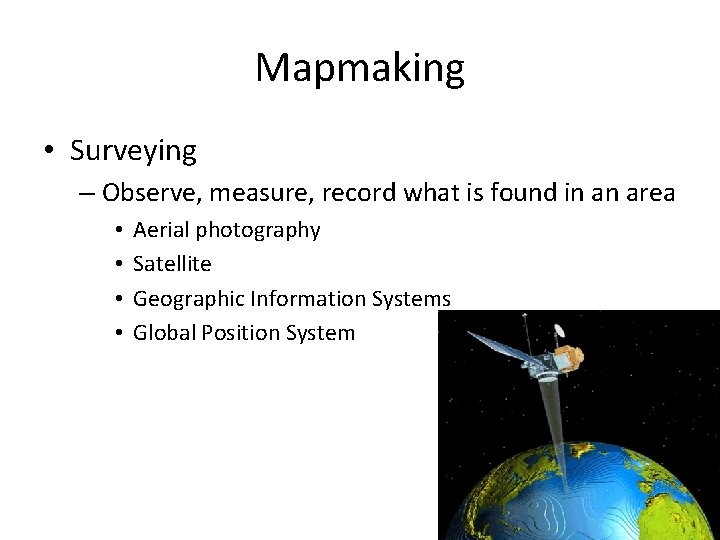
Mapmaking • Surveying – Observe, measure, record what is found in an area • • Aerial photography Satellite Geographic Information Systems Global Position System
Must Know Information About Maps!!!
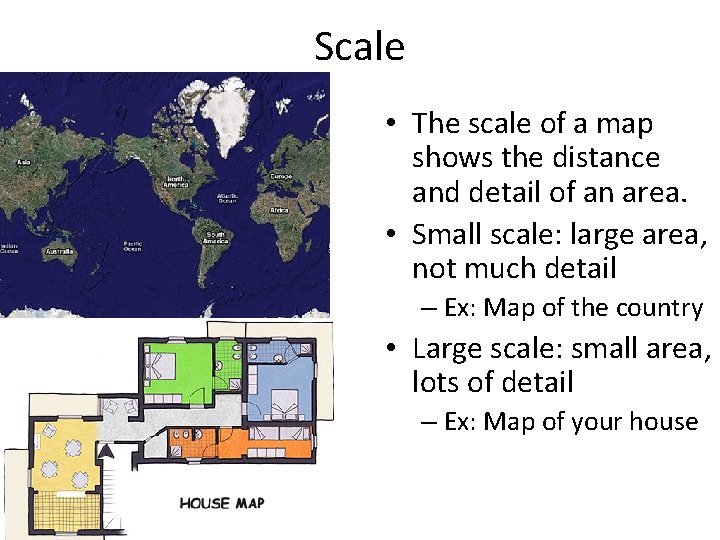
Scale • The scale of a map shows the distance and detail of an area. • Small scale: large area, not much detail – Ex: Map of the country • Large scale: small area, lots of detail – Ex: Map of your house
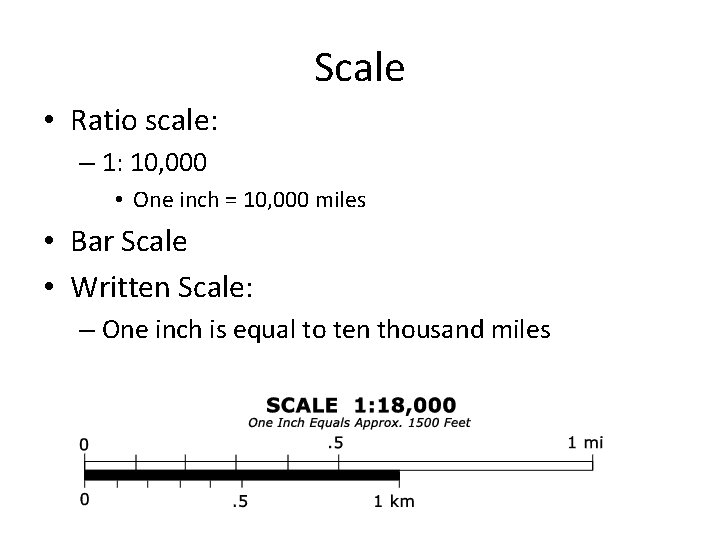
Scale • Ratio scale: – 1: 10, 000 • One inch = 10, 000 miles • Bar Scale • Written Scale: – One inch is equal to ten thousand miles
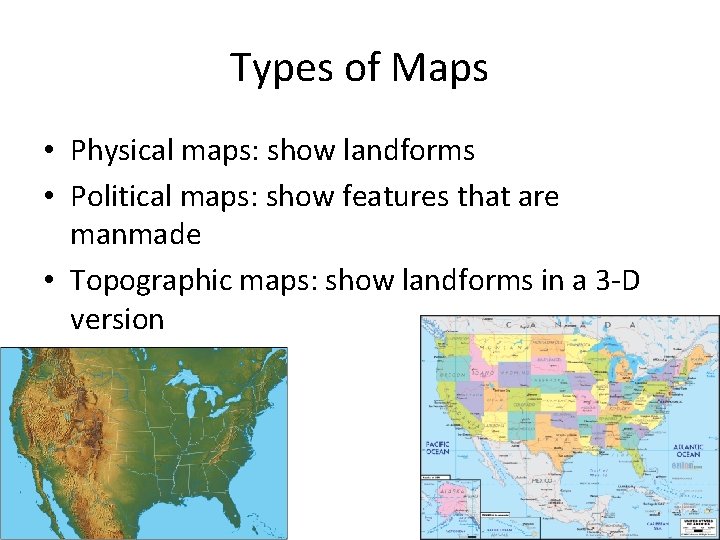
Types of Maps • Physical maps: show landforms • Political maps: show features that are manmade • Topographic maps: show landforms in a 3 -D version
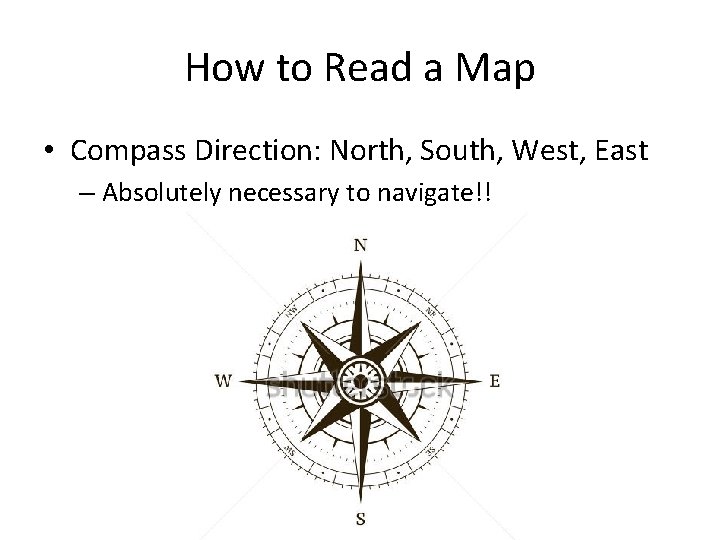
How to Read a Map • Compass Direction: North, South, West, East – Absolutely necessary to navigate!!
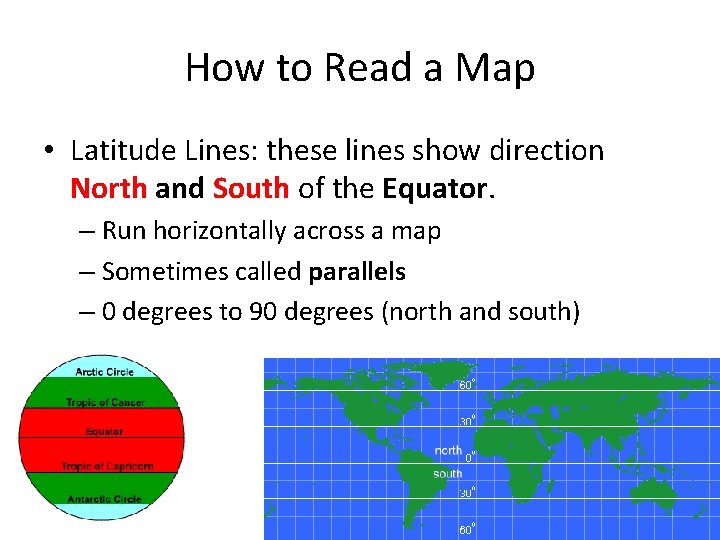
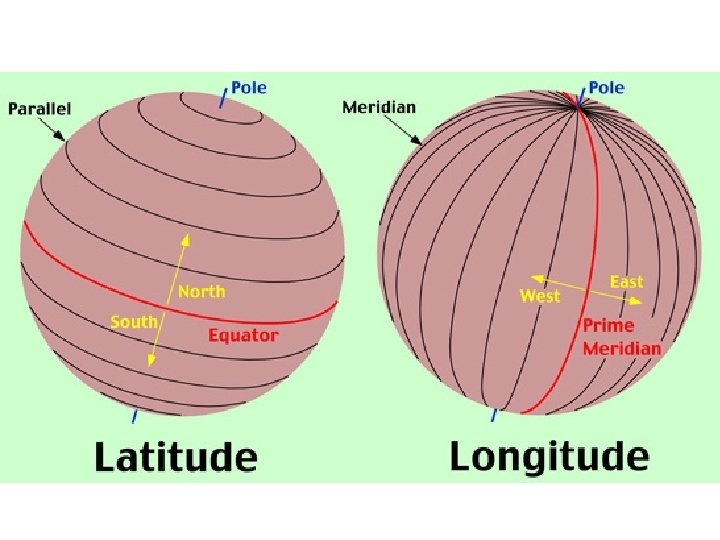
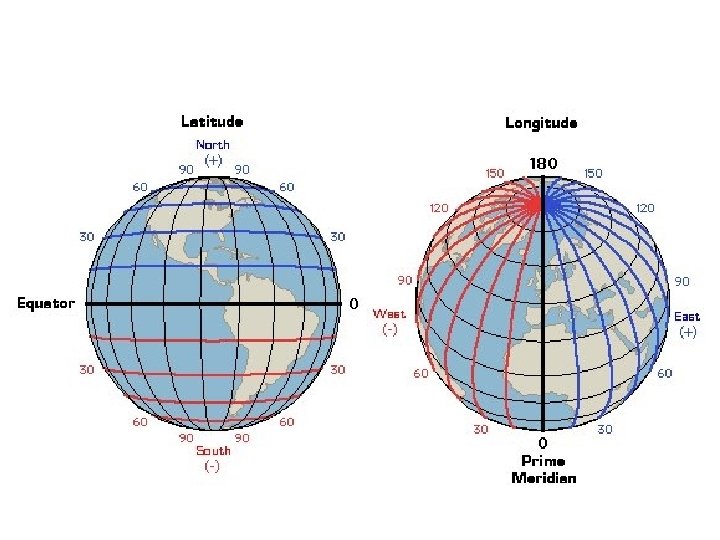
How to Read a Map • Latitude Lines: these lines show direction North and South of the Equator. – Run horizontally across a map – Sometimes called parallels – 0 degrees to 90 degrees (north and south)
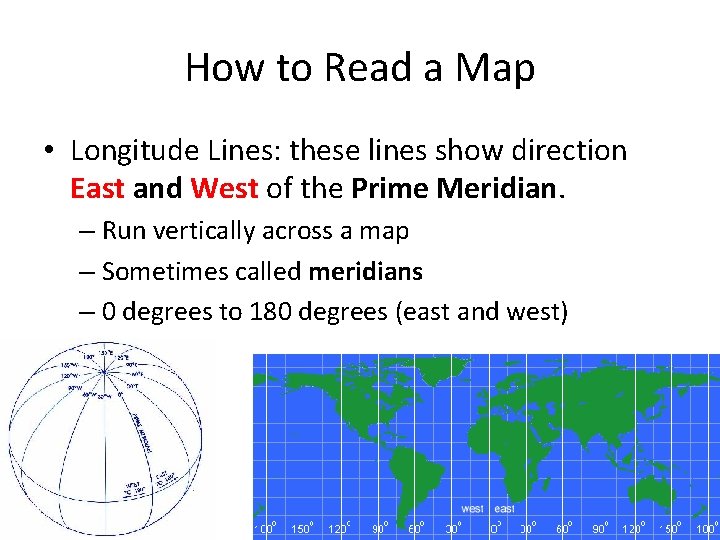
How to Read a Map • Longitude Lines: these lines show direction East and West of the Prime Meridian. – Run vertically across a map – Sometimes called meridians – 0 degrees to 180 degrees (east and west)
- Slides: 24