
Unit 1 Basic Principles of Government Pillars of
Unit 1: Basic Principles of Government Pillars of Democracy
The Pillars of Democracy • The components needed for a democracy to be successful and prosperous; if one is missing, democracy would be weakened and eventually crumble.
What is… • Democracy- rule by the people. • Representative Government- the people elect officials that will represent • Direct Democracytheir interests in the people run the day government. to day aspects of the government. We do not have this type of democracy!!!
Sovereignty of the People • The people are free and independent of each other and the government and have the power to make their own decisions.
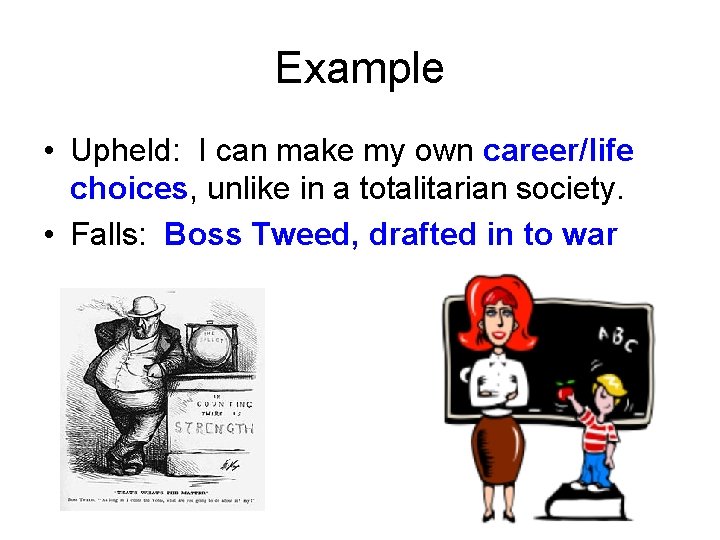
Example • Upheld: I can make my own career/life choices, unlike in a totalitarian society. • Falls: Boss Tweed, drafted in to war
Government based upon consent of the governed • The government can only make decisions if they have the approval of the people for which it exists.
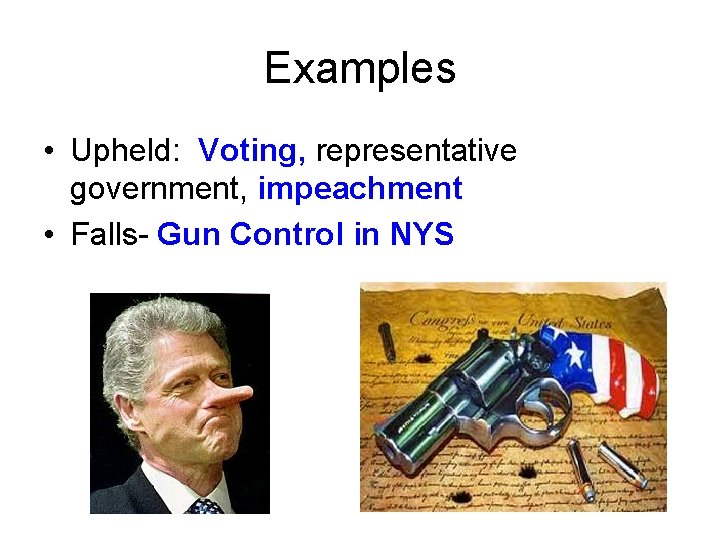
Examples • Upheld: Voting, representative government, impeachment • Falls- Gun Control in NYS
Majority Rule • Decisions are made when over half of the population (or elected body) approves it.
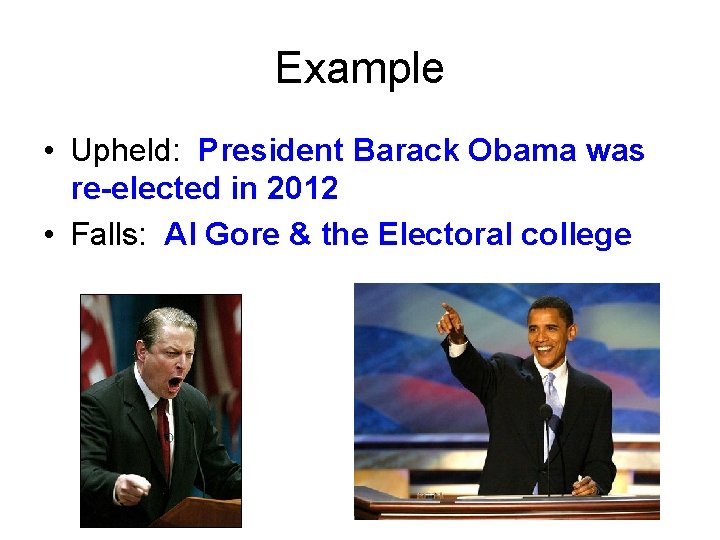
Example • Upheld: President Barack Obama was re-elected in 2012 • Falls: Al Gore & the Electoral college
Minority Rights • The rights of the minority voice can not be ignored even with majority rule; the people share the same rights.
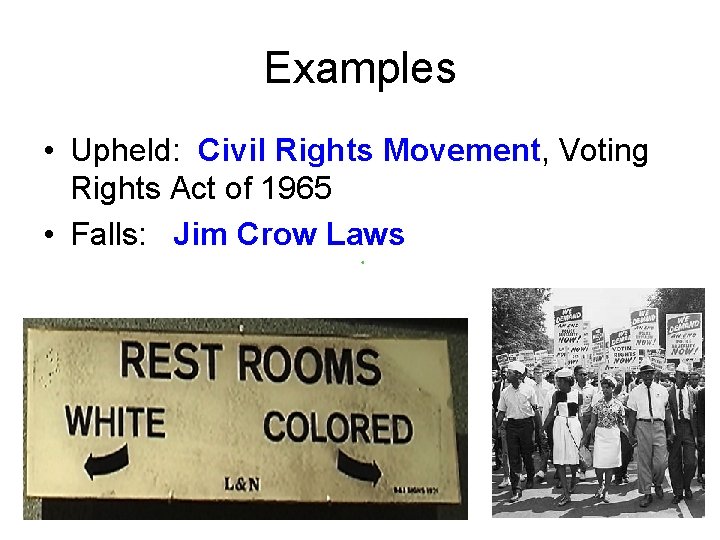
Examples • Upheld: Civil Rights Movement, Voting Rights Act of 1965 • Falls: Jim Crow Laws
Guarantee of basic human rights • All citizens are guaranteed the rights of life, liberty, property, and the pursuit of happiness…these can not be taken away.
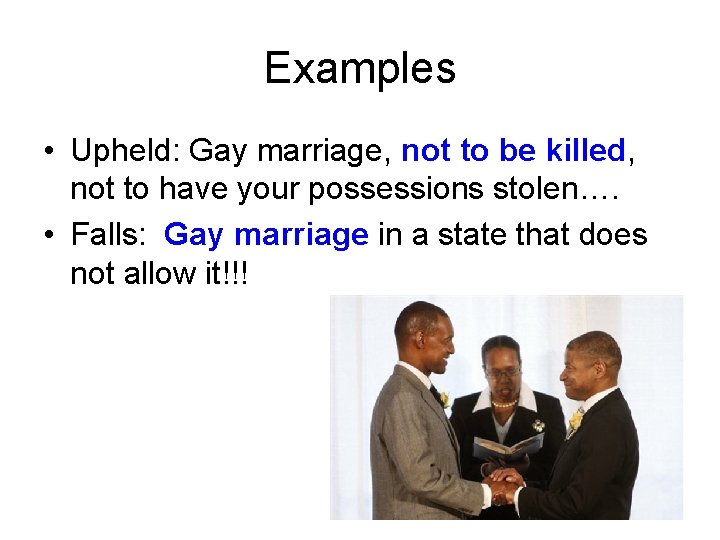
Examples • Upheld: Gay marriage, not to be killed, not to have your possessions stolen…. • Falls: Gay marriage in a state that does not allow it!!!
Free and fair elections • The electoral process is open to all people, free of cost, and all citizens have the right to run as well as vote in the election.
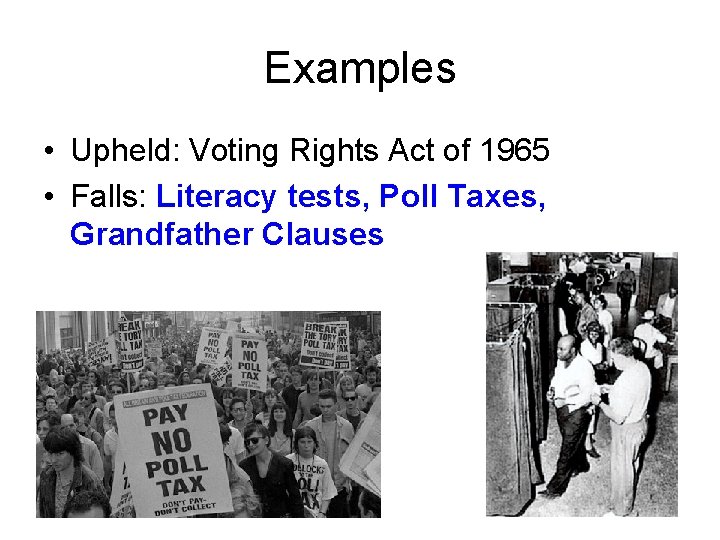
Examples • Upheld: Voting Rights Act of 1965 • Falls: Literacy tests, Poll Taxes, Grandfather Clauses
Equality before the law • Justice is blind, there is no factor/characteristic that is distinguishable in the face of the law…all citizens have the same rights and freedoms under the laws.
Example • Upheld: A Muslim American will be treated the same as all other Americans. • Falls: Muslim Americans being racially profiled and treated as a terrorist threat.
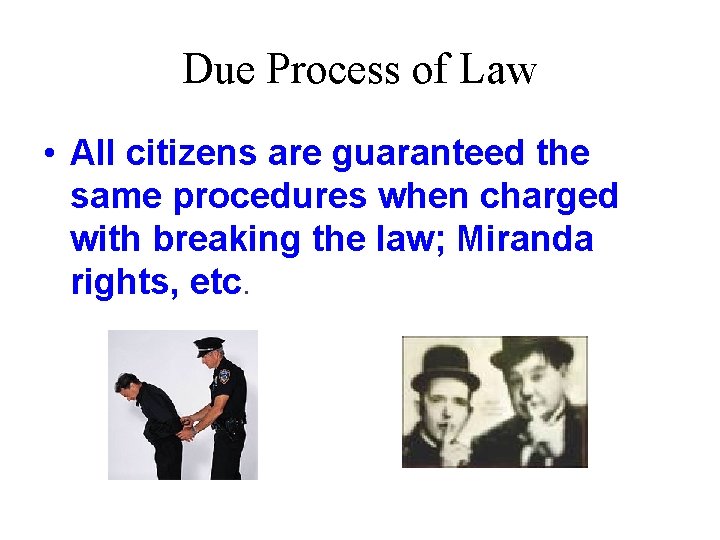
Due Process of Law • All citizens are guaranteed the same procedures when charged with breaking the law; Miranda rights, etc.
Example • Upheld: A jury of your peers will determine your guilt or innocence. • Falls: Vigilante justice, not being read your Miranda Rights
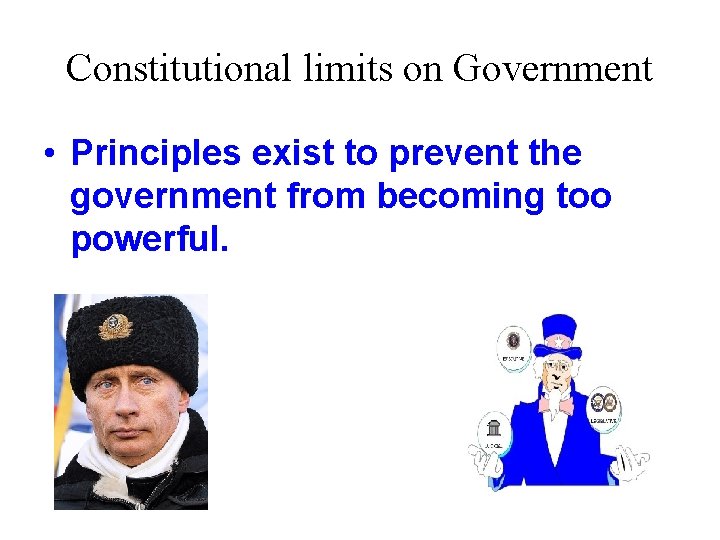
Constitutional limits on Government • Principles exist to prevent the government from becoming too powerful.
Examples • Upheld: Checks and Balances, Separation of Powers, Veto Power • Falls: F. D. R. served 4 terms in office- led to a 2 term limit.
Social, Economic & Political Pluralism • Differences are allowed and promoted in the government because the citizens of America are vastly different. • Pluralism; various ethnic, religious, etc. groups existing together in a nation.
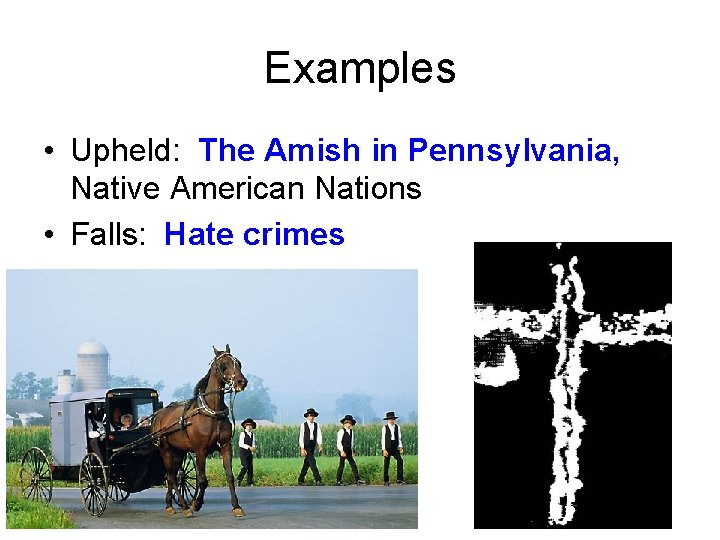
Examples • Upheld: The Amish in Pennsylvania, Native American Nations • Falls: Hate crimes
Values of tolerance, pragmatism, cooperation, and compromise • Citizens of the nation must work with one another respecting the different opinions and values; also they must be realistic in their decisions and be willing to compromise so that work may be done.
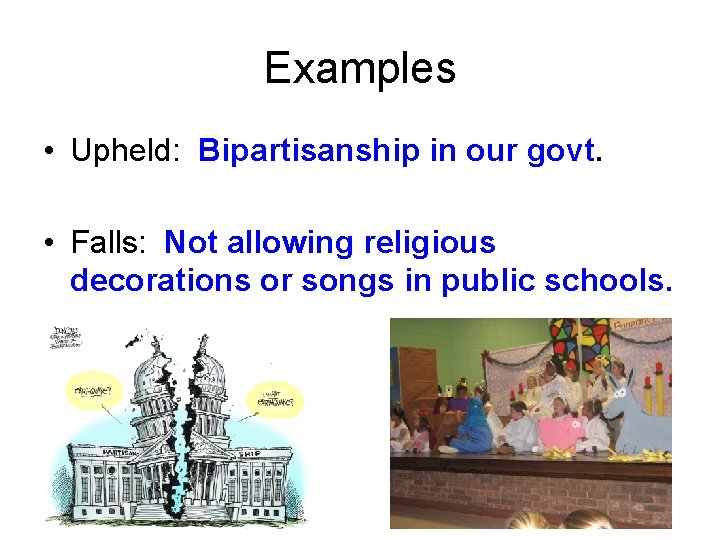
Examples • Upheld: Bipartisanship in our govt. • Falls: Not allowing religious decorations or songs in public schools.
Pick a Pillar 3 x 5 Card • Put your name on the 3 x 5 card. • On one side, pick the pillar you feel is most important and WHY. • On the other side of the card, pick the pillar you feel is least important and WHY. • Hand in on your way out the door.
- Slides: 26