
Unit 1 Basic Chemical and Biological Principals Chapter

Unit 1: Basic Chemical and Biological Principals Chapter 5 - Manipulation of Nucleic Acids Molecular Biology, 3 rd edition by Clark, Pazdernik and Mc. Gehee Copyright © 2019 by Academic Cell. All rights reserved.
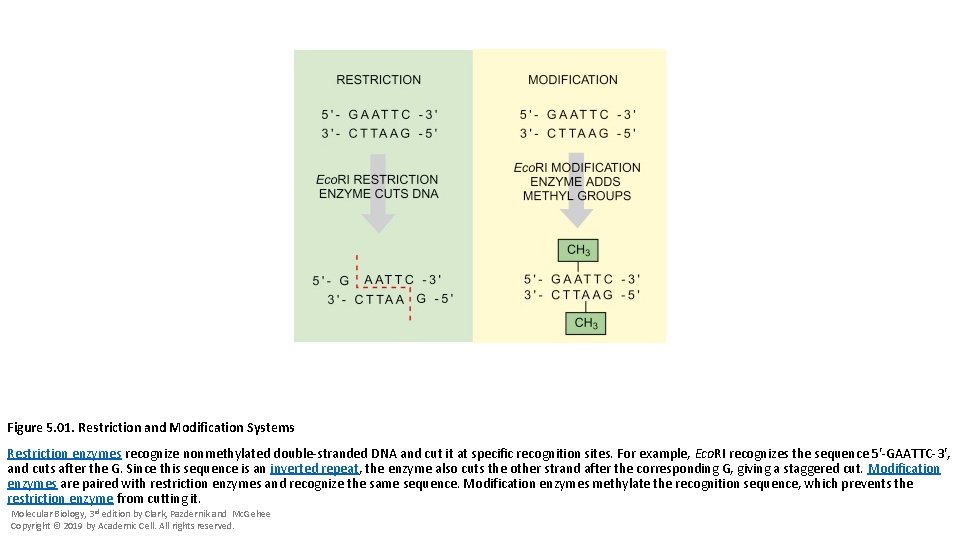
Figure 5. 01. Restriction and Modification Systems Restriction enzymes recognize nonmethylated double-stranded DNA and cut it at specific recognition sites. For example, Eco. RI recognizes the sequence 5′-GAATTC-3′, and cuts after the G. Since this sequence is an inverted repeat, the enzyme also cuts the other strand after the corresponding G, giving a staggered cut. Modification enzymes are paired with restriction enzymes and recognize the same sequence. Modification enzymes methylate the recognition sequence, which prevents the restriction enzyme from cutting it. Molecular Biology, 3 rd edition by Clark, Pazdernik and Mc. Gehee Copyright © 2019 by Academic Cell. All rights reserved.
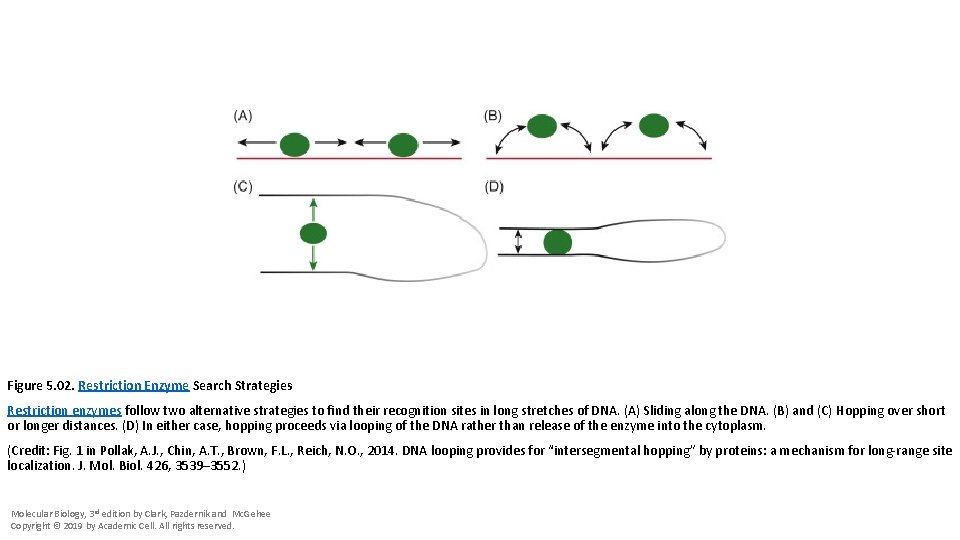
Figure 5. 02. Restriction Enzyme Search Strategies Restriction enzymes follow two alternative strategies to find their recognition sites in long stretches of DNA. (A) Sliding along the DNA. (B) and (C) Hopping over short or longer distances. (D) In either case, hopping proceeds via looping of the DNA rather than release of the enzyme into the cytoplasm. (Credit: Fig. 1 in Pollak, A. J. , Chin, A. T. , Brown, F. L. , Reich, N. O. , 2014. DNA looping provides for “intersegmental hopping” by proteins: a mechanism for long-range site localization. J. Mol. Biol. 426, 3539– 3552. ) Molecular Biology, 3 rd edition by Clark, Pazdernik and Mc. Gehee Copyright © 2019 by Academic Cell. All rights reserved.
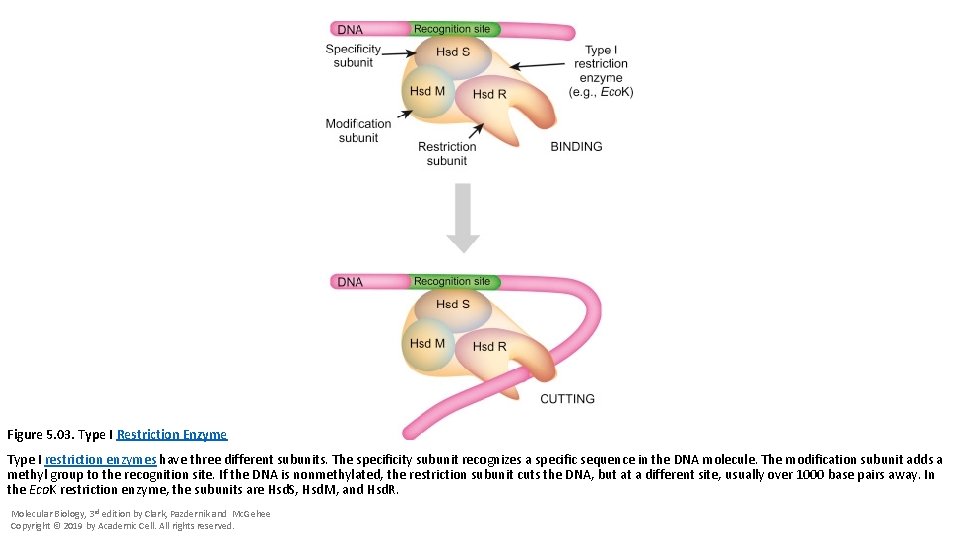
Figure 5. 03. Type I Restriction Enzyme Type I restriction enzymes have three different subunits. The specificity subunit recognizes a specific sequence in the DNA molecule. The modification subunit adds a methyl group to the recognition site. If the DNA is nonmethylated, the restriction subunit cuts the DNA, but at a different site, usually over 1000 base pairs away. In the Eco. K restriction enzyme, the subunits are Hsd. S, Hsd. M, and Hsd. R. Molecular Biology, 3 rd edition by Clark, Pazdernik and Mc. Gehee Copyright © 2019 by Academic Cell. All rights reserved.

Figure 5. 04. Type II Restriction Enzymes—Blunt Versus Sticky Ends Hpa. I is a blunt end restriction enzyme, that is, it cuts both strands of DNA in exactly the same position. Eco. RI is a sticky end restriction enzyme. The enzyme cuts between the G and A on both strands, which generates a four base pair overhang on the ends of the DNA. Since these bases are free to base pair with any complementary sequence, they are considered “sticky. ” Molecular Biology, 3 rd edition by Clark, Pazdernik and Mc. Gehee Copyright © 2019 by Academic Cell. All rights reserved.

Figure 5. 05. Matching of Compatible Sticky Ends Bam. HI and Bgl. II generate the same overhanging or sticky ends. Bam. HI recognizes the sequence 5′-GGATCC-3′ and cuts after the first 5′ G, which generates the 5′GATC-3′ overhang on the bottom strand. Bgl. II recognizes the sequence 5′-AGATCT-3′ and cuts after the first 5′ A, which generates a 5′-GATC-3′ overhang on the top strand. If these two pieces are allowed to anneal, the complementary sequences will hydrogen bond together, allowing the nicks to be sealed more easily by DNA ligase. Molecular Biology, 3 rd edition by Clark, Pazdernik and Mc. Gehee Copyright © 2019 by Academic Cell. All rights reserved.
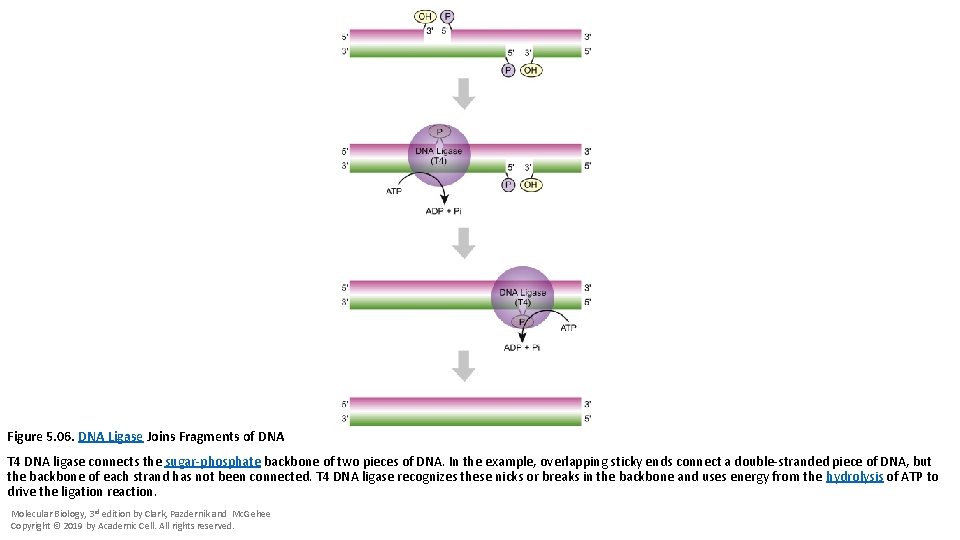
Figure 5. 06. DNA Ligase Joins Fragments of DNA T 4 DNA ligase connects the sugar-phosphate backbone of two pieces of DNA. In the example, overlapping sticky ends connect a double-stranded piece of DNA, but the backbone of each strand has not been connected. T 4 DNA ligase recognizes these nicks or breaks in the backbone and uses energy from the hydrolysis of ATP to drive the ligation reaction. Molecular Biology, 3 rd edition by Clark, Pazdernik and Mc. Gehee Copyright © 2019 by Academic Cell. All rights reserved.
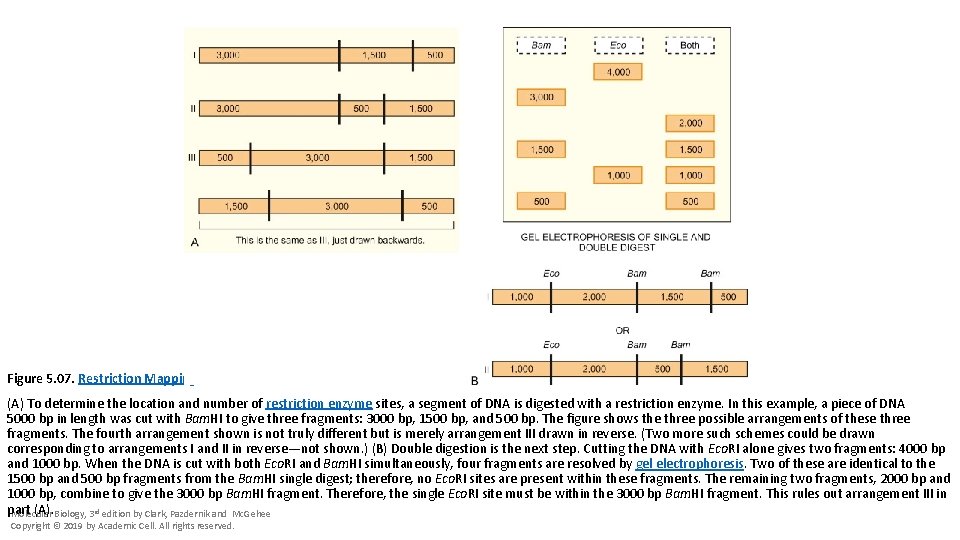
Figure 5. 07. Restriction Mapping (A) To determine the location and number of restriction enzyme sites, a segment of DNA is digested with a restriction enzyme. In this example, a piece of DNA 5000 bp in length was cut with Bam. HI to give three fragments: 3000 bp, 1500 bp, and 500 bp. The figure shows the three possible arrangements of these three fragments. The fourth arrangement shown is not truly different but is merely arrangement III drawn in reverse. (Two more such schemes could be drawn corresponding to arrangements I and II in reverse—not shown. ) (B) Double digestion is the next step. Cutting the DNA with Eco. RI alone gives two fragments: 4000 bp and 1000 bp. When the DNA is cut with both Eco. RI and Bam. HI simultaneously, four fragments are resolved by gel electrophoresis. Two of these are identical to the 1500 bp and 500 bp fragments from the Bam. HI single digest; therefore, no Eco. RI sites are present within these fragments. The remaining two fragments, 2000 bp and 1000 bp, combine to give the 3000 bp Bam. HI fragment. Therefore, the single Eco. RI site must be within the 3000 bp Bam. HI fragment. This rules out arrangement III in part (A). Biology, 3 rd edition by Clark, Pazdernik and Mc. Gehee Molecular Copyright © 2019 by Academic Cell. All rights reserved.
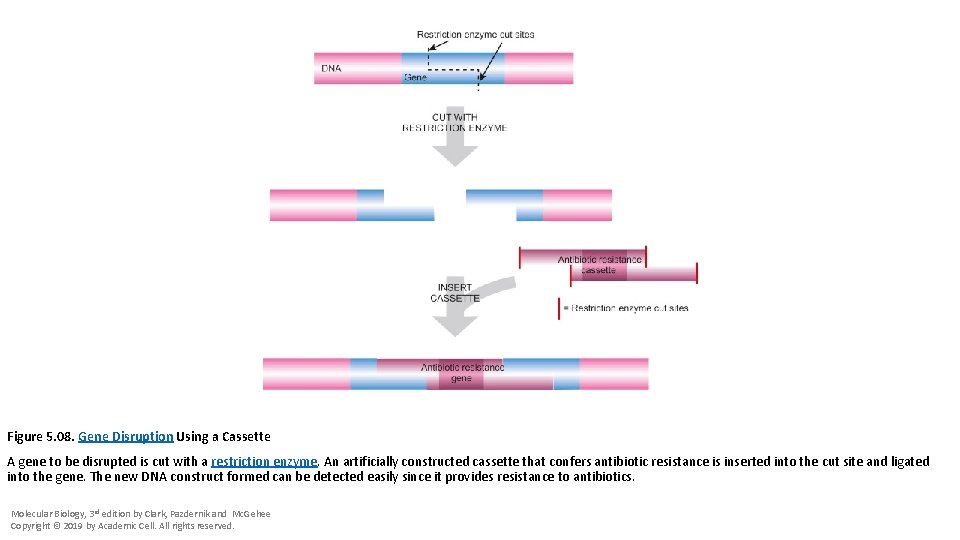
Figure 5. 08. Gene Disruption Using a Cassette A gene to be disrupted is cut with a restriction enzyme. An artificially constructed cassette that confers antibiotic resistance is inserted into the cut site and ligated into the gene. The new DNA construct formed can be detected easily since it provides resistance to antibiotics. Molecular Biology, 3 rd edition by Clark, Pazdernik and Mc. Gehee Copyright © 2019 by Academic Cell. All rights reserved.
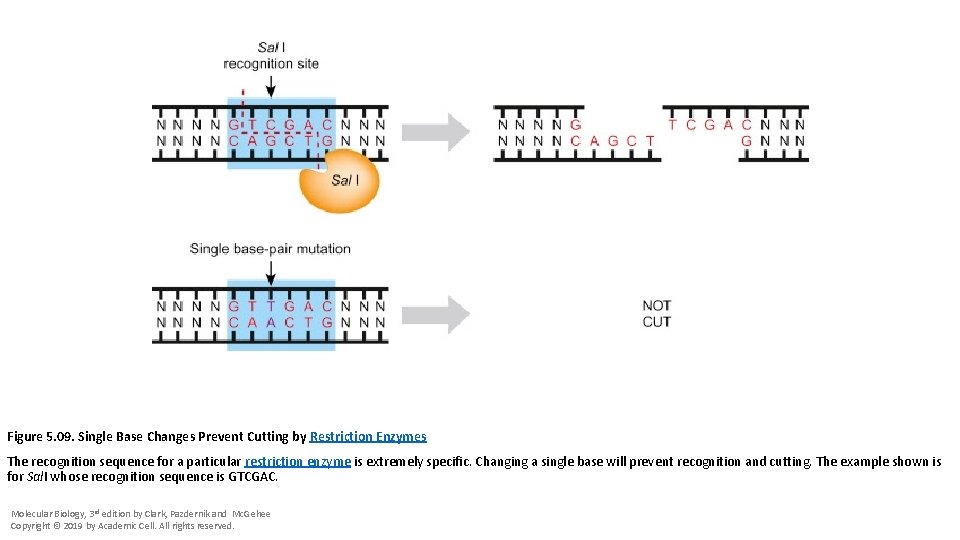
Figure 5. 09. Single Base Changes Prevent Cutting by Restriction Enzymes The recognition sequence for a particular restriction enzyme is extremely specific. Changing a single base will prevent recognition and cutting. The example shown is for Sal. I whose recognition sequence is GTCGAC. Molecular Biology, 3 rd edition by Clark, Pazdernik and Mc. Gehee Copyright © 2019 by Academic Cell. All rights reserved.
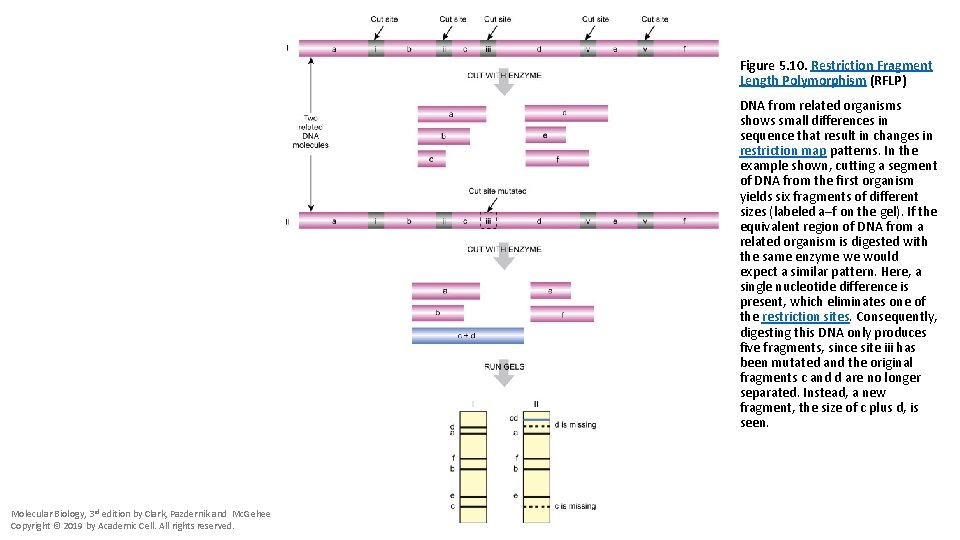
Figure 5. 10. Restriction Fragment Length Polymorphism (RFLP) DNA from related organisms shows small differences in sequence that result in changes in restriction map patterns. In the example shown, cutting a segment of DNA from the first organism yields six fragments of different sizes (labeled a–f on the gel). If the equivalent region of DNA from a related organism is digested with the same enzyme we would expect a similar pattern. Here, a single nucleotide difference is present, which eliminates one of the restriction sites. Consequently, digesting this DNA only produces five fragments, since site iii has been mutated and the original fragments c and d are no longer separated. Instead, a new fragment, the size of c plus d, is seen. Molecular Biology, 3 rd edition by Clark, Pazdernik and Mc. Gehee Copyright © 2019 by Academic Cell. All rights reserved.
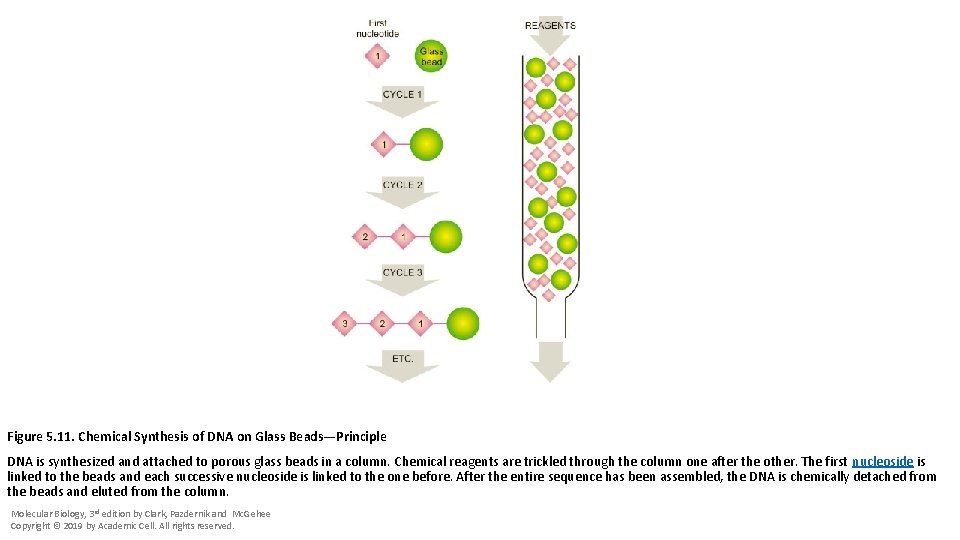
Figure 5. 11. Chemical Synthesis of DNA on Glass Beads—Principle DNA is synthesized and attached to porous glass beads in a column. Chemical reagents are trickled through the column one after the other. The first nucleoside is linked to the beads and each successive nucleoside is linked to the one before. After the entire sequence has been assembled, the DNA is chemically detached from the beads and eluted from the column. Molecular Biology, 3 rd edition by Clark, Pazdernik and Mc. Gehee Copyright © 2019 by Academic Cell. All rights reserved.
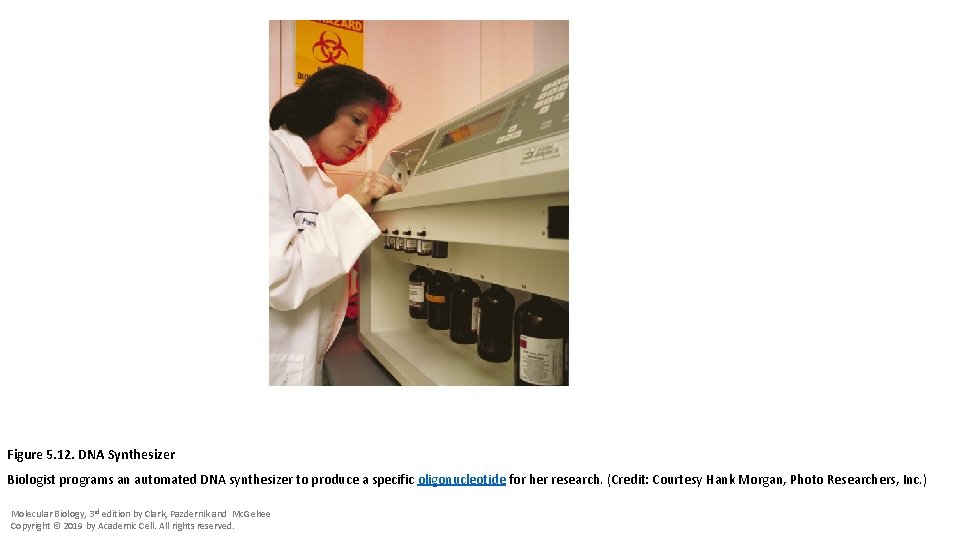
Figure 5. 12. DNA Synthesizer Biologist programs an automated DNA synthesizer to produce a specific oligonucleotide for her research. (Credit: Courtesy Hank Morgan, Photo Researchers, Inc. ) Molecular Biology, 3 rd edition by Clark, Pazdernik and Mc. Gehee Copyright © 2019 by Academic Cell. All rights reserved.
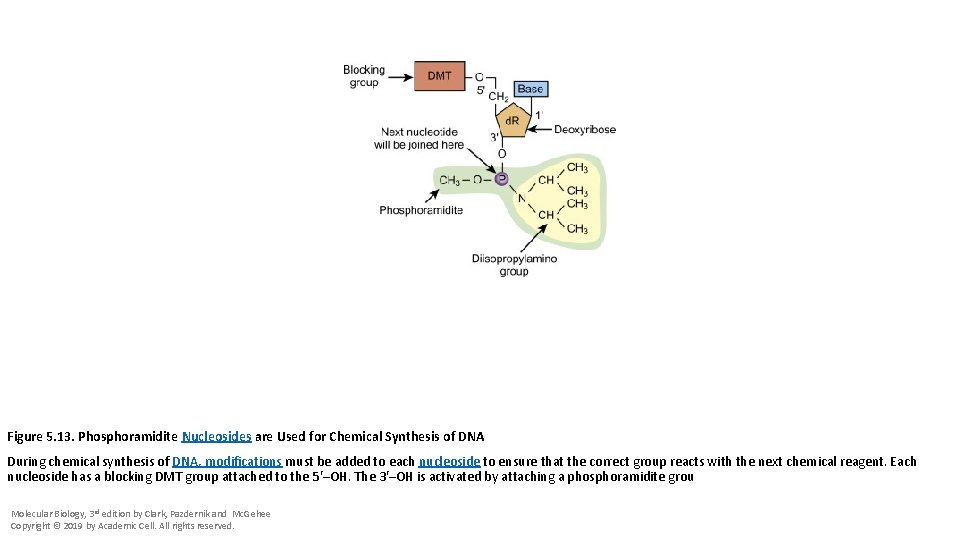
Figure 5. 13. Phosphoramidite Nucleosides are Used for Chemical Synthesis of DNA During chemical synthesis of DNA, modifications must be added to each nucleoside to ensure that the correct group reacts with the next chemical reagent. Each nucleoside has a blocking DMT group attached to the 5′–OH. The 3′–OH is activated by attaching a phosphoramidite grou Molecular Biology, 3 rd edition by Clark, Pazdernik and Mc. Gehee Copyright © 2019 by Academic Cell. All rights reserved.
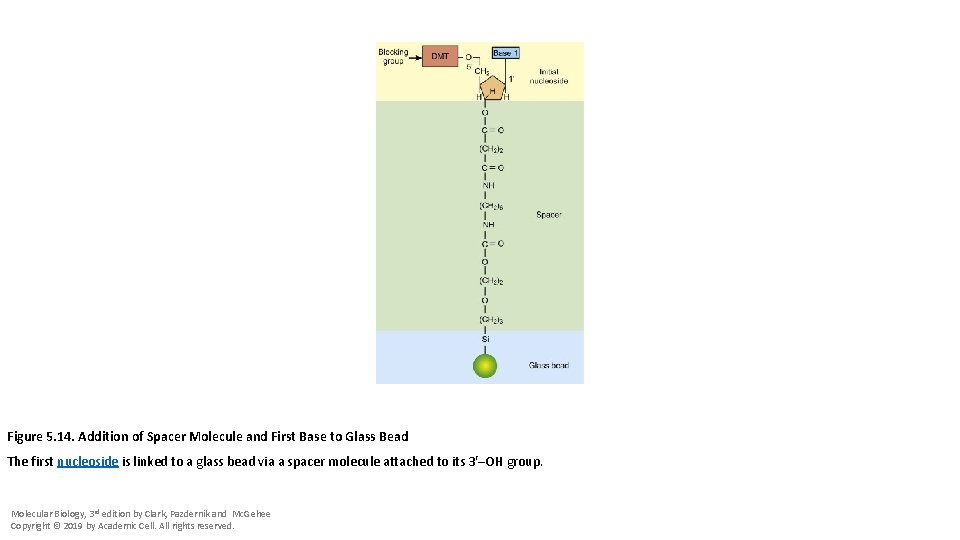
Figure 5. 14. Addition of Spacer Molecule and First Base to Glass Bead The first nucleoside is linked to a glass bead via a spacer molecule attached to its 3′–OH group. Molecular Biology, 3 rd edition by Clark, Pazdernik and Mc. Gehee Copyright © 2019 by Academic Cell. All rights reserved.
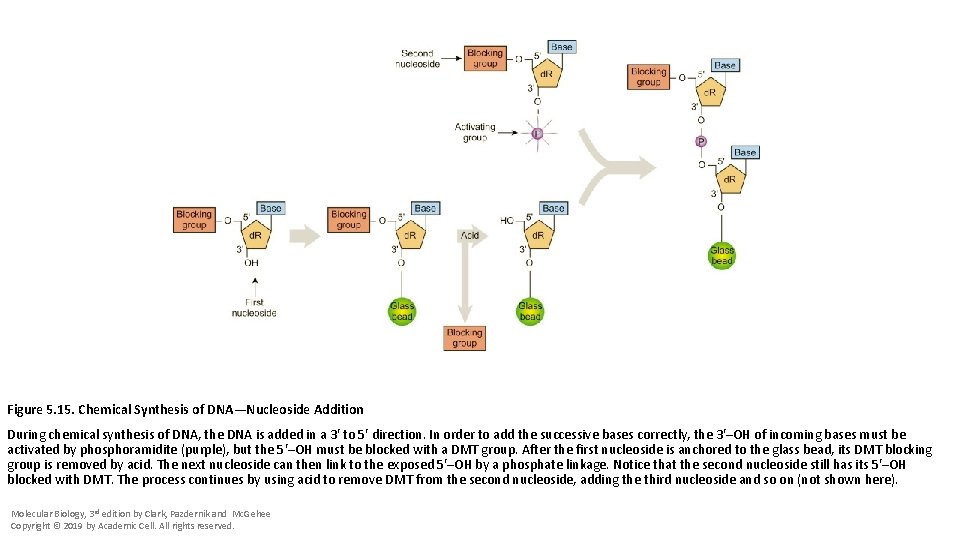
Figure 5. 15. Chemical Synthesis of DNA—Nucleoside Addition During chemical synthesis of DNA, the DNA is added in a 3′ to 5′ direction. In order to add the successive bases correctly, the 3′–OH of incoming bases must be activated by phosphoramidite (purple), but the 5′–OH must be blocked with a DMT group. After the first nucleoside is anchored to the glass bead, its DMT blocking group is removed by acid. The next nucleoside can then link to the exposed 5′–OH by a phosphate linkage. Notice that the second nucleoside still has its 5′–OH blocked with DMT. The process continues by using acid to remove DMT from the second nucleoside, adding the third nucleoside and so on (not shown here). Molecular Biology, 3 rd edition by Clark, Pazdernik and Mc. Gehee Copyright © 2019 by Academic Cell. All rights reserved.
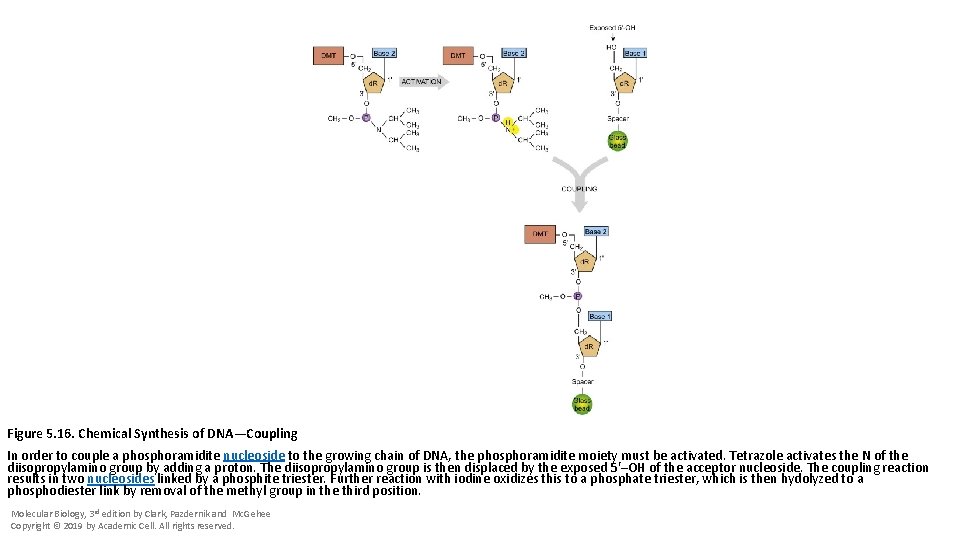
Figure 5. 16. Chemical Synthesis of DNA—Coupling In order to couple a phosphoramidite nucleoside to the growing chain of DNA, the phosphoramidite moiety must be activated. Tetrazole activates the N of the diisopropylamino group by adding a proton. The diisopropylamino group is then displaced by the exposed 5′–OH of the acceptor nucleoside. The coupling reaction results in two nucleosides linked by a phosphite triester. Further reaction with iodine oxidizes this to a phosphate triester, which is then hydolyzed to a phosphodiester link by removal of the methyl group in the third position. Molecular Biology, 3 rd edition by Clark, Pazdernik and Mc. Gehee Copyright © 2019 by Academic Cell. All rights reserved.
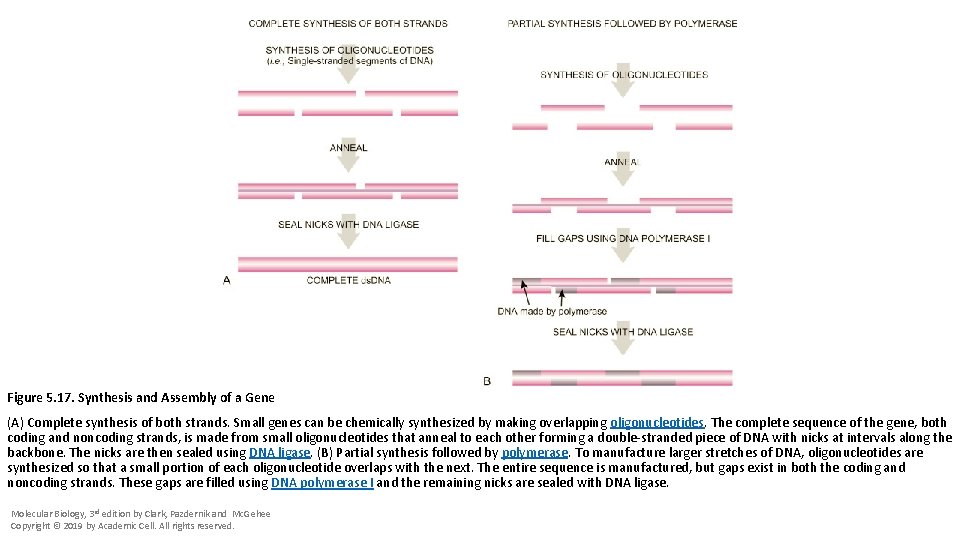
Figure 5. 17. Synthesis and Assembly of a Gene (A) Complete synthesis of both strands. Small genes can be chemically synthesized by making overlapping oligonucleotides. The complete sequence of the gene, both coding and noncoding strands, is made from small oligonucleotides that anneal to each other forming a double-stranded piece of DNA with nicks at intervals along the backbone. The nicks are then sealed using DNA ligase. (B) Partial synthesis followed by polymerase. To manufacture larger stretches of DNA, oligonucleotides are synthesized so that a small portion of each oligonucleotide overlaps with the next. The entire sequence is manufactured, but gaps exist in both the coding and noncoding strands. These gaps are filled using DNA polymerase I and the remaining nicks are sealed with DNA ligase. Molecular Biology, 3 rd edition by Clark, Pazdernik and Mc. Gehee Copyright © 2019 by Academic Cell. All rights reserved.
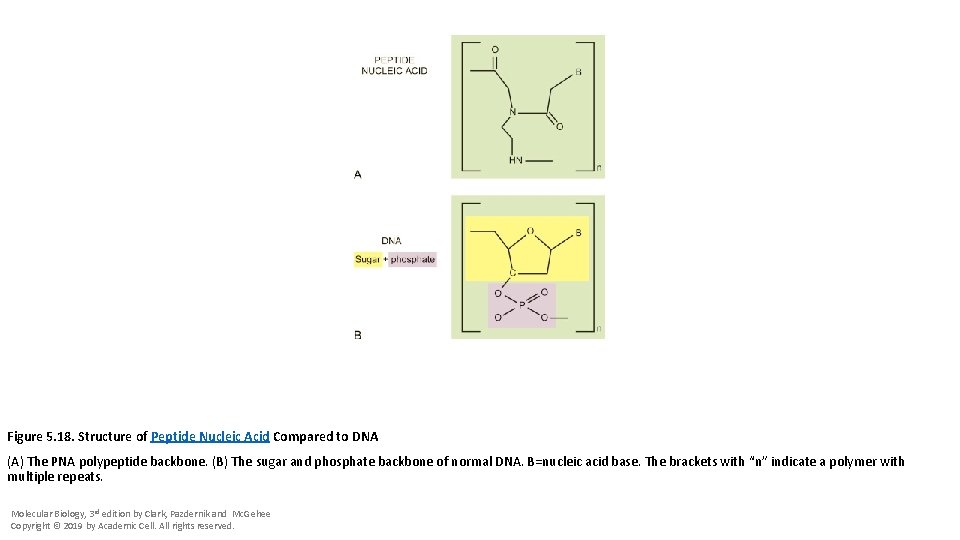
Figure 5. 18. Structure of Peptide Nucleic Acid Compared to DNA (A) The PNA polypeptide backbone. (B) The sugar and phosphate backbone of normal DNA. B=nucleic acid base. The brackets with “n” indicate a polymer with multiple repeats. Molecular Biology, 3 rd edition by Clark, Pazdernik and Mc. Gehee Copyright © 2019 by Academic Cell. All rights reserved.
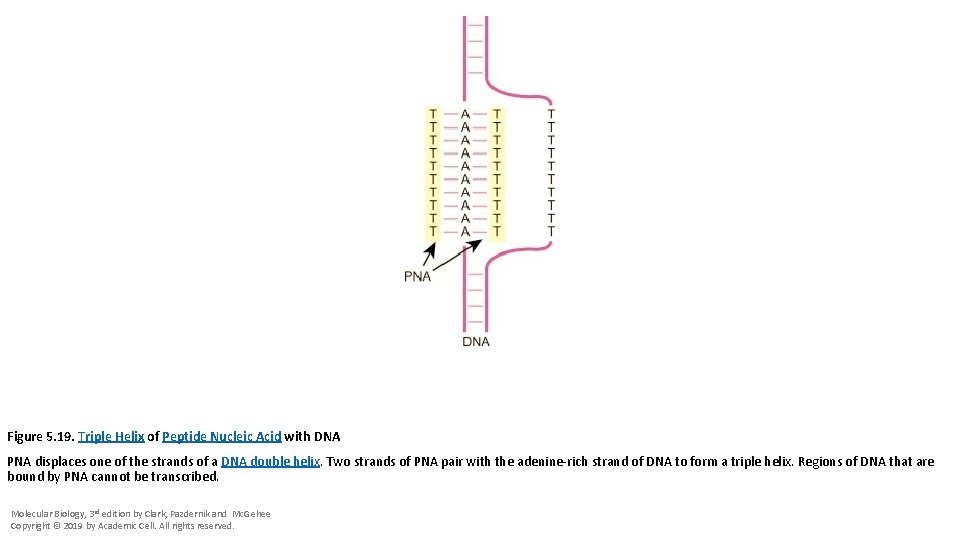
Figure 5. 19. Triple Helix of Peptide Nucleic Acid with DNA PNA displaces one of the strands of a DNA double helix. Two strands of PNA pair with the adenine-rich strand of DNA to form a triple helix. Regions of DNA that are bound by PNA cannot be transcribed. Molecular Biology, 3 rd edition by Clark, Pazdernik and Mc. Gehee Copyright © 2019 by Academic Cell. All rights reserved.
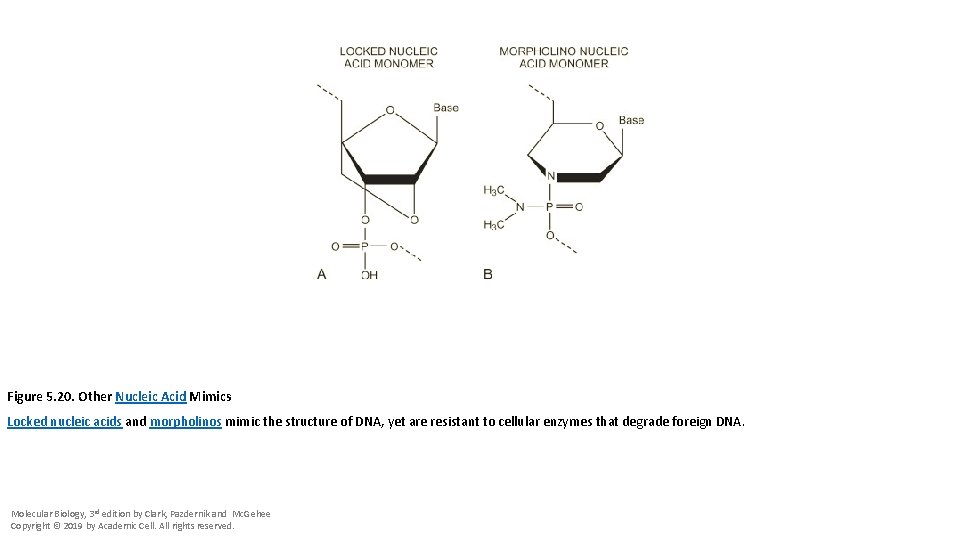
Figure 5. 20. Other Nucleic Acid Mimics Locked nucleic acids and morpholinos mimic the structure of DNA, yet are resistant to cellular enzymes that degrade foreign DNA. Molecular Biology, 3 rd edition by Clark, Pazdernik and Mc. Gehee Copyright © 2019 by Academic Cell. All rights reserved.
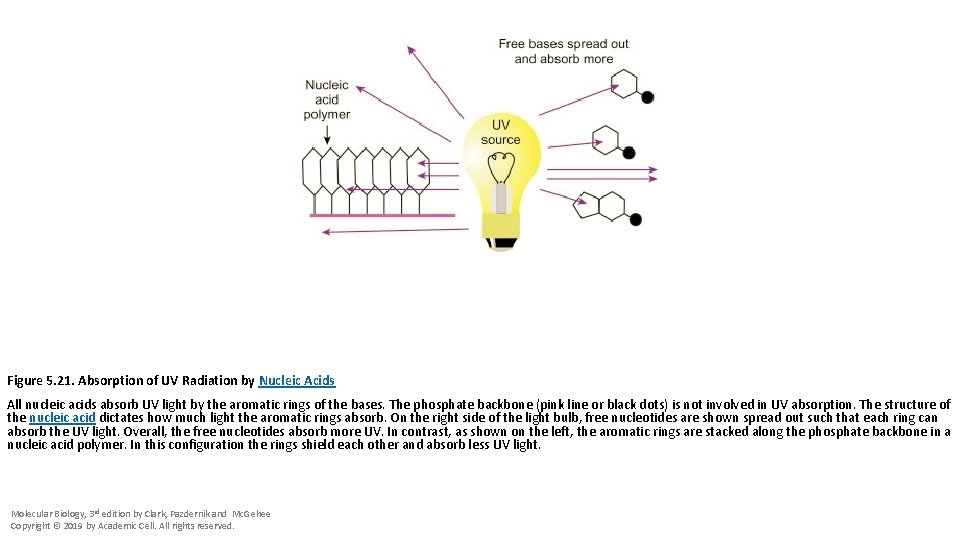
Figure 5. 21. Absorption of UV Radiation by Nucleic Acids All nucleic acids absorb UV light by the aromatic rings of the bases. The phosphate backbone (pink line or black dots) is not involved in UV absorption. The structure of the nucleic acid dictates how much light the aromatic rings absorb. On the right side of the light bulb, free nucleotides are shown spread out such that each ring can absorb the UV light. Overall, the free nucleotides absorb more UV. In contrast, as shown on the left, the aromatic rings are stacked along the phosphate backbone in a nucleic acid polymer. In this configuration the rings shield each other and absorb less UV light. Molecular Biology, 3 rd edition by Clark, Pazdernik and Mc. Gehee Copyright © 2019 by Academic Cell. All rights reserved.
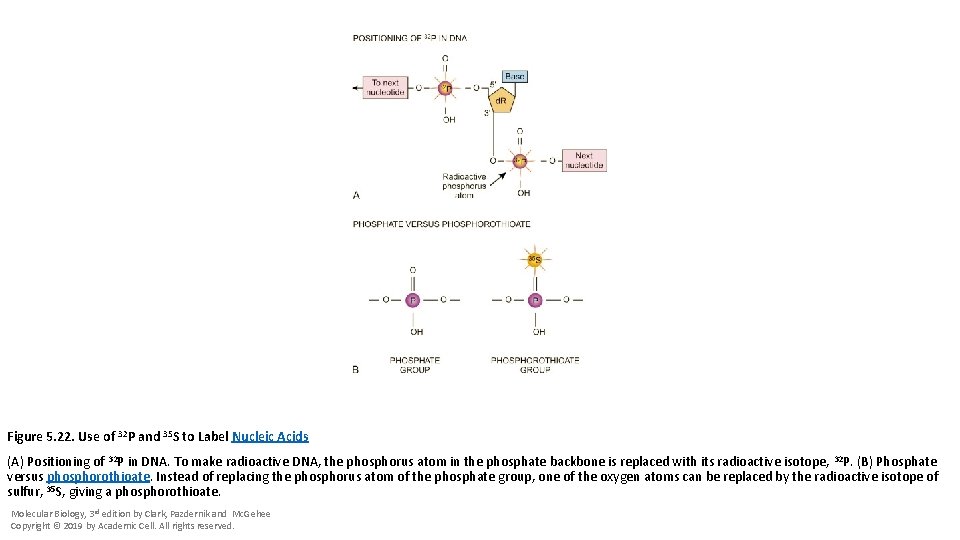
Figure 5. 22. Use of 32 P and 35 S to Label Nucleic Acids (A) Positioning of 32 P in DNA. To make radioactive DNA, the phosphorus atom in the phosphate backbone is replaced with its radioactive isotope, 32 P. (B) Phosphate versus phosphorothioate. Instead of replacing the phosphorus atom of the phosphate group, one of the oxygen atoms can be replaced by the radioactive isotope of sulfur, 35 S, giving a phosphorothioate. Molecular Biology, 3 rd edition by Clark, Pazdernik and Mc. Gehee Copyright © 2019 by Academic Cell. All rights reserved.
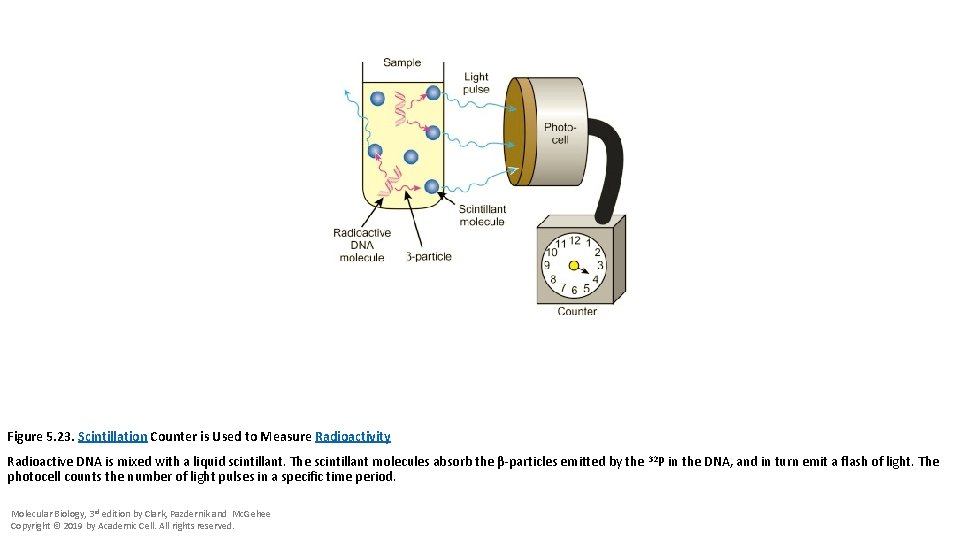
Figure 5. 23. Scintillation Counter is Used to Measure Radioactivity Radioactive DNA is mixed with a liquid scintillant. The scintillant molecules absorb the β-particles emitted by the 32 P in the DNA, and in turn emit a flash of light. The photocell counts the number of light pulses in a specific time period. Molecular Biology, 3 rd edition by Clark, Pazdernik and Mc. Gehee Copyright © 2019 by Academic Cell. All rights reserved.
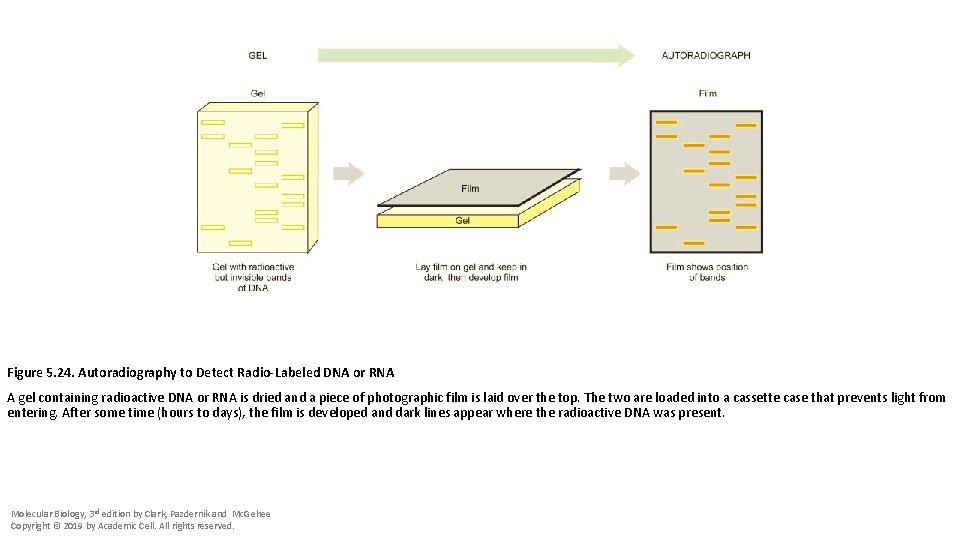
Figure 5. 24. Autoradiography to Detect Radio-Labeled DNA or RNA A gel containing radioactive DNA or RNA is dried and a piece of photographic film is laid over the top. The two are loaded into a cassette case that prevents light from entering. After some time (hours to days), the film is developed and dark lines appear where the radioactive DNA was present. Molecular Biology, 3 rd edition by Clark, Pazdernik and Mc. Gehee Copyright © 2019 by Academic Cell. All rights reserved.
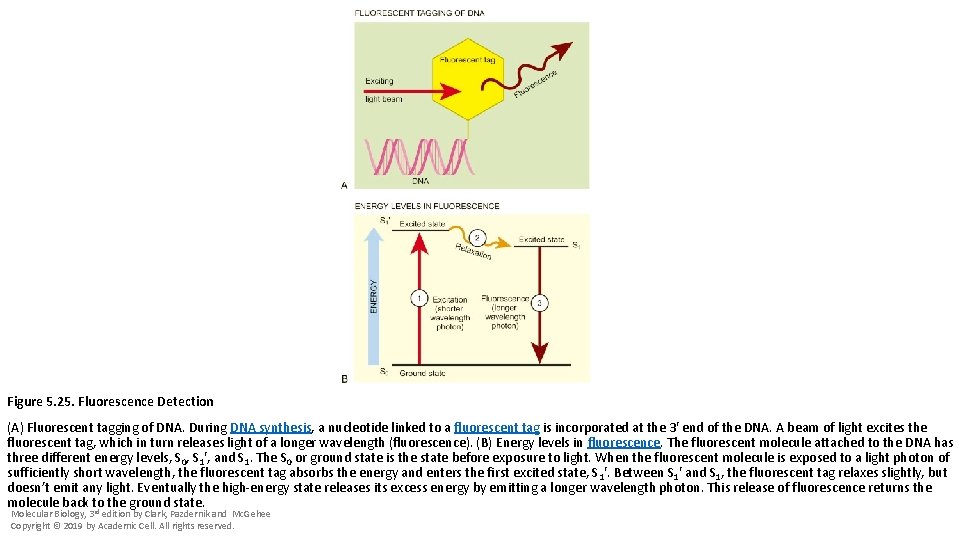
Figure 5. 25. Fluorescence Detection (A) Fluorescent tagging of DNA. During DNA synthesis, a nucleotide linked to a fluorescent tag is incorporated at the 3′ end of the DNA. A beam of light excites the fluorescent tag, which in turn releases light of a longer wavelength (fluorescence). (B) Energy levels in fluorescence. The fluorescent molecule attached to the DNA has three different energy levels, S 0, S 1′, and S 1. The S 0 or ground state is the state before exposure to light. When the fluorescent molecule is exposed to a light photon of sufficiently short wavelength, the fluorescent tag absorbs the energy and enters the first excited state, S 1′. Between S 1′ and S 1, the fluorescent tag relaxes slightly, but doesn’t emit any light. Eventually the high-energy state releases its excess energy by emitting a longer wavelength photon. This release of fluorescence returns the molecule back to the ground state. rd Molecular Biology, 3 edition by Clark, Pazdernik and Mc. Gehee Copyright © 2019 by Academic Cell. All rights reserved.
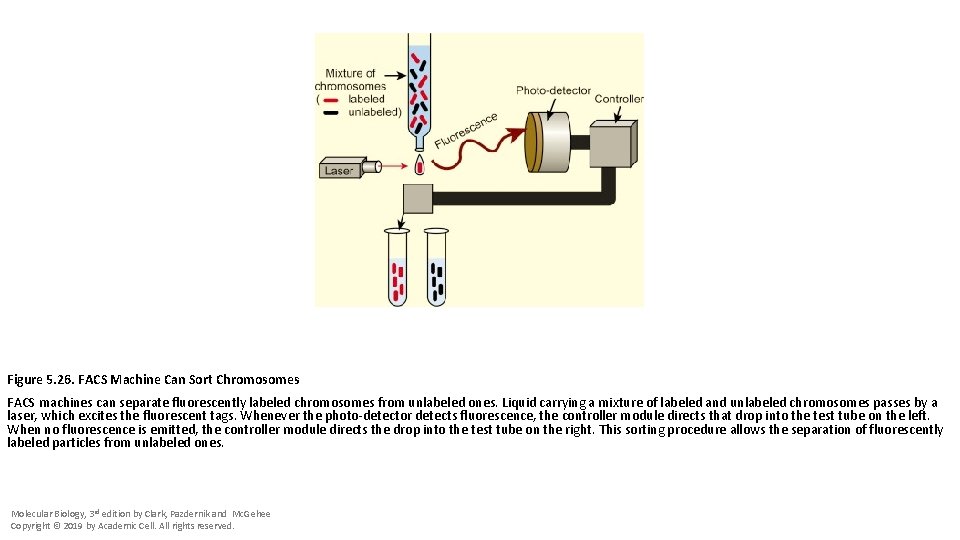
Figure 5. 26. FACS Machine Can Sort Chromosomes FACS machines can separate fluorescently labeled chromosomes from unlabeled ones. Liquid carrying a mixture of labeled and unlabeled chromosomes passes by a laser, which excites the fluorescent tags. Whenever the photo-detector detects fluorescence, the controller module directs that drop into the test tube on the left. When no fluorescence is emitted, the controller module directs the drop into the test tube on the right. This sorting procedure allows the separation of fluorescently labeled particles from unlabeled ones. Molecular Biology, 3 rd edition by Clark, Pazdernik and Mc. Gehee Copyright © 2019 by Academic Cell. All rights reserved.
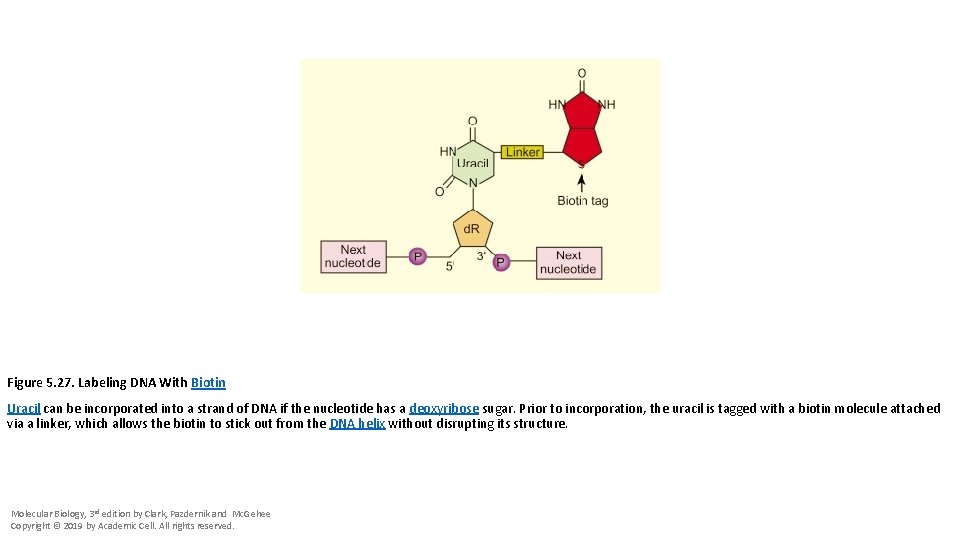
Figure 5. 27. Labeling DNA With Biotin Uracil can be incorporated into a strand of DNA if the nucleotide has a deoxyribose sugar. Prior to incorporation, the uracil is tagged with a biotin molecule attached via a linker, which allows the biotin to stick out from the DNA helix without disrupting its structure. Molecular Biology, 3 rd edition by Clark, Pazdernik and Mc. Gehee Copyright © 2019 by Academic Cell. All rights reserved.
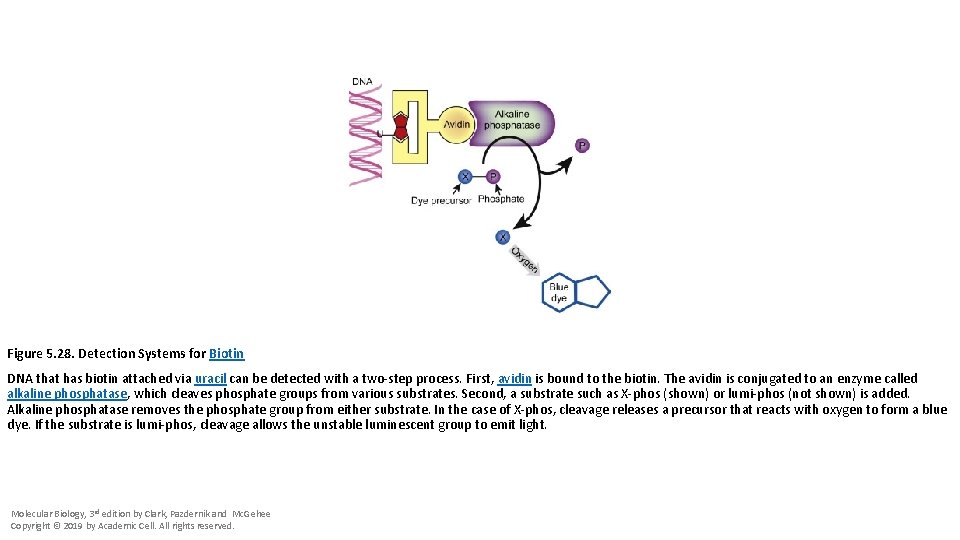
Figure 5. 28. Detection Systems for Biotin DNA that has biotin attached via uracil can be detected with a two-step process. First, avidin is bound to the biotin. The avidin is conjugated to an enzyme called alkaline phosphatase, which cleaves phosphate groups from various substrates. Second, a substrate such as X-phos (shown) or lumi-phos (not shown) is added. Alkaline phosphatase removes the phosphate group from either substrate. In the case of X-phos, cleavage releases a precursor that reacts with oxygen to form a blue dye. If the substrate is lumi-phos, cleavage allows the unstable luminescent group to emit light. Molecular Biology, 3 rd edition by Clark, Pazdernik and Mc. Gehee Copyright © 2019 by Academic Cell. All rights reserved.
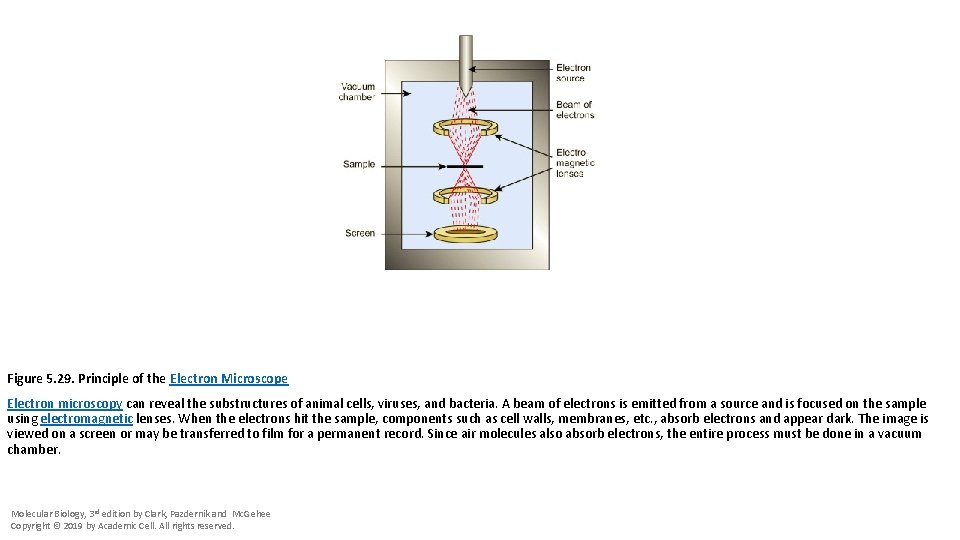
Figure 5. 29. Principle of the Electron Microscope Electron microscopy can reveal the substructures of animal cells, viruses, and bacteria. A beam of electrons is emitted from a source and is focused on the sample using electromagnetic lenses. When the electrons hit the sample, components such as cell walls, membranes, etc. , absorb electrons and appear dark. The image is viewed on a screen or may be transferred to film for a permanent record. Since air molecules also absorb electrons, the entire process must be done in a vacuum chamber. Molecular Biology, 3 rd edition by Clark, Pazdernik and Mc. Gehee Copyright © 2019 by Academic Cell. All rights reserved.
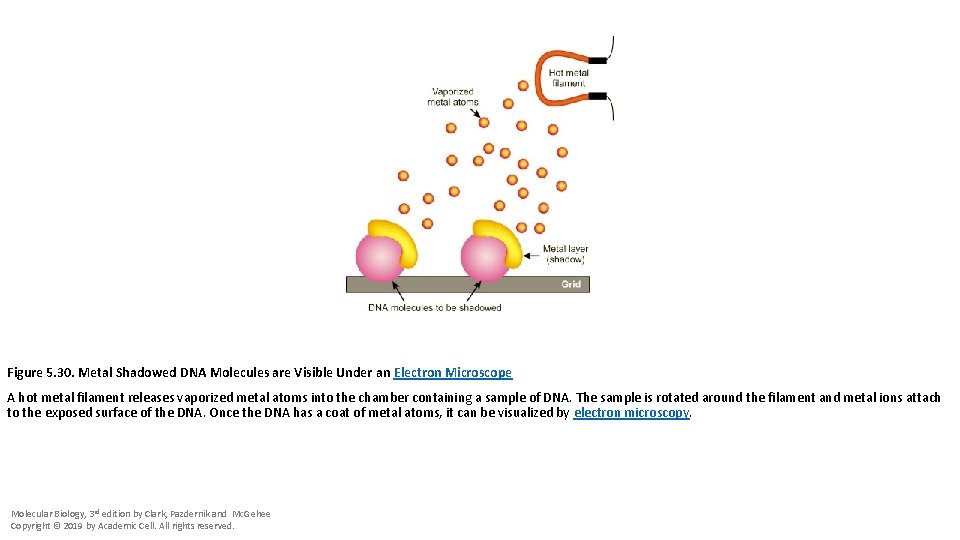
Figure 5. 30. Metal Shadowed DNA Molecules are Visible Under an Electron Microscope A hot metal filament releases vaporized metal atoms into the chamber containing a sample of DNA. The sample is rotated around the filament and metal ions attach to the exposed surface of the DNA. Once the DNA has a coat of metal atoms, it can be visualized by electron microscopy. Molecular Biology, 3 rd edition by Clark, Pazdernik and Mc. Gehee Copyright © 2019 by Academic Cell. All rights reserved.
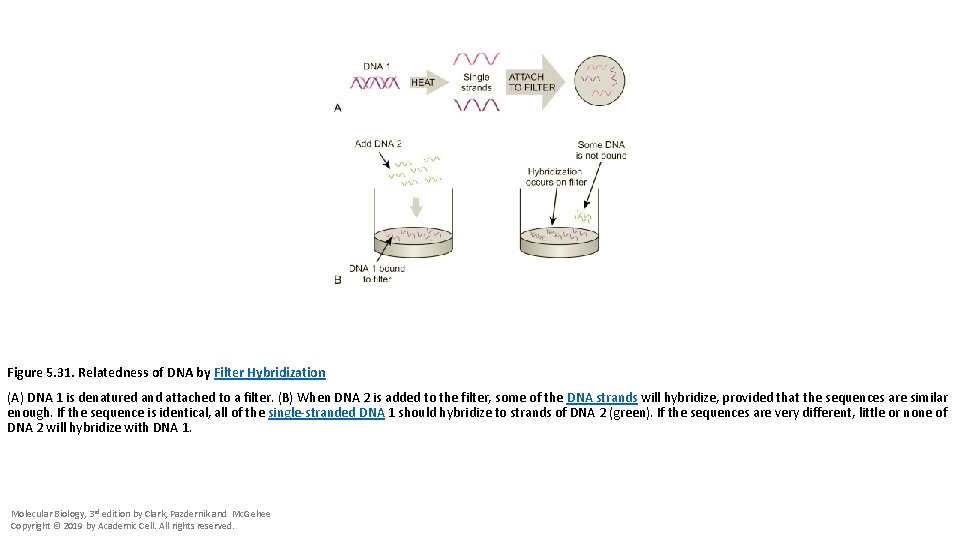
Figure 5. 31. Relatedness of DNA by Filter Hybridization (A) DNA 1 is denatured and attached to a filter. (B) When DNA 2 is added to the filter, some of the DNA strands will hybridize, provided that the sequences are similar enough. If the sequence is identical, all of the single-stranded DNA 1 should hybridize to strands of DNA 2 (green). If the sequences are very different, little or none of DNA 2 will hybridize with DNA 1. Molecular Biology, 3 rd edition by Clark, Pazdernik and Mc. Gehee Copyright © 2019 by Academic Cell. All rights reserved.
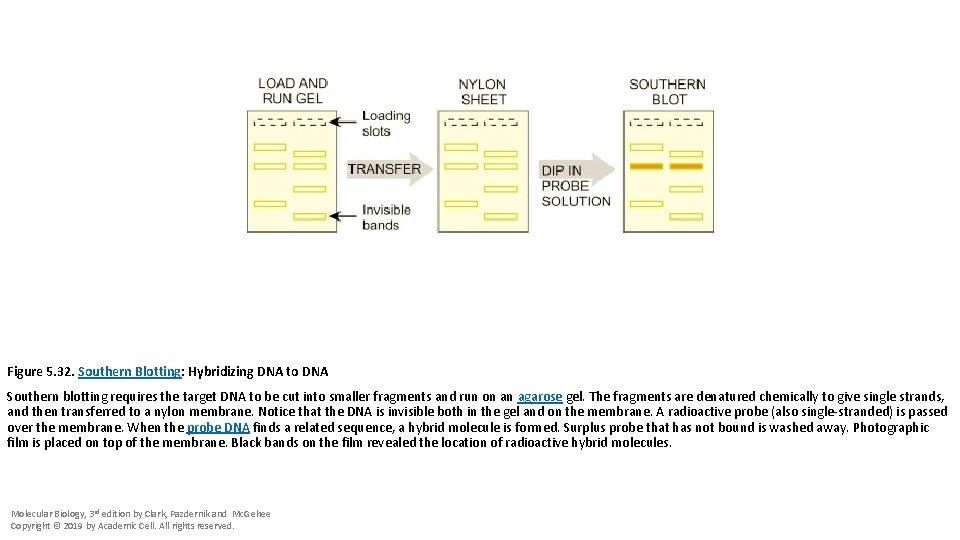
Figure 5. 32. Southern Blotting: Hybridizing DNA to DNA Southern blotting requires the target DNA to be cut into smaller fragments and run on an agarose gel. The fragments are denatured chemically to give single strands, and then transferred to a nylon membrane. Notice that the DNA is invisible both in the gel and on the membrane. A radioactive probe (also single-stranded) is passed over the membrane. When the probe DNA finds a related sequence, a hybrid molecule is formed. Surplus probe that has not bound is washed away. Photographic film is placed on top of the membrane. Black bands on the film revealed the location of radioactive hybrid molecules. Molecular Biology, 3 rd edition by Clark, Pazdernik and Mc. Gehee Copyright © 2019 by Academic Cell. All rights reserved.
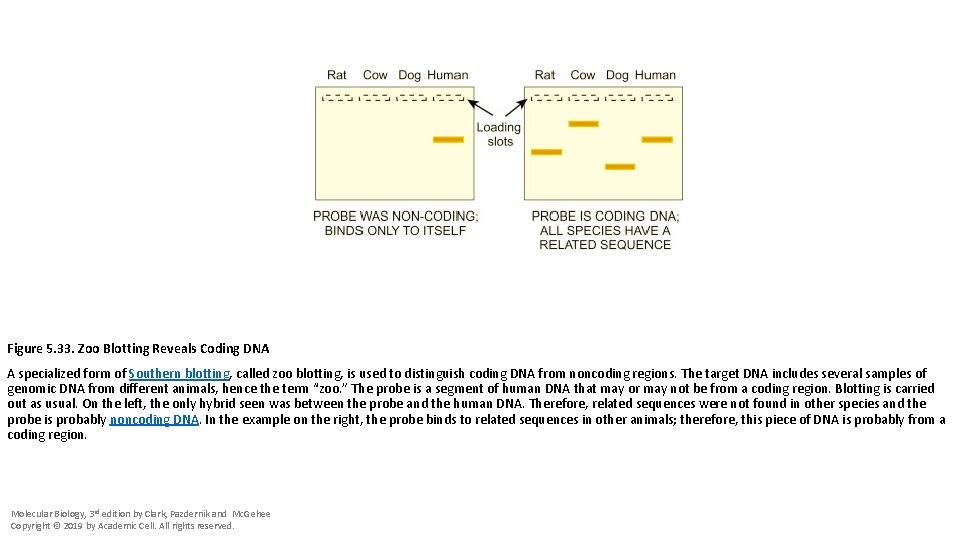
Figure 5. 33. Zoo Blotting Reveals Coding DNA A specialized form of Southern blotting, called zoo blotting, is used to distinguish coding DNA from noncoding regions. The target DNA includes several samples of genomic DNA from different animals, hence the term “zoo. ” The probe is a segment of human DNA that may or may not be from a coding region. Blotting is carried out as usual. On the left, the only hybrid seen was between the probe and the human DNA. Therefore, related sequences were not found in other species and the probe is probably noncoding DNA. In the example on the right, the probe binds to related sequences in other animals; therefore, this piece of DNA is probably from a coding region. Molecular Biology, 3 rd edition by Clark, Pazdernik and Mc. Gehee Copyright © 2019 by Academic Cell. All rights reserved.
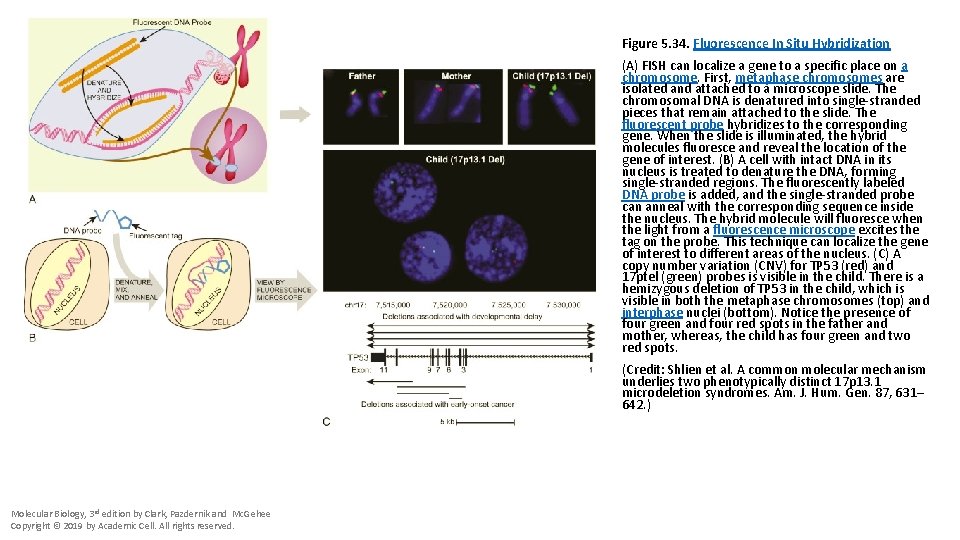
Figure 5. 34. Fluorescence In Situ Hybridization (A) FISH can localize a gene to a specific place on a chromosome. First, metaphase chromosomes are isolated and attached to a microscope slide. The chromosomal DNA is denatured into single-stranded pieces that remain attached to the slide. The fluorescent probe hybridizes to the corresponding gene. When the slide is illuminated, the hybrid molecules fluoresce and reveal the location of the gene of interest. (B) A cell with intact DNA in its nucleus is treated to denature the DNA, forming single-stranded regions. The fluorescently labeled DNA probe is added, and the single-stranded probe can anneal with the corresponding sequence inside the nucleus. The hybrid molecule will fluoresce when the light from a fluorescence microscope excites the tag on the probe. This technique can localize the gene of interest to different areas of the nucleus. (C) A copy number variation (CNV) for TP 53 (red) and 17 ptel (green) probes is visible in the child. There is a hemizygous deletion of TP 53 in the child, which is visible in both the metaphase chromosomes (top) and interphase nuclei (bottom). Notice the presence of four green and four red spots in the father and mother, whereas, the child has four green and two red spots. (Credit: Shlien et al. A common molecular mechanism underlies two phenotypically distinct 17 p 13. 1 microdeletion syndromes. Am. J. Hum. Gen. 87, 631– 642. ) Molecular Biology, 3 rd edition by Clark, Pazdernik and Mc. Gehee Copyright © 2019 by Academic Cell. All rights reserved.
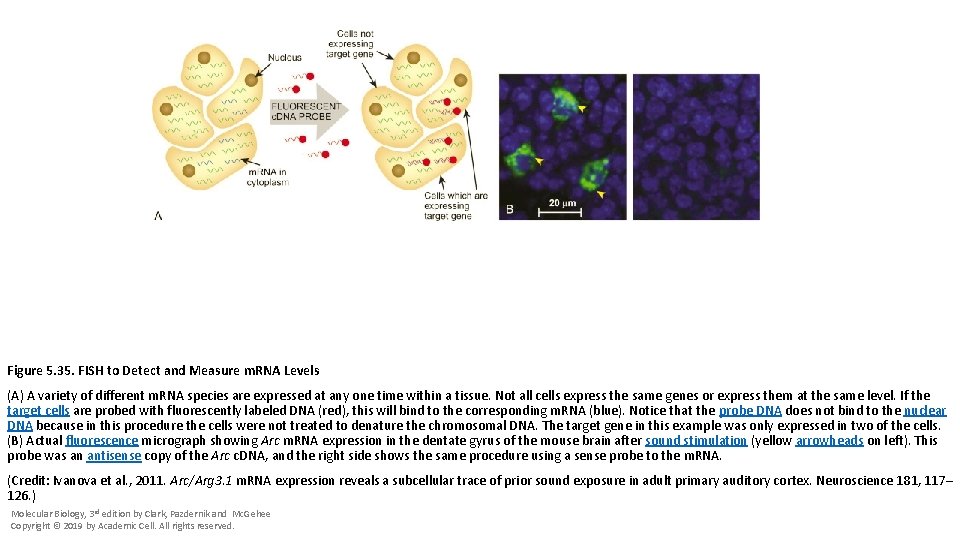
Figure 5. 35. FISH to Detect and Measure m. RNA Levels (A) A variety of different m. RNA species are expressed at any one time within a tissue. Not all cells express the same genes or express them at the same level. If the target cells are probed with fluorescently labeled DNA (red), this will bind to the corresponding m. RNA (blue). Notice that the probe DNA does not bind to the nuclear DNA because in this procedure the cells were not treated to denature the chromosomal DNA. The target gene in this example was only expressed in two of the cells. (B) Actual fluorescence micrograph showing Arc m. RNA expression in the dentate gyrus of the mouse brain after sound stimulation (yellow arrowheads on left). This probe was an antisense copy of the Arc c. DNA, and the right side shows the same procedure using a sense probe to the m. RNA. (Credit: Ivanova et al. , 2011. Arc/Arg 3. 1 m. RNA expression reveals a subcellular trace of prior sound exposure in adult primary auditory cortex. Neuroscience 181, 117– 126. ) Molecular Biology, 3 rd edition by Clark, Pazdernik and Mc. Gehee Copyright © 2019 by Academic Cell. All rights reserved.
- Slides: 36