
Unit 1 AP The Human Skeletal System Assessment





- Slides: 16
Unit 1 A&P: The Human Skeletal System Assessment Criteria 1. 1 Explain the functions of the musculoskeletal system
Functions of the skeleton SADPAM S – Shape/Support Gives the body its shape and supports the weight of all the other tissues A – Attachment for muscles and tendons Bones provide the attachment point for the tendons of most skeletal muscles D – Development of blood cells Red blood cells, white blood cells and platelets are produced within the red bone marrow of the bone.
Functions of the skeleton P – Protection Help to protect vital organs from injury; for example, ribs protect the heart and lungs and the skull protects the brain. A – Allows movements of the body When skeletal muscles contract, they pull on bones to produce a movement M – Mineral store Bones store minerals calcium and phosphorus which are important for the strength of the bone.
S A D P A M
Bone Facts • Half of the bones in your body are found in your hands and feet. • Your skeleton accounts for 14% of your body mass. • A block of bone the size of a matchbox can support a load of 9 tons (4 times more than the same amount of concrete. • Your skeleton is completely replaced every 7 year (not all at once!) • Every second, your bone marrow produces 200 million erythrocytes (red blood cells. ) • The Egyptians were the first recorded people that could repair a fractured bone. • They were also the first people to make a prosthetic appendage.
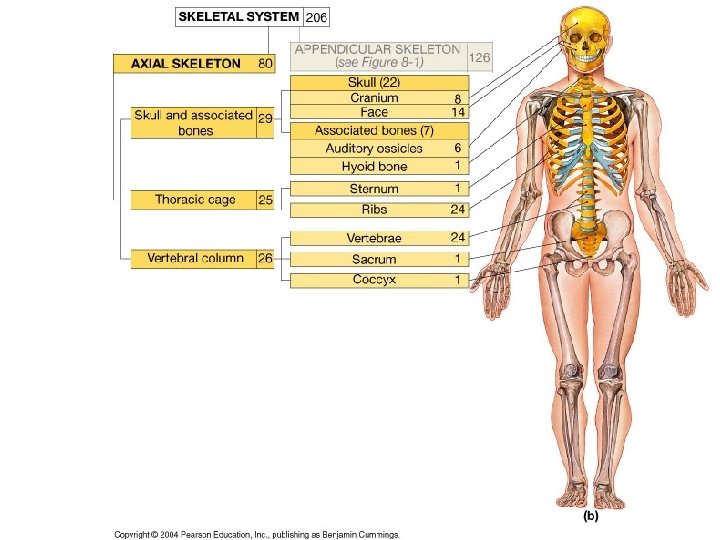
Skeletal System • Skeleton or skeletal system consists of the bones and the joints of the body. • Hard framework of 206 bones, divided into two parts. • The axial skeleton: • Supports the head, neck and trunk. • Consists of the skull, the vertebral column, the ribs and the sternum.
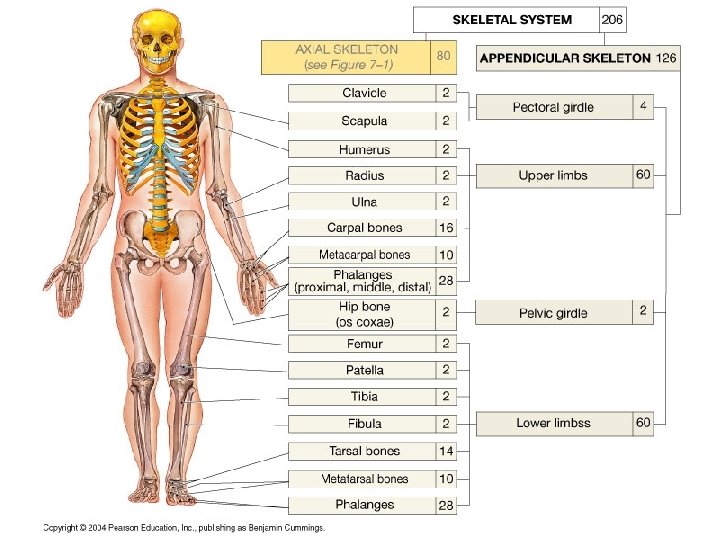
Skeletal System • The appendicular skeleton: • Supports the appendages or limbs and attaches them to the rest of the body. • Consists of the shoulder girdle, the upper limbs, the pelvic girdle and the lower limbs.
Types of bones There are five different types of bones defined according to their shape. • Long bones • The body’s levers. They allow movement particularly in the limbs. E. g. femur ( thigh bone), clavicle (collar bone) • Short bones • Strong and compact bones, usually grouped in parts of the body where little movement is required. E. g. tarsals and carpals. • Flat bones • Protective bones with broad flat surfaces for muscle attachment. E. g. occipital, parietal (in the skull), scapula (shoulder)
Types of bones • Irregular bones • Bones that do not fit in the previous categories and have different characteristics. E. g. vertebrae, mandible, zygomatic • Sesamoid bones • Bones within tendons. There are only two sesamoid bones in the human body (the kneecap or patella, and the hyoid (base of the tongue) • Sutural bones • Bones that occur between the bones in the skull, aiding their fusion during early life
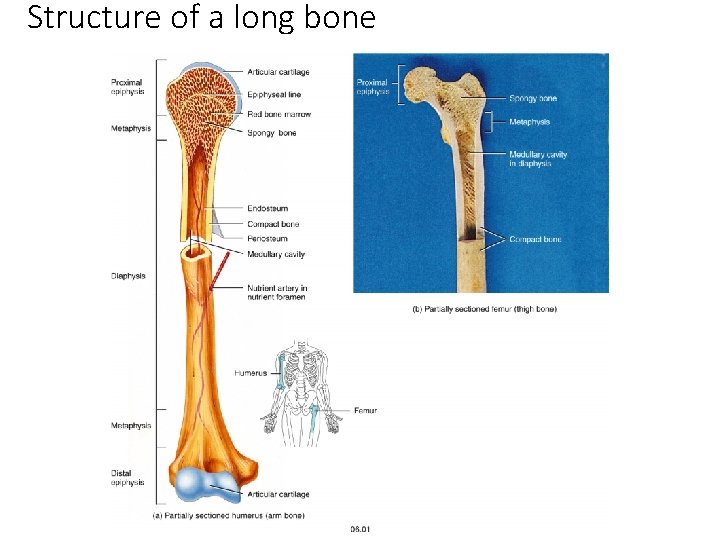
Structure of a long bone