
UNIT 1 Air Pollution An atmospheric condition present













- Slides: 33
UNIT : 1
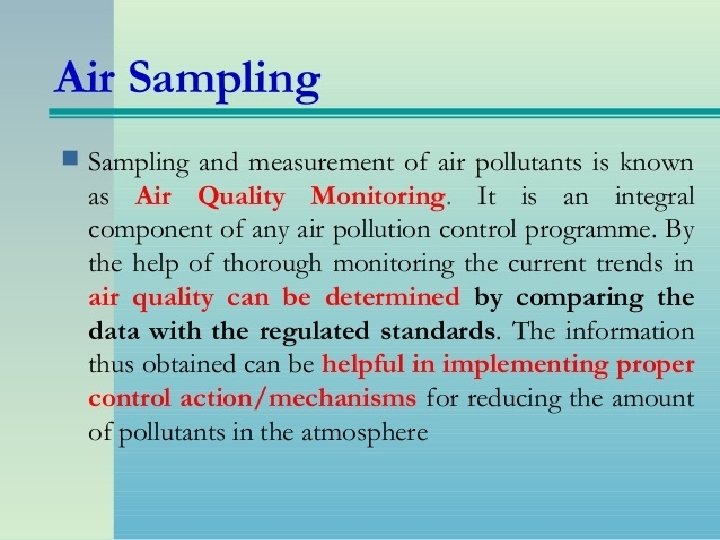
Air Pollution An atmospheric condition present in concentrations which can cause undesirable effects on man and his environment is called as air pollution. Gaseous pollution include oxides of sulphur, oxides of nitrogen, carbon monoxide, volatile organic compounds etc. Particulate pollutants include smoke, soot, dust, fumes, aerosols, liquid droplets, pollen gain etc.
Measurement of Air Pollution An air quality index (AQI) is used by government agencies to communicate to the public how polluted the air currently is or how polluted it is forecast to become. As the AQI increases, an increasingly large percentage of the population is likely to experience increasingly severe adverse health effects.
Air Quality Health Index : The Air Quality Health Index provides a number from 1 to 10+ to indicate the level of health risk associated with local air quality. On occasion, when the amount of air pollution is abnormally high, the number may exceed 10. The AQHI provides a local air quality current value as well as a local air quality maximums forecast for today, tonight, and tomorrow, and provides associated health advice. [
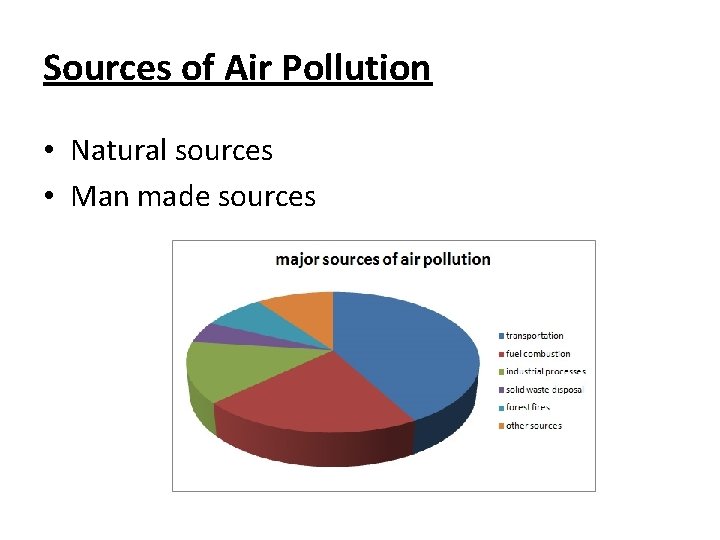
Sources of Air Pollution • Natural sources • Man made sources
• Natural sources: The natural sources of air pollution are volcanic eruptions, forest fires, sea salt sprays, biological decay etc. • Man made sources: The man made sources include thermal power plants, industrial units, vehicular emissions, fossil fuel burning, agricultural activities etc.
Classification Of Air Pollution : Basically contaminants are of two types and they are as follows: • Primary contaminants • Secondary contaminants
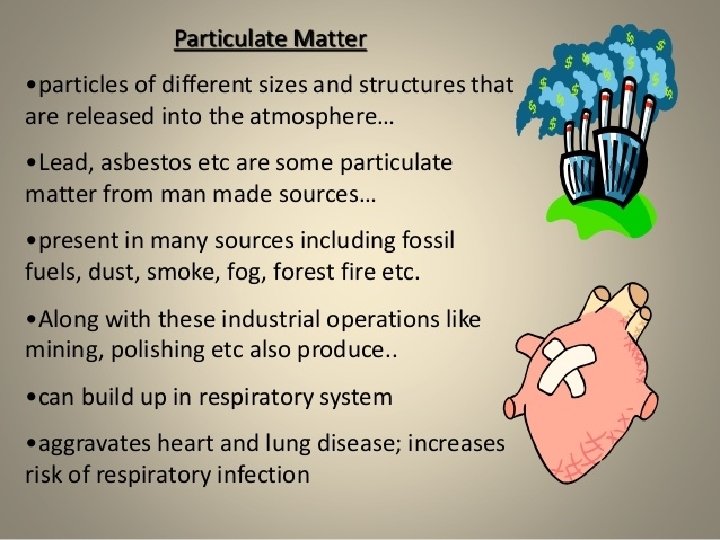
Primary contaminants : Primary contaminants are substances which are directly released into air from sources. The important primary contaminants which are hazardous in high amount are as follows: • Carbon compounds • Sulphur compounds • Nitrogen compounds • Halogen compounds • Aerosols or particulate matter
Secondary contaminants : They are formed in atmosphere from primary contaminants and secondary pollutants are also called as precursors. The important secondary contaminants are : • Ozone formed from reactions of photochemical of VOCs and nitrogen oxides. • The droplets of sulfuric acid formed from sulphur dioxide. • The droplets of nitric acid formed from nitrogen dioxide. • Sulphate aerosols formed from reactions of sulfuric acid droplets with ammonia.
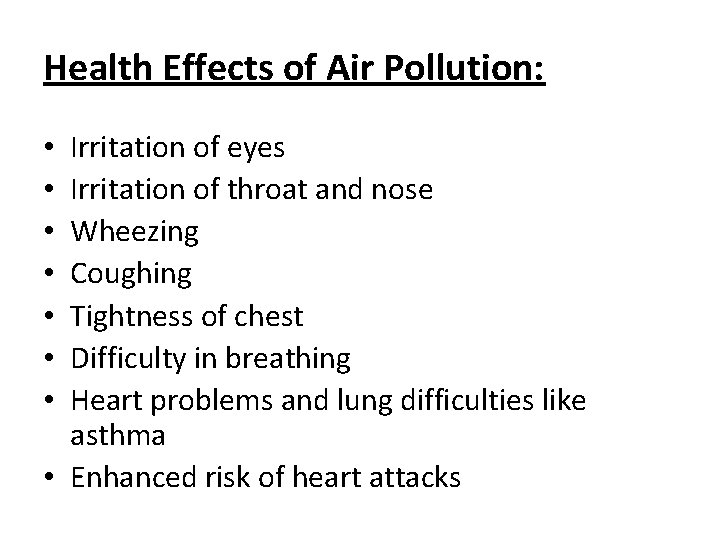
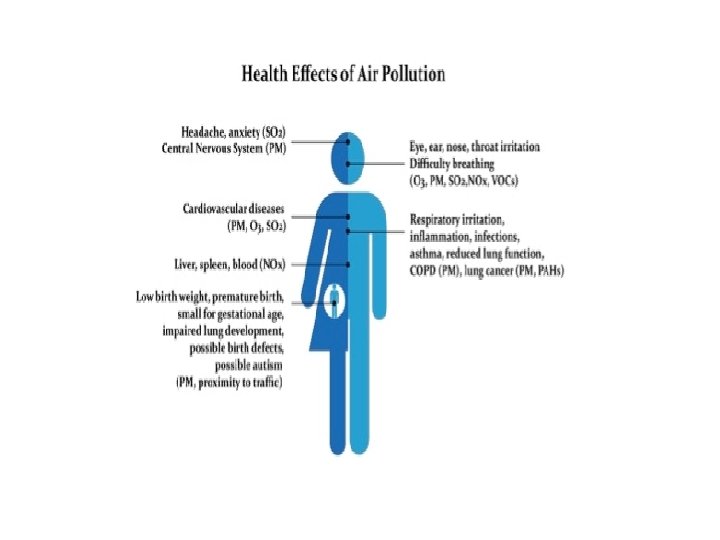
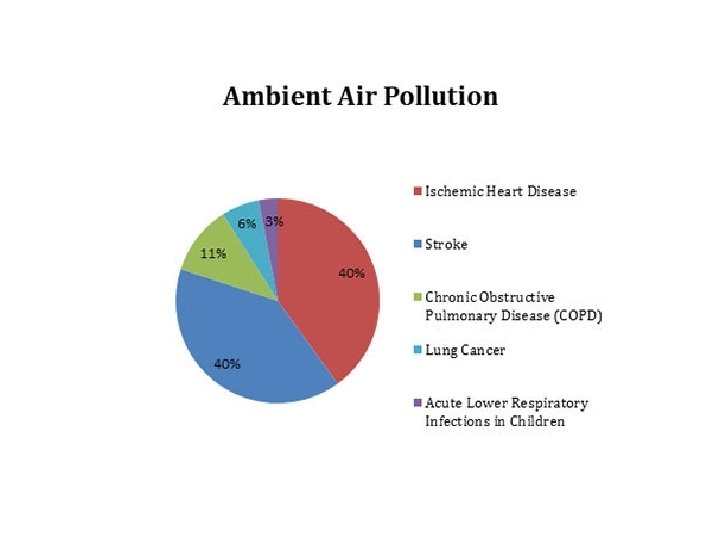
Health Effects of Air Pollution: Irritation of eyes Irritation of throat and nose Wheezing Coughing Tightness of chest Difficulty in breathing Heart problems and lung difficulties like asthma • Enhanced risk of heart attacks • •
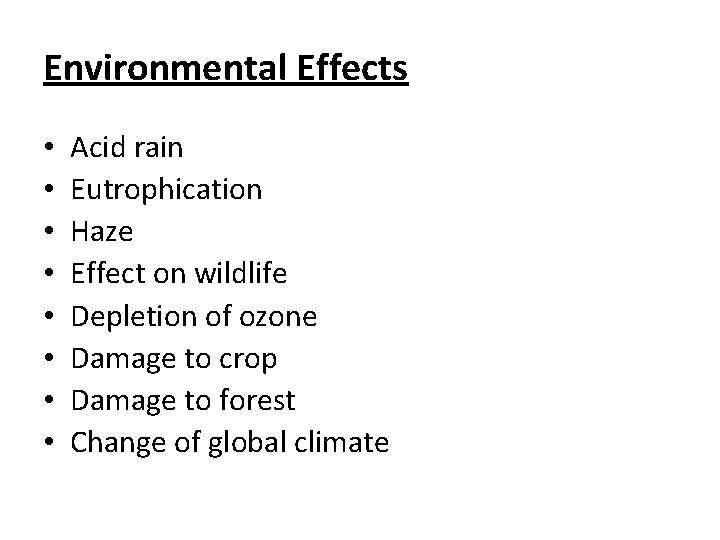
Environmental Effects • • Acid rain Eutrophication Haze Effect on wildlife Depletion of ozone Damage to crop Damage to forest Change of global climate
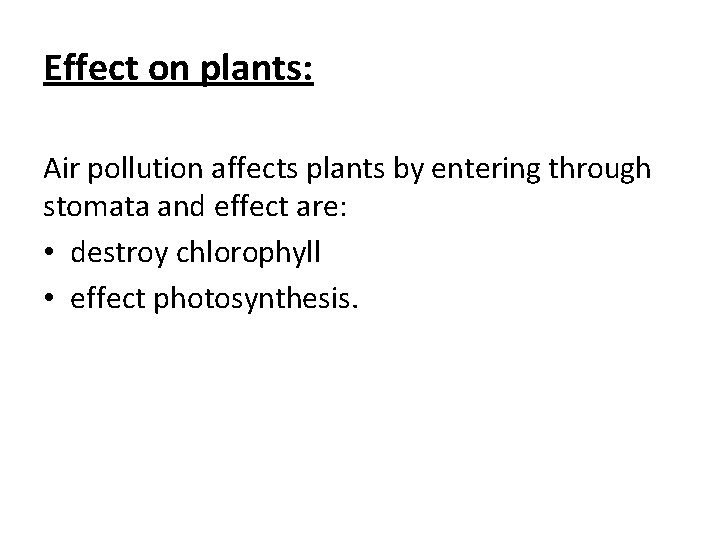
Effect on plants: Air pollution affects plants by entering through stomata and effect are: • destroy chlorophyll • effect photosynthesis.
UNIT : 2