
Unit 1 A Diesel Engine Operation and Maintenance
- Slides: 71
Unit 1 A – Diesel Engine Operation and Maintenance 1
§ Describe… o Differences between diesel fuel and gasoline o Major components of a diesel fuel system o Correct operating procedures/parameters of starting a diesel engine o Basic powertrain components of a fire apparatus and each component’s operating characteristics § Discuss… o Diesel particulate filter and its function in the regeneration process 2
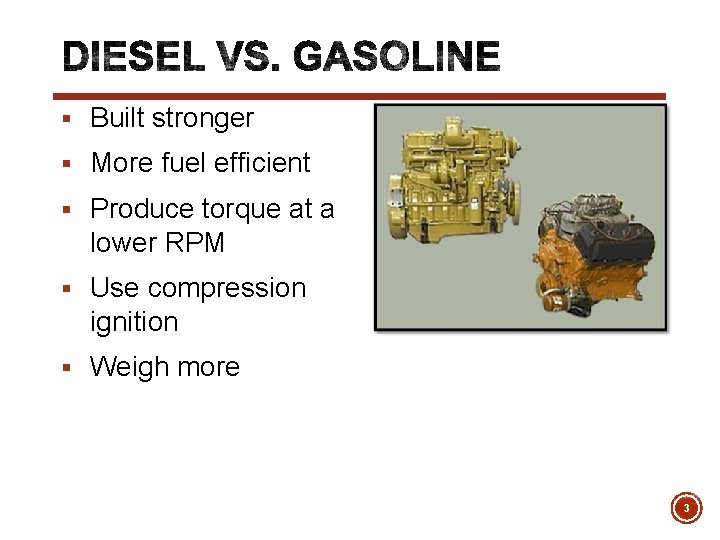
§ Built stronger § More fuel efficient § Produce torque at a lower RPM § Use compression ignition § Weigh more 3
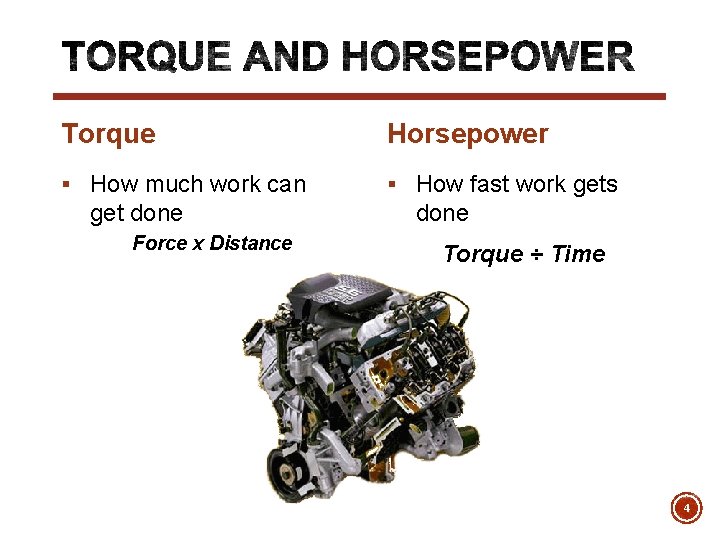
Torque Horsepower § How much work can § How fast work gets get done Force x Distance done Torque ÷ Time 4
5
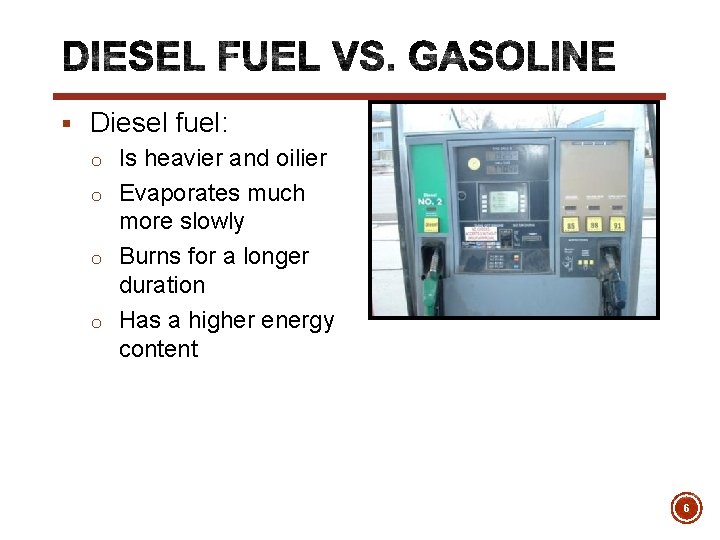
§ Diesel fuel: o Is heavier and oilier o Evaporates much more slowly o Burns for a longer duration o Has a higher energy content 6
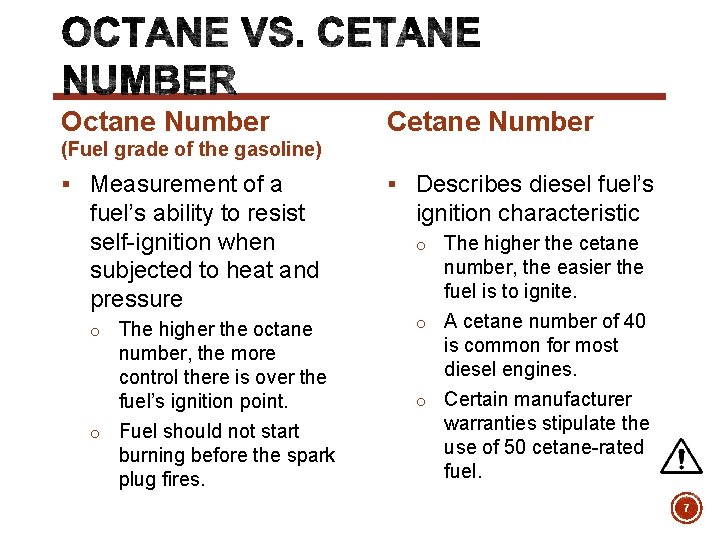
Octane Number Cetane Number (Fuel grade of the gasoline) § Measurement of a fuel’s ability to resist self-ignition when subjected to heat and pressure The higher the octane number, the more control there is over the fuel’s ignition point. o Fuel should not start burning before the spark plug fires. o § Describes diesel fuel’s ignition characteristic The higher the cetane number, the easier the fuel is to ignite. o A cetane number of 40 is common for most diesel engines. o Certain manufacturer warranties stipulate the use of 50 cetane-rated fuel. o 7
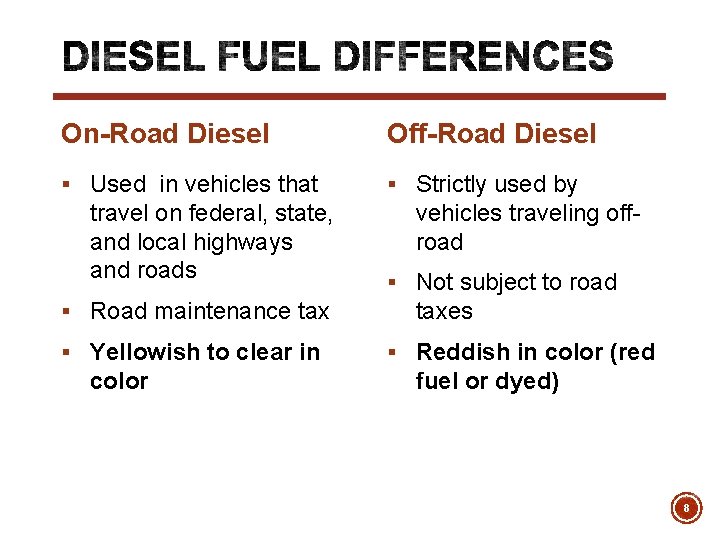
On-Road Diesel Off-Road Diesel § Used in vehicles that § Strictly used by travel on federal, state, and local highways and roads § Road maintenance tax § Yellowish to clear in color vehicles traveling offroad § Not subject to road taxes § Reddish in color (red fuel or dyed) 8
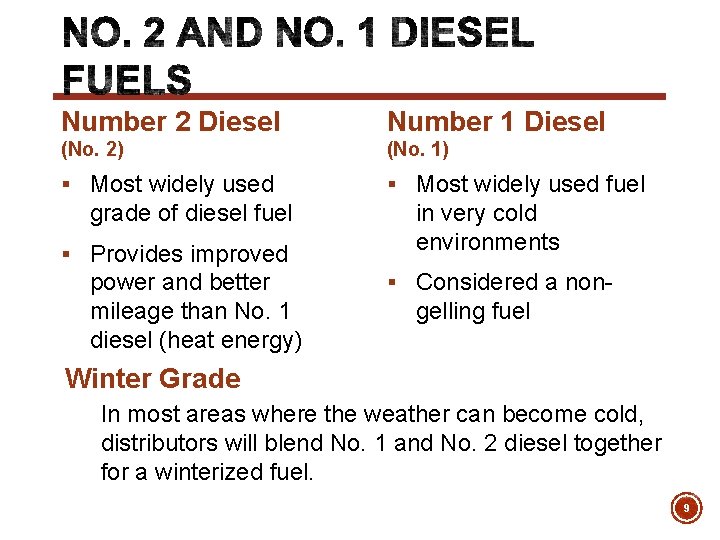
Number 2 Diesel Number 1 Diesel (No. 2) (No. 1) § Most widely used fuel grade of diesel fuel § Provides improved power and better mileage than No. 1 diesel (heat energy) in very cold environments § Considered a non- gelling fuel Winter Grade In most areas where the weather can become cold, distributors will blend No. 1 and No. 2 diesel together for a winterized fuel. 9
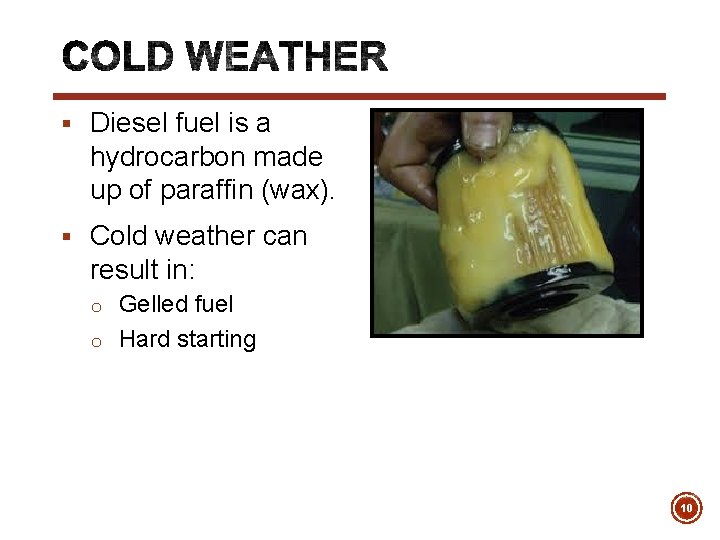
§ Diesel fuel is a hydrocarbon made up of paraffin (wax). § Cold weather can result in: o Gelled fuel o Hard starting 10
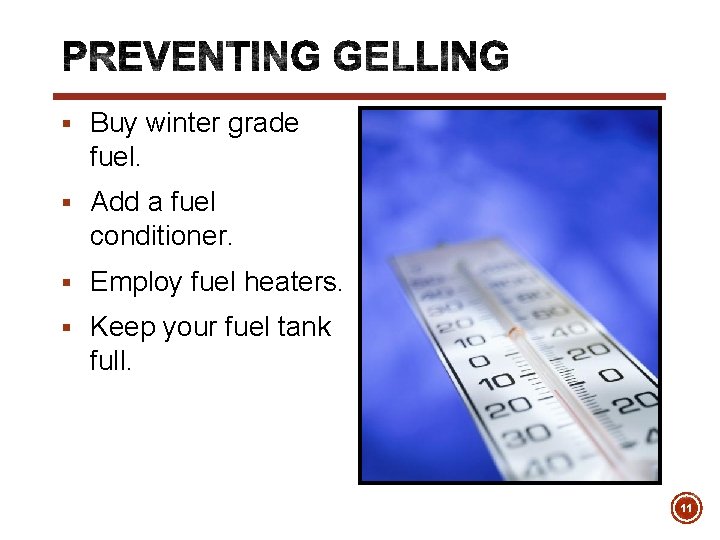
§ Buy winter grade fuel. § Add a fuel conditioner. § Employ fuel heaters. § Keep your fuel tank full. 11
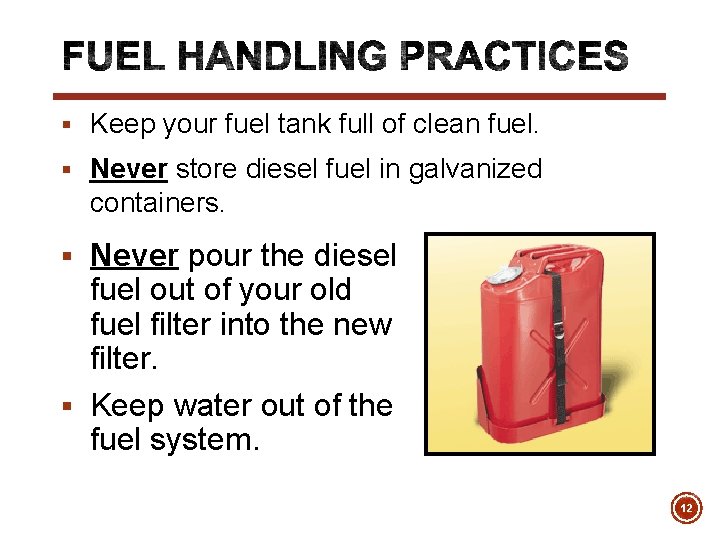
§ Keep your fuel tank full of clean fuel. § Never store diesel fuel in galvanized containers. § Never pour the diesel fuel out of your old fuel filter into the new filter. § Keep water out of the fuel system. 12
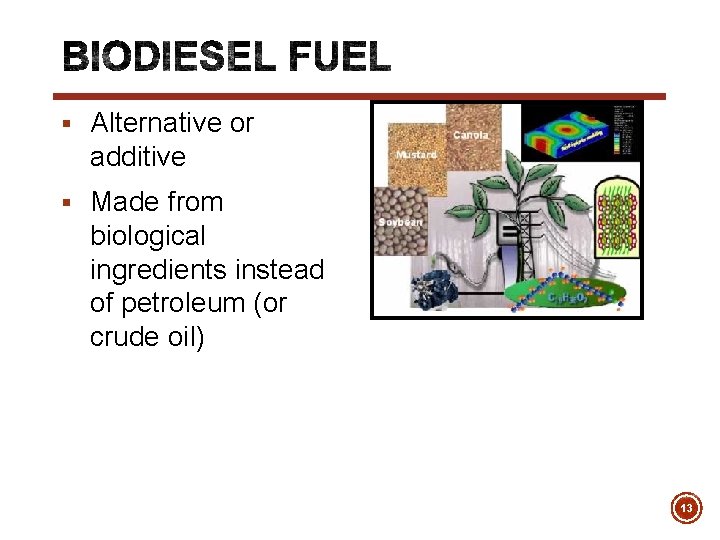
§ Alternative or additive § Made from biological ingredients instead of petroleum (or crude oil) 13
§ Biodiesel is a blended fuel. o B 20 is 20% biodiesel and 80% diesel § B 20 and B 40 are the most common blends. § Use of blended fuel with a rating higher than B 20 may void some manufacturer’s warranties. 14
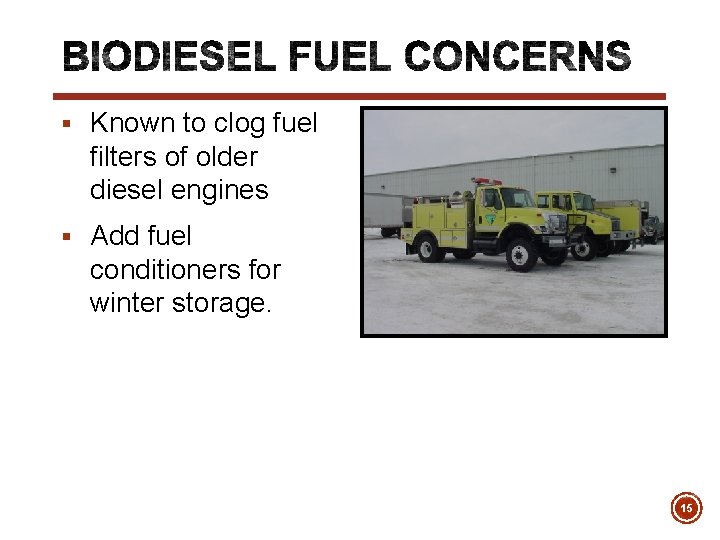
§ Known to clog fuel filters of older diesel engines § Add fuel conditioners for winter storage. 15
16
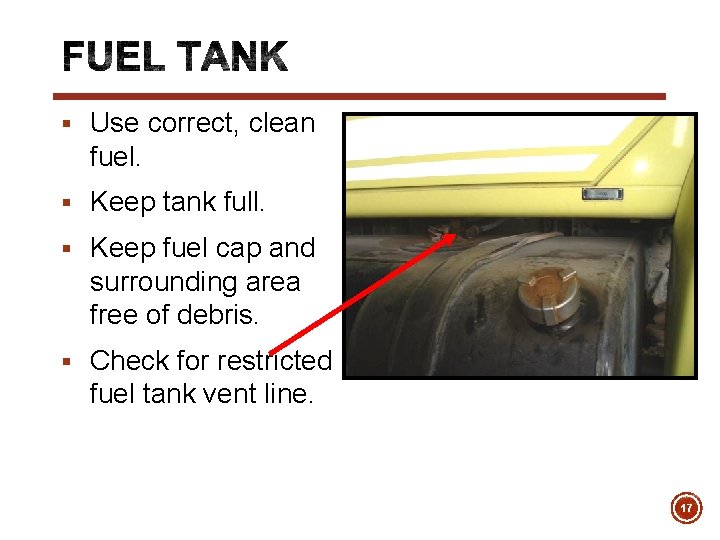
§ Use correct, clean fuel. § Keep tank full. § Keep fuel cap and surrounding area free of debris. § Check for restricted fuel tank vent line. 17
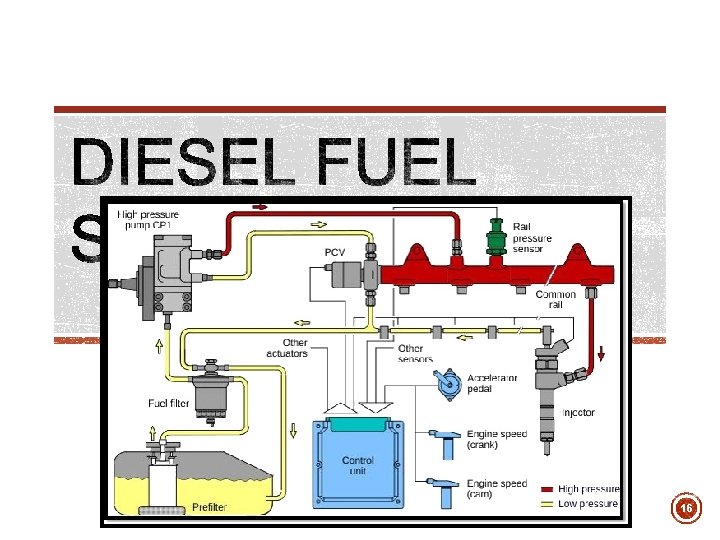
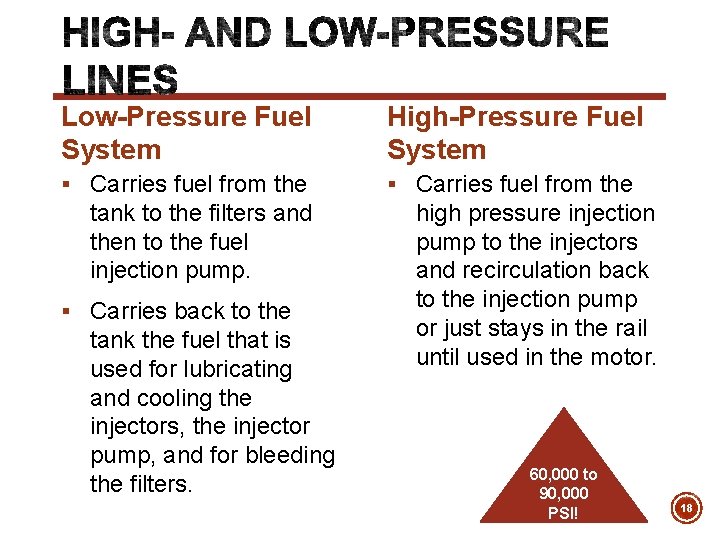
Low-Pressure Fuel System High-Pressure Fuel System § Carries fuel from the tank to the filters and then to the fuel injection pump. § Carries back to the tank the fuel that is used for lubricating and cooling the injectors, the injector pump, and for bleeding the filters. high pressure injection pump to the injectors and recirculation back to the injection pump or just stays in the rail until used in the motor. 60, 000 to 90, 000 PSI! 18
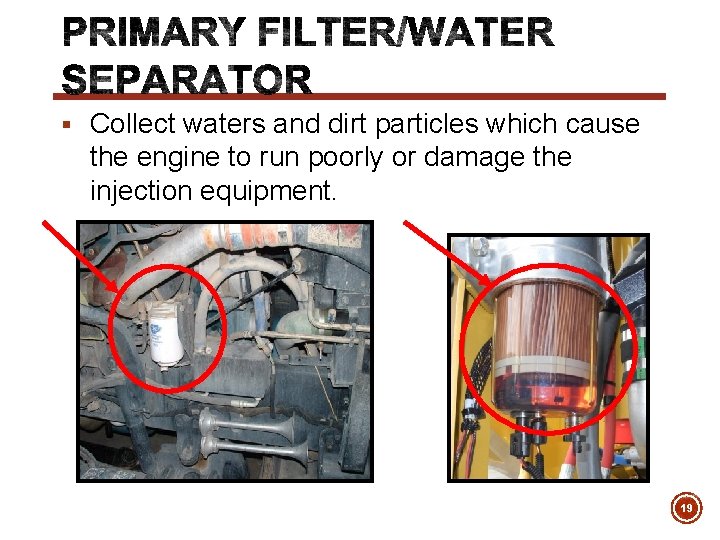
§ Collect waters and dirt particles which cause the engine to run poorly or damage the injection equipment. 19
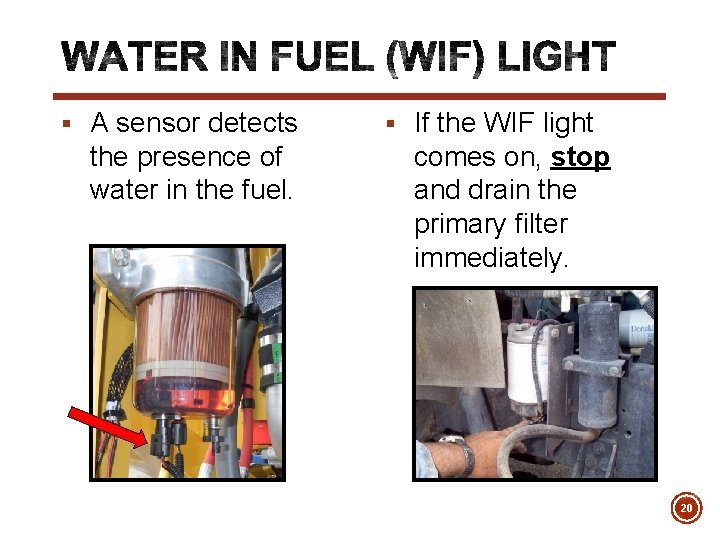
§ A sensor detects the presence of water in the fuel. § If the WIF light comes on, stop and drain the primary filter immediately. 20
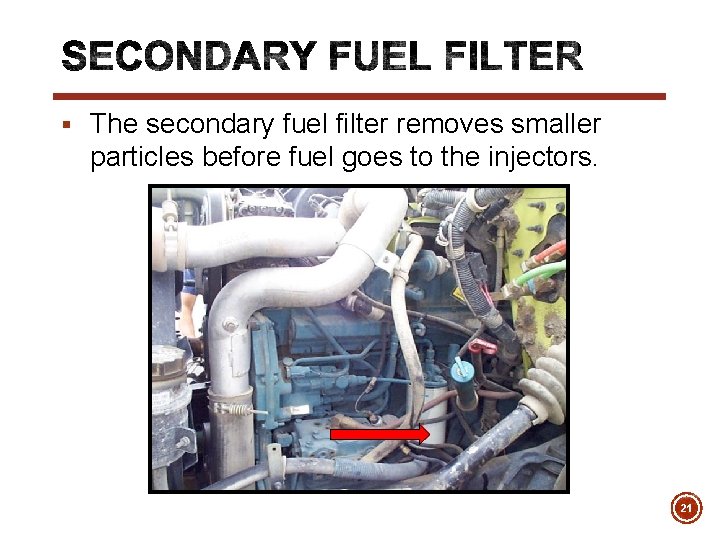
§ The secondary fuel filter removes smaller particles before fuel goes to the injectors. 21
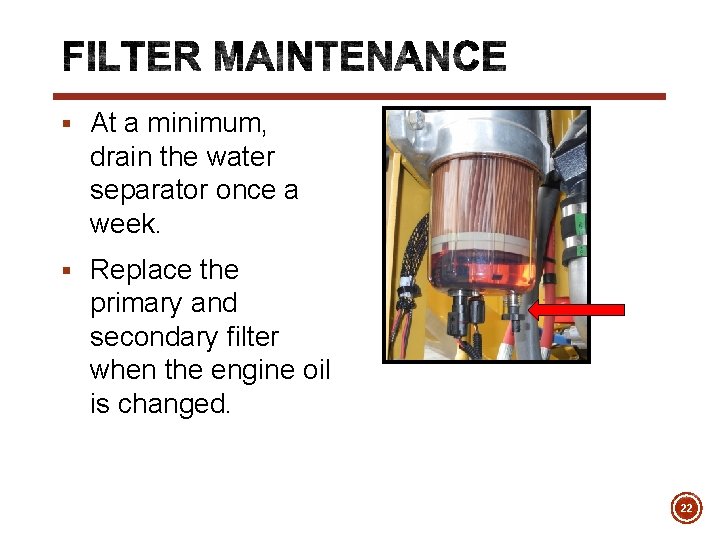
§ At a minimum, drain the water separator once a week. § Replace the primary and secondary filter when the engine oil is changed. 22
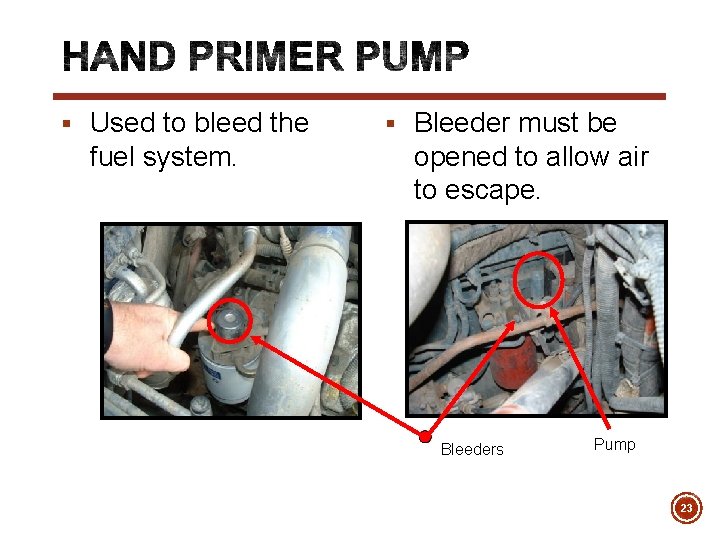
§ Used to bleed the fuel system. § Bleeder must be opened to allow air to escape. Bleeders Pump 23
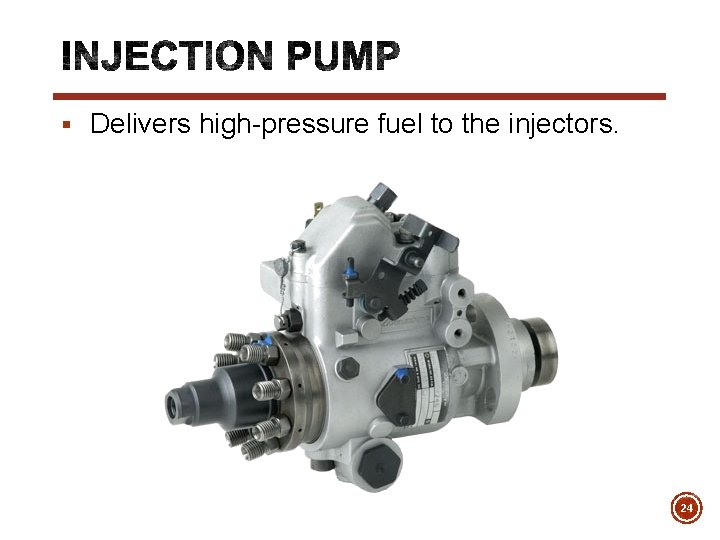
§ Delivers high-pressure fuel to the injectors. 24
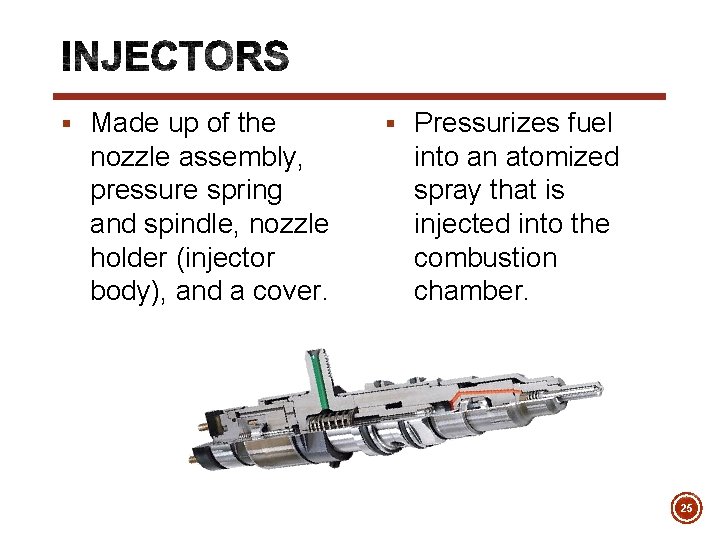
§ Made up of the nozzle assembly, pressure spring and spindle, nozzle holder (injector body), and a cover. § Pressurizes fuel into an atomized spray that is injected into the combustion chamber. 25
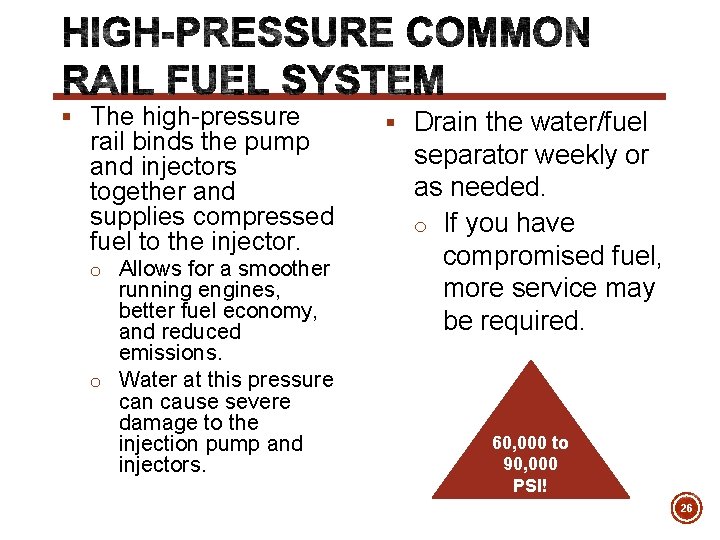
§ The high-pressure rail binds the pump and injectors together and supplies compressed fuel to the injector. o Allows for a smoother running engines, better fuel economy, and reduced emissions. o Water at this pressure can cause severe damage to the injection pump and injectors. § Drain the water/fuel separator weekly or as needed. o If you have compromised fuel, more service may be required. 60, 000 to 90, 000 PSI! 26
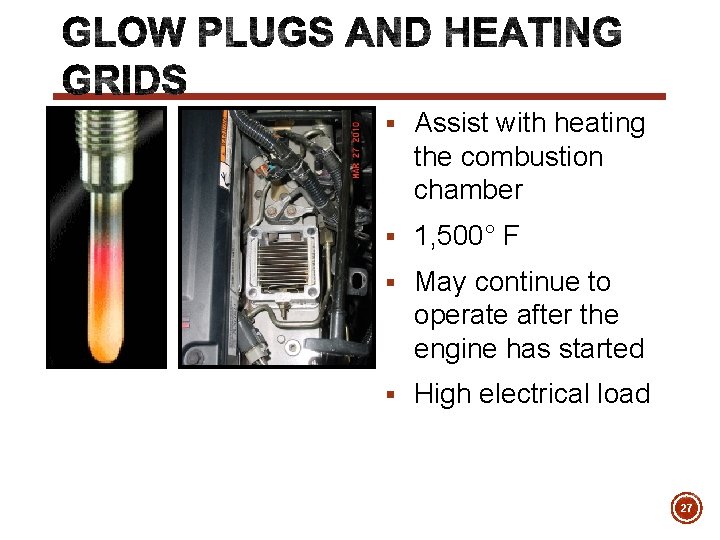
§ Assist with heating the combustion chamber § 1, 500° F § May continue to operate after the engine has started § High electrical load 27
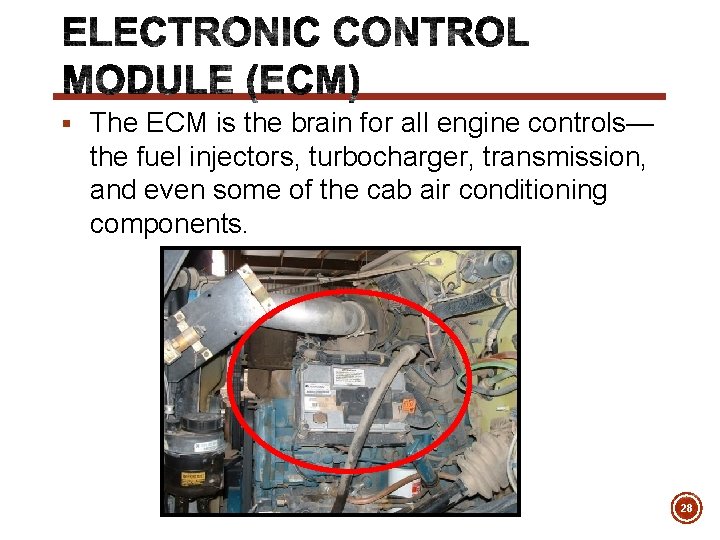
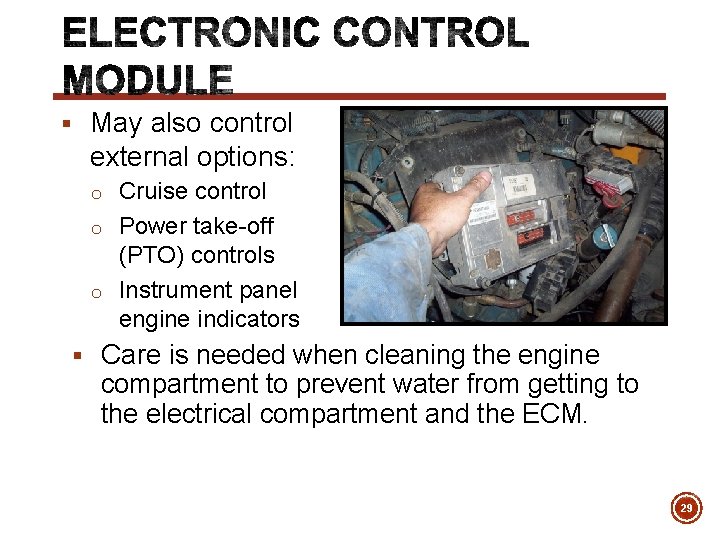
§ The ECM is the brain for all engine controls— the fuel injectors, turbocharger, transmission, and even some of the cab air conditioning components. 28
§ May also control external options: o Cruise control o Power take-off (PTO) controls o Instrument panel engine indicators § Care is needed when cleaning the engine compartment to prevent water from getting to the electrical compartment and the ECM. 29
30
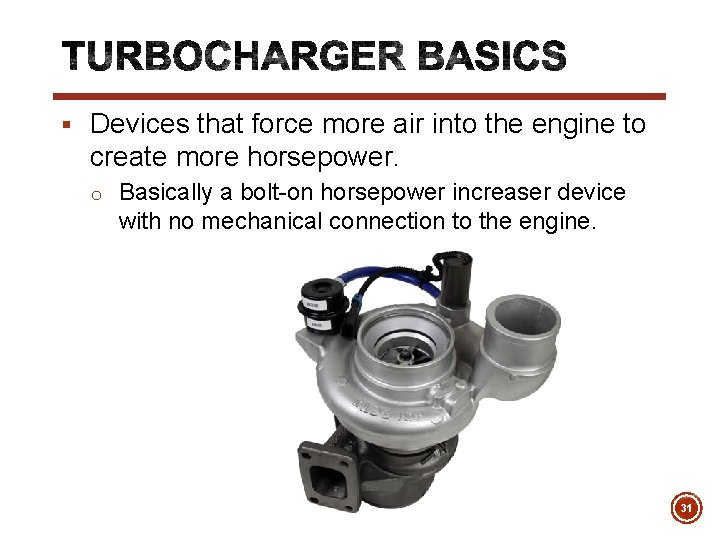
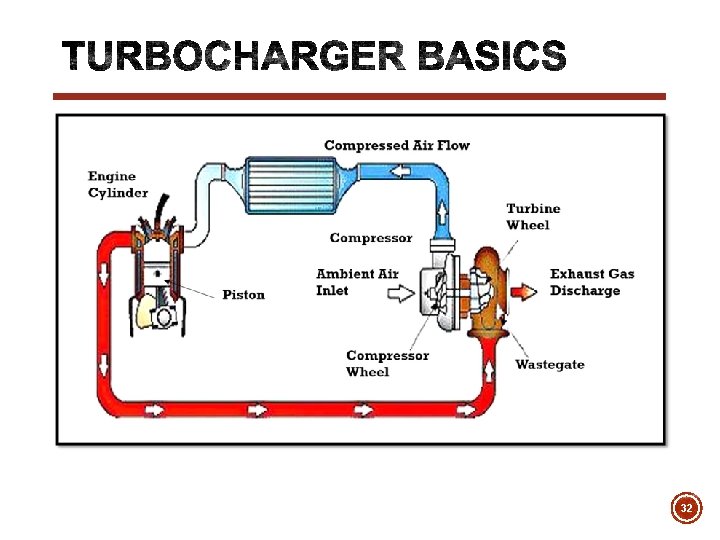
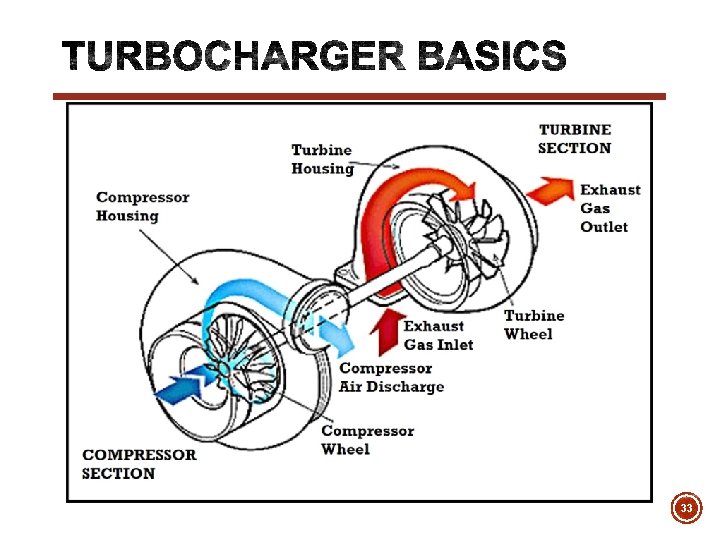
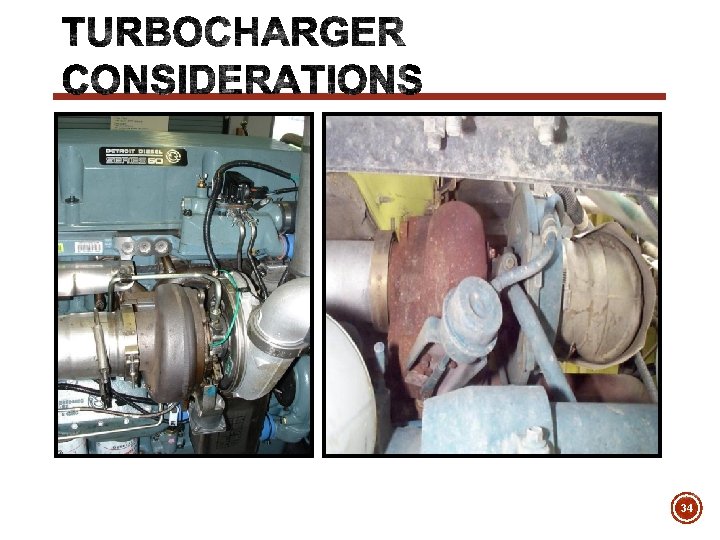
§ Devices that force more air into the engine to create more horsepower. o Basically a bolt-on horsepower increaser device with no mechanical connection to the engine. 31
32
33
34
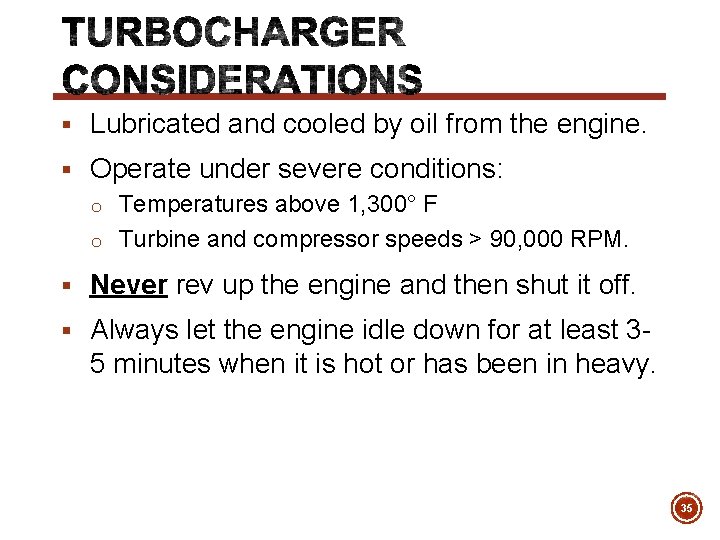
§ Lubricated and cooled by oil from the engine. § Operate under severe conditions: o Temperatures above 1, 300° F o Turbine and compressor speeds > 90, 000 RPM. § Never rev up the engine and then shut it off. § Always let the engine idle down for at least 3 - 5 minutes when it is hot or has been in heavy. 35
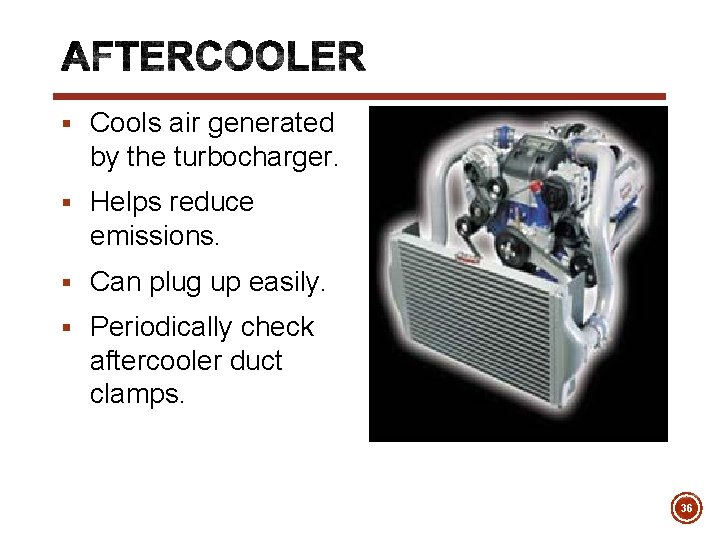
§ Cools air generated by the turbocharger. § Helps reduce emissions. § Can plug up easily. § Periodically check aftercooler duct clamps. 36
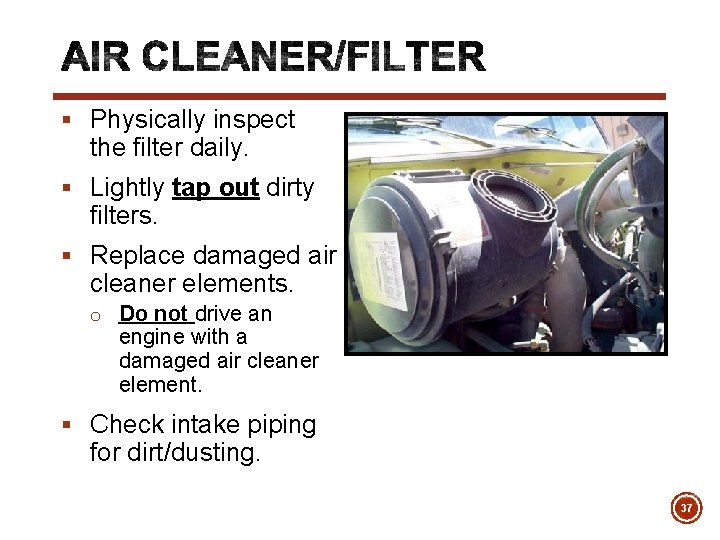
§ Physically inspect the filter daily. § Lightly tap out dirty filters. § Replace damaged air cleaner elements. o Do not drive an engine with a damaged air cleaner element. § Check intake piping for dirt/dusting. 37
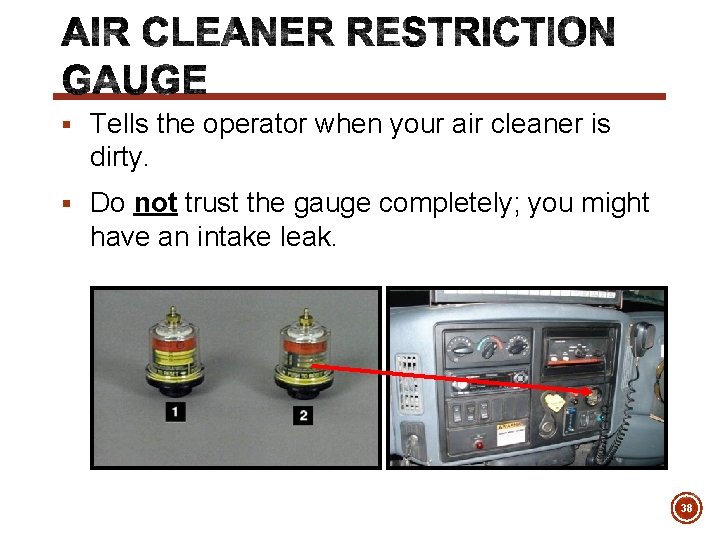
§ Tells the operator when your air cleaner is dirty. § Do not trust the gauge completely; you might have an intake leak. 38
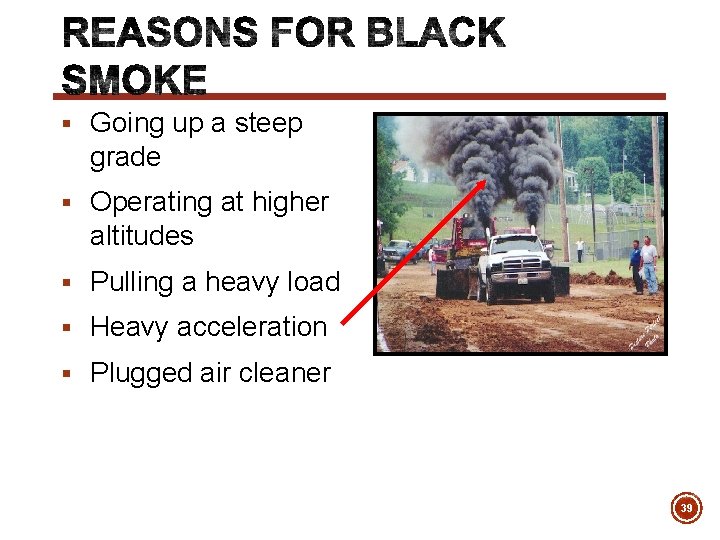
§ Going up a steep grade § Operating at higher altitudes § Pulling a heavy load § Heavy acceleration § Plugged air cleaner 39
40
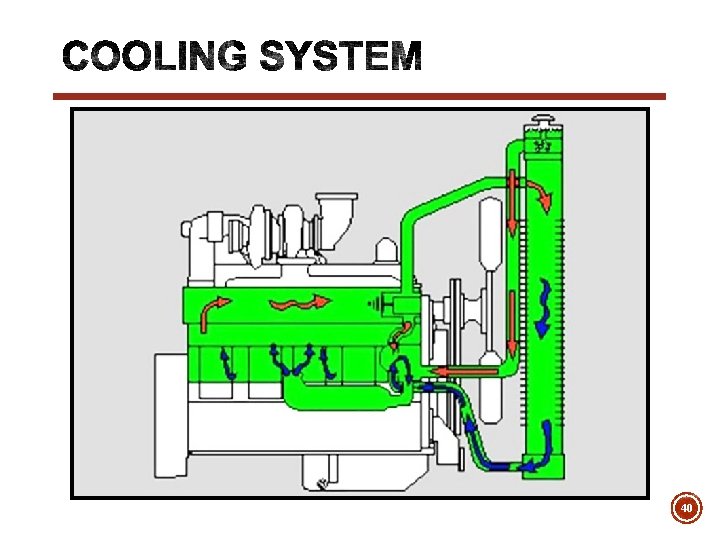
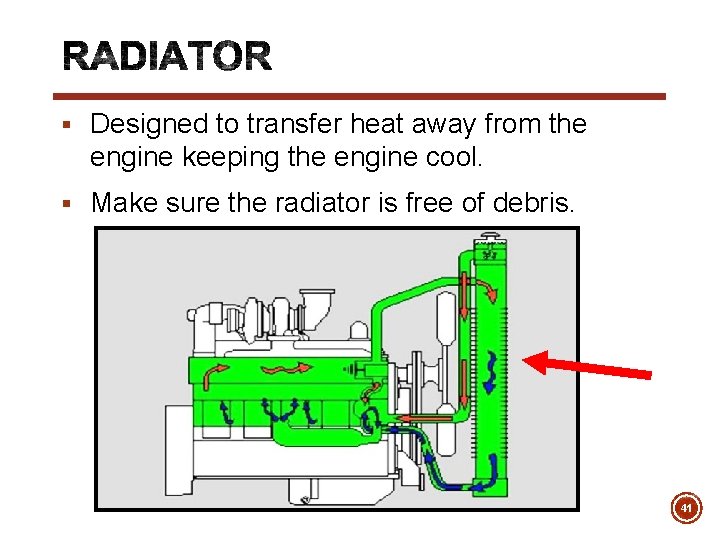
§ Designed to transfer heat away from the engine keeping the engine cool. § Make sure the radiator is free of debris. 41
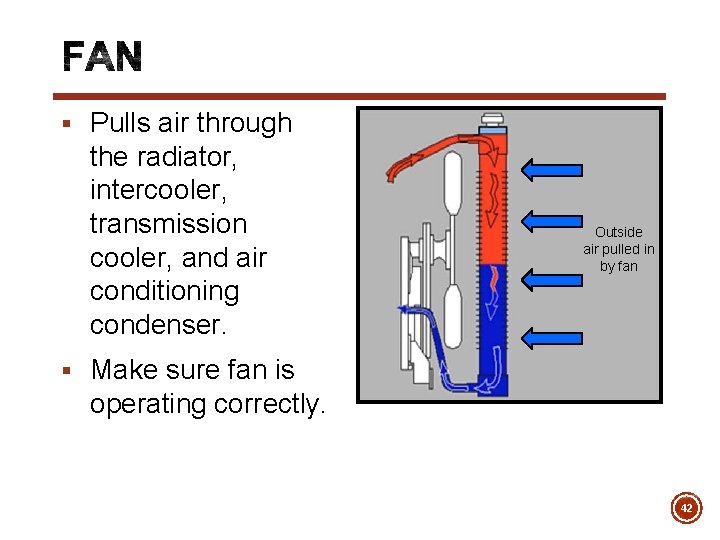
§ Pulls air through the radiator, intercooler, transmission cooler, and air conditioning condenser. Outside air pulled in by fan § Make sure fan is operating correctly. 42
43
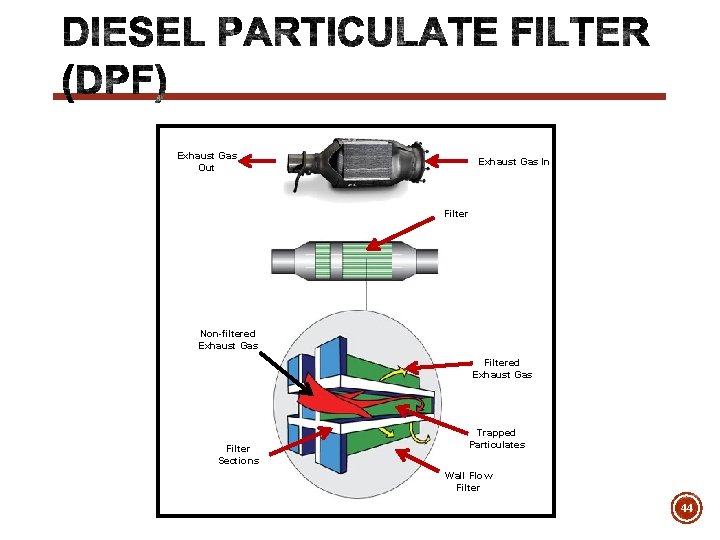
Exhaust Gas Out Exhaust Gas In Filter Non-filtered Exhaust Gas Filter Sections Trapped Particulates Wall Flow Filter 44
§ The process of cleaning the DPF. § Vehicle manufacturers have different regeneration processes. o Read and understand the information in the vehicle owner’s manual. The following slides are general information and do not pertain to a specific manufacturer. 45
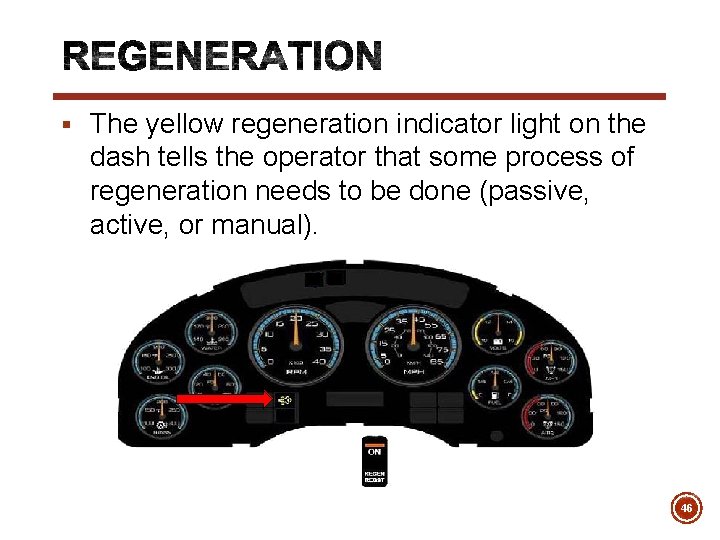
§ The yellow regeneration indicator light on the dash tells the operator that some process of regeneration needs to be done (passive, active, or manual). 46
§ Generally done automatically by passive and active systems without driver involvement. o Passive systems use only the exhaust gas stream to burn out the soot. o Active systems use a fuel burner that heats the filter to soot combustion temperatures. § Can also be done manually by the driver through a process known as “parked regeneration” or manual stationary regeneration. ” 47
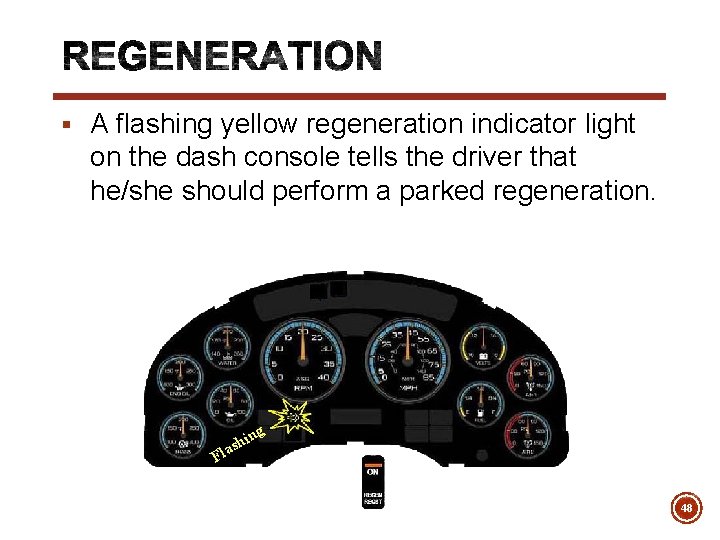
§ A flashing yellow regeneration indicator light on the dash console tells the driver that he/she should perform a parked regeneration. ng hi s a l F 48
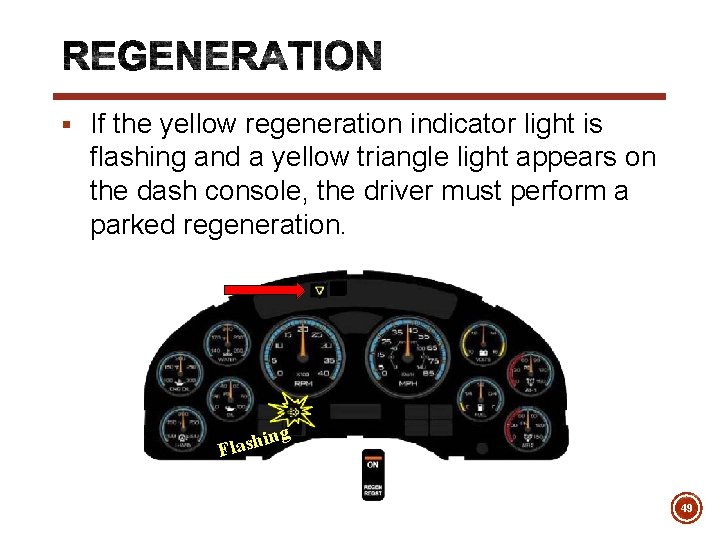
§ If the yellow regeneration indicator light is flashing and a yellow triangle light appears on the dash console, the driver must perform a parked regeneration. ing h s a l F 49
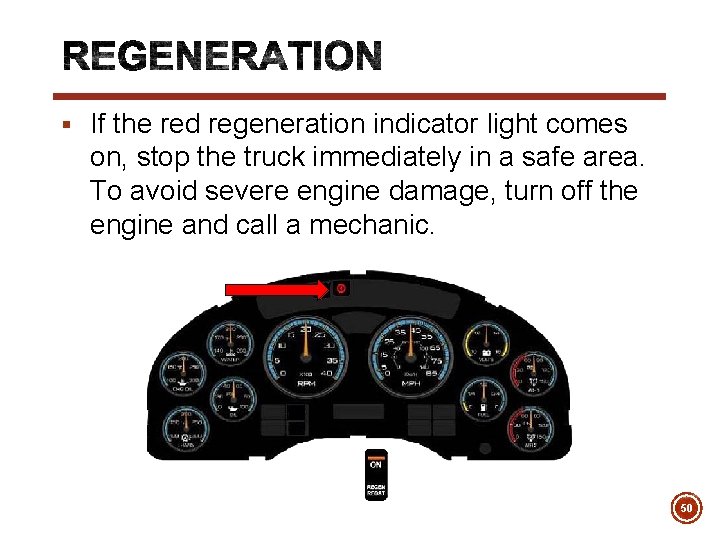
§ If the red regeneration indicator light comes on, stop the truck immediately in a safe area. To avoid severe engine damage, turn off the engine and call a mechanic. 50
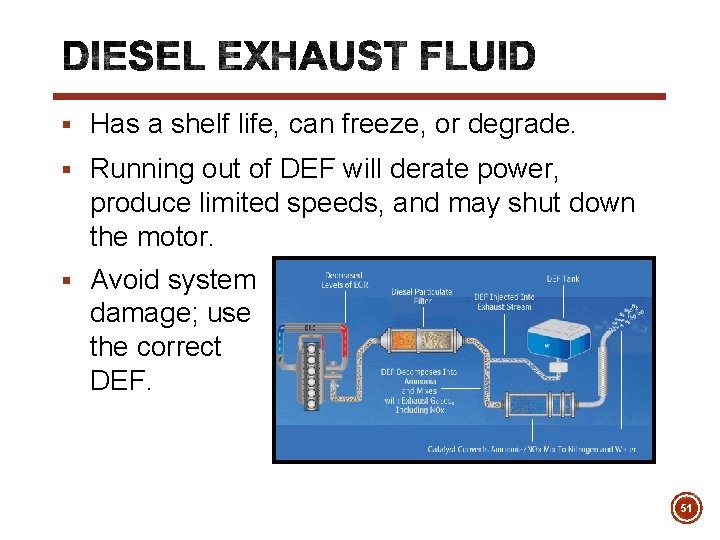
§ Has a shelf life, can freeze, or degrade. § Running out of DEF will derate power, produce limited speeds, and may shut down the motor. § Avoid system damage; use the correct DEF. 51
52
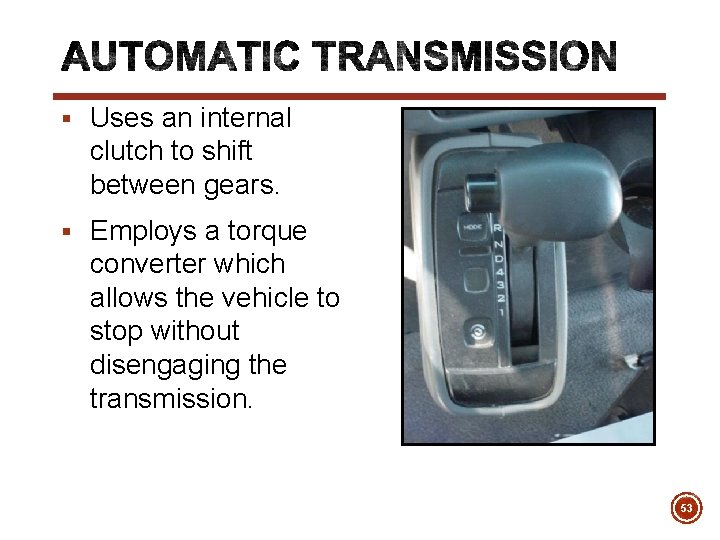
§ Uses an internal clutch to shift between gears. § Employs a torque converter which allows the vehicle to stop without disengaging the transmission. 53
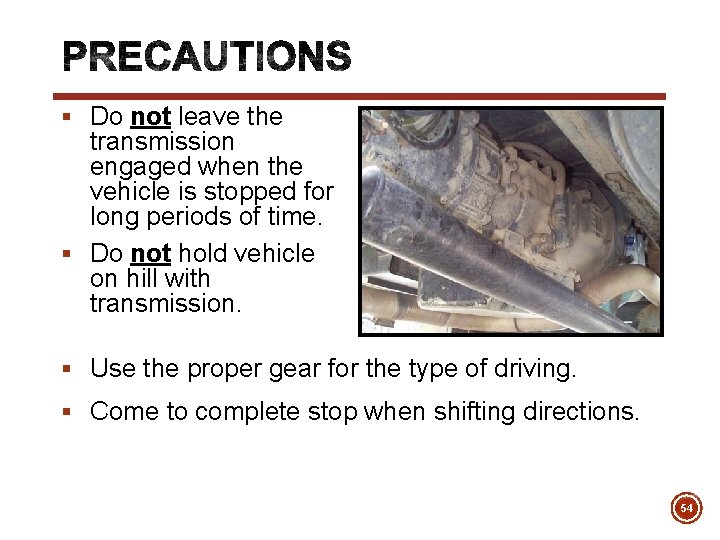
§ Do not leave the transmission engaged when the vehicle is stopped for long periods of time. § Do not hold vehicle on hill with transmission. § Use the proper gear for the type of driving. § Come to complete stop when shifting directions. 54
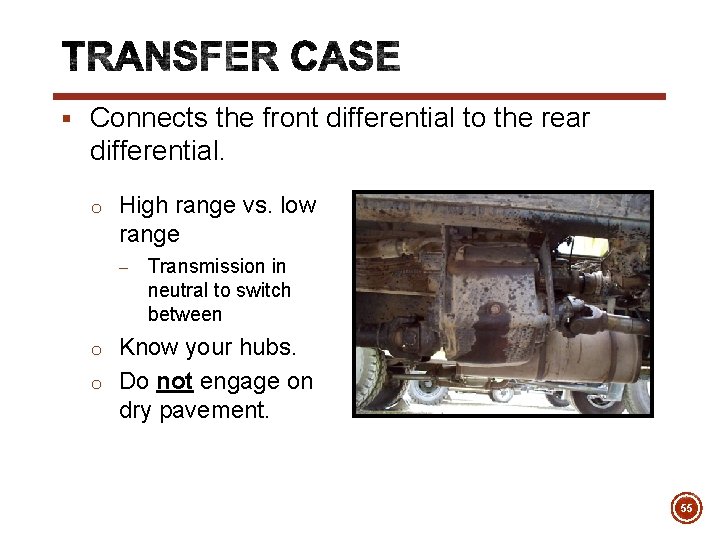
§ Connects the front differential to the rear differential. o High range vs. low range – Transmission in neutral to switch between o Know your hubs. o Do not engage on dry pavement. 55
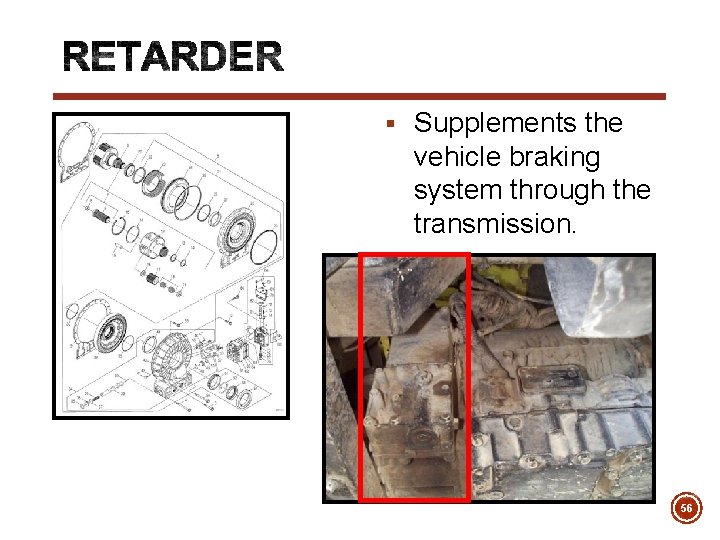
§ Supplements the vehicle braking system through the transmission. 56
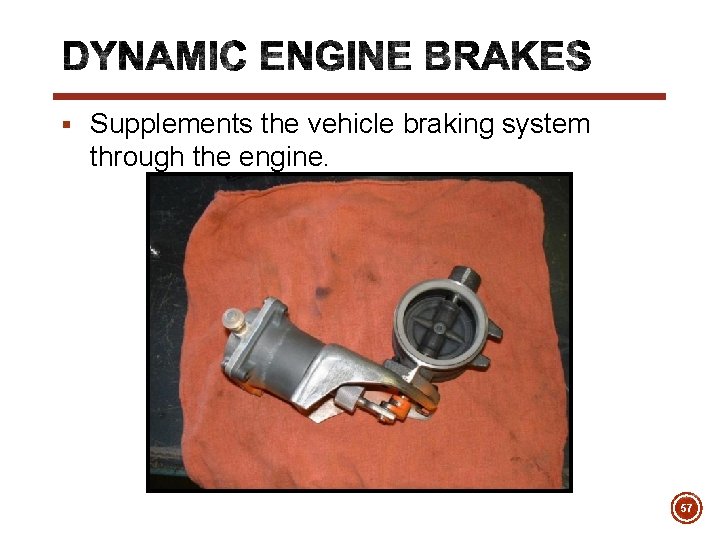
§ Supplements the vehicle braking system through the engine. 57
58
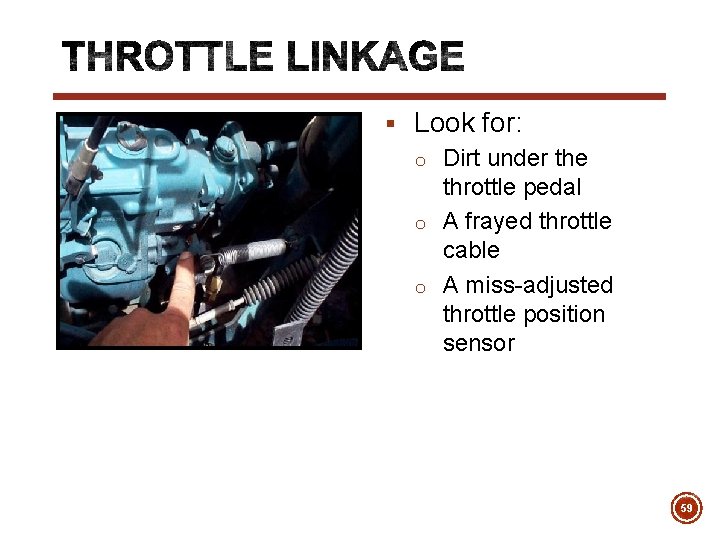
§ Look for: o Dirt under the throttle pedal o A frayed throttle cable o A miss-adjusted throttle position sensor 59
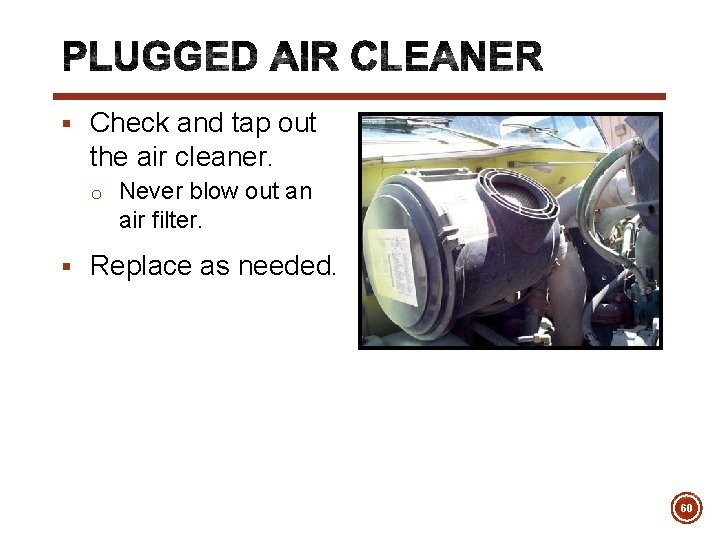
§ Check and tap out the air cleaner. o Never blow out an air filter. § Replace as needed. 60
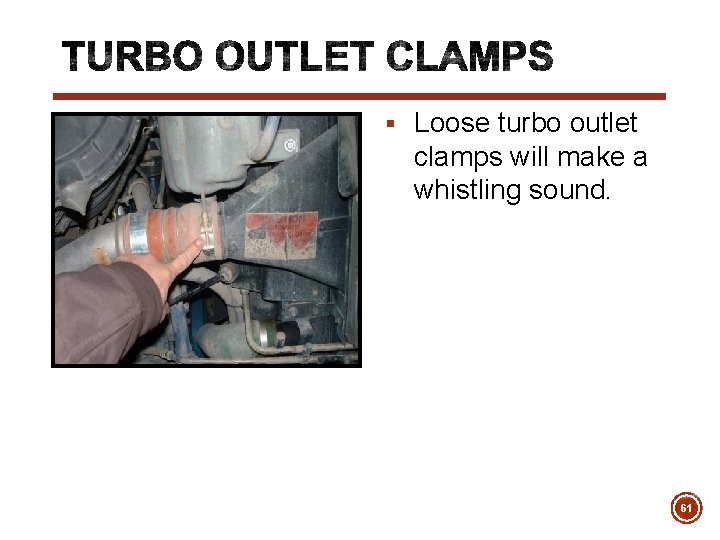
§ Loose turbo outlet clamps will make a whistling sound. 61
62
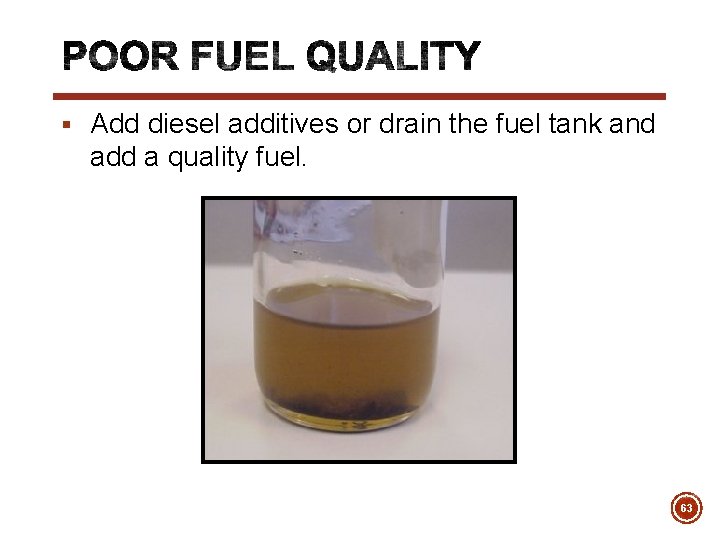
§ Add diesel additives or drain the fuel tank and add a quality fuel. 63
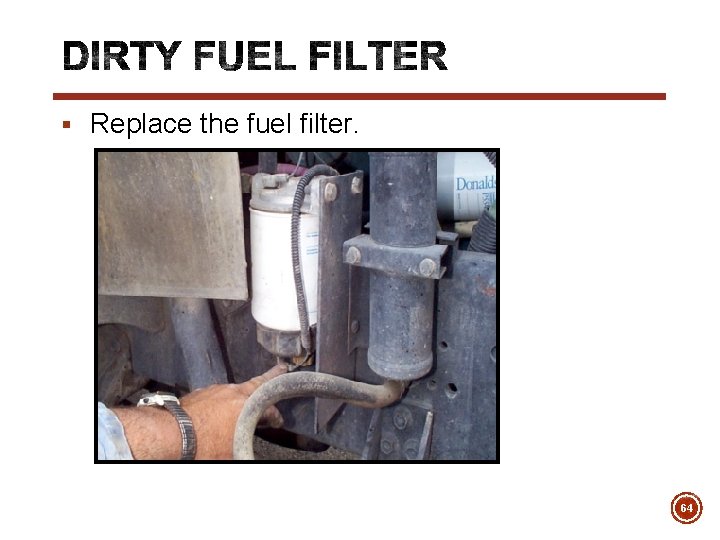
§ Replace the fuel filter. 64
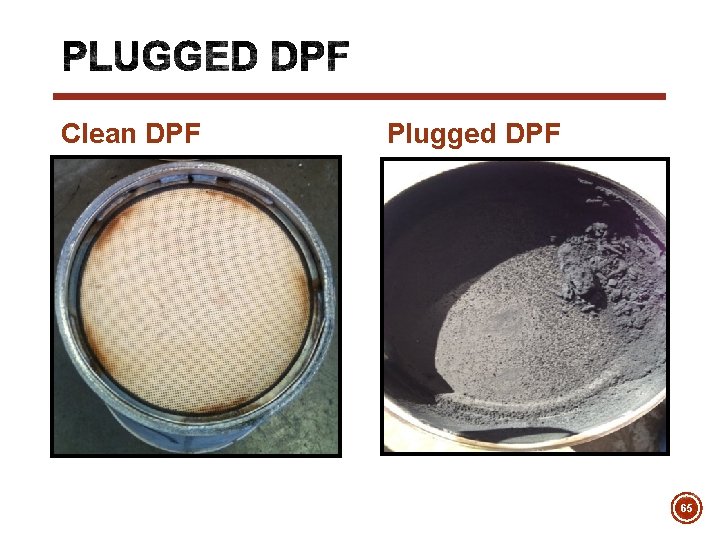
Clean DPF Plugged DPF 65
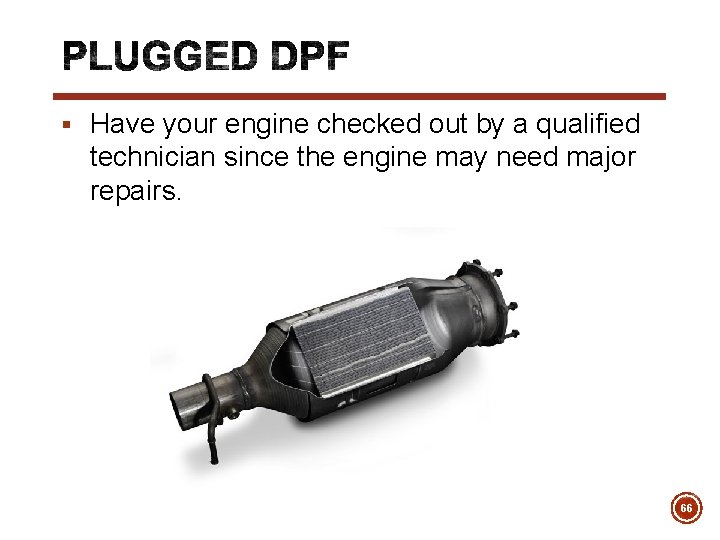
§ Have your engine checked out by a qualified technician since the engine may need major repairs. 66
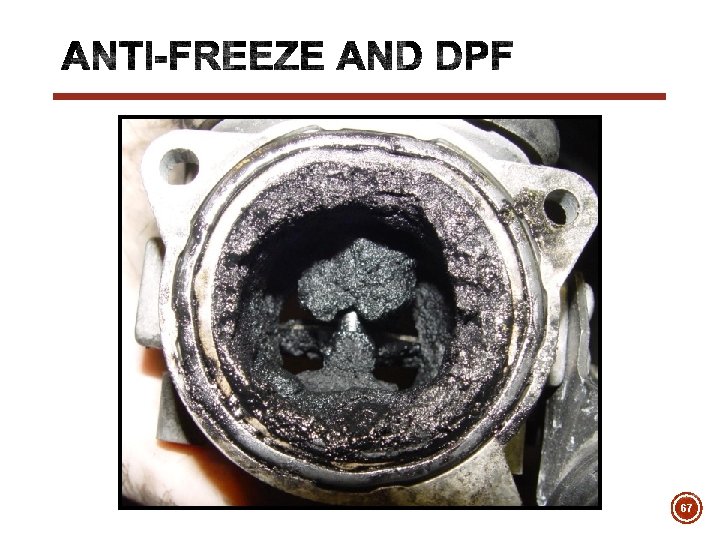
67
§ Dust and dirt is the biggest cause of motor damage. o Will damage rings and cylinders and blow seals and gaskets. o Causes loss of power. o Dilutes engine oil. § Have a qualified technician check your engine; the engine may need major repairs or overhaul. 68
69
§ If possible, start your engine and let idle for 2 to 3 minutes before moving. § Slowly throttle the engine until the coolant is up to operating temperature. § Never idle your engine for more than 5 minutes (low idle). § Shut down after 5 minutes if engine has been run hard or when exhaust temperature is below 300° F. § If your engine must idle, set throttle between 1, 000 and 1, 200 RPMs (high idle). 70
§ Describe… o Differences between diesel fuel and gasoline o Major components of a diesel fuel system o Correct operating procedures/parameters of starting a diesel engine o Basic powertrain components of a fire apparatus and each component’s operating characteristics § Discuss… o Diesel particulate filter and its function in the regeneration process 71