
UNIT 01 PROBLEM SOLVING TECHNIQUE S R Sreenivasan
UNIT- 01 PROBLEM SOLVING TECHNIQUE S R. Sreenivasan Computer Teacher San. Thome Higher Secondary School Chennai 600 004
CHAPTER 02 DATA ABSTRACTIO N
PREFACE I N THIS CHAPTER WE ARE GOING TO DISCUSS ABOUT DATA ABSTRACTION WHICH IS A POWERFUL TOOL IN COMPUTER PROGRAMMING , AND ALSO ABOUT THE LISTS, TUPLES AND PAIRS WHICH ARE USED TO STORE THE ELEMENTS
CONTENTS SNAPSHOT ü Abstract Data structures. ü Abstract data type. ü Abstract / Concrete Implementation ü List ü Tuples ü Pairs ü Data Abstraction in Structure.
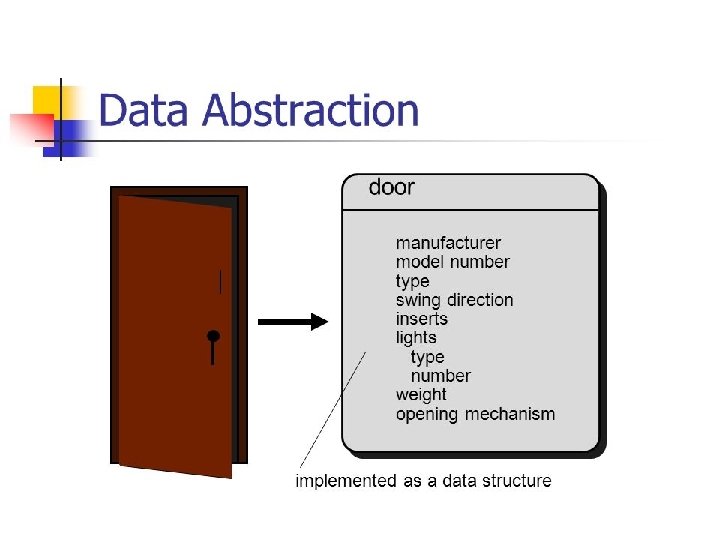
DATA ABSTRACTION � Data abstraction is a powerful concept in computer science that allows programmers to treat code as objects � Example, car objects, pencil objects, people objects, etc.
MODULARITY � Abstraction provides modularity (modularity means splitting a program in to many modules). � Classes (structures) are the representation for “Abstract Data Types”, (ADT)
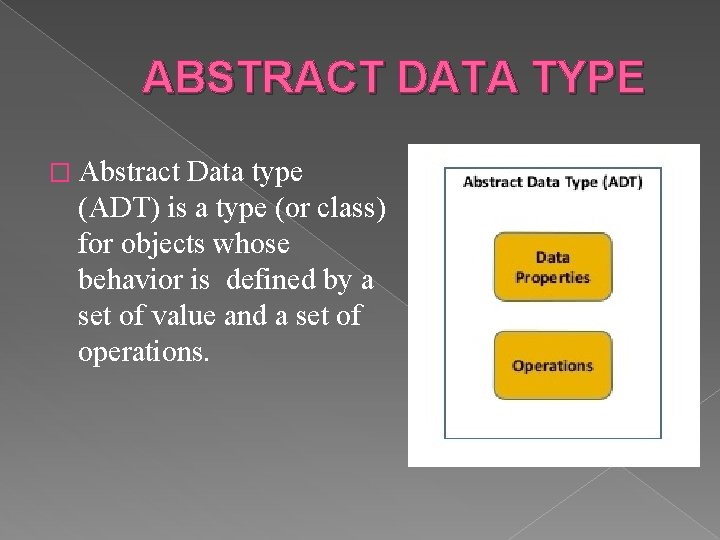
ABSTRACT DATA TYPE � Abstract Data type (ADT) is a type (or class) for objects whose behavior is defined by a set of value and a set of operations.
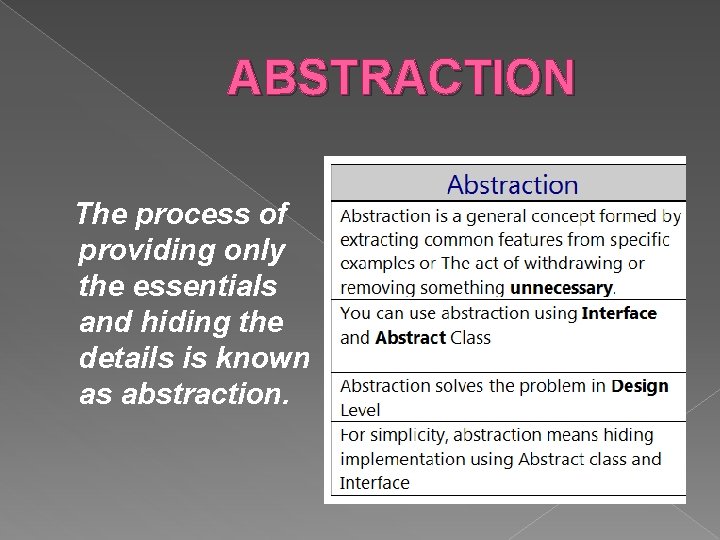
ABSTRACTION The process of providing only the essentials and hiding the details is known as abstraction.

IMPLEMENTATION OF ADT Different ways to implement ADT : SINGLE LINKED LIST v DOUBLE LINKED LIST v STACK ADT v QUEUE ADT v
CONSTRUCTORS � Constructors are functions that build the abstract data type. � Constructors create an object, bundling together different pieces of information, while selectors extract individual pieces of information from the object.
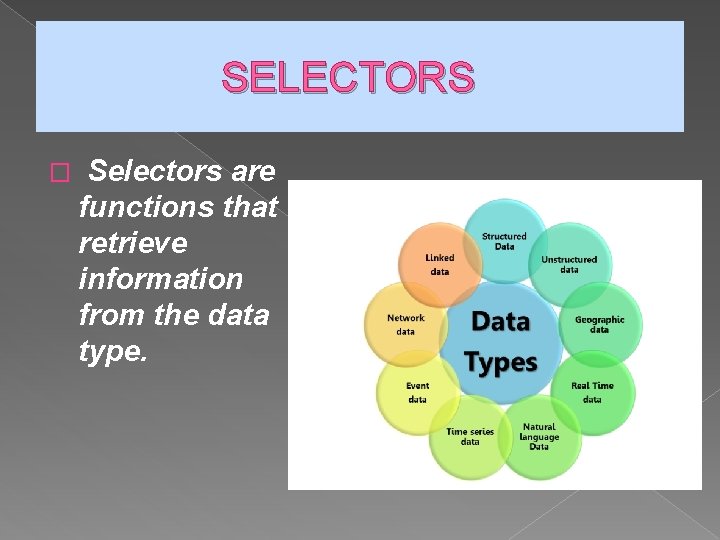
SELECTORS � Selectors are functions that retrieve information from the data type.
EXAMPLE For example, say you have an abstract data type called city. This city object will hold the city’s name, and its latitude and longitude. To create a city object, you’d use a function like city = makecity (name, lat, lon)
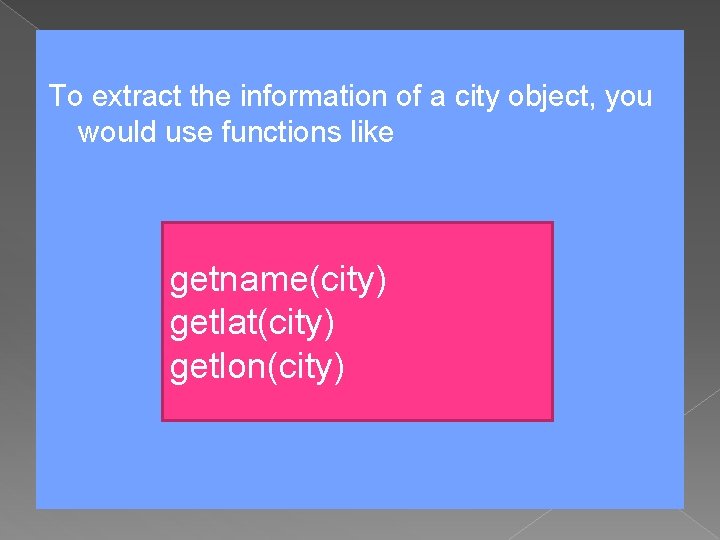
To extract the information of a city object, you would use functions like getname(city) getlat(city) getlon(city)
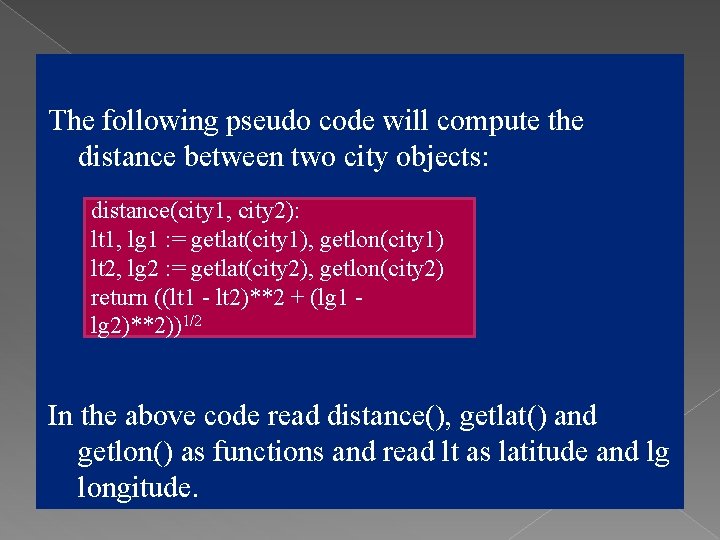
The following pseudo code will compute the distance between two city objects: distance(city 1, city 2): lt 1, lg 1 : = getlat(city 1), getlon(city 1) lt 2, lg 2 : = getlat(city 2), getlon(city 2) return ((lt 1 - lt 2)**2 + (lg 1 lg 2)**2))1/2 In the above code read distance(), getlat() and getlon() as functions and read lt as latitude and lg longitude.
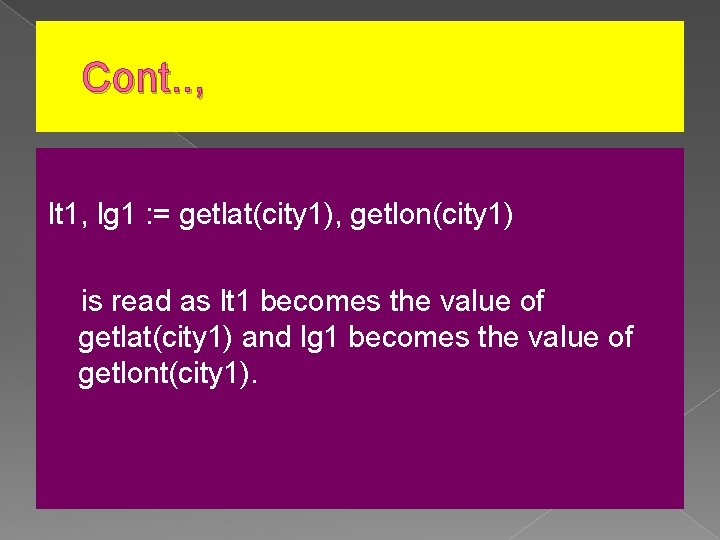
Cont. . , lt 1, lg 1 : = getlat(city 1), getlon(city 1) is read as lt 1 becomes the value of getlat(city 1) and lg 1 becomes the value of getlont(city 1).
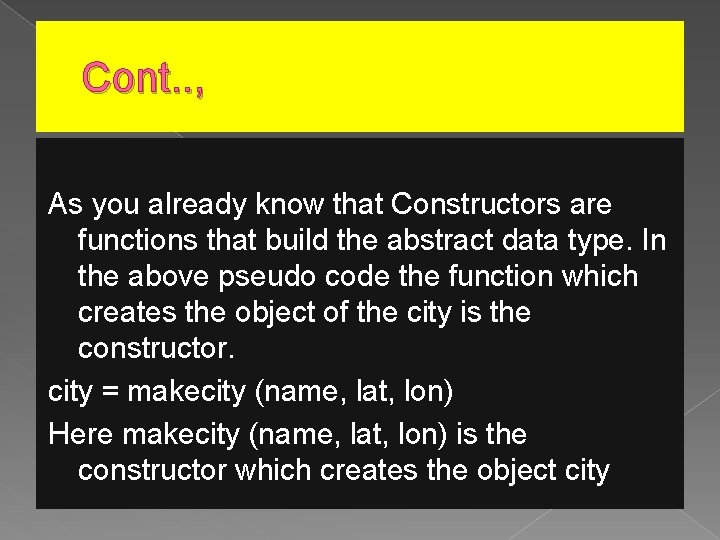
Cont. . , As you already know that Constructors are functions that build the abstract data type. In the above pseudo code the function which creates the object of the city is the constructor. city = makecity (name, lat, lon) Here makecity (name, lat, lon) is the constructor which creates the object city
SELECTORS- EXAMPLES Selectors are nothing but the functions that retrieve information from the data type. Therefore in the above code getname(city) getlat(city) getlon(city) are the selectors because these functions extract the information of the city object
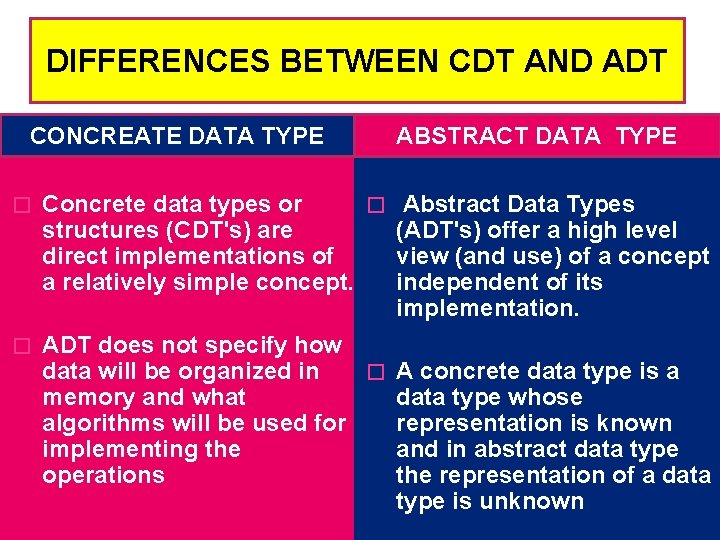
DIFFERENCES BETWEEN CDT AND ADT CONCREATE DATA TYPE ABSTRACT DATA TYPE � Concrete data types or � Abstract Data Types structures (CDT's) are (ADT's) offer a high level direct implementations of view (and use) of a concept a relatively simple concept. independent of its implementation. � ADT does not specify how � A concrete data type is a data will be organized in data type whose memory and what algorithms will be used for representation is known implementing the and in abstract data type operations the representation of a data type is unknown
WISHFUL THINKING Wishful Thinking is the formation of beliefs and making decisions according to what might be pleasing to imagine instead of by appealing to reality.
LISTS � List is constructed by placing expressions within square brackets separated by commas � Such an expression is called a list literal. List can store multiple values. Example for List is [10, 20].
ACCESSING THE ELEMENT OF LIST The elements of a list can be accessed in two ways. � The first way is via our familiar method of multiple assignment �A second method for accessing the elements in a list is by the element selection operator
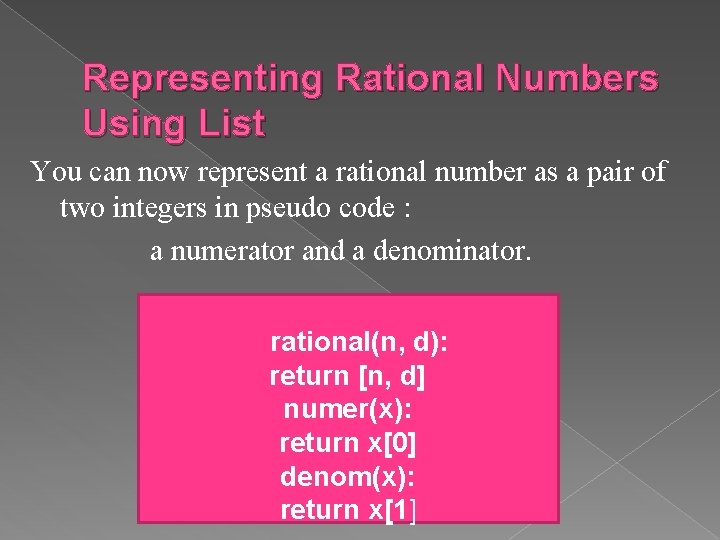
Representing Rational Numbers Using List You can now represent a rational number as a pair of two integers in pseudo code : a numerator and a denominator. rational(n, d): return [n, d] numer(x): return x[0] denom(x): return x[1]
PAIRS v Any way of bundling two values together into one can be considered as a pair. v Lists are a common method to do so. Therefore List can be called as Pairs.
TUPLES � A tuple is a comma-separated sequence of values surrounded with parentheses. � Tuple is similar to a list. � Example colour= ('red', 'blue', 'Green')
![Representation of Tuple as a Pair nums : = (1, 2) nums[0] 1 nums[1]](http://slidetodoc.com/presentation_image_h2/fff23feac221b77e944c9c1d87f7f24c/image-26.jpg "Representation of Tuple as a Pair nums : = (1, 2) nums[0] 1 nums[1]")
Representation of Tuple as a Pair nums : = (1, 2) nums[0] 1 nums[1] 2 Note the square bracket notation is used to access the data you stored in the pair. The data is zero indexed, meaning you access the first element with nums[0] and the second with nums[1].
LISTS VS TUPLES
DIFFERENCE BETWEEN TUPLE AND PAIRS The difference between the two is that you cannot change the elements of a tuple once it is assigned whereas in a list, elements can be changed.
Data Abstraction in Structure � List allow data abstraction in that you can give a name to a set of memory cells.
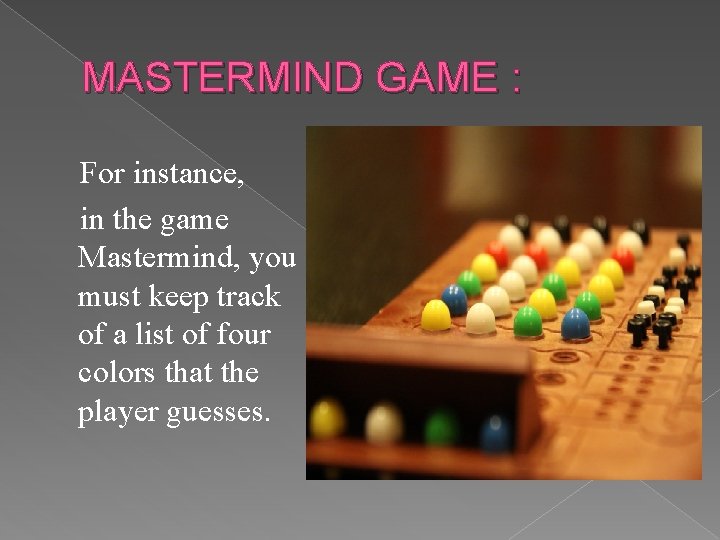
MASTERMIND GAME : For instance, in the game Mastermind, you must keep track of a list of four colors that the player guesses.
( CONT…, ) � Instead of using four separate variables you can use a single variable ‘Predict’ � Predict =['red', 'blue', 'green']
(Contd…) What lists do not allow us to do is name the various parts of a multi- item object. In the case of a Predict, you don't really need to name the parts: using an index to get to each color suffices.
CLASS � We say functions are subordinate to the class because their job is to do things with the data of the class, e. g. , to modify or analyze the data of a Person object. � � Therefore we can define a class as bundled data and the functions that work on that data.
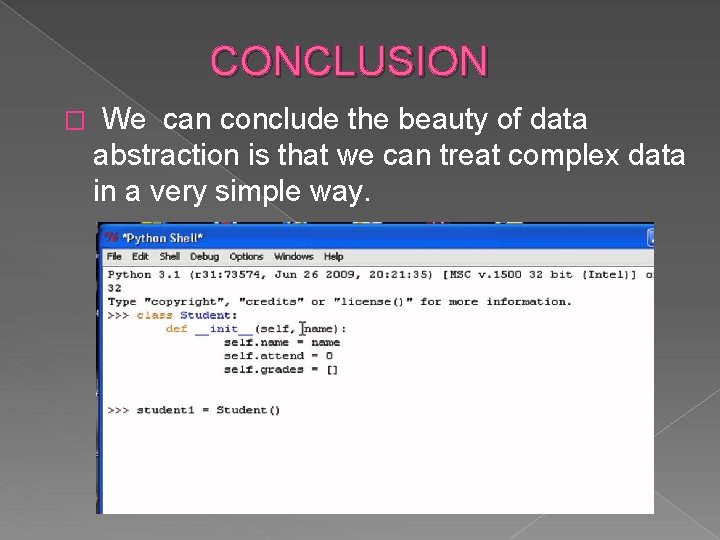
CONCLUSION � We can conclude the beauty of data abstraction is that we can treat complex data in a very simple way.
POINTS TO REMEMBER: • Abstract Data type (ADT) is a type (or class) for objects whose behavior is defined by a set of value and a set of operations. • The definition of ADT only mentions what operations are to be performed but not how these operations will be implemented.
• Constructors are functions that build the abstract data type. • Selectors are functions that retrieve information from the data type. • Concrete data types or structures (CDT's) are direct implementations of a relatively simple concept. • Abstract Data Types (ADT's) offer a high level view (and use) of a concept independent of its implementation.
• Pair is a compound structure which is made up of list or Tuple • List is constructed by placing expressions within square brackets separated by commas • List does not allow to name the various parts of a multi-item object.

- Slides: 38