
Union Government Of INDIA UNION LEGISLATURE of INDIA
- Slides: 50
Union Government Of INDIA
UNION LEGISLATURE of INDIA
Rajya Sabha (Council of States)
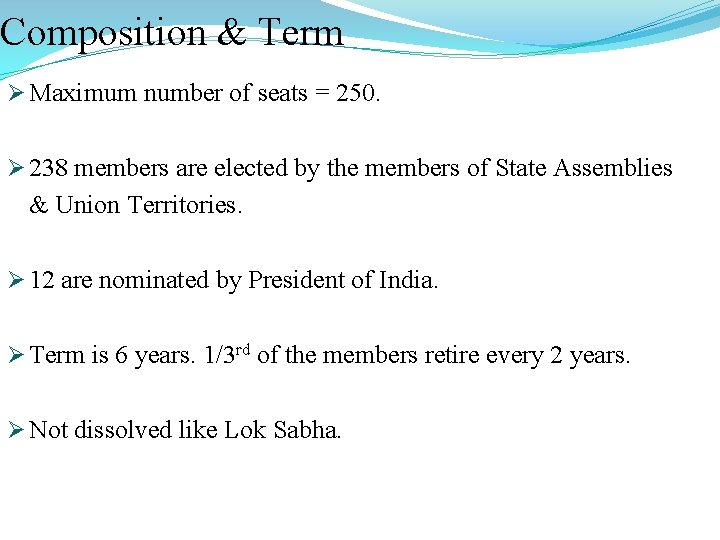
Composition & Term Ø Maximum number of seats = 250. Ø 238 members are elected by the members of State Assemblies & Union Territories. Ø 12 are nominated by President of India. Ø Term is 6 years. 1/3 rd of the members retire every 2 years. Ø Not dissolved like Lok Sabha.
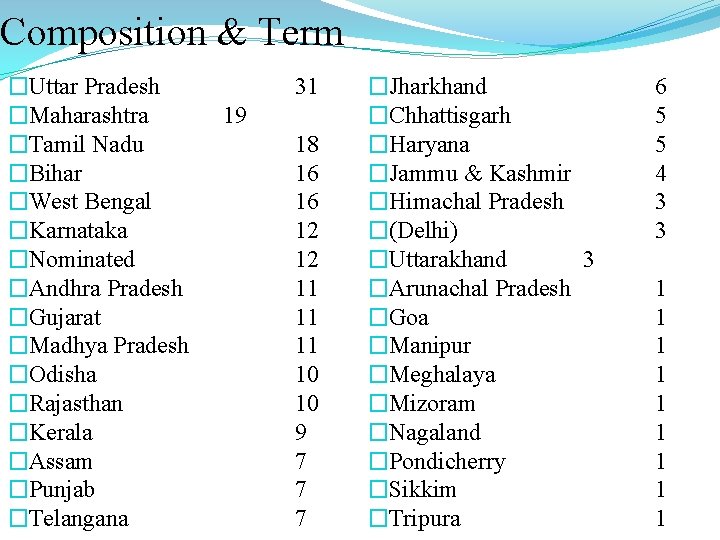
Composition & Term �Uttar Pradesh �Maharashtra �Tamil Nadu �Bihar �West Bengal �Karnataka �Nominated �Andhra Pradesh �Gujarat �Madhya Pradesh �Odisha �Rajasthan �Kerala �Assam �Punjab �Telangana 31 19 18 16 16 12 12 11 11 11 10 10 9 7 7 7 �Jharkhand �Chhattisgarh �Haryana �Jammu & Kashmir �Himachal Pradesh �(Delhi) �Uttarakhand 3 �Arunachal Pradesh �Goa �Manipur �Meghalaya �Mizoram �Nagaland �Pondicherry �Sikkim �Tripura 6 5 5 4 3 3 1 1 1 1 1
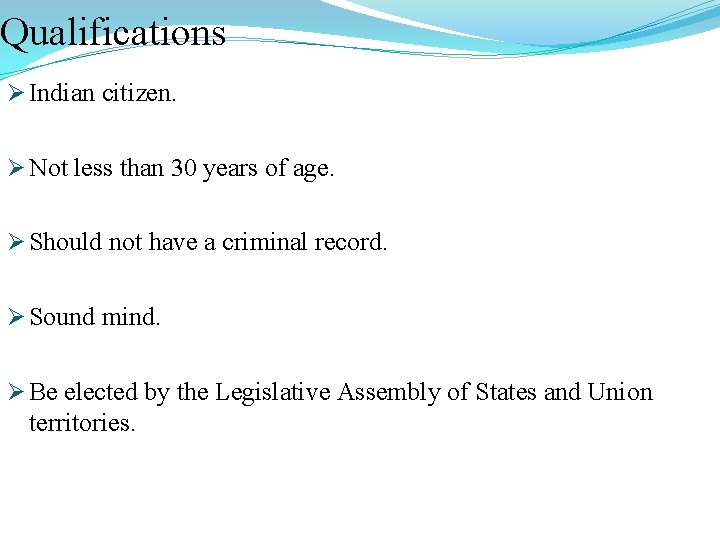
Qualifications Ø Indian citizen. Ø Not less than 30 years of age. Ø Should not have a criminal record. Ø Sound mind. Ø Be elected by the Legislative Assembly of States and Union territories.
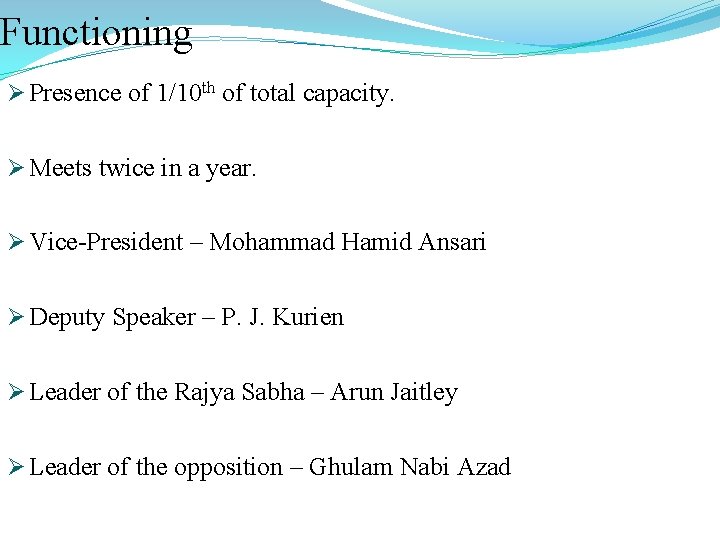
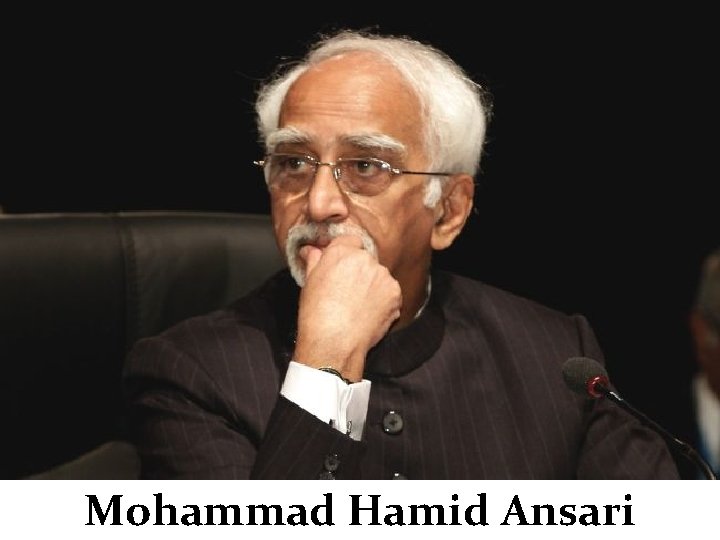
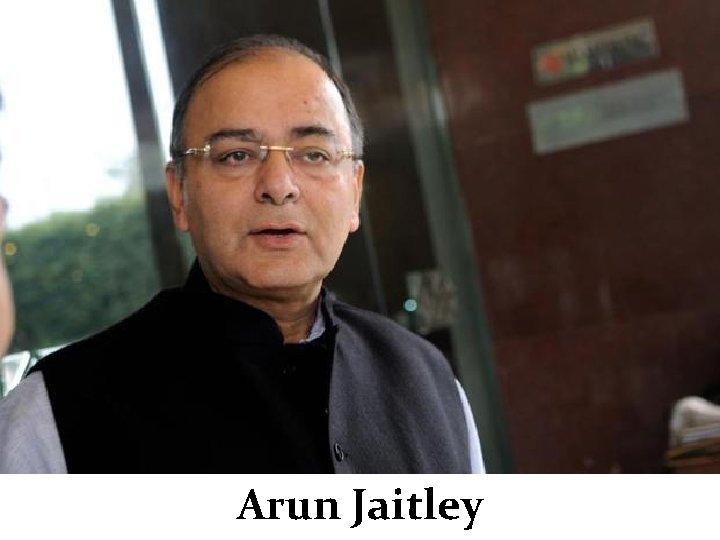
Functioning Ø Presence of 1/10 th of total capacity. Ø Meets twice in a year. Ø Vice-President – Mohammad Hamid Ansari Ø Deputy Speaker – P. J. Kurien Ø Leader of the Rajya Sabha – Arun Jaitley Ø Leader of the opposition – Ghulam Nabi Azad
Mohammad Hamid Ansari
Arun Jaitley
Lok Sabha (House of the People)
Composition & Term Ø Maximum number of seats = 545. Ø 543 are directly elected. Ø 2 are nominated by President of India. Ø 79 seats are reserved for SCs & 41 for STs. Ø Term is 5 years. Sessions can be dissolved in case of “MINORITY”.
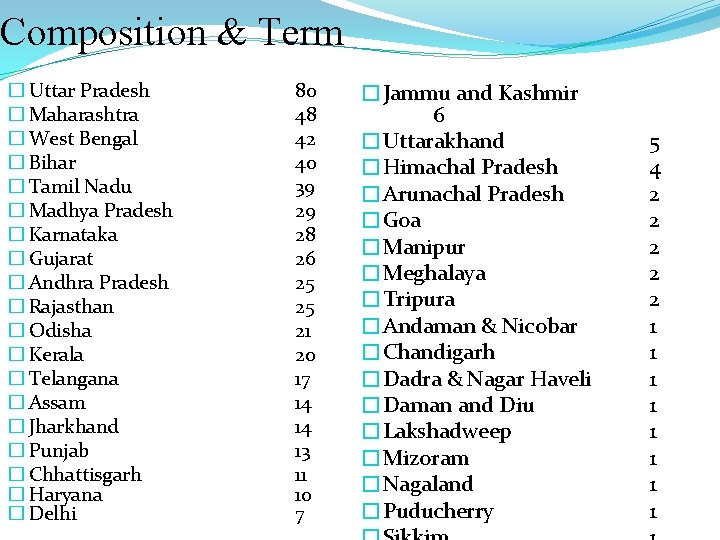
Composition & Term � Uttar Pradesh � Maharashtra � West Bengal � Bihar � Tamil Nadu � Madhya Pradesh � Karnataka � Gujarat � Andhra Pradesh � Rajasthan � Odisha � Kerala � Telangana � Assam � Jharkhand � Punjab � Chhattisgarh � Haryana � Delhi 80 48 42 40 39 29 28 26 25 25 21 20 17 14 14 13 11 10 7 �Jammu and Kashmir 6 �Uttarakhand �Himachal Pradesh �Arunachal Pradesh �Goa �Manipur �Meghalaya �Tripura �Andaman & Nicobar �Chandigarh �Dadra & Nagar Haveli �Daman and Diu �Lakshadweep �Mizoram �Nagaland �Puducherry 5 4 2 2 2 1 1 1 1
Qualifications Ø Indian citizen. Ø Not less than 25 years of age. Ø Should not have a criminal record. Ø Sound mind. Ø Should not hold any office of profit. Ø should have his/her name in the electoral rolls in any part of the country
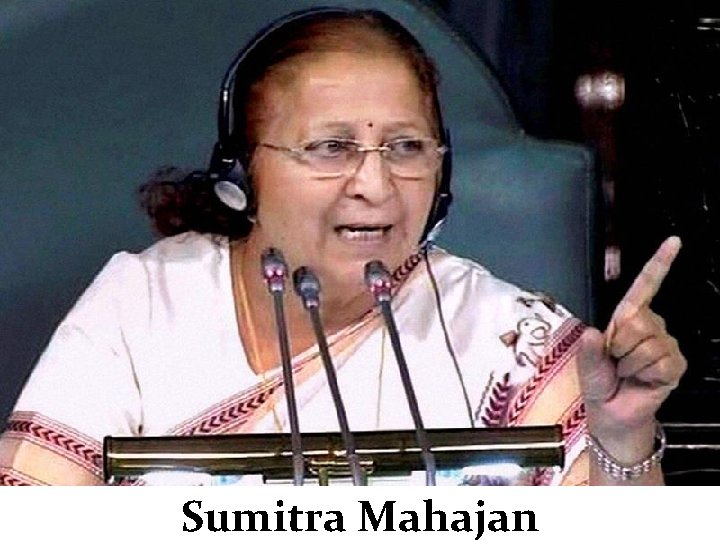
Functioning Ø Three sessions in a year. 1) Budget Session. 2) Monsoon Session 3) Winter Session Ø Question Hour & Zero Hour. Ø Speaker – Sumitra Mahajan. Ø Deputy Speaker – M. Thambidurai Ø Voting to pass the bills.
Sumitra Mahajan
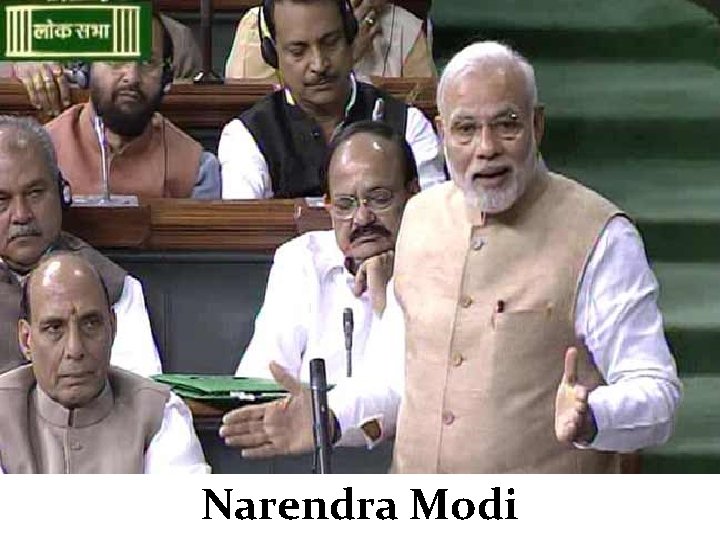
Narendra Modi
Powers : Legislative Ø Making laws. Ø Presentation of Financial bills. Ø Voting on different bills. Ø Bill becomes law only after the approval of the house. Ø Joint session. Ø President’s approval.
Powers : Administrative Ø Lok Sabha controls the Executive. Ø Leader of the majority party becomes the PM. Ø Lok Sabha MPs & the Union Cabinet. Ø Role of the opposition. Ø No-confidence motion. Ø Adjournment motion.
Powers : Financial Ø Exclusive Financial Powers. Ø Introduction/Discussion of a Financial bill is done in Lok Sabha. It is then sent to Rajya Sabha. Ø Rajya Sabha has a time of 14 days. Ø President’s approval. Ø Union Budget. Ø Lok decides how money is raised & spent.
Powers : Judicial Ø Impeachment. Ø Resolutions. Ø Discussion on various commissions & their investigations. Powers : Amendment Ø Amendment of the constitution. Ø Approval of both the houses.
UNION EXECUTIVE of INDIA
The President
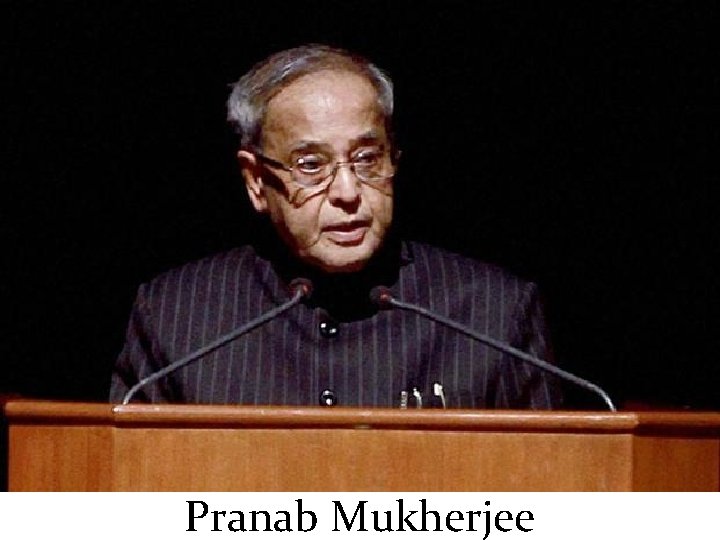
The President of India Ø Article 52. Ø Constitutional head of the country. Ø Head of the armed forces. Ø Custodian of all Executive powers in India. Ø Cannot be prosecuted. Ø President of India – Pranab Mukherjee
Pranab Mukherjee
Election of the President Ø Article 54 & 55. Ø Electoral college - Elected members of Parliament, elected members of Legislative assemblies. Ø Oath or Affirmation: I, (name), do swear in the name of God (or solemnly affirm) that I will faithfully execute the office of President (or discharge the functions of the President) of the Republic of India, and will to the best of my ability preserve, protect and defend the Constitution and the law, and that I will devote myself to the service and well-being of the people of the Republic of India. Ø 5 year term.
Qualifications Ø Indian citizen. Ø Not less than 35 years of age. Ø Should not have a criminal record. Ø Should not hold any office of profit. Ø Should be qualified for election as a member of the Lok Sabha.
Powers : Executive Ø Nominates the Prime Minister. Ø Nominates the Council of Ministers. Ø Appointment of Auditor general, Judges of the Supreme Court & the high Courts, Governors of the States, Chairman & Members of the Finance Commission, UPSC, Election Commissioners. Ø Appoints chiefs of the Armed Forces. Ø Power to terminate.
Powers : Legislative Ø Summon or postpone the sessions. Inaugurates the parliament after the General elections & so at the beginning of the first session each year. Ø Heads the Joint session. Ø Gives approval to the bills. Ø Nominates members to Rajya Sabha & Lok Sabha. . Ø Acts upon the recommendations of the PM & his ministers. Ø Dissolution of the Lok Sabha.
Powers : Judicial Ø Appoints the Chief Justice of the SC and other judges on the advice of the Chief Justice. Ø Can dismiss a judge after a Joint Resolution of Impeachment. Ø Reduce the punishment. Ø Cancel or upheld the Capital punishment.
Powers : Financial Ø Permission of the president is needed to introduce Financial Bill in Lok Sabha. Ø The President continues a Finance commission after every five years to recommend the distribution of the taxes between the centre and the States Ø Consolidated Fund is in the name of the President, from which the Judges of the SC & members of Public Service commission receive their salaries.
Powers : Military Ø Appoints the Chiefs of Armed Forces. Ø Declares war and peace. Ø All important treaties and contracts are made in the President's name. Powers : Emergency Ø President can declare : 1) National Emergency 2) State Emergency 3) Financial Emergency
The Prime Minister
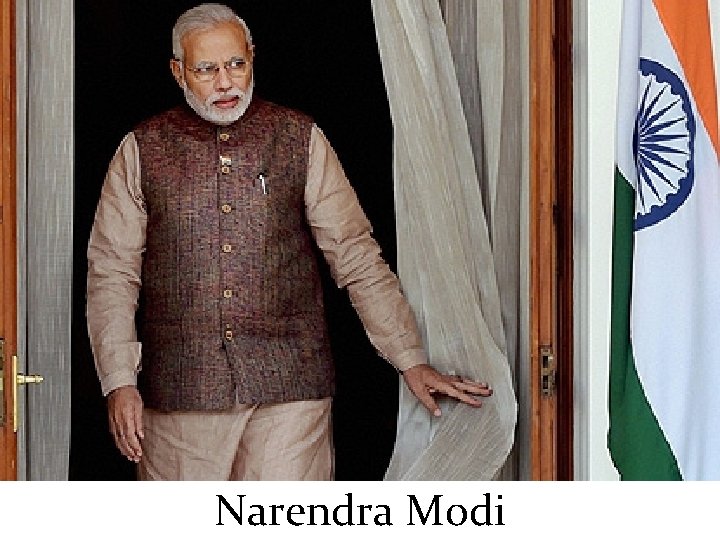
The Prime Minister of India Ø Assist & advise the President. Ø Head of the Government. Ø Has the real power to carry out administration. Ø Head of the Council of Ministers. Ø Leads the executive branch of the Government of India.
Narendra Modi
Powers Ø Appointment of Ministers/Removal of Ministers/Allocation of departments. Ø Prime Minister usually heads: 1) Ministry of Personnel, Public Grievances and Pensions 2) Ministry of Planning 3) Department of Atomic Energy/Space Ø Represents India on Global stage. Ø Schedules and attends the sessions of the Houses of Parliament and is required to answer the question from the Members of Parliament
The Union Cabinet
The Union Cabinet of India Ø Three hierarchies of ministers : 1) Cabinet Ministers 2) Minister of state 3) Minister of state with Independent charge Ø Strength = 15% of total strength of parliament. Ø PM is the controller of the cabinet. Ø Support in Lok Sabha.
UNION JUDICIARY of INDIA
Supreme Court
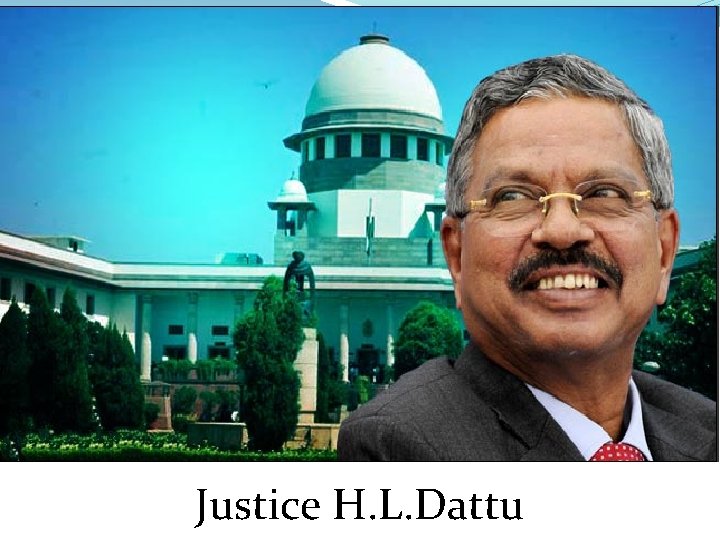
Supreme Court Ø Came into existence by on January 28, 1950. It is in New Delhi. Ø The highest judicial forum in India. Final court of appeal. Ø It comprises the Chief Justice and 30 other judges. Ø The law declared by the Supreme Court becomes binding on all courts within India. Ø Chief Justice of India - Justice H. L. Dattu
Qualifications Ø Indian citizen. Ø Experience of 5 years as a High Court Judge/10 years as advocate of High Court. Ø Distinguished Jurist Appointment/Removal Ø Appointed by the President Ø Retirement age = 65 years / Resignation / Impeachment
Justice H. L. Dattu
Powers : Original Ø Resolving the disputes between States, Union & States. Ø Enforcement of Fundamental Rights – Article 32 Ø It is empowered to issue directions, orders or writs, including writs in the nature of habeas corpus, mandamus, prohibition, quowarranto and certiorari to enforce them. Ø PILs.
Powers : Appellate Ø Challenging the lower court verdict. Ø Civil cases. Ø Criminal cases. Ø Transfer of cases from the lower courts.
Powers : Advisory Ø Advising the President of India. Ø Opinion given by the Supreme Court is not to be considered as a judgment. Powers : Other Ø Court of Records. Ø Advisor to States & Centre. Ø Issue writs.
High Court
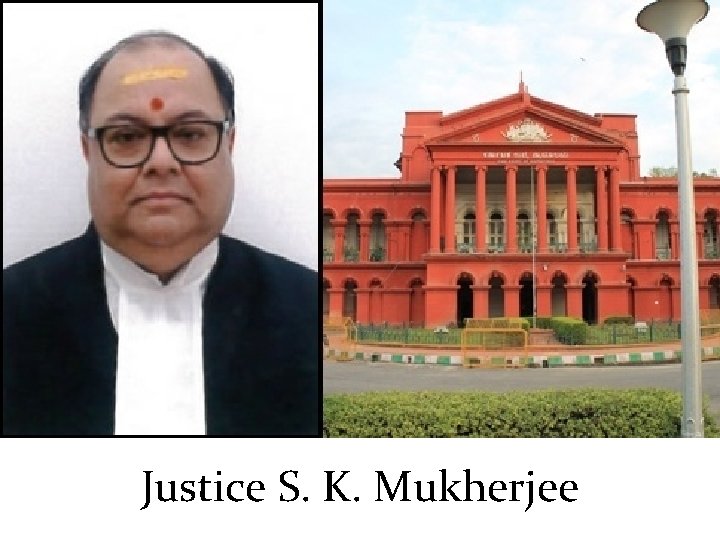
High Court Ø High Court in every State. Ø Chief Justice & other judges. Ø The number of Judges is not fixed. Ø 3 High courts during British Rule. There are 24 now. Ø Mobile courts or Bench of the High court. Ø Chief Justice of Karnataka - Subhro Kamal Mukherjee
Justice S. K. Mukherjee
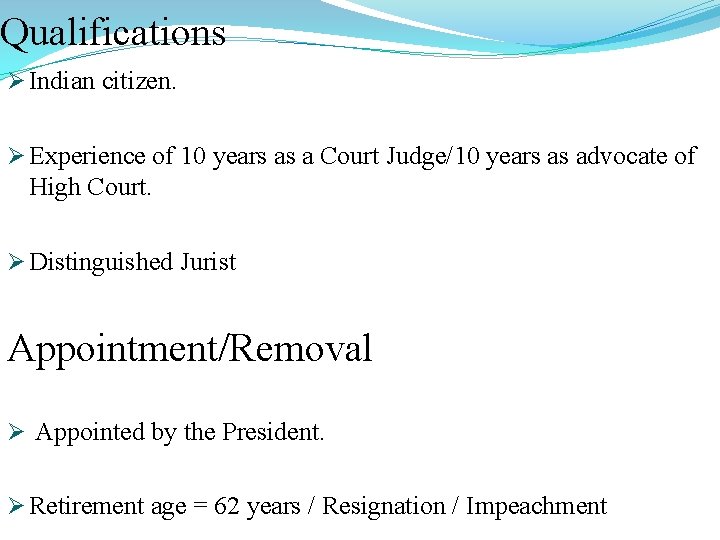
Qualifications Ø Indian citizen. Ø Experience of 10 years as a Court Judge/10 years as advocate of High Court. Ø Distinguished Jurist Appointment/Removal Ø Appointed by the President. Ø Retirement age = 62 years / Resignation / Impeachment
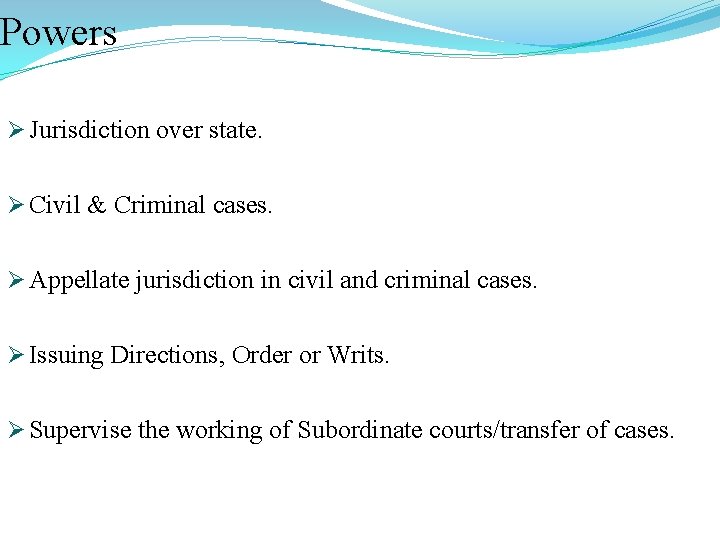
Powers Ø Jurisdiction over state. Ø Civil & Criminal cases. Ø Appellate jurisdiction in civil and criminal cases. Ø Issuing Directions, Order or Writs. Ø Supervise the working of Subordinate courts/transfer of cases.