
Unilateral Cochlear Implantation in Older Children Two Case
- Slides: 1
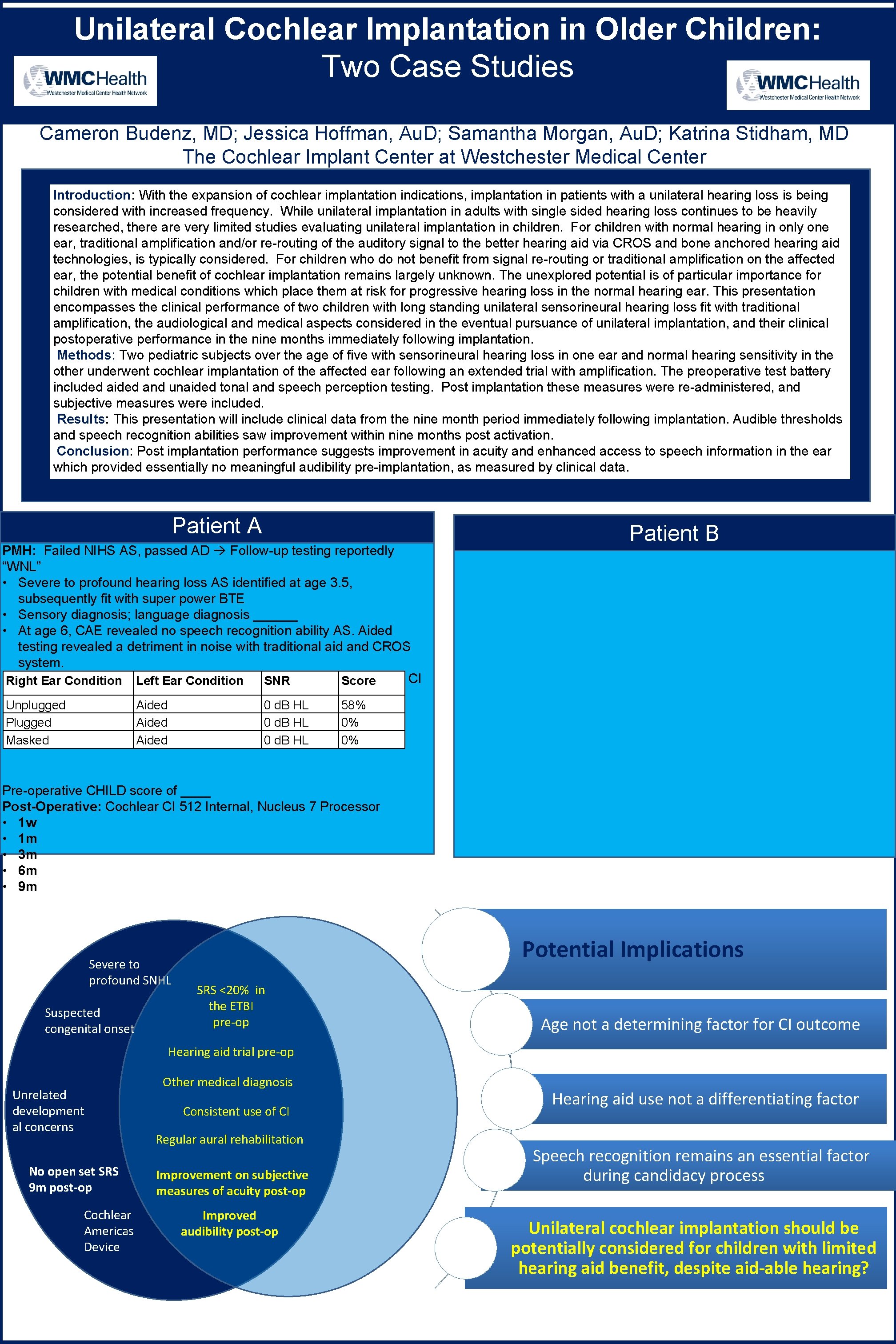
Unilateral Cochlear Implantation in Older Children: Two Case Studies Cameron Budenz, MD; Jessica Hoffman, Au. D; Samantha Morgan, Au. D; Katrina Stidham, MD The Cochlear Implant Center at Westchester Medical Center Introduction: With the expansion of cochlear implantation indications, implantation in patients with a unilateral hearing loss is being considered with increased frequency. While unilateral implantation in adults with single sided hearing loss continues to be heavily researched, there are very limited studies evaluating unilateral implantation in children. For children with normal hearing in only one ear, traditional amplification and/or re-routing of the auditory signal to the better hearing aid via CROS and bone anchored hearing aid technologies, is typically considered. For children who do not benefit from signal re-routing or traditional amplification on the affected ear, the potential benefit of cochlear implantation remains largely unknown. The unexplored potential is of particular importance for children with medical conditions which place them at risk for progressive hearing loss in the normal hearing ear. This presentation encompasses the clinical performance of two children with long standing unilateral sensorineural hearing loss fit with traditional amplification, the audiological and medical aspects considered in the eventual pursuance of unilateral implantation, and their clinical postoperative performance in the nine months immediately following implantation. Methods: Two pediatric subjects over the age of five with sensorineural hearing loss in one ear and normal hearing sensitivity in the other underwent cochlear implantation of the affected ear following an extended trial with amplification. The preoperative test battery included aided and unaided tonal and speech perception testing. Post implantation these measures were re-administered, and subjective measures were included. Results: This presentation will include clinical data from the nine month period immediately following implantation. Audible thresholds and speech recognition abilities saw improvement within nine months post activation. Conclusion: Post implantation performance suggests improvement in acuity and enhanced access to speech information in the ear which provided essentially no meaningful audibility pre-implantation, as measured by clinical data. Patient A PMH: Failed NIHS AS, passed AD Follow-up testing reportedly “WNL” • Severe to profound hearing loss AS identified at age 3. 5, subsequently fit with super power BTE • Sensory diagnosis; language diagnosis ______ • At age 6, CAE revealed no speech recognition ability AS. Aided testing revealed a detriment in noise with traditional aid and CROS system. • Right Identification of a cholesteatoma AD prompted parental interest in CI Ear Condition Left Ear Condition SNR Score CIE: Recorded Pediatric Az Bio Sentences at 0∘ azimuth Unplugged Plugged Masked Aided 0 d. B HL Patient B 58% 0% 0% Pre-operative CHILD score of ____ Post-Operative: Cochlear CI 512 Internal, Nucleus 7 Processor • 1 w • 1 m • 3 m • 6 m • 9 m Severe to profound SNHL Suspected congenital onset Potential Implications SRS <20% in the ETBI pre-op Age not a determining factor for CI outcome Hearing aid trial pre-op Unrelated development al concerns No open set SRS 9 m post-op Cochlear Americas Device Other medical diagnosis Consistent use of CI Regular aural rehabilitation Improvement on subjective measures of acuity post-op Improved audibility post-op Hearing aid use not a differentiating factor Speech recognition remains an essential factor during candidacy process Unilateral cochlear implantation should be potentially considered for children with limited hearing aid benefit, despite aid-able hearing?