
Unikonts and Excavates Eukaryotic Supergroups Tree of Life




- Slides: 25
Unikonts and Excavates
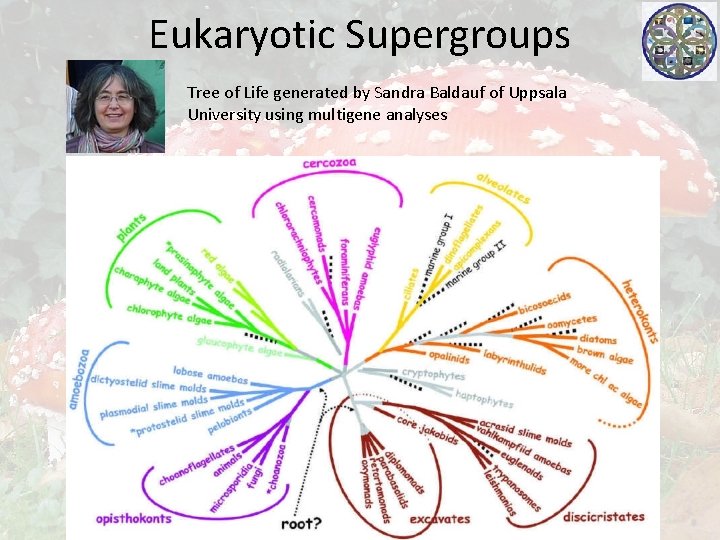
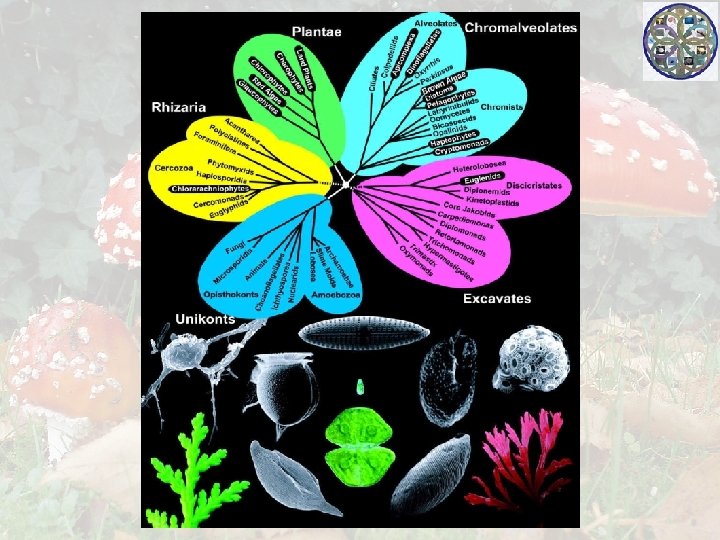
Eukaryotic Supergroups Tree of Life generated by Sandra Baldauf of Uppsala University using multigene analyses
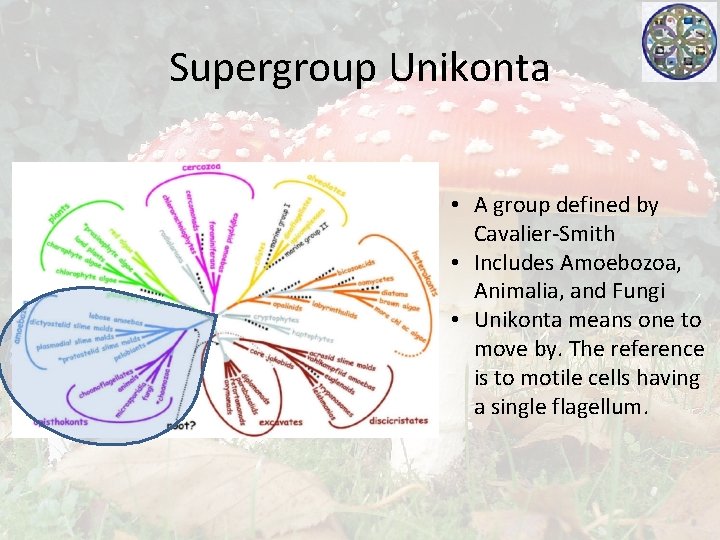
Supergroup Unikonta • A group defined by Cavalier-Smith • Includes Amoebozoa, Animalia, and Fungi • Unikonta means one to move by. The reference is to motile cells having a single flagellum.
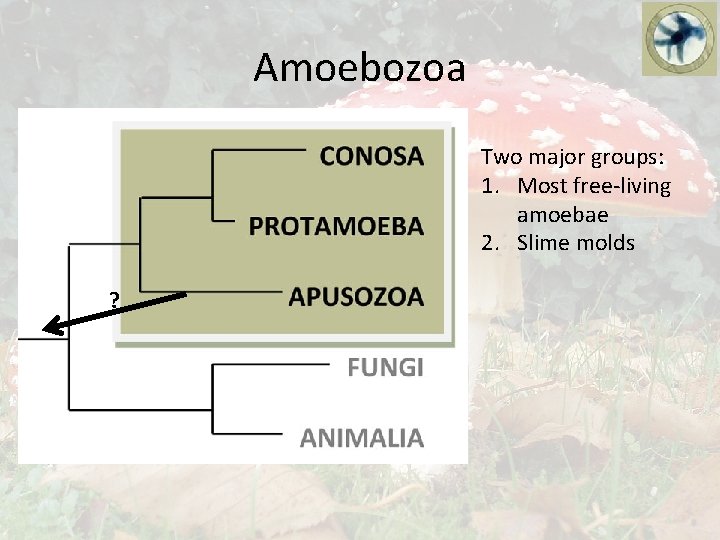
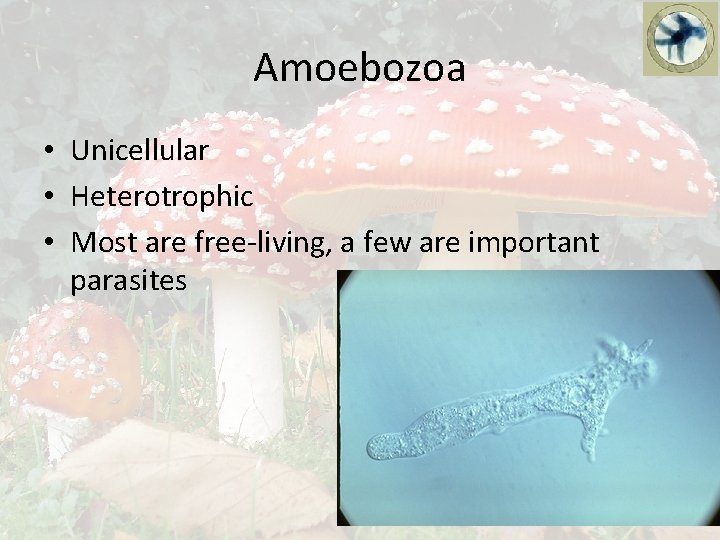
Amoebozoa Two major groups: 1. Most free-living amoebae 2. Slime molds ?
Amoebozoa • Unicellular • Heterotrophic • Most are free-living, a few are important parasites
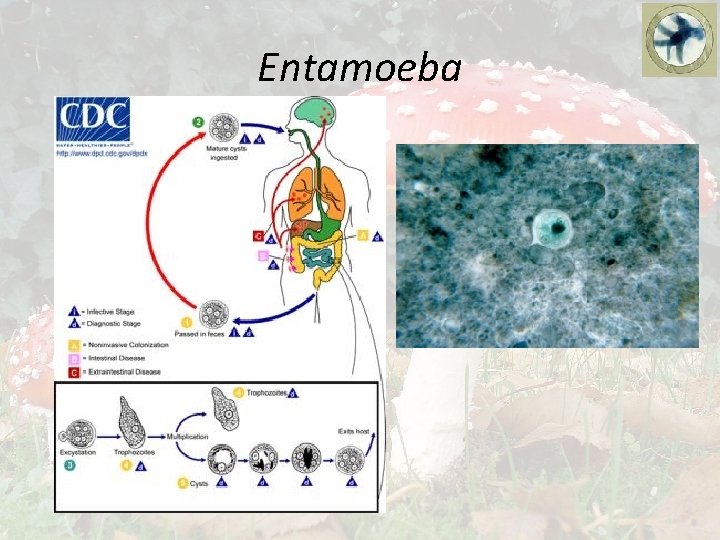
Entamoeba
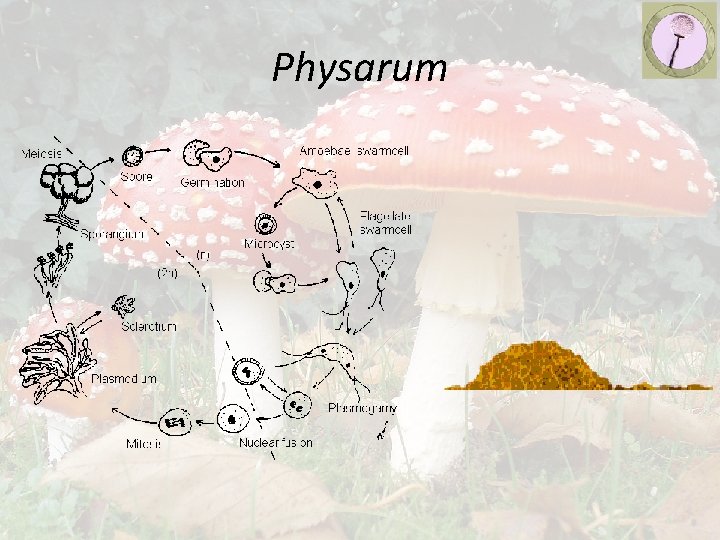
Physarum
Supergroup Excavata
Excavates • Unicellular • Most are heterotrophs, commensals, a few are parasites • No sexual reproduction known • Mitochondria absent (lost them)
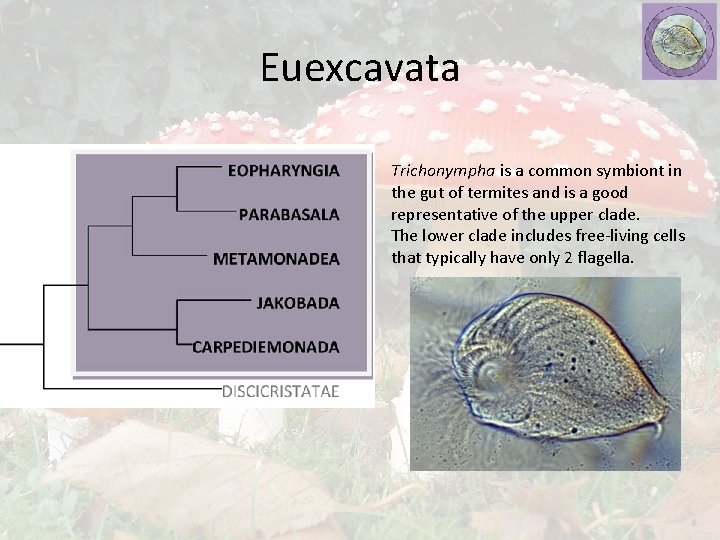
Euexcavata Trichonympha is a common symbiont in the gut of termites and is a good representative of the upper clade. The lower clade includes free-living cells that typically have only 2 flagella.
Eukaryotic Domains
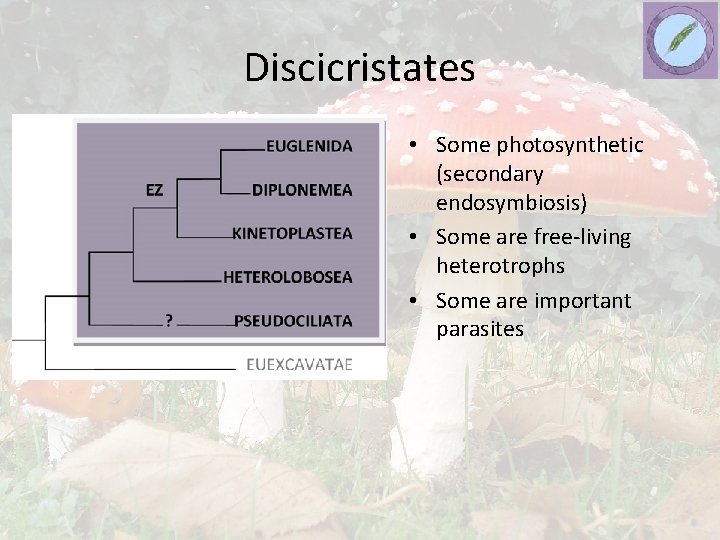
Discicristates • Some photosynthetic (secondary endosymbiosis) • Some are free-living heterotrophs • Some are important parasites
Euglena
Trypanosoma
Fungi
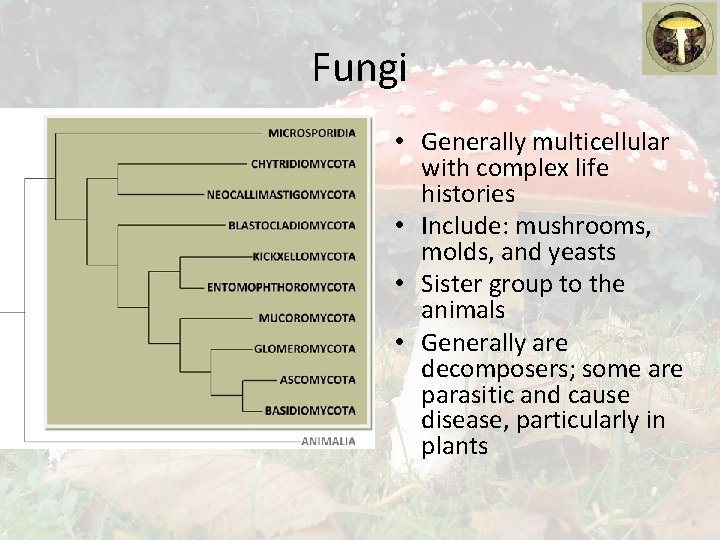
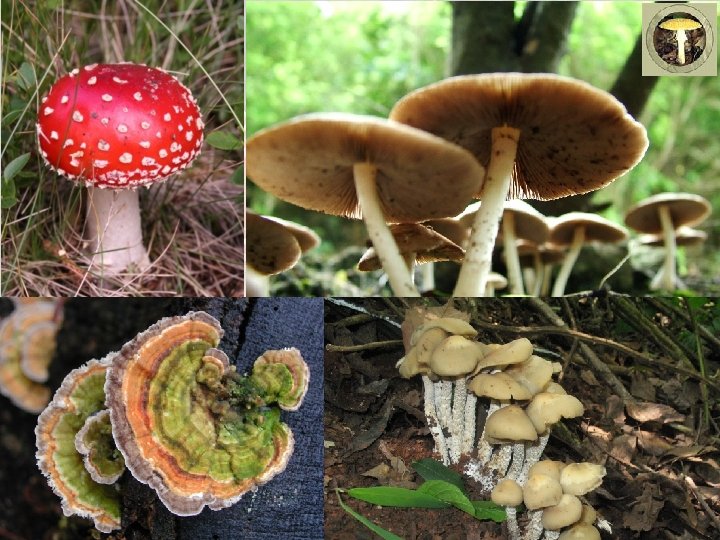
Fungi • Generally multicellular with complex life histories • Include: mushrooms, molds, and yeasts • Sister group to the animals • Generally are decomposers; some are parasitic and cause disease, particularly in plants
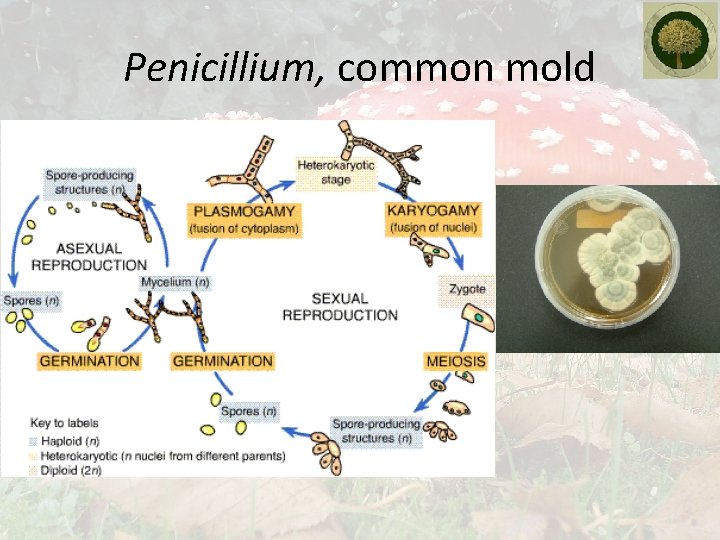
Penicillium, common mold
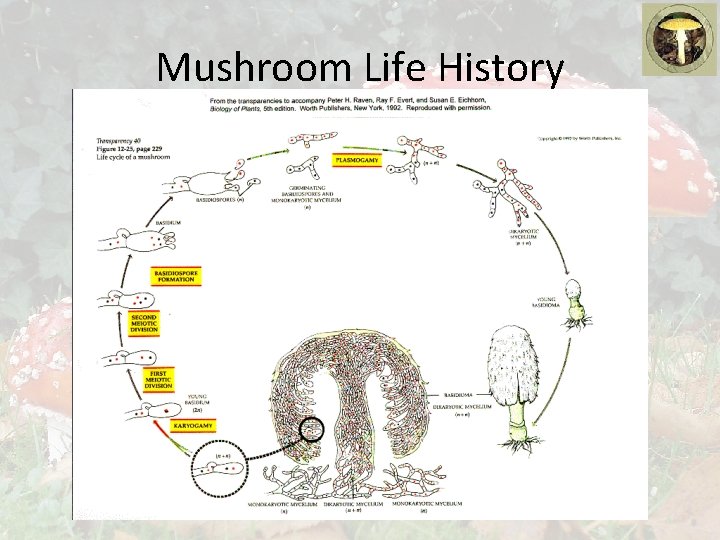
Mushroom Life History
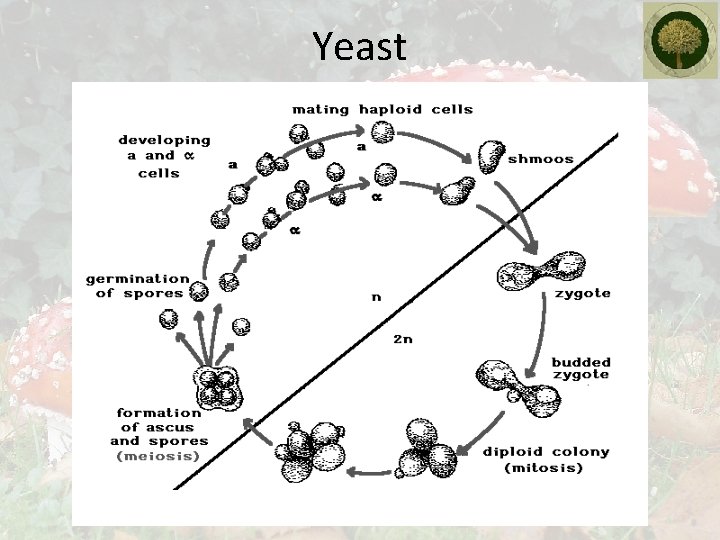
Yeast
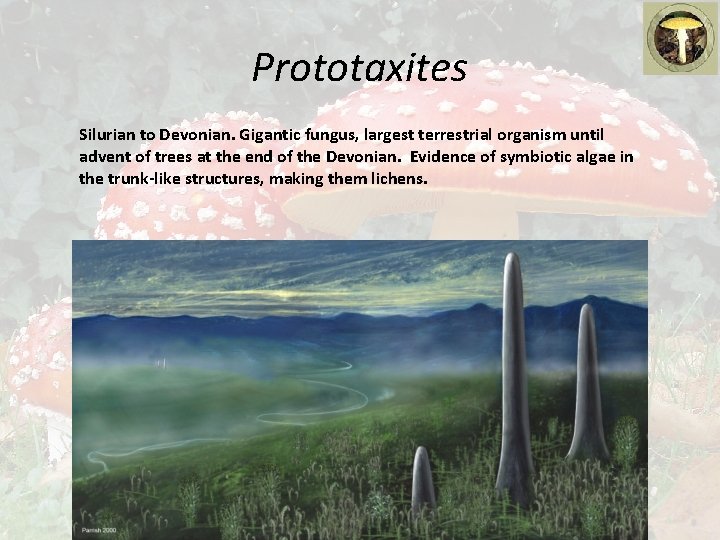
Prototaxites Silurian to Devonian. Gigantic fungus, largest terrestrial organism until advent of trees at the end of the Devonian. Evidence of symbiotic algae in the trunk-like structures, making them lichens.
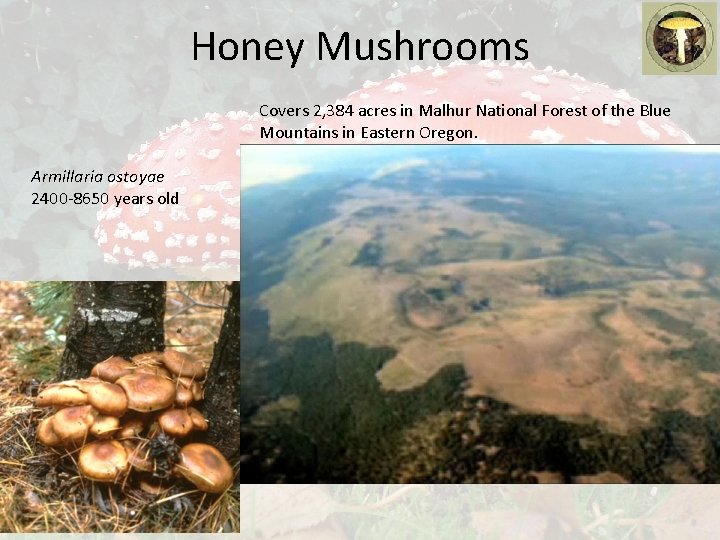
Honey Mushrooms Covers 2, 384 acres in Malhur National Forest of the Blue Mountains in Eastern Oregon. Armillaria ostoyae 2400 -8650 years old
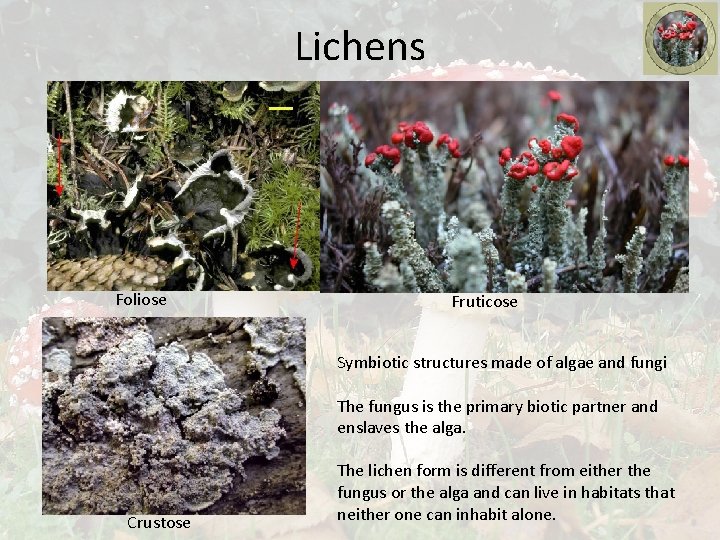
Lichens Foliose Fruticose Symbiotic structures made of algae and fungi The fungus is the primary biotic partner and enslaves the alga. Crustose The lichen form is different from either the fungus or the alga and can live in habitats that neither one can inhabit alone.