
Unidad 6 El imperativo familiar y negativo Negative
- Slides: 16
Unidad 6 El imperativo familiar y negativo Negative Tú Commands
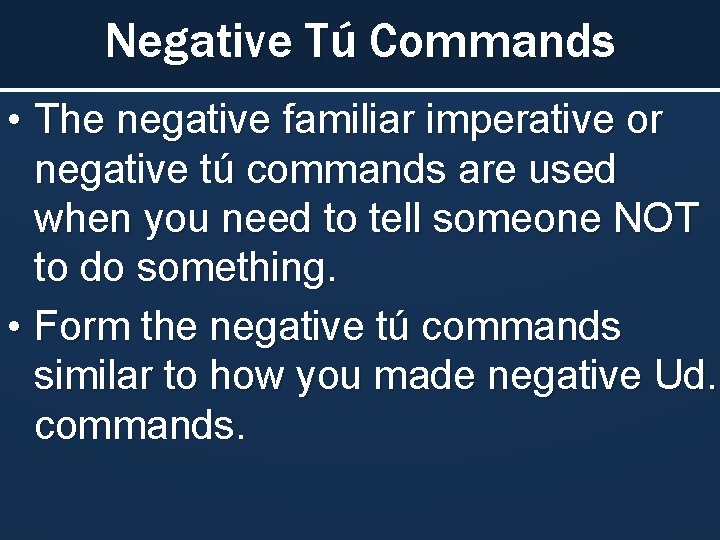
Negative Tú Commands • The negative familiar imperative or negative tú commands are used when you need to tell someone NOT to do something. • Form the negative tú commands similar to how you made negative Ud. commands.
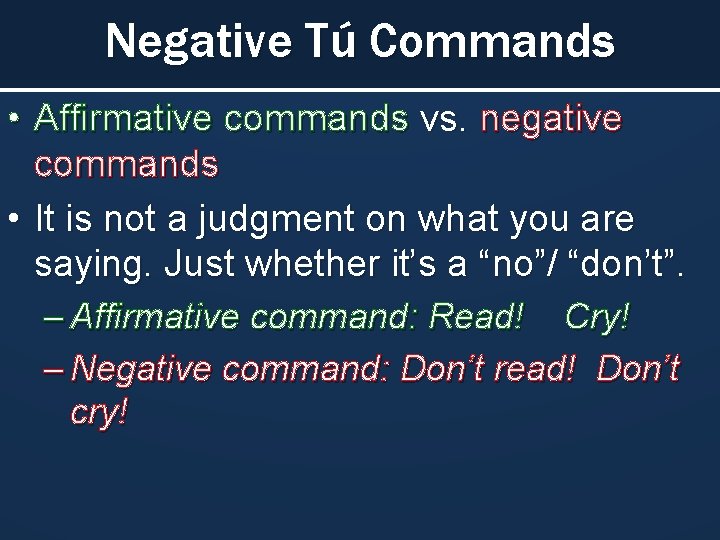
Negative Tú Commands • Affirmative commands vs. negative commands • It is not a judgment on what you are saying. Just whether it’s a “no”/ “don’t”. – Affirmative command: Read! Cry! – Negative command: Don’t read! Don’t cry!
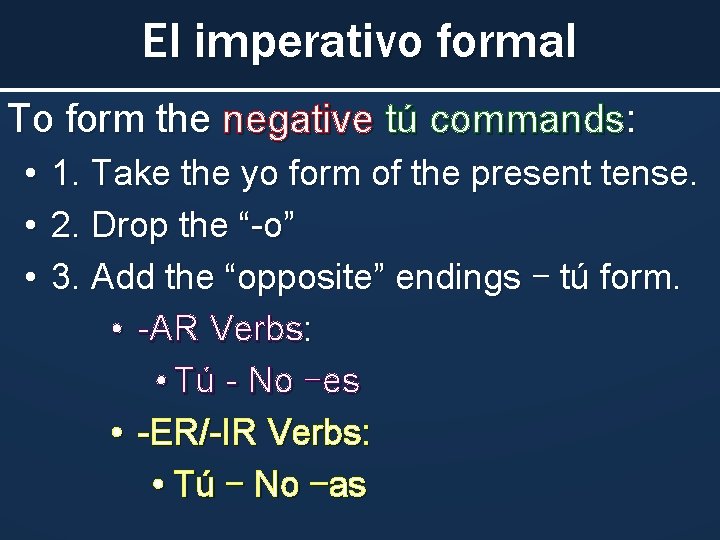
El imperativo formal To form the negative tú commands: • 1. Take the yo form of the present tense. • 2. Drop the “-o” • 3. Add the “opposite” endings – tú form. • -AR Verbs: • Tú - No –es • -ER/-IR Verbs: • Tú – No –as
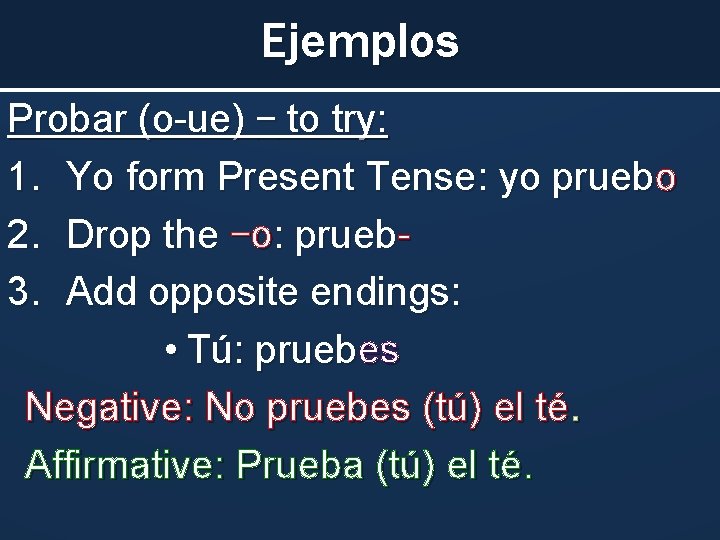
Ejemplos Probar (o-ue) – to try: 1. Yo form Present Tense: yo pruebo 2. Drop the –o: prueb 3. Add opposite endings: • Tú: pruebes Negative: No pruebes (tú) el té. Affirmative: Prueba (tú) el té.
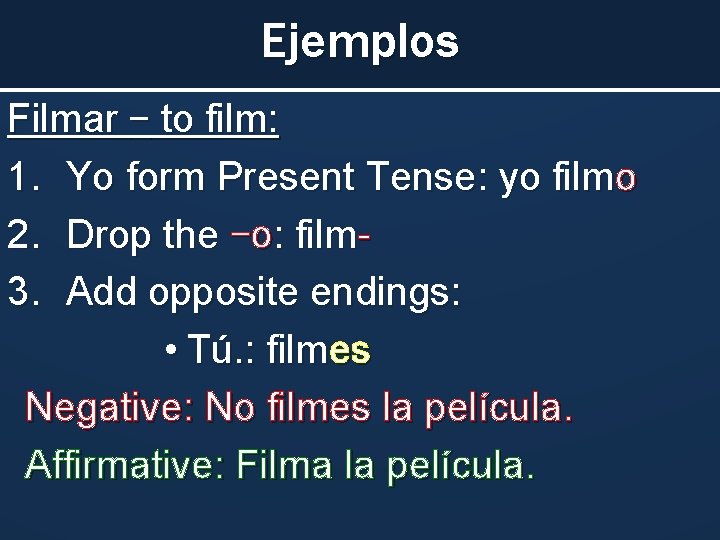
Ejemplos Filmar – to film: 1. Yo form Present Tense: yo filmo 2. Drop the –o: film 3. Add opposite endings: • Tú. : filmes Negative: No filmes la película. Affirmative: Filma la película.
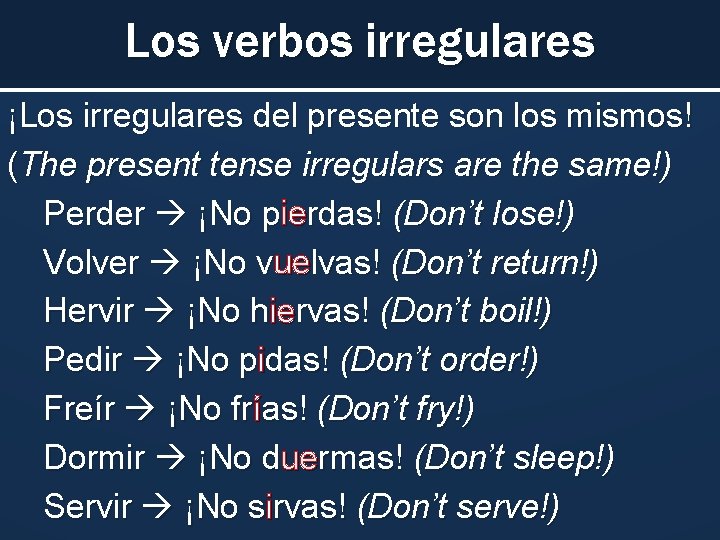
Los verbos irregulares ¡Los irregulares del presente son los mismos! (The present tense irregulars are the same!) Perder ¡No pierdas! (Don’t lose!) Volver ¡No vuelvas! (Don’t return!) Hervir ¡No hiervas! (Don’t boil!) Pedir ¡No pidas! (Don’t order!) Freír ¡No frías! (Don’t fry!) Dormir ¡No duermas! (Don’t sleep!) Servir ¡No sirvas! (Don’t serve!)
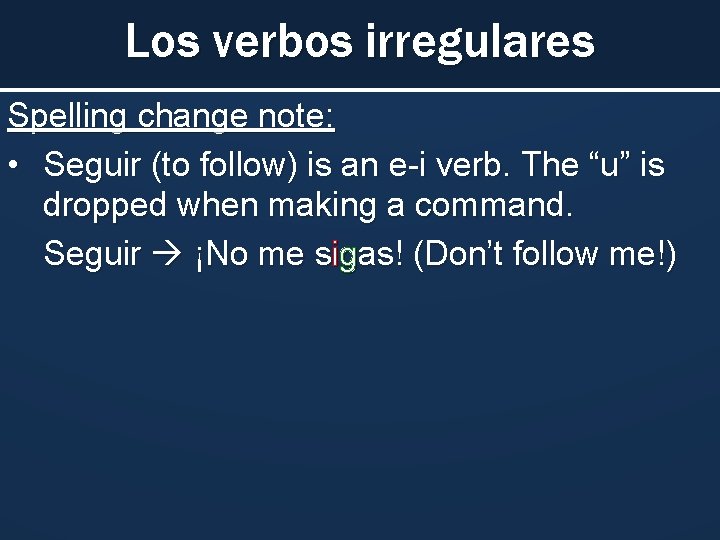
Los verbos irregulares Spelling change note: • Seguir (to follow) is an e-i verb. The “u” is dropped when making a command. Seguir ¡No me sigas! (Don’t follow me!)
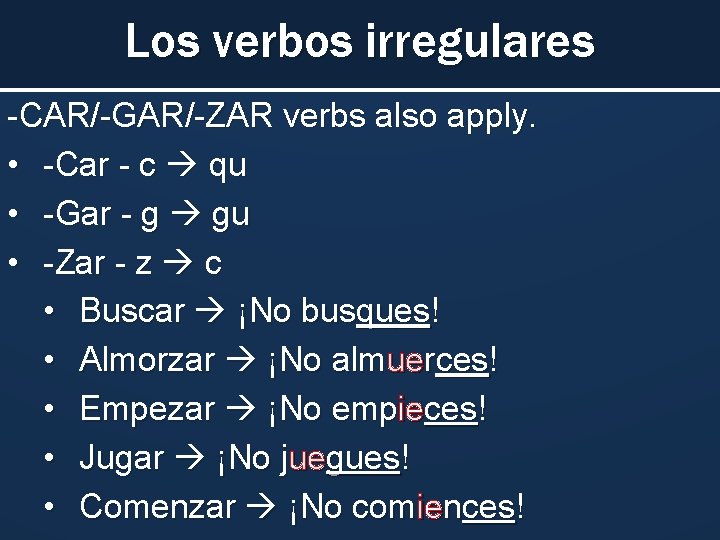
Los verbos irregulares -CAR/-GAR/-ZAR verbs also apply. • -Car - c qu • -Gar - g gu • -Zar - z c • Buscar ¡No busques! • Almorzar ¡No almuerces! • Empezar ¡No empieces! • Jugar ¡No juegues! • Comenzar ¡No comiences!
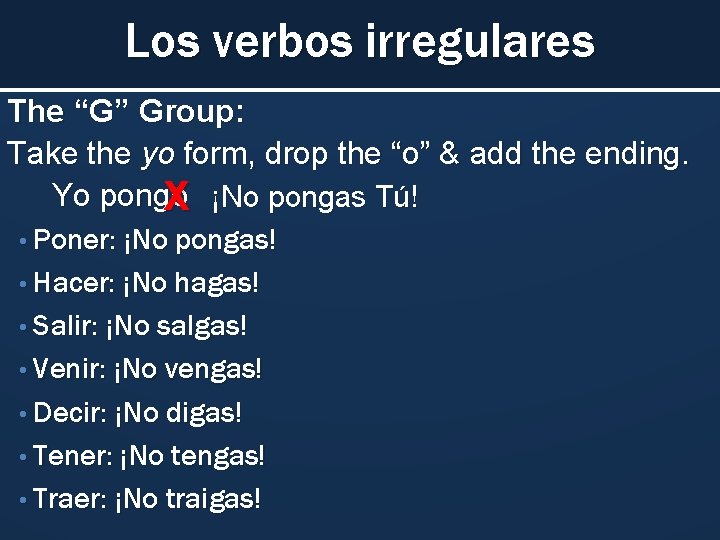
Los verbos irregulares The “G” Group: Take the yo form, drop the “o” & add the ending. Yo pongo X ¡No pongas Tú! • Poner: ¡No pongas! • Hacer: ¡No hagas! • Salir: ¡No salgas! • Venir: ¡No vengas! • Decir: ¡No digas! • Tener: ¡No tengas! • Traer: ¡No traigas!
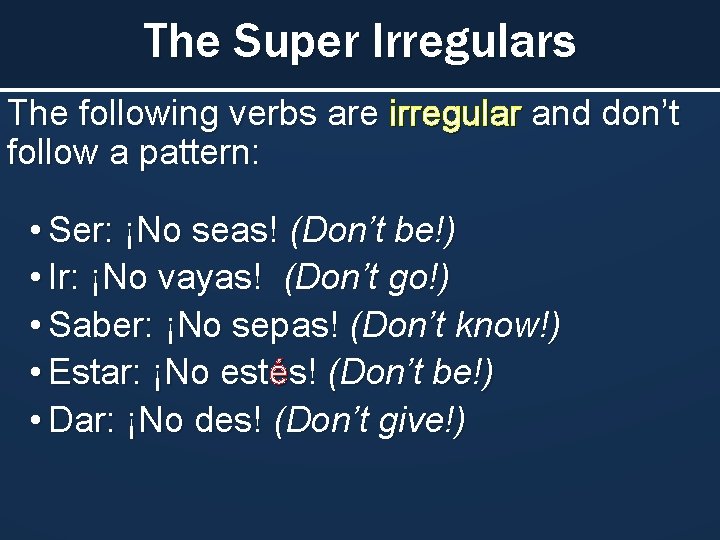
The Super Irregulars The following verbs are irregular and don’t follow a pattern: • Ser: ¡No seas! (Don’t be!) • Ir: ¡No vayas! (Don’t go!) • Saber: ¡No sepas! (Don’t know!) • Estar: ¡No estés! (Don’t be!) • Dar: ¡No des! (Don’t give!)
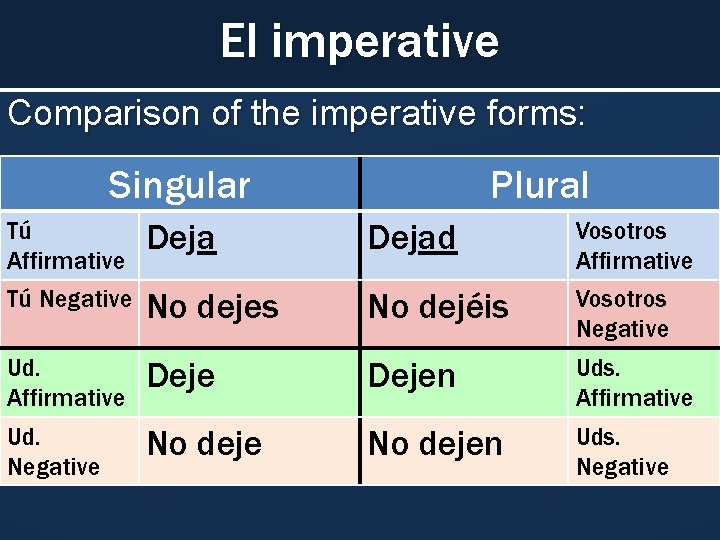
El imperative Comparison of the imperative forms: Singular Plural Tú Affirmative Dejad Vosotros Affirmative Tú Negative No dejes No dejéis Vosotros Negative Ud. Affirmative Dejen Uds. Affirmative Ud. Negative No dejen Uds. Negative
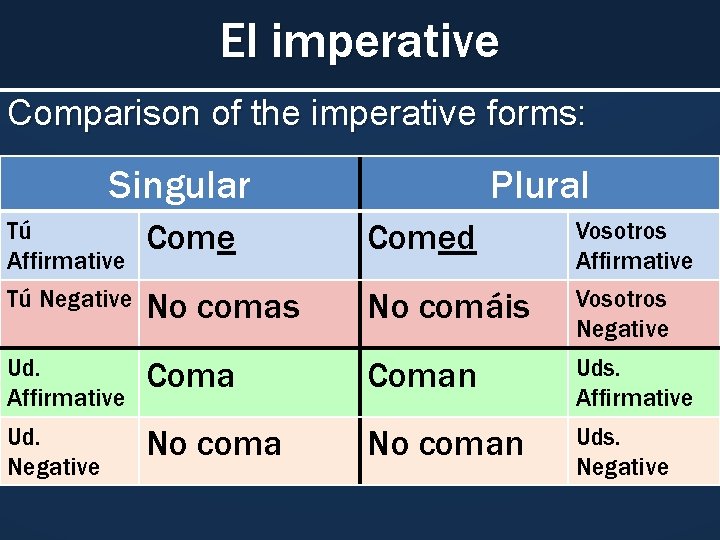
El imperative Comparison of the imperative forms: Singular Plural Tú Affirmative Comed Vosotros Affirmative Tú Negative No comas No comáis Vosotros Negative Ud. Affirmative Coman Uds. Affirmative Ud. Negative No coman Uds. Negative
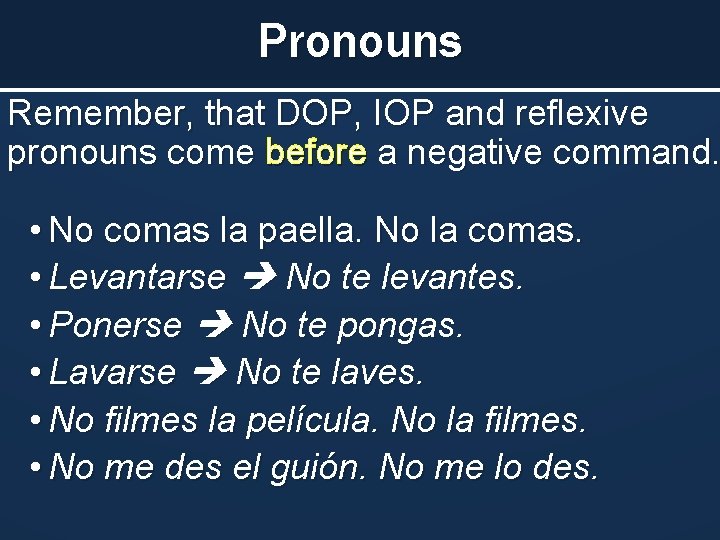
Pronouns Remember, that DOP, IOP and reflexive pronouns come before a negative command. • No comas la paella. No la comas. • Levantarse No te levantes. • Ponerse No te pongas. • Lavarse No te laves. • No filmes la película. No la filmes. • No me des el guión. No me lo des.
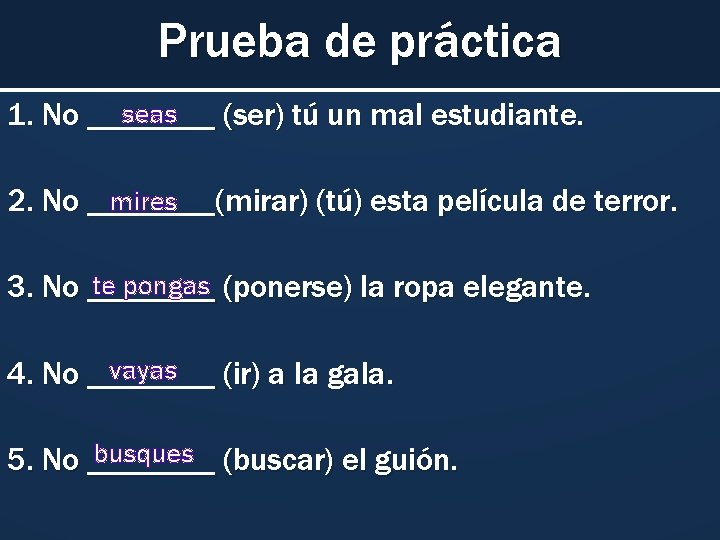
Prueba de práctica seas 1. No ____ (ser) tú un mal estudiante. mires 2. No ____(mirar) (tú) esta película de terror. te pongas (ponerse) la ropa elegante. 3. No ____ vayas 4. No ____ (ir) a la gala. busques (buscar) el guión. 5. No ____
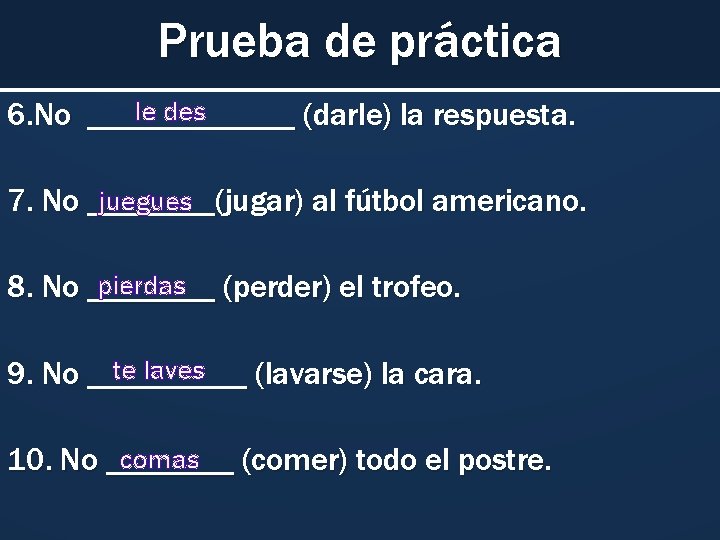
Prueba de práctica le des 6. No _______ (darle) la respuesta. juegues 7. No ____(jugar) al fútbol americano. pierdas (perder) el trofeo. 8. No ____ te laves 9. No _____ (lavarse) la cara. comas 10. No ____ (comer) todo el postre.