
Unicellular Marine Organisms Bacteria Most abundant organisms on
Unicellular Marine Organisms
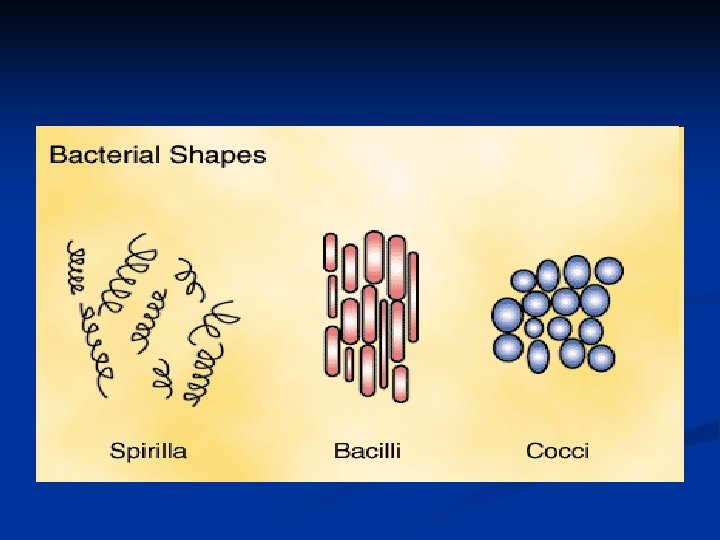
Bacteria Most abundant organisms on earth n Widely distributed in the ocean n Microscopic single-celled organisms n Three basic shapes: n Coccus = round n Bacilli = rod shaped n Spirilla = corkscrew n
Decay bacteria Bacteria break down organic matter into smaller molecules that are released into the ocean n Called “Decomposers” n Most abundant in bottom sediments where dead matter accumulates n Thrive in warm, moist, dark and nutrient rich environments n Chemosynthesis- process by which sulfur bacteria derive energy from chemicals n
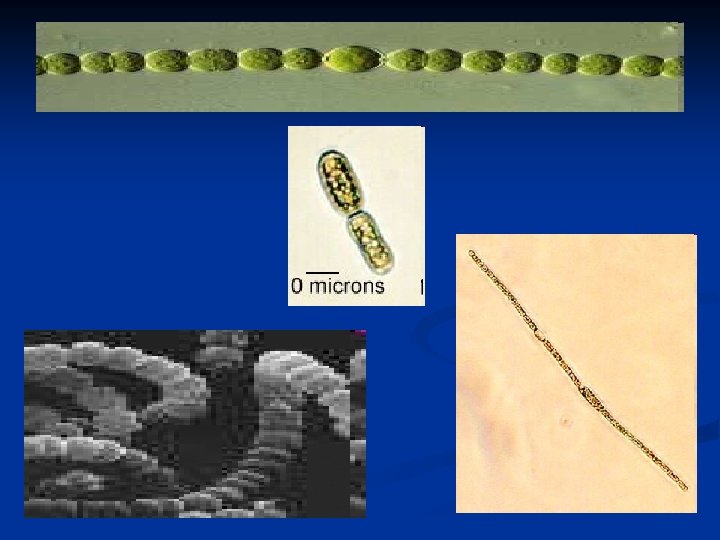
Blue-Green Bacteria n Cyanobacteria- type of bacteria that contain chlorophyll and lack a membrane bound nucleus n The only bacteria that are photosynthetic n Found throughout the oceans and are very hardy
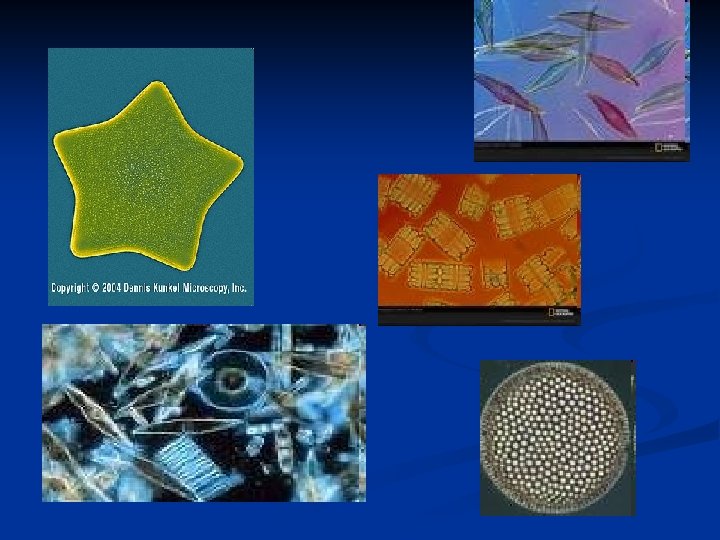
Diatoms Among the most common organisms in the ocean n Single-celled protists that usually float or drift near the surface n Classified as phytoplankton (“plant wanderers”) n Contain chlorophyll and perform photosynthesis n Have cell walls made of silica n
Diatom Diversity and Life Functions Over 25, 000 species of diatoms n Most are found in the cold waters of the world n Classified in phylum Chrysophyta (“golden algae”) n Classified according to their shape n Round = centric diatoms n Pen-shaped = pennate n Spines = shape that prevent sinking n
n Can reproduce asexually or sexually n When diatoms die, their glassy cell walls remain and accumulate on the sea floor n Layer of these deposits are called diatomaceous earth (excellent filtering material) n Almost all animals in the sea ultimately depend on diatoms for food
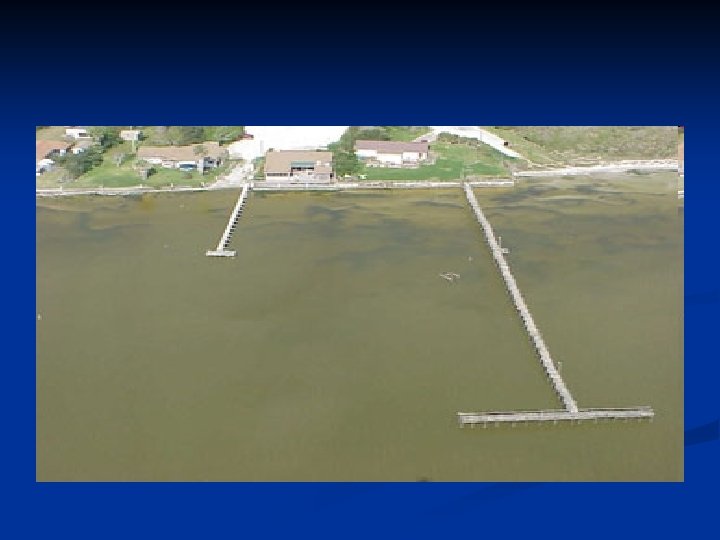
Problems from Diatoms n Algal blooms- sudden increase in diatom populations n Brown tide- water becomes so clouded with algae that the waters turn brown
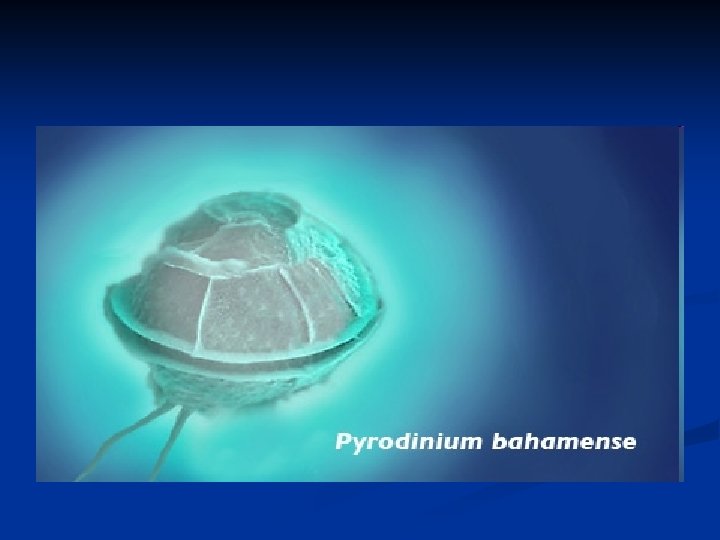
Dinoflagellates Another group of protists often found near the surface n Classified in phylum Pyrrophyta “red (or fire) algae” n Have two flagella that help move the dinoflagellate along (diatoms cannot propel themselves at all) n Contain chloroplasts and can make their own food n Have cell walls made of cellulose like plants n
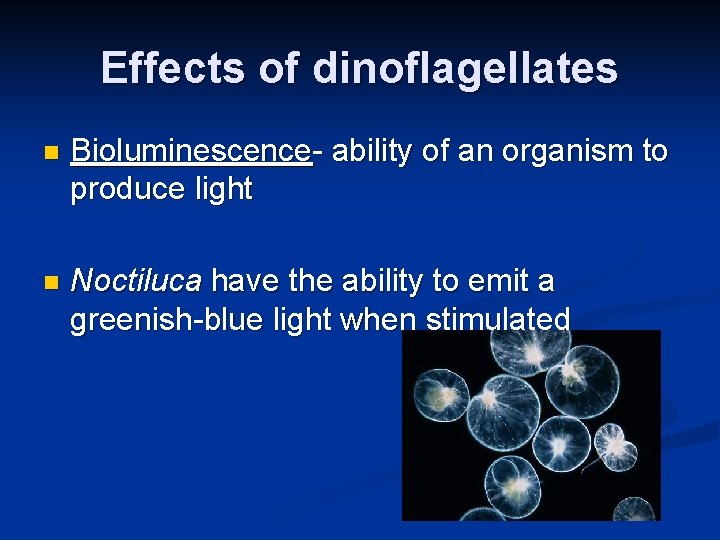
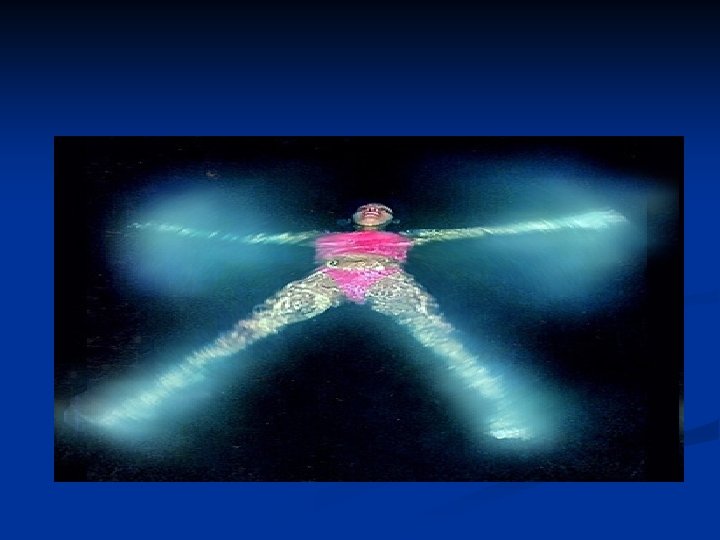
Effects of dinoflagellates n Bioluminescence- ability of an organism to produce light n Noctiluca have the ability to emit a greenish-blue light when stimulated
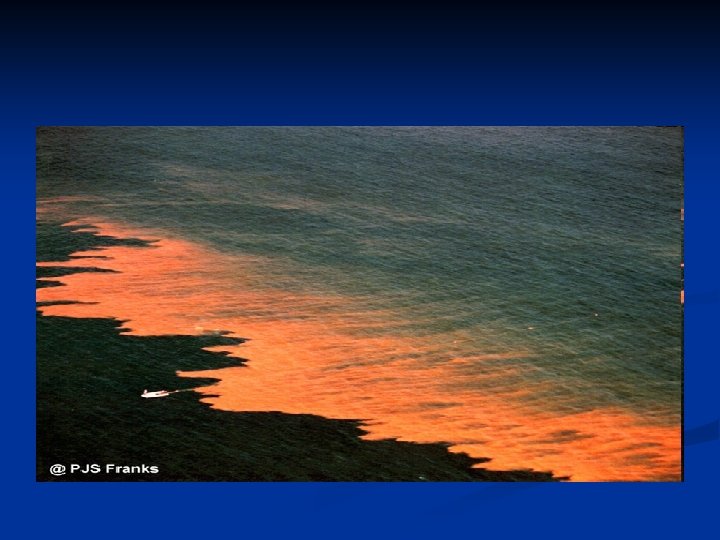
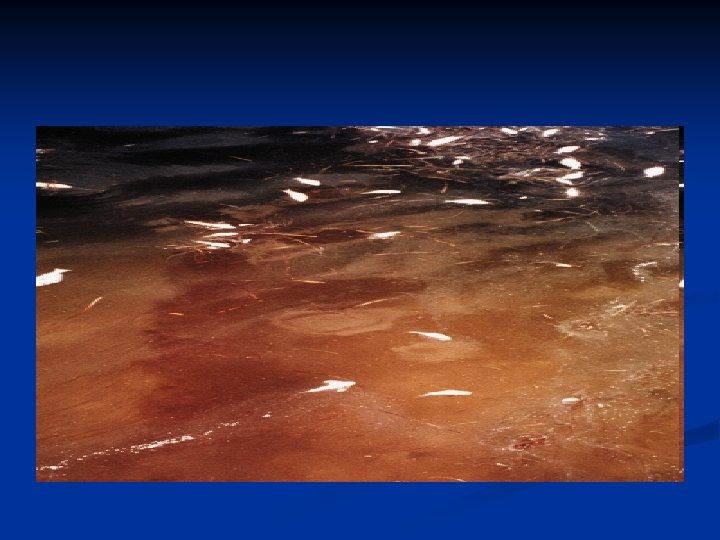
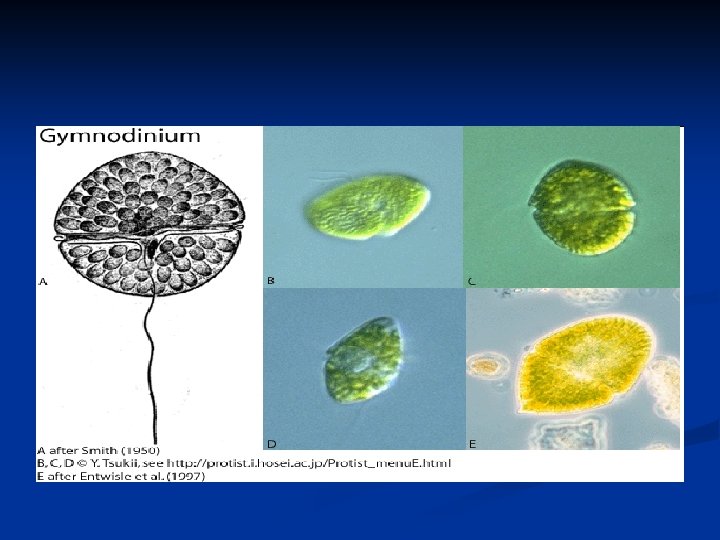
Red Tide Water suddenly turns a reddish color with no warning n Occurs because of a sudden explosion of the Gymnodinium dinoflagellate population n Toxins released by the organisms accumulate in shellfish that eat the algae n In turn, the organisms that feed on the shellfish (fish, marine birds, humans) are poisoned n Algal bloom also reduces oxygen levels in n
- Slides: 20