
Unicellular and Multicellular Organisms Cells Unicellular Organisms Bacteria
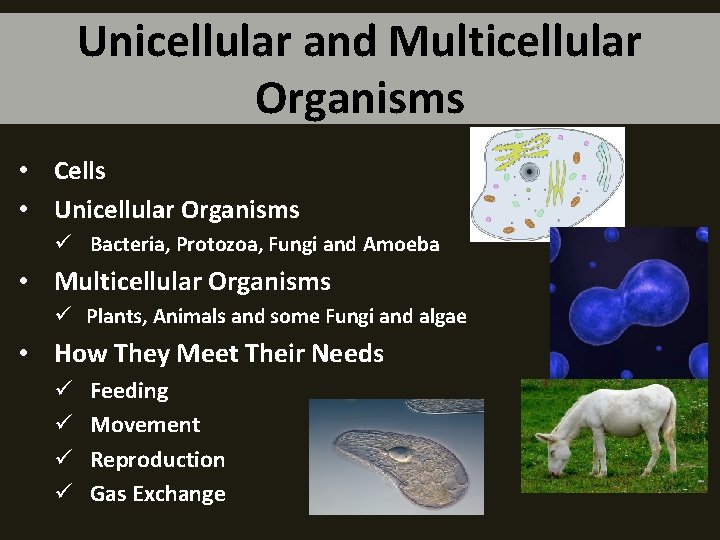
Unicellular and Multicellular Organisms • Cells • Unicellular Organisms ü Bacteria, Protozoa, Fungi and Amoeba • Multicellular Organisms ü Plants, Animals and some Fungi and algae • How They Meet Their Needs ü ü Feeding Movement Reproduction Gas Exchange
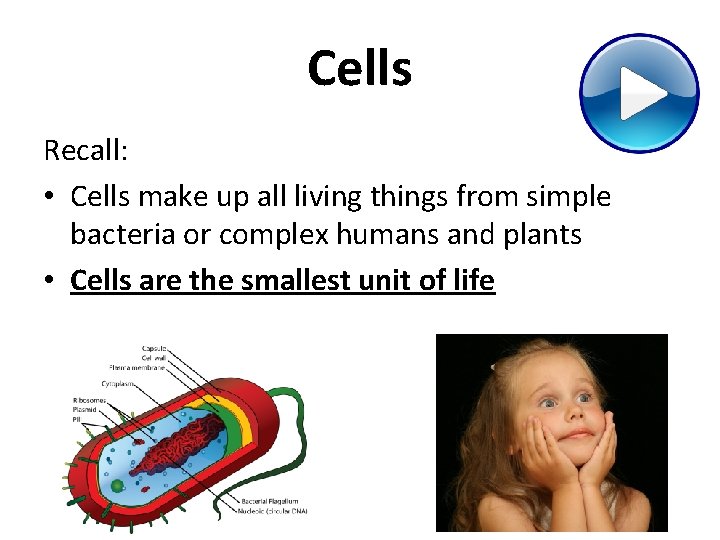
Cells Recall: • Cells make up all living things from simple bacteria or complex humans and plants • Cells are the smallest unit of life
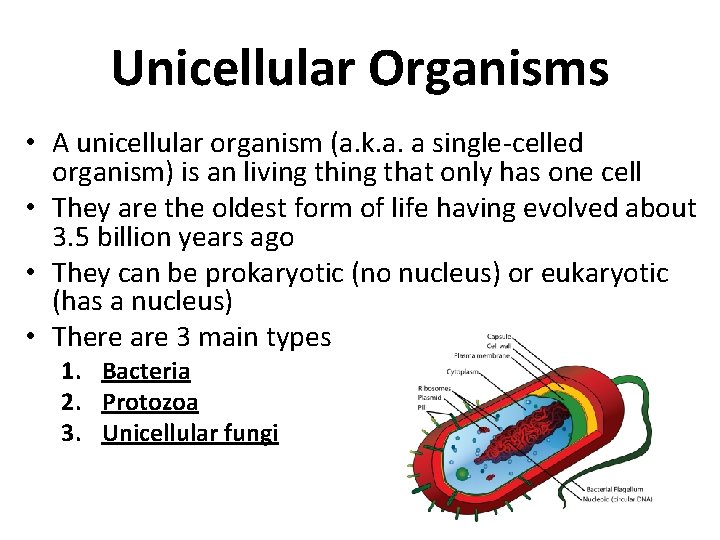
Unicellular Organisms • A unicellular organism (a. k. a. a single-celled organism) is an living that only has one cell • They are the oldest form of life having evolved about 3. 5 billion years ago • They can be prokaryotic (no nucleus) or eukaryotic (has a nucleus) • There are 3 main types 1. Bacteria 2. Protozoa 3. Unicellular fungi
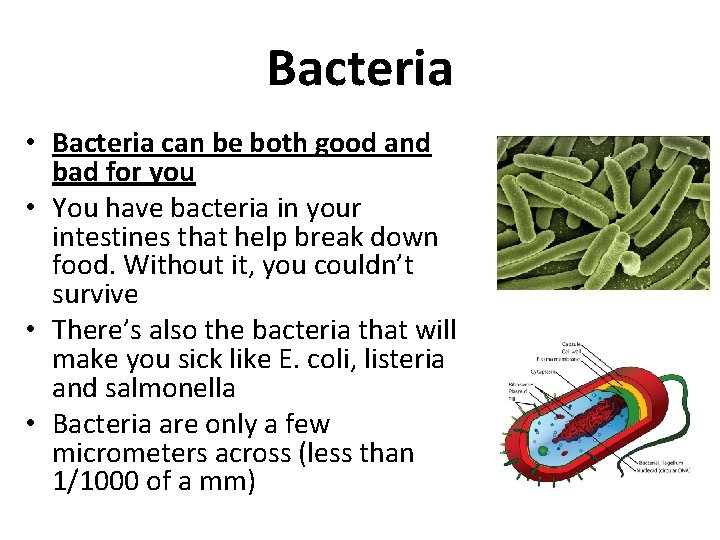
Bacteria • Bacteria can be both good and bad for you • You have bacteria in your intestines that help break down food. Without it, you couldn’t survive • There’s also the bacteria that will make you sick like E. coli, listeria and salmonella • Bacteria are only a few micrometers across (less than 1/1000 of a mm)
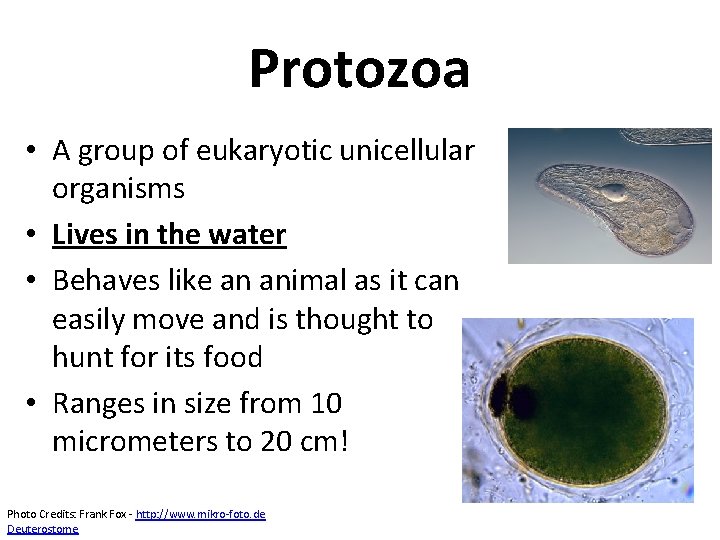
Protozoa • A group of eukaryotic unicellular organisms • Lives in the water • Behaves like an animal as it can easily move and is thought to hunt for its food • Ranges in size from 10 micrometers to 20 cm! Photo Credits: Frank Fox - http: //www. mikro-foto. de Deuterostome
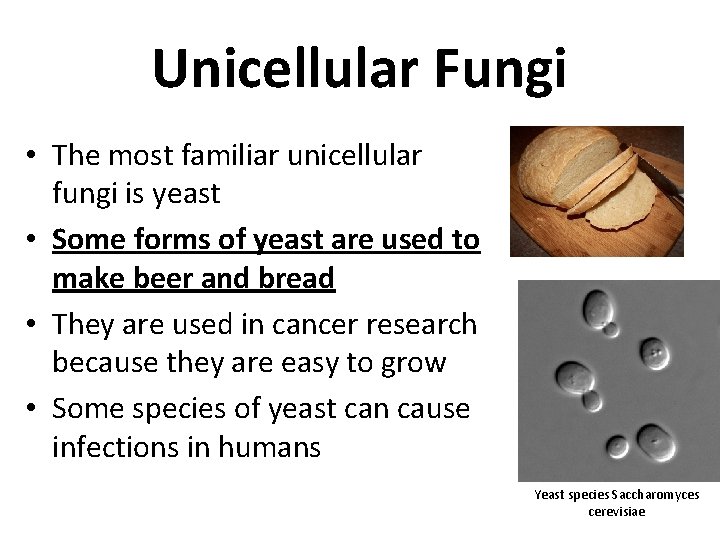
Unicellular Fungi • The most familiar unicellular fungi is yeast • Some forms of yeast are used to make beer and bread • They are used in cancer research because they are easy to grow • Some species of yeast can cause infections in humans Yeast species Saccharomyces cerevisiae
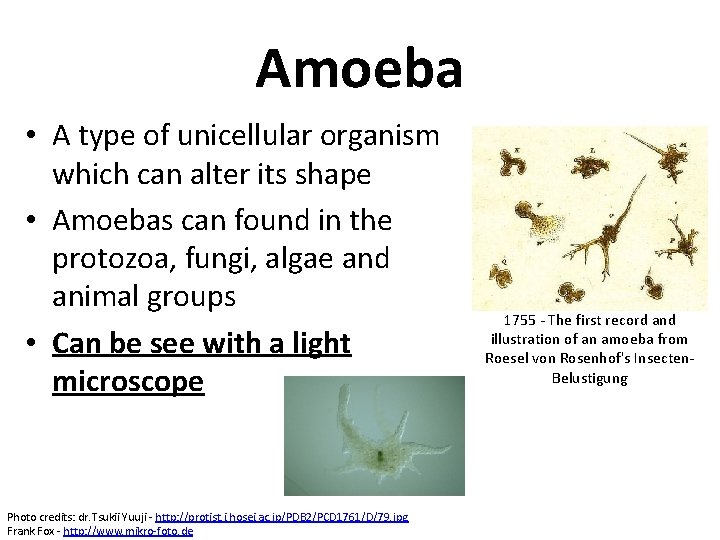
Amoeba • A type of unicellular organism which can alter its shape • Amoebas can found in the protozoa, fungi, algae and animal groups • Can be see with a light microscope Photo credits: dr. Tsukii Yuuji - http: //protist. i. hosei. ac. jp/PDB 2/PCD 1761/D/79. jpg Frank Fox - http: //www. mikro-foto. de 1755 - The first record and illustration of an amoeba from Roesel von Rosenhof's Insecten. Belustigung
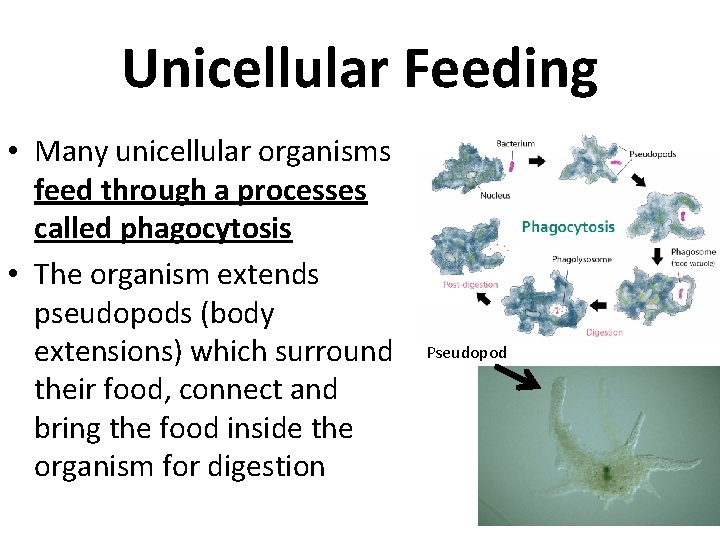
Unicellular Feeding • Many unicellular organisms feed through a processes called phagocytosis • The organism extends pseudopods (body extensions) which surround their food, connect and bring the food inside the organism for digestion Pseudopod
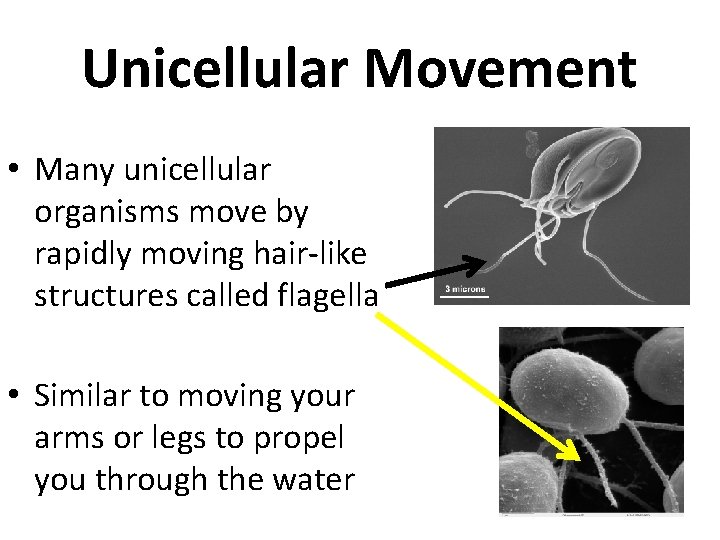
Unicellular Movement • Many unicellular organisms move by rapidly moving hair-like structures called flagella • Similar to moving your arms or legs to propel you through the water
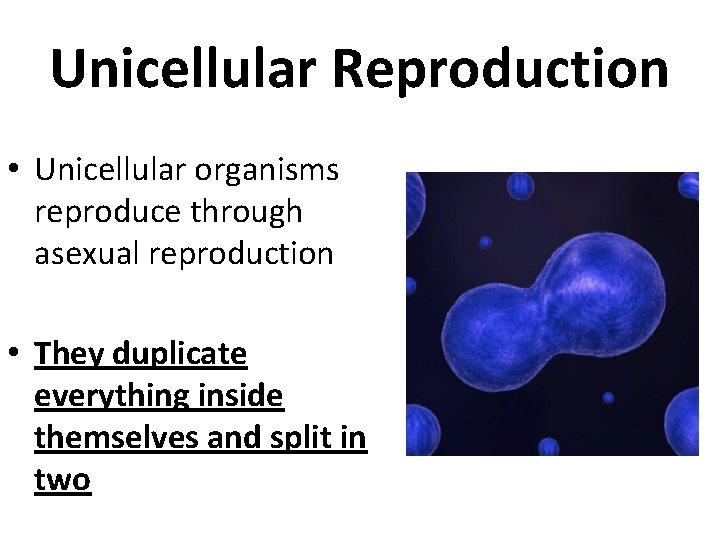
Unicellular Reproduction • Unicellular organisms reproduce through asexual reproduction • They duplicate everything inside themselves and split in two
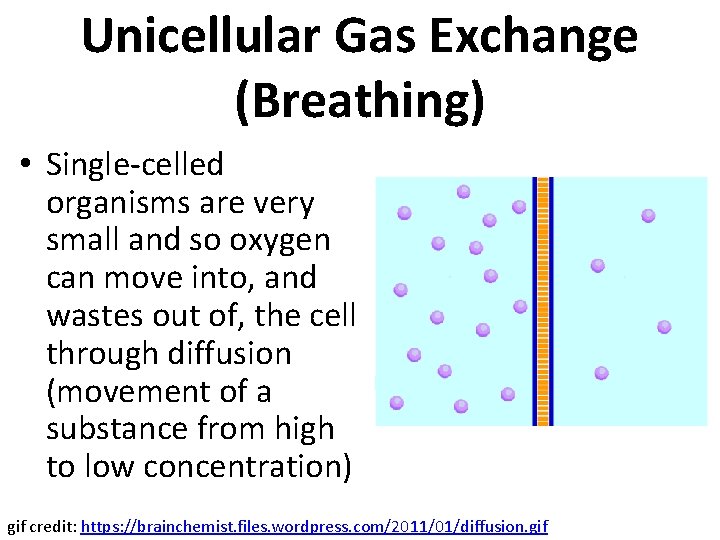
Unicellular Gas Exchange (Breathing) • Single-celled organisms are very small and so oxygen can move into, and wastes out of, the cell through diffusion (movement of a substance from high to low concentration) gif credit: https: //brainchemist. files. wordpress. com/2011/01/diffusion. gif
Unicellular vs. Multicellular Organisms
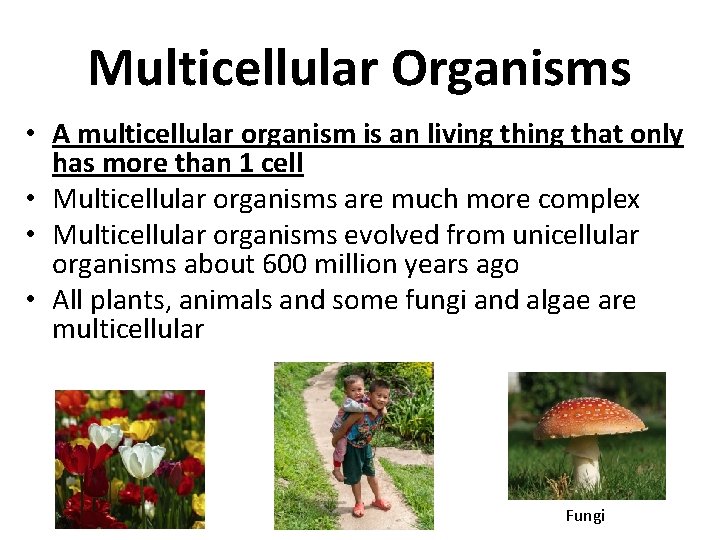
Multicellular Organisms • A multicellular organism is an living that only has more than 1 cell • Multicellular organisms are much more complex • Multicellular organisms evolved from unicellular organisms about 600 million years ago • All plants, animals and some fungi and algae are multicellular Fungi
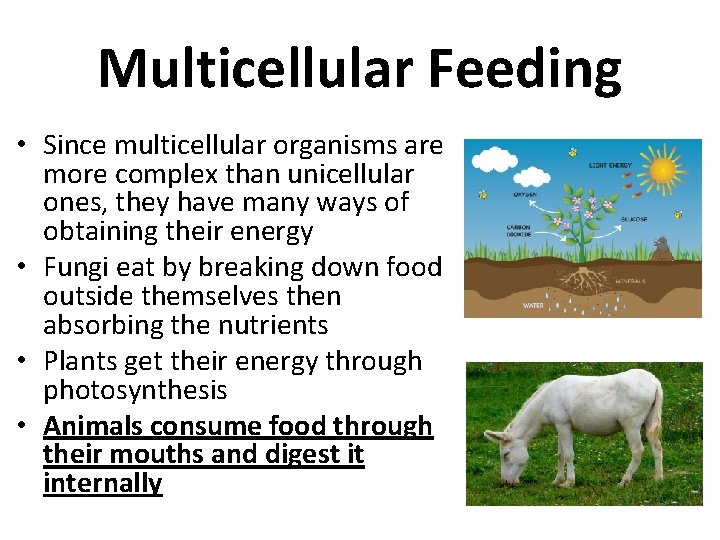
Multicellular Feeding • Since multicellular organisms are more complex than unicellular ones, they have many ways of obtaining their energy • Fungi eat by breaking down food outside themselves then absorbing the nutrients • Plants get their energy through photosynthesis • Animals consume food through their mouths and digest it internally
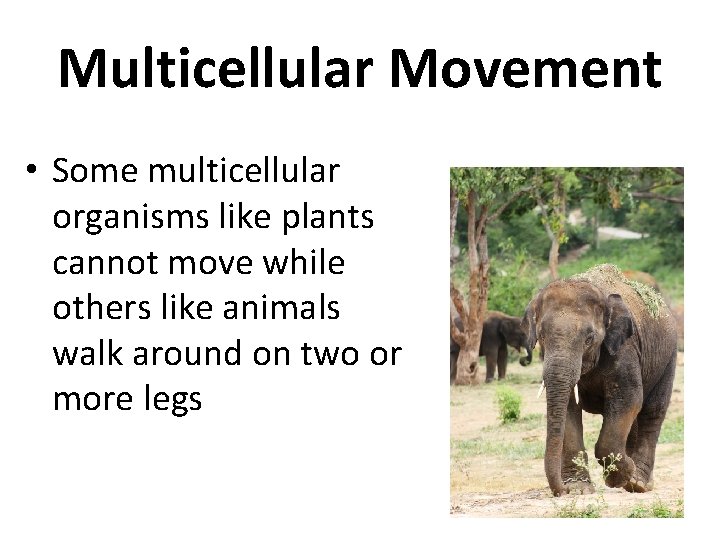
Multicellular Movement • Some multicellular organisms like plants cannot move while others like animals walk around on two or more legs
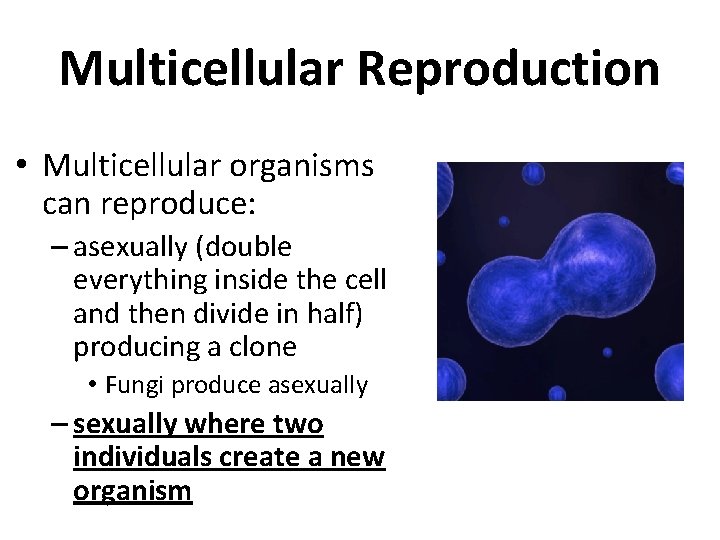
Multicellular Reproduction • Multicellular organisms can reproduce: – asexually (double everything inside the cell and then divide in half) producing a clone • Fungi produce asexually – sexually where two individuals create a new organism
Multicellular Gas Exchange (Breathing) • In simple multicellular organisms like algae, gas exchange can occur via diffusion • In larger organisms, their cells are too far from the environment so diffusion alone isn’t good enough
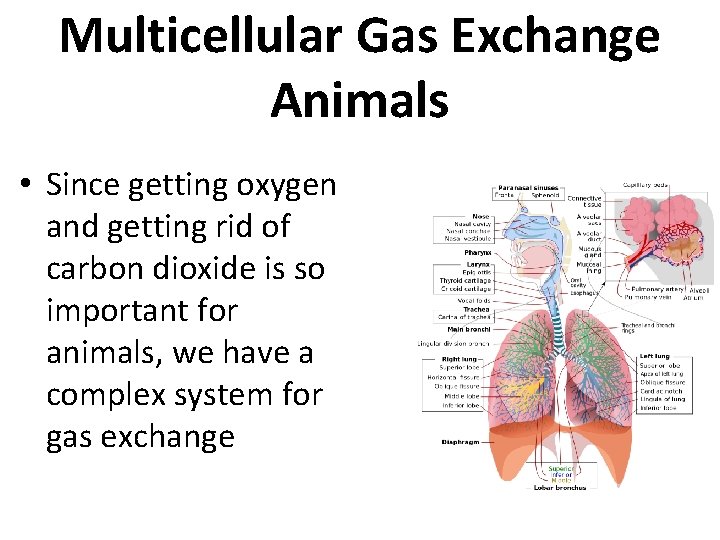
Multicellular Gas Exchange Animals • Since getting oxygen and getting rid of carbon dioxide is so important for animals, we have a complex system for gas exchange
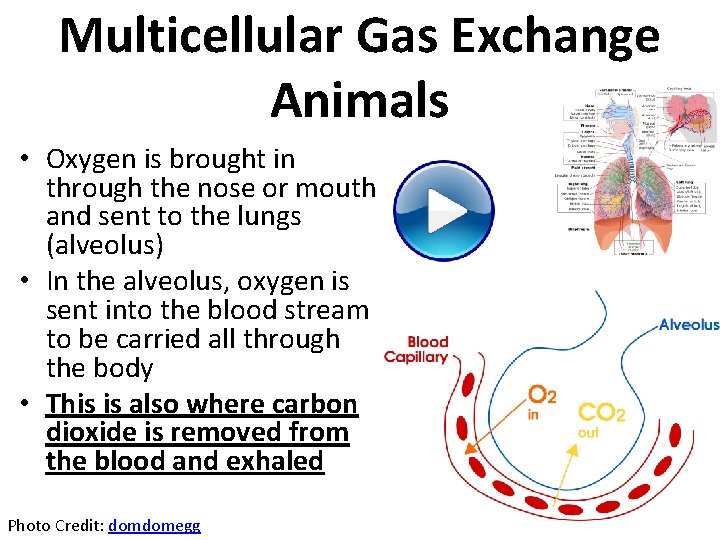
Multicellular Gas Exchange Animals • Oxygen is brought in through the nose or mouth and sent to the lungs (alveolus) • In the alveolus, oxygen is sent into the blood stream to be carried all through the body • This is also where carbon dioxide is removed from the blood and exhaled Photo Credit: domdomegg
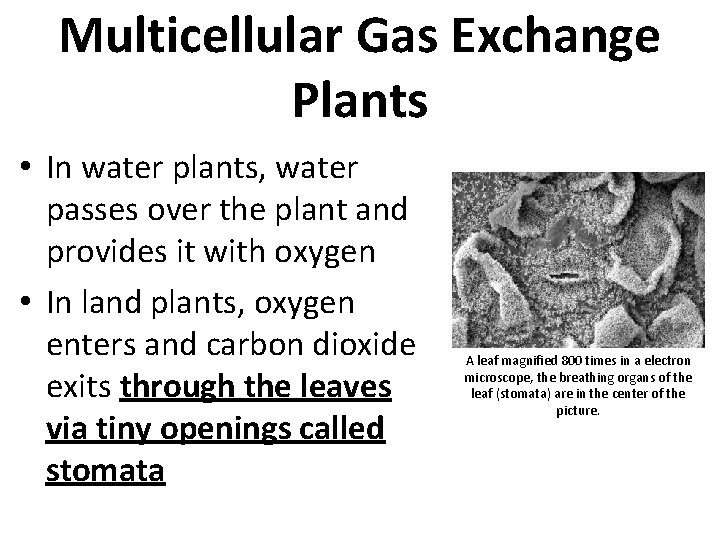
Multicellular Gas Exchange Plants • In water plants, water passes over the plant and provides it with oxygen • In land plants, oxygen enters and carbon dioxide exits through the leaves via tiny openings called stomata A leaf magnified 800 times in a electron microscope, the breathing organs of the leaf (stomata) are in the center of the picture.
- Slides: 20